
 (800) 949-0401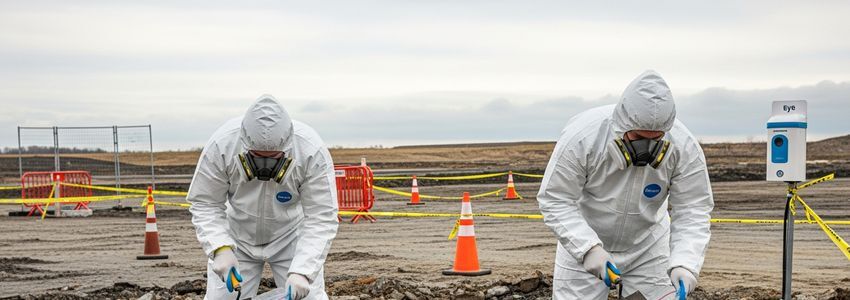
Environmental Remediation Business Loans: The Complete Financing Guide for Environmental Remediation Contractors
Environmental remediation contractors clean up some of the most complex and hazardous sites in the country. From contaminated industrial properties and polluted groundwater systems to brownfield redevelopment zones and hazardous waste removal projects, these businesses perform critical work that protects public health, restores land value, and brings blighted properties back into productive use. The work is technically demanding, project timelines run long, and the cost of mobilizing for a single contract can easily exceed what most firms carry in available cash.
That is the central challenge for environmental remediation contractors: the gap between what the work requires upfront and when payment actually arrives. Specialized equipment, site-specific labor, regulatory compliance costs, bonding requirements, and laboratory testing fees all accumulate before a single invoice gets paid. Without access to reliable financing, even well-established firms can struggle to take on larger contracts, replace aging equipment, or maintain the cash flow needed to keep crews on the job.
This guide covers every major financing option available to environmental remediation businesses, explains how to qualify, and lays out the practical scenarios where each product makes sense. Whether you run a small regional cleanup firm or a multi-state environmental services company, understanding your financing options is essential to scaling the business and staying competitive in a market where contract values continue to rise.
What Environmental Remediation Businesses Do
Environmental remediation is the process of removing or neutralizing pollutants from soil, groundwater, surface water, and sediments. Companies in this sector serve government agencies, industrial clients, real estate developers, and property owners managing contamination liabilities from decades of industrial activity, underground storage tank leaks, and agricultural chemical use.
The scope of work varies widely, but the most common service categories include:
Soil Remediation
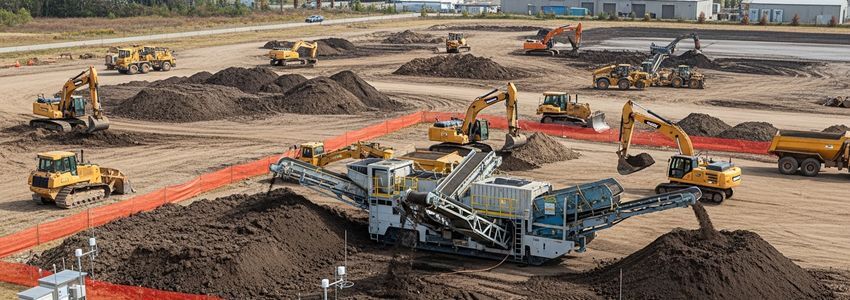
Contaminated soil projects involve excavation, on-site treatment, or off-site disposal of impacted material. Depending on the contaminants, contractors may use bioremediation techniques, chemical stabilization, thermal treatment, or soil vapor extraction. Excavation-based projects require heavy equipment and can span multiple seasons when dealing with deep contamination plumes.
Groundwater Treatment and Pump-and-Treat Systems
Contaminated groundwater is one of the most persistent environmental problems in the United States. According to the U.S. Environmental Protection Agency, thousands of Superfund sites across the country involve complex groundwater contamination requiring years of active treatment. Pump-and-treat systems extract contaminated water, treat it above ground, and re-inject clean water, requiring ongoing monitoring, mechanical maintenance, and lab analysis.
Industrial Site Decontamination
Decommissioning industrial facilities involves removing hazardous materials including asbestos, lead paint, PCBs, petroleum products, and heavy metals before a site can be demolished, repurposed, or sold. These projects require specialized personal protective equipment, industrial vacuum systems, and certified disposal protocols.
Hazardous Waste Removal and Disposal
Permitted environmental contractors manage the transport and disposal of hazardous materials under strict regulatory frameworks. Vehicles, containers, manifests, and disposal facilities all require compliance with EPA and state environmental agency regulations. The cost of maintaining compliance infrastructure is significant and ongoing.
Brownfield Redevelopment
Brownfield sites are previously developed properties contaminated by prior industrial or commercial use. Redevelopment projects unlock substantial property value and often attract federal and state grant funding alongside private financing. Environmental contractors are central players in site assessment, cleanup planning, and remediation execution on brownfield projects.
The industry employs a skilled and specialized workforce. Environmental contractors must maintain certifications, carry substantial insurance coverage, post bonds on government contracts, and invest heavily in equipment and technology. These obligations create persistent capital needs that routine revenue alone often cannot satisfy.
The U.S. environmental services market generates tens of billions in annual revenue, with remediation services representing a significant share. Government infrastructure investment and stricter enforcement of environmental liability laws continue to expand the pipeline of remediation projects, creating meaningful growth opportunities for well-capitalized contractors.
Why Environmental Remediation Businesses Need Financing
The business model for environmental remediation creates structural cash flow challenges that most other contractors do not face. Understanding these challenges is the first step toward choosing the right financing product.
High Upfront Equipment and Mobilization Costs
Environmental remediation projects require specialized equipment that most general contractors do not own. Vacuum excavation trucks, remediation trailers, air sparging systems, soil vapor extraction units, and monitoring well drilling rigs all represent significant capital investments. A single vacuum truck can cost $150,000 to $400,000. Excavators equipped for contaminated soil handling run from $200,000 to $500,000 depending on size and configuration.
For government and large commercial contracts, mobilization often requires equipment delivery, site preparation, and crew staging before the contract even formally begins. These pre-billing costs must be covered by the contractor's own capital or by financing.
Long Project Timelines and Extended Payment Cycles
Government remediation contracts, which represent a substantial share of the market, typically operate on 30-to-90-day payment cycles. Federal contracts through agencies like the Department of Defense, the EPA, and state environmental agencies follow procurement rules that delay payment well beyond project milestones. Contractors working on multi-year groundwater treatment systems may go months between invoice payments while payroll, benefits, subcontractor costs, and equipment expenses continue uninterrupted.
Bonding and Insurance Requirements
Federal and state environmental contracts typically require performance bonds, payment bonds, and environmental liability insurance coverage. Bond premiums and insurance costs can represent 3 to 8 percent of the contract value. A $2 million government cleanup contract might require $60,000 to $160,000 in bonding and insurance costs before work begins, all of which must be paid upfront.
Laboratory and Testing Costs
Environmental remediation projects are driven by data. Phase II environmental site assessments, remedial investigation reports, and ongoing compliance monitoring all require laboratory analysis. Lab costs can run $5,000 to $50,000 or more per project phase, and these expenses typically fall on the contractor before billing can proceed.
Subcontractor and Materials Float
Large-scale remediation projects often involve subcontractors providing specialized services such as drilling, geophysical testing, air monitoring, and soil transport. As the prime contractor, environmental firms must pay subcontractors on schedule while waiting for client payments to arrive. This float creates direct financing needs that working capital products are specifically designed to address.
Regulatory Compliance Infrastructure
Maintaining EPA and state agency compliance requires ongoing investment in training, certification, safety systems, and documentation. Health and safety plans, emergency response protocols, and waste manifesting systems all have associated costs. Environmental businesses that let their compliance infrastructure slip risk permit suspension and contract disqualification, making this a non-discretionary cost category regardless of cash flow timing.
The combination of high upfront costs, long payment cycles, and non-negotiable compliance expenses means that even profitable environmental remediation firms regularly need external financing to maintain operations and pursue growth. This is not a sign of financial weakness - it is a structural feature of the industry.
Ready to Finance Your Remediation Business?
Crestmont Capital specializes in fast, flexible funding for environmental contractors. Get a decision in as little as 24 hours.
Apply NowTypes of Financing Available for Environmental Remediation Businesses
Environmental remediation contractors have access to a range of financing products, each suited to different needs and circumstances. The right product depends on what you need the money for, how quickly you need it, and what your business financials look like.
The main categories are:
- Equipment financing for purchasing or refinancing remediation equipment
- Working capital loans for covering operating expenses and cash flow gaps
- Business lines of credit for ongoing access to flexible capital
- SBA loans for larger, longer-term financing needs
- Small business loans for general growth and operational needs
Each of these products works differently, and most established environmental firms use two or three simultaneously to meet different needs.
Equipment Financing for Remediation Contractors
Equipment financing is among the most useful and accessible tools available to environmental remediation businesses. The equipment itself serves as collateral, which means approval requirements are generally more accessible than for unsecured products, and loan-to-value ratios can be strong.
What Equipment Qualifies?
Virtually all environmental remediation equipment qualifies for equipment financing, including:
- Vacuum excavation trucks and industrial vacuum systems
- Excavators and track hoes with contaminated-site configurations
- Groundwater pump-and-treat systems and monitoring equipment
- Soil vapor extraction (SVE) units and air sparging systems
- Directional drilling rigs and monitoring well installation equipment
- High-capacity filtration and water treatment skids
- Hazmat response trailers and decontamination units
- Field laboratories and portable analytical equipment
- Work trucks, trailers, and support vehicles
How Equipment Financing Works
With equipment financing, the lender finances 80 to 100 percent of the purchase price. You make fixed monthly payments over a term typically ranging from 24 to 84 months. The equipment secures the loan, so unsecured collateral is generally not required. At the end of the term, you own the equipment outright.
For newer businesses, lenders may require a down payment of 10 to 20 percent. Established firms with strong financials often qualify for 100 percent financing with no down payment.
Equipment Leasing as an Alternative
For equipment that becomes obsolete quickly or that you only need for specific projects, an equipment lease may be preferable to a purchase loan. Operating leases allow you to return the equipment at lease end and upgrade to newer technology, which can be important for monitoring and analytical equipment that evolves rapidly in the environmental sector.
Equipment financing for remediation contractors at Crestmont Capital works with businesses at various stages, from startups with limited history to established firms refinancing existing equipment to free up working capital.
Working Capital Loans and Lines of Credit
Working capital financing addresses the cash flow timing problems that define environmental remediation contracting. These products provide liquidity to cover operating expenses while contracts are in progress and invoices are outstanding.
Term-Based Working Capital Loans
Unsecured working capital loans provide a lump sum of cash that you repay over a defined term, typically 6 to 36 months. These loans are often unsecured, meaning no specific collateral is required. Approval is based primarily on business revenue, cash flow consistency, and credit profile.
For environmental contractors, working capital loans work well when you have a specific near-term need: covering payroll on a new contract, funding a bond premium, or bridging a gap between invoice dates on a large government project.
Business Lines of Credit
A business line of credit is a revolving credit facility that you draw from as needed and repay as cash comes in. Lines of credit are ideal for environmental contractors because the need for external capital is not constant - it spikes when contracts begin and eases when invoices get paid. A revolving line lets you match your borrowing to actual cash needs rather than taking on a fixed loan for an uncertain amount.
Lines of credit are especially valuable for managing subcontractor payment schedules. If a drilling subcontractor is net-30 but your client pays net-60, a line of credit covers the 30-day gap without requiring you to take on longer-term debt.
Revenue-Based Financing
For environmental businesses with strong, consistent revenue but limited collateral or shorter operating history, revenue-based financing provides capital in exchange for a fixed percentage of future revenue. This product aligns repayment with your actual cash flow, which can be valuable in an industry where project timing varies significantly.
You can learn more about fast business loan options that can provide capital within days rather than weeks, which matters when contract opportunities arise on short notice.
SBA Loans for Environmental Remediation Businesses
The U.S. Small Business Administration offers several loan programs that can be particularly well-suited to environmental remediation contractors seeking long-term, low-cost capital for growth.
SBA 7(a) Loans
SBA 7(a) loans provide up to $5 million with terms up to 10 years for working capital and up to 25 years for real estate. Interest rates are capped at relatively favorable levels, and the SBA guarantee (typically 75 to 85 percent of the loan) reduces lender risk, making approval more accessible for growing businesses that might not qualify for conventional bank financing.
For environmental contractors, SBA 7(a) loans work well for:
- Purchasing a competitor or acquiring an established remediation firm
- Financing a fleet of specialized vehicles and equipment
- Funding major facility improvements, such as equipment storage and decontamination facilities
- Refinancing existing higher-cost debt to reduce monthly obligations
SBA 504 Loans
SBA 504 loans provide long-term, fixed-rate financing for major fixed assets. For environmental contractors looking to purchase or build a facility - such as a hazardous waste staging yard, equipment maintenance facility, or field operations center - an SBA 504 loan provides up to $5.5 million with terms up to 25 years and competitive fixed rates.
The 504 program requires a Certified Development Company (CDC) partner and generally takes 60 to 90 days to close. It is a better fit for planned investments than urgent cash flow needs.
SBA Loan Requirements
SBA loan requirements include being a for-profit U.S. business, meeting SBA size standards for the environmental services industry, demonstrating a reasonable credit history, and showing that other financing is not available on reasonable terms. Environmental remediation contractors generally qualify under NAICS codes 562110 (Hazardous Waste Treatment and Disposal) or 562910 (Remediation Services).
Environmental remediation contractors working on government contracts may be able to use their contract award letters or purchase orders as part of the credit story when applying for SBA or working capital financing. A firm government contract dramatically reduces lender risk and can improve both approval odds and pricing.
Environmental Remediation Loan Options Comparison
| Loan Type | Best For | Loan Amount | Term | Speed |
|---|---|---|---|---|
| Equipment Financing | Vacuum trucks, excavators, treatment systems | $10K - $5M+ | 24-84 months | 2-5 days |
| Working Capital Loan | Payroll, bonds, lab costs, subcontractors | $10K - $500K | 6-36 months | 1-3 days |
| Line of Credit | Ongoing float, subcontractor payments | $10K - $500K | Revolving | 1-3 days |
| SBA 7(a) Loan | Acquisitions, large equipment, refinancing | Up to $5M | Up to 10-25 years | 30-90 days |
| SBA 504 Loan | Facilities, major fixed assets | Up to $5.5M | 10-25 years | 60-90 days |
How to Qualify for Environmental Remediation Business Loans
Qualification requirements vary significantly by product type and lender, but understanding the key factors lenders evaluate will help you present the strongest possible application.
Credit Score Requirements
Business credit and personal credit scores both factor into most lending decisions. For working capital products and equipment financing through alternative lenders like Crestmont Capital, credit score minimums are generally more flexible than traditional banks - often starting at 550 to 600 for revenue-based products. SBA loans typically require 650+ personal credit scores.
If your credit score is below the threshold for one product, other options may still be available. Lenders who specialize in small business finance understand that environmental contractors often have complex financial profiles driven by project timing rather than underlying business weakness.
Revenue and Time in Business
Most lenders require:
- Time in business: 6 to 24 months minimum (6 months for some alternative lenders, 2 years for SBA)
- Annual revenue: Typically $100,000 to $250,000 minimum, though requirements vary by product and loan size
- Revenue consistency: 3 to 6 months of bank statements demonstrating steady cash flow
Documentation Typically Required
For most small business loan products, environmental contractors should have the following ready:
- 3 to 6 months of business bank statements
- Most recent 2 years of business tax returns (for SBA and larger loans)
- Current accounts receivable aging report
- A list of active contracts or purchase orders
- Business license and state contractor certifications
- Proof of insurance and bonding capacity (for larger contracts)
For SBA loans, additional documentation includes a business plan, personal financial statement, and sometimes a detailed description of the project being financed.
Collateral Considerations
Equipment financing is self-collateralized by definition. For working capital loans and lines of credit, some lenders take a blanket lien on business assets (UCC filing), while others offer truly unsecured products based on revenue and creditworthiness alone. SBA loans generally require available collateral but can proceed without it if insufficient collateral is available.
Environmental contractors often have substantial equipment equity that can support collateralized lending beyond what their credit scores alone might qualify for.
Find Out What You Qualify For Today
Our application takes minutes, and most environmental remediation contractors get a decision within 24 hours. No obligation to accept any offer.
Check Your OptionsReal-World Financing Scenarios for Environmental Remediation Contractors
Understanding how other environmental contractors use business financing can help you identify the right product for your situation.
Scenario 1: Winning a State Contract That Requires New Equipment
A mid-sized environmental contractor in the Midwest secures a $1.8 million state groundwater remediation contract but needs a dedicated pump-and-treat trailer valued at $280,000 to execute the work. The project payment terms are net-45, but the equipment must be operational within 30 days of contract execution.
The solution: equipment financing covers the $280,000 trailer with 72-month terms and a monthly payment that fits within the project's expected margin. The contractor draws on a working capital line of credit to cover crew costs, subcontractor fees, and lab work during the first invoice cycle. Once the first payment arrives, the line is paid down and the equipment loan begins amortizing.
Scenario 2: Federal Government Brownfield Cleanup
An environmental services firm wins a multi-year brownfield cleanup contract worth $4.5 million over three years with the Army Corps of Engineers. Payment arrives quarterly, but crew payroll, equipment maintenance, and subcontractor costs run monthly.
The contractor uses an SBA 7(a) working capital loan to establish a stable financial foundation for the contract period, supplemented by a revolving line of credit to manage the intra-quarter timing gaps. Because the contract itself represents strong, predictable government revenue, the SBA lender views the application favorably despite the firm's current debt load from prior equipment purchases.
Scenario 3: Emergency Industrial Spill Response
An environmental contractor receives a call for an emergency industrial petroleum spill response at a major manufacturing facility. The project is time-critical and requires deploying a full vacuum recovery team within 24 hours, plus renting additional equipment from a third-party provider at $15,000 per day.
Because the contract will be emergency-billed at premium rates, the project is highly profitable - but the contractor needs $85,000 upfront for equipment rental deposits, crew overtime, and hazmat disposal fees. A fast working capital loan from Crestmont Capital, approved in under 24 hours, covers the mobilization costs. The project invoices $210,000 within 15 days and the loan is repaid promptly.
Scenario 4: Acquiring a Competitor's Book of Business
A regional environmental firm identifies an opportunity to acquire a retiring competitor's client contracts, permits, and equipment for $750,000. The acquisition would double the firm's revenue base and add three government contracts to the portfolio.
The acquisition is financed with an SBA 7(a) loan, which provides the full $750,000 at a 10-year term. The monthly debt service is covered comfortably by the additional revenue from the acquired contracts. This type of acquisition financing is a primary use case for SBA 7(a) loans in the environmental sector.
For more context on how specialized contractors manage growth financing, see our guides on dewatering contractor business loans and mechanical contractor business loans, which address similar project-cycle financing challenges.
Environmental Remediation Business Loan Process Flow
From Contract Win to Funded in 5 Steps
Win a government or commercial remediation contract
Equipment, bonds, payroll, lab, subcontractors
3-6 months bank statements, revenue history, contract docs
Capital available in as little as 24 hours
Mobilize, complete work, get paid, repay, and reinvest
How Crestmont Capital Helps Environmental Remediation Contractors
Crestmont Capital is a specialized small business lender with deep experience serving environmental services contractors, specialty trade contractors, and industrial services businesses. We understand that the cash flow patterns of environmental remediation companies are driven by project structure, government payment cycles, and seasonal demand - not by underlying business weakness.
Our approach is built around three principles:
Speed When It Matters
Environmental project opportunities do not wait for traditional bank timelines. When you win an emergency response contract, a fast-track brownfield project, or a time-sensitive industrial cleanup, you need capital deployed within days, not weeks. Our working capital and equipment financing approvals move as quickly as 24 to 48 hours from complete application to funded.
Products Matched to Remediation Business Needs
We offer the full range of products that environmental contractors actually use:
- Equipment financing for vacuum trucks, excavators, and remediation systems
- Working capital loans for project mobilization, bonding, and cash flow gaps
- Business lines of credit for ongoing operational flexibility
- SBA loans for longer-term growth, acquisitions, and major capital investments
- Small business loans for general operational and growth needs
Flexible Qualification Standards
We evaluate environmental remediation businesses holistically, looking at revenue trends, contract quality, and business trajectory rather than applying rigid credit score cutoffs. If you have consistent revenue and can demonstrate a clear path to repayment, we want to find a way to help you access capital.
The U.S. Census Bureau tracks environmental services employment and revenue trends that reflect the strong and growing demand in this sector, and according to Forbes, environmental remediation is among the specialty contracting sectors expected to see sustained growth through the end of the decade as infrastructure investment and environmental liability enforcement continue to expand the project pipeline.
Frequently Asked Questions About Environmental Remediation Business Loans
1. What types of loans are best for environmental remediation contractors?
The best loan type depends on your specific need. Equipment financing works best for purchasing vacuum trucks, excavators, and remediation systems. Working capital loans are ideal for covering payroll, bonding, and subcontractor costs during long payment cycles. Lines of credit provide revolving access to capital for ongoing cash flow management. SBA loans offer the best rates and terms for large, long-term needs like acquisitions or major equipment fleets.
2. How quickly can an environmental remediation business get funded?
With Crestmont Capital, working capital loans and equipment financing can be approved and funded in as little as 24 to 48 hours after receiving a complete application. SBA loans take longer due to government documentation requirements, typically 30 to 90 days. For urgent project mobilization needs, alternative lenders consistently outperform traditional banks on speed.
3. What credit score do I need for environmental remediation business financing?
Credit score requirements vary by product. Revenue-based and working capital products from alternative lenders often accept scores of 550 to 600. Equipment financing typically requires 600 to 640. SBA loans generally require 650 or higher on the personal credit score. However, strong revenue and business history can compensate for lower credit scores in many cases, so it is worth applying even if your score falls below these thresholds.
4. Can a new environmental remediation business get a loan?
Yes, though options are more limited for startups. Businesses with 6 months or more of operating history and consistent monthly revenue can qualify for working capital products and equipment financing. SBA loans generally require 2 years in business. If your business is brand new, equipment financing with a down payment and strong personal credit is often the most accessible path to early-stage capital.
5. Can I use a business loan to cover bonding costs for a government contract?
Yes. Bond premiums are a legitimate and common use of working capital financing. Environmental contractors frequently use short-term working capital loans or lines of credit to cover the upfront cost of performance bonds and payment bonds required on government remediation contracts. The bond cost is then recovered through the contract revenue over the project period.
6. Does Crestmont Capital finance vacuum trucks and industrial remediation equipment?
Yes. Crestmont Capital offers equipment financing for the full range of environmental remediation equipment including vacuum excavation trucks, high-capacity industrial vacuums, pump-and-treat systems, soil vapor extraction units, directional drilling rigs, monitoring equipment, and support vehicles. Equipment financing is secured by the asset itself, which generally makes approval more accessible than unsecured products.
7. How much can an environmental remediation business borrow?
Loan amounts depend on the product and your business financials. Working capital loans typically range from $10,000 to $500,000. Equipment financing can cover individual assets from $10,000 to several million dollars. SBA 7(a) loans provide up to $5 million. Lines of credit typically range from $10,000 to $500,000 for small and mid-size environmental firms. Businesses with strong revenue and established track records can qualify for larger amounts across most product types.
8. What documents are needed to apply for an environmental remediation business loan?
For most working capital and equipment financing products, you need 3 to 6 months of business bank statements, proof of business registration, and a basic financial summary. For larger loans and SBA products, you also need 2 years of business tax returns, a personal financial statement, accounts receivable aging, and information about active contracts. Having current equipment list and insurance certificates on hand can also speed the process.
9. Is a line of credit or a term loan better for managing project cash flow gaps?
A line of credit is generally the better choice for managing recurring cash flow gaps because you only borrow what you need when you need it, and you repay as invoices come in. This minimizes interest costs. A term loan is better when you have a specific, known expense - such as a bond premium or equipment purchase - and want predictable fixed repayment. Many environmental contractors carry both: a term loan for specific capital needs and a line of credit for ongoing cash management.
10. Can I finance remediation equipment for a specific contract and pay it off when the contract ends?
Yes. Equipment financing terms can be structured to match project timelines. For multi-year government remediation contracts, 36 to 60 month equipment loans often align well with contract periods. Some lenders also offer early payoff options without penalties, allowing you to retire the loan when a large payment arrives. Be sure to ask about prepayment terms when comparing equipment financing offers.
11. Do environmental remediation contractors qualify for SBA loans?
Yes, environmental remediation contractors are generally eligible for SBA loan programs including the 7(a) and 504 programs. NAICS codes 562110 (Hazardous Waste Treatment and Disposal) and 562910 (Remediation Services) are within SBA size standard guidelines for small businesses. Contractors must meet standard SBA requirements including operating as a for-profit U.S. business, demonstrating repayment ability, and not exceeding SBA size thresholds for their industry classification.
12. Can I use business financing to hire additional environmental technicians for a large contract?
Yes. Working capital financing is frequently used to cover payroll expansion when an environmental contractor wins a large contract that requires adding field technicians, project managers, or safety officers. The additional labor cost is covered by the working capital loan, and the loan is repaid as the contract generates revenue. This is one of the most common and appropriate uses of working capital financing in the environmental services industry.
13. How does applying for a business loan affect my credit score?
Initial prequalification checks typically use a soft credit inquiry that does not affect your score. A full loan application involves a hard credit inquiry, which may reduce your score by a few points temporarily. This impact is generally minor and short-lived. Shopping multiple lenders within a short window (typically 14 to 45 days depending on the scoring model) is treated as a single inquiry by most credit scoring systems, so comparing offers from multiple lenders does not multiply the impact.
14. What is the typical interest rate for environmental remediation business loans?
Rates vary significantly by product and applicant profile. SBA loans currently carry rates in the 10 to 14 percent range for fixed-rate products. Equipment financing rates typically range from 6 to 20 percent APR depending on equipment type, loan term, and applicant credit. Working capital loans and lines of credit from alternative lenders carry a wider rate range based on risk profile, revenue, and business history. The best way to know your rate is to apply and compare offers.
15. How does Crestmont Capital evaluate environmental remediation businesses differently from traditional banks?
Crestmont Capital focuses on overall business health and revenue performance rather than applying rigid credit score or collateral requirements. We understand that environmental contractors often have complex financial profiles shaped by government payment cycles, seasonal project volume, and upfront capital demands. We look at revenue trends, contract quality, accounts receivable, and business trajectory. This holistic approach allows us to work with businesses that may not meet traditional bank standards but are fundamentally sound and growing.
Start Your Application Today
Environmental remediation contractors across the country rely on Crestmont Capital for fast, flexible financing. Apply online in minutes.
Apply Now - Free, No ObligationNext Steps for Environmental Remediation Contractors
Your Action Plan
- Assess your capital needs: Identify whether you need equipment financing, working capital, a line of credit, or a longer-term SBA product.
- Gather your documents: Pull together 3 to 6 months of bank statements, your most recent tax returns, and a list of active contracts.
- Check your credit: Review your personal and business credit scores before applying so there are no surprises.
- Apply with Crestmont Capital: Our online application takes minutes. You can receive an approval decision in as little as 24 hours.
- Compare your options: Review any offers you receive against the cost of not having the capital available - particularly for time-sensitive contracts or equipment needs.
- Use financing strategically: Match the product to the need - use short-term working capital for short-term needs and longer-term equipment financing for assets you will use for years.
Ready to get started? Apply now at Crestmont Capital or explore more information on small business loans for contractors.
Disclaimer: The information provided in this article is for general educational purposes only and is not financial, legal, or tax advice. Funding terms, qualifications, and product availability may vary and are subject to change without notice. Crestmont Capital does not guarantee approval, rates, or specific outcomes. For personalized information about your business funding options, contact our team directly.








