
 (800) 949-0401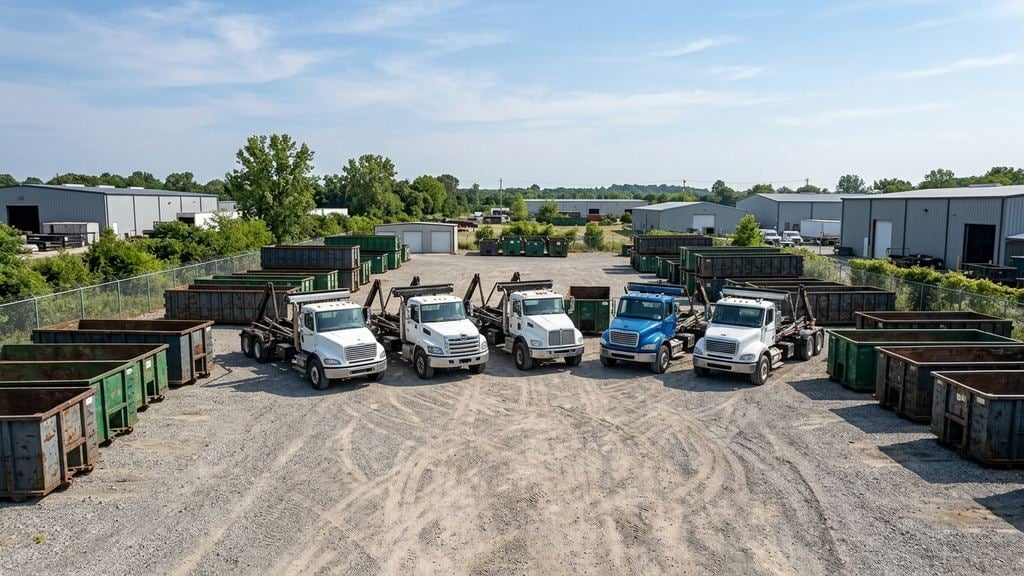
Dumpster Rental Business Loans: The Complete Financing Guide
Running a dumpster rental company means managing a capital-intensive operation where trucks cost $130,000 to $200,000 each, roll-off containers run $3,000 to $10,000 per unit, and a single-truck operation with 10 to 15 containers can require $150,000 or more just to get off the ground. Whether you need to expand your fleet, replace aging equipment, cover payroll during slow seasons, or open a new service territory, dumpster rental business loans give you the financial runway to grow without draining your cash reserves.
This guide covers every financing option available to dumpster rental companies in 2026 - from equipment loans and working capital lines to SBA programs - along with what lenders look for, how to qualify, and how Crestmont Capital helps waste and roll-off businesses get funded fast.
In This Article
- What Is a Dumpster Rental Business Loan?
- Why Dumpster Rental Companies Need Financing
- Types of Loans for Dumpster Rental Businesses
- How the Financing Process Works
- Qualification Requirements
- Comparing Financing Options
- How Crestmont Capital Helps
- Real-World Scenarios
- How to Get Started
- Frequently Asked Questions
What Is a Dumpster Rental Business Loan?
A dumpster rental business loan is any form of commercial financing specifically structured to meet the capital needs of roll-off container and waste management companies. These loans can fund equipment purchases, fleet expansion, working capital shortfalls, business acquisitions, or real estate for a dispatch and storage yard.
Unlike consumer loans, business financing for dumpster rental companies is evaluated based on your company's revenue history, cash flow, credit profile, and assets - not just personal credit. Lenders in this space understand the cyclical nature of the industry, the high cost of equipment, and the steady demand tied to construction, demolition, and residential cleanout markets.
The U.S. dumpster rental market reached approximately $654 million in 2025, with the broader industry projected to grow at a compounding rate of 5.2% annually through 2031. That growth is fueled by construction activity, home renovation trends, and stricter municipal waste disposal regulations - all of which create consistent demand for roll-off services year after year. According to the U.S. Small Business Administration, small businesses across capital-intensive industries like waste management consistently rank access to financing as a top growth barrier.
Industry Insight: The U.S. waste management sector generated an estimated $375.4 billion in revenue in 2025, according to Grand View Research. Dumpster rental is one of the highest-margin segments, with well-run operations achieving net profit margins of 18% to 25%.
Why Dumpster Rental Companies Need Financing
The dumpster rental business is built on physical assets that depreciate and wear out. A roll-off truck that handles 10 jobs per week is accumulating serious mechanical stress. Containers get dented, rust, and eventually need to be retired. Expansion into a new service area requires another truck, additional containers, and the working capital to sustain operations until that route becomes profitable. The U.S. Census Bureau reports that new business applications in waste services and construction support remain elevated, reflecting strong entrepreneurial activity in this sector.
Here are the most common reasons dumpster rental operators seek financing:
- Fleet expansion: Adding a second or third roll-off truck to cover more territory
- Container inventory growth: Purchasing additional 10, 20, or 40-yard containers to meet demand
- Equipment replacement: Retiring aging trucks before they cause costly downtime
- Seasonal cash flow gaps: Managing payroll and fuel costs during winter slowdowns
- Business acquisition: Buying out a competitor or acquiring an existing route
- Yard and facility costs: Leasing or purchasing land for container storage and dispatch
- Working capital: Covering operational costs while awaiting invoice payment from commercial clients
- Marketing and technology: Investing in online booking platforms and dispatch software
Equipment costs alone present a significant barrier. A new roll-off truck from Peterbilt or Freightliner can run $200,000 to $245,000 in 2026. Even a used truck in solid condition often commands $80,000 to $140,000. Layered on top of that are container purchases, insurance, licensing, and operational overhead - all before your first rental revenue comes in.
Ready to Expand Your Dumpster Rental Fleet?
Get fast, flexible financing built for roll-off and waste management businesses. No obligation - apply in minutes.
Apply Now →Types of Loans for Dumpster Rental Businesses
No single financing product fits every need. Dumpster rental operators typically work with a combination of loan types depending on their goals, timeline, and financial profile.
Equipment Financing
Equipment financing is purpose-built for companies that need trucks, containers, and heavy machinery. The equipment itself serves as collateral, which reduces lender risk and makes approval more accessible - even for businesses with limited credit history. Loan terms typically range from 24 to 84 months, with rates starting around 6% to 9% for qualified borrowers. You own the equipment outright once the loan is paid off.
For dumpster rental businesses, equipment financing covers roll-off trucks, hook-lift trucks, rear-load containers, and even yard equipment like forklifts used for container stacking. You can finance both new and used equipment, and many lenders offer application-only approvals up to $250,000 with same-day or next-day funding.
Equipment Leasing
Leasing works similarly to financing but with key differences. You make monthly payments to use the equipment, and at lease end you can return it, renew, or purchase it at fair market value or a fixed residual price. Leasing preserves working capital, keeps your balance sheet lighter, and lets you upgrade to newer equipment more frequently. For dumpster rental operators who want to rotate their fleet every five to seven years, leasing can be a smart capital strategy.
Working Capital Loans
A working capital loan provides a lump sum for day-to-day operational costs - fuel, insurance premiums, payroll, marketing, software subscriptions, or seasonal inventory. These loans are typically unsecured and repaid over 6 to 36 months. Because they are based on revenue rather than collateral, they tend to have faster approval timelines, making them ideal for time-sensitive needs.
Business Line of Credit
A business line of credit is a revolving credit facility that lets you draw funds as needed, up to an approved limit. This is particularly useful for dumpster rental companies that deal with fluctuating costs - you draw when you need it and repay as cash flow allows. Lines of credit are often used for emergency repairs, short-term cash gaps, or opportunistic equipment purchases when a good deal appears on used inventory.
SBA Loans
SBA loans are government-backed loans issued through approved lenders. The SBA 7(a) loan program is the most common, offering up to $5 million for working capital, equipment, real estate, and business acquisition. The SBA 504 loan is structured for major fixed assets and real estate, offering longer terms and lower down payments. SBA loans come with competitive rates and extended repayment terms - often 10 years for equipment and 25 years for real estate - but the application process takes four to eight weeks and requires thorough documentation.
Merchant Cash Advance
A merchant cash advance provides upfront capital in exchange for a percentage of future daily revenues. This product is better suited to businesses that accept credit cards heavily, and it carries a higher cost of capital than traditional loans. For dumpster rental operators who bill clients on invoices rather than card swipes, MCAs are generally not the best fit - but they can serve as a last-resort bridge for urgent short-term needs.
Term Loans
Traditional term loans from banks or alternative lenders provide a fixed amount upfront, repaid in equal installments over a defined period. For dumpster rental businesses, a traditional term loan can fund fleet expansion, facility upgrades, or large operational investments. Rates depend on creditworthiness, loan term, and collateral, and repayment periods typically range from 1 to 10 years.
How the Financing Process Works
Understanding the loan process helps you move quickly when opportunity strikes. Here is a step-by-step overview of how most dumpster rental business loans are originated and funded:
Step 1: Determine your need. Before you apply, get clear on what you need the funds for, how much you need, and how long you need to repay it. Lenders will ask these questions, and having crisp answers speeds up the process.
Step 2: Gather your documents. Most lenders require three to six months of business bank statements, recent tax returns, a copy of your business license, and basic business information (entity type, years in business, monthly revenue). Equipment financing also requires a quote or invoice for the specific equipment.
Step 3: Submit your application. Online lenders and alternative finance companies can process applications in one to three business days. Traditional banks and SBA lenders take longer. Crestmont Capital can typically review and approve applications within 24 to 48 hours.
Step 4: Review the offer. Your lender will present a term sheet with the loan amount, interest rate or factor rate, term length, repayment schedule, and any collateral requirements. Compare this carefully against your cash flow projections before signing.
Step 5: Close and fund. After accepting the offer and completing any final documentation, funds are typically wired within one to three business days. Equipment lenders may pay the vendor directly, while working capital loans are deposited into your business bank account.
Pro Tip: Keep three to six months of business bank statements current and accessible. Most lenders request these immediately, and having them organized saves days of back-and-forth during the application process.
Qualification Requirements for Dumpster Rental Business Loans
Requirements vary by lender and loan type, but here are the general benchmarks used to evaluate dumpster rental business loan applications:
- Time in business: Most lenders prefer at least 6 to 12 months of operating history. SBA loans typically require two or more years. Equipment financing is the most flexible - startups with a solid personal credit profile can still qualify if the equipment itself provides adequate collateral.
- Monthly revenue: Working capital lenders typically look for at least $10,000 to $15,000 in monthly gross revenue. Equipment loans have no minimum revenue requirement for application-only programs under $250,000.
- Credit score: For working capital and term loans, a personal credit score of 620 or higher opens the door to most alternative lenders. Scores above 680 qualify for preferred rates. Equipment financing can be approved with scores as low as 550 when strong collateral is present.
- Cash flow: Lenders want to see that your business generates sufficient cash flow to service the new debt. A debt service coverage ratio (DSCR) of 1.25 or higher is generally preferred, meaning your net operating income covers loan payments by at least 25%.
- Collateral: Equipment loans are self-collateralized. Working capital loans are typically unsecured. SBA loans may require a blanket lien on business assets and, in some cases, personal guarantees.
Dumpster rental businesses have a meaningful advantage with equipment financing specifically: the asset value of roll-off trucks and containers is well-documented in the market, making them straightforward collateral for lenders who specialize in waste and construction equipment.
Comparing Financing Options for Dumpster Rental Companies
| Loan Type | Best For | Typical Amount | Speed | Rates |
|---|---|---|---|---|
| Equipment Financing | Trucks, containers, fleet | $10K - $5M+ | 1-3 days | 6-15% |
| Working Capital Loan | Payroll, fuel, operations | $10K - $500K | 24-48 hrs | 10-30% |
| Business Line of Credit | Recurring costs, emergencies | $10K - $1M | 2-5 days | 8-25% |
| SBA 7(a) Loan | Long-term growth, real estate | Up to $5M | 4-8 weeks | Prime + 2.25-4.75% |
| Term Loan | Expansion, acquisition | $25K - $5M | 3-7 days | 9-30% |
| Equipment Leasing | Fleet rotation, low down payment | $10K - $2M | 1-3 days | 6-20% |
Industry Context: According to the SBA, small businesses with fewer than 20 employees account for 89% of all U.S. businesses - and most dumpster rental operations fall squarely in that category. These businesses are well-positioned for SBA programs and alternative financing designed specifically for owner-operated companies.
How Crestmont Capital Helps Dumpster Rental Businesses
Crestmont Capital is a leading U.S. business lender that specializes in fast, flexible financing for owner-operated companies - including dumpster rental, roll-off, and waste management businesses. We understand that timing matters in this industry. When a route opens up or a competitor is looking to sell, you cannot wait six weeks for a bank decision. According to Forbes, alternative lenders have become the primary source of fast business capital for small operators in asset-heavy industries - reducing average funding timelines from weeks to days.
Our platform connects dumpster rental operators with the right loan product for their specific need - whether that is a single truck purchase, a fleet expansion loan, or a revolving line of credit to smooth out seasonal cash flow. We work with businesses across all credit profiles, and our application process takes minutes.
Here is what we offer dumpster rental businesses:
- Equipment financing and leasing for roll-off trucks, hook-lift trucks, and containers
- Working capital loans for fuel, insurance, payroll, and operational costs
- Business lines of credit for recurring and flexible funding needs
- SBA loan programs for long-term growth and real estate
- Term loans for business acquisition or expansion into new markets
We also serve related industries if you are diversifying your operations. If you handle construction debris or junk removal alongside dumpster rentals, our construction equipment financing guide and our moving company loans guide cover adjacent financing needs that may apply to your operation.
Our team understands the waste and roll-off industry. We know what it costs to run a route, how margins are structured, and what it takes to grow from one truck to five. We are not just matching you with any loan - we are helping you find the right capital for your specific stage of growth.
Learn more about our equipment financing options or explore our full range of small business financing solutions.
Get Your Dumpster Rental Business Funded
Flexible equipment loans and working capital for roll-off operators. Fast approvals, competitive rates, and a lender who understands your business.
Apply Now →Real-World Scenarios: How Dumpster Rental Operators Use Financing
Understanding how financing is used in practice helps you see which product fits your situation. Here are six scenarios common to dumpster rental companies of various sizes:
Scenario 1: Startup Looking to Launch with One Truck
A former construction superintendent with strong industry contacts wants to start a dumpster rental operation in a mid-size metro. He needs a roll-off truck and 12 containers to get started. With a personal credit score of 670 and a detailed business plan, he qualifies for equipment financing covering $160,000 at a 36-month term. The monthly payment fits within his projected revenue from just four to five weekly container rentals - giving him room to grow before the loan puts any strain on cash flow.
Scenario 2: Established Operator Adding a Second Route
A two-year-old dumpster rental business generating $35,000 per month in revenue wants to expand into an adjacent county. They need a second truck and 20 additional containers - approximately $240,000 in total equipment. They use a combination of equipment financing ($190,000) and a working capital loan ($50,000) to cover the truck, containers, and initial marketing to establish the new route. Approval comes in 48 hours, and they are operational within three weeks.
Scenario 3: Seasonal Cash Flow Gap
A northeast dumpster rental company that does 70% of its revenue from April through October faces a cash flow crunch in January. Payroll, insurance renewals, and truck maintenance are due while revenue is at its seasonal low. A $60,000 working capital loan bridges the gap, allowing the owner to retain his full crew through the slow months rather than laying off trained drivers who might not return in spring.
Scenario 4: Acquiring a Competitor's Route
A five-year-old dumpster rental operator learns that a competitor is exiting the market and selling their route book, two trucks, and 25 containers for $380,000. This is a turnkey acquisition with an established customer base. The operator secures a $380,000 term loan through Crestmont Capital, structured over 60 months. The acquired route's existing revenue covers the monthly payment from day one, making it a cash-flow-positive acquisition immediately.
Scenario 5: Fleet Modernization
A dumpster rental business with four trucks has two aging vehicles approaching 400,000 miles - a reliability risk in a service where downtime means missed jobs and unhappy customers. The owner uses equipment financing to replace both trucks simultaneously, keeping the loan payments offset by eliminating ongoing repair costs that were running $2,500 per month per truck.
Scenario 6: Securing a Yard Lease
A growing roll-off company renting month-to-month at a shared yard wants to secure a long-term lease on a dedicated 2-acre parcel with a covered service bay. The security deposit and first and last month's rent total $85,000. A short-term working capital loan covers the upfront lease costs while keeping the business's cash reserves intact for equipment and operations.
How to Get Started
Complete our quick application at offers.crestmontcapital.com/apply-now - it takes just a few minutes and does not require a hard credit pull to get started.
A Crestmont Capital advisor who understands the dumpster rental and waste management industry will review your needs, assess your options, and match you with the best loan product for your situation.
Receive your funds - often within 24 to 48 hours of approval - and put them to work expanding your fleet, covering operations, or acquiring new routes.
Frequently Asked Questions
Take the Next Step for Your Business
Whether you need one truck or ten, Crestmont Capital has the financing to make it happen. Apply today and hear back within 24 hours.
Apply Now →Conclusion
The dumpster rental industry is a proven, cash-generating business built on essential services that construction crews, homeowners, and municipalities depend on year-round. The capital requirements are real - trucks, containers, insurance, licensing, and operational costs add up fast - but so does the revenue potential. With net margins between 18% and 25% for well-run operations and a market growing at over 5% annually, the fundamentals are strong.
Dumpster rental business loans give you the financial leverage to act when opportunity appears - whether that means adding a second truck, acquiring a competitor's route, bridging a seasonal gap, or building the infrastructure for a serious regional operation. The right loan product matched to your specific need and financial profile makes all the difference.
Crestmont Capital is here to help you navigate the options, get approved fast, and access the capital you need to grow. Start your application today and get a decision within 24 hours.
Disclaimer: The information provided in this article is for general educational purposes only and is not financial, legal, or tax advice. Funding terms, qualifications, and product availability may vary and are subject to change without notice. Crestmont Capital does not guarantee approval, rates, or specific outcomes. For personalized information about your business funding options, contact our team directly.








