
Running a drywall contracting business means living on the front lines of construction schedules, tight payment cycles, and a constant need for materials, equipment, and skilled labor. Whether you are bidding on commercial buildouts, residential new construction, or large-scale renovation projects, the financial demands of a drywall operation can outpace even the most profitable contracts. That gap between when you spend money and when clients pay is where many drywall businesses run into trouble.
The good news is that lenders recognize drywall contractors as creditworthy borrowers with recurring revenue and steady project pipelines. From equipment loans to working capital lines of credit, there are more financing options available to drywall business owners today than ever before. This guide walks you through every major option, what you need to qualify, how to compare offers, and exactly how to apply so you can keep your crews working and your business growing.
Crestmont Capital works with drywall contractors across the country to secure fast, flexible business financing. Get a decision in as little as 24 hours.
Apply Now - Takes 5 Minutes- Why Drywall Contractors Need Financing
- Types of Business Loans for Drywall Contractors
- Equipment Financing for Drywall Businesses
- Working Capital and Lines of Credit
- SBA Loans for Drywall Contractors
- What You Need to Qualify
- Drywall Contractor Financing at a Glance
- Financing Options With Bad Credit
- How to Apply for a Drywall Business Loan
- Common Uses for Drywall Business Financing
- Next Steps
- Frequently Asked Questions
Why Drywall Contractors Need Financing
Drywall contracting is one of the most cash-intensive trades in the construction industry. Unlike service businesses that collect payment at the point of sale, drywall contractors front the cost of materials, labor, and equipment weeks or months before receiving payment from general contractors or property owners. According to the U.S. Small Business Administration, cash flow problems are among the top reasons small construction businesses fail - and drywall firms are especially vulnerable given the volume of material costs involved.
Consider a mid-size drywall company landing a $500,000 commercial buildout contract. Before the first sheet of drywall is hung, the owner needs to purchase material, pre-pay subcontractors, fuel trucks, and cover ongoing overhead expenses like payroll, insurance, and licensing. That contract may take 90 to 120 days to complete - and payment terms may push the final check out another 30 to 60 days. That is potentially six months of capital tied up in a single job.
Drywall contractors also face significant seasonal fluctuations. New construction slows in winter in many U.S. regions, but fixed costs like insurance premiums, equipment payments, and office overhead do not. A business loan or line of credit creates the financial bridge needed to maintain operations, retain key employees, and be ready when the next busy season arrives.
Beyond cash flow, drywall businesses grow through strategic investment. New equipment - lift systems, automatic tapers, sprayers, commercial vehicles - can dramatically increase crew productivity and the size of jobs a contractor can competitively bid. Without access to equipment financing, many drywall contractors are forced to rent equipment repeatedly at rates that far exceed the cost of ownership.
Types of Business Loans for Drywall Contractors
There is no single "drywall contractor loan." Instead, business owners have access to a variety of financing products, each designed for different purposes, timelines, and financial profiles. Understanding these options is the first step toward choosing the right financing for your specific situation.
Term Loans
A term loan provides a lump sum of capital that is repaid over a fixed period - typically one to five years for short-term loans and five to ten years for longer-term products. Term loans are ideal when you have a specific capital need: buying a commercial vehicle, hiring a new crew, funding a large project, or refinancing higher-cost debt. Rates can range from around 6% to 30% or higher depending on the lender type (bank versus alternative lender), your credit profile, and business revenue.
Long-term business loans are generally best for larger capital expenditures - equipment purchases, vehicle fleets, or facility improvements - where you want to spread repayment over several years. Short-term business loans are better suited for bridging immediate cash flow gaps, financing a large material purchase for a specific project, or handling an unexpected expense.
Business Lines of Credit
A business line of credit functions like a revolving credit account. You are approved for a maximum credit limit and can draw funds as needed, repaying and reusing the credit as your cash flow allows. For drywall contractors, a line of credit is an especially powerful tool because it provides on-demand access to capital without requiring a new loan application every time a cash need arises.
For example, if you land a new job and need $80,000 for materials, you draw from your line of credit, purchase the materials, complete the job, collect payment, and repay the line - all within a few months. You only pay interest on what you actually use, making it a highly cost-efficient form of financing for businesses with predictable revenue cycles.
Equipment Financing
Equipment financing is specifically designed to fund the purchase of business equipment using the equipment itself as collateral. This structure makes it easier to qualify than unsecured loans, and interest rates are typically lower. For drywall contractors, equipment financing can cover automatic taping tools, texture machines, drywall lifts, scaffolding systems, compressors, commercial vans and trucks, and trailers.
Invoice Financing and Factoring
If your drywall business has outstanding invoices from creditworthy general contractors or property owners, invoice financing lets you unlock that capital immediately rather than waiting 30 to 90 days for payment. With invoice factoring, you sell your receivables to a lender at a discount (typically 70-90% of face value upfront) in exchange for immediate cash. This is not a loan per se, but it accomplishes the same goal of providing working capital quickly.
SBA Loans
The Small Business Administration backs several loan programs designed to give small businesses access to longer-term, lower-rate financing. SBA 7(a) loans - the most common type - can fund up to $5 million for a wide range of business purposes including working capital, equipment, and real estate. While SBA loans offer excellent rates and terms, they come with more documentation requirements and longer approval timelines than alternative lenders.
Merchant Cash Advances
A merchant cash advance (MCA) provides upfront capital in exchange for a percentage of future revenue. MCAs are the fastest type of business financing to access - sometimes funded within 24 hours - but they are also the most expensive. For drywall contractors in urgent need of cash with limited other options, an MCA can be a short-term solution, but it should not be a long-term financing strategy.
Equipment Financing for Drywall Businesses
The right equipment is the difference between a drywall crew that hangs 500 sheets per day and one that hangs 1,500. Modern drywall equipment - including automatic tapers, corner tools, pump jacks, and electric lift systems - is expensive but transformative. A single high-quality automatic taping system can cost $15,000 to $30,000 or more. A commercial vehicle configured for drywall transport can run $45,000 to $75,000. A full crew trailer with taping and finishing tools can exceed $100,000.
Rather than depleting your working capital on equipment purchases, equipment financing lets you acquire what your crews need while preserving cash for materials, payroll, and overhead. Key benefits include:
- Collateral-based structure: The equipment secures the loan, making approval easier even for contractors with less-than-perfect credit.
- Preserved cash flow: Instead of a large upfront payment, you spread the cost across monthly installments aligned with your revenue cycle.
- Immediate access to better tools: Your crews get the equipment they need now, increasing productivity and revenue-generating capacity immediately.
- Fixed monthly payments: Predictable repayment makes budgeting easier and protects against interest rate volatility.
Equipment loans for drywall contractors typically have terms of 24 to 84 months, with rates ranging from approximately 5% to 20% depending on the age of equipment (new vs. used), the lender, and your credit profile. Used equipment typically carries slightly higher rates than new, and lenders may cap financing at a percentage of the equipment's appraised value.
Equipment leasing and equipment loans serve different purposes. Leasing is ideal for equipment you expect to upgrade frequently (like taping tools) or for preserving your borrowing capacity. Buying (through an equipment loan) makes more sense for core assets like vehicles and lifts that you plan to use for many years. Discuss both options with your lender to determine which fits your situation.
Working Capital and Lines of Credit
Working capital financing is the lifeblood of any construction subcontractor. Unlike equipment loans that fund specific assets, working capital loans and lines of credit provide flexible cash that can be used for any business purpose: covering payroll during slow periods, purchasing materials for an upcoming job, handling an unexpected repair, or bridging the gap while waiting on invoice payment.
According to a CNBC report on small business cash flow, more than 60% of small contractors experience at least one significant cash flow crisis per year. A revolving line of credit is the single most effective tool for managing these cycles without disrupting operations or losing employees.
Working capital loans and lines of credit for drywall contractors typically offer:
- Credit limits from $25,000 to $500,000 or more depending on revenue
- Repayment terms from 6 months to 3 years for term-based products
- Revolving replenishment on lines of credit as balances are paid down
- Fast approvals - sometimes within 24 to 48 hours at alternative lenders
- Minimal collateral requirements for smaller credit amounts
For drywall contractors who handle multiple concurrent jobs, a line of credit is especially valuable because the draw can be sized precisely to each project's needs. Rather than taking out a $200,000 term loan to cover three jobs, you can draw $70,000 for job one, repay as that job is invoiced, and draw again for jobs two and three. This revolving structure minimizes total interest expense while maximizing flexibility.
If you need funds fast - within 24 to 72 hours - Crestmont Capital's fast business loans are designed specifically for contractors with urgent capital needs. The streamlined application process means you can access capital the same week you apply.
SBA Loans for Drywall Contractors
SBA-backed loans are among the best financing options available to established drywall contractors. The government guarantee (up to 85% of the loan amount) reduces lender risk, which translates into lower interest rates, longer repayment terms, and higher loan amounts than most alternative lending options. The SBA's primary loan programs include:
SBA 7(a) Loans
The SBA 7(a) is the most flexible program, offering loans up to $5 million for working capital, equipment, commercial real estate, and debt refinancing. Interest rates are typically prime plus 2.25% to 4.75% depending on loan size and term - significantly lower than most alternative lender products. Terms can extend to 10 years for working capital and equipment, and up to 25 years for commercial real estate.
For drywall contractors looking to purchase a building, acquire a competing company, or fund a major expansion, the SBA 7(a) is hard to beat. The tradeoff is time: the application process involves detailed documentation - two to three years of business tax returns, personal financial statements, business financial statements, a business plan, and more. Approval can take four to eight weeks or longer.
Learn more about SBA loans for small businesses and how the process works.
SBA 504 Loans
The SBA 504 program is specifically designed for major fixed asset purchases - commercial real estate and large equipment. A 504 loan is structured as two components: a conventional lender covers 50% of the project cost, a Certified Development Company (CDC) covers 40% backed by the SBA, and the borrower contributes 10% down. For a drywall contractor looking to purchase a facility or major equipment package exceeding $250,000, the 504 can offer below-market rates and terms of 10 to 25 years.
SBA Microloans
The SBA Microloan program provides loans up to $50,000 through nonprofit intermediaries, primarily to startups and small businesses that need smaller amounts of capital. For newer drywall contractors who do not yet qualify for larger SBA programs, a microloan can provide seed capital for equipment, tools, or working capital.
More details are available directly from the SBA's official loan programs page.
Crestmont Capital's funding specialists work with drywall contractors every day and can match you with the best loan product for your specific situation - no obligation, no pressure.
Get a Free ConsultationWhat You Need to Qualify for a Drywall Business Loan
Qualification requirements vary significantly between traditional bank loans, SBA loans, and alternative lenders. Here is a breakdown of the core criteria you will typically encounter:
Credit Score
Traditional bank lenders typically want a personal credit score of 680 or higher. SBA lenders usually require at least 650 to 680. Alternative lenders (online lenders, fintech platforms) may approve borrowers with scores as low as 550 to 600, particularly for secured products like equipment financing. Your business credit score - from Dun and Bradstreet, Equifax Business, or Experian Business - also plays a role, especially for larger loan amounts.
Time in Business
Most traditional lenders require at least two years in business. SBA lenders typically want the same. Alternative lenders are often more flexible - some will work with contractors who have been in business for just six months. Startups face the biggest challenge and may need to rely on equipment financing (where the asset serves as collateral), SBA microloans, or business credit cards to get started.
Annual Revenue
Lenders want to see enough revenue to support debt service. For a $100,000 loan, most lenders want to see annual revenue of at least $200,000 to $300,000. Alternative lenders may have lower thresholds. Many alternative lenders calculate a debt service coverage ratio (DSCR) - your operating income divided by your annual debt payments - and want to see a ratio of at least 1.25x.
Documentation
Typical documentation requirements include:
- Business bank statements (last 3 to 12 months)
- Business and personal tax returns (last 1 to 3 years)
- Profit and loss statement and balance sheet
- Business license and contractor's license
- Accounts receivable aging report
- List of current and pending contracts
- Driver's license and Social Security Number for owners with 20%+ ownership
Collateral
Some loans are unsecured (no collateral required), especially for smaller amounts with strong-credit borrowers. Others require collateral - which can include business equipment, vehicles, inventory, accounts receivable, or a personal guarantee. Equipment loans are inherently collateralized by the equipment being financed.
Drywall Contractor Financing at a Glance
Drywall Business Loan Options Compared
| Loan Type | Amount Range | Term | Speed | Best For |
|---|---|---|---|---|
| SBA 7(a) | $25K - $5M | Up to 10 years | 4-8 weeks | Established contractors, major expansion |
| Equipment Financing | $10K - $2M+ | 24-84 months | 2-5 days | Vehicles, tools, machinery |
| Business Line of Credit | $25K - $500K | Revolving | 1-3 days | Ongoing working capital, materials |
| Short-Term Loan | $10K - $250K | 3-18 months | 24-48 hours | Urgent cash needs, bridge financing |
| Invoice Financing | 70-90% of invoice | 30-90 days | 1-2 days | Cash flow on outstanding invoices |
| Term Loan (Alt. Lender) | $25K - $500K | 1-5 years | 24-72 hours | Expansion, hiring, debt consolidation |
Source: Crestmont Capital internal data, 2026
Financing Options for Drywall Contractors With Bad Credit
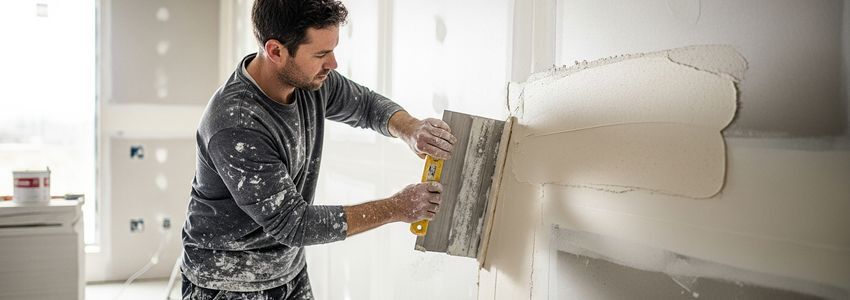
A low personal credit score does not automatically disqualify you from business financing. Drywall contractors with credit challenges have several paths to capital, especially if their business has strong revenue and consistent cash flow.
Bad credit business loans are available through alternative lenders who evaluate your business holistically - looking at bank deposits, project pipeline, accounts receivable, and business history rather than relying solely on credit scores. Common options include:
- Revenue-based financing: Loans or advances based on monthly revenue, not credit score. Repayment is tied to a percentage of revenue, making it flexible during slow periods.
- Equipment financing: Because the equipment serves as collateral, lenders are more willing to work with lower credit scores. Some equipment lenders approve borrowers with scores as low as 550.
- Invoice financing: Your clients' creditworthiness matters more than your own. If you work with creditworthy general contractors, you may qualify even with bruised credit.
- Secured business loans: Pledging business assets (vehicles, equipment, real estate) as collateral can offset a lower credit score in a lender's risk assessment.
- Business credit cards: For smaller needs, a business credit card with a modest limit can help bridge gaps while you work on rebuilding your credit profile.
Taking on a small business loan and repaying it consistently is one of the fastest ways to improve your business credit profile. Even if your first loan comes with a higher rate, building a track record of on-time repayment opens the door to better terms on your next financing - including SBA loans and bank lines of credit at significantly lower rates.
How to Apply for a Drywall Business Loan
Applying for a business loan as a drywall contractor does not have to be complicated. Here is a step-by-step walkthrough of the process with Crestmont Capital - from initial application to funding.
Step 1: Determine Your Capital Need
Before applying, clarify exactly what you need the funds for and how much you require. Borrowing more than you need increases your cost; borrowing too little may not solve the problem. Calculate the specific project costs, equipment quotes, payroll gap, or material budget you are financing.
Step 2: Choose the Right Loan Type
Based on your need - equipment purchase, working capital, project funding, or bridge financing - select the appropriate product. If you are unsure, a Crestmont Capital funding specialist can help you identify the best fit during a no-obligation consultation.
Step 3: Gather Your Documentation
Pull together your recent bank statements, tax returns, business financials, contractor license, and any other documentation the lender requests. Having these ready speeds up the process significantly.
Step 4: Submit Your Application
Crestmont Capital's online application takes about five minutes to complete. You'll provide basic information about your business, annual revenue, time in business, and the loan amount you need. No lengthy paperwork required upfront.
Step 5: Review Your Offer
Once your application is reviewed, you'll receive a loan offer detailing the amount, rate, term, and repayment structure. Review the total cost of capital - not just the monthly payment - to ensure it aligns with your business's cash flow.
Step 6: Accept and Receive Funds
Upon accepting an offer, funds are typically deposited into your business bank account within one to three business days for alternative lender products. SBA loans may take longer due to the additional underwriting involved.
For contractors who need capital urgently, fast business loans from Crestmont Capital can be funded within 24 hours of approval in many cases. And if you ever run into an unexpected equipment failure, job site accident, or urgent payroll need, emergency business loans provide a rapid-response solution.
Common Uses for Drywall Business Financing
Drywall contractors use business financing for a wide range of purposes. Here are some of the most common scenarios where a business loan can make a meaningful difference:
Material Purchases for Large Projects
Drywall sheet costs have fluctuated significantly in recent years. According to data tracked by Reuters, construction material inflation has put significant pressure on contractor margins. A large commercial project may require $50,000 to $150,000 or more in drywall, joint compound, screws, and framing material - all of which must be purchased before the job can begin.
Hiring and Payroll
Drywall is a skilled trade, and qualified hangers, tapers, and finishers are in high demand. When a new contract arrives and you need to expand your crew quickly, a working capital loan ensures you can onboard new hires and make payroll without disrupting existing operations. According to the U.S. Census Bureau, construction trade businesses with 10-19 employees represent some of the fastest-growing segments in the sector.
Purchasing or Upgrading Equipment
A well-equipped crew can hang and tape dramatically more drywall per day than an under-equipped one. Investing in automatic taping tools, texture sprayers, drywall lifts, and specialized finishing equipment directly increases revenue capacity. Many contractors find that the productivity gains from new equipment more than offset the financing cost within 6 to 12 months.
Fleet Expansion and Vehicle Purchases
Commercial vehicles are essential to a drywall operation. Panel vans, flatbeds, and equipment trailers are required to transport material and tools to job sites. As your business grows, expanding your fleet allows you to run multiple crews simultaneously - multiplying your revenue potential. Vehicle financing is one of the most common uses for drywall business loans, and the vehicle itself typically serves as collateral.
Bidding on Larger Contracts
Many general contractors require subcontractors to demonstrate financial stability - through bank letters, surety bonds, or verified lines of credit - before awarding large contracts. Having an active business line of credit or a healthy bank balance makes it easier to qualify for higher-value work that can significantly accelerate business growth.
Business Acquisition
If a competitor or retiring contractor in your market is looking to sell their drywall business, a business acquisition loan can fund the purchase. This can be a faster path to growth than organic expansion, immediately adding revenue, contracts, equipment, and trained employees to your operation.
Office and Workspace Improvements
As a drywall company grows beyond a one or two-crew operation, having a professional office space, warehouse for material storage, and a yard for equipment becomes important. Leasehold improvements, warehouse buildouts, and commercial real estate purchases are all eligible uses for business financing.
You can explore the full range of small business loans available through Crestmont Capital and learn which options fit your business profile.
Also see our guide on contractor business loans for a broader look at financing options across the trades.
Crestmont Capital has been helping contractors access business financing since 2015. Our team understands the drywall industry - the cash flow cycles, the project timelines, and the capital needs that come with growth. Apply in minutes and get a decision fast.
Apply for a Drywall Business LoanNext Steps: How to Move Forward With Financing
Your Financing Action Plan
Also worth reading: our guide on how to get a business loan covers the application process in detail, including tips for strengthening your application and what to expect from lenders at each stage.
For a broader look at industry financing trends, Forbes Finance Council's construction lending coverage provides useful context on how lenders evaluate contractor credit risk in the current environment.
Frequently Asked Questions About Drywall Contractor Business Loans
What is a drywall contractor business loan?
A drywall contractor business loan is a type of commercial financing specifically used by drywall installation, taping, and finishing businesses to fund working capital, equipment purchases, payroll, material costs, or business expansion. These loans can come from traditional banks, credit unions, the SBA, or alternative online lenders.
How much can a drywall contractor borrow?
Loan amounts vary widely depending on the lender and loan type. Alternative lenders typically offer $10,000 to $500,000. SBA loans can go up to $5 million. Equipment loans are usually sized to the value of the equipment being financed. Your revenue, credit profile, and business history all influence how much you can borrow.
What credit score do I need to get a drywall business loan?
Traditional bank and SBA lenders typically require a personal credit score of 650 to 680 or higher. Alternative lenders may work with scores as low as 550 to 600, particularly for secured loan types like equipment financing. Your business credit score also matters for larger loan amounts.
How fast can I get a business loan as a drywall contractor?
Speed depends on the lender type. Alternative lenders like Crestmont Capital can often fund within 24 to 72 hours of approval. SBA loans typically take four to eight weeks or longer due to more detailed underwriting. Equipment financing falls in the middle, often taking two to five business days.
Can a startup drywall business get a loan?
Yes, though options are more limited for businesses with less than one year of operating history. New drywall contractors may qualify for equipment financing (using the equipment as collateral), SBA microloans (up to $50,000), business credit cards, or revenue-based financing once they have a few months of bank statement history.
Do I need collateral for a drywall contractor business loan?
Not always. Many alternative lenders offer unsecured working capital loans and lines of credit with no collateral requirement for amounts up to $150,000 or $200,000. Equipment loans use the equipment as collateral. SBA loans over $25,000 typically require collateral if available. A personal guarantee is commonly required for business loans to small companies.
What interest rates should I expect on a drywall business loan?
Rates range widely by product. SBA 7(a) loans typically carry rates of prime plus 2.25% to 4.75% (roughly 8% to 12% in recent market conditions). Equipment financing rates run from approximately 5% to 20%. Alternative lender term loans and lines of credit may range from 15% to 45% or higher for higher-risk profiles. Always compare annualized rates (APR or factor rate equivalent) rather than just monthly payments.
Can I use a business loan to pay my drywall crews?
Yes. Working capital loans and lines of credit can be used for any legitimate business purpose, including payroll. If a project payment is delayed and you need to make payroll on time, a short-term working capital loan or draw from a business line of credit is a common and appropriate solution.
What documents do I need to apply for a drywall business loan?
Most lenders require recent business bank statements (3 to 6 months), business and personal tax returns (1 to 3 years), a profit and loss statement, a business license and contractor's license, and a government-issued ID. Some lenders also request an accounts receivable aging report and a list of current or pending contracts.
Is equipment financing better than a business loan for drywall equipment?
For equipment purchases specifically, equipment financing is often the better choice. It is easier to qualify for (the equipment itself serves as collateral), typically carries lower rates than unsecured working capital loans, and preserves your general business credit capacity for other needs. A general business loan may offer more flexibility in how funds are used.
Can I get a business loan with only a few months in business?
Some alternative lenders will work with businesses that have been operating for just six months if monthly bank deposits are strong and consistent. Equipment financing is also accessible earlier in a business's life because the equipment serves as collateral. Most banks and SBA lenders require at least two years of operating history.
How does invoice financing work for drywall contractors?
Invoice financing allows you to borrow against your outstanding invoices. You submit your unpaid invoices to a lender, who advances you 70% to 90% of the invoice face value. When your client pays the invoice, the lender receives that payment, deducts their fee, and remits the remaining balance to you. It is a fast way to unlock cash tied up in receivables without waiting for payment terms to expire.
Does Crestmont Capital work with drywall contractors specifically?
Yes. Crestmont Capital has been working with construction trade businesses, including drywall contractors, since 2015. Our funding specialists understand the project-based cash flow cycles, seasonal fluctuations, and capital needs common to drywall businesses. We offer a range of loan products designed to fit contractor cash flow patterns.
What is the difference between a business loan and a merchant cash advance for a drywall contractor?
A business loan is a traditional debt product repaid on a fixed schedule with defined interest. A merchant cash advance provides a lump sum in exchange for a percentage of future revenue, with no fixed repayment date. MCAs are faster to access but significantly more expensive. For drywall contractors with strong revenue, a business term loan or line of credit is almost always the more cost-effective option.
How can I improve my chances of getting approved for a drywall business loan?
Key steps include: improving your personal and business credit score before applying, keeping your business bank account deposits healthy and consistent, avoiding overdrafts, maintaining organized financial records, reducing existing debt where possible, and having a clear plan for how you will use and repay the funds. Working with a lender that specializes in contractor financing also helps, as they understand industry-specific revenue patterns.
Disclaimer: The information provided in this article is for general educational purposes only and is not financial, legal, or tax advice. Funding terms, qualifications, and product availability may vary and are subject to change without notice. Crestmont Capital does not guarantee approval, rates, or specific outcomes. For personalized information about your business funding options, contact our team directly.