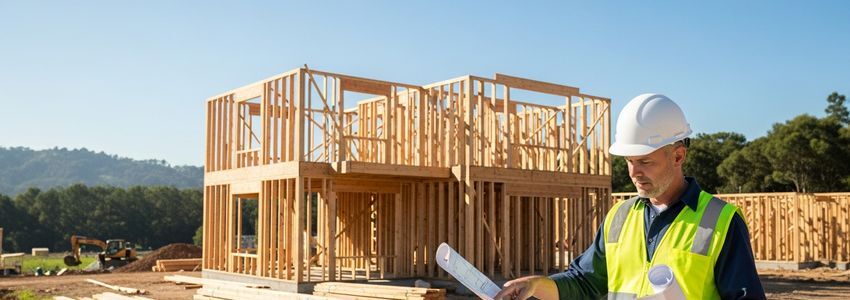
The home building industry is the backbone of community growth and economic development. From sprawling suburban subdivisions to intricate custom homes, builders transform raw land into the places people call home. However, this transformative work comes with significant financial challenges. Long project timelines, massive upfront costs for land and materials, and the cyclical nature of the real estate market create a unique and demanding cash flow environment. For residential construction companies, custom home builders, and spec home builders alike, securing reliable and flexible funding isn't just an advantage- it's a fundamental requirement for survival and growth. This is where specialized home builder business loans become a critical tool for success.
Traditional lenders often struggle to understand the specific financial rhythms of the construction industry. They may see the gap between expenses and revenue as a risk, rather than a standard part of the building process. This can lead to loan denials or financing products that don't align with a builder's needs. Fortunately, a new landscape of financing has emerged, offering solutions tailored specifically for the construction sector. These home builder business loans are designed to address the precise challenges builders face, whether it's purchasing a new fleet of excavators, covering payroll while waiting for a construction draw, or seizing a time-sensitive opportunity to acquire a prime parcel of land. This comprehensive guide will explore the complete world of financing for home builders, providing the insights you need to build a stronger, more resilient, and more profitable business.
In This Article
- What Are Home Builder Business Loans?
- Key Benefits of Home Builder Business Financing
- How Home Builder Financing Works
- Types of Loans Available to Home Builders
- Who Qualifies for Home Builder Business Loans?
- Home Builder Loans vs. Other Construction Financing
- How Crestmont Capital Helps Home Builders
- Real-World Scenarios: How Builders Use Financing
- How to Get Started
- Frequently Asked Questions
What Are Home Builder Business Loans?
Home builder business loans are a category of financial products specifically designed to meet the capital requirements of residential construction companies. Unlike a generic business loan that might be used by a retailer or a restaurant, these financing solutions are structured to accommodate the project-based, capital-intensive nature of home building. They are not typically the same as a traditional, one-off construction loan meant to fund a single house from foundation to finish. Instead, they provide ongoing liquidity and capital for the business itself, allowing builders to manage operations, invest in growth, and navigate the complex cash flow cycles inherent in their industry.
Residential home builders need specialized funding for several key reasons:
- High Upfront Costs: Before the first dollar of revenue is seen from a project, builders must spend heavily on land acquisition, permits, architectural plans, site preparation, and raw materials like lumber, concrete, and steel.
- Long Payment Cycles: The payment structure in construction often involves draws or progress payments. This means significant work must be completed before payment is received, creating large gaps where expenses for labor and materials must be covered out-of-pocket.
- Capital-Intensive Equipment: Building homes efficiently requires a range of expensive equipment, from excavators and bulldozers to cranes and concrete mixers. This machinery represents a substantial capital investment that needs dedicated financing.
- Market Opportunities: The real estate market moves quickly. A desirable plot of land might become available suddenly, and builders need fast access to capital to secure it before a competitor does.
- Operational Volatility: Unexpected events like weather delays, supply chain disruptions, or subcontractor issues can strain cash flow. Having a financial cushion is essential to absorb these shocks without derailing a project.
Whether you're a spec builder constructing homes in anticipation of market demand, a custom builder working directly with clients on their dream homes, or a large-scale production builder developing entire communities, these specialized loans provide the financial framework to support your business model. They offer the flexibility to cover day-to-day operational costs, make strategic long-term investments, and ultimately, build a more stable and profitable enterprise.
Key Benefits of Home Builder Business Financing
Securing the right financing can be a game-changer for a home building company. It moves a business from a reactive state- constantly chasing payments to cover costs- to a proactive one, where strategic decisions drive growth. Here are the key benefits:
- Improved Cash Flow Management: The most immediate benefit is the ability to smooth out the peaks and valleys of your cash flow. A loan or line of credit ensures you can pay suppliers, meet payroll, and cover other operational expenses on time, even while waiting for project draws or home sales to close.
- Ability to Take on More or Larger Projects: Capital constraints are often the primary factor limiting a builder's growth. With adequate financing, you can confidently bid on larger projects or manage multiple builds simultaneously, significantly increasing your revenue potential.
- Purchase and Upgrade Essential Equipment: Financing allows you to acquire modern, efficient construction equipment without depleting your cash reserves. Updated machinery can reduce labor costs, improve project timelines, and enhance job-site safety.
- Bridge Gaps Between Construction Draws: Stop financing your projects with high-interest credit cards or delaying payments to vendors. A working capital loan or line of credit provides the perfect bridge to cover costs between milestone payments.
- Seize Time-Sensitive Opportunities: When a supplier offers a bulk discount on lumber or a prime parcel of land goes up for sale, having ready access to capital means you can act immediately. This agility can lead to substantial cost savings and competitive advantages.
- Cover Unexpected Costs and Delays: Projects rarely go exactly as planned. Financing provides a crucial safety net to handle unforeseen expenses- like material price hikes or the need for additional site work- without jeopardizing the project's budget or timeline.
- Enhanced Business Credibility and Growth: A well-managed financing relationship builds a strong credit history for your business. This not only makes future borrowing easier but also signals to suppliers, subcontractors, and clients that your company is financially stable and reliable.
How Home Builder Financing Works
Navigating the financing process can seem daunting, but modern lenders like Crestmont Capital have streamlined the steps to be as efficient as possible. Understanding the journey from application to funding helps demystify the process and prepares you for success. Here is a typical step-by-step explanation of how it works.
Assess Your Financial Needs
Clearly define why you need funding. Is it for new equipment, covering payroll for a new project, purchasing materials in bulk, or acquiring land? Quantify the amount needed and outline how it will be used to generate revenue. This clarity is crucial for selecting the right loan product.
Gather Required Documentation
While requirements vary, typical documents include recent business bank statements, profit and loss statements, a list of current projects, and details on any existing business debt. For equipment financing, you'll need a quote or invoice for the machinery you intend to purchase.
Submit Your Application
Lenders like Crestmont Capital offer a simple online application that can be completed in minutes. This initial step provides the lender with a snapshot of your business's financial health and funding needs without requiring a hard credit pull.
Underwriting and Review
The lender's underwriting team will review your application and supporting documents. They assess your business's revenue, cash flow, credit history, and overall financial stability to determine your eligibility and the best possible terms for your loan.
Approval and Funding
Once approved, you will receive a clear offer detailing the loan amount, interest rate, term, and payment schedule. After you accept the offer and sign the final documents, the funds are disbursed directly to your business bank account, often in as little as 24-48 hours.
Ready to Build Your Business?
Access the capital you need to take on new projects, buy equipment, and manage cash flow. Our simple application takes just minutes.
Apply NowTypes of Loans Available to Home Builders
There is no one-size-fits-all loan for home builders. The best financing option depends on your specific need, financial situation, and business goals. Understanding the different types of loans available is the first step toward making an informed decision. Here are some of the most common and effective financing solutions for residential construction companies.
1. Working Capital Loans
Working capital loans are short-term financing solutions designed to cover everyday operational expenses. For a home builder, this is the lifeblood of project management. This type of loan provides a lump sum of cash that can be used for a wide range of needs, such as meeting payroll during a slow payment period, purchasing lumber and other materials for a new project, paying subcontractors, or covering unexpected repairs to existing equipment. The key benefit is flexibility; the funds are unrestricted and can be deployed wherever the business needs them most to maintain smooth operations. Repayment is typically made through fixed daily, weekly, or monthly payments over a short term, usually 3 to 18 months.
2. Equipment Financing
Home building is an equipment-heavy industry. From excavators and backhoes to dump trucks and scaffolding, the right machinery is essential for efficiency and profitability. Equipment financing is a specialized loan where the equipment itself serves as collateral. This makes it easier to qualify for than some other types of loans. You can finance up to 100% of the cost of new or used equipment, preserving your working capital for other needs. Terms are typically aligned with the expected lifespan of the equipment, and at the end of the term, you own the machinery outright. This is an ideal solution for builders looking to expand their capabilities or replace aging, unreliable equipment.
3. Business Line of Credit
A business line of credit is one of the most flexible financing tools available. Instead of a lump-sum loan, you are approved for a maximum credit limit. You can draw funds from this limit as needed, up to the maximum amount, and you only pay interest on the money you've actually used. Once you repay the drawn amount, your credit limit is replenished. This makes it a perfect tool for managing fluctuating cash flow, covering unexpected project costs, or having a safety net for emergencies. For a home builder, a line of credit can be used to buy materials as needed, cover short-term payroll gaps, and manage the unpredictable costs that can arise on a job site.
4. SBA Loans
SBA loans are partially guaranteed by the U.S. Small Business Administration, which reduces the risk for lenders. This often results in longer repayment terms, lower interest rates, and higher borrowing amounts compared to other loan types. The two most common SBA loans for builders are the 7(a) Loan Program and the 504 Loan Program. A 7(a) loan is highly versatile and can be used for working capital, equipment purchases, and even real estate acquisition. A 504 loan is specifically for purchasing major fixed assets, such as commercial real estate (like a new office or workshop) or heavy machinery. While the application process for SBA loans can be more intensive and time-consuming, the favorable terms make them an excellent option for well-established, profitable building companies.
5. Term Loans
A traditional term loan provides a lump sum of capital that is paid back with interest over a predetermined period (the "term"). These loans are well-suited for significant, planned investments that will contribute to long-term growth. For a home builder, a term loan could be used to purchase a large plot of land for a new subdivision, build a new company headquarters, or make a substantial investment in technology and software to streamline operations. Because they are used for major investments, term loans typically have longer repayment periods (2-10 years) and competitive interest rates.
| Loan Type | Best For | Typical Loan Amount | Typical Repayment Term |
|---|---|---|---|
| Working Capital Loan | Covering payroll, buying materials, managing short-term cash flow gaps. | $10,000 - $500,000 | 3 - 18 months |
| Equipment Financing | Purchasing new or used construction machinery and vehicles. | Up to 100% of equipment cost | 2 - 7 years |
| Business Line of Credit | Ongoing cash flow management, unexpected expenses, and project cost overruns. | $10,000 - $250,000 (revolving) | Revolving (typically renewed annually) |
| SBA Loan | Major investments like real estate, debt refinancing, or significant working capital needs. | Up to $5 million | 7 - 25 years |
| Term Loan | Large, planned expenditures like land acquisition or major business expansion. | $25,000 - $2 million+ | 2 - 10 years |
Home Building Industry: Key Statistics
The U.S. home building industry is a dynamic and vital part of the national economy. Understanding the market's scale and trends can help builders position themselves for success. Here are some key statistics that paint a picture of the current landscape.
1.45 Million
Housing Starts
The seasonally adjusted annual rate for privately-owned housing starts, indicating strong and consistent demand for new residential construction.
(Source: U.S. Census Bureau)
$1.1 Trillion
Market Size
The estimated market size of the single-family home building industry in the United States, showcasing its massive economic impact.
(Source: IBISWorld)
943,000
Industry Employment
The number of people directly employed in the residential building construction industry, not including the vast network of subcontractors and suppliers.
(Source: U.S. Bureau of Labor Statistics)
6.7 Months
Supply of New Homes
The current estimated supply of new single-family homes on the market. A balanced market is typically around 6 months, indicating healthy conditions.
(Source: Reuters)

Who Qualifies for Home Builder Business Loans?
Lenders evaluate several factors to assess the risk and determine the eligibility of a home building business for financing. While specific requirements vary between loan products and lenders, focusing on these key areas will significantly improve your chances of approval. At Crestmont Capital, we look at the overall health of your business, not just a single metric.
- Time in Business: Most lenders prefer to see a track record of success. A minimum of one to two years in operation is often required, as this demonstrates stability and experience in managing projects and finances. Newer businesses may still qualify but might need to provide a strong business plan and personal financial guarantees.
- Annual Revenue: Your company's gross annual revenue is a primary indicator of its ability to handle debt. Lenders will look for consistent and sufficient revenue to support loan repayments. A common minimum threshold is around $250,000 in annual revenue, though this can vary.
- Credit Score: Both your personal and business credit scores will be reviewed. A strong personal credit score (typically 650+) shows a history of responsible financial management. The business credit score reflects its history of paying suppliers and other creditors on time. While a perfect score isn't necessary, a higher score generally leads to better terms and higher approval odds.
- Cash Flow and Bank Statements: Lenders will analyze your last 3-6 months of business bank statements to understand your cash flow. They want to see consistent deposits, a healthy average daily balance, and no excessive non-sufficient funds (NSF) events. This demonstrates that your business has the liquidity to manage its day-to-day obligations.
- Existing Debt: Your current debt obligations will be considered. Lenders calculate a debt service coverage ratio (DSCR) to ensure your business generates enough income to cover its existing debts plus the new proposed loan payment.
- Project Pipeline and Contracts: For home builders, a strong pipeline of future work is a significant asset. Providing information on signed contracts, ongoing projects, and prospective builds can strengthen your application by demonstrating future revenue streams.
Pro Tip for Qualification
Don't self-disqualify! Even if you don't meet every single "ideal" criterion, many modern lenders take a holistic view of your business. Strong revenue can often offset a shorter time in business, and a detailed plan for how the funds will generate profit can make a significant difference. The best first step is always to speak with a financing specialist to understand your specific options.
Find Out What You Qualify For
Our quick and easy process gives you a clear picture of your financing options with no obligation and no impact on your credit score.
Get Pre-Qualified TodayHome Builder Loans vs. Other Construction Financing
The term "construction financing" can be broad. It's important for home builders to understand the distinction between general business loans tailored for their trade and other common funding types like traditional bank construction loans or hard money loans. Each serves a different purpose and comes with its own set of pros and cons.
| Feature | Home Builder Business Loans (Crestmont Capital) | Traditional Bank Construction Loans | Hard Money Loans |
|---|---|---|---|
| Primary Use | Ongoing business operations: working capital, equipment, payroll, multiple projects. | Funding a single, specific construction project from start to finish. | Short-term, asset-based lending for quick property acquisition or "fix-and-flip" scenarios. |
| Funding Speed | Fast. Typically 1-3 business days. | Slow. Can take 30-90 days or more due to extensive underwriting and appraisals. | Very Fast. Often within a few days to a week. |
| Qualification Requirements | Based on business revenue, cash flow, and credit. Streamlined documentation. | Extremely strict. Requires extensive financial history, detailed project plans, high credit scores, and significant collateral. | Based almost entirely on the value of the property (collateral), not borrower's credit or business financials. |
| Flexibility of Funds | Highly flexible. Can be used for nearly any business purpose. | Highly restrictive. Funds are disbursed in draws after inspections and are tied directly to the project budget. | Moderately flexible, but intended for real estate-related costs. |
| Interest Rates & Fees | Competitive market rates. Transparent fees. | Generally the lowest interest rates, but often come with high closing costs and fees. | Very high interest rates (often 10-18%+) and significant upfront points (fees). |
| Ideal Borrower | Established home builders needing capital for growth, operations, or equipment. | Large, highly-established developers with perfect credit and a long-term, single-project focus. | Builders or investors who can't qualify for traditional financing and need funds immediately for a high-margin project. |
How Crestmont Capital Helps Home Builders
At Crestmont Capital, we understand that home builders operate in a unique financial ecosystem. You're not just running a business- you're managing complex, long-term projects with massive capital outlays. That's why we've moved beyond the rigid, one-size-fits-all approach of traditional banking to provide financing solutions that are as dynamic and hardworking as you are.
Our primary advantage is our deep understanding of the construction industry. We know that healthy revenue on paper doesn't always mean cash in the bank. We recognize the critical need for liquidity to bridge the gap between paying for materials and labor and receiving your next construction draw. Our application and underwriting processes are designed for speed and efficiency, allowing you to get a decision and receive funding in days, not months. This agility means you can bid on that new project, purchase that discounted lumber, or hire that crucial new crew without hesitation.
We offer a diverse portfolio of funding products tailored to the specific needs of builders. If you're looking to manage daily expenses and seize opportunities, our Small Business Loans provide the working capital you need. When it's time to upgrade your heavy machinery, our specialized Equipment Financing programs can get you the tools to build better and faster. For ultimate financial flexibility, a Business Line of Credit acts as a revolving safety net, ready whenever you need it. We even have dedicated programs for Construction Equipment Financing that understand the value and lifecycle of your most critical assets.
We believe in building relationships, not just processing transactions. Our dedicated funding specialists work with you to understand your goals and challenges, helping you select the right financial tool for the job. We've helped countless contractors and builders secure the funding they need to thrive, and we've compiled our expertise in resources like our guide to Construction Business Loans. With Crestmont Capital, you get a financial partner who is invested in your success, providing the capital and support you need to keep building.
Real-World Scenarios: How Home Builders Use Financing
Understanding the theory behind loans is one thing, but seeing how they are applied in real-world situations truly illustrates their value. Here are four detailed scenarios showing how different types of home builders leverage financing to overcome challenges and achieve growth.
Scenario 1: The Spec Builder Bridging a Sales Gap
Oakwood Homes is a spec builder that focuses on constructing three to five high-end homes per year, anticipating market demand. They recently completed a $1.2 million home, but the local real estate market has experienced a temporary slowdown, and the property has been on the market for 60 days longer than projected. During this time, Oakwood's cash reserves have been depleted by final landscaping costs, utility payments, and staging fees. A prime opportunity arises to purchase a lot in a desirable new subdivision at a below-market price, but they lack the immediate liquidity. Instead of passing on the deal or taking out a high-interest personal loan, Oakwood secures a $150,000 working capital loan. This infusion allows them to purchase the new lot and cover the holding costs of the unsold property for another few months. Three weeks later, their completed spec home sells, and they easily repay the short-term loan, having secured their next project without compromising their financial stability.
Scenario 2: The Custom Home Builder Upgrading for Efficiency
Riverbend Custom Builders has a reputation for quality craftsmanship but has been struggling to keep up with project timelines. Their 15-year-old backhoe is unreliable, frequently breaking down and causing costly delays. They are currently bidding on their largest project to date- a complex custom estate that requires significant excavation work. They know their old equipment isn't up to the task and could jeopardize the project. The owner, Sarah, decides to seek equipment financing for a new, state-of-the-art compact excavator with multiple attachments, costing $95,000. She is approved for 100% financing with a five-year term. The monthly payment is predictable and fits easily into her budget. With the new, reliable equipment, Riverbend wins the large contract. The excavator's efficiency reduces their excavation time by 30% and eliminates downtime from repairs, improving their profitability on the project and positioning them to take on more complex, high-margin jobs in the future. The financing allowed them to acquire a revenue-generating asset without any upfront cash outlay.
Scenario 3: A Growing Firm Managing Multiple Projects with a Line of Credit
Pinnacle Development, a mid-sized production builder, is experiencing rapid growth. They are simultaneously managing three different phases of a 50-home subdivision. This creates a complex cash flow puzzle. They need to order lumber for five homes in Phase 3, pay the framing crew for ten homes in Phase 2, and cover landscaping costs for five completed homes in Phase 1- all while waiting for milestone payments and sales to close. Volatile lumber prices add another layer of uncertainty. To manage this, Pinnacle secures a $250,000 business line of credit. When a supplier offers a 10% discount for an upfront bulk lumber purchase, they draw $80,000 from the line to capitalize on the savings. Two weeks later, they draw another $50,000 to cover payroll. When a large draw payment from the developer comes in, they pay down the balance on their line of credit, restoring their full credit limit. This financial flexibility allows them to operate smoothly, optimize purchasing, and avoid project delays, all while only paying interest on the funds they are actively using.
Scenario 4: A Builder Seizing a Land Acquisition Opportunity with a Term Loan
Stone Creek Builders, a company specializing in small, semi-custom communities, identifies a 10-acre parcel of undeveloped land that has just come on the market. The location is perfect for their next 20-home project. The seller, an individual looking for a quick sale, is offering the land for $750,000, a price well below market value, but requires a close in 30 days. Going through a traditional bank for a land loan would take too long and risk losing the deal. The owner of Stone Creek approaches Crestmont Capital for a term loan. Based on the company's strong financials and clear business plan for the property, they are approved for an $800,000 term loan with a 7-year repayment schedule. The additional $50,000 is earmarked for initial permitting and engineering fees. They close on the land in 21 days, securing the property. The fixed monthly payments of the term loan are easy to budget for, and the acquisition of the land at a discount significantly increases the overall profitability of their upcoming project, providing a substantial return on the investment.
How to Get Started with Home Builder Financing
Taking the next step toward securing the capital your home building business needs is straightforward. We've designed our process to be transparent, fast, and focused on your needs. Here’s how you can get started.
Consult with a Financing Specialist
The first step is a no-obligation conversation. Contact our team and speak with a specialist who understands the home building industry. We'll listen to your goals, learn about your specific capital needs, and answer any questions you have. This initial consultation helps us identify the best potential financing solutions for your business before you even fill out an application.
Complete Our Simple Application
Forget stacks of paperwork and weeks of waiting. Our online application is streamlined and can be completed in just a few minutes. You'll provide basic information about your business and its financial performance. In most cases, all we need to get started are your last few months of business bank statements. The entire process is secure and confidential.
Review Your Offer and Receive Funding
Our underwriting team works quickly. Once your application is reviewed, you'll receive a clear, transparent funding offer outlining the amount, term, and rate. There are no hidden fees or surprises. Your dedicated specialist will walk you through the offer to ensure it aligns with your goals. Upon your acceptance, the final steps are completed, and the funds are deposited directly into your business account, often within 24 hours.
Your Next Project Starts Here
Don't let a lack of capital slow your growth. Get the funds you need to build bigger, better, and faster.
Apply in MinutesFrequently Asked Questions
What is the minimum credit score required for a home builder business loan?
While a higher credit score (typically 650+) will open up more options with better rates, there isn't a single minimum score. Many lenders, including Crestmont Capital, look at the overall health of your business. Strong monthly revenue and consistent cash flow can often compensate for a lower credit score. We encourage you to apply even if your credit is not perfect.
How quickly can I get funded?
The funding speed is a major advantage of working with a modern lender. After submitting a simple online application and the required documents (like bank statements), you can often receive an approval decision within hours. Once you accept an offer, funds can be deposited into your account in as little as 24-48 hours.
Can I get a loan if my home building business is new?
It can be more challenging for brand-new businesses, as most lenders prefer to see at least 1-2 years of operational history. However, some financing options may be available for startups, especially if the owner has extensive industry experience, a strong personal credit history, and a detailed business plan with projected revenues.
What kind of documents do I need to apply?
The documentation requirements are typically much simpler than a traditional bank loan. For most applications, you will need the last 3-6 months of your business bank statements, your driver's license, and a voided business check. For larger loan amounts or specific products like SBA loans, you may also need to provide financial statements (profit & loss, balance sheet) and tax returns.
Will applying for a loan affect my credit score?
Most initial applications and pre-qualification processes with modern lenders use a "soft" credit pull, which does not impact your credit score. A "hard" credit pull, which may affect your score slightly, is typically only performed once you have reviewed and decided to move forward with a specific loan offer.
Can I use the loan to buy land?
Yes, certain loan products are well-suited for land acquisition. A term loan, for example, is an excellent option for purchasing a significant asset like a plot of land for a new development. Discussing your specific intention to buy land with your financing specialist will help them match you with the right product.
What's the difference between a working capital loan and a business line of credit?
A working capital loan provides you with a single lump sum of cash that you repay over a fixed term with regular payments. A business line of credit gives you a credit limit that you can draw from as needed. You only pay interest on the amount you've drawn, and as you repay it, your available credit is replenished. The loan is best for a specific, one-time need, while the line of credit is better for ongoing cash flow management.
Is collateral required for a home builder business loan?
It depends on the loan type and amount. Many working capital loans are unsecured, meaning they don't require specific collateral. However, the loan is typically secured by a general lien on business assets. Equipment financing is self-collateralized, as the equipment itself secures the loan. Larger loans or loans for businesses with weaker credit profiles may require specific collateral.
How much can my home building company borrow?
Loan amounts can range from as little as $10,000 to over $5 million. The amount your business qualifies for depends on factors like your annual revenue, average bank balances, creditworthiness, and the specific loan product you are seeking.
Can I use a business loan to pay off existing debt?
Yes, this is a common use of funds called debt consolidation or refinancing. If you have multiple high-interest debts (like credit card balances or expensive short-term loans), consolidating them into a single term loan with a lower interest rate can simplify your payments and reduce your overall interest cost.
Are the interest rates fixed or variable?
This depends on the loan product. Most working capital loans and term loans offered by alternative lenders come with a fixed factor rate or interest rate, meaning your payments will be consistent and predictable throughout the life of the loan. Some lines of credit may have variable rates tied to a benchmark rate like the Prime Rate.
What if I have a slow season? Are the payments flexible?
Standard term loans and working capital loans have fixed repayment schedules. However, some lenders offer revenue-based financing options where payments are a percentage of your monthly sales, providing more flexibility during slower periods. It's important to discuss the seasonal nature of your business with your financing specialist to find a product with a payment structure that works for you.
Can I get a loan to purchase a fleet of vehicles for my construction business?
Absolutely. Equipment financing is not just for heavy machinery; it can also be used to purchase trucks, vans, and other vehicles essential to your home building operations. You can often bundle multiple vehicles into a single financing agreement.
What is the difference between a loan and equipment leasing?
With an equipment loan (financing), you are borrowing money to purchase the asset, and you own it at the end of the repayment term. With an equipment lease, you are essentially renting the equipment for a set period. Leasing often has lower monthly payments and can be beneficial for equipment that quickly becomes outdated. At the end of a lease, you typically have the option to return the equipment, renew the lease, or purchase it.
Can I pay my loan off early, and are there prepayment penalties?
Many modern financing products are structured without prepayment penalties, allowing you to pay off the loan early and save on interest costs. However, some loans may have prepayment fees or be structured in a way that the full cost is due regardless of when you pay it off. It is crucial to clarify the prepayment policy for any loan offer you are considering.
Disclaimer: The information provided in this article is for general educational purposes only and is not financial, legal, or tax advice. Funding terms, qualifications, and product availability may vary and are subject to change without notice. Crestmont Capital does not guarantee approval, rates, or specific outcomes. For personalized information about your business funding options, contact our team directly.