
The crane service industry sits at the center of American construction, energy, and infrastructure work. Every tower rising over a city skyline, every bridge deck set into place, and every wind turbine assembled on a ridgeline depends on crane services. For contractors, rental company owners, and fleet operators, understanding the latest crane service statistics is not just trivia. It is the foundation for smarter bidding, better fleet decisions, and well-timed financing moves. This guide compiles the most important crane service statistics for 2026, from market size and rental rates to workforce data, safety numbers, and the technology trends reshaping the industry.
Whether you run a crane rental company, operate a lifting services division inside a larger construction firm, or are weighing your first crane purchase, the data below will help you benchmark your business against the broader market and spot where the opportunities are heading next.
In This Article
- What Is the Crane Service Industry?
- Crane Service Market Size and Growth Statistics
- Key Statistics by Crane Segment
- Crane Rental and Pricing Statistics
- Workforce and Operator Statistics
- Crane Safety Statistics
- Technology and Industry Trends
- What These Statistics Mean for Business Owners
- How Crestmont Capital Helps Crane Businesses
- Real-World Scenarios
- Frequently Asked Questions
- How to Get Started
What Is the Crane Service Industry?
The crane service industry covers every business activity built around lifting heavy loads with cranes: equipment rental with and without operators, contract lifting services, crane sales and leasing, inspection and maintenance, rigging, and specialized heavy-lift engineering. It serves construction, manufacturing, energy, shipping, utilities, and infrastructure sectors.
Most of the industry falls into three business models. First, bare rental, where a company rents a crane and supplies its own operator. Second, operated and maintained rental, where the crane arrives with a certified operator and the rental company handles maintenance. Third, full contract lifting, where the crane company plans and executes the entire lift, including rigging, permits, and engineering. The contract lifting model has grown steadily because general contractors increasingly prefer to outsource lift planning risk to specialists.
The industry is highly fragmented at the local level and concentrated at the top. A handful of national players operate fleets worth hundreds of millions of dollars, while thousands of regional and family-owned companies run one to twenty cranes. That fragmentation matters for financing: the typical crane service business is exactly the kind of company that benefits from flexible equipment financing and working capital programs rather than traditional bank credit alone.
Crane Service Market Size and Growth Statistics
Market size figures vary slightly by source and by how narrowly the category is defined, but the major research houses agree on the overall shape of the market. Here are the headline crane service statistics for 2026.
United States crane rental market: Industry analysts estimate the U.S. crane rental market at approximately 5 to 6 billion dollars in annual revenue, with steady mid-single-digit growth projected through the end of the decade. The broader equipment rental industry, of which cranes are a major component, has set revenue records in consecutive years, and cranes consistently rank among the highest-revenue equipment categories per unit.
Global crane market: The worldwide crane market, including sales of new equipment, is estimated at roughly 35 to 40 billion dollars annually. Asia-Pacific accounts for the largest regional share, while North America remains the most profitable market per machine due to higher rental rates and strong utilization.
Construction spending context: According to the U.S. Census Bureau's construction spending reports, total U.S. construction spending has been running at an annualized pace above 2 trillion dollars. Manufacturing construction and infrastructure work, two of the most crane-intensive categories, have been among the strongest segments. Every billion dollars of construction spending translates into lift demand, and the current pipeline of semiconductor fabs, data centers, battery plants, and bridge projects is unusually crane-heavy.
Growth rate: Most forecasts place crane service market growth in the 4 to 6 percent compound annual range through 2030. The crane rental segment is growing faster than new equipment sales, continuing a multi-decade shift toward rental over ownership.
Key Stat: Rental now accounts for more than half of all construction equipment usage in the United States, and cranes are among the most-rented asset classes because of their high purchase price and project-based demand. For many contractors, renting a crane for a specific job costs a fraction of owning one that sits idle between projects.
Key Statistics by Crane Segment
The crane market is not one market. It is a collection of distinct equipment segments, each with its own demand drivers, rate structures, and growth outlook. Here is how the major segments compare in 2026.
Mobile Cranes
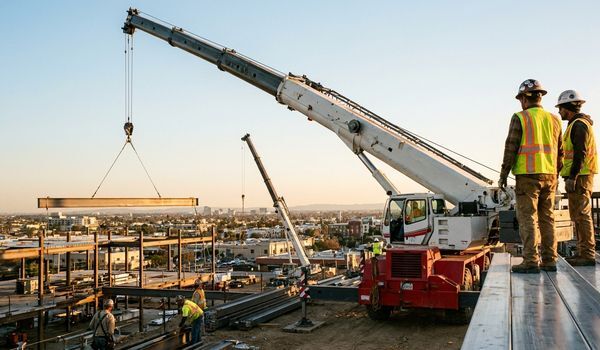
Mobile cranes, including all-terrain, rough-terrain, and truck-mounted units, are the largest and most liquid segment of the rental fleet. The mobile crane market represents the biggest share of crane service revenue because these machines move easily between jobsites and serve everything from residential construction to industrial maintenance. All-terrain cranes in the 200 to 500 ton class are in particularly strong demand for energy and infrastructure work.
Tower Cranes
Tower cranes are the most visible sign of urban construction health. Industry crane counts in major North American cities have remained near record levels, driven by multifamily housing, hotel, and data center construction. Tower crane demand is a leading indicator: developers erect towers months before a project peaks, so high tower crane counts today signal sustained construction activity for the next 12 to 24 months. Typical tower crane rental packages run 15,000 to 40,000 dollars per month including the operator, depending on capacity and market.
Crawler Cranes
Crawler cranes serve the heaviest lifts: power plants, refineries, wind farms, and bridge work. Lattice boom crawlers in the 300 to 750 ton class have seen strong utilization from the renewable energy buildout. Wind turbine installation and repowering has become one of the most reliable sources of crawler crane demand, and the pipeline of permitted wind projects extends well beyond 2030.
Overhead and Gantry Cranes
Overhead cranes live inside factories, warehouses, and shipyards rather than on construction sites. This segment tracks manufacturing investment closely, and the reshoring wave in American manufacturing has pushed overhead crane orders higher. Companies building or expanding production facilities typically finance overhead crane systems as part of a broader facility equipment package.
| Segment | Typical Purchase Price | Typical Rental Rate | Primary Demand Driver |
|---|---|---|---|
| All-terrain mobile crane | 1 to 5 million dollars | 1,000 to 2,500 dollars per day | Energy, infrastructure, industrial |
| Rough-terrain crane | 250,000 to 1 million dollars | 200 to 600 dollars per day | General construction, plant maintenance |
| Tower crane | 500,000 to 2 million dollars | 15,000 to 40,000 dollars per month | High-rise residential, hotels, data centers |
| Crawler crane | 1 to 7 million dollars | 20,000 to 75,000 dollars per month | Wind energy, power, bridges, refineries |
| Overhead bridge crane | 50,000 to 500,000 dollars installed | Usually purchased, not rented | Manufacturing expansion, warehousing |
Need a Crane for Your Next Project?
Crestmont Capital finances cranes and lifting equipment of every size. Fast approvals, flexible terms, no obligation.
Apply Now →Crane Rental and Pricing Statistics
Pricing is where crane service statistics get immediately practical. Whether you are bidding a job that needs a crane or building a rental fleet business plan, these are the numbers that matter most in 2026.
Rental rate trends: Crane rental rates have climbed steadily over the past five years, driven by strong demand, higher new-equipment prices, and elevated labor costs for certified operators. Industry rate surveys show average rental rate increases of 3 to 5 percent annually, with the tightest supply and fastest rate growth in large-capacity all-terrain and crawler classes. Utilization rates at well-run rental companies have been running at historically high levels, which gives rental companies pricing power they have not enjoyed in decades.
Crane service cost structure: For buyers of crane services, the all-in crane service cost includes more than the machine. A typical operated crane rental invoice includes the base machine rate, operator labor, mobilization and demobilization, rigging, permits, and insurance. Mobilization alone can run from a few thousand dollars for a small rough-terrain unit to well over 100,000 dollars for a large crawler crane that must be trucked in on dozens of loads and assembled on site.
Used equipment values: One of the most striking statistics of the past several years is the appreciation of used crane values. Cranes purchased before 2020 routinely sell today for more than their original purchase price, a nearly unheard-of pattern in heavy equipment. Strong used values give crane owners unusually good collateral positions when financing additional fleet.
New equipment pricing: New crane prices have risen substantially since 2020, with manufacturers passing through higher steel, component, and labor costs. Lead times for large all-terrain and crawler cranes have stretched to 12 months or more at various points, which pushes more buyers toward the used market and supports rental rates for existing fleet owners.
By the Numbers
Crane Service Industry - Key Statistics for 2026
$6B
Estimated annual U.S. crane rental market revenue
$2T+
Annualized U.S. construction spending driving lift demand
46K
Crane and tower operators employed in the United States
4-6%
Projected annual market growth rate through 2030
Workforce and Operator Statistics
Behind every crane statistic is a person in the cab. Workforce data tells one of the most important stories in the industry right now.
Employment: The United States employs approximately 46,000 crane and tower operators, according to federal occupational employment data, with tens of thousands more working as riggers, signal persons, lift directors, and crane mechanics. Employment in the occupation is projected to grow in line with construction activity through the next decade.
Wages: Crane operators are among the best-paid equipment operators in construction. Median annual pay for crane and tower operators runs in the mid-60,000 dollar range, with experienced operators of large hydraulic and lattice boom cranes in major metro markets regularly earning 90,000 to 120,000 dollars or more with overtime. Union operators on large infrastructure projects sit at the top of the pay scale.
The labor gap: Ask any crane rental company owner about their biggest constraint and the answer is rarely the machines. It is the people. The industry faces a persistent shortage of certified operators, particularly for large-capacity cranes. Certification requirements, an aging workforce, and competition from other trades all contribute. This shortage has direct financial consequences: rental companies turn away work not because the crane is booked, but because there is no operator available to run it.
Training investment: The statistics on training explain why the shortage persists. Developing a competent large-crane operator takes years. Certification through the national accredited programs requires written exams and practical testing for each crane type. Companies that invest in operator training and retention consistently report higher utilization and better safety records, making workforce development one of the highest-return investments a crane business can make.
Business Tip: The operator shortage means a crane sitting without an operator earns nothing. Many fleet owners use a business line of credit to cover payroll and training costs while they build their operator bench, keeping machines rentable instead of parked.
Crane Safety Statistics
Safety statistics are the sobering side of the crane service data set, and they explain why insurance, training, and compliance costs keep rising.
Federal workplace fatality data has historically recorded an average of roughly 42 to 44 crane-related deaths per year in the United States. The most common causes are workers being struck by loads or equipment, crane collapses, electrocution from contact with power lines, and falls. Power line contact alone accounts for a significant share of crane electrocutions, which is why OSHA's crane standard imposes strict clearance requirements.
The good news in the data is the long-term trend. Widespread adoption of operator certification, better lift planning software, load moment indicators, anti-two-block devices, and stricter inspection regimes have pushed incident rates down substantially over the past two decades. Companies with documented safety programs also pay meaningfully lower insurance premiums, so safety investment shows up directly on the bottom line.
For crane service businesses, the safety statistics translate into a clear financial message: insurers, general contractors, and owners all scrutinize safety records. A strong experience modification rate wins work. A poor one can disqualify a company from bidding, regardless of price.
Technology and Industry Trends
Several technology and market trends are reshaping the crane service statistics that will define the rest of the decade.
Telematics and fleet management: Modern cranes ship with sophisticated telematics that report location, utilization, fuel burn, load cycles, and fault codes in real time. Rental companies using telematics data report measurably higher fleet utilization because they can see exactly which machines earn money and which sit idle. Utilization data also strengthens financing applications, since lenders can verify revenue-generating activity directly.
Electrification and alternative power: Electric and hybrid cranes have moved from concept to commercial reality, particularly in the compact and city crane classes where noise and emissions rules are tightest. Several manufacturers now offer plug-in tower cranes and battery-powered mobile units. While diesel still dominates large-capacity machines, the electric segment is growing from a small base at double-digit rates.
Lift planning software: Three-dimensional lift planning tools have become standard for complex picks. These programs model the crane, load, site geometry, and ground conditions before the machine ever arrives, reducing both safety risk and costly standby time. Adoption is now a competitive necessity for companies bidding sophisticated work.
Data center construction: Few trends matter more to near-term crane demand than the data center construction boom. Hyperscale data center campuses require enormous crane packages for steel, mechanical equipment, and generator installation. Market coverage from outlets like Reuters Business has documented the scale of data center and energy infrastructure investment flowing into construction, and crane-intensive industrial work is a direct beneficiary.
Fleet renewal pressure: The average age of the North American crane fleet climbed during periods when new machines were hard to get. As supply chains have normalized, fleet owners face a wave of replacement decisions. That dynamic is pushing financing activity, as companies weigh the cost of maintaining aging cranes against the carrying cost of new equipment.
What These Statistics Mean for Business Owners
Statistics only matter if they change decisions. Here is how the 2026 crane service data translates into action for different players in the market.
For crane rental company owners: High utilization and rising rates mean the revenue side of the business is strong. The binding constraints are capital for fleet expansion and operators to run the machines. The current environment rewards owners who can add capacity quickly when demand spikes, which usually means having financing arranged before the opportunity appears rather than scrambling for it after.
For contractors who buy crane services: Expect rates to keep climbing in large-capacity classes, and book cranes early. The statistics on utilization explain why: rental fleets are running tight, and the crane you assume will be available in eight weeks may be committed to someone else. Locking in crane capacity during preconstruction is increasingly a competitive advantage.
For companies weighing rent versus buy: The math has shifted. With used crane values strong and rental rates high, ownership pencils out more often for companies with steady utilization above roughly 60 percent. Below that threshold, renting usually wins because the carrying cost of an idle crane is brutal. The crossover point depends on the crane class, your utilization, and your cost of capital.
For sellers of crane services: The market research fundamentals matter. The SBA's market research guidance recommends exactly the kind of industry benchmarking this article compiles: know your market size, your growth rate, and your cost structure relative to competitors before you price, hire, or expand.
How Crestmont Capital Helps Crane Service Businesses
Crane businesses are capital-intensive by nature, and the statistics above explain why access to flexible financing separates growing companies from stalled ones. Crestmont Capital works with crane rental companies, contract lifters, and contractors across the country, and we understand the specific economics of lifting equipment: long useful lives, strong resale values, seasonal utilization, and the revenue spikes that come with big projects.
Our equipment financing programs cover the full range of lifting assets, from rough-terrain cranes and boom trucks to large all-terrain and crawler machines. Because cranes hold their value so well, they often qualify for attractive terms, and we can finance both new and used equipment, including purchases from auctions and private sellers. If you are newer to the market, our complete guide to crane financing for contractors and construction companies walks through the options in detail.
For crane rental companies managing the ups and downs of project work, working capital loans smooth out the gaps between mobilization costs and customer payments. Owners expanding a rental operation can also review our guide to crane rental business loans for financing structures built specifically around rental fleet economics.
The application takes minutes, decisions are fast, and funding can arrive in days rather than the weeks a traditional bank typically requires. In a market where the next big lift can appear with little warning, speed matters.
Ready to Grow Your Crane Fleet?
Join thousands of equipment-intensive businesses that trust the #1 business lender in the U.S. Apply in minutes.
Apply Now →Real-World Scenarios
To make the statistics concrete, here are five common situations where the 2026 crane service data directly shapes a business decision.
Scenario 1: The rental company adding a second all-terrain crane. A regional rental company runs a 250-ton all-terrain crane at 80 percent utilization and keeps turning away overflow work. With rental rates in that class running 1,500 dollars per day or more, a second machine generating even 15 billed days per month produces over 20,000 dollars in monthly revenue. Equipment financing converts the 2 million dollar purchase into a fixed monthly payment the machine can cover within its first week of work each month.
Scenario 2: The steel erector weighing rent versus buy. A structural steel contractor spends 40,000 dollars per month on operated crane rentals across multiple projects. At that spend level, the rent-versus-buy math favors ownership: financing a used 110-ton rough-terrain crane costs a fraction of the rental outlay, and the strong used-equipment market means the crane retains resale value if the workload changes.
Scenario 3: The wind services firm chasing repowering work. A contractor specializing in wind turbine maintenance sees the repowering wave coming and needs a large crawler crane to compete for the work. With crawler rental packages running 50,000 dollars per month or more and projects lasting many months, purchasing a used crawler with financing beats renting for any program longer than about a year, and the machine opens an entirely new revenue line.
Scenario 4: The manufacturer installing overhead cranes. A fabricator expanding into a new 60,000 square foot facility needs three overhead bridge cranes installed before production equipment arrives. Because overhead cranes are typically purchased rather than rented, the company bundles the 400,000 dollar crane package into a facility equipment financing arrangement, preserving cash for hiring and raw materials.
Scenario 5: The crane owner covering an operator gap. A small crane company lands a six-month industrial maintenance contract but must hire and certify two operators before work begins. A working capital facility covers recruiting, certification, and the first payroll cycles, bridging the gap until the customer's first progress payments arrive. Statistics on the operator shortage explain why: in this market, the companies that can staff lifts win them.
Frequently Asked Questions
How big is the crane service industry in the United States? +
Industry analysts estimate the U.S. crane rental market at approximately 5 to 6 billion dollars in annual revenue, with the broader crane service sector larger still when contract lifting, sales, and maintenance are included. The global crane market, including new equipment sales, runs roughly 35 to 40 billion dollars per year.
How fast is the crane services market growing? +
Most forecasts place crane service market growth in the 4 to 6 percent compound annual range through 2030. Growth is driven by infrastructure spending, data center and manufacturing construction, renewable energy projects, and the continuing shift from crane ownership toward rental.
How much does it cost to rent a crane in 2026? +
Crane rental cost depends heavily on capacity and type. Small rough-terrain cranes rent for roughly 200 to 600 dollars per day, large all-terrain cranes for 1,000 to 2,500 dollars per day, tower cranes for 15,000 to 40,000 dollars per month, and large crawler cranes for 20,000 to 75,000 dollars per month. Mobilization, operator labor, rigging, and permits add to the base rate.
What share of construction companies rent cranes instead of buying? +
Rental penetration in U.S. construction equipment has climbed past 50 percent, and cranes are among the most-rented asset classes. The high purchase price of cranes, project-based demand, and the cost of idle time make rental attractive for all but the most consistently utilized machines.
How many crane operators work in the United States? +
Federal occupational data counts approximately 46,000 crane and tower operators employed in the United States, with many more workers serving as riggers, signal persons, lift directors, and crane mechanics. The occupation is projected to keep growing alongside construction activity.
What is the average salary for a crane operator? +
Median annual pay for crane and tower operators runs in the mid-60,000 dollar range nationally. Experienced operators running large cranes in major metro markets and on union infrastructure projects regularly earn 90,000 to 120,000 dollars or more per year with overtime.
Which types of cranes are most common in construction? +
Mobile cranes, including all-terrain, rough-terrain, and truck-mounted units, make up the largest share of the rental fleet because they move easily between jobsites. Tower cranes dominate high-rise urban construction, crawler cranes handle the heaviest industrial and energy lifts, and overhead cranes serve factories and warehouses.
What do the safety statistics say about crane work? +
Federal data has historically recorded roughly 42 to 44 crane-related fatalities per year in the United States, most commonly from struck-by incidents, collapses, power line contact, and falls. The long-term trend has improved significantly thanks to operator certification, better lift planning technology, and stricter inspection standards.
What is driving crane service demand in 2026? +
The strongest demand drivers are infrastructure spending, data center construction, semiconductor and battery plant construction, renewable energy projects, and manufacturing reshoring. Total U.S. construction spending running above 2 trillion dollars annualized keeps lift demand elevated across nearly every crane segment.
How much does a new crane cost to purchase? +
New crane prices range from roughly 250,000 dollars for smaller rough-terrain units to 1 to 5 million dollars for large all-terrain cranes and up to 7 million dollars or more for high-capacity crawler cranes. Tower cranes typically run 500,000 to 2 million dollars. Strong used values mean well-maintained cranes often resell near or even above their original price.
What is the outlook for the crane service industry through 2030? +
The crane industry outlook remains positive, with projected compound annual growth of 4 to 6 percent through 2030. Analysts expect rental to keep gaining share from ownership, electrification to grow from a small base, and telematics-driven fleet management to become standard practice across the industry.
Do crane service rates vary by region? +
Yes. Crane service rates run highest in markets with strong construction activity and tight equipment supply, such as major coastal metros and regions with heavy energy or semiconductor investment. Rates in slower markets can run meaningfully lower for the same machine, which is why large cranes routinely travel hundreds of miles between regional markets.
What financing options exist for crane service businesses? +
Crane businesses typically use equipment financing or leasing for machine purchases, working capital loans for operating expenses and mobilization costs, and business lines of credit for flexible cash flow. Because cranes hold value well, they often qualify for attractive terms on both new and used purchases, including auction and private-party transactions.
How is technology changing the crane service industry? +
Telematics now gives fleet owners real-time utilization and maintenance data, 3D lift planning software models complex picks before the crane arrives, and electric and hybrid cranes are entering commercial use in compact classes. Companies using fleet data consistently report higher utilization and stronger financing applications because lenders can verify machine activity directly.
Where can I find reliable crane industry statistics? +
Reliable sources include the U.S. Census Bureau for construction spending data, federal labor agencies for employment and wage statistics, industry associations for rental rate and utilization surveys, and crane count indexes that track tower crane activity in major cities. Trade publications serving the lifting industry also publish annual fleet and market studies.
Put These Statistics to Work
The crane market rewards businesses that can move fast. Get the financing you need before the next opportunity appears.
Apply Now →How to Get Started
Complete our quick application at offers.crestmontcapital.com/apply-now - takes just a few minutes.
A Crestmont Capital advisor will review your needs and match you with the right financing option for your crane or fleet purchase.
Receive your funds and put them to work - often within days of approval.
Conclusion
The crane service statistics for 2026 tell a consistent story: a multi-billion dollar market growing at a healthy clip, powered by record construction spending, infrastructure investment, and the industrial buildout reshaping the American economy. Rental rates are strong, utilization is high, used equipment values are holding, and the industry's biggest constraint is finding enough certified operators rather than finding work. For crane service business owners, this is an environment that rewards readiness. The companies positioned to add capacity, hire operators, and mobilize quickly are the ones capturing the growth.
Whether the data points you toward adding a crane, expanding a rental fleet, or simply benchmarking your business against the market, Crestmont Capital can help you move at the speed the current market demands. Apply online in minutes and put these crane service statistics to work for your business.
Disclaimer: The information provided in this article is for general educational purposes only and is not financial, legal, or tax advice. Funding terms, qualifications, and product availability may vary and are subject to change without notice. Crestmont Capital does not guarantee approval, rates, or specific outcomes. For personalized information about your business funding options, contact our team directly.

About the author and reviewer
Allan GarfinkleMBA (Finance), JD
Chief Revenue Officer, Crestmont Capital
Allan Garfinkle is the Chief Revenue Officer at Crestmont Capital, where he has spent more than a decade leading revenue strategy, business development, and operational growth. With 28 years of experience building and advising startups and small businesses, Allan has helped more than 10,000 business owners navigate financing decisions, growth opportunities, and changing economic conditions. He earned a Bachelor of Science in Economics and an MBA with a concentration in Finance from Northeastern University, as well as a Juris Doctor from New England Law, where his studies focused on contracts and business law. His writing draws on extensive practical experience in small-business lending, equipment financing, business credit, and commercial finance.