In the high-stakes world of construction, manufacturing, and logistics, a crane isn't just a piece of equipment; it's a fundamental engine of productivity and growth. From erecting skyscrapers to managing port logistics, these powerful machines are indispensable. However, their significant cost, often running into hundreds of thousands or even millions of dollars, presents a major capital hurdle for businesses of all sizes. This is where crane financing becomes a critical strategic tool. It provides the necessary capital to acquire these essential assets without depleting cash reserves, enabling companies to take on larger projects, improve efficiency, and expand their operational capabilities. At Crestmont Capital, we specialize in providing fast, flexible financing solutions tailored to the unique needs of your industry.
In This Article
- What is Crane Financing?
- Types of Cranes You Can Finance
- Crane Financing vs. Leasing: Which is Right for Your Business?
- How Crane Financing Works: Loan Amounts, Terms, and Rates
- Financing New vs. Used Cranes: Pros and Cons
- How to Qualify for a Crane Loan
- The Crane Financing Application Process: A Step-by-Step Guide
- Understanding Section 179 for Equipment Purchases
- Industries That Rely on Crane Financing
- The Cost of Cranes: What to Expect
- Why Choose a Specialized Lender Like Crestmont Capital?
- Next Steps to Secure Your Crane Financing
- Frequently Asked Questions About Crane Financing
What is Crane Financing?
Crane financing is a specialized type of business loan designed specifically for the purchase of new or used cranes. It functions as a form of equipment financing where the crane itself serves as the collateral for the loan. This secured structure often makes it easier to qualify for than a traditional unsecured business loan, as the lender has a tangible asset backing the funds.
Instead of paying the full purchase price upfront, which can severely impact a company's liquidity, crane financing allows you to break down the cost into predictable monthly payments over a set period. This approach offers several key advantages for your business:
- Preserves Working Capital: Keep your cash on hand for other critical business needs like payroll, marketing, materials, or unexpected expenses.
- Immediate ROI: Put your new crane to work immediately and start generating revenue. The asset can begin paying for itself from day one, turning a major expense into a profitable investment.
- 100% Financing: Many financing agreements, especially for well-qualified buyers, can cover the full cost of the crane, including soft costs like taxes, delivery, and installation.
- Builds Equity: Unlike leasing, with every payment you make on a crane loan, you are building equity in a valuable asset that you will own outright at the end of the term.
Ultimately, crane financing is a strategic financial bridge. It connects your company's operational needs with its financial reality, empowering you to acquire the heavy-lifting capacity required to compete and succeed in today's demanding market.
Types of Cranes You Can Finance
The world of cranes is diverse, with each type designed for specific tasks, terrains, and lift capacities. A knowledgeable lender like Crestmont Capital understands this diversity and can finance a wide range of crane types, ensuring you get the right machine for your job. Here are some of the most common types of cranes we help businesses acquire through our specialized construction equipment financing programs.
Mobile Cranes (All-Terrain, Truck-Mounted)
Mobile cranes are the versatile workhorses of many industries. Their key advantage is mobility, as they can be driven on public roads to various job sites.
- All-Terrain Cranes: These are the most versatile mobile cranes, equipped with all-wheel drive and capable of traveling at highway speeds while also navigating rough, off-road job sites. They offer high lifting capacities and long boom lengths.
- Truck-Mounted Cranes: These consist of a crane (or "carrier") mounted on a commercial truck chassis. They are excellent for projects that require frequent travel between sites, such as utility work or HVAC installation.
Tower Cranes
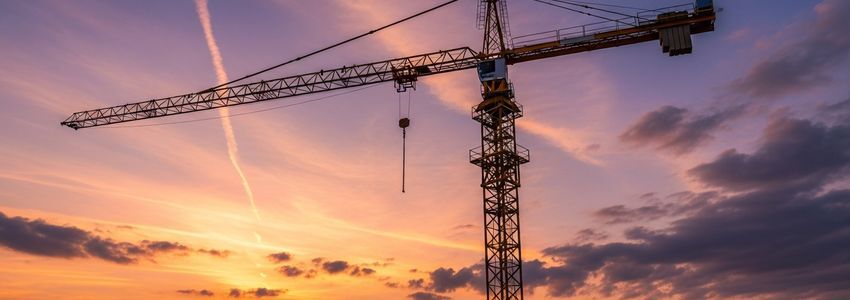
The iconic silhouette of a tower crane is synonymous with urban construction. These fixed cranes are assembled on-site and offer unparalleled height and lifting capacity for building skyscrapers, large commercial structures, and dams. Due to their immense size and cost, financing is almost always a necessity for their acquisition.
Crawler Cranes
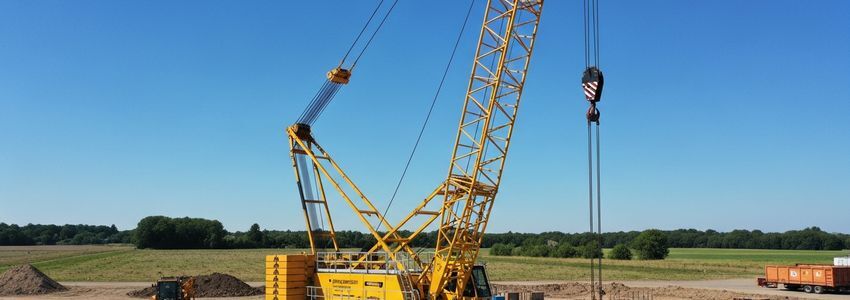
Crawler cranes are mounted on a chassis with a set of tracks, or "crawlers," instead of wheels. This design provides exceptional stability and allows them to move around a job site, even on soft or uneven ground. They are known for their massive lifting capacities, making them ideal for large-scale construction, bridge building, and wind turbine installation.
Rough Terrain Cranes
As the name suggests, rough terrain (RT) cranes are built for off-road conditions. They feature a compact frame, large rubber tires, and four-wheel drive and steering, giving them excellent maneuverability on tight and unimproved job sites. While not typically legal for public roads, they are indispensable for infrastructure, mining, and energy projects.
Carry Deck Cranes
Carry deck cranes are a smaller, more mobile type of crane that features a 360-degree rotating boom on a small, four-wheeled platform. Their defining feature is the "carry deck" - a flat surface for transporting materials around the job site. They are perfect for maintenance tasks in industrial plants, workshops, and smaller construction sites where space is limited.
Overhead and Gantry Cranes
Unlike mobile cranes, overhead and gantry cranes are typically permanent or semi-permanent fixtures within a facility.
- Overhead (Bridge) Cranes: These run on an elevated runway system along the length of a factory or warehouse, used for lifting and moving heavy materials in manufacturing, steel production, and assembly lines.
- Gantry Cranes: Similar to bridge cranes, but their bridge is supported by legs that run on wheels or along a track. They are commonly seen in shipyards, railyards, and outdoor storage areas.
No matter the type, size, or application, Crestmont Capital has the expertise to structure a financing plan that aligns with your business goals and the specific crane you need to acquire.
Crane Financing vs. Leasing: Which is Right for Your Business?
When acquiring a crane, you generally have two main options: financing (a loan) or leasing. The best choice depends on your company's financial situation, long-term strategy, and how you plan to use the equipment. Understanding the key differences is crucial for making an informed decision.
| Feature | Crane Financing (Loan) | Crane Leasing |
|---|---|---|
| Ownership | You own the crane outright after the final loan payment. | The leasing company owns the crane. You are essentially renting it for a fixed term. |
| Upfront Cost | Typically requires a down payment (0-20% of the purchase price). | Often requires only the first and last month's payment upfront, resulting in a lower initial cash outlay. |
| Monthly Payments | Generally higher, as you are paying off the full value of the crane plus interest. | Typically lower, as you are only paying for the crane's depreciation during the lease term. |
| Maintenance & Repairs | You are responsible for all maintenance and repair costs. | Responsibility can vary. Some leases include maintenance packages, while others make you responsible. |
| End-of-Term Options | You own a valuable asset that you can continue to use, sell, or trade-in. | You can return the crane, renew the lease, or purchase it for its fair market value or a predetermined price. |
| Customization | No restrictions. You can modify or customize the crane as needed for your operations. | Modifications are usually restricted or prohibited by the leasing agreement. |
When to Choose Crane Financing
Financing is the ideal path if your goal is long-term ownership. This is the best option for companies that:
- Have core operations that will consistently require a specific type of crane for many years.
- Want to build equity in a tangible asset that adds value to their balance sheet.
- Prefer the freedom to use the equipment without restrictions on hours or wear and tear.
- Plan to use the crane for its entire useful life or want the option to sell it in the future.
When to Consider Crane Leasing
Leasing is often favored by businesses that want to minimize upfront costs and maintain a fleet of modern equipment. This is a strong choice for companies that:
- Need a crane for a specific project with a defined timeline.
- Want lower monthly payments to improve short-term cash flow.
- Prefer to upgrade to the latest technology every few years without the hassle of selling used equipment.
- Do not want to be responsible for the long-term maintenance of an aging asset.
The decision between financing and leasing is a significant one. The team at Crestmont Capital can walk you through both scenarios, helping you analyze the financial implications and choose the structure that best supports your business's growth and operational strategy.
Ready to Get Financing?
Crestmont Capital offers fast approvals in as little as 24 hours.
How Crane Financing Works: Loan Amounts, Terms, and Rates
Navigating the specifics of a crane loan can seem complex, but it boils down to four key components: the loan amount, the term, the interest rate, and the down payment. Understanding how these elements work together will help you secure the best possible financing for your needs.
Loan Amounts
The amount you can finance for a crane is directly tied to its cost. Given the vast range of crane types and conditions, loan amounts can vary dramatically. You might be looking at a loan of $50,000 for a small, used carry deck crane, or you could require financing in excess of $5 million for a brand-new, high-capacity tower crane. Lenders like Crestmont Capital have the capacity to fund this entire spectrum. In many cases, we can also bundle "soft costs" into the loan, such as shipping, taxes, and initial setup, providing a true 100% financing solution.
Loan Terms
The loan term is the length of time you have to repay the loan. For heavy equipment like cranes, terms typically range from 24 to 84 months (2 to 7 years). The term you choose has a direct impact on your monthly payment and the total interest you'll pay.
- Shorter Terms (e.g., 36-48 months): Result in higher monthly payments but lower total interest costs over the life of the loan. You'll own the crane free and clear much faster.
- Longer Terms (e.g., 60-84 months): Lead to more affordable, lower monthly payments, which can be beneficial for cash flow. However, you will pay more in total interest over the longer period.
We work with you to find a term that creates a manageable monthly payment while aligning with the expected useful life of the crane.
Interest Rates
The interest rate is the cost of borrowing the money, expressed as a percentage of the loan amount. Crane financing rates are not one-size-fits-all; they are determined by several risk factors, including:
- Your Credit Score: A higher personal and business credit score demonstrates a history of responsible borrowing and will secure you the most competitive rates.
- Time in Business: Established companies (typically 2+ years) are seen as lower risk and often qualify for better rates than startups.
- Financial Health: Lenders will review your business's revenue and cash flow to ensure you can comfortably afford the payments.
- Crane Age and Value: New cranes often command slightly lower rates than used ones because they have a higher, more predictable collateral value and come with warranties.
- Loan Amount and Term: The size and length of the loan can also influence the final rate.
Rates can range from as low as 5% for highly qualified applicants to over 20% for businesses with significant credit challenges.
Down Payments
A down payment is the portion of the crane's purchase price that you pay upfront. The standard down payment for crane financing ranges from 0% to 20%.
- 0% Down (100% Financing): Many well-qualified businesses with strong credit and financials can secure financing for the full purchase price. This is an excellent option for preserving cash.
- 10-20% Down: A down payment reduces the amount you need to borrow, which in turn lowers your monthly payment and can help you qualify for a better interest rate. It also demonstrates your commitment to the investment, which lenders view favorably.
Financing New vs. Used Cranes: Pros and Cons
One of the first decisions you'll face is whether to purchase a new or used crane. Both options have distinct advantages and disadvantages, and the right choice depends on your budget, project needs, and risk tolerance. Financing is available for both new and used equipment.
Financing a New Crane
Pros:
- Latest Technology: New cranes come with the most advanced safety features, fuel efficiency, and operational technology, boosting productivity and compliance.
- Full Manufacturer's Warranty: A comprehensive warranty provides peace of mind and protects you from unexpected, costly repairs in the initial years of ownership.
- No Wear and Tear: You get a pristine machine with a full operational lifespan ahead of it, free from the hidden problems of a previous owner.
- Potentially Better Financing Terms: Lenders may offer slightly lower interest rates and longer repayment terms for new equipment due to its higher collateral value and lower perceived risk.
Cons:
- Higher Purchase Price: The upfront cost is significantly higher than for a comparable used model.
- Faster Initial Depreciation: Like a new car, a new crane experiences its steepest drop in value during the first one to two years of operation.
Financing a Used Crane
Pros:
- Lower Upfront Cost: The most significant advantage is the substantial cost savings, allowing you to acquire a capable machine for a fraction of the price of a new one.
- Slower Depreciation: A used crane has already undergone its most significant depreciation, so its value will decline more slowly.
- Proven Reliability: You can often find well-maintained models with a documented history of reliable performance.
Cons:
- Higher Risk of Maintenance Issues: The equipment is older and may require more frequent or significant repairs. A thorough third-party inspection is essential.
- No Warranty: Most used cranes are sold "as-is," meaning you are fully responsible for any and all repairs after the purchase.
- Outdated Technology: A used model may lack the latest efficiency and safety features, which could impact performance and operator comfort.
- Potentially Stricter Financing: While readily available, financing for older equipment might come with slightly higher rates or shorter terms depending on the crane's age and condition.
How to Qualify for a Crane Loan
Qualifying for a crane loan is a straightforward process, but lenders will carefully evaluate several key aspects of your business and personal financial history to assess risk. Understanding these criteria will help you prepare a strong application and increase your chances of approval for the best possible terms.
1. Credit Score
Your personal and business credit scores are one of the most important factors. They provide a snapshot of your history with repaying debt. While requirements vary by lender, here's a general breakdown:
- Excellent Credit (720+): Applicants in this range can expect to qualify for the lowest interest rates, longest terms, and are most likely to be approved for 100% financing.
- Good Credit (680-719): You will still have access to very competitive rates and favorable terms from a wide range of lenders.
- Fair Credit (620-679): You can still secure financing, but the interest rates may be higher to offset the lender's increased risk. Some lenders specialize in this "near-prime" credit space.
- Challenged Credit (Below 620): While more difficult, obtaining financing is not impossible. Lenders like Crestmont Capital can often find solutions by looking at other factors, such as strong cash flow or a significant down payment.
2. Time in Business
Lenders prefer to see a track record of stability and success. The industry standard for the most competitive financing is at least two years in business. Businesses with this history have demonstrated their ability to navigate market cycles and manage their finances effectively. However, if you are a startup or have been in business for less than two years, options are still available. These programs may require a stronger credit score, a larger down payment, or a detailed business plan to demonstrate future viability.
3. Annual Revenue and Cash Flow
Lenders need to be confident that your business generates enough income to comfortably handle the new monthly loan payment. They will typically ask for recent business bank statements (usually 3-6 months) to verify your revenue and analyze your average daily balance and cash flow patterns. While there's no magic number, most lenders look for annual revenues of at least $150,000 to $250,000 for significant equipment purchases. Consistent revenue and healthy cash flow are powerful indicators of a low-risk borrower.
4. Industry Experience
While not always a strict requirement, having relevant experience in your industry (construction, logistics, etc.) is a major plus. Lenders are more comfortable financing a crane for a contractor with 10 years of experience than for someone completely new to the field. Your proven expertise suggests you know how to operate the equipment profitably and safely.
Ready to Get Financing?
Crestmont Capital offers fast approvals in as little as 24 hours.
The Crane Financing Application Process: A Step-by-Step Guide
At Crestmont Capital, we've streamlined the application process to be as fast and efficient as possible, so you can get your equipment funded and on the job site without lengthy delays. Here’s a look at the typical steps from application to funding.
Step 1: The Initial Application
The process begins with a simple one-page online application. You'll provide basic information about your business, such as its legal name, address, time in business, and annual revenue, along with personal details for the owner(s). You'll also specify the type of crane you're looking to purchase and the estimated cost. This initial step can often be completed in just a few minutes.
Step 2: Documentation Submission
After the initial review, a financing specialist will contact you to request a few supporting documents. The exact requirements depend on the loan amount and your credit profile, but they typically include:
- Equipment Quote or Invoice: A formal quote from the seller (dealer or private party) detailing the crane's make, model, year, VIN/serial number, and purchase price.
- Business Bank Statements: Usually the most recent 3 to 6 months to verify revenue and cash flow.
- Financial Statements: For larger loan amounts (e.g., over $250,000), lenders may request a profit and loss statement and a balance sheet.
Submitting these documents promptly is the key to a fast approval.
Step 3: Underwriting and Review
This is the stage where the lender's underwriting team performs its due diligence. They will review your application, credit report, bank statements, and all supporting documents to assess the risk and determine the terms of the loan. A specialized lender with deep knowledge of the construction industry can often complete this review much faster than a traditional bank.
Step 4: Approval and Term Sheet
Once your application is approved, you will receive a formal term sheet or financing agreement. This document will clearly outline all the key details of the loan: the approved loan amount, the interest rate, the monthly payment, and the repayment term. This is your opportunity to review the offer and ask your financing specialist any questions you may have before proceeding.
Step 5: Final Documentation and Funding
After you accept the terms, you'll sign the final loan documents. This is often done electronically for speed and convenience. Once the signed documents are received, the lender will coordinate directly with the crane seller to fund the transaction. The funds are typically wired directly to the seller's account. Once the seller confirms receipt of payment, you can arrange to take delivery of your crane. The entire process, from application to funding, can often be completed in as little as 24 to 48 hours.
Understanding Section 179 for Equipment Purchases
When discussing equipment acquisition, it's helpful to be aware of a provision in the IRS tax code known as Section 179. This is a tax incentive designed to encourage businesses to invest in themselves by purchasing new or used equipment.
In simple terms, Section 179 allows businesses to deduct the full purchase price of qualifying equipment from their gross income in the year it is purchased and put into service. Instead of depreciating the asset over several years, you can potentially write off the entire cost at once. For a high-value asset like a crane, this can create a significant reduction in a company's tax liability for that year.
Key points to understand about Section 179:
- It applies to both new and used equipment. This makes financing a used crane even more attractive for many businesses.
- The equipment must be for business use. The crane must be used for business purposes more than 50% of the time to qualify.
- There are annual deduction limits. The IRS sets limits on the total amount of equipment that can be expensed and a cap on the total amount of equipment purchased. These limits are often adjusted, so it's important to know the current year's figures. You can find up-to-date information on government resources like the Small Business Administration website. According to the SBA, this can be a powerful tool for small businesses.
By financing a crane and taking advantage of the Section 179 deduction, a business can acquire a revenue-generating asset with minimal cash outlay and potentially lower its tax bill in the same year. This can make the net cost of acquiring the crane significantly lower.
It is crucial to remember that Crestmont Capital does not provide tax advice. The information here is for educational purposes only. You must consult with a qualified tax professional or accountant to understand how Section 179 applies to your specific financial situation and to ensure you are in full compliance with all IRS regulations.
Industries That Rely on Crane Financing
Cranes are foundational to a wide array of industries, driving progress and enabling projects that would otherwise be impossible. Crane financing serves as the financial backbone for companies in these sectors, allowing them to acquire the necessary lifting power to operate and grow.
- Construction (Commercial & Residential): This is the most obvious and largest user of cranes. From lifting steel beams for skyscrapers and stadiums to placing trusses on residential homes and moving heavy building materials, tower cranes, mobile cranes, and crawler cranes are ever-present on construction sites.
- Oil & Gas: The energy sector relies heavily on cranes for exploration, drilling, and refinery operations. Rough terrain and crawler cranes are used to assemble drilling rigs, lay pipelines, and perform maintenance on massive infrastructure.
- Utilities and Power Generation: Building and maintaining our power grid is a heavy-duty job. Cranes are essential for erecting transmission towers, installing large transformers, and performing maintenance at power plants. The renewable energy sector also uses massive cranes to install wind turbines.
- Ports, Shipping, and Logistics: Gantry cranes are the titans of the shipping world, responsible for loading and unloading countless containers from massive cargo ships every day. Mobile cranes are also used throughout port facilities for various lifting tasks.
- Manufacturing and Industrial Plants: Inside large manufacturing facilities, overhead bridge cranes are indispensable. They move heavy raw materials, position large components on assembly lines, and load finished products for shipping, playing a vital role in the production of everything from automobiles to heavy machinery.
- Telecommunications: The rollout of 5G and the maintenance of existing cellular networks require cranes to lift crews and equipment to the top of cell towers for installation and repair work.
The U.S. Crane Industry at a Glance
$20B+
Annual U.S. Crane Rental Market Size
7.4%
Projected Annual Growth in Construction Sector through 2026
95%
of Businesses Use Financing to Acquire Key Assets
Source: Internal market analysis and industry reports.
The Cost of Cranes: What to Expect
The purchase price of a crane is its single largest expense, and prices vary widely based on type, capacity, brand, age, and features. Having a realistic budget is the first step toward securing the right financing. Below are general price ranges for various types of new and used cranes to provide a frame of reference.
- Carry Deck Cranes:
- Used: $40,000 - $120,000
- New: $90,000 - $250,000+
- Rough Terrain Cranes:
- Used: $100,000 - $400,000
- New: $200,000 - $750,000+
- Truck-Mounted Cranes:
- Used: $75,000 - $500,000
- New: $150,000 - $1,000,000+
- Crawler Cranes:
- Used: $200,000 - $1,500,000
- New: $500,000 - $3,000,000+
- All-Terrain Cranes:
- Used: $300,000 - $1,200,000
- New: $600,000 - $3,500,000+
- Tower Cranes:
- Used: $350,000 - $1,000,000
- New: $1,000,000 - $5,000,000+
Remember, these are estimates. Prices can be influenced by factors like boom length, lift capacity (tonnage), included attachments, and overall condition. Always get a formal quote from a reputable dealer or seller, which you will need for your financing application. For more information on financing high-value assets, explore our heavy equipment financing guide.
Why Choose a Specialized Lender Like Crestmont Capital?
When seeking financing for a high-value, specialized asset like a crane, partnering with the right lender is just as important as choosing the right equipment. While a traditional bank might be your first thought, a specialized lender like Crestmont Capital offers distinct advantages tailored to the needs of your industry.
Industry Expertise
Traditional banks are generalists. They handle mortgages, car loans, and a wide range of business financing, but they often lack deep knowledge of specific heavy equipment. At Crestmont Capital, we live and breathe equipment financing. We understand the value of a Liebherr all-terrain crane versus a Manitowoc crawler. This expertise allows us to make faster, more informed credit decisions and structure loans that make sense for the asset's lifecycle and your business's cash flow.
Speed and Efficiency
In business, timing is everything. A project can't wait weeks for a bank's loan committee to meet. We've built our process for speed. With a simple online application and streamlined documentation requirements, we can provide approvals in hours, not weeks. Funding can happen in as little as 24-48 hours, allowing you to secure your crane from the seller and get it to the job site without costly delays.
Flexible Credit Requirements
Banks often have rigid, black-and-white credit requirements. A single blemish on your credit report or being in business for less than five years can lead to an automatic denial. As a leading provider of commercial financing, we take a more holistic view of your business. We look beyond just the credit score to consider your cash flow, industry experience, and the value of the collateral. This flexibility results in significantly higher approval rates, giving more businesses access to the capital they need to grow.
Customized Solutions
We recognize that no two businesses are the same. That's why we don't offer one-size-fits-all loan products. We work with you to tailor a financing solution that fits your specific needs. Whether you need a deferred payment plan to get through an off-season or a longer term to lower your monthly payment, we have the flexibility to create a structure that works for you. Explore our crane financing page to see how we can help. According to a recent industry report by Reuters, the demand for flexible financing in the industrial sector is at an all-time high.
Ready to Get Financing?
Crestmont Capital offers fast approvals in as little as 24 hours.
Next Steps to Secure Your Crane Financing
Ready to take the next step and add a powerful new crane to your fleet? Follow this simple plan to get started on the path to fast and flexible financing with Crestmont Capital.
Determine Your Equipment Needs
Identify the exact type of crane that best suits your upcoming projects. Consider the required lift capacity, boom length, mobility, and whether a new or used model is the best fit for your budget and operational needs.
Get a Quote from a Seller
Contact a reputable equipment dealer or find a private party seller and obtain a formal quote or bill of sale for the crane you wish to purchase. This document is essential for the financing application.
Gather Your Financial Documents
To ensure a fast process, have your last 3-6 months of business bank statements readily available. This will allow our underwriting team to quickly verify your revenue and approve your application.
Complete Our Simple Application
Fill out our secure, one-page online application. It takes just a few minutes, and once submitted, one of our dedicated financing specialists will contact you to guide you through the rest of the quick and easy process.
Frequently Asked Questions About Crane Financing
Can I finance a used crane?
What credit score do I need for crane financing?
How long does it take to get funded?
Can I finance a crane with no money down?
What are typical interest rates for a crane loan?
Can startups get crane financing?
Does the loan cover soft costs like delivery and taxes?
What happens at the end of the loan term?
Is crane financing a secured loan?
Can I pay off my crane loan early?
What documents do I need to apply?
Do I need to have a specific crane picked out before I apply?
What's the difference between a crane loan and an SBA loan?
Can I finance crane repairs or attachments?
Why was my application denied by a bank?
Disclaimer: This content is provided for general educational purposes only and does not constitute financial, legal, or tax advice. Please consult a qualified professional before making any financial decisions.