
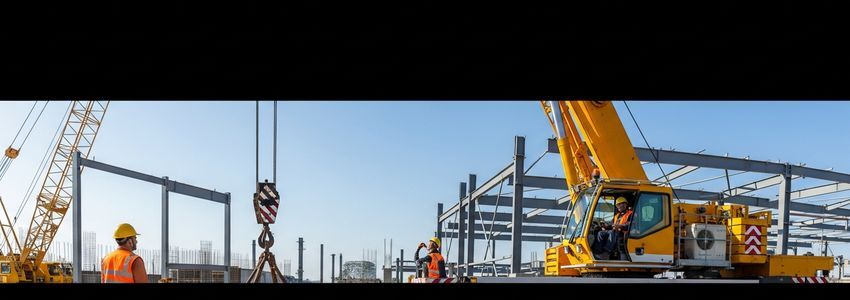
Running a crane rental business means managing some of the most expensive equipment in the construction industry. A single mobile crane can cost anywhere from $500,000 to over $2 million, and tower cranes can run even higher. Whether you are looking to purchase your first crane, expand your fleet, cover operating costs, or navigate seasonal cash flow gaps, understanding your financing options is critical to long-term success.
This guide covers everything crane rental business owners need to know about securing the right funding, from equipment loans and SBA programs to lines of credit and fast-funding alternatives. We break down qualification requirements, typical rates, and which loan types work best for different situations, so you can make the most informed decision for your company.
- Why Crane Rental Companies Need Specialized Financing
- Best Loan Types for Crane Rental Businesses
- Equipment Financing and Leasing for Cranes
- SBA Loans for Crane Rental Companies
- How to Qualify for Crane Rental Business Loans
- Crane Rental Financing at a Glance
- The Loan Application Process
- Smart Financing Strategies for Fleet Growth
- Frequently Asked Questions
Why Crane Rental Companies Need Specialized Financing
The crane rental industry is capital-intensive by nature. Unlike many service businesses where the primary costs are labor and overhead, crane rental companies must continually invest in major equipment assets to remain competitive and meet client demand. Here is a look at the key financial challenges that drive crane rental businesses to seek specialized financing:
High Equipment Costs
Cranes are among the most expensive pieces of construction equipment on the market. Rough-terrain cranes typically cost $300,000 to $800,000. All-terrain cranes range from $500,000 to $1.5 million. Crawler cranes can exceed $2 million, and tower cranes used in urban high-rise construction can cost $3 million or more. Even used cranes in good working condition command prices well beyond the reach of most companies' cash reserves.
Ongoing Maintenance and Inspection Costs
Cranes require rigorous preventive maintenance and mandatory OSHA-compliant inspections. Annual maintenance costs for a single crane can range from $20,000 to $100,000+ depending on type and usage. Unexpected breakdowns can cost even more, potentially sidelining a crane that is generating $5,000 to $20,000 per day in rental revenue. Access to quick working capital is essential for handling these unpredictable costs.
Seasonal Cash Flow Gaps
Construction activity slows significantly in winter months across most of the U.S., meaning crane rental revenues can drop 30-50% compared to peak summer months. Without adequate financing, these gaps can make it difficult to cover payroll, insurance, storage costs, and loan payments during the slow season.
Growth Opportunities Require Fast Capital
When a major construction project comes to your area, or a competitor's crane becomes available at auction, timing matters. Having access to pre-approved financing or a business line of credit lets you move quickly on opportunities that could transform your business.
Ready to Finance Your Crane Rental Business?
Get pre-qualified in minutes with no impact to your credit score. Crestmont Capital specializes in heavy equipment financing for crane rental companies.
Apply Now - Free ConsultationBest Loan Types for Crane Rental Businesses
Crane rental companies have access to a wide range of financing products. Understanding which loan type fits your specific needs will save you time and money. Here is a breakdown of the most relevant options for crane rental business owners:
1. Equipment Financing Loans
Equipment financing is often the first choice for crane purchases. The crane itself serves as collateral, which means lenders are willing to offer competitive rates and terms even for borrowers who may not qualify for unsecured loans. With equipment financing, you own the crane outright once the loan is paid off, and monthly payments are typically tax-deductible as a business expense.
- Typical loan amounts: $100,000 to $5 million+
- Terms: 3 to 7 years (up to 10 years for large cranes)
- Rates: 5% to 15% APR depending on credit and lender
- Down payment: 10% to 25% typically required
- Best for: Purchasing cranes you intend to own long-term
2. SBA 7(a) Loans
The SBA 7(a) loan program is the Small Business Administration's flagship lending product, and it is well-suited for crane rental companies that need flexible capital for equipment purchases, working capital, or business expansion. The SBA guarantees up to 85% of the loan amount, reducing lender risk and enabling better rates for borrowers.
- Maximum loan amount: $5 million
- Terms: Up to 10 years for working capital, up to 25 years for real estate
- Rates: Prime plus 2.25% to 4.75%
- Requirements: 2+ years in business, 650+ credit score, strong cash flow
3. SBA 504 Loans
For large crane purchases or facility investments, the SBA 504 loan is often the most cost-effective option. The program combines a conventional bank loan (typically 50% of project cost) with an SBA-backed loan through a Certified Development Company (40%), requiring only a 10% down payment from the borrower. This makes it possible to acquire a $1 million crane with just $100,000 down at below-market rates.
4. Business Lines of Credit
A business line of credit gives crane rental companies the flexibility to draw funds as needed and repay them on a revolving basis. It is ideal for covering cash flow gaps, emergency maintenance costs, or short-term operational needs. Unlike a term loan, you only pay interest on what you actually draw.
- Credit limits: $50,000 to $500,000 typically
- Draw period: 12 to 24 months, often renewable
- Rates: 8% to 25% APR depending on creditworthiness
- Best for: Working capital, seasonal cash flow management, emergency repairs
5. Term Loans
Traditional small business term loans provide a lump sum that is repaid over a fixed period with regular payments. They are versatile and can be used for equipment, fleet expansion, hiring, or general business growth. Banks typically offer the best rates but have stricter requirements; online lenders are more flexible but charge higher rates.
6. Invoice Factoring and Financing
Crane rental companies that extend credit to general contractors or project owners often have significant capital tied up in outstanding invoices. Invoice factoring converts these receivables to immediate cash, typically at a fee of 2% to 5% of the invoice value. This is particularly useful for larger rental companies with established billing cycles.
Many successful crane rental companies use a combination of financing types. For example: an equipment loan for the crane itself, an SBA 7(a) loan for a maintenance facility, and a line of credit for working capital. Each product serves a different purpose, and using them together can optimize your overall cost of capital.
Equipment Financing and Leasing for Cranes
Because cranes are such significant assets, equipment-specific financing deserves a deeper look. The two primary routes are equipment loans (financing to purchase) and equipment leasing.
Equipment Loans: Pros and Cons
When you take out an equipment loan through a program like Crestmont Capital's equipment financing, you receive the funds to purchase the crane, and the crane serves as collateral. Once the loan is repaid, you own the equipment free and clear.
Advantages of equipment loans:
- Build equity in your equipment over time
- Full depreciation and Section 179 tax deductions available
- No mileage or usage restrictions imposed by the lender
- Equipment can be used as collateral for future loans
- Ownership creates balance sheet assets that strengthen your financial profile
Considerations:
- Higher monthly payments than leasing due to buying down the full cost
- You bear the risk of equipment depreciation
- Technology or model obsolescence risk over long loan terms
Equipment Leasing: When It Makes Sense
Through equipment leasing, your company rents the crane from the leasing company for a fixed monthly payment. At lease end, you typically have options to buy, renew the lease, or return the equipment.
Advantages of leasing:
- Lower monthly payments than buying, preserving cash flow
- Easier to upgrade to newer crane models at lease end
- Less capital tied up in depreciating assets
- Operating lease payments may be fully deductible as operating expenses
- Easier to qualify for than some loan types
Leasing is typically best for:
- Specialized cranes needed for specific projects
- Companies that want to minimize balance sheet debt
- Startups with limited credit history
- Situations where technology obsolescence is a concern
SBA Loans for Crane Rental Companies
SBA loan programs are among the best financing options available to established crane rental businesses. The government guarantee reduces lender risk, enabling better terms than most companies could obtain on their own. Here is what you need to know about SBA financing for the crane rental industry.
SBA 7(a) Loans: Flexible Capital for Growth
The SBA 7(a) program is the most widely used and flexible. According to SBA.gov, the program can be used for:
- Purchasing equipment (cranes, trucks, support vehicles)
- Working capital for operations
- Refinancing existing debt at better terms
- Expanding facilities or purchasing a yard/storage area
- Acquiring another crane rental business
The 7(a) program requires working with an SBA-approved lender. Rates are variable and tied to the prime rate. As of 2026, total rates typically range from 9.5% to 12.5% for qualified borrowers. Application timelines run 30 to 90 days, so SBA loans are not for urgent needs.
SBA 504 Loans: Best for Large Equipment Purchases
The 504 program is specifically designed for major fixed-asset purchases like cranes and other heavy equipment. The structure - 50% bank, 40% SBA-backed CDC, 10% borrower equity - makes large acquisitions highly accessible. Fixed rates on the SBA portion are typically 3% to 5% below market, and terms can extend to 10 or 25 years.
For a crane rental company looking to purchase a $1.5 million all-terrain crane, a 504 loan could mean:
- $750,000 from a conventional bank (50%)
- $600,000 from an SBA CDC (40%)
- $150,000 down payment from the borrower (10%)
This structure dramatically reduces the cash required upfront compared to conventional financing, which often requires 20-30% down.
SBA Express Loans: Faster Access to Smaller Amounts
For crane rental businesses needing up to $500,000 quickly, SBA Express loans offer a streamlined approval process (typically 36-hour SBA decision vs. several weeks for standard 7(a)). These are useful for equipment upgrades, working capital, or smaller acquisitions.
Need Fast Funding for Your Crane Business?
Crestmont Capital offers fast business loans with approvals in as little as 24 hours. No lengthy SBA paperwork required for urgent capital needs.
Get Fast Approval NowHow to Qualify for Crane Rental Business Loans
Understanding what lenders look for helps you prepare a stronger application and increases your approval odds. Here are the key qualification factors for crane rental business loans:
Credit Score Requirements
Lender credit score requirements vary significantly by loan type:
- Traditional bank loans: 680+ personal credit score typically required
- SBA loans: 650+ (many lenders prefer 680+)
- Equipment financing: 600+ for most lenders, with the crane as collateral softening requirements
- Online/alternative lenders: Some accept 580+, but rates will be significantly higher
Your business credit score (Dun and Bradstreet, Experian Business, or Equifax Business) is also reviewed. Building strong business credit by paying suppliers on time and maintaining low credit utilization can improve your financing options over time.
Time in Business
Most traditional lenders require at least 2 years of operating history. SBA loans have similar requirements. Some equipment lenders and alternative financing companies will work with businesses operating for as little as 6 months, though options are more limited. Startups typically have the best success with equipment leasing or lenders that specialize in new business financing.
Annual Revenue and Cash Flow
Lenders want to see that your business generates sufficient revenue to cover loan payments. Most lenders look for:
- Annual revenue: $150,000+ for smaller loans, $500,000+ for larger equipment loans
- Debt service coverage ratio (DSCR): At least 1.25x (net operating income / annual debt payments)
- Consistent revenue history: Three years of tax returns showing stable or growing income
- Profit margins: Construction equipment rental typically carries 20-40% EBITDA margins
Down Payment and Collateral
For equipment loans, the crane itself is the primary collateral. Most lenders require 10-25% down payment on equipment purchases. For working capital loans or lines of credit, lenders may require a personal guarantee and/or blanket lien on business assets. Strong collateral positions - like owning multiple cranes free and clear - significantly improve your borrowing power.
Crane Rental Financing at a Glance
Crane Rental Business Loan Quick Reference
The Loan Application Process
Applying for crane rental business financing requires preparation. Here is a step-by-step overview of what to expect:
Step 1: Assess Your Needs
Before applying, clearly define how much you need, what the funds will be used for, and how long you will need to repay. Equipment purchases usually warrant longer-term financing, while working capital needs may call for a line of credit. Knowing your purpose helps you select the right loan type and avoid overborrowing.
Step 2: Review Your Financial Profile
Pull your personal and business credit reports. Review your last 3 years of tax returns and recent profit and loss statements. Calculate your current debt service coverage ratio. Identify any issues (derogatory marks, cash flow gaps, high debt ratios) that you can address before applying.
Step 3: Gather Required Documents
Most lenders will require some combination of:
- Business and personal tax returns (2-3 years)
- Business bank statements (3-6 months recent)
- Profit and loss statement (current year-to-date)
- Balance sheet
- Business license and formation documents
- Equipment invoice or purchase agreement (for equipment loans)
- List of existing equipment and associated loans
- Accounts receivable aging report (for larger loans)
Step 4: Compare Lenders
Do not accept the first offer. Compare at least three lenders, including your primary bank, an SBA-approved lender, and an online lender like Crestmont Capital. Key factors to compare:
- Annual percentage rate (APR) - the true all-in cost
- Loan term and monthly payment amount
- Origination fees and prepayment penalties
- Speed of approval and funding
- Flexibility in repayment structure
According to Forbes Advisor's equipment financing guide, comparing multiple lenders can save business owners thousands in interest costs over the life of an equipment loan.
Step 5: Submit Your Application
With online lenders like Crestmont Capital, you can submit applications digitally and receive a decision in hours. Traditional banks and SBA loans require more paperwork and take longer, but often deliver better rates for qualified borrowers.
Step 6: Review and Accept the Offer
Read all loan documents carefully before signing. Understand the total repayment amount, not just the monthly payment. Check for prepayment penalties (which can be costly if you pay off a crane loan early), balloon payment provisions, and the scope of personal guarantee obligations.

Smart Financing Strategies for Fleet Growth
Growing a crane rental fleet requires strategic use of financing tools. Here are proven strategies used by successful crane rental companies:
Build Equity to Unlock Better Terms
As you pay down equipment loans, you build equity that can serve as collateral for future financing. Many crane rental companies use paid-off equipment as collateral when purchasing additional cranes, enabling them to borrow more at lower rates. Consistently paying loans on time also builds your business credit profile, further improving future borrowing terms.
Use a Line of Credit for Opportunistic Buys
Cranes frequently come to market at auction when construction companies liquidate assets or upgrade fleets. Having a pre-approved business line of credit means you can move quickly when a quality crane becomes available at below-market prices. The speed advantage can save you 20-30% compared to buying at full retail price.
Match Loan Terms to Asset Life
Avoid over-leveraging by matching your loan term to the expected useful life of the crane. A 5-year-old rough-terrain crane with 15 years of useful life remaining can support a 7-year loan. But taking a 10-year loan on an older crane that may need replacement in 5 years creates risk. Work with your lender to structure terms that align with realistic asset life.
Separate Operating and Capital Financing
Experienced crane rental operators separate their financing into two distinct categories: capital financing for equipment purchases (long-term loans or SBA programs) and operating financing for day-to-day needs (lines of credit or invoice factoring). Mixing these can lead to paying high short-term rates for long-term assets or tying up lines of credit in equipment that should be financed with term loans.
Consider Sale-Leaseback for Liquidity
If you own cranes outright and need working capital, a sale-leaseback arrangement allows you to sell cranes to a financing company and immediately lease them back for continued use. This converts illiquid equipment equity into cash while retaining full operational control of the equipment. It is a useful strategy for companies experiencing growth opportunities that require more capital than available cash flow allows.
Refinance When Rates Drop
If you took out equipment loans when rates were high, refinancing when your credit profile improves or market rates decline can generate significant savings. On a $1 million crane loan, reducing your rate by just 2% can save $40,000+ over a 7-year term. Review your existing loans annually and consider refinancing whenever you can reduce your rate by 1.5% or more.
Compare Crane Rental Business Loan Options
Our specialists understand the crane rental industry. Get personalized loan options matched to your fleet size, revenue, and growth goals.
Compare My OptionsWhat Lenders Really Look for in Crane Rental Loan Applications
Beyond the basic qualification metrics, experienced lenders who work with crane rental companies evaluate several industry-specific factors that can make or break your application:
Equipment Condition and Age
For equipment loans and lease-backs, lenders will often commission an independent appraisal of your cranes. Equipment in excellent condition with low hours and full maintenance records commands higher valuations - sometimes 20-30% more than comparable equipment with spotty maintenance history. Keeping meticulous maintenance logs and inspection records is a business practice that pays dividends at loan time.
Contract and Revenue Backlog
Lenders love to see signed contracts or rental agreements demonstrating future revenue. If you have $500,000 in confirmed rental contracts for the next 6 months, this dramatically strengthens your application by showing predictable cash flow. Whenever possible, secure written contracts before applying for major financing.
Customer Concentration Risk
If one customer represents more than 30-40% of your total revenue, lenders may view this as a concentration risk. Diversifying your customer base across multiple contractors and project types not only protects your business but makes you a more attractive borrower.
Industry Certifications and Compliance
Lenders evaluate the regulatory risk profile of your business. Being fully certified (NCCCO crane operator certifications, ASME standards compliance, current OSHA compliance record) reduces perceived risk and demonstrates professional operations. Any OSHA violations or pending legal actions should be disclosed and explained upfront.
Management Experience
For loans over $500,000, many lenders review management team experience. Owners with 10+ years in the crane industry, formal certifications, and a track record of successfully operating and growing crane rental businesses are viewed much more favorably than first-time operators.
Common Mistakes to Avoid When Financing Your Crane Business
Learning from common financing mistakes can save your crane rental company significant money and stress:
- Focusing only on monthly payment, not total cost: A lower monthly payment with a longer term often means paying far more in total interest. Always calculate total cost of financing, not just the monthly figure.
- Waiting until cash flow is critical: Apply for credit and financing when your business is strong, not when you are desperate. Lenders give better terms to businesses that do not appear to need the money urgently.
- Underestimating working capital needs: When budgeting for a new crane, factor in not just the purchase price but also insurance, transport, commissioning, initial maintenance, and operator payroll. These can add 15-25% to your total first-year cost.
- Ignoring prepayment penalties: Some equipment loans carry stiff prepayment penalties of 2-5% of the remaining balance. If you think you might pay off the loan early (perhaps by selling the crane), this clause can be very expensive.
- Not shopping multiple lenders: The first offer is rarely the best. Working with a financing broker or marketplace lender like Crestmont Capital lets you compare multiple offers simultaneously with a single application.
Frequently Asked Questions About Crane Rental Business Loans
What types of loans are available for crane rental businesses?
How much can I borrow for a crane rental business loan?
What credit score do I need for a crane rental business loan?
Can a startup crane rental company get financing?
How long does it take to get approved for a crane rental business loan?
What is the interest rate on crane rental business loans?
Is equipment financing or leasing better for crane rental companies?
Can I use an SBA loan to buy cranes for my rental business?
What documents do I need to apply for a crane rental business loan?
What is a business line of credit and how can it help my crane rental company?
Do crane rental businesses qualify for fast business loans?
How does invoice factoring work for crane rental companies?
What are typical loan terms for crane equipment financing?
Can I refinance existing crane equipment loans?
What is the best financing option for expanding a crane rental fleet?
Next Steps: Securing Financing for Your Crane Rental Business
- Review your financials - Pull your credit reports, gather 3 years of tax returns, and calculate your current DSCR
- Define your financing need - Determine whether you need equipment financing, working capital, or a combination
- Explore your options - Compare equipment loans, SBA programs, and lines of credit side by side
- Prepare your documentation - Organize bank statements, equipment lists, contracts, and maintenance records
- Apply with Crestmont Capital - Get personalized loan options for your crane rental business with no impact to your credit score
Disclaimer: The information provided in this article is for general educational purposes only and does not constitute financial, legal, or tax advice. Loan products, rates, and qualification requirements vary by lender and are subject to change. Always consult with a qualified financial professional before making borrowing decisions for your business. Crestmont Capital is not responsible for decisions made based on the information in this article.



