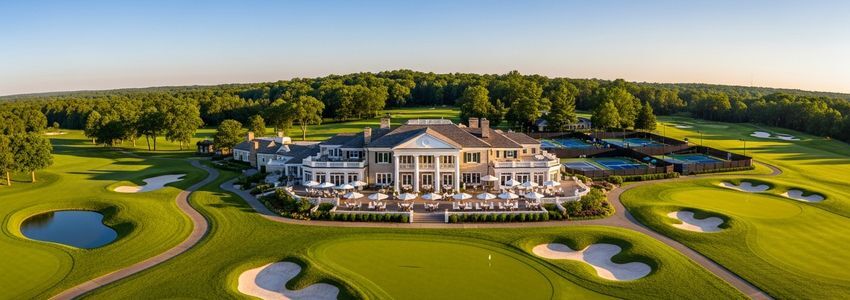
Running a country club is a unique business venture that blends luxury hospitality, sports facilities, fine dining, and high-touch member services under one roof. Whether you operate a private golf and tennis club, an exclusive social membership organization, or a full-service recreation facility, access to capital is critical to maintaining the standards your members expect. Country club business loans provide the funding you need to keep your facility competitive, modernize amenities, handle seasonal cash flow gaps, and invest in long-term growth.
Crestmont Capital has helped hundreds of hospitality and recreation businesses secure the financing they need quickly and with flexible terms. In this guide, we break down everything country club owners need to know about financing options, qualification requirements, and how to find the right loan for your club's unique needs.
In This Article
What Are Country Club Business Loans?
Country club business loans are commercial financing solutions designed to fund the operational and capital needs of private clubs, golf clubs, tennis clubs, social clubs, and recreational membership facilities. These loans can cover a wide range of expenses, from major golf course renovations and clubhouse upgrades to equipment purchases, working capital, payroll, and technology investments.
Unlike standard small business loans, country club financing often needs to accommodate larger loan amounts, longer repayment terms, and flexible structures that work around the club's revenue model - which can be heavily seasonal and dependent on membership dues, initiation fees, and event bookings. Lenders with hospitality industry experience understand these dynamics and can structure terms accordingly.
Country clubs and private recreational facilities represent a multi-billion dollar industry in the United States. According to the National Golf Foundation, there are approximately 16,000 golf facilities in the U.S., many of which are private clubs with extensive operations that require ongoing capital investment. From 18-hole championship courses to elegant banquet halls and heated pools, maintaining these facilities demands significant and continuous funding.
Industry Insight: The U.S. private club industry generates over $20 billion in annual revenue across golf, social, and athletic facilities, according to the Club Management Association of America. Capital investment is a constant necessity for clubs seeking to retain and attract members.
Why Country Clubs Need Financing
Country clubs face unique financial pressures that make access to business financing particularly important. The high fixed costs of maintaining large facilities, the seasonal nature of many revenue streams, and the capital-intensive requirements of renovations and equipment all create regular needs for outside capital.
Common reasons country clubs seek financing include:
- Golf course renovation and maintenance - Resurfacing greens, cart paths, irrigation system upgrades, and course redesign projects can cost hundreds of thousands to millions of dollars
- Clubhouse and facility upgrades - Restaurant kitchen modernization, locker room renovations, banquet hall improvements, and structural repairs
- Equipment purchases - Golf carts, turf maintenance equipment, kitchen equipment, fitness machines, and pool systems
- Technology investments - Member management software, tee time booking systems, point-of-sale upgrades, and AV systems
- Seasonal working capital - Bridging cash flow gaps during off-season months when revenue drops but expenses remain high
- Staff expansion and payroll - Hiring seasonal employees and covering payroll during periods of high demand
- New amenity development - Adding pickleball courts, fitness centers, aquatic facilities, or dining expansions
- Emergency repairs - Addressing urgent facility issues that cannot wait for budget cycles
Need Financing for Your Country Club?
Get flexible financing fast from Crestmont Capital - the #1 business lender in the U.S. No obligation - apply in minutes.
Apply Now →Types of Financing for Country Clubs
Country clubs have access to multiple financing vehicles, each suited to different needs and situations. Understanding the options helps you select the right tool for your specific goals.
Term Loans
Traditional term loans provide a lump sum of capital repaid over a fixed schedule with interest. These are well-suited for large capital projects like golf course renovations, major equipment purchases, or clubhouse construction. Terms typically range from 1 to 10 years, with amounts from $50,000 to several million dollars depending on the lender and your club's financial profile.
Business Line of Credit
A business line of credit gives your club revolving access to funds up to an approved limit. You draw only what you need and pay interest only on what you use. This is ideal for managing seasonal cash flow swings, covering payroll gaps, or funding smaller recurring expenses without taking out a new loan each time.
Equipment Financing
For major equipment purchases like golf carts, turf maintenance machinery, kitchen equipment, or fitness gear, equipment financing lets you spread payments over time while using the equipment immediately. The equipment itself typically serves as collateral, making this a more accessible option even for clubs with limited additional assets.
SBA Loans
SBA loans - particularly the SBA 7(a) program - offer favorable terms including lower down payments, longer repayment periods (up to 25 years for real estate), and competitive interest rates. They are best for established clubs with strong financials who can navigate the application process, which typically takes longer than alternative lending options.
Working Capital Loans
Short-term working capital loans address immediate operational needs without long-term commitment. These loans are typically repaid within 3 to 24 months and are ideal for bridging seasonal revenue gaps or funding time-sensitive needs like a membership drive or upcoming event season.
Commercial Real Estate Loans
For clubs looking to purchase land for expansion, build new facilities, or refinance existing property debt, commercial real estate loans provide long-term financing structured around the property's value. These often require larger down payments and stronger documentation but provide the longest repayment terms.
By the Numbers
Country Club Industry - Key Statistics
16,000+
Golf facilities in the U.S.
$20B+
Annual private club industry revenue
$500K
Average annual capital expenditure per club
48 hrs
Typical approval time with alternative lenders
How Country Club Financing Works
The process of securing a country club business loan follows a structured path from application through funding. Understanding each step helps you prepare effectively and move through the process faster.
Step 1 - Determine your financing need. Before applying, calculate exactly how much you need, what it will be used for, and how quickly you need it. Lenders respond more favorably to borrowers who can articulate a clear, specific use of funds.
Step 2 - Gather your financial documentation. Most lenders will want to review at least 2-3 years of business tax returns, recent bank statements, profit and loss statements, a balance sheet, and information about your membership base and revenue streams. Clubs with consistent, documented revenue from dues, events, and food and beverage operations are viewed positively.
Step 3 - Choose the right lender and loan type. Traditional banks offer competitive rates but require strong credit and may take 30-90 days. Online and alternative lenders move faster - sometimes funding in 24-72 hours - but may charge higher rates. SBA loans offer the best long-term terms but involve the most paperwork and time. Match your urgency and financial profile to the right lender type.
Step 4 - Submit your application. Provide all requested documentation accurately and completely. Incomplete applications cause delays. Be transparent about your club's financials, membership trends, and planned use of funds.
Step 5 - Review and accept your offer. Compare loan offers carefully, looking at APR, total cost of capital, repayment schedule, prepayment penalties, and any covenants or conditions. Accept the offer that best fits your club's cash flow and long-term goals.
Step 6 - Receive funds and implement. Once approved and funded, deploy capital according to your plan. Keep records of expenditures for tax and reporting purposes.
| Loan Type | Best For | Typical Amount | Speed |
|---|---|---|---|
| Term Loan | Capital projects, renovations | $50K - $5M+ | 1-30 days |
| Line of Credit | Cash flow, ongoing expenses | $25K - $1M | 24-72 hours |
| Equipment Financing | Golf carts, machinery, gear | $10K - $2M | 24-72 hours |
| SBA Loan | Long-term expansion, real estate | Up to $5M | 30-90 days |
| Working Capital Loan | Seasonal gaps, payroll | $10K - $500K | 24-48 hours |
How to Qualify for a Country Club Business Loan
Qualification requirements vary by lender and loan type, but most lenders evaluate country clubs using a consistent set of criteria. Understanding what lenders look for helps you present a stronger application.
Credit Score Requirements
Most traditional banks and SBA lenders prefer a minimum personal credit score of 650-680 and a strong business credit profile. Alternative lenders may work with scores as low as 580-600, making financing accessible even to clubs that have faced recent financial challenges. A higher score typically unlocks better rates and larger loan amounts.
Time in Business
Established clubs with 2+ years of operating history have the easiest time qualifying. Newer operations or recently restructured clubs may face more scrutiny but can still access capital through alternative lenders who weigh revenue and membership trends more heavily than length of operation.
Annual Revenue
Most lenders want to see consistent annual revenue. For working capital and equipment loans, many alternative lenders look for minimum monthly revenues in the range of $10,000-$25,000. Larger term loans and SBA financing typically require higher revenue thresholds. Your club's membership dues schedule, event revenues, and food and beverage income all count.
Cash Flow Documentation
Country clubs must demonstrate that they generate enough cash flow to service new debt on top of existing obligations. Lenders calculate debt service coverage ratios (DSCR) and typically want to see a ratio of at least 1.25 - meaning for every $1.00 of debt payments, the club generates $1.25 in operating cash flow. Seasonal variations should be explained and documented.
Pro Tip: Country clubs with diverse revenue streams - membership dues, golf rounds, dining, events, and lessons - are viewed more favorably by lenders than those heavily reliant on a single income source. Documenting all revenue categories separately can strengthen your application.
Membership Stability
Lenders may ask for membership counts, retention rates, and average dues revenue per member. A stable or growing membership base is a strong indicator of long-term financial health. High churn or declining membership numbers may raise flags that need to be addressed proactively in your application narrative.
Collateral
Some loans - particularly larger term loans or SBA loans - require collateral such as real property, equipment, or other club assets. Equipment financing is self-collateralized. Unsecured working capital loans and lines of credit may require only a personal guarantee rather than specific collateral.
Ready to Secure Financing for Your Club?
Crestmont Capital works with private clubs and recreational facilities nationwide. See your options in minutes.
Get Financing →How Crestmont Capital Helps Country Clubs

Crestmont Capital is a direct lender specializing in fast, flexible business financing for established businesses across all industries - including private clubs and recreational facilities. Unlike traditional banks that apply rigid, one-size-fits-all criteria, Crestmont takes a holistic view of your club's financial health and works to find solutions that fit your specific situation.
We offer a range of products that country club owners rely on, including short-term business loans for immediate needs, equipment financing for fleet and facility upgrades, and lines of credit for ongoing operational flexibility. Our team understands that hospitality and recreation businesses have unique revenue patterns, and we structure repayment schedules around your club's income cycles.
Our application process is straightforward and can be completed online in minutes. Most applicants receive a decision within 24 hours, and many receive funding within 48-72 hours of approval - far faster than traditional bank timelines. For clubs facing time-sensitive needs like an urgent facility repair or a once-in-a-season renovation window, speed matters.
Crestmont also supports clubs with larger capital needs through our commercial financing division. Whether your club is planning a multi-million dollar renovation, expanding to add new amenities, or looking to refinance existing debt at better rates, our team can help you evaluate all available options and identify the path that protects your cash flow while meeting your capital goals.
If you're considering an acquisition loan to purchase an existing country club or expand your facilities portfolio, Crestmont has experience structuring acquisition financing for hospitality and recreation assets. We can also help clubs that want to explore bad credit business loans if your credit profile needs improvement before qualifying for prime rates.
For clubs that have published recent blog content on financing topics, relevant prior posts from Crestmont include our guide on recreation center business loans and our comprehensive overview on equipment financing strategies for capital-intensive businesses.
Real-World Financing Scenarios
To illustrate how country club business loans are used in practice, here are several scenarios that reflect the kinds of situations club operators commonly encounter.
Scenario 1 - Golf Course Irrigation Upgrade
A 250-member private golf club in the Southeast needed to replace its aging underground irrigation system, which was causing inconsistent turf quality and increasing water usage costs. The project was estimated at $750,000. The club applied for a term loan from Crestmont Capital and was approved within 48 hours for $750,000 over a 7-year term. The improved irrigation system reduced water costs by 22% and eliminated the patchy conditions that had been a member complaint for two seasons.
Scenario 2 - Seasonal Cash Flow Bridge
A country club in the Northeast operates at peak capacity May through September but sees revenue drop sharply in the winter months. In January, the club needed to make payroll for its year-round skeleton staff and cover facility maintenance costs while membership revenue was at a seasonal low. A $150,000 line of credit allowed the club to draw funds as needed across the winter, then pay it down quickly when spring memberships and event bookings picked up. The revolving structure saved the club from multiple costly one-time loan applications.
Scenario 3 - Fitness Center Expansion
A full-service country club found that members were increasingly using nearby commercial gyms because the club's fitness facilities were outdated. The board approved a $400,000 renovation plan to add new cardio equipment, free weights, and a yoga studio. Equipment financing from Crestmont Capital covered the $300,000 in equipment purchases, while a working capital loan funded the construction and renovation costs. The expansion increased member retention and attracted 40 new members in the first year, generating additional annual dues revenue well exceeding loan costs.
Scenario 4 - Emergency Roof Repair
A severe storm damaged the roof of the main clubhouse at a Midwest country club, creating an urgent repair need estimated at $200,000. The club did not have sufficient reserves to cover this expense, and with the summer event season approaching, they could not afford to delay. Crestmont's emergency business loan program approved the club for $200,000 within 24 hours. Repairs were completed before the peak season, allowing the club to fulfill its event calendar without disruption.
Scenario 5 - Dining Renovation and Kitchen Upgrade
A prestigious country club wanted to elevate its dining experience to compete with fine restaurants and attract more non-member events. The project involved a full kitchen equipment upgrade, dining room redesign, and bar expansion at a total cost of $550,000. The club combined equipment financing for the kitchen ($250,000) with a term loan for renovation costs ($300,000). The upgraded dining experience drove a 35% increase in event bookings and improved member satisfaction scores significantly.
Scenario 6 - Pickleball Court Addition
As pickleball surged in popularity, a country club recognized an opportunity to attract younger members by adding four covered pickleball courts. The construction cost was $280,000. With a traditional bank requiring a 90-day SBA process, the club turned to Crestmont for a fast-track term loan. Funded in 4 business days, the project was completed before the spring season. The new courts helped recruit 55 new member households in the first year.
Frequently Asked Questions
What types of loans are available for country clubs?
Country clubs can access term loans, lines of credit, equipment financing, SBA loans, working capital loans, and commercial real estate loans. The best option depends on the amount needed, how quickly you need it, and whether the funds are for a specific purchase or general operations.
How much can a country club borrow?
Loan amounts vary significantly by lender and loan type. Working capital loans may start at $10,000, while term loans and SBA loans can reach $5 million or more. Most country clubs qualify for amounts based on annual revenue, with lenders typically offering loans of 10-30% of annual revenue as a starting benchmark.
What credit score is needed to finance a country club?
Traditional bank and SBA loans generally require a personal credit score of 650 or higher. Alternative lenders may work with scores as low as 580-600. A higher credit score unlocks better interest rates and larger loan amounts. Business credit history also factors into approval decisions.
How fast can a country club get approved for a loan?
Approval timelines depend on the lender. Alternative lenders like Crestmont Capital can approve applications within 24-48 hours and fund within 2-4 business days. Traditional banks take 30-60 days, and SBA loans can take 60-90 days or longer. If speed matters, working with a direct alternative lender is generally the fastest route.
Can a country club get financing with seasonal revenue?
Yes. Lenders familiar with the hospitality and recreation industry understand seasonal revenue patterns. Providing 12-24 months of bank statements and explaining your seasonal cycles clearly in your application helps lenders assess your overall financial health rather than focusing on any single low-revenue month. Lines of credit are particularly well-suited to seasonal businesses.
Is collateral required for country club loans?
It depends on the loan type and amount. Equipment financing is secured by the purchased equipment. Working capital loans and smaller lines of credit may be unsecured (requiring only a personal guarantee). Larger term loans and SBA loans typically require collateral such as real property, equipment, or other business assets. Some lenders offer partially secured or unsecured options for well-qualified borrowers.
Can nonprofits or member-owned clubs access business financing?
Yes, but the options may differ. Member-owned private clubs structured as corporations or LLCs can access standard business loans. Nonprofit 501(c)(7) clubs may have more limited options but can still qualify for certain commercial and SBA loans. Lenders will evaluate revenue, membership financial health, and operational history regardless of ownership structure.
What documents are needed to apply for a country club loan?
Typical documentation includes: business and personal tax returns (2-3 years), bank statements (3-12 months), profit and loss statements, balance sheet, business formation documents, and information about your membership base. Larger loans may require a business plan, appraisals, or additional financial reports. Alternative lenders often require less documentation than traditional banks.
How do I use a business loan to grow my country club's membership?
Loan capital can directly support membership growth by funding facility improvements that attract new members, marketing campaigns that promote membership benefits, technology upgrades that improve the member experience, or new amenities like pickleball courts or fitness centers that appeal to younger demographics. The ROI from a well-executed capital project can significantly exceed the cost of borrowing.
What interest rates can country clubs expect?
Interest rates vary by loan type, lender, credit profile, and market conditions. SBA loans typically range from 6-12%. Traditional bank loans range from 5-10% for well-qualified borrowers. Alternative business loans may carry factor rates or APRs ranging from 8-40% depending on risk profile, loan size, and term length. Equipment financing rates generally range from 5-20% APR.
Can I refinance an existing country club loan?
Yes. Refinancing can help country clubs reduce their interest rate, extend repayment terms to lower monthly payments, or consolidate multiple loans into a single obligation. If your club's financial position has improved since original financing was obtained, refinancing may unlock significantly better terms. A Crestmont Capital advisor can help evaluate whether refinancing makes sense for your situation.
How does a line of credit differ from a term loan for a country club?
A term loan provides a one-time lump sum that you repay over a fixed schedule - best for defined capital projects. A line of credit gives you revolving access to funds up to an approved limit, which you draw and repay as needed. Lines of credit are better for ongoing or uncertain cash flow needs. Many clubs benefit from having both products available simultaneously.
What is the role of membership dues in a loan application?
Membership dues represent predictable, recurring revenue - one of the most appealing characteristics from a lender's perspective. Documenting your dues structure, total members, retention rates, and dues collection history demonstrates stable cash flow that can support debt repayment. Clubs with locked-in annual or multi-year membership agreements are viewed particularly favorably.
Can a new country club get financing?
Yes, though options may be more limited for startups or newly established clubs. New clubs with less than 2 years of history typically need to rely on strong personal credit, collateral, or a compelling business plan to secure financing. SBA loans and equipment financing are often more accessible than unsecured term loans for newer operations. A solid membership pipeline and pre-sales of memberships can also help demonstrate viability to lenders.
How do I compare country club loan offers?
When comparing offers, look beyond the interest rate to evaluate: total cost of capital (including fees), effective APR, repayment schedule and flexibility, prepayment penalties, any covenants or conditions, and the lender's reputation and responsiveness. A slightly higher rate from a lender who funds in 48 hours may be far more valuable than a lower rate that takes 90 days to close, depending on your situation.
How to Get Started
Complete our quick application at offers.crestmontcapital.com/apply-now - takes just a few minutes to submit.
A Crestmont Capital advisor will review your club's financial profile and match you with the right financing option for your situation.
Receive your funds and put them to work - often within 48-72 hours of approval. Start your renovation, equipment upgrade, or operational investment without delay.
Conclusion
Country clubs occupy a unique and demanding position in the business world - they must deliver exceptional experiences while managing high fixed costs, seasonal revenue patterns, and constant capital needs. Country club business loans provide the financial foundation to keep your facility competitive, your members satisfied, and your operations running smoothly through every season.
From golf course irrigation systems to dining room renovations, fitness center expansions to emergency repairs, the right financing at the right time can make the difference between thriving and falling behind. Crestmont Capital offers the speed, flexibility, and industry knowledge to help private clubs access the capital they need - without the delays and rigid requirements of traditional banks.
Whether you need $50,000 to upgrade your cart fleet or $2 million to renovate your clubhouse, we have options designed to meet your club's specific needs. Visit our contact page or apply online today to speak with a financing expert about your country club's capital goals.
Apply for Country Club Financing Today
Fast approvals, flexible terms, and financing tailored to your club's needs. Crestmont Capital - the #1 business lender in the U.S.
Start Your Application →Disclaimer: The information provided in this article is for general educational purposes only and is not financial, legal, or tax advice. Funding terms, qualifications, and product availability may vary and are subject to change without notice. Crestmont Capital does not guarantee approval, rates, or specific outcomes. For personalized information about your business funding options, contact our team directly.