In the competitive and capital-intensive world of construction, having the right equipment is not just an advantage; it's a necessity. From excavators and bulldozers to cranes and concrete mixers, these powerful machines are the backbone of any successful project. However, the high upfront cost of this machinery can be a significant barrier for many contractors and construction companies. This is where construction equipment financing becomes an indispensable tool, enabling businesses to acquire the assets they need to grow without depleting their cash reserves. By leveraging smart financing solutions, you can take on bigger jobs, improve efficiency, and boost your bottom line.
Understanding the landscape of construction equipment financing is the first step toward making a strategic investment in your company's future. Whether you're a startup looking to purchase your first backhoe or an established firm upgrading an entire fleet, the right financing partner can make all the difference. This comprehensive guide will walk you through everything you need to know, from the types of equipment you can finance and typical rates and terms to the qualification requirements and the application process. At Crestmont Capital, we specialize in providing fast, flexible, and competitive financing options tailored to the unique needs of the construction industry, helping you build a stronger business from the ground up.
- What Is Construction Equipment Financing?
- Types of Construction Equipment You Can Finance
- How Construction Equipment Financing Works
- Construction Equipment Financing Rates and Terms
- How to Qualify for Construction Equipment Financing
- New vs. Used Construction Equipment Financing
- Benefits of Financing Construction Equipment vs. Paying Cash
- Construction Equipment Leasing vs. Financing: Which is Right for You?
- How to Apply for Construction Equipment Financing with Crestmont Capital
- Frequently Asked Questions
What Is Construction Equipment Financing?
Construction equipment financing is a specific type of business loan or lease designed to help companies purchase or acquire heavy machinery and other essential tools for construction projects. Unlike a traditional business loan that provides a lump sum of cash for general purposes, this financing is specifically tied to the acquisition of a physical asset. The equipment itself typically serves as the collateral for the loan, which makes it a form of secured financing. This structure often makes it easier for businesses, including those with less-than-perfect credit or a shorter operating history, to get approved.
The core principle is simple: a lender, like Crestmont Capital, provides you with the funds to buy the equipment you need from a dealer, manufacturer, or private seller. In return, you make regular monthly payments over a predetermined period (the loan term) until the full amount plus interest is paid off. At the end of the term, you own the equipment outright. This approach allows you to put the equipment to work immediately, generating revenue that can help cover the cost of the financing and contribute to your business's growth.
This financing model is critical for the construction industry, where a single piece of equipment, such as a new bulldozer or crane, can cost hundreds of thousands of dollars. According to the U.S. Census Bureau, total construction spending in the United States regularly exceeds $1.5 trillion annually, a figure that highlights the immense scale and capital requirements of the sector. For small and mid-sized contractors, financing is not just a convenience; it's the primary vehicle for competing and scaling operations. It transforms a prohibitive capital expenditure into a manageable operating expense, aligning the cost of the equipment with the income it generates over its useful life.
Furthermore, equipment financing can cover more than just the sticker price of the machine. Often, "soft costs" such as taxes, delivery fees, installation, and training can be bundled into the loan amount. This all-in-one approach simplifies the acquisition process and ensures you have a single, predictable payment for the entire equipment package. By using financing, contractors can preserve their working capital for other critical business needs like payroll, marketing, and unexpected project expenses, ensuring financial stability and operational flexibility.
Types of Construction Equipment You Can Finance
The range of machinery eligible for construction equipment financing is vast, covering nearly every tool and vehicle a contractor might need on a job site. Lenders understand the diverse requirements of the industry and are typically willing to finance any equipment that holds its value and is essential for revenue generation. At Crestmont Capital, we provide financing for a comprehensive list of new and used assets, ensuring you can get the exact piece of equipment your project demands.
Here’s a breakdown of the common categories and specific types of equipment you can finance:
1. Earthmoving Equipment: This is the most common category, encompassing the heavy machinery used for excavation, grading, and moving large quantities of soil, rock, and debris.
- Excavators: Essential for digging foundations, trenches, and demolition. We offer specialized excavating equipment financing.
- Bulldozers: Used for pushing large quantities of material and grading land. Check out our guide to bulldozer financing.
- Backhoe Loaders: Versatile machines with a loader bucket on the front and a digging arm on the back.
- Skid Steer Loaders: Compact and agile, ideal for tight job sites. Our Bobcat financing guide covers these in detail.
- Wheel Loaders: Used to load material like asphalt, dirt, and gravel onto trucks.
- Trenchers: Specialized equipment for digging trenches for pipes and cables.
2. Material Handling Equipment: These machines are crucial for lifting and transporting heavy materials around the job site.
- Cranes: Including tower cranes, mobile cranes, and rough-terrain cranes for lifting materials to great heights. We have specific crane financing programs.
- Forklifts & Telehandlers: Used for lifting and moving pallets and other materials.
- Conveyor Belts: For transporting materials like gravel and sand over distances.
3. Roadwork and Paving Equipment: This category includes all the machinery needed for building and maintaining roads, parking lots, and other paved surfaces.
- Asphalt Pavers: Machines that lay asphalt on road surfaces.
- Compactors & Rollers: Used to compact soil, gravel, and asphalt to create a solid foundation.
- Milling Machines: For removing the surface layer of a paved area.
- Concrete Mixers and Pumps: Essential for any project involving concrete work.
4. Vehicles and Hauling Equipment: Transporting materials and machinery to and from the job site is a critical function.
- Dump Trucks: For hauling loose material such as sand, gravel, or demolition waste.
- Flatbed Trucks & Trailers: For transporting other pieces of heavy equipment.
- Water Trucks: Used for dust control on job sites.
5. Other Specialized and Support Equipment:
- Generators & Air Compressors: To power tools and other equipment on site.
- Light Towers: For enabling work during nighttime hours or in low-light conditions.
- Surveying and GPS Equipment: High-tech tools for precision grading and site layout.
This list is not exhaustive. The general rule is that if the equipment is vital to your construction business operations and has a resale value, it can almost certainly be financed. Lenders are more concerned with the asset's ability to generate income and retain value than its specific function. This flexibility makes financing a powerful tool for acquiring everything from a single skid steer to an entire fleet for a large-scale government contract.
How Construction Equipment Financing Works
Navigating the construction equipment financing process can seem daunting, but it's typically a straightforward and streamlined procedure, especially when working with an experienced lender like Crestmont Capital. Our goal is to get you the equipment you need as quickly as possible so you can get back to work. The process generally follows four key steps, from initial application to receiving your new machinery.
Step 1: Application and Pre-Approval
The journey begins with a simple application. Most modern lenders offer a one-page online application that can be completed in minutes. You'll provide basic information about your business, such as its legal name, address, time in business, and annual revenue. You will also need to provide details about the equipment you wish to purchase, including its make, model, year, price, and the seller's information (whether it's a dealer or a private party). For financing amounts under $250,000, this is often all that's required. For larger requests, you may be asked for additional documentation like recent bank statements or tax returns.
Step 2: Credit Review and Underwriting
Once your application is submitted, it goes to the underwriting team. The lender will review your business's financial health and credit history to assess the risk of the loan. A key point here is that many specialized lenders use a "soft" credit pull for the initial review, which does not impact your credit score. The underwriters look at several factors, including:
- Business and Personal Credit Scores: A strong score demonstrates a history of responsible borrowing.
- Time in Business: Lenders prefer to see at least 1-2 years of operating history, though programs exist for newer businesses.
- Cash Flow: Bank statements are reviewed to ensure your business has sufficient and consistent revenue to support the new monthly payment.
- Equipment Value: The lender assesses the value and useful life of the equipment, as it serves as the primary collateral.
Based on this review, the lender will issue a credit decision, which can often happen within a few hours. If approved, you will receive a financing offer outlining the loan amount, interest rate, term length, and monthly payment.
Step 3: Documentation and Verification
After you accept the financing offer, the lender moves to the documentation phase. You will be sent a set of loan documents to review and sign, which can typically be done electronically. The lender will also work directly with the equipment seller to verify the details of the purchase. This includes confirming the final price, obtaining a formal invoice, and verifying the equipment's serial number (VIN/PIN). The lender may also require proof of insurance for the equipment, with the lender listed as the loss payee. This protects both you and the lender in case of damage or theft.
Step 4: Funding and Equipment Delivery
Once all documents are signed and verifications are complete, the lender will fund the transaction. The funds are typically sent directly to the equipment seller via wire transfer or ACH. This direct payment system is efficient and secure, ensuring the seller is paid promptly. As soon as the seller confirms receipt of the funds, the equipment is released to you. You can then arrange for pickup or delivery and put your new asset to work immediately. Your first loan payment is usually due 30 days after the funding date.
Ready to Finance Your Construction Equipment?
Get fast approval with competitive rates from Crestmont Capital.
Apply Now - Free QuoteConstruction Equipment Financing Rates and Terms
Understanding the potential rates, terms, and costs associated with construction equipment financing is crucial for budgeting and making an informed decision. These elements can vary significantly based on several factors related to your business profile and the equipment itself. While there is no one-size-fits-all answer, we can provide a general overview of what you can expect.
Typical Interest Rates
Interest rates for construction equipment loans are determined by the lender's assessment of risk. The stronger your financial profile, the lower your rate will be. Rates can range from as low as 5% for highly qualified borrowers to over 25% for businesses with significant credit challenges.
- Excellent Credit (750+): Businesses with strong credit, several years in business, and solid cash flow can expect the most competitive rates, typically in the 5% to 9% range.
- Good Credit (680-749): Well-established businesses with good credit history will often see rates in the 9% to 15% range.
- Fair Credit (620-679): Businesses with some credit blemishes or shorter operating history might qualify for rates between 15% and 22%.
- Challenging Credit (Below 620): Startups or businesses with past credit issues may still qualify, often through specialized bad credit equipment financing programs. Rates will be higher, potentially 20% and up, to compensate for the increased risk.
Loan Terms
The loan term is the length of time you have to repay the loan. For construction equipment, terms typically range from 24 to 84 months (2 to 7 years). The term length offered often depends on the cost and expected useful life of the equipment.
- Shorter Terms (2-4 years): Result in higher monthly payments but lower total interest paid over the life of the loan. This is common for less expensive or used equipment.
- Longer Terms (5-7 years): Lead to lower, more manageable monthly payments, which can be beneficial for cash flow. However, you will pay more in total interest. This is typical for new, expensive machinery like large excavators or cranes.
For example, financing a $100,000 bulldozer at 8% interest would result in a monthly payment of approximately $2,028 over 60 months (5 years). The same loan over 84 months (7 years) would have a lower monthly payment of about $1,559, but you would pay significantly more in total interest.
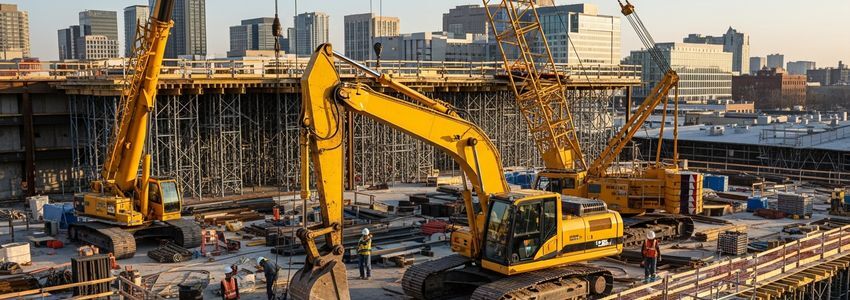
Financing solutions for all types of construction equipment
Down Payments
One of the major advantages of equipment financing is the low down payment requirement. Many programs offer 100% financing, meaning no down payment is needed. This is especially true for well-qualified borrowers. For others, a down payment of 10% to 20% might be required. A larger down payment can reduce your monthly payments and may help you secure a lower interest rate, as it lowers the lender's risk.
Pro Tip: Section 179 Tax Deduction
Don't forget the potential tax benefits. Under Section 179 of the IRS tax code, businesses may be able to deduct the full purchase price of qualifying new or used equipment in the year it is put into service. This can provide a significant tax saving that effectively lowers the net cost of your financed equipment. Consult with a tax professional to see how this could benefit your business.
How to Qualify for Construction Equipment Financing
Qualifying for construction equipment financing is generally more accessible than qualifying for other types of business loans because the equipment itself secures the loan. However, lenders still have specific criteria they use to evaluate applicants. Preparing your documentation and understanding these requirements can significantly improve your chances of approval and help you secure the best possible terms.
Here are the key factors lenders consider:
1. Credit Score
Both your personal and business credit scores are important. A higher score indicates a lower risk to the lender. While a perfect score isn't necessary, it directly impacts your interest rate.
- 680+ FICO Score: This is generally the threshold for securing competitive rates and favorable terms. Applicants in this range are considered low-risk.
- 620-679 FICO Score: You can still find good financing options in this range, though rates may be slightly higher. Lenders will look closely at other factors like cash flow and time in business.
- Below 620 FICO Score: Approval is still possible, but options may be more limited. Lenders specializing in subprime financing can help, but you should expect higher rates and potentially a down payment requirement.
2. Time in Business
The length of time your business has been operational is a key indicator of stability.
- 2+ Years: This is the gold standard. Businesses with at least two years of history have access to the widest range of financing products and the best rates.
- 6 Months - 2 Years: Many lenders, including Crestmont Capital, have programs for businesses in this range. You'll need to demonstrate strong revenue and a solid business plan.
- Startups (Under 6 Months): Financing is more challenging for startups but not impossible. Lenders will heavily weigh your personal credit score, industry experience, and may require a larger down payment or additional collateral.
3. Annual Revenue and Cash Flow
Lenders need to be confident that your business generates enough income to comfortably handle the new loan payment. They will typically review your last 3-6 months of business bank statements to assess your average monthly revenue and daily balances. A consistent, positive cash flow is a strong indicator of financial health. There isn't always a strict minimum revenue requirement, but lenders want to see that the new payment won't strain your finances.
4. Equipment Details
The type, age, and condition of the equipment play a role.
- New Equipment: Easier to finance with longer terms and lower rates because it has a high, predictable value.
- Used Equipment: Still highly financeable, but lenders may offer slightly shorter terms or higher rates, especially for older models. They will verify the equipment's fair market value to ensure it adequately collateralizes the loan.
Required Documents
To streamline the process, have the following documents ready:
- Completed Application: The starting point for any loan.
- Equipment Quote/Invoice: A formal quote from the seller detailing the equipment, price, and any additional costs.
- Bank Statements: Typically the last 3-6 months of business bank statements for revenue verification.
- Tax Returns: For larger loan amounts (often over $250,000), lenders may request the last 1-2 years of business and personal tax returns.
- Driver's License: A copy for identity verification.
By understanding these criteria and preparing in advance, you can present a strong application and position your business for a fast and successful financing experience.
New vs. Used Construction Equipment Financing
A common dilemma for contractors is whether to invest in new or used equipment. Both options have distinct advantages and disadvantages, and the best choice depends on your budget, project needs, and long-term business strategy. Fortunately, lenders like Crestmont Capital offer robust used equipment financing programs alongside options for brand-new machinery.
Financing New Construction Equipment
Purchasing new equipment straight from the manufacturer or an authorized dealer offers several benefits. You get the latest technology, peak performance, and a full manufacturer's warranty, which minimizes the risk of unexpected repair costs. From a financing perspective, new equipment is often seen as lower risk by lenders.
Pros:
- Better Financing Terms: Lenders typically offer the lowest interest rates and longest repayment terms for new equipment due to its high, easily determined value and longer useful life.
- Promotional Offers: Manufacturers often partner with lenders to offer special financing deals, such as 0% interest for a limited period.
- Warranty and Reliability: A full warranty reduces maintenance risks, and new machines are less likely to break down, preventing costly project delays.
- Latest Technology: New models often come with improved fuel efficiency, enhanced safety features, and advanced GPS or telematics systems, boosting productivity.
Cons:
- Higher Initial Cost: The upfront price is significantly higher than for used equipment, resulting in larger loan amounts and higher monthly payments.
- Rapid Depreciation: New equipment depreciates fastest in the first couple of years, similar to a new car.
Financing Used Construction Equipment
Buying used equipment can be a smart financial move, especially for businesses looking to manage costs or acquire a specific piece of machinery that is no longer in production. The secondary market for construction equipment is vast and active.
Pros:
- Lower Purchase Price: The most significant advantage is the lower cost, which can be 25-50% less than a new model. This translates to a smaller loan and more manageable payments.
- Slower Depreciation: Used equipment has already undergone its steepest depreciation, so it tends to hold its value better over time.
- Faster ROI: The lower initial investment means you can potentially achieve a return on your investment more quickly.
Cons:
- Potentially Higher Rates: Lenders may charge slightly higher interest rates and offer shorter terms for used equipment to offset the increased risk associated with its age and condition.
- No Warranty: Used equipment is often sold "as-is," meaning you are responsible for any repairs. A thorough inspection before purchase is critical.
- Unknown History: You may not know the full maintenance and usage history of the machine, which could lead to unexpected issues.
Financing Comparison: New vs. Used
| Feature | New Equipment Financing | Used Equipment Financing |
|---|---|---|
| Interest Rates | Typically lower (e.g., 5-10%) | Slightly higher (e.g., 7-15%) |
| Loan Terms | Longer (up to 7 years) | Often shorter (up to 5 years) |
| Down Payment | Often 0% for qualified buyers | May require 10-20% |
| Approval Speed | Very fast; value is standardized | Fast, but may require an inspection or appraisal |
Ultimately, the decision to finance new or used equipment depends on your specific circumstances. A business that needs the latest technology for a high-profile, long-term project might benefit from new equipment. In contrast, a contractor needing a reliable dump truck for general use could save a significant amount of money by financing a well-maintained used model.
Upgrade Your Fleet Today
Whether new or used, Crestmont Capital has a financing solution for you. Get a free, no-obligation quote in minutes.
Get Started NowBenefits of Financing Construction Equipment vs. Paying Cash
Even if your construction company has enough cash on hand to purchase equipment outright, financing is often the more strategic financial decision. Successful business owners understand that cash is king, and preserving liquidity is paramount for navigating the unpredictable nature of the construction industry. Opting for a construction equipment financing plan offers numerous advantages over a large cash outlay.
1. Conservation of Working Capital
This is the single most important benefit. A new excavator can cost over $200,000. Paying cash for such an asset instantly depletes your liquid capital, which is vital for day-to-day operations. This cash is needed for payroll, fuel, materials, marketing, and unexpected expenses or opportunities. By financing, you convert a massive one-time expense into a predictable, manageable monthly payment, keeping your cash free to fuel growth and maintain a healthy financial cushion.
2. Immediate Return on Investment (ROI)
Financing allows you to acquire and deploy revenue-generating equipment immediately, without waiting to save up the full purchase price. The new machine can start earning money on projects right away. In many cases, the additional income generated by the equipment can exceed the monthly financing payment, resulting in a net positive cash flow from day one.
3. 100% Financing and Bundled Costs
Many equipment financing agreements cover the full cost of the asset, requiring little to no down payment. Furthermore, soft costs like shipping, installation, and training can often be rolled into the loan. This means you can acquire a fully operational piece of equipment with minimal upfront cash, a feat that is impossible when paying cash.
4. Significant Tax Advantages
Financing equipment provides powerful tax benefits. As mentioned earlier, Section 179 of the IRS code allows you to deduct the full purchase price of the equipment in the year you acquire it. For example, if you finance a $150,000 wheel loader, you may be able to deduct the full $150,000 from your taxable income. Assuming a 25% tax bracket, this could result in a tax savings of $37,500. Additionally, the interest paid on the loan is also typically tax-deductible. These benefits can substantially reduce the true cost of acquiring the equipment. (Always consult a tax advisor for specifics related to your business).
5. Building Business Credit
Making consistent, on-time payments on an equipment loan helps build a strong credit history for your business. A robust business credit profile makes it easier and cheaper to secure financing for future needs, whether it's for more equipment, a line of credit, or a commercial real estate loan. Paying cash does nothing to build your business's credit file.
6. Fixed, Predictable Payments
Equipment loans come with a fixed interest rate and a fixed monthly payment over the life of the loan. This makes budgeting and financial forecasting much simpler and more accurate. You know exactly what your equipment will cost you each month, protecting you from interest rate fluctuations and allowing for better long-term planning.
While paying cash avoids interest charges, the opportunity cost of tying up that much capital often outweighs the interest savings. That cash could be invested in marketing to win more contracts, hiring more skilled labor, or held in reserve for emergencies-all of which can provide a greater return than the interest saved. As Forbes often highlights, smart leverage is a key component of scaling a successful business.
Construction Equipment Leasing vs. Financing: Which is Right for You?
When acquiring equipment, you have two primary options: financing (an equipment loan) or leasing. While both achieve the goal of getting you the machinery you need, they function differently and are suited for different business strategies. Understanding the distinction is key to making the right choice.
Equipment Financing (Loan)
As we've discussed, financing is a loan to purchase equipment. You make payments over a set term, and at the end of that term, you own the equipment free and clear. It's an ideal path for businesses that plan to use the equipment for its entire useful life and want to build equity in their assets.
Equipment Leasing
An equipment lease is essentially a long-term rental agreement. You pay a monthly fee to use the equipment for a specified period (e.g., 36 or 60 months). At the end of the lease term, you have several options:
- Return the equipment to the leasing company.
- Renew the lease and continue using the equipment.
- Purchase the equipment at its fair market value (FMV) or a pre-determined price (like a $1 buyout lease).
There are two main types of leases:
- Operating Lease (Fair Market Value or FMV): This is a true lease. Monthly payments are lower because you are only paying for the depreciation of the equipment during the lease term. At the end, you can buy it for its current market value. This is great for companies that want to consistently upgrade to the latest technology and avoid the hassles of ownership and resale.
- Capital Lease ($1 Buyout): This functions more like a loan. The monthly payments are higher, but at the end of the term, you can purchase the equipment for a nominal amount, typically $1. For tax purposes, this is often treated as a purchase from the start.
Key Differences at a Glance
| Aspect | Financing (Loan) | Leasing (FMV) |
|---|---|---|
| Ownership | You own the equipment at the end of the term. | The leasing company owns it. You have the option to buy. |
| Monthly Payment | Generally higher, as you're paying off the full value. | Generally lower, as you're only paying for depreciation. |
| Upfront Costs | May require a down payment. | Often requires only the first and last month's payment. |
| End of Term | You own the asset. | Return, renew, or purchase the equipment. |
| Tax Treatment | You can take depreciation and Section 179 deductions. | Lease payments are typically treated as an operating expense. |
| Best For | Long-term use, building equity, equipment that holds value. | Short-term projects, equipment that becomes obsolete quickly, keeping payments low. |
Which should you choose?
Choose financing if:
- You plan to use the equipment for many years.
- The equipment has a long useful life and retains its value well (e.g., a bulldozer).
- You want to build equity and own the asset at the end.
Choose leasing if:
- You want the lowest possible monthly payment.
- You need to constantly have the latest technology (e.g., GPS surveying equipment).
- You only need the equipment for a specific project or a few years.
- You don't want to deal with reselling the equipment later.
Crestmont Capital offers both flexible financing and leasing options. Our experts can discuss your business goals and help you determine the most advantageous structure for your situation.
How to Apply for Construction Equipment Financing with Crestmont Capital
At Crestmont Capital, we've designed our application process to be as fast, simple, and transparent as possible. We know that in the construction business, time is money, and you can't afford to be bogged down by paperwork. Our goal is to get you an approval and funding in record time so you can acquire the equipment you need to keep your projects moving forward. For a more detailed look at financing heavy machinery, see our heavy equipment financing guide.
Our Simple 3-Step Financing Process
Apply Online
Fill out our secure, one-page online application in under 5 minutes. It's a soft credit pull, so it won't affect your credit score.
Review Your Offer
Receive a credit decision, often within a few hours. Your dedicated account manager will walk you through the terms and options.
Get Funded
Once you e-sign the documents, we wire the funds directly to the seller. You can get your equipment in as fast as 24-48 hours.
What You'll Need to Get Started:
- Business Information: Legal business name, address, and tax ID (EIN).
- Personal Information: Your name, address, and social security number (for credit check purposes).
- Equipment Information: A description of the equipment you want to finance and an invoice or quote from the seller.
For most transactions under $250,000, our application-only program is all you need. There's no need to provide tax returns, financial statements, or a detailed business plan. We focus on making the process as frictionless as possible.
Industry Insight: The Need for Speed
The construction industry moves fast. A sudden contract win or equipment failure requires immediate action. Unlike traditional banks or the SBA, which can take weeks or months to approve a loan, specialized lenders like Crestmont Capital can provide funding in as little as 24 hours. This speed and agility are critical advantages for contractors who need to capitalize on opportunities without delay.
Our team of financing specialists has deep expertise in the construction industry. We understand the value of the equipment and the realities of your business cycle. We work with a wide network of funding partners to find the most competitive rates and flexible terms available, even for business owners with less-than-perfect credit. We finance purchases from dealers, private parties, and auctions nationwide.
Don't Let a Lack of Capital Hold You Back
Your next big project is waiting. Let Crestmont Capital provide the funding you need to succeed.
Apply in 5 MinutesFrequently Asked Questions About Construction Equipment Financing
What is the minimum credit score for construction equipment financing?
While a higher credit score (680+) will get you the best rates, we have programs available for a wide range of credit profiles. We can often find financing solutions for business owners with scores as low as 550, especially if they have strong cash flow and have been in business for over a year.
Can I finance used construction equipment?
Absolutely. Crestmont Capital offers excellent financing options for both new and used equipment. There are generally no age restrictions on the machinery, as long as it's in good working condition and has a reasonable market value to serve as collateral.
How long does the financing process take?
Our process is designed for speed. You can often get a credit approval within 2-4 hours of submitting your application. From there, funding can be completed in as little as 24-48 hours, depending on how quickly you and the seller provide the necessary documentation.
Do I need a down payment?
For well-qualified borrowers, 100% financing with no down payment is very common. For those with challenged credit or newer businesses, a down payment of 10-20% may be required to secure an approval and lower the lender's risk.
Can I finance equipment from a private seller or an auction?
Yes. We are very flexible and can facilitate financing for purchases from authorized dealers, private parties, and equipment auctions. Our team will work directly with the seller to handle the verification and funding process smoothly.
What if I am a startup construction company?
Financing is available for startups, though the requirements are stricter. Lenders will place a heavy emphasis on your personal credit score (ideally 680+), relevant industry experience, and may require a down payment and a detailed business plan. We have specific programs designed to help new businesses get the equipment they need to get started.
Will applying for financing affect my credit score?
Our initial application process uses a "soft" credit pull, which does not impact your credit score. This allows you to see what terms you qualify for without any risk. A "hard" credit inquiry is only performed once you decide to move forward with a specific loan offer.
Can I pay off my equipment loan early?
This depends on the specific loan agreement. Some loans have prepayment penalties, while others do not. Be sure to discuss this with your financing specialist if you anticipate being able to pay off the loan ahead of schedule. We can help find a loan structure that meets your needs.
What types of construction equipment can I finance?
You can finance almost any type of new or used construction equipment, including excavators, bulldozers, cranes, backhoes, skid steers, dump trucks, asphalt pavers, and more. If it's a piece of equipment that helps your business generate revenue, we can likely finance it.
Are there any restrictions on the age of the equipment?
Generally, there are no strict age limits. The primary consideration is the equipment's condition and fair market value. As long as the equipment is in good working order and has a value that supports the loan amount, its age is less of a factor. However, terms may be shorter for very old equipment.
What loan amounts are available?
We can provide financing for a wide range of needs, from as little as $10,000 for a small attachment to over $2,000,000 for a large fleet of heavy machinery. The amount you qualify for depends on your business's financial profile and the value of the equipment.
Can I bundle soft costs like shipping and taxes into the loan?
Yes, in many cases we can offer 100% financing that includes soft costs. This allows you to finance the total cost of acquiring and deploying the equipment, including the purchase price, taxes, delivery fees, and installation, into one convenient monthly payment.
What is the difference between a loan and a $1 buyout lease?
Functionally, they are very similar. Both are designed for you to own the equipment at the end. A $1 buyout lease is a type of capital lease where you make regular payments and then purchase the equipment for $1 at the end of the term. For tax and accounting purposes, it's treated like a loan, and you can still take advantage of Section 179 deductions.
Can I refinance existing construction equipment?
Yes, refinancing is an option. If you have an existing loan with a high interest rate, you may be able to refinance it to get a lower monthly payment or better terms. You can also do a sale-leaseback, where you sell equipment you own to a lender and lease it back, which is a way to generate working capital from your existing assets.
Do I need to have a specific piece of equipment picked out before I apply?
It's helpful, but not strictly necessary. You can apply for a pre-approval to find out how much you qualify for. This gives you the confidence to shop for equipment knowing your financing is already in place, which can give you more negotiating power with sellers.
Your Next Steps
Investing in the right equipment is one of the most impactful decisions you can make for your construction business. With the right financing partner, you can acquire the tools you need to increase efficiency, take on larger, more profitable projects, and secure a competitive edge in the market.
At Crestmont Capital, we are committed to being that partner. We combine deep industry knowledge with a streamlined process and a commitment to finding the best possible financing solution for every client.
Ready to get started?
- Submit our quick online application. It's free, secure, and won't impact your credit score.
- Speak with a financing specialist. We'll review your options and answer all your questions.
- Get funded and grow your business. Acquire your equipment and start generating more revenue.
This content is provided for general educational purposes only and does not constitute financial, legal, or tax advice. Consult with a qualified professional before making financing decisions.