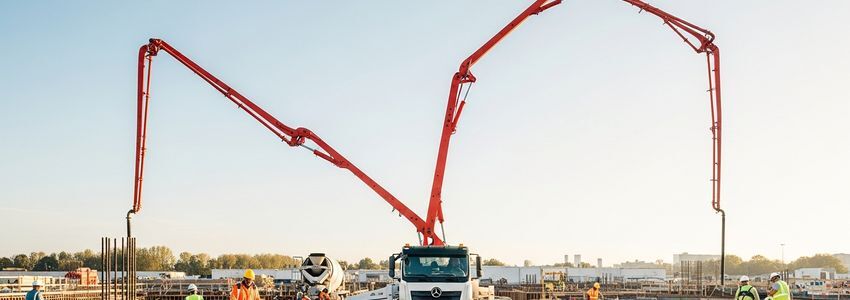
Securing the right equipment is non-negotiable for success in the competitive concrete and construction industry. A reliable concrete pump can dramatically increase your efficiency, expand your project capabilities, and boost your bottom line. This comprehensive guide explores every aspect of concrete pump financing, providing the detailed information you need to make a strategic investment in your company's future.
Table of Contents
In This Article
- What Is Concrete Pump Financing?
- Types of Concrete Pumps and Equipment Costs
- Key Benefits of Financing vs. Buying Outright
- How Concrete Pump Financing Works
- Types of Financing Options Available
- Who Qualifies for Concrete Pump Financing?
- How Crestmont Capital Helps Concrete Contractors
- Real-World Scenarios
- Financing vs. Leasing vs. Renting
- Frequently Asked Questions
- How to Get Started
- Conclusion
- What Is Concrete Pump Financing?
- Types of Concrete Pumps and Equipment Costs
- Key Benefits of Financing vs. Buying Outright
- How Concrete Pump Financing Works
- Types of Financing Options Available
- Who Qualifies for Concrete Pump Financing?
- How Crestmont Capital Helps Concrete Contractors
- Real-World Scenarios
- Concrete Pump Financing vs. Leasing vs. Renting
- Frequently Asked Questions
- How to Get Started
- Conclusion
What Is Concrete Pump Financing?
Concrete pump financing is a specialized financial product that allows contractors and construction businesses to acquire concrete pumps without paying the full purchase price upfront. Instead of depleting cash reserves, businesses can make predictable monthly payments over a set term. This financial tool is a form of asset-based lending where the concrete pump itself serves as the primary collateral for the loan or lease.
This type of funding is not limited to just the purchase of new equipment. A comprehensive concrete pump financing agreement can cover a wide range of costs associated with the acquisition. This includes the purchase of used pumps, major repairs or overhauls on existing equipment, and even "soft costs" such as taxes, delivery fees, and operator training. By bundling these expenses into a single payment, you simplify your accounting and preserve your working capital for other critical business needs.
Essentially, concrete pump financing is a strategic lever for business growth. It provides access to essential, high-cost machinery that might otherwise be out of reach, enabling you to take on larger, more profitable jobs. This is a common practice within the broader category of heavy equipment financing, tailored specifically to the needs of concrete professionals who rely on this vital machinery to stay competitive and efficient on the job site.
Whether you need a massive boom pump for a high-rise project or a versatile line pump for residential foundations, financing makes it possible to get the right tool for the job now. It transforms a prohibitive capital expenditure into a manageable operating expense, aligning the cost of the equipment with the revenue it generates over its lifespan. This alignment is crucial for maintaining healthy cash flow and scaling your operations sustainably.
Types of Concrete Pumps and Equipment Costs
Understanding the different types of concrete pumps and their associated costs is the first step in determining your financing needs. The price of this equipment can vary dramatically based on type, size, brand, and condition. Having a clear idea of the market rates will help you create a realistic budget and approach lenders with a well-defined funding request.
The two primary categories of concrete pumps are boom pumps and line pumps, each designed for different applications and carrying a distinct price tag. Beyond the initial purchase price, it's also important to consider the total cost of ownership, which includes maintenance, insurance, and potential repairs. A robust construction equipment financing plan should account for these variables.
Boom Pumps (Truck-Mounted)
Boom pumps are the heavy-hitters of the concrete pumping world. They consist of a large pump mounted on a truck chassis with a remote-controlled articulating robotic arm, or "boom," used to place concrete with precision at significant heights and distances. These are essential for large-scale commercial, industrial, and infrastructure projects like high-rise buildings, bridges, and large foundations.
The cost of a new boom pump is substantial, typically ranging from $200,000 to over $1,000,000. Key factors influencing the price include the length of the boom (from 20 meters to over 70 meters), the pump's output capacity (measured in cubic yards or meters per hour), the truck chassis brand (such as Mack, Peterbilt, or Freightliner), and the pump manufacturer (like Schwing, Putzmeister, or CIFA). Used boom pumps offer a more affordable entry point, with prices often falling between $75,000 and $500,000 depending on age, hours of operation, and maintenance history. Securing specialized boom pump financing is critical for acquiring these high-value assets.
Line Pumps (Trailer-Mounted or Skid-Mounted)
Line pumps, also known as trailer pumps or stationary pumps, are more compact and versatile than their boom pump counterparts. They pump concrete through a series of steel or rubber hoses that are manually laid out on the job site. This makes them ideal for smaller-scale projects where a large boom is unnecessary or cannot access the area, such as residential foundations, swimming pools, sidewalks, and low-rise commercial slabs.
The cost for a new line pump is significantly lower, generally ranging from $30,000 to $150,000. The price depends on factors like pumping pressure, maximum output, engine type (diesel or electric), and portability. Used line pumps can be found for as little as $15,000 to $70,000. Due to their lower cost and versatility, line pump financing is a popular option for smaller contractors, concrete specialists, and those looking to expand their service offerings without the massive investment of a boom pump.
Other Associated Costs to Consider
The sticker price of the pump is only part of the equation. When planning your financing, it is wise to factor in other potential expenses. These can include initial sales tax, delivery and commissioning fees, and costs for initial operator training. Additionally, ongoing expenses like preventative maintenance, replacement parts (hoses, clamps, wear plates), and comprehensive insurance coverage should be included in your long-term business budget. Some financing agreements can be structured to include a portion of these upfront costs, providing a more turnkey solution for your business.
Key Benefits of Financing vs. Buying Outright
For most construction businesses, the decision to finance a concrete pump rather than purchase it with cash is a strategic one rooted in sound financial management. While paying cash might seem appealing to avoid interest payments, it can severely restrict your company's flexibility and growth potential. Financing offers numerous advantages that often outweigh the cost of interest, making it the preferred acquisition method for smart contractors.
The primary benefit of financing is the preservation of working capital. Cash is the lifeblood of any business, especially in the construction industry where cash flow can be unpredictable. Tying up hundreds of thousands of dollars in a single piece of equipment can leave you vulnerable to unexpected expenses, project delays, or payroll shortfalls. Financing keeps your cash on hand for daily operations, marketing, hiring skilled labor, and seizing new opportunities as they arise.
Financing also provides predictable, fixed monthly payments that simplify budgeting and forecasting. You know exactly what your equipment will cost each month, allowing you to accurately bid on jobs and manage your expenses. This stability is a significant advantage over the lumpy, unpredictable costs associated with equipment rentals or major cash outlays. Furthermore, financing allows you to acquire newer, more efficient, and more reliable equipment than you might be able to afford with cash. This can lead to reduced downtime, lower maintenance costs, and the ability to complete jobs faster, directly improving your profitability.
From a tax perspective, financing a concrete pump can offer significant advantages. Under Section 179 of the IRS tax code, businesses may be able to deduct the full purchase price of qualifying new or used equipment in the year it is put into service. This can result in substantial tax savings. Additionally, the interest paid on a concrete pump loan is typically tax-deductible as a business expense. Always consult with a tax professional to understand how these benefits apply to your specific financial situation.
Expand Your Fleet Without Draining Your Capital
Get the concrete pump you need to grow your business. Our simple application takes just a few minutes.
Get a Free Quote →How Concrete Pump Financing Works
The process of securing concrete pump financing is designed to be straightforward and efficient, especially when working with a lender that specializes in construction equipment. The goal is to get you the capital you need to acquire your equipment quickly so you can get it on the job site and start generating revenue. While specific steps may vary slightly between lenders, the general workflow remains consistent.
The journey begins with a simple application. Most modern lenders, like Crestmont Capital, offer a secure online application that can be completed in minutes. You will provide basic information about your business, such as your legal business name, time in business, and annual revenue, as well as details about the specific concrete pump you wish to purchase, including its cost, age, and the seller's information.
After submitting your application, a financing specialist will review your information. They may request additional documentation to verify your business's financial health. This typically includes a few months of business bank statements, and for larger loan amounts, financial statements like a profit and loss statement or balance sheet. This underwriting process is where the lender assesses risk and determines the terms of your financing offer, including the interest rate, loan amount, and repayment period.
Once approved, you will receive a formal financing offer outlining all the terms and conditions. After you review and accept the offer, the lender will finalize the documentation. The lender then funds the transaction, typically by paying the equipment dealer or private seller directly. With the payment complete, you can take possession of your concrete pump and put it to work immediately, while your predictable monthly payments to the lender begin.
Apply in Minutes
Complete our simple, secure online application. Tell us about your business and the equipment you need.
Review Your Offers
We assess your application and provide you with clear, competitive financing offers, often within a few hours.
Sign Documents
Accept the best offer for your business and sign the financing documents electronically. No need to visit a bank.
Get Your Equipment
We pay the seller directly. You get your concrete pump and put it to work growing your business.
Types of Financing Options Available
When seeking concrete equipment financing, contractors have several different products to choose from. The best option for your business will depend on your specific goals, such as whether you want to own the equipment long-term, desire the lowest possible monthly payment, or need maximum flexibility. Understanding the nuances of each option is key to making an informed decision.
Equipment Finance Agreements (EFAs)
An Equipment Finance Agreement, or EFA, is the most straightforward type of concrete pump loan. It functions much like a traditional loan where the lender provides the funds to purchase the equipment, and you make regular principal and interest payments over a fixed term. With an EFA, you are the legal owner of the equipment from day one, and the lender holds a security interest (a lien) on it until the loan is fully repaid. This is an excellent choice for contractors who plan to keep their concrete pump for its entire useful life and want to build equity in their assets.
Capital Leases ($1 Buyout Lease)
A capital lease, often called a $1 buyout lease, is structured as a lease but functions very similarly to a loan for accounting and tax purposes. You make regular lease payments for the duration of the term, and at the end, you have the option to purchase the concrete pump for a nominal amount, typically just $1. Because ownership is virtually guaranteed to transfer to you, the IRS generally treats this as a purchase, allowing you to take advantage of depreciation and Section 179 tax deductions. A concrete pump lease of this type is ideal for businesses that want the benefits of ownership but may prefer the payment structure of a lease.
Fair Market Value (FMV) Leases
A Fair Market Value (FMV) lease is a true lease, also known as an operating lease. With an FMV lease, you are essentially renting the equipment for a set period, typically 2 to 5 years. Because you are only paying for the depreciation of the equipment during the lease term, not its full value, the monthly payments are often significantly lower than with an EFA or capital lease. At the end of the term, you have several options: you can purchase the pump for its fair market value, return it to the lender, or renew the lease with a newer model. This is a great option for businesses that want to maintain a modern fleet, avoid the risks of obsolescence, and have the lowest possible monthly outlay.
SBA Loans
Loans backed by the U.S. Small Business Administration (SBA), such as the 7(a) and 504 loan programs, can be an excellent source for construction equipment loans. SBA loans are known for their long repayment terms and competitive interest rates, which can result in very affordable monthly payments. According to the SBA's official site, these loans can be used for a variety of business purposes, including major equipment purchases. However, the application process for SBA loans is typically more intensive and time-consuming, with stricter eligibility requirements regarding credit score, time in business, and financial documentation. They are best suited for well-established businesses with strong financial records that are not in a hurry to acquire their equipment.
Key Stat: The U.S. construction industry is a major economic driver. According to the U.S. Census Bureau, the total value of construction put in place is consistently over $1.8 trillion annually, highlighting the immense demand for efficient equipment like concrete pumps.
Who Qualifies for Concrete Pump Financing?
Lenders evaluate several key factors to determine a business's eligibility for concrete pump financing. While requirements can vary, understanding the general criteria will help you prepare your application and increase your chances of approval. The good news is that financing is often more accessible than traditional bank loans because the equipment itself provides strong collateral.
Credit Score: Both your personal and business credit scores play a significant role. Most lenders prefer to see a FICO score of 620 or higher. However, a lower score doesn't automatically mean a disqualification. Many alternative lenders, including Crestmont Capital, have programs specifically designed for business owners with less-than-perfect credit. These programs may require a larger down payment or have slightly higher interest rates to offset the increased risk, but they provide a vital pathway to equipment ownership. For those with credit challenges, exploring bad credit business loans can be a viable strategy.
Time in Business: Lenders typically like to see a business history of at least one to two years. This track record demonstrates stability and an ability to manage operations and cash flow over time. Start-up businesses (less than one year old) can still obtain financing, but they may face more scrutiny. Strong personal credit, a solid business plan, and a down payment become even more important for new companies seeking to finance their first major piece of equipment.
Annual Revenue and Cash Flow: Your company's revenue is a direct indicator of its ability to handle a new monthly payment. Lenders will review your business bank statements to verify consistent cash flow and ensure that your income can comfortably support the new debt obligation. While there isn't always a strict minimum revenue requirement, a healthy and predictable flow of deposits is crucial for approval. Lenders want to see that your business isn't just surviving, but has the capacity to grow with the new equipment.

How Crestmont Capital Helps Concrete Contractors
Navigating the world of equipment financing can be complex, but Crestmont Capital simplifies the process for concrete contractors and construction business owners. We understand the unique challenges and opportunities of your industry, from the seasonal nature of the work to the urgent need for reliable machinery. Our entire approach is built around providing fast, flexible, and transparent financing solutions that help your business thrive.
One of our core strengths is speed. When you win a new contract or an old pump breaks down, you don't have weeks to wait for a traditional bank to approve a loan. We offer a streamlined online application and a rapid underwriting process, often providing approvals within hours and funding within a day or two. This commitment to speed is why so many contractors turn to us for fast business loans to seize opportunities without delay.
We also offer a wide range of financing products to suit any business need. Whether you're looking for a straightforward equipment financing agreement to own your pump long-term, or a flexible equipment leasing option to keep your fleet modern, we have a solution. Our financing specialists work with you to understand your goals and structure a plan with terms and payments that align with your cash flow and business strategy.
Crestmont Capital is committed to serving the entire spectrum of the construction industry. We work with established, multi-million dollar companies as well as newer businesses and those with challenging credit histories. Our diverse lending programs, including options for bad credit business loans, ensure that more contractors have access to the capital they need to grow. From general small business loans for working capital to specialized financing for high-value assets like concrete pumps, our mission is to be your trusted financial partner.
Your Partner in Construction Financing
Crestmont Capital understands the needs of contractors. Get the funding you need from a lender you can trust.
Apply Now →Real-World Scenarios
To better illustrate how concrete pump financing works in practice, let's explore three common scenarios faced by contractors. These examples showcase how different financing structures can be applied to solve specific business challenges and facilitate growth.
Scenario 1: The Start-Up Contractor
The Challenge: Marco has worked as a concrete finisher for 10 years and decides to start his own business focusing on residential projects like patios, foundations, and pools. He has excellent industry experience and good personal credit (a 720 FICO score), but his business is brand new with no revenue history. He needs a reliable used line pump, which costs $45,000, but doesn't have the cash to buy it outright.
The Solution: Marco applies for a concrete pump lease through Crestmont Capital. Due to his strong personal credit and industry experience, he is approved for a 48-month Fair Market Value (FMV) lease with a 10% down payment. This structure offers a lower monthly payment compared to a loan, preserving his limited start-up capital. After four years, as his business is established and profitable, he will have the option to purchase the pump or upgrade to a newer model, allowing his equipment to grow with his company.
Scenario 2: The Expanding Business
The Challenge: "Precision Concrete Pumping," a well-established company with five years in business and annual revenues of $1.5 million, just won a major contract to work on a new multi-story office building. Their current fleet doesn't include a boom pump with sufficient reach for the project. They need to acquire a new 40-meter boom pump costing $550,000 as quickly as possible to meet the project deadline.
The Solution: The owner applies for an Equipment Finance Agreement (EFA). Given the company's strong financials and time in business, they are quickly approved for 100% financing over a 72-month term. The EFA allows them to take immediate ownership of the pump and benefit from the Section 179 tax deduction for the full purchase price in the current tax year. The fast funding process ensures they get the pump on-site without delaying the lucrative new project, and the predictable monthly payment is easily incorporated into their project budget.
Scenario 3: The Technology Upgrade
The Challenge: A veteran-owned concrete business has an eight-year-old boom pump that is becoming increasingly unreliable and costly to maintain. The downtime is hurting their reputation and profitability. The owner wants to upgrade to a newer, more fuel-efficient model with advanced telematics for better fleet management, which costs $625,000. He wants to own the asset long-term but is concerned about a high monthly payment.
The Solution: The owner secures a concrete pump loan structured as a capital lease with a $1 buyout option and an 84-month (7-year) term. This long term spreads the cost out, resulting in a manageable monthly payment that fits within his budget. At the end of the term, he will own the modern, efficient pump for just one dollar, securing a valuable asset for his company for years to come. This strategic financing allows him to improve operational efficiency and reduce maintenance costs without straining his cash flow.
The Concrete Pumping Industry at a Glance
$50B+
Global Concrete Pump Market Size
5.5%
Projected Annual Growth Rate (CAGR)
70%
Of Businesses Finance Equipment Acquisitions
Source: Industry reports and market analysis from firms like Grand View Research and Bloomberg.
Concrete Pump Financing vs. Leasing vs. Renting
Choosing how to acquire a concrete pump is a critical decision. The three main options-financing, leasing, and renting-each have distinct advantages and disadvantages. The right choice depends on your company's financial situation, project pipeline, and long-term goals.
Financing (through an EFA or capital lease) is ideal for businesses that want to own their assets and build equity. It's a long-term strategy that provides stability and potential tax benefits. Leasing (specifically an FMV or operating lease) is suited for businesses that prioritize low monthly payments and want access to the latest technology without the commitment of ownership. Renting is a short-term solution, perfect for one-off jobs or when you need a specific type of pump for a brief period. It offers maximum flexibility but is the most expensive option over time and builds no equity.
Below is a table that breaks down the key differences to help you decide which path is best for your business.
| Feature | Financing (Loan/EFA) | Leasing (FMV Lease) | Renting |
|---|---|---|---|
| Ownership | You own the equipment at the end of the term. | Lender retains ownership. You have the option to buy, return, or upgrade. | Rental company owns the equipment at all times. |
| Upfront Cost | Low to moderate (down payment may be required). | Lowest (often first and last month's payment). | Moderate (security deposit and first rental payment). |
| Monthly Payment | Higher (reflects full asset value). | Lower (reflects depreciation during use). | Highest (includes profit margin for rental company). |
| Term Length | Long-term (typically 3-7 years). | Medium-term (typically 2-5 years). | Short-term (daily, weekly, or monthly). |
| Maintenance | You are responsible for all maintenance and repairs. | You are typically responsible for routine maintenance. | Rental company is usually responsible for major repairs. |
| Tax Implications | Potential for Section 179 deduction and interest deduction. | Monthly payments may be treated as a fully deductible operating expense. | Rental payments are fully deductible operating expenses. |
| Best For | Businesses wanting to build equity and use equipment for its full lifespan. | Businesses prioritizing low payments and access to modern equipment. | One-off projects, specialized needs, or trying equipment before buying. |
Expert Tip: Many contractors use a hybrid approach. They finance core equipment like their primary line or boom pump, and then rent specialized pumps for unique, short-term jobs. This strategy optimizes capital allocation and operational flexibility.
Frequently Asked Questions
What is the minimum credit score for concrete pump financing?
While a credit score of 620 or higher is generally preferred, it is not a strict cutoff. Many lenders, including Crestmont Capital, offer financing programs for business owners with scores in the high 500s. Factors like time in business, cash flow, and the value of the equipment can help offset a lower credit score.
Can I finance a used concrete pump?
Absolutely. Financing is available for both new and used concrete pumps. Lenders will typically consider the age and condition of the used equipment when determining financing terms. Financing a used pump is a popular strategy for reducing the initial investment and lowering monthly payments.
How long are the repayment terms?
Repayment terms for a concrete pump loan or lease typically range from 24 to 84 months (2 to 7 years). The length of the term depends on the cost and age of the equipment, your credit profile, and your preference. Longer terms result in lower monthly payments, while shorter terms mean you pay less interest over the life of the loan.
How much of a down payment is required?
For well-qualified borrowers with strong credit and business history, 100% financing with no down payment is often possible. For businesses that are newer or have challenged credit, a down payment of 10-20% may be required to secure the financing. A down payment reduces the lender's risk and can help you get approved with better terms.
How quickly can I get funded?
With a streamlined lender like Crestmont Capital, the process is very fast. After submitting a simple online application, you can often receive an approval and financing offers within a few hours. Once you select an offer and sign the documents, funding can occur in as little as 24-48 hours.
Can I finance a pump from a private seller?
Yes, many lenders will finance equipment purchased from a private seller, not just from a dealership. The lender will work with you and the seller to verify the equipment's condition and value and will handle the payment directly to the seller to ensure a secure transaction.
What documents do I need to apply?
For most applications under $250,000, the process is simple. You will typically only need to complete the application and provide the last 3-6 months of your business bank statements. For larger requests, you may be asked for additional financial documents like tax returns or a profit and loss statement.
Does the financing cover soft costs like delivery and training?
Yes, many financing agreements can be structured to include soft costs. This allows you to bundle expenses like taxes, delivery fees, installation, and initial operator training into your total financing amount, resulting in a single, convenient monthly payment.
What is Section 179 and how does it apply?
Section 179 of the IRS tax code allows businesses to deduct the full purchase price of qualifying equipment purchased or financed during the tax year. This means if you finance a $400,000 concrete pump, you may be able to deduct the entire $400,000 from your taxable income. It's a powerful incentive designed to encourage businesses to invest in themselves. Always consult your tax advisor for details specific to your business.
Can startups get financing for a concrete pump?
Yes, startups and new businesses can qualify for concrete pump financing. Lenders will place more emphasis on the owner's personal credit score, industry experience, and a comprehensive business plan. A down payment is often required, and a lease structure might be recommended to reduce risk and upfront costs.
What happens if I have bad credit?
Having bad credit does not automatically disqualify you. There are specialized financing programs for businesses with challenged credit. Lenders will look at other factors like your recent cash flow and the value of the pump itself. You may be offered terms with a higher interest rate or be required to provide a larger down payment, but financing is still very much a possibility.
Is it better to get a loan or a lease for a concrete pump?
The "better" option depends on your business goals. If you want to own the asset long-term and build equity, a loan (EFA) or a capital lease is best. If you prioritize the lowest monthly payment and want the flexibility to upgrade your equipment every few years, a Fair Market Value (FMV) lease is the superior choice.
What are the typical interest rates?
Interest rates for concrete pump financing can vary widely based on your credit score, time in business, and the specific terms of the deal. Rates can be as low as 6-8% for top-tier applicants, while businesses with higher risk profiles might see rates in the 15-30% range. The best way to know your rate is to submit a no-obligation application.
Can I pay off my concrete pump loan early?
This depends on the specific financing agreement. Some loans have prepayment penalties, while others do not. It's important to ask your lender about their prepayment policy before signing the documents if you anticipate being able to pay the loan off ahead of schedule.
What if my business is seasonal?
Many lenders who specialize in construction financing understand the seasonal nature of the industry. They can offer flexible payment structures, such as step payments (lower payments during slow months) or seasonal payments (no payments during the off-season). Be sure to discuss your cash flow cycle with your financing specialist to find a payment plan that works for you.
Ready to Finance Your Concrete Pump?
Get fast, flexible equipment financing from the #1 business lender in the U.S. No obligation - apply in minutes.
Apply Now →How to Get Started
Securing the financing you need for a new or used concrete pump is a straightforward process. By following a few simple steps, you can move from identifying your equipment needs to having that equipment on your job site quickly. Here is a clear path to getting started with Crestmont Capital.
Define Your Equipment Needs
First, identify the exact type of concrete pump that best suits your projects. Determine whether you need a boom pump or a line pump, and whether a new or used model is more appropriate for your budget. Get a quote from a dealer or private seller so you know the exact amount you need to finance.
Gather Your Documents
To speed up the process, have your basic information ready. This includes your business's legal name, address, tax ID number, and the last 3-6 months of your business bank statements. Having these on hand will make the application process seamless.
Complete Our Simple Application
Fill out our secure, one-page online application. It takes only a few minutes to complete and requires no hard credit pull, so it won't affect your credit score. This gives us the information we need to find the best financing options for you.
Review Offers and Get Funded
A dedicated financing specialist will contact you to discuss your application and present you with clear, competitive financing offers. Once you choose the best plan for your business and sign the documents, we will pay the seller directly, and you can take delivery of your concrete pump.
Conclusion
For any serious concrete contractor, a reliable concrete pump is not a luxury-it is a fundamental asset for growth, efficiency, and profitability. While the initial cost of this equipment can be daunting, concrete pump financing provides a powerful and accessible solution. It allows you to acquire the exact machinery you need to compete for larger jobs and scale your operations without compromising your company's cash flow.
By understanding the different types of pumps, the variety of financing options available, and the key qualification criteria, you can make a strategic investment that pays dividends for years to come. Whether you choose a loan, a lease, or another financing structure, the goal is the same: to turn a major capital expenditure into a manageable operating expense that generates a strong return on investment.
At Crestmont Capital, we specialize in helping construction businesses like yours secure the equipment they need to succeed. Our fast, flexible, and transparent financing process is designed to get you funded quickly so you can get back to what you do best-building. If you're ready to take your business to the next level, we invite you to start the conversation today.
Disclaimer: The information provided in this article is for general educational purposes only and is not financial, legal, or tax advice. Funding terms, qualifications, and product availability may vary and are subject to change without notice. Crestmont Capital does not guarantee approval, rates, or specific outcomes. For personalized information about your business funding options, contact our team directly.