
 (800) 949-0401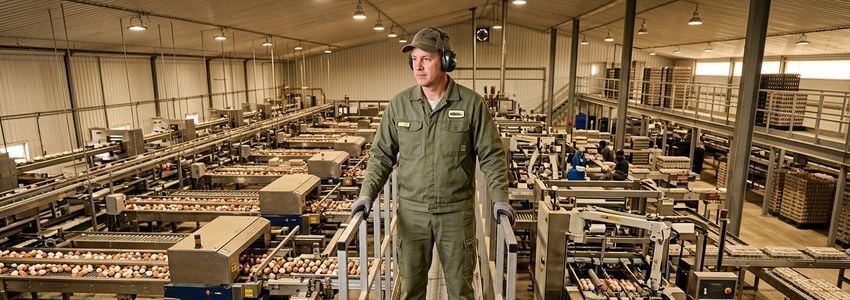
Commercial Egg Production Equipment Financing: The Complete Guide for Poultry Farmers
Commercial egg production equipment financing gives poultry farmers a way to acquire layer housing systems, egg grading lines, washing equipment, and incubation technology without draining the cash reserves a farm needs to survive a bad quarter. Whether you run a family-owned layer operation or a large-scale egg processing facility, the equipment that keeps eggs moving from nest to carton is expensive, specialized, and constantly evolving. Financing spreads that cost over time so working capital stays available for feed, labor, and flock health.
This guide covers everything a poultry farmer or egg producer needs to know about financing egg farm equipment: what qualifies, how the process works, what it costs, and how to choose the right funding structure for a growing or modernizing operation.
In This Article
What Is Egg Production Equipment Financing?
Egg production equipment financing is a business funding arrangement that lets a poultry farm or processing operation purchase, lease, or upgrade the physical machinery involved in producing, grading, washing, and packaging eggs, while spreading the cost across manageable monthly payments instead of a single upfront outlay. It functions much like other equipment financing programs: a lender covers most or all of the purchase price, and the equipment itself typically secures the loan.
For egg producers, this covers a wide range of assets, from layer cage systems and cage-free aviary housing to egg candling machines, automated grading lines, egg washers, and climate control systems that keep a laying flock productive year-round. Because commercial egg farm equipment routinely costs anywhere from $15,000 for a small egg washer to well over $1 million for a fully automated grading and packaging line, financing is often the only realistic path to modernization for small and mid-size producers.
Key Stat: The United States had roughly 373 million commercial laying hens as of January 2026, with about 309 million producing table eggs, according to USDA Agricultural Marketing Service data. That scale of production depends on continuous equipment investment across thousands of individual farms.
Key Benefits of Financing Egg Production Equipment
Egg farms operate on tight margins that swing with feed costs, egg prices, and disease pressure. Financing equipment instead of paying cash preserves flexibility in a business where conditions can change fast.
- Preserves working capital for feed, labor, utilities, and biosecurity measures instead of tying it up in a single large purchase.
- Predictable monthly payments make budgeting easier across seasonal egg price fluctuations.
- Access to newer technology such as automated grading and cage-free housing systems that improve efficiency and animal welfare compliance.
- Potential tax advantages associated with business equipment purchases, which a farm's accountant can evaluate based on current tax rules.
- Faster approval than many traditional bank loans, since the equipment itself often serves as collateral.
- Flexible terms that can be structured around seasonal cash flow patterns common in agricultural operations.
- Ability to bundle multiple equipment purchases, such as financing a new egg washer and grading line together as a single facility upgrade.
Ready to Upgrade Your Egg Farm?
Get fast, flexible equipment financing built for agricultural operations. No obligation to apply.
Apply Now →How Egg Production Equipment Financing Works
The process is more straightforward than most farm owners expect, and it typically moves faster than a conventional bank loan because the equipment itself provides built-in collateral.
Quick Guide
How Egg Farm Equipment Financing Works
Get a quote from your equipment vendor for the layer housing, washer, grader, or incubation system you need.
Provide basic business details, recent bank statements, and the equipment quote to a lender.
Many equipment financing decisions come back within 24 to 48 hours, with terms based on equipment value and business history.
The lender pays the vendor directly, and the farm begins making fixed monthly payments while using the new equipment right away.
Loan or lease terms generally range from 24 to 84 months depending on the type and expected useful life of the equipment. Down payments, when required, typically run 0 to 15 percent of the equipment cost. Interest rates and structures vary based on the applicant's time in business, credit profile, and the age and type of equipment being financed.
Documentation requirements are usually lighter than a traditional bank loan. Most lenders ask for a completed application, three to six months of business bank statements, and a vendor quote or invoice for the equipment. Larger financing requests, such as a full housing conversion, may require additional financial documentation like tax returns or a profit and loss statement, but the overall process remains far less burdensome than a conventional commercial mortgage or SBA facility loan.
Types of Equipment You Can Finance
Egg production financing covers far more than just cages. Most lenders, including Crestmont Capital, will finance any equipment integral to the production, processing, or packaging of eggs.
- Layer housing systems, including conventional cage, enriched colony, and cage-free aviary systems.
- Egg washers and sanitizing equipment that meet USDA and state food safety requirements.
- Egg grading and sizing machines that sort eggs by weight for retail and wholesale distribution.
- Automated packaging and carton-filling lines that speed up throughput and reduce labor costs.
- Incubation and hatchery equipment for operations that also raise replacement pullets.
- Feeding and watering systems designed for large-scale layer barns.
- Climate control and ventilation equipment that maintains flock health and egg quality in extreme weather.
- Manure handling and waste management systems required for environmental compliance.
- Refrigeration and cold storage units for holding eggs before shipment.
- Delivery vehicles and refrigerated trucks used to transport eggs to retailers and distributors.
By the Numbers
Egg Production Equipment Financing - Key Statistics
373M
Total U.S. laying hens as of January 2026 (USDA)
309M
Layers producing table eggs (USDA)
24-48 Hrs
Typical equipment financing decision time
33M+
Small businesses operating in the U.S. (SBA)
Who This Financing Is Best For
Egg production equipment financing works well for a range of operations at different stages of growth.
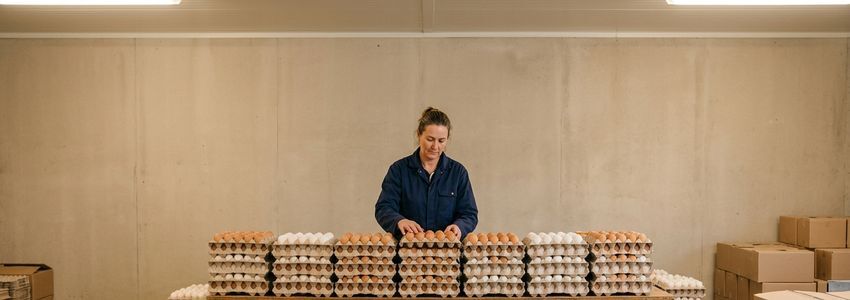
- Small family-owned layer farms looking to upgrade from manual to automated grading and washing to compete on retail contracts.
- Mid-size producers expanding flock capacity and need additional housing and feeding infrastructure.
- Cage-free transition operations retrofitting barns to meet retailer and state cage-free mandates.
- Egg processing and packing facilities that need higher-throughput grading, washing, and packaging lines.
- Hatcheries that supply pullets to layer operations and need incubation equipment upgrades.
- Established farms replacing aging equipment before it becomes a food safety or reliability risk.
This financing is generally less well suited to brand-new operations with no operating history and no existing revenue, since most lenders want to see at least some time in business or a strong personal credit and collateral position to offset that risk.
Seasonal operations that ramp production ahead of holiday demand periods, such as Thanksgiving and the winter baking season, also benefit from financing timed to match cash flow cycles. Structuring a financing agreement with a step-up payment schedule, where payments start lower and increase as new equipment comes fully online and boosts output, is another option some lenders offer for farms bringing on significant new capacity.
Multi-generational family farms transitioning ownership between generations often use equipment financing as part of a broader succession plan, replacing aging equipment at the same time ownership changes hands rather than inheriting outdated infrastructure alongside the business. This approach lets a new generation of ownership start with modern, reliable equipment instead of deferring maintenance on machinery nearing the end of its useful life.
Financing vs. Other Funding Options
Egg farmers have several ways to fund equipment purchases. Understanding the tradeoffs helps in choosing the right structure for a specific situation.
| Funding Option | Best For | Typical Speed | Collateral |
|---|---|---|---|
| Equipment Financing | Specific equipment purchases | 24-72 hours | The equipment itself |
| SBA 7(a) or 504 Loan | Large facility upgrades or expansions | Several weeks to months | Often equipment and real estate |
| Working Capital Loan | Feed, labor, day-to-day cash flow | 1-3 days | Usually unsecured or blanket lien |
| Traditional Bank Term Loan | Established farms with strong financials | Weeks to months | Varies, often broad business assets |
SBA loans, discussed in detail on our SBA loans page, can offer strong rates for farms planning a major facility overhaul, but the application and underwriting timeline is typically much longer than dedicated equipment financing. For farms that need equipment on-site quickly, a direct equipment financing structure is usually the faster path.
Cash purchases remain an option for well-capitalized operations, but tying up six or seven figures in a grading line or housing retrofit removes the buffer a farm needs to absorb a bad feed-price quarter or an unexpected disease outbreak. Many egg producers who could technically pay cash still choose to finance equipment specifically to keep that buffer intact, treating the fixed monthly payment as a cost of doing business rather than a compromise.
Vendor-offered financing or in-house payment plans from equipment manufacturers can also be worth comparing, though these programs are sometimes structured with the vendor's margin in mind rather than the farm's cash flow. Independent equipment financing from a lender that specializes in commercial and agricultural equipment often provides more flexible terms, faster funding, and the ability to bundle equipment from multiple vendors into a single financing agreement.
How Crestmont Capital Helps
Crestmont Capital works with poultry and egg producers across the country to structure financing around the realities of agricultural cash flow. As a leading provider of agricultural equipment financing, Crestmont understands that egg production is seasonal, feed-cost-sensitive, and dependent on flock health in ways that generic small business lending programs often overlook.
Crestmont's farm equipment financing programs support everything from a single egg washer replacement to a full facility retrofit for cage-free compliance. For farms that would rather lease than own, Crestmont's equipment leasing option keeps monthly costs lower and equipment upgrades easier down the road.
When cash flow gets tight between egg price cycles, Crestmont's working capital loans give farms a way to cover feed and payroll without touching equipment financing terms. Producers who have already worked with Crestmont on flock or housing financing can review related guidance in our poultry farm loans guide and our poultry farm equipment financing guide for additional detail on housing and feeding system funding.
Modernize Your Egg Production Line
From layer housing to grading equipment, Crestmont Capital funds the tools your operation needs to grow.
Apply Now →Real-World Financing Scenarios
Scenario 1: Cage-Free Conversion. A mid-size layer farm with 200,000 birds needed to convert conventional cage housing to enriched colony systems to meet a new retailer contract requirement. Equipment financing covered the housing retrofit over 60 months, letting the farm keep the retail contract without a large cash outlay.
Scenario 2: Grading Line Upgrade. A family-owned egg farm was manually sorting eggs by hand, creating a labor bottleneck during peak season. Financing an automated grading and packaging line cut labor hours significantly and allowed the farm to take on a new wholesale account.
Scenario 3: Washer Replacement After a Failed Inspection. An egg producer's aging washing equipment failed a routine food safety inspection. Fast equipment financing allowed the farm to install a compliant washer within days and avoid a shutdown that would have halted revenue entirely.
Scenario 4: New Hatchery Equipment for Vertical Integration. A layer operation decided to raise its own pullets instead of purchasing them from an outside hatchery. Financing incubation and brooding equipment let the farm control its own flock replacement schedule and reduce dependence on outside suppliers.
Scenario 5: Refrigerated Delivery Fleet Expansion. A regional egg distributor won a new grocery chain contract that required daily deliveries across a wider territory. Equipment financing for two additional refrigerated delivery trucks let the farm fulfill the contract without depleting cash reserves needed for feed purchases.
Scenario 6: Backup Power for Climate Control. A layer farm in a region prone to grid outages needed a backup generator system to keep ventilation and climate control running during power failures, since even a few hours of lost cooling can stress or kill a flock in hot weather. Financing the generator system spread the cost over five years, letting the farm protect its flock without a large emergency capital outlay.
Frequently Asked Questions
Next Steps
Confirm pricing on the specific washer, grader, housing system, or line you need.
Most lenders ask for 3 to 6 months of business bank statements.
Submit an application and get a funding decision, often within 24 to 48 hours.
Get Your Egg Farm Equipment Funded
Apply in minutes and see what financing options are available for your operation.
Apply Now →Conclusion
Commercial egg production equipment financing gives poultry farmers a practical way to modernize layer housing, grading lines, washing equipment, and packaging systems without draining the working capital needed to run day-to-day operations. From small family farms upgrading a single washer to large operations converting to cage-free housing at scale, financing structures the cost of critical equipment into payments that match the realities of agricultural cash flow. For egg producers ready to move forward, Crestmont Capital offers financing built around the specific demands of the poultry industry.
Disclaimer: The information provided in this article is for general educational purposes only and is not financial, legal, or tax advice. Funding terms, qualifications, and product availability may vary and are subject to change without notice. Crestmont Capital does not guarantee approval, rates, or specific outcomes. For personalized information about your business funding options, contact our team directly.








