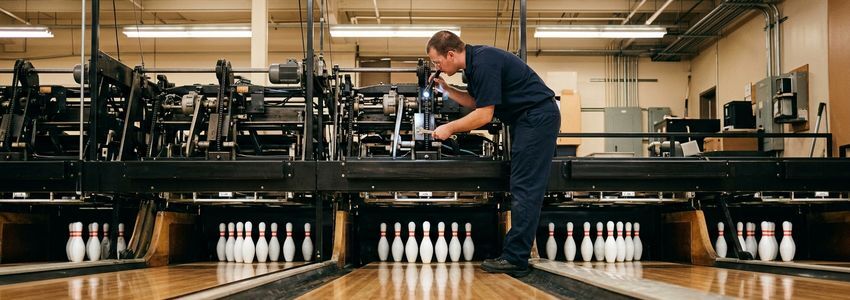
Bowling alley pinsetter financing is becoming one of the most common funding requests we see from entertainment center owners, and it is easy to understand why. A single lane's pinsetter can cost anywhere from $10,000 to $22,000 to replace with a new unit, and most centers operate 20 to 40 lanes. That kind of capital outlay rarely sits in a checking account waiting to be spent, which is why equipment financing has become the default path for owners who need working pinsetters without draining cash reserves.
Whether a machine has finally failed after two decades of service, an insurance inspection flagged a safety issue, or a center is converting from free-fall mechanical pinsetters to modern string pinsetters to cut labor and energy costs, the underlying problem is the same: the equipment has to be replaced or repaired now, and the money has to come from somewhere. This guide walks through exactly how bowling alley pinsetter financing works, what it costs, which loan structures make the most sense, and how a center owner qualifies.
Access to capital remains a top concern for small business owners nationally. According to U.S. Census Bureau small business survey data, obtaining financing or working capital continues to rank among the most commonly cited operational challenges for owners across service and entertainment industries alike.
In This Article
What Is Pinsetter Financing?
Pinsetter financing is a form of equipment financing that lets a bowling center owner purchase, lease, or upgrade pinsetting equipment while spreading the cost over a set repayment term instead of paying the full amount upfront. Rather than draining working capital to buy one or more machines outright, an owner borrows against the value of the equipment itself and repays the loan through predictable monthly payments, often timed to match the additional revenue or savings the new equipment generates.
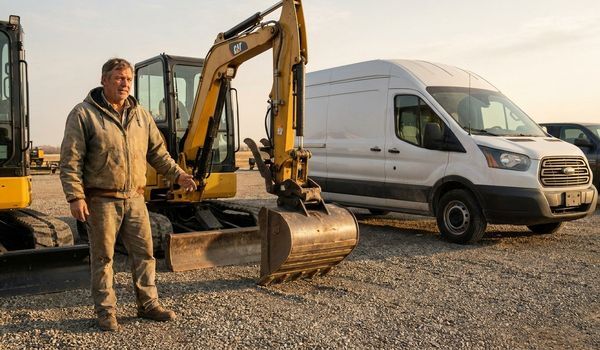
This type of financing typically falls under the broader category of commercial equipment financing, since a pinsetter is a piece of income-producing business equipment much like a commercial oven, an excavator, or a CNC machine. Lenders evaluate the same core factors: the value and useful life of the equipment, the creditworthiness of the business, and the cash flow available to support the new payment.
Bowling centers use this type of financing for several distinct scenarios: replacing a single failed pinsetter, upgrading an entire bank of aging free-fall machines to modern string pinsetters, financing a full center renovation that includes pinsetters alongside lane resurfacing and scoring systems, or acquiring used equipment at a lower price point during a facility purchase.
Key Benefits of Financing Over Paying Cash
Most bowling center owners could theoretically save up cash reserves and pay for a pinsetter replacement outright, but very few actually do it that way, and for good reason.
- Preserves working capital. Cash stays available for payroll, food and beverage inventory, marketing, and unexpected repairs elsewhere in the center rather than being tied up in a single equipment purchase.
- Matches payments to revenue. A working pinsetter generates league fees, open bowling revenue, and party bookings immediately. Structuring payments monthly lets the equipment help pay for itself as it earns.
- Faster deployment. A broken pinsetter means dead lanes and lost revenue every single day. Financing approval can move faster than saving enough cash to buy equipment outright, especially when a center needs multiple units replaced at once.
- Potential tax treatment advantages. Many equipment financing structures allow the business to expense a significant portion of the equipment cost in the year it is placed in service, subject to current tax rules and a business's own accountant's guidance.
- Keeps other credit lines open. Using equipment-specific financing instead of a general-purpose line of credit or credit card keeps those other resources available for operational needs.
- Access to newer, more efficient equipment. Financing often makes it possible to upgrade to modern string pinsetters, which use dramatically less electricity and require less maintenance labor than 20+ year old free-fall machines, rather than settling for a patched-together used unit.
Ready to Get Your Lanes Back Open?
Get fast, flexible equipment financing from the #1 business lender in the U.S. No obligation, apply in minutes.
Apply Now →How Pinsetter Financing Works
The mechanics of pinsetter financing follow the same general process as most equipment financing, with a few bowling-industry-specific wrinkles.
- Get a quote from a pinsetter manufacturer or reseller. Companies that sell new or refurbished pinsetters (AMF, Brunswick/QubicaAMF, or string pinsetter manufacturers) will provide a formal equipment quote, including installation, freight, and any pit or electrical modifications needed.
- Submit a financing application. Most lenders ask for basic business information, time in business, and recent bank statements. Many equipment financing applications for amounts under roughly $250,000 can be processed with minimal paperwork.
- Receive approval and terms. Approved applicants typically receive a term sheet outlining the loan or lease amount, interest rate or factor rate, term length, and monthly payment.
- Equipment is ordered and installed. Funds are usually paid directly to the equipment vendor once documentation is signed, so the center owner never has to front the purchase price personally.
- Repayment begins. Monthly payments start on a set schedule, generally aligned with when the equipment goes into service so the lanes are already generating revenue before the first payment is due.
Quick Guide
Pinsetter Financing Process — At a Glance
Pinsetter cost, installation, and pit modifications quoted in writing.
Submit basic business and bank statement information.
Approve rate, term, and monthly payment structure.
Funds go directly to the vendor; lanes go back into service.
Key Stat: According to industry pricing data, a new commercial free-fall pinsetter typically runs $10,000 to $22,000 per lane installed, while modern string pinsetter conversions often run $8,000 to $17,300 per lane depending on the brand and scope of work. A 24-lane center converting its full bank of machines can easily face a six-figure capital project.
Financing Options for Bowling Centers
There is no single "pinsetter loan" product. Instead, bowling center owners typically choose from a handful of financing structures depending on the size of the project, their credit profile, and whether they are financing a single machine or a full center renovation.
Equipment Financing and Leasing
The most direct option is a dedicated equipment leasing or equipment loan product, where the pinsetter itself serves as collateral. Terms typically run three to seven years, and the equipment can often be financed at up to 100% of cost including installation, since the machine holds resale value that reduces lender risk.
SBA Loans
For larger projects, such as a full pinsetter bank replacement combined with lane resurfacing or a broader center renovation, SBA loans offer longer repayment terms and competitive rates, though the approval process typically takes longer and requires more extensive documentation than a direct equipment loan. The U.S. Small Business Administration guarantees a portion of these loans through approved lenders, which is part of why terms can be more favorable than conventional bank financing for equipment-heavy projects.
Business Line of Credit
A business line of credit is useful for centers that want flexibility, for example financing a smaller repair now with the option to draw more funds later if additional lanes need attention. This structure works best as a complement to, rather than a replacement for, a dedicated equipment loan for a large purchase.
Used Equipment Financing
Not every center needs brand-new machines. Used equipment financing allows an owner to finance refurbished pinsetters, which can cost roughly 60-80% less than new units, while still spreading payments over a manageable term. This is a common route for centers acquiring an existing facility that needs equipment upgrades shortly after purchase.
Commercial Financing for Multi-Location Operators
Owners operating more than one bowling center often turn to broader commercial financing solutions that can be structured across multiple locations and equipment needs simultaneously, simplifying what would otherwise be several separate loan applications.
Who This Financing Is Best For
Pinsetter financing tends to make the most sense for a specific set of bowling and entertainment center scenarios:
- Independent bowling center owners facing an unexpected pinsetter failure that has taken lanes offline
- Multi-location operators standardizing equipment across several centers
- Owners converting from free-fall mechanical pinsetters to string pinsetters to cut electricity and labor costs
- Buyers of an existing bowling center who inherited aging equipment as part of the purchase
- Family entertainment centers adding bowling as a new amenity alongside arcade or laser tag offerings
- Centers preparing for league season or a peak revenue period who cannot afford downtime
It is generally a poor fit for businesses with fewer than six months of operating history and no revenue track record, since most equipment lenders want to see some period of consistent cash flow before extending financing, though startup-friendly structures do exist in limited cases.
Comparing Your Financing Options
Choosing between these structures often comes down to project size, urgency, and how the numbers pencil out over the loan term. The table below compares the most common paths bowling center owners consider.
| Financing Type | Typical Term | Best For | Speed to Fund |
|---|---|---|---|
| Equipment Financing/Leasing | 3-7 years | Single or multiple pinsetter purchases | Days to about 1 week |
| SBA 7(a) or 504 Loan | 5-25 years | Full center renovation projects | Several weeks to 2+ months |
| Business Line of Credit | Revolving | Smaller repairs, flexible ongoing needs | Days to about 1 week |
| Used Equipment Financing | 2-5 years | Budget-conscious acquisitions or refurbished units | Days to about 1 week |
How Crestmont Capital Helps
Crestmont Capital works with bowling center owners and family entertainment center operators to structure financing around the realities of the industry: seasonal revenue swings tied to league schedules, the need to move quickly when a lane goes dark, and the wide range of equipment costs between a single pinsetter repair and a full center renovation.
Rather than a one-size-fits-all product, Crestmont evaluates each center's cash flow, time in business, and the specific equipment quote to match the owner with the financing structure that fits, whether that is straightforward equipment financing, a working capital loan to bridge cash flow during installation downtime, or a business line of credit to keep flexibility on hand for future maintenance.
Owners researching this topic often also review our guide on bowling lane equipment financing, which covers lane resurfacing, ball returns, and scoring system upgrades, or our broader overview of bowling alley business loans for centers considering a full renovation or expansion rather than a single equipment replacement.
Don't Let a Broken Pinsetter Cost You League Revenue
Crestmont Capital moves fast on equipment financing so your lanes stay open. Apply in minutes, no obligation.
Apply Now →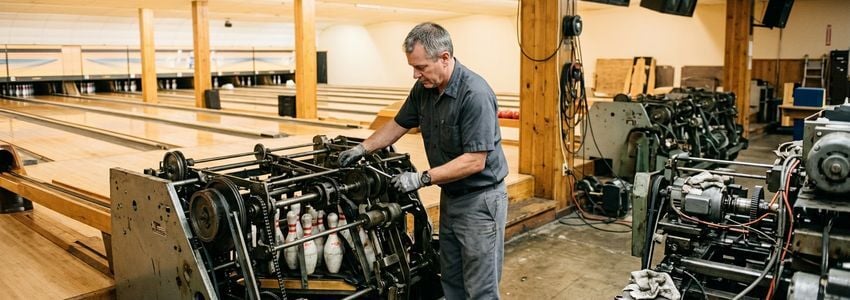
Real-World Scenarios
Scenario 1: The Sudden Failure
A 32-lane bowling center in the Midwest had three pinsetters fail within the same month after 22 years of continuous use. With league season two weeks away, the owner could not afford to wait on a slow-moving loan process. Equipment financing for the three replacement units was approved and funded within days, with the machines installed before the first league night of the season.
Scenario 2: The Efficiency Conversion
An entertainment center operator running 24 lanes on aging free-fall pinsetters was spending heavily on electricity and a dedicated mechanic to keep the machines running. Financing a full conversion to string pinsetters let the center cut its energy and maintenance costs significantly within the first year, with the savings covering a meaningful portion of the new monthly payment.
Scenario 3: The Acquisition
A buyer purchasing an existing bowling center discovered during due diligence that six of the eighteen lanes had pinsetters nearing the end of their service life. Rather than renegotiating the purchase price, the buyer arranged used equipment financing to replace the six units within the first 90 days of ownership, keeping the full center operational from day one.
Scenario 4: The Expansion
A family entertainment center adding an eight-lane bowling section to its existing arcade and laser tag facility needed pinsetters, lane surfaces, and a scoring system all at once. A combined equipment financing package covered the full buildout, letting the new bowling section open in time for the summer season.
Scenario 5: The Insurance Mandate
An insurance inspection flagged safety concerns with two decades-old pinsetters at a community bowling center, requiring replacement to maintain coverage. With the deadline set by the insurer, the center used a fast equipment financing approval to replace the flagged units before the coverage lapse date.
Frequently Asked Questions
What does it cost to finance a bowling alley pinsetter?
A single new free-fall pinsetter typically costs $10,000 to $22,000 installed per lane, while string pinsetter conversions often run $8,000 to $17,300 per lane depending on brand and installation scope. Total project cost scales with the number of lanes being replaced.
How long does pinsetter financing take to get approved?
Standard equipment financing applications are often reviewed within one to two business days, with funding possible within a week once documentation is complete. SBA-backed loans for larger renovation projects generally take several weeks to two months.
Can I finance used or refurbished pinsetters?
Yes. Used equipment financing is common in the bowling industry, since refurbished pinsetters can cost significantly less than new units while still providing reliable service for years.
What credit score do I need to qualify?
Requirements vary by lender and loan size, but many equipment financing programs consider applicants with fair to good personal credit, especially when the business has a solid operating history and cash flow to support the payment.
Is the pinsetter itself used as collateral?
In most equipment financing and leasing structures, yes. The equipment itself secures the loan, which is part of why approval can move faster than for unsecured financing.
Should I finance the full pinsetter bank or replace machines one at a time?
This depends on the age and condition of the existing fleet. If several machines are approaching end of life together, financing a full bank replacement at once is often more cost-effective than repeated smaller projects, since bulk installation and shipping costs are typically lower per unit.
Are string pinsetters cheaper to finance than traditional free-fall models?
String pinsetter units generally carry a lower upfront purchase price than new free-fall machines from major manufacturers, though the total project cost depends on installation complexity and any pit modifications required.
Can financing cover installation and electrical work, not just the machine itself?
Many equipment financing structures allow the total quoted project cost, including freight, installation, and any electrical or pit modifications, to be rolled into the financed amount rather than requiring those costs to be paid separately in cash.
What happens if my center is too new to qualify for standard equipment financing?
Newer businesses may have more limited options, but working capital loans and alternative equipment financing structures can sometimes accommodate centers with a shorter operating history, particularly if the owner has relevant industry experience or strong personal credit.
How does seasonality in bowling affect loan repayment terms?
Some lenders can structure seasonal or step-up payment schedules that align with league season revenue peaks, though standard fixed monthly payments remain the most common structure for equipment loans.
Do I need a down payment for pinsetter financing?
Many equipment financing structures require little to no down payment, particularly for well-qualified applicants, though larger or riskier projects may require a modest down payment to reduce the lender's exposure.
Can I finance pinsetters as part of a larger bowling center renovation?
Yes. Many owners bundle pinsetter replacement with lane resurfacing, scoring system upgrades, and furniture into a single larger financing package, often through an SBA loan or a broader commercial financing structure.
What documents do lenders typically require?
Common requirements include recent business bank statements, a formal equipment quote, basic business formation documents, and sometimes tax returns for larger loan amounts. Requirements are typically lighter for smaller equipment loans than for SBA financing.
Is leasing better than a loan for pinsetter equipment?
It depends on the owner's goals. Leasing can offer lower monthly payments and easier upgrade paths at the end of the term, while a loan builds equity in equipment the business will own outright once repaid. A lender can help model both scenarios against the specific equipment quote.
How quickly can lanes go back into service after financing is approved?
Once financing is approved and funds are released to the equipment vendor, timelines depend primarily on manufacturer lead time and installation scheduling rather than the financing process itself, which can often be completed within days.
Get Your Lanes Financed the Right Way
Speak with Crestmont Capital about equipment financing built around your center's revenue cycle. No obligation.
Apply Now →Next Steps
Contact a pinsetter manufacturer or reseller for a formal quote including installation and any pit or electrical work.
Pull together recent bank statements and business formation documents.
Submit your application and equipment quote for review.
Once approved, funds go to the vendor and installation can begin promptly.
Conclusion
Bowling alley pinsetter financing exists precisely because equipment failures do not wait for a convenient time, and cash reserves are rarely large enough to absorb a full pinsetter bank replacement without financing help. Whether the need is a single emergency repair, a full efficiency conversion to string pinsetters, or a renovation tied to a center acquisition, matching the right financing structure to the project size and timeline is what keeps lanes open and revenue flowing. Industry coverage from outlets like Forbes has repeatedly highlighted equipment financing as one of the fastest-moving capital options available to small business owners precisely because approval can hinge on the equipment's own value rather than solely on the business's balance sheet. Owners who plan ahead, gather a solid equipment quote, and understand their financing options are in the strongest position to act quickly when a pinsetter needs attention.
Disclaimer: The information provided in this article is for general educational purposes only and is not financial, legal, or tax advice. Funding terms, qualifications, and product availability may vary and are subject to change without notice. Crestmont Capital does not guarantee approval, rates, or specific outcomes. For personalized information about your business funding options, contact our team directly.