
 (800) 949-0401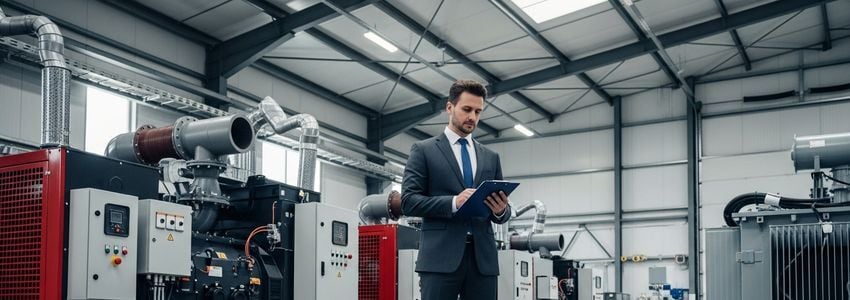
Commercial Backup Power System Financing: The Complete Guide for Business Owners
In today's hyper-connected economy, a power outage is more than a minor inconvenience; it's a direct threat to your revenue, reputation, and operational stability. For any business that relies on electricity to serve customers, process transactions, or maintain critical systems, even a brief loss of power can result in catastrophic losses. This is why investing in a reliable backup power solution is no longer a luxury, but a fundamental component of modern business continuity planning. However, the significant upfront cost of these systems can be a major hurdle. This is where commercial backup power system financing becomes an essential tool, enabling businesses to secure the resilience they need without depleting their working capital. This comprehensive guide will walk you through every aspect of financing these critical assets, from understanding the available technologies to navigating the application process.In This Article
- What Is Commercial Backup Power System Financing?
- Why Businesses Need Backup Power
- Types of Commercial Backup Power Systems You Can Finance
- How Commercial Backup Power System Financing Works
- Financing Options Comparison
- Who Qualifies for Backup Power Financing?
- How Crestmont Capital Helps
- Real-World Scenarios
- Frequently Asked Questions
- How to Get Started
What Is Commercial Backup Power System Financing?
Commercial backup power system financing is a specialized form of funding designed to help businesses purchase and install equipment that provides electricity during a utility grid failure. Instead of paying the full, often substantial, cost upfront, financing allows you to spread the expense over a set period through manageable monthly payments. This financial tool covers the entire spectrum of backup power solutions, from diesel generators to sophisticated battery storage systems.
The core concept is similar to other types of business lending, but it is specifically tailored for acquiring mission-critical assets. The financing can cover not just the main equipment (like the generator or battery bank) but also all associated "soft costs." These can include:
- Automatic Transfer Switches (ATS): The hardware that automatically switches your building's power source from the grid to your backup system.
- Installation and Labor: The costs associated with professional setup, including electrical work, concrete pad pouring, and system integration.
- Shipping and Delivery: The expense of transporting heavy equipment to your location.
- Permits and Inspections: Necessary municipal or county fees to ensure compliance with local codes.
By bundling these costs into a single financing package, businesses can acquire a turnkey solution without unexpected out-of-pocket expenses. This approach preserves cash flow for daily operations, inventory, and growth initiatives while immediately providing the protection of an uninterrupted power supply.
Why Businesses Need Backup Power
The need for reliable backup power has never been more critical. An increasingly strained national power grid, combined with more frequent and severe weather events, has made outages a common reality for businesses across the country. A report by CNBC highlights the growing strain on U.S. power grids, making proactive measures essential. The financial and operational consequences of even a short-term outage can be devastating.
The Staggering Cost of Downtime
Downtime is not just a pause in operations; it is an active drain on your bottom line. The costs manifest in several ways:
- Lost Revenue: The most immediate impact. If your point-of-sale systems are down, your e-commerce site is offline, or your production line is halted, you are not making money. For a restaurant, this means lost meal services. For a retail store, it means no sales.
- Productivity Loss: Employees cannot work without power for their computers, machinery, and lighting. Every minute of an outage is a minute of paid-for-but-unproductive labor.
- Data Loss and Corruption: A sudden shutdown can corrupt critical data, damage servers, and disrupt IT infrastructure, leading to costly recovery efforts. For data centers and tech companies, this is an existential threat.
- Inventory Spoilage: Businesses in the food service, grocery, and pharmaceutical industries risk losing thousands of dollars in temperature-sensitive inventory if refrigeration systems fail.
- Reputational Damage: Customers expect reliability. An outage can lead to cancelled orders, missed deadlines, and a perception of unreliability that can drive customers to your competitors. According to Forbes, a solid business continuity plan, which includes backup power, is vital for maintaining customer trust.
Beyond Financials: Safety and Compliance
For many industries, backup power is a matter of safety and regulatory compliance. Hospitals, assisted living facilities, and surgical centers are legally required to have backup power to operate life-support systems. Other businesses need it to maintain security systems, emergency lighting, and fire suppression systems, ensuring the safety of employees and customers during an emergency.
Key Insight: An investment in backup power is not just an expense; it is a form of insurance. It protects your revenue streams, your assets, and your brand reputation against the growing threat of power grid instability.
Is Your Business Prepared for a Power Outage?
Don't wait for a blackout to reveal your vulnerabilities. Secure the financing you need to protect your operations, revenue, and reputation. Get a free quote from Crestmont Capital today.
Apply Now →Types of Commercial Backup Power Systems You Can Finance
The right backup power system depends on your business's specific needs, including power load, runtime requirements, and budget. Fortunately, financing is available for a wide range of solutions.
1. Commercial Standby Generators
These are the most common form of backup power. Standby generators automatically detect a power outage, start up, and begin supplying electricity to your facility via an automatic transfer switch, often within seconds. They run on fuels like natural gas, propane, or diesel.
- Best for: Businesses requiring long-duration power, such as manufacturing plants, large retail stores, hotels, and cold storage facilities.
- Considerations: They require regular maintenance, fuel storage (for diesel/propane), and compliance with local noise and emissions regulations. Crestmont Capital offers specialized industrial generator financing to cover these powerful units.
2. Uninterruptible Power Supply (UPS) Systems
A UPS provides instantaneous, battery-powered protection against momentary power sags, surges, and complete outages. They are designed to bridge the gap for a few minutes, either until the utility power returns or until a long-term source like a generator kicks in. Their primary role is to allow for the safe shutdown of sensitive equipment or to ensure a seamless transition to a generator.
- Best for: Data centers, IT closets, medical offices with sensitive diagnostic equipment, and any business that cannot tolerate even a millisecond of power interruption.
- Considerations: UPS systems provide short-term power only. They are often used in conjunction with a standby generator for comprehensive protection. Learn more about your options with our guide to UPS battery backup system financing.
3. Battery Energy Storage Systems (BESS)
Also known as commercial batteries, BESS solutions store energy from the grid (or a renewable source) and discharge it when needed. They are silent, produce no emissions, and provide instant power. Modern lithium-ion battery systems can power essential circuits for several hours, depending on their capacity.
- Best for: Office buildings, retail shops, and restaurants looking for a quiet, clean solution for shorter outages. They are also excellent for "peak shaving"-using stored energy during times of high electricity rates to lower utility bills.
- Considerations: Runtime is limited by battery capacity, and they have a higher initial cost per kilowatt-hour compared to generators, though costs are decreasing.
4. Solar-Plus-Storage Systems
This solution combines a commercial solar panel array with a BESS. The solar panels generate electricity during the day, powering the business and charging the batteries. During an outage, the business can run on the stored solar energy. This creates a self-sufficient, resilient, and green power source.
- Best for: Businesses with ample roof or ground space that want to achieve energy independence, reduce their carbon footprint, and lower their long-term energy costs.
- Considerations: This is the most capital-intensive option upfront, making financing particularly crucial. Performance depends on weather and sunlight availability.
How Commercial Backup Power System Financing Works
Securing financing for a backup power system is a straightforward process designed to get your business protected as quickly as possible. While specifics can vary by lender, the general path follows a clear set of steps. At Crestmont Capital, we've streamlined this process to be fast, transparent, and efficient.
The journey from identifying your need to having a fully operational system involves collaboration between your business, the equipment vendor, and the financing partner. The financing company pays the vendor directly for the equipment and installation, and your business then makes regular payments to the financing company over an agreed-upon term.
Your Path to Power Resiliency: The 4-Step Financing Process
Apply Online
Complete a simple, one-page application in minutes. Provide basic information about your business and the equipment you need.
Get Approved
Receive a credit decision, often within a few hours. Our team works quickly to review your application and provide clear financing terms.
System Installed
Your vendor installs the backup power system. You begin making your scheduled payments, now protected from power outages.
Vendor Paid
Once you approve the financing documents, we pay your chosen equipment vendor directly, allowing them to release the system for delivery.
Quick Guide
How Commercial Backup Power System Financing Works - At a Glance
Determine system size, load requirements, and runtime needs with an energy audit or electrician consultation.
Select from equipment financing, leasing, SBA loans, or line of credit based on your cash flow and ownership goals.
Apply online in minutes with basic business and financial information. No lengthy paperwork required at Crestmont Capital.
Receive your decision quickly - often within 24-48 hours - and purchase or install your backup power system.
Financing Options Comparison
Several financial products can be used for acquiring a backup power system. The best choice depends on your business's financial situation, tax strategy, and long-term goals. Here is a comparison of the most common options available through lenders like Crestmont Capital.
| Financing Option | How It Works | Key Benefits | Best For |
|---|---|---|---|
| Equipment Financing Agreement (EFA) | A straightforward loan where the backup power system serves as its own collateral. You make fixed monthly payments and own the equipment outright at the end of the term. | - You own the asset. - Potential tax benefits (Section 179 deduction). - Fixed, predictable payments. - Builds business credit. |
Businesses that want to own their equipment long-term and take advantage of tax depreciation benefits. |
| Equipment Leasing | Essentially a long-term rental. You make lower monthly payments to use the equipment for a set period. At the end of the lease, you can return it, purchase it, or upgrade to a newer model. | - Lower monthly payments. - Preserves capital for other needs. - Easy to upgrade technology. - Payments may be treated as an operating expense. |
Businesses that want lower upfront costs, predictable expenses, and the flexibility to upgrade to newer technology every few years. |
| Small Business Loans | A lump sum of capital that can be used for various business purposes, including the purchase of a backup power system. This can be a term loan or an SBA-backed loan. | - Can cover more than just the equipment. - SBA loans may offer longer terms and lower interest rates. - Flexible use of funds. |
Established businesses with strong credit seeking favorable terms, or those who need to finance a larger project that includes more than just the backup power system. |
| Business Line of Credit | A revolving credit line you can draw from as needed. You only pay interest on the amount you use. You could use it to pay the vendor for the system. | - Maximum flexibility. - Draw funds as needed for the project. - Can be used for future needs once repaid. - Quick access to capital. |
Businesses that want a flexible funding source for the power system and other ongoing operational needs, or those managing projects with variable costs. |
Who Qualifies for Backup Power Financing?
One of the biggest advantages of working with a specialized lender like Crestmont Capital is our flexible and accessible qualification criteria. Unlike traditional banks that often have rigid requirements, we focus on the overall health and potential of your business. While every case is unique, here are the general guidelines for what we look for:
- Time in Business: Most programs require a business to be operational for at least 6 to 12 months. This demonstrates a track record and stability.
- Business Revenue: Lenders will want to see consistent monthly or annual revenue. This shows you have the cash flow to support the new monthly payment. Specific minimums vary, but a healthy revenue stream is key.
- Credit Score: Both personal and business credit history are considered. While a high score is beneficial, we have programs available for a wide range of credit profiles. A strong business history can often offset a less-than-perfect personal credit score.
- Industry Type: We finance businesses across nearly every industry, from restaurants and healthcare to manufacturing and IT. As long as there is a clear need for the equipment, your industry is unlikely to be a barrier.
The application process is designed to be simple. You typically will not need extensive documentation like multi-year tax returns or complex business plans for equipment financing. In most cases, a simple one-page application and recent bank statements are enough to secure an approval, often within the same business day.
Did You Know? The Small Business Administration (SBA) offers disaster assistance loans that can be used for mitigation measures, such as installing a generator, to protect against future disasters. This underscores the federal government's recognition of backup power as a critical business asset. Learn more at SBA.gov.
How Crestmont Capital Helps
Navigating the world of commercial financing can be complex, but Crestmont Capital is dedicated to making it simple, fast, and transparent. We are not just a lender; we are a financing partner invested in your business's success and resilience. Here is how we stand out:
- Speed and Efficiency: We know that when you need backup power, you need it now. Our streamlined online application takes minutes to complete, and we often provide approvals in as little as two hours. This means you can move forward with your vendor and get your system installed weeks faster than with a traditional bank.
- High Approval Rates: We work with a diverse portfolio of funding partners and have programs designed for businesses of all sizes, credit profiles, and industries. Our goal is to find a "yes" for our clients.
- 100% Financing: Our programs can cover the total project cost, including the equipment, shipping, installation, and any other soft costs. This allows you to acquire a complete, turnkey solution with zero money down, preserving your cash for other business needs.
- Expertise in Equipment: We understand the assets you are financing. Our team has deep experience in equipment financing, from industrial generators to complex IT infrastructure. We speak your language and understand the value this equipment brings to your operation.
- Personalized Service: When you work with Crestmont, you get a dedicated account manager who will guide you through the entire process. They will answer your questions, explain your options clearly, and work to structure a financing plan that perfectly fits your budget and goals.
Unlock Your Business's Full Potential
Crestmont Capital offers fast, flexible equipment financing for commercial backup power systems. Get pre-qualified in minutes with no obligation.
Apply Now →Real-World Scenarios
To better understand the practical application of commercial backup power system financing, let's look at how it helps businesses in different sectors.
1. The Independent Restaurant
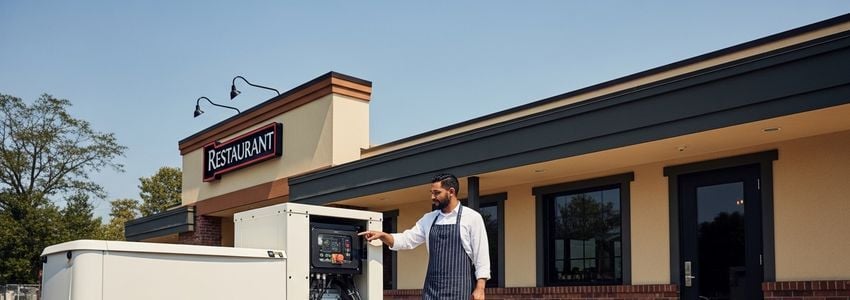
Problem: A popular farm-to-table restaurant in a storm-prone area experiences several power outages a year. During a recent weekend outage, they lost over $10,000 in refrigerated and frozen inventory and had to cancel a full book of reservations, resulting in significant lost revenue and reputational damage.
Solution: The owner decides to install a 50kW natural gas standby generator. The total project cost, including the generator, automatic transfer switch, and installation, is $35,000. They use an equipment financing agreement from Crestmont Capital. With a 60-month term, their monthly payment is approximately $750. This predictable operating expense is a fraction of the loss from a single outage, and they can now operate with confidence through any grid failure.
2. The Regional Data Center
Problem: A data center that provides co-location and cloud services for local businesses needs to upgrade its power infrastructure to guarantee its "five nines" (99.999%) uptime service level agreement. Their existing system lacks sufficient redundancy.
Solution: They plan a $500,000 project to install a new parallel generator and a large-scale UPS system. A capital expenditure of this size would strain their cash reserves. They secure an equipment lease for the entire project. This provides them with lower monthly payments and allows them to treat the expense as an operational cost. At the end of the lease term, they have the option to upgrade to the latest, most efficient technology to maintain their competitive edge.
3. The Multi-Location Medical Clinic
Problem: A growing network of urgent care clinics needs to ensure their electronic health records (EHR) systems, diagnostic equipment, and vaccine refrigerators remain operational during outages to comply with healthcare regulations and ensure patient safety.
Solution: The practice uses a business line of credit to fund the phased installation of UPS and small standby generator systems at three of their busiest locations. The line of credit gives them the flexibility to draw funds as each project phase begins, paying interest only on the capital they have used. This allows them to manage the large-scale project without disrupting their day-to-day cash flow.
4. The Manufacturing Facility
Problem: A plastics manufacturer runs a 24/7 operation. An unexpected power loss can cause molten plastic to solidify inside their expensive extrusion machinery, leading to days of downtime and costly, labor-intensive repairs that can exceed $100,000 per incident.
Solution: The facility finances a 1MW diesel generator capable of powering their entire production line. The total cost is $250,000. They choose a seven-year equipment financing loan. The investment pays for itself by preventing just one or two major shutdowns, protecting their most valuable machinery and ensuring they meet their production deadlines for key clients.
Frequently Asked Questions
What is the typical interest rate for commercial backup power financing?
Interest rates vary widely based on your business's credit profile, time in business, revenue, and the financing product you choose. Rates can range from the single digits for highly qualified businesses using SBA loans or traditional financing, to higher rates for newer businesses or those with challenged credit. Crestmont Capital works with multiple lenders to find the most competitive rate for your specific situation.
How long are the repayment terms?
Repayment terms typically range from 24 to 84 months (2 to 7 years). Shorter terms result in higher monthly payments but lower overall interest costs, while longer terms provide a more manageable monthly payment. We can help you model different term lengths to find a payment that fits your budget.
Can I finance a used generator or backup power system?
Yes, many financing programs are available for used equipment. Financing used assets can be a cost-effective way to get the protection you need. The terms may be slightly different from those for new equipment, often with a shorter repayment period, but it is a very common practice.
Do I need a down payment?
One of the major benefits of our financing programs is that many require little to no money down. We specialize in 100% financing that covers the total project cost, allowing you to preserve your working capital for other business priorities.
How quickly can I get funded?
The process is incredibly fast. After submitting a simple online application, you can receive an approval in as little as 2-4 hours. Once you sign the financing documents, we can typically fund the equipment vendor within 24-48 hours, allowing your project to move forward without delay.
Will financing my equipment affect my personal credit?
For most business financing, lenders will perform a soft credit pull initially, which does not impact your score. A hard inquiry may be performed later in the process. While personal credit is a factor, the financing is structured in the business's name. Making on-time payments will primarily build your business credit history.
Can I finance the installation and shipping costs too?
Absolutely. This is a key advantage of working with us. We can bundle all "soft costs"-including installation, shipping, permits, and training-into one convenient financing package. This ensures there are no surprise out-of-pocket expenses.
What is Section 179 and how does it relate to financing?
Section 179 of the IRS tax code allows businesses to deduct the full purchase price of qualifying equipment (new or used) purchased or financed during the tax year. This means if you finance a $50,000 generator, you may be able to deduct the full $50,000 from your gross income. It's a powerful incentive to invest in business equipment. Consult with your tax advisor for details specific to your business.
What happens at the end of an equipment lease?
At the end of a lease term, you typically have several options. The most common is a Fair Market Value (FMV) lease, where you can: 1) Purchase the equipment for its current fair market value, 2) Return the equipment to the lender, or 3) Renew the lease, often at a lower payment. Another option is a $1 Buyout lease, which functions more like a loan, where you own the equipment at the end for a nominal fee.
Can I finance a system from any vendor or manufacturer?
Yes. We are vendor-independent, which means you have the freedom to choose the equipment and the installation partner that best suits your needs. Once you have a quote from your preferred vendor, you can bring it to us to arrange the financing.
Is backup power financing available for startups?
Financing can be more challenging for startups with less than six months of operational history. However, some programs are available, especially if the business owner has a strong personal credit score and a solid business plan. We recommend contacting us to discuss your specific situation.
What's the difference between equipment financing and a working capital loan?
Equipment financing is specifically for acquiring a physical asset, and the equipment itself serves as the collateral for the loan. A working capital loan provides cash for general business operations (like payroll, inventory, or marketing) and is typically unsecured, often resulting in shorter terms and higher rates.
Can I pay off my financing agreement early?
Yes, most financing agreements can be paid off early. Some loan structures may have prepayment penalties, while others do not. It is important to review the terms of your specific agreement. We are transparent about all terms and conditions before you sign.
What kind of documentation is required to apply?
For most equipment financing applications under $250,000, the process is very simple. You will typically only need to complete a one-page application. For larger amounts or more complex situations, we may ask for the last 3-6 months of your business bank statements.
Does my industry affect my ability to get financing?
Crestmont Capital funds businesses across almost all industries. While some lenders may have restrictions on certain high-risk sectors, we have a broad appetite and can typically find a solution for any legitimate business that demonstrates a need for backup power and the ability to repay the loan.
How to Get Started
Protecting your business with a reliable backup power system is a critical step towards ensuring long-term stability and growth. With the right financing partner, the process is simple and accessible. Follow these steps to get started on securing your operations.
Ready to Make Your Business Invincible to Outages?
Apply today and get the commercial backup power system financing your business needs. Fast approval, competitive rates, flexible terms.
Apply Now →Conclusion
In an era defined by uncertainty, from severe weather to an aging power grid, business continuity is paramount. A commercial backup power system is one of the most effective investments you can make to safeguard your revenue, protect your assets, and maintain customer trust. The high upfront cost of this critical infrastructure should not be a barrier to securing your future.
Commercial backup power system financing from a trusted partner like Crestmont Capital transforms a prohibitive capital expense into a manageable operating expense. With a variety of flexible options, a fast and simple application process, and expert guidance, we empower businesses to acquire the resilience they need to thrive in any condition. By investing in backup power today, you are not just buying a piece of equipment; you are buying peace of mind and ensuring that when the lights go out for everyone else, your business stays on.
Disclaimer: The information provided in this article is for general educational purposes only and is not financial, legal, or tax advice. Funding terms, qualifications, and product availability may vary and are subject to change without notice. Crestmont Capital does not guarantee approval, rates, or specific outcomes. For personalized information about your business funding options, contact our team directly.








