
 (800) 949-0401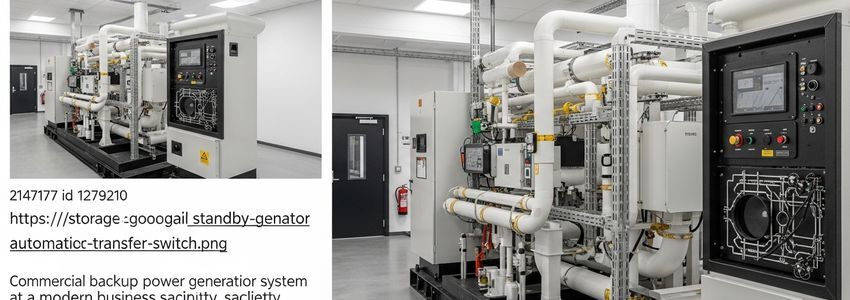
Backup Power System Financing: The Complete Guide for Business Owners
In today's hyper-connected economy, a power outage is no longer a minor inconvenience - it's a direct threat to your bottom line. For businesses of all sizes, from data centers and hospitals to retail stores and manufacturing plants, consistent power is the lifeblood of operations. A single outage can halt production, corrupt critical data, damage customer trust, and result in catastrophic financial losses. This is why investing in a robust backup power system is not a luxury, but a fundamental component of a modern business continuity plan. However, the significant upfront cost of commercial-grade generators, battery storage systems, and uninterruptible power supplies (UPS) can be a major hurdle for many companies.
This is where strategic financing becomes a powerful tool. Securing commercial backup power system financing allows you to acquire the essential equipment you need to protect your operations without depleting your working capital. By spreading the cost over time with predictable monthly payments, you can immediately benefit from the security and reliability of a backup power solution while preserving cash flow for growth, inventory, and other critical business needs. This comprehensive guide will walk you through every aspect of financing your backup power system, from understanding the different types of equipment and their costs to navigating the various financing options available and maximizing your return on investment through tax incentives. At Crestmont Capital, we specialize in helping businesses like yours secure the capital needed for mission-critical equipment, ensuring you're prepared for anything.
Protect Your Business from Power Outages
Don't let a power failure shut down your operations. Get the capital you need for a reliable backup power system with Crestmont Capital's flexible financing options. Fast approval, competitive rates.
Apply NowIn This Article
- Why Every Business Needs a Reliable Backup Power Strategy
- Understanding the Types of Commercial Backup Power Systems
- Estimating the Costs: What to Expect for Your Backup Power System
- The Financial Case for Backup Power: Calculating Your ROI
- Navigating Your Options for Commercial Backup Power System Financing
- Key Industries That Can't Afford to Lose Power
- Qualifying for Backup Power System Financing: What Lenders Look For
- The Step-by-Step Guide to Applying for Financing with Crestmont Capital
- Unlocking Tax Savings: How Section 179 Applies to Backup Power Equipment
- Generator vs. Battery Storage: Which is Right for Your Business?
- Financing Backup Power with Less-Than-Perfect Credit
- Frequently Asked Questions About Backup Power System Financing
Why Every Business Needs a Reliable Backup Power Strategy
The modern electrical grid, while remarkably resilient, is facing increasing strain from extreme weather events, aging infrastructure, and rising demand. Power outages are becoming more frequent and lasting longer, posing a significant risk to unprepared businesses. The consequences of even a brief interruption can be severe and far-reaching, extending beyond a simple loss of lights and computers. A comprehensive backup power strategy is a critical investment in your company's resilience, reputation, and long-term viability.
The Staggering Financial Cost of Downtime
For any business, time is money, and downtime is a direct drain on revenue. The cost of an outage varies dramatically by industry, but the numbers are consistently substantial. Consider these impacts:
- Lost Revenue: If your point-of-sale systems are down, you can't process transactions. If your production line stops, you can't create products. If your website is offline, you can't make e-commerce sales. Every minute of downtime translates directly to lost income.
- Productivity Loss: Employees are unable to work without power for their computers, machinery, and communication tools. This idle time represents a significant payroll expense with zero output.
- Data Loss and Corruption: A sudden shutdown can lead to the loss of unsaved work and, more critically, the corruption of essential business data, databases, and financial records. Recovering this data can be expensive and time-consuming, if it's possible at all.
- Supply Chain Disruptions: If your business is part of a larger supply chain, your downtime can cause a domino effect, impacting your partners and potentially leading to contractual penalties or damaged relationships.
The Numbers Don't Lie: The High Price of Power Outages
Recent studies highlight the escalating financial risk of power failures for U.S. businesses:
- According to the U.S. Department of Energy, power outages cost the U.S. economy an estimated $150 billion annually. (Source: DOE.gov)
- A survey by ITIC found that for 91% of enterprises, a single hour of downtime costs over $300,000. For 44% of those, the cost exceeds $1 million per hour.
- The average duration of power interruptions has more than doubled in the last decade, emphasizing the growing need for long-term backup solutions.
Protecting Your Reputation and Customer Trust
The damage from a power outage isn't just financial; it can also inflict long-term harm on your brand's reputation. In an always-on world, customers have high expectations for reliability and service. If an outage forces you to close your doors, cancel appointments, or fail to deliver on promises, that negative experience can erode customer loyalty. A business that remains fully operational during a local power failure, however, demonstrates professionalism, reliability, and a commitment to service, which can be a powerful competitive differentiator.
Ensuring Regulatory Compliance and Safety
For many industries, backup power is not just a good idea - it's a legal or regulatory requirement. Certain sectors must maintain operations to ensure public safety and meet compliance standards. These include:
- Healthcare Facilities: Hospitals, clinics, and nursing homes require uninterrupted power for life-support systems, surgical equipment, and electronic health records.
- Data Centers: These facilities have strict uptime service level agreements (SLAs) with their clients, where any downtime can result in severe financial penalties.
- Pharmaceutical and Biotech Labs: Temperature-sensitive samples, experiments, and products can be ruined by a power loss to refrigeration and climate control systems.
- Emergency Services: Police stations, fire departments, and 911 call centers must remain operational to protect the community.
Failing to meet these requirements can lead to hefty fines, loss of licensure, and legal liability. Investing in a compliant backup power system is an essential cost of doing business in these critical sectors.
Understanding the Types of Commercial Backup Power Systems
Choosing the right backup power system depends on your business's specific needs, including power load, required runtime, budget, and physical space. There is no one-size-fits-all solution. Understanding the primary types of equipment available is the first step in designing a system that provides the right level of protection for your operations. These systems are often used in combination to create a multi-layered defense against power loss.
Commercial Generators
Generators are the workhorses of backup power, capable of providing long-duration electricity for your entire facility. They work by converting mechanical energy from an engine into electrical energy.
- Diesel Generators: Highly reliable and fuel-efficient, diesel generators are a popular choice for large-scale applications like hospitals, data centers, and manufacturing plants. They offer high power output and can run for extended periods, provided you have an adequate fuel supply.
- Natural Gas Generators: These connect directly to your utility's natural gas line, eliminating the need for on-site fuel storage and refueling. They are generally cleaner-burning than diesel but may be dependent on the gas line's integrity during a widespread disaster.
- Propane Generators: Propane has a long shelf life and is stored on-site in tanks. It's a clean-burning fuel, making it a good choice for businesses looking to minimize their environmental footprint. Propane generators are common for small to medium-sized commercial applications.
Uninterruptible Power Supply (UPS)
A UPS provides instantaneous, short-term battery power the moment a utility outage occurs. Its primary role is not to run your business for hours, but to bridge the critical gap between the power failure and the moment your generator kicks in (which can take 10-60 seconds). This prevents a hard shutdown of sensitive electronics.
- Purpose: A UPS protects critical equipment like servers, computers, and networking hardware from data loss, corruption, and physical damage caused by sudden power loss or surges.
- How it Works: When grid power is active, the UPS stays charged. The instant it detects a failure, it seamlessly switches to its internal battery, providing clean, consistent power to connected devices. This allows for a graceful shutdown of systems or a smooth transition to a long-term generator.
Battery Energy Storage Systems (BESS)
Modern battery storage systems are emerging as a powerful and flexible alternative or supplement to traditional generators. A BESS stores electricity from the grid (or a renewable source) in high-capacity batteries and deploys it when needed.
- Advantages: BESS are silent, produce no on-site emissions, and require less maintenance than generators. They provide instantaneous power like a UPS but can be scaled to provide longer runtimes.
- Applications: They are ideal for businesses in areas with noise restrictions or emissions regulations. They also excel at "peak shaving" - using stored energy during times of high electricity rates to lower utility bills, providing an additional ROI beyond just backup power.
Solar + Battery Storage Systems
This integrated solution combines a commercial solar panel array with a Battery Energy Storage System. It offers the ultimate in energy resilience and sustainability.
- How it Works: During the day, solar panels power your business and charge the battery system. If the grid goes down, the business can run on the stored solar energy. This creates a self-sufficient "microgrid" that can potentially operate indefinitely during an extended outage, as long as there is sunlight to recharge the batteries.
- Benefits: This system not only protects against outages but also significantly reduces or even eliminates your electricity bill. Businesses can also take advantage of federal tax credits and other incentives for renewable energy.
Automatic Transfer Switch (ATS)
The ATS is the brain of your backup power system. It's a critical component that links your facility to both the utility grid and your backup power source (like a generator).
- Function: The ATS constantly monitors the incoming utility power. When it detects a failure or significant voltage drop, it automatically disconnects your facility from the grid and signals the generator to start. Once the generator is at full power, the ATS transfers your building's electrical load to it. When utility power is restored and stable, it transfers the load back and shuts down the generator. This ensures a safe, seamless transition without manual intervention.
Insight: A layered approach is often the most effective. Many businesses combine a facility-wide generator for long-term power with smaller UPS units on critical servers and workstations. This provides both immediate protection against data loss and long-duration operational continuity.

Estimating the Costs: What to Expect for Your Backup Power System
The total investment in a commercial backup power system is more than just the price of the generator or battery. It's a comprehensive project that includes the core equipment, installation, and ongoing maintenance. Understanding these cost components is crucial for accurate budgeting and for securing the right amount of financing.
Equipment Costs by Type and Size
The primary cost driver is the equipment itself, which varies widely based on capacity (measured in kilowatts, or kW) and technology.
- Small Commercial Generators (20kW - 100kW): Suitable for small businesses, retail stores, or restaurants.
- Cost Range: $5,000 to $25,000
- Mid-Sized Commercial Generators (100kW - 500kW): Designed for mid-sized office buildings, grocery stores, or light industrial facilities.
- Cost Range: $25,000 to $100,000
- Large Industrial Generators (500kW - 2,000kW+): Required for large manufacturing plants, data centers, and hospitals.
- Cost Range: $100,000 to $500,000+
- Uninterruptible Power Supply (UPS): Costs depend on the load and required runtime. A server room UPS might cost $3,000 to $15,000, while a data center-scale system can run into the hundreds of thousands.
- Battery Energy Storage Systems (BESS): Costs are typically measured per kilowatt-hour (kWh) of storage. A small commercial system might start around $30,000, with larger systems easily exceeding $200,000.
Installation and "Soft Costs"
Installation is a significant part of the total project cost and should never be underestimated. These "soft costs" can often account for 50-100% of the equipment cost.
- Site Preparation: This may include pouring a concrete pad for the generator, trenching for fuel and electrical lines, and ensuring proper clearance and ventilation.
- Electrical Work: A licensed commercial electrician is required to install the Automatic Transfer Switch (ATS) and safely integrate the backup system with your building's main electrical panel. This is complex and critical work.
- Permitting and Inspections: Most municipalities require permits for generator installation, which involves submitting plans and passing inspections for electrical, building, and sometimes environmental or noise compliance.
- Fuel System: For diesel or propane generators, this includes the cost of the storage tank, fuel lines, and monitoring systems. For natural gas, it involves plumbing costs to connect to the utility line.
- Delivery and Rigging: Commercial generators are large, heavy pieces of equipment that often require a crane for placement, adding to the installation cost.
Ongoing Maintenance and Fuel Costs
Your financing should also account for the long-term cost of ownership to ensure your system remains reliable.
- Maintenance Contracts: Regular maintenance is essential. A typical service contract includes periodic inspections, oil and filter changes, load bank testing, and battery checks. This can cost anywhere from $500 to $5,000+ per year depending on the size of the system.
- Fuel Costs: This includes the cost to keep a diesel or propane tank full and the cost of fuel consumed during outages and routine testing. Natural gas costs will appear on your utility bill.
When seeking commercial backup power system financing, it's vital to get a comprehensive quote from your installer that includes all these components. This ensures you request enough funding to cover the entire project from start to finish, avoiding unexpected out-of-pocket expenses.
The Financial Case for Backup Power: Calculating Your ROI
Investing in a backup power system is a significant capital expenditure, and like any major business investment, it's essential to understand its potential return on investment (ROI). While the peace of mind it provides is invaluable, the financial justification is often straightforward when you quantify the cost of a single power outage. The ROI is not about generating new revenue, but about preventing catastrophic losses.
Step 1: Calculate the Cost of a Single Hour of Downtime
The first step is to create a realistic estimate of how much money your business loses for every hour it's non-operational. This is your "Cost of Downtime" (CoD).
CoD = Lost Revenue + Lost Productivity + Recovery Costs
- Lost Revenue: Estimate your average hourly revenue. For a retail store, this is your average hourly sales. For a manufacturing plant, it's the value of the goods not produced. For a professional services firm, it's the billable hours lost.
- Lost Productivity: Calculate the total hourly wage of all employees who would be idled by an outage. (Total hourly payroll cost).
- Recovery Costs: These are less obvious but can be substantial. Include potential costs like:
- Overtime pay to catch up on work after power is restored.
- Cost of spoiled inventory (e.g., food in a restaurant).
- Cost of repairing equipment damaged by a sudden shutdown.
- Potential penalties for missing deadlines or violating SLAs.
Step 2: Estimate Your Annual Risk
Next, consider the likelihood and duration of outages in your area. You can research data from your local utility or use national averages. The U.S. Energy Information Administration (EIA) provides data on grid reliability.
Annual Cost of Risk = (Cost of Downtime per Hour) x (Average Hours of Outages per Year)
ROI Calculation Example: A Mid-Sized Manufacturing Company
Let's put this into a real-world scenario:
- Business Profile: A manufacturing facility with 50 employees and $10 million in annual revenue.
- Backup System Cost: They require a 300kW diesel generator. Total project cost (equipment + installation) is $85,000.
- Financing: They secure an equipment financing agreement from Crestmont Capital for the full $85,000 over 5 years (60 months). Their monthly payment is approximately $1,800.
Calculating their Cost of Downtime:
- Lost Revenue: $10M revenue / 2,000 work hours/year = $5,000 per hour.
- Lost Productivity: 50 employees x $30/hour average loaded wage = $1,500 per hour.
- Total Cost of Downtime: $5,000 + $1,500 = $6,500 per hour.
Analyzing the ROI:
This region experiences an average of 8 hours of outages per year. Annual Cost of Risk: $6,500/hour x 8 hours = $52,000 per year.
In this example, a single 8-hour outage would cost the company $52,000 in direct losses. The annual cost of their financing payments is roughly $21,600 ($1,800 x 12). By investing in the generator, they prevent a potential loss of $52,000, yielding a significant positive ROI in the very first year. The system pays for itself more than twice over annually just by preventing predictable downtime. This simple calculation transforms the generator from a costly expense into a high-return insurance policy against financial disaster.
Calculate Your Financing Payments
See how affordable a backup power system can be. Our fast and flexible equipment financing options fit your budget, so you can protect your business without breaking the bank.
Get a Free QuoteNavigating Your Options for Commercial Backup Power System Financing
Once you've determined the need for a backup power system and estimated the cost, the next step is to choose the right financing vehicle. Crestmont Capital offers a suite of flexible solutions designed to meet the diverse needs of businesses. The best option for you will depend on your company's financial situation, goals, and preference for equipment ownership.
Equipment Financing Agreements
This is the most common and straightforward method for acquiring a backup power system. An Equipment Financing agreement is essentially a loan where the equipment itself serves as the collateral.
- How it Works: Crestmont Capital provides up to 100% of the funds needed to purchase the generator, UPS, battery system, and cover installation costs. You then make fixed monthly payments over a set term (typically 2-7 years).
- Key Benefits:
- Ownership: You own the equipment from day one. At the end of the term, the equipment is yours, free and clear.
- Predictable Payments: Fixed monthly payments make budgeting simple and predictable.
- Tax Advantages: You can often depreciate the asset and may be eligible for significant tax savings under Section 179 (more on this later).
- Best For: Businesses that want to own their assets long-term and build equity. This is a great option for permanent, mission-critical infrastructure like a backup generator.
Equipment Leasing
Equipment Leasing is an excellent alternative for businesses that prefer lower monthly payments or want to avoid the responsibilities of ownership. You are essentially renting the equipment for a predetermined period.
- How it Works: You make monthly lease payments for the use of the equipment. At the end of the lease term, you typically have several options: purchase the equipment (often for a predetermined price), renew the lease, or return the equipment.
- Key Benefits:
- Lower Monthly Payments: Lease payments are often lower than loan payments because you are only paying for the depreciation of the equipment during the lease term, not its full value.
- Preserves Capital: Leasing requires little to no down payment, freeing up cash for other business needs.
- Flexibility: Easy to upgrade to newer technology at the end of the term, which is particularly relevant for rapidly advancing battery storage systems.
- Best For: Businesses that want to conserve capital, need lower payments, or anticipate needing to upgrade their technology in a few years.
SBA Loans
Loans backed by the U.S. Small Business Administration (SBA) are another powerful option. While the application process can be more intensive, SBA loans often come with some of the most favorable terms available.
- How it Works: The SBA guarantees a portion of the loan, reducing the risk for lenders like Crestmont Capital. This allows us to offer longer repayment terms and lower interest rates. SBA 7(a) and 504 loans can both be used for major equipment purchases.
- Key Benefits:
- Long Repayment Terms: Terms can extend up to 10 years for equipment, resulting in very low monthly payments.
- Low Interest Rates: Rates are capped by the SBA and are among the most competitive on the market.
- High Loan Amounts: SBA loans can finance very large projects, up to $5 million.
- Best For: Well-established businesses with strong credit and financials that can navigate the more detailed application process to secure the best possible terms.
Business Line of Credit
A Business Line of Credit provides flexible, revolving access to capital. While not typically used for the entire purchase of a large system, it can be an excellent tool for managing associated or unexpected costs.
- How it Works: You are approved for a specific credit limit. You can draw funds as needed, up to that limit, and you only pay interest on the amount you've used. As you repay the balance, your available credit is replenished.
- Key Benefits:
- Flexibility: Use it to cover installation overages, initial fuel costs, or the first year's maintenance contract.
- Readily Available: Once established, the funds are there when you need them without having to reapply.
- Interest-Only Payments: Many lines of credit offer interest-only payment periods, further improving cash flow.
- Best For: Businesses that want a financial safety net to cover the soft costs and ongoing expenses associated with their new backup power system.
Key Industries That Can't Afford to Lose Power
While every business benefits from uninterrupted power, for some industries, it is an absolute operational imperative. A power failure in these sectors can lead to life-threatening situations, massive data loss, or irreversible product damage. These industries represent prime candidates for robust commercial backup power system financing.
Healthcare and Medical Facilities
This is perhaps the most critical sector for backup power. Hospitals, surgical centers, and long-term care facilities must maintain power to life-support equipment, operating rooms, diagnostic imaging machines (MRI, CT scanners), and electronic health record (EHR) systems. A power loss is not an option.
Primary Need: Instantaneous and long-duration power. A combination of UPS systems for critical devices and large diesel generators is standard. Compliance with NFPA and TJC standards is mandatory.
Data Centers and IT Infrastructure
Data centers are the backbone of the digital economy. They promise clients near-perfect uptime (often 99.999%). Any downtime violates SLAs, leading to severe financial penalties and loss of client trust. Power loss can also cause catastrophic data corruption.
Primary Need: Redundancy and reliability. Data centers use multiple layers of protection, including massive UPS systems, multiple redundant generators, and sophisticated transfer switches.
Manufacturing and Industrial Plants
Modern manufacturing relies on continuous processes. A sudden shutdown can damage sensitive machinery, ruin entire batches of product (e.g., in food processing or chemical manufacturing), and cause lengthy and expensive restart procedures.
Primary Need: Stable, long-duration power to keep production lines moving and prevent damage to high-value capital equipment. Large natural gas or diesel generators are common.
Grocery Stores and Cold Storage
For these businesses, a power outage is a race against the clock. Thousands or even millions of dollars in perishable inventory can be lost if refrigeration and freezer units lose power for even a few hours.
Primary Need: Power to maintain critical refrigeration loads. A generator sized to handle the significant electrical draw of compressors is essential.
Restaurants and Hospitality
Similar to grocery stores, restaurants risk losing valuable food inventory. Furthermore, an outage shuts down point-of-sale systems, kitchen equipment, lighting, and HVAC, forcing a complete closure and loss of all revenue. Hotels need to power guest rooms, safety systems, and elevators.
Primary Need: Operational continuity to protect inventory and serve customers. A generator that can power kitchen equipment, refrigeration, and front-of-house systems is key.
Retail and E-commerce Fulfillment
In brick-and-mortar retail, no power means no lights, no security systems, and no credit card processing. For e-commerce warehouses, an outage halts the entire fulfillment process, from picking and packing to shipping, causing significant backlogs and customer dissatisfaction.
Primary Need: Power for lighting, security, POS systems, and warehouse automation equipment to ensure business can continue as usual.
Expert Tip: When getting quotes for your system, ask the provider to perform a load calculation. This professional assessment measures your facility's actual power consumption to ensure you purchase a generator or battery system that is correctly sized for your critical needs - not too big and not too small.
Qualifying for Backup Power System Financing: What Lenders Look For
Securing financing for a major equipment purchase is a straightforward process when you understand what lenders are looking for. At Crestmont Capital, we take a holistic view of your business's health to find the best possible financing solution. While specific requirements vary by loan product, most lending decisions are based on a combination of key factors, often referred to as the "Five C's of Credit": Character, Capacity, Capital, Collateral, and Conditions.
Credit Score (Character)
Your personal and business credit history is a primary indicator of your financial reliability. It demonstrates a track record of managing and repaying debt.
- Good to Excellent Credit (680+): Applicants in this range will typically qualify for the most favorable terms, including the lowest interest rates and longest repayment periods, across all loan types, including SBA loans.
- Fair Credit (600-679): Businesses in this range are still strong candidates for equipment financing and leasing. Terms will be competitive, though rates may be slightly higher than for top-tier credit applicants.
- Challenged Credit (Below 600): While options may be more limited, financing is still possible. We offer specialized programs like our bad credit equipment financing, which may require a larger down payment or have shorter terms.
Time in Business (Conditions)
Lenders prefer to see a history of stable operations. The longer you've been in business, the more confidence a lender has in your ability to navigate market cycles.
- 2+ Years: This is the standard threshold for most traditional financing products, including the most competitive equipment loans and SBA loans.
- 6 Months to 2 Years: Many financing options are available for newer businesses, particularly equipment financing where the asset itself secures the loan.
- Startups (Under 6 months): Financing can be more challenging but is not impossible, especially with a strong business plan, good personal credit, and some form of owner investment.
Annual Revenue (Capacity)
Your business's revenue demonstrates its ability to generate sufficient cash flow to cover its operating expenses plus the new monthly loan payment. This is a critical measure of your repayment capacity.
- $250,000+ Annual Revenue: This level of revenue typically opens up access to a wide range of financing options with competitive terms.
- $100,000 - $250,000 Annual Revenue: Businesses in this range are still well-positioned for equipment financing and various small business loans.
- Under $100,000 Annual Revenue: Options may include shorter-term loans or financing that looks more closely at recent cash flow, such as revenue-based financing.
Collateral
For an equipment financing agreement, the backup power system itself serves as the primary collateral for the loan. This is a major advantage, as it reduces the risk for the lender and often means you don't have to pledge other business or personal assets. In some cases, for very large loans or for businesses with weaker credit profiles, a down payment or an additional guarantee may be requested.
Required Documentation
To streamline the application process, it's helpful to have the following documents ready:
- Basic Application Form: Our simple online application captures the essential information about your business.
- Equipment Quote: A detailed quote from your chosen vendor for the generator, BESS, UPS, and installation.
- Bank Statements: Typically the last 3-6 months of business bank statements to verify revenue and cash flow.
- Financial Statements: For larger loan requests (usually over $250,000), a profit and loss statement and balance sheet may be required.
The Step-by-Step Guide to Applying for Financing with Crestmont Capital
We understand that as a business owner, your time is valuable. That's why we've designed our application and funding process to be as fast, simple, and transparent as possible. Our goal is to get you the capital you need to secure your backup power system with minimal hassle.
Step 1: Quick and Easy Online Application
The entire process starts with our secure online application. It takes just a few minutes to complete and can be done from any device.
- Visit our Application Page: Navigate to our Apply Now page.
- Provide Basic Information: You'll be asked for some fundamental details about your business, such as your company name, time in business, estimated annual revenue, and contact information.
- Specify Your Needs: Indicate the amount of financing you're requesting and that it is for equipment (a backup power system).
- Submit Securely: Once you submit the form, it is securely transmitted to our team of funding specialists. This initial application is a "soft pull" and will not affect your credit score.
Step 2: Consultation with a Dedicated Funding Specialist
Within hours of submitting your application, you will be contacted by a dedicated funding specialist from Crestmont Capital. This is not a call center; you will have a single point of contact who will guide you through the entire process.
- Discuss Your Goals: Your specialist will take the time to understand your specific project, including the type of equipment you're buying and the total project cost.
- Review Your Options: Based on your business profile and needs, your specialist will outline the most suitable financing options available to you, whether it's an equipment loan, a lease, or an SBA loan. They will clearly explain the potential rates, terms, and payment structures for each.
- Gather Documentation: Your specialist will provide you with a short, clear list of any required documents, such as your equipment quote and recent bank statements. You can typically submit these electronically for speed and convenience.
Step 3: Underwriting and Approval
Once we have your complete application package, our in-house underwriting team gets to work. We use a combination of advanced technology and common-sense underwriting to evaluate your file quickly.
- Fast Turnaround: For most equipment financing requests under $250,000, we can provide a credit decision in as little as 24 hours.
- Receive Your Offer: Upon approval, your funding specialist will present you with a clear, easy-to-understand financing offer. It will detail the loan amount, interest rate, term, and monthly payment. There are no hidden fees or surprises.
Step 4: Funding and Equipment Purchase
After you accept the financing offer and sign the loan documents (which can be done electronically), we move immediately to the funding stage.
- Coordination with Your Vendor: We work directly with your chosen backup power system supplier. We can pay them directly via wire transfer or ACH, ensuring they get paid quickly so they can release your equipment for delivery and installation.
- Project Completion: You can now proceed with the installation of your new backup power system, knowing the financing is fully secured.
- Begin Payments: Your predictable monthly payments will begin as per your financing agreement, allowing you to enjoy the security of your new system while managing your cash flow effectively.
Ready to Secure Your Business?
The path to business continuity is just a few clicks away. Start our simple application now and get a decision in as little as 24 hours. Protect your revenue, data, and reputation today.
Apply NowUnlocking Tax Savings: How Section 179 Applies to Backup Power Equipment
One of the most significant financial advantages of purchasing and financing a backup power system is the IRS Section 179 tax deduction. This powerful tax incentive is designed to encourage businesses to invest in themselves by purchasing new or used equipment. For many businesses, Section 179 can dramatically reduce the true net cost of a generator or battery storage system, making the investment even more affordable.
What is the Section 179 Deduction?
In simple terms, Section 179 of the IRS tax code allows businesses to deduct the full purchase price of qualifying equipment from their gross income in the year it is placed into service. This is a significant acceleration of tax savings compared to traditional depreciation, where you would write off a small portion of the asset's cost over many years.
- Immediate Deduction: Instead of depreciating the asset over a 7-year schedule, you can deduct 100% of the cost in the current tax year.
- Qualifying Equipment: Most tangible business property qualifies, including generators, UPS systems, battery storage, and even the "soft costs" associated with installation, as long as they are part of the initial purchase and financing.
- Deduction Limits: For 2023, the maximum Section 179 deduction is $1,160,000, with a total equipment purchase limit of $2,890,000. These limits are more than enough to cover the vast majority of commercial backup power projects.
How Section 179 Works with Equipment Financing
The best part about Section 179 is that you can take the full deduction on your financed equipment, even if you've only made a few payments on it by the end of the year. The tax savings can be substantial and can often exceed your total cash outlay for the first year.
Section 179 Example:
Let's revisit our manufacturing company that financed an $85,000 backup power system.
- Equipment Cost: $85,000
- Section 179 Deduction: They can deduct the full $85,000 from their taxable income.
- Assumed Tax Bracket: 30% (combined federal and state)
- Tax Savings: $85,000 x 0.30 = $25,500
In this scenario, the company gets an immediate $25,500 reduction in their tax bill for the year. This is real cash that stays in the business.
Analyzing the Net Cost:
- Initial Equipment Cost: $85,000
- First-Year Tax Savings: -$25,500
- True Net Cost of Equipment: $59,500
By using the Section 179 deduction, the company effectively lowered the cost of their critical backup power system by 30%. This tax benefit makes the ROI on the investment even more compelling and immediate. It's a powerful financial tool that every business owner should discuss with their accountant when considering a capital equipment financing purchase.
Generator vs. Battery Storage: Which is Right for Your Business?
The two leading technologies for commercial backup power are traditional generators and modern Battery Energy Storage Systems (BESS). While both can protect your business from an outage, they have distinct characteristics. The right choice depends on your specific operational needs, location, budget, and long-term energy strategy.
Commercial Generators
Generators have been the go-to solution for decades and remain a reliable and cost-effective choice for many applications.
- Pros:
- Long Runtime: As long as you can refuel it, a generator can run for days or even weeks, making it ideal for extended outages.
- High Power Output: Generators can be scaled to power the largest industrial loads, including heavy machinery with high startup currents.
- Lower Upfront Cost: On a per-kilowatt basis, the initial purchase price of a generator is typically lower than a comparable battery system.
- Proven Technology: Generators are a mature, well-understood technology with a vast service and support network.
- Cons:
- Maintenance: They are mechanical engines that require regular maintenance (oil changes, filter replacements, load testing) to ensure reliability.
- Noise and Emissions: Generators produce significant noise and exhaust fumes, which can be an issue in residential areas or for businesses with sustainability goals.
- Fuel Storage: Diesel and propane require on-site storage tanks, which need to be managed and refilled. Natural gas models are dependent on the utility pipeline.
- Delayed Start: There is a 10-60 second delay between the power outage and the generator reaching full power, requiring a UPS for sensitive electronics.
Battery Energy Storage Systems (BESS)
Battery storage technology has advanced rapidly, making BESS an increasingly viable and attractive option for commercial backup power.
- Pros:
- Instantaneous Power: A BESS provides seamless, uninterruptible power the moment the grid fails, acting like a large-scale UPS.
- Silent and Emission-Free: They operate silently and produce no on-site emissions, making them perfect for indoor installation or in areas with strict environmental or noise regulations.
- Low Maintenance: With no moving parts, batteries require significantly less maintenance than generators.
- Energy Cost Savings: A BESS can be used for more than just backup. It enables "peak shaving" (using battery power during expensive peak-rate hours) and "load shifting" (charging with cheap off-peak power) to actively reduce your monthly utility bills.
- Renewable Integration: They pair perfectly with solar panels, allowing you to store and use your own clean energy, further reducing costs and improving resilience.
- Cons:
- Limited Runtime: The runtime of a BESS is finite and determined by its storage capacity (kWh) and your load. It's ideal for short to medium-duration outages but may not be sufficient for a multi-day event without a way to recharge (like solar).
- Higher Upfront Cost: The initial investment for a BESS is generally higher than for a generator of equivalent power output (kW).
- Power Output Limitations: While improving, they may struggle with the very high inrush currents of large industrial motors compared to a generator.
The Hybrid Approach
For the ultimate in reliability and flexibility, many businesses are now opting for a hybrid system. This could involve:
- A BESS to handle daily peak shaving and provide instantaneous power for critical loads during the first few hours of an outage.
- A smaller generator that only kicks in to recharge the batteries during a very long outage, running for shorter periods and consuming less fuel.
This approach combines the clean, silent, and cost-saving benefits of battery storage with the long-duration peace of mind of a generator.
Financing Backup Power with Less-Than-Perfect Credit
A challenging credit history can feel like a barrier to securing the capital your business needs to grow and protect itself. However, at Crestmont Capital, we believe that your credit score is just one piece of your story. We offer specialized financing solutions designed to help business owners with less-than-perfect credit acquire mission-critical equipment like backup power systems.
Understanding Bad Credit Equipment Financing
When it comes to financing essential equipment, the asset itself provides a great deal of security for the loan. This is why bad credit equipment financing is one of the most accessible forms of funding for business owners with a bruised credit profile. The generator or battery system you are purchasing serves as the collateral, which significantly reduces the lender's risk.
This focus on collateral allows us to approve a higher percentage of applicants who may have been turned down by traditional banks. We place more weight on the health and potential of your business, not just a three-digit number.
What to Expect When Applying with Bad Credit
While we are committed to finding a solution for every business, it's important to have realistic expectations. Financing terms for applicants with challenged credit will differ from those offered to applicants with excellent credit. You may encounter:
- Higher Interest Rates: Rates are based on risk, so a lower credit score will typically result in a higher interest rate to compensate for that increased risk.
- Shorter Repayment Terms: You may be offered a shorter loan term, such as 24 or 36 months instead of 60. This results in a higher monthly payment but allows you to pay off the debt and build credit more quickly.
- Down Payment Requirement: You may be asked to provide a down payment, typically 10-20% of the equipment's cost. This demonstrates your commitment to the purchase and reduces the total amount being financed.
Alternative Financing Options
In addition to specialized equipment financing, there are other avenues to explore:
- Unsecured Working Capital Loans: These loans are based more on your business's recent revenue and cash flow than your credit score. If your business has consistent daily or weekly sales, a short-term business loan or merchant cash advance could provide the funds you need quickly.
- Equipment Leasing: For some businesses with bad credit, leasing can be easier to qualify for than a loan. Since the leasing company retains ownership of the equipment, their risk is lower.
Tips for Improving Your Approval Odds
If you have bad credit, you can strengthen your application by:
- Preparing a Strong Application: Have all your documentation in order, including recent bank statements that show consistent revenue and a healthy daily balance.
- Offering a Down Payment: Voluntarily offering a down payment, even if not required, shows financial strength and can improve your terms.
- Highlighting Your Business's Strengths: Be prepared to discuss your business's story, your industry experience, and your plan for growth. We listen to more than just the numbers.
Don't let a past financial challenge prevent you from protecting your business's future. Contact our funding specialists to discuss your situation. We are experts at navigating complex financial profiles to find workable solutions.
Frequently Asked Questions About Backup Power System Financing
Can I finance 100% of my backup power system project?
Yes, in many cases, you can finance 100% of the project cost. Our equipment financing programs are designed to cover not only the cost of the generator or battery system itself but also the "soft costs" associated with it, including delivery, installation, electrical work, and permitting. This allows you to acquire a turn-key solution with little to no upfront cash outlay.
How long does the financing process take?
Our process is designed for speed. You can complete our simple online application in minutes. For most equipment financing requests under $250,000, we can provide a credit decision and formal offer within 24 hours. Once you accept the offer, we can typically fund the deal and pay your vendor within 1-2 business days.
What is the minimum credit score required for financing?
While a higher credit score (680+) will secure the best rates and terms, we do not have a strict minimum credit score. We offer a range of solutions, including programs specifically for businesses with challenged credit. We take a holistic view of your business, considering factors like time in business and revenue in addition to your credit history.
What are typical interest rates for commercial backup power system financing?
Interest rates vary based on your credit profile, time in business, and the financing product you choose. For well-qualified borrowers, rates on equipment financing agreements can be very competitive, often in the single digits. SBA loans typically offer the lowest rates. Our financing specialists will provide you with a clear, transparent quote with no hidden fees.
Can I qualify for financing if I am a new business?
Yes, we have financing programs available for newer businesses, typically those with at least 6 months of operational history. For startups, financing is still possible, especially with a strong business plan, good personal credit from the owner, and some form of owner investment or collateral.
Does financing a backup generator qualify for the Section 179 tax deduction?
Absolutely. One of the major benefits of financing is that you can still take the full Section 179 deduction for the entire purchase price of the equipment in the year you place it into service, even if you've only made a few payments. This can provide significant tax savings that can offset a large portion of the equipment's cost. Always consult with your tax advisor to confirm eligibility.
What loan amounts are available for backup power systems?
We can finance projects of nearly any size. Our financing options range from as little as $10,000 for a small commercial system to $5 million or more for large-scale industrial projects, such as those for data centers or hospitals. The amount you qualify for will depend on your business's revenue and overall financial health.
Is it better to get an equipment loan or a lease for a generator?
The choice between a loan and a lease depends on your business goals. If you want to own the asset long-term and build equity, an equipment loan is the best choice. If you prefer lower monthly payments, want to preserve capital, or may want to upgrade the equipment in a few years, a lease might be more advantageous. Our specialists can help you compare the pros and cons of each.
Can I use a business line of credit to buy a backup power system?
While you could use a business line of credit, it's often not the most cost-effective tool for a large, one-time purchase. A line of credit is better suited for short-term working capital needs. A dedicated equipment financing agreement will almost always offer a lower fixed interest rate and a longer repayment term, resulting in a more manageable monthly payment for a large capital asset.
What documents do I need to apply for financing?
Our application process is designed to be simple. For most applications under $250,000, all we typically need is our one-page application, a quote for the equipment you wish to purchase, and your last 3 months of business bank statements. For larger requests, we may also ask for financial statements like a P&L and balance sheet.
Will applying for financing affect my credit score?
Our initial application and pre-qualification process involves a "soft" credit pull, which does not impact your credit score. We only perform a "hard" credit pull, which may have a small, temporary impact on your score, once you have reviewed and decided to move forward with a specific financing offer.
How do I choose the right size generator or battery system for my business?
It is crucial to have a professional load calculation performed by a qualified electrician or your equipment vendor. They will assess your facility's power needs, determine which circuits are critical, and calculate the total kilowatt (kW) capacity required to run them. Sizing the system correctly is key to ensuring it performs as expected during an outage.
Can I finance a used backup power system?
Yes, we offer financing for both new and used equipment. Financing a well-maintained used generator can be a cost-effective way to get the protection you need at a lower price point. We will typically require an inspection report and details about the equipment's age and service history.
What happens at the end of an equipment lease term?
At the end of a typical equipment lease, you have several options. The most common is a $1 Buyout Lease, where you purchase the equipment for a nominal fee of $1 and take full ownership. Other options may include a Fair Market Value (FMV) purchase, renewing the lease, or returning the equipment to the leasing company.
Why should I choose Crestmont Capital over my local bank?
While banks are a great resource, they often have very strict underwriting criteria and a slow, paper-intensive application process. As a specialized business lender, Crestmont Capital offers a faster, more flexible process with higher approval rates. We understand equipment financing specifically and can offer a wider range of products tailored to your unique business needs, including solutions for those with less-than-perfect credit.
Disclaimer: The information provided in this article is for general educational purposes only and does not constitute financial, legal, or professional advice. Crestmont Capital is not a financial advisor. Loan products, rates, and eligibility requirements vary by lender and are subject to change. Always consult with qualified financial and legal professionals before making financing decisions. Loan approval is not guaranteed and is subject to underwriting criteria.








