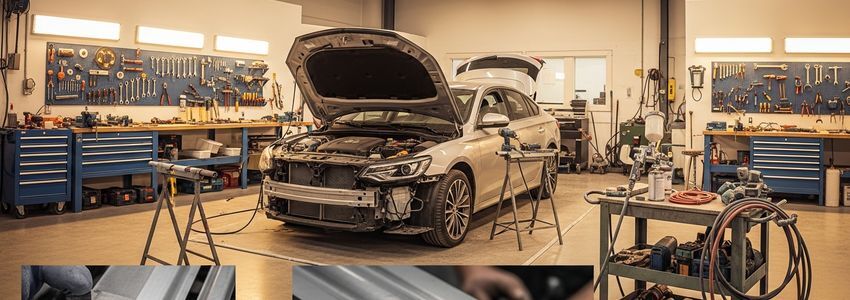
Running a successful collision repair shop takes more than skill with a spray gun or frame machine. It takes capital. Whether you need to upgrade your paint booth, purchase new diagnostic equipment, cover payroll during a slow month, or expand to a second location, collision repair business loans give you the financial muscle to grow and compete. This guide covers everything auto body shop owners need to know about financing options, qualification requirements, how to apply, and how Crestmont Capital can help you get funded fast.
In This Article
What Are Collision Repair Business Loans?
Collision repair business loans are financing products designed for auto body shops, collision centers, and automotive repair businesses. They provide capital that shop owners can use to fund equipment, manage cash flow, hire staff, expand operations, or cover unexpected expenses.
Unlike personal loans, collision repair business loans are structured around your business's revenue, time in operation, and creditworthiness. They can be secured against equipment or real estate, or unsecured based entirely on your business's financial profile. The right loan type depends on what you need the money for and how quickly you need it.
The collision repair industry is one of the most equipment-intensive sectors in small business. From frame straightening machines and paint booths to welding systems and ADAS calibration tools, the cost of running a modern body shop continues to rise. Access to affordable financing is not a luxury - it is a strategic necessity.
Industry Note: The U.S. auto body repair market generates over $47 billion in annual revenue, according to IBISWorld data. More than 32,000 auto body shops operate nationwide, with the average shop employing 10 to 20 workers and managing complex equipment worth hundreds of thousands of dollars.
Types of Financing for Auto Body Shops
There is no one-size-fits-all loan for collision repair businesses. Different financing products serve different needs, and understanding your options is the first step to choosing the right one.
Equipment Financing
Equipment financing is purpose-built for purchasing business equipment. The equipment itself typically serves as collateral, which means rates are competitive and approval is tied more to the equipment value than your credit score alone. For auto body shops, this is ideal for funding paint booths, frame straightening equipment, welding systems, spray guns, alignment machines, and ADAS calibration technology.
Working Capital Loans
Working capital loans provide a lump sum of cash for day-to-day operating expenses. They are ideal when you need to cover payroll during a slow month, purchase parts inventory, pay for utilities and insurance, or bridge the gap between when you complete a repair and when insurance pays out. These are typically unsecured and fund quickly.
Business Line of Credit
A business line of credit gives you flexible, revolving access to capital up to an approved limit. You draw what you need, repay it, and draw again. This is especially valuable for shops that deal with unpredictable cash flow due to insurance delays, seasonal patterns, or variable parts costs. Lines of credit are commonly used to manage inventory and operational gaps.
SBA Loans
SBA loans are backed by the U.S. Small Business Administration and offer some of the lowest interest rates available to small business owners. They are best for larger capital needs - expansions, real estate acquisitions, major equipment purchases, or refinancing expensive debt. The trade-off is time: SBA loans take 30 to 90 days to close and require more documentation than conventional options.
Term Loans
Traditional term loans provide a fixed lump sum repaid over a set period, typically 1 to 10 years. They are well-suited for major investments like shop expansion, purchasing a second location, or upgrading your entire equipment suite at once. Rates and terms depend on your business's creditworthiness and the lender's underwriting criteria.
Revenue-Based Financing
Revenue-based financing ties repayments to a percentage of your business's daily or monthly sales. This structure is flexible and accommodates seasonal fluctuations - you pay more when revenue is strong and less during slow periods. It is a good option for established shops with consistent revenue that want fast access to capital without fixed monthly payments.
Need Funding for Your Auto Body Shop?
Get fast, flexible financing from the #1 business lender in the U.S. Apply in minutes with no obligation.
Apply Now →How Collision Repair Business Financing Works
Getting a collision repair business loan follows a predictable process, especially when you work with a lender like Crestmont Capital that specializes in small business financing. Here is what to expect from start to funded.
Quick Guide
How Collision Repair Business Financing Works
Complete a simple application with your business information and basic financial details. Takes just minutes.
Provide 3 to 6 months of bank statements and basic business information. Equipment financing may require a vendor quote.
A funding specialist reviews your application and presents loan options that match your situation and goals.
Funds are deposited directly to your business bank account. Working capital loans often fund in 24 to 72 hours.
How Auto Body Shops Use Business Loans
Collision repair business loans are versatile. Shop owners across the country use financing for a wide range of purposes that drive growth and operational stability.
Equipment and Technology Upgrades
The collision repair industry is technology-driven. Modern vehicles require ADAS calibration systems, advanced welding equipment, and computerized paint matching systems that can cost tens of thousands of dollars each. Equipment financing allows shops to acquire the latest technology without depleting cash reserves, keeping them competitive with dealer-affiliated body shops and franchise chains.
Paint Booth Financing
A high-quality paint booth is the backbone of any collision repair operation. Crossdraft and downdraft booths from leading manufacturers like Global Finishing Solutions or Garmat can cost $30,000 to $100,000 or more. Equipment financing spreads this cost over time while letting the booth generate revenue from day one.
Payroll and Staffing
Skilled collision repair technicians, estimators, and detailers are in high demand. A working capital loan or business line of credit gives shop owners the ability to hire and retain quality staff without worrying about whether this month's insurance payments have cleared. Labor is typically the largest expense in a body shop, and financing helps smooth that cost.
Parts Inventory
Keeping common OEM and aftermarket parts in stock reduces repair cycle times and improves customer satisfaction scores. A business line of credit is ideal for funding inventory purchases since you can draw and repay as parts are used and invoices are paid.
Marketing and Customer Acquisition
Competing with large MSO chains and insurance preferred shops requires consistent marketing. Financing can fund Google Ads campaigns, website development, social media advertising, and reputation management tools that drive new customers to your shop.
Expansion and Second Locations
When your shop is running at capacity, expansion is the next step. Business loans can fund the leasehold improvements, equipment, and working capital needed to open a second location, acquire a competitor's shop, or build out additional bay capacity at your current facility.
By the Numbers
Collision Repair Industry - Key Statistics
$47B+
U.S. auto body repair market annual revenue
32,000+
Auto body shops operating in the U.S.
$4,500+
Average collision repair claim in 2024
24 Hrs
Time to funding with Crestmont Capital
How to Qualify for Collision Repair Business Loans
Qualifying for a collision repair business loan depends on several factors. Lenders evaluate your creditworthiness, business history, and revenue to determine the loan amount and terms you can access. Understanding these factors helps you prepare a stronger application and set realistic expectations.
Time in Business
Most lenders prefer that your collision repair shop has been operating for at least 6 to 12 months. Established businesses with 2 or more years of history have access to the widest range of products and the best rates. Brand-new shops may qualify for equipment financing using the equipment as collateral, or through SBA startup programs.
Annual Revenue
Revenue is one of the most important factors in loan underwriting. Working capital loans typically require $100,000 to $150,000 or more in annual revenue. SBA loans and larger term loans generally require $250,000 or more. Many collision repair shops exceed these thresholds given the average claim size and volume of work processed.
Personal Credit Score
While your business's financial health matters most, lenders also review your personal credit score. A score of 600 or above opens access to most financing options. Scores above 680 qualify for more competitive rates. If your credit needs improvement, focusing on paying down existing debt and correcting any errors on your credit report before applying can make a meaningful difference.
Business Bank Statements
Most lenders request 3 to 6 months of business bank statements. These provide insight into your cash flow patterns, average daily balance, and revenue consistency. Healthy, predictable cash flow is one of the strongest signals you can send to a lender. For more on strengthening your application, see our guide on auto mechanic business loans which covers many of the same qualification strategies.
Collateral
Many collision repair loans are unsecured, meaning no collateral is required. Equipment financing uses the purchased equipment as collateral, which makes it more accessible even for shops with lower credit scores. Larger loans, including SBA loans and commercial real estate financing, may require additional collateral such as business assets or a personal guarantee.
Pro Tip: Insurance-backed collision repair revenue is highly predictable and lender-friendly. When presenting your financials, clearly document your insurance claim volume and average ticket size. This consistency helps underwriters view your business as lower risk, which can translate to better loan terms.
How Crestmont Capital Helps Collision Repair Shops
Crestmont Capital is the #1 rated business lender in the United States, with a proven track record of helping small business owners across industries access the capital they need to grow. We understand the unique financial dynamics of the collision repair industry - the equipment-intensive nature of operations, the lag between completing repairs and receiving insurance payments, and the competitive pressure from MSO chains and dealer-affiliated shops.
Our financing solutions for collision repair businesses include working capital loans, equipment financing, business lines of credit, SBA loans, and commercial financing. Whether you need $25,000 for a new welder or $500,000 to fund a shop expansion, we match you with the right product at the best available terms.
Our equipment financing programs are especially popular with auto body shops looking to upgrade paint booths, frame machines, and diagnostic equipment without depleting working capital. For shops managing cash flow between insurance payouts, our business line of credit provides flexible access to funds when you need them.
Crestmont Capital also offers unsecured working capital loans for shop owners who need fast capital without pledging collateral. Many of our collision repair clients are approved and funded within 24 to 72 hours of application. You can check out our auto glass business loans guide for additional context on how we serve the broader automotive repair sector.
Ready to Fund Your Collision Repair Shop?
Crestmont Capital funds auto body shops in 24 to 72 hours. No obligation to apply - see your options in minutes.
Apply Now →Real-World Scenarios: How Collision Repair Shops Use Business Loans
Understanding how other shop owners have used financing helps you identify the right approach for your own situation. Here are six realistic examples of how collision repair businesses leverage loans to grow and thrive.
Scenario 1: Upgrading to a Downdraft Paint Booth
A mid-sized collision repair shop in Ohio had been losing high-end vehicle repairs to a competitor with a newer paint booth. The owner financed a $75,000 downdraft booth through equipment financing, with monthly payments of approximately $1,400 over 60 months. Within six months, the shop had recovered market share on luxury vehicle repairs and increased its average repair order by $800.
Scenario 2: Bridging an Insurance Payment Gap
A Texas body shop completed $120,000 in repairs in a single month but wouldn't receive payment from insurers for 45 days. Using a $60,000 business line of credit, the owner covered payroll, parts vendors, and utilities during the payment gap. Once the insurance checks arrived, they repaid the line and retained it for future cash flow needs.
Scenario 3: Buying Out a Retiring Competitor
A Florida shop owner identified a neighboring collision center whose owner was retiring. Using an SBA 7(a) loan of $350,000, she acquired the competitor's customer accounts, equipment, and lease rights. The acquisition doubled her shop's capacity and tripled monthly revenue within a year.
Scenario 4: Investing in ADAS Calibration Equipment
As modern vehicles increasingly rely on advanced driver assistance systems, a collision repair shop in California recognized that ADAS calibration would soon be required for most repairs. The owner financed $45,000 in calibration equipment through equipment financing, added a new revenue line, and positioned the shop as a preferred repairer for insurers handling ADAS-equipped vehicles.
Scenario 5: Hiring Certified Technicians
A growing shop in Georgia needed to hire two additional I-CAR certified technicians but didn't have the working capital to cover the salary increase during the onboarding period. A $40,000 working capital loan covered four months of increased labor costs. Repair volume grew enough within 90 days that the new staff more than paid for themselves.
Scenario 6: Seasonal Staffing and Marketing
A collision repair shop in the Midwest saw a spike in winter-related damage repairs and wanted to capitalize with additional staffing and targeted advertising. A $30,000 business line of credit funded the seasonal staffing ramp-up and a local digital marketing campaign. The campaign generated 85 new repair orders during the three-month winter season.
Comparing Your Financing Options
The right financing product depends on your specific needs, timeline, and business profile. This comparison helps you evaluate your options side by side.
| Loan Type | Best For | Typical Amount | Speed to Fund |
|---|---|---|---|
| Equipment Financing | Paint booths, frame machines, diagnostic tools | $5K - $500K+ | 1-5 business days |
| Working Capital Loan | Payroll, inventory, operating costs | $10K - $500K | 24-72 hours |
| Business Line of Credit | Ongoing cash flow, insurance payment gaps | $10K - $250K | 1-3 business days |
| SBA Loan | Large expansion, real estate, acquisition | $50K - $5M | 30-90 days |
| Revenue-Based Financing | Fast capital with flexible repayment | $10K - $250K | 24-48 hours |
For more on how equipment financing rates compare across loan types, see our in-depth guide on equipment financing rates. If you're also considering auto detailing services to complement your collision repair business, our auto detailing business loans guide covers financing options for that side of the automotive sector.
Lender Comparison Tip: When comparing loan offers, look beyond the monthly payment. Compare the total cost of capital across the full loan term. A lower monthly payment with a longer term may cost significantly more overall. Crestmont Capital specialists help you evaluate the true cost of each option before you commit.
Frequently Asked Questions
What are collision repair business loans?
Collision repair business loans are financing products designed for auto body shops, collision centers, and automotive repair businesses that need capital for equipment, working capital, expansion, or operations. They include term loans, equipment financing, business lines of credit, and more.
How much can I borrow for my collision repair shop?
Most collision repair businesses can borrow between $10,000 and $500,000 through standard lending products. Larger loans up to $5 million or more are available through SBA loans or commercial financing for established shops with strong financials.
What credit score do I need for a collision repair business loan?
Many lenders work with business owners who have a personal credit score of 600 or above. Stronger scores of 680 or higher will qualify you for better rates and terms. Some equipment financing options are available even with lower scores.
How fast can I get funding for my auto body shop?
Crestmont Capital can fund collision repair businesses in as little as 24 to 72 hours for working capital and equipment financing products. SBA loans take longer, typically 30 to 90 days.
Can I finance collision repair equipment with a business loan?
Yes. Equipment financing is one of the most popular loan types for collision repair shops. You can finance paint booths, frame straightening machines, welding equipment, alignment systems, diagnostic tools, and more. The equipment itself often serves as collateral.
Do I need collateral to get a collision repair business loan?
Not always. Many working capital loans and business lines of credit are unsecured, meaning no collateral is required. Equipment financing uses the purchased equipment as collateral. Larger term loans or SBA loans may require additional collateral.
How long do I need to be in business to qualify?
Most lenders require at least 6 to 12 months in business. Some equipment financing programs are available to newer shops. Established collision repair businesses with 2 or more years of operating history have access to the broadest range of loan products and the best rates.
What revenue does my shop need to qualify?
Minimum annual revenue requirements vary by lender and loan type. Many working capital loans require $100,000 to $150,000 in annual revenue. SBA loans and larger term loans typically require $250,000 or more. Crestmont Capital works with shops across a wide range of revenue levels.
Can I use a business loan to open a second collision repair location?
Yes. Business expansion loans, commercial real estate financing, and SBA loans are all well-suited for opening a second location. You can finance the buildout, equipment, working capital, and even the property purchase itself.
What documents do I need to apply for a collision repair business loan?
Typical requirements include 3 to 6 months of business bank statements, a government-issued ID, basic business information (EIN, time in business, revenue), and for larger loans, business and personal tax returns. Equipment financing usually requires a quote from the vendor.
Are there loans specifically for buying collision repair equipment?
Yes. Equipment financing is designed specifically to fund business equipment purchases. For auto body shops, this includes paint booths, frame machines, welders, lifts, spray systems, and diagnostic equipment. Rates are typically lower than working capital loans since the equipment serves as collateral.
What interest rates can I expect for a collision repair business loan?
Rates vary based on your credit score, time in business, loan type, and lender. Working capital loans may have factor rates from 1.1 to 1.5. Traditional term loans typically range from 6% to 25% APR. Equipment financing rates usually range from 5% to 20% APR. SBA loans offer the lowest rates, typically prime plus 2.25% to 4.75%.
Can I get a loan if my collision repair shop has slow seasons?
Yes. Lenders that specialize in small business lending understand seasonal cash flow. A business line of credit is ideal for seasonal businesses since you only draw what you need and repay as revenue comes in. Lenders typically look at average monthly revenue rather than just peak or slow months.
What is the difference between a business line of credit and a term loan for my auto body shop?
A term loan gives you a lump sum upfront that you repay over a fixed period - ideal for large purchases like equipment or expansion. A business line of credit gives you flexible access to funds up to a set limit, great for managing cash flow, payroll during slow periods, or buying parts inventory. Many collision repair shops use both products.
How do I apply for a collision repair business loan with Crestmont Capital?
Applying is simple. Visit offers.crestmontcapital.com/apply-now and complete the online application in minutes. A funding specialist will review your needs and match you with the best financing options. You can receive a decision quickly and get funded in as little as 24 to 72 hours.
How to Get Started
Complete our quick application at offers.crestmontcapital.com/apply-now - takes just a few minutes.
A Crestmont Capital advisor will review your collision repair shop's needs and match you with the right financing option.
Receive your funds and put them to work - often within days of approval. Grow your shop with confidence.
Conclusion
Collision repair business loans give auto body shop owners the financial foundation to compete, grow, and thrive. Whether you need to finance a new paint booth, bridge an insurance payment gap, hire additional technicians, or expand to a second location, the right financing product can make it happen. With options ranging from equipment financing and business lines of credit to SBA loans and working capital, there is a solution for every stage of your business.
Crestmont Capital specializes in helping collision repair shops access the capital they need - fast, efficiently, and on terms that work for your business. The application takes minutes and there is no obligation. If you are ready to take your collision repair business to the next level, apply today and speak with one of our funding specialists.
Apply for Collision Repair Business Financing Today
Fast approval. Flexible terms. Funds in as little as 24 hours. No obligation to apply.
Apply Now →Disclaimer: The information provided in this article is for general educational purposes only and is not financial, legal, or tax advice. Funding terms, qualifications, and product availability may vary and are subject to change without notice. Crestmont Capital does not guarantee approval, rates, or specific outcomes. For personalized information about your business funding options, contact our team directly.