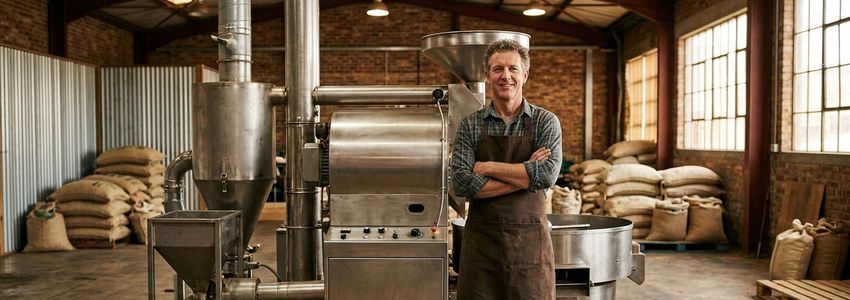
A coffee roasting business lives and dies by its roaster. Whether you are running a 5-kilo sample roaster out of a shared commercial kitchen or operating a 60-kilo drum roaster to supply wholesale accounts, the machine at the center of your operation determines how much coffee you can produce, how consistent your roast profiles are, and ultimately how much revenue your business can generate. Coffee roasting equipment financing gives roastery owners a way to acquire, upgrade, or expand their roasting capacity without draining the cash reserves needed for green coffee inventory, packaging, and payroll.
This guide covers everything a coffee roasting business owner needs to know about financing a coffee roasting machine: what it is, how it works, the types of equipment lenders will finance, what underwriters look for, and how to structure a deal that fits the way your roastery actually makes money.
Crestmont Capital has helped thousands of business owners across the country secure fast, flexible equipment financing tailored to their industry. This guide draws on that experience to walk coffee roasters through the entire process, from choosing the right roasting machine to getting funded.
In This Article
What Is Coffee Roasting Equipment Financing?
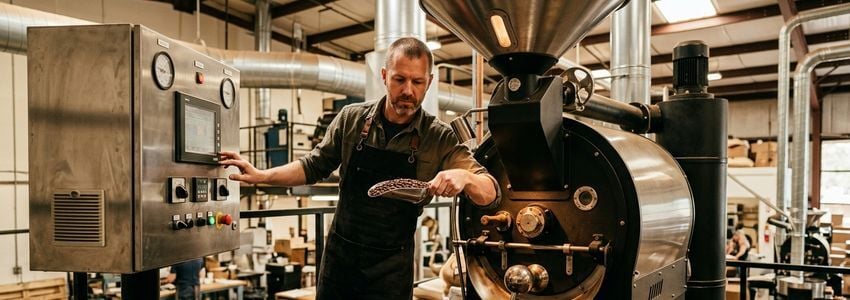
Coffee roasting equipment financing is a business loan or lease structured specifically to help roastery owners purchase, upgrade, or lease the machinery needed to roast coffee at commercial scale. Instead of paying the full price of a new or used coffee roasting machine up front, the equipment itself typically secures the loan, and the cost is spread across manageable monthly payments over a term that usually runs two to seven years.
This matters because commercial roasting equipment is expensive relative to the size of most roasting businesses. A small-batch sample roaster can start around $5,000 to $10,000, while a mid-size 15 to 30-kilo drum roaster suitable for a growing wholesale operation often runs $40,000 to $150,000. Fully automated, high-volume production roasters used by larger regional brands can exceed $500,000 once you factor in the roaster itself, the afterburner or smoke abatement system, cooling trays, and destoner. Coffee roasting equipment financing turns that large upfront capital requirement into a predictable operating expense.
Financing also extends beyond the roaster itself. Lenders that understand the coffee industry will typically finance an entire production line: green coffee storage silos, bean cleaners and destoners, cooling trays, packaging and bagging equipment, nitrogen flush sealers, and even the smoke abatement or afterburner systems many municipalities require for roasters above a certain size.
Ready to Scale Your Roastery?
Get fast, flexible equipment financing from the #1 business lender in the U.S. No obligation, apply in minutes.
Apply Now →Equipment You Can Finance
Coffee roasting is more than one machine. A well-structured financing package can cover the full range of equipment a roastery relies on to move green coffee from raw bean to finished, packaged product:
- Drum roasters - the workhorse of most commercial roasteries, available in gas, electric, and hybrid heat-transfer models ranging from 5-kilo sample batches to 120-kilo production runs
- Fluid bed and air roasters - preferred by some specialty roasters for faster roast cycles and a cleaner flavor profile
- Sample roasters - smaller units used for cupping, quality control, and developing new roast profiles before committing green coffee to a full production batch
- Afterburners and smoke abatement systems - often required by local air quality regulations once roasting volume crosses a certain threshold
- Destoners and bean cleaners - remove stones, debris, and defective beans before roasting
- Cooling trays and stir mechanisms - stop the roast process quickly and evenly to lock in flavor
- Packaging equipment - bagging machines, nitrogen flush valve sealers, and label applicators for finished retail and wholesale bags
- Green coffee storage - silos, totes, and climate-controlled storage racks that protect inventory before it is roasted
- Roast profiling and data logging software and hardware - systems like Cropster or Artisan that track and replicate consistent roast curves
Whether you are financing a single upgraded drum roaster or an entire new production line, the equipment being purchased typically serves as the collateral for the loan, which is what allows approval to move faster than a traditional unsecured business loan.
Key Benefits of Financing Your Coffee Roasting Equipment
Roastery owners choose financing over paying cash for several practical reasons:
- Preserve working capital. Green coffee is a volatile, seasonal commodity. Keeping cash on hand to buy coffee when prices dip or a great lot becomes available matters more than owning your roaster outright on day one.
- Match payments to revenue growth. A new or upgraded roaster increases your production capacity gradually as you build wholesale accounts and subscription customers. Spreading the cost over time aligns the expense with the revenue it generates.
- Preserve other credit lines. Using equipment-secured financing instead of a business line of credit or credit cards keeps your revolving credit available for day-to-day operating needs like payroll and packaging supplies.
- Potential tax advantages. Many roasters structure equipment purchases to take advantage of accelerated depreciation schedules. Speak with your accountant about how a purchase or lease fits your specific tax situation.
- Upgrade technology faster. Roast profiling technology and emissions control systems continue to improve. Financing (particularly leasing) makes it easier to upgrade to more efficient, more consistent equipment without waiting to fully depreciate the old machine.
- Fast approval on collateralized equipment. Because the roaster itself secures the loan, approval timelines are often faster than unsecured financing, sometimes within 24 to 48 hours for well-qualified applicants.
Key Stat: According to the U.S. Small Business Administration, access to capital is consistently cited as one of the top barriers to growth among the more than 33 million small businesses operating in the United States.
How Coffee Roasting Equipment Financing Works
The mechanics of coffee roasting equipment financing are straightforward once you understand the basic structure:
- You select the equipment. Get a written quote from your roaster manufacturer or dealer, whether that is a new machine from a company like Diedrich, Loring, Probat, or San Franciscan, or a used roaster you have sourced through a broker.
- You apply for financing. The lender reviews your business financials, time in business, and the equipment quote to determine loan amount and terms.
- The lender pays the vendor directly. Once approved, funds go straight to the equipment seller, so you never have to front the full purchase price.
- You make fixed monthly payments. Payments are set for the term of the loan, typically two to seven years depending on the equipment's useful life and the loan amount.
- You own the equipment at the end of the term (with a financing structure) or you have purchase, renewal, or return options (with a lease structure).
Loan-to-value on coffee roasting equipment is generally strong because roasters hold their value well when properly maintained, and there is an active secondary market for used commercial roasters. That resale value gives lenders confidence and often translates to more competitive rates for borrowers.
The Specialty Coffee Growth Opportunity
By the Numbers
The U.S. Specialty Coffee Market at a Glance
$10.7B
U.S. specialty coffee market size in 2025
7.0%
Projected annual growth rate through 2031
60%+
Share of coffee consumed by U.S. adults that is specialty grade
$500K+
Cost of a fully automated, high-volume roasting system
The specialty coffee category has grown from a niche market into a mainstream force in American food and beverage spending. That growth is a direct opportunity for independent roasters who can add wholesale, subscription, and grocery accounts, but only if their roasting capacity can keep up with demand. A roaster that is maxed out running 12-hour days on a small drum machine cannot chase new wholesale contracts, no matter how strong the demand is.
Financing vs. Leasing a Coffee Roasting Machine
Roastery owners generally choose between two structures when acquiring a new machine. The right choice depends on how long you plan to keep the equipment and how your business handles cash flow.
| Feature | Equipment Financing | Equipment Leasing |
|---|---|---|
| Ownership | You own the roaster at the end of the term and it becomes a business asset. | The leasing company retains ownership. You are essentially renting the machine. |
| Upfront Cost | May require a down payment, though 100% financing is available for well-qualified applicants. | Often lower upfront cost, typically first and last payment. |
| Best For | A primary production roaster you plan to run for 7-15+ years. | Sample roasters, packaging automation, or software/hardware that may need frequent upgrades. |
| End of Term | You keep the equipment free and clear. | Renew the lease, purchase the equipment at fair market value, or return it. |
For most established roasters, financing tends to make the most sense for the primary drum roaster, since a well-maintained commercial roaster can run reliably for well over a decade. Leasing can be a smarter fit for packaging automation and roast profiling technology that benefits from more frequent upgrades.
Qualification Requirements
Lenders review several factors when evaluating a coffee roasting equipment financing application. Understanding these ahead of time helps you put together a stronger application.
- Credit score: A personal FICO score of 620 or higher opens up the most competitive programs, though options exist for lower scores, especially with a down payment or strong revenue.
- Time in business: Two or more years of operating history is ideal, but many lenders, including Crestmont Capital, offer programs for roasters with as little as six months of operating history, particularly for smaller equipment amounts.
- Annual revenue: Lenders want to see cash flow, whether from cafe retail sales, wholesale accounts, farmers market sales, or online subscriptions, sufficient to cover the new monthly payment alongside existing obligations.
- Down payment: Not always required, but a down payment of 10 to 20% can improve approval odds and secure better rates, especially on larger production roaster purchases.
- Equipment value and vendor. Since the roaster secures the loan, its resale value, brand reputation, and condition (new vs. used) all factor into the lender's decision.
How to Apply for Coffee Roasting Equipment Financing
Applying with Crestmont Capital is designed to be fast and straightforward, so you can lock in your equipment quote and get roasting on new capacity as quickly as possible.
Request an itemized quote from your roaster manufacturer or dealer.
Bank statements, tax returns, and a driver's license are typically required.
Provide basic business details and the financing amount you're requesting.
Review your term sheet with a financing specialist and sign electronically.
Your equipment vendor is paid directly and arranges delivery and installation.
How Crestmont Capital Helps Coffee Roasters
Crestmont Capital works with coffee roasting business owners across the country to structure financing that matches the seasonal and growth-stage realities of the specialty coffee industry. Whether you need a single upgraded drum roaster or a complete new production line, our team can help you find the right fit.
- Coffee Machine Financing for roasters, brewers, and cafe equipment
- Equipment Financing for drum roasters, destoners, and packaging lines
- Used Equipment Financing for pre-owned commercial roasters
- Unsecured Working Capital Loans for green coffee inventory and payroll
- Bad Credit Equipment Financing for roasters building their credit profile
Our team understands the cycle of green coffee purchasing, wholesale account onboarding, and the seasonal swings that come with holiday gift sets and subscription boxes, which means we can structure a financing plan around how your roastery actually generates revenue rather than a one-size-fits-all product. For roasters who are still refining their financing strategy, our guide on coffee roaster business loans covers the broader range of funding options beyond equipment-specific financing, and our guide to commercial espresso machine financing is a useful companion resource for roasters who also operate a retail cafe.
Don't Let Roasting Capacity Cap Your Growth
Apply for coffee roasting equipment financing today and start filling the wholesale orders you've been turning away.
Apply Now →Real-World Scenarios
Scenario 1: The Outgrown Sample Roaster. A roastery founder started with a 5-kilo sample roaster and built a loyal local following at farmers markets. When a regional grocery chain offered a wholesale contract requiring 200 pounds of roasted coffee per week, the sample roaster simply could not keep up. Coffee roasting equipment financing allowed the owner to purchase a 25-kilo drum roaster and fulfill the contract without depleting the cash needed for the larger green coffee order the new account required.
Scenario 2: The Emissions Compliance Upgrade. A mid-size roastery received a notice from its local air quality management district that its roasting volume now required a certified afterburner or catalytic oxidizer. Rather than halting production to save up for the $60,000 unit, the owner used equipment financing to install the required system immediately, keeping the roastery in compliance and operating.
Scenario 3: Adding a Second Production Line. A wholesale roaster supplying several regional cafes needed to add a second roasting line to handle overnight batches without running the existing crew into overtime. Financing the second roaster allowed the business to double capacity while spreading the cost across the new revenue the additional accounts generated.
Scenario 4: Buying Out a Retiring Roaster's Equipment. When a longtime roastery owner in a neighboring town decided to retire, a growing roaster saw an opportunity to acquire a well-maintained 60-kilo Probat roaster at a fraction of new equipment cost. Used equipment financing allowed the buyer to move quickly before another buyer could make an offer.
Scenario 5: The Seasonal Packaging Bottleneck. A subscription-based roastery saw packaging become the bottleneck every holiday season, not roasting capacity. Financing an automated bagging and nitrogen-flush sealing line let the team keep pace with holiday gift box demand without hiring and training seasonal packaging staff every single year.
Frequently Asked Questions
What is coffee roasting equipment financing?
Coffee roasting equipment financing is a business loan or lease used to purchase or upgrade the machinery a roastery needs, including drum roasters, afterburners, destoners, cooling trays, and packaging equipment, with payments spread over a fixed term instead of one large upfront payment.
How much does a commercial coffee roasting machine cost?
Prices vary widely by capacity. Small sample roasters can start around $5,000 to $10,000, mid-size 15 to 30-kilo drum roasters typically run $40,000 to $150,000, and fully automated high-volume production systems can exceed $500,000 once afterburners and cooling equipment are included.
Can I finance a used coffee roaster?
Yes. Used equipment financing is common in the coffee industry since well-maintained commercial roasters from brands like Probat, Diedrich, and San Franciscan often have decades of useful life remaining. Lenders will typically evaluate the age, condition, and resale value of the specific machine.
What credit score do I need to finance a coffee roaster?
A personal FICO score of 620 or higher typically qualifies for the most competitive programs, but options exist for lower scores, especially with a down payment or strong business cash flow. Bad credit equipment financing programs are also available for roasters still building their credit profile.
How long does approval take for coffee roasting equipment financing?
Because the roaster itself secures the loan, approval can often happen within 24 to 48 hours for well-qualified applicants who provide a complete application and equipment quote.
Do I need a down payment to finance a coffee roaster?
Not always. Some well-qualified applicants secure 100% financing, but a down payment of 10 to 20% can improve approval odds and result in more favorable terms, especially on larger production roaster purchases.
What is the difference between financing and leasing a roaster?
With financing, you own the roaster once the loan is paid off. With leasing, the leasing company retains ownership and you have options to renew, buy at fair market value, or return the equipment at the end of the term. Financing typically suits a primary production roaster, while leasing can suit equipment that benefits from more frequent upgrades.
How long is a coffee roasting equipment loan term?
Terms typically run two to seven years depending on the equipment amount and its expected useful life. Larger production roasters may qualify for longer terms since they hold value well over time.
Can startups or new roasteries get equipment financing?
Many lenders, including Crestmont Capital, offer programs for businesses with as little as six months of operating history, particularly for smaller equipment amounts like sample roasters or entry-level drum roasters. A strong personal credit profile and a solid business plan can help newer roasteries qualify.
What documents do I need to apply?
Most applications require recent business bank statements, tax returns, a driver's license, and an itemized quote from your equipment vendor. Additional documentation may be requested for larger financing amounts.
Can I finance an afterburner or emissions control system separately?
Yes. Afterburners and catalytic oxidizers required for air quality compliance can be financed on their own or bundled with a roaster purchase. Many roasters finance the compliance equipment urgently when a local air quality district issues a notice.
Does financing cover packaging equipment too?
Yes. Bagging machines, nitrogen flush sealers, and label applicators can typically be included in the same financing package as the roaster, or financed separately as your packaging needs grow.
Is an SBA loan a good option for buying a coffee roaster?
SBA 7(a) loans can be used to purchase equipment and offer competitive rates with terms that can extend up to the useful life of the equipment. However, SBA loans typically take longer to fund than direct equipment financing, which can matter if you need to move quickly on a used roaster or a compliance deadline.
How do I get started with Crestmont Capital?
Start by requesting a written quote from your roaster manufacturer or dealer, then complete Crestmont Capital's online application. A financing specialist will review your options and walk you through terms before you sign anything.
Can I bundle a roaster, destoner, and packaging line into one financing agreement?
Yes. Lenders that understand the coffee industry can often finance a full production line in a single agreement, combining the roaster, destoner, cooling equipment, and packaging machinery into one predictable monthly payment instead of separate loans for each piece of equipment.
Next Steps
Contact your preferred roaster manufacturer or dealer for an itemized written quote.
Complete our fast online application and get a decision quickly.
Once approved, your vendor is paid directly and you can schedule delivery and installation.
Turn Wholesale Demand Into Roasted Coffee
Get the roasting capacity you need to grow, without draining your cash reserves. Apply today.
Apply Now →Conclusion
Coffee roasting equipment financing gives roastery owners a practical way to scale production without sacrificing the working capital needed to buy green coffee, cover payroll, and keep the business running day to day. As the specialty coffee market continues to grow, the roasters who can quickly add capacity, whether by upgrading a drum roaster, adding a second production line, or investing in compliance equipment, are the ones positioned to capture new wholesale and subscription business instead of turning it away.
Crestmont Capital has helped roasting businesses across the country structure financing that fits their growth stage and cash flow. If your roasting capacity is holding your business back, our team is ready to help you find a solution.
According to the U.S. Small Business Administration, businesses that reinvest in equipment tend to see stronger long-term growth than those that delay capital investment due to cash constraints. For a coffee roasting business, that reinvestment often starts with the roaster itself. Learn more about the SBA 7(a) loan program or explore Census Bureau small business data to see how equipment investment trends are shaping the broader food and beverage manufacturing sector. Recent industry coverage from Forbes projects the global coffee market to reach $369.46 billion by 2030, a clear signal that now is the time to invest in the capacity to compete.
Disclaimer: The information provided in this article is for general educational purposes only and is not financial, legal, or tax advice. Funding terms, qualifications, and product availability may vary and are subject to change without notice. Crestmont Capital does not guarantee approval, rates, or specific outcomes. For personalized information about your business funding options, contact our team directly.