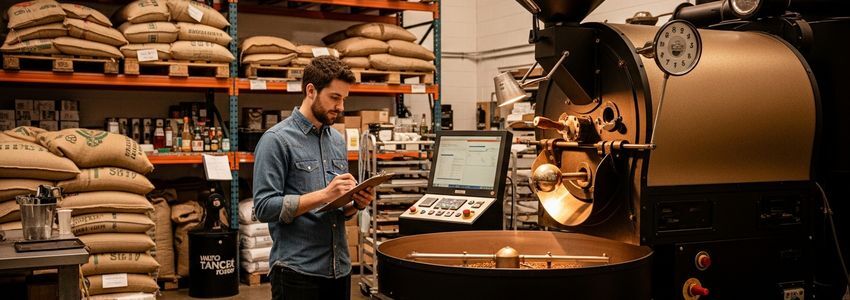
Coffee roaster business loans give specialty coffee entrepreneurs the capital needed to purchase commercial roasting equipment, build out production facilities, expand distribution, and keep up with the surging demand for artisan coffee. Whether you're launching a micro-roastery or scaling a regional coffee brand, access to the right financing can make the difference between staying small and growing into a sustainable business.
In This Article
- What Are Coffee Roaster Business Loans?
- Key Benefits of Financing Your Coffee Roastery
- How Coffee Roaster Business Loans Work
- Types of Financing for Coffee Roasters
- Who Qualifies for Coffee Roaster Financing?
- Coffee Roasting Industry at a Glance
- How Crestmont Capital Helps Coffee Roasters
- Real-World Scenarios
- Frequently Asked Questions
- How to Get Started
What Are Coffee Roaster Business Loans?
Coffee roaster business loans are financing products designed specifically to help coffee roasting businesses cover startup costs, purchase equipment, manage cash flow, and fund growth. These loans can take many forms - from equipment financing used to purchase a drum or convection roaster, to working capital loans that help cover green coffee bean inventory purchases and seasonal cash flow gaps.
The specialty coffee market in the United States has expanded dramatically. According to the Specialty Coffee Association, specialty coffee now represents over 60% of all coffee consumed by American adults, and the number of independent coffee roasters continues to grow year over year. That growth comes with capital needs. Commercial roasting equipment starts at $10,000 for small-batch machines and can exceed $500,000 for fully automated high-volume systems. Add in facility build-out, green coffee inventory, packaging, and marketing costs, and most roastery owners find they need outside financing to launch or scale effectively.
A small business loan for a coffee roaster is not a one-size-fits-all product. Lenders evaluate your roastery's revenue history, time in business, credit profile, and business plan. Alternative lenders like Crestmont Capital provide more flexible underwriting than traditional banks, making financing accessible to roasters who are still building their credit or revenue track record.
Industry Insight: The U.S. specialty coffee market is valued at over $47 billion annually, with craft and independent roasters capturing a growing share as consumers increasingly prefer locally sourced, single-origin, and artisan roasts over mass-market brands.
Key Benefits of Financing Your Coffee Roastery
Coffee roaster business financing offers several advantages that help owners build and grow without depleting personal savings or waiting for slow organic growth.
Acquire high-value roasting equipment immediately. Commercial drum roasters, cooling trays, destoners, and green coffee storage silos represent significant capital outlays. Equipment financing lets you acquire these assets and generate revenue from day one while spreading payments over time.
Manage green coffee inventory purchasing. Green coffee beans must often be purchased in large quantities - sometimes months before roasting - to lock in pricing and supply from origin countries. A working capital loan or business line of credit gives you the flexibility to buy strategically without cash flow strain.
Build out or upgrade your roastery facility. Proper ventilation, gas lines, electrical service, and roast profile monitoring systems are critical infrastructure. A business expansion loan can cover the renovation costs of converting a warehouse or commercial space into a code-compliant roastery.
Hire and train skilled staff. A quality roaster operator, green coffee buyer, or barista trainer can dramatically improve your product quality and customer relationships. Business loans for payroll and hiring give you the runway to bring on the right people before revenue fully supports those positions.
Fund marketing and sales expansion. Whether you're attending trade shows, launching a subscription service, or building your wholesale accounts, marketing capital is essential for growth. Financing allows you to invest in brand-building activities that would otherwise be delayed.
Preserve working capital for day-to-day needs. Maintaining a cash cushion for unexpected expenses - equipment repairs, shipping delays, supplier price changes - is smart business management. Borrowing for capital investments preserves your liquidity for operational continuity.
Ready to Fund Your Coffee Roastery?
Get fast, flexible financing from the #1 business lender in the U.S. Apply in minutes - no obligation.
Apply Now →How Coffee Roaster Business Loans Work
The process of securing financing for your coffee roasting business follows a straightforward path, though the specific steps vary by loan type and lender.
Step 1 - Identify your financing need. Before applying, determine exactly what you need funds for: equipment purchase, working capital, facility renovation, or general business expansion. Your intended use of funds will guide which loan type is best suited for your situation.
Step 2 - Gather your financial documents. Most lenders require recent bank statements (typically three to six months), business tax returns, a current profit and loss statement, and basic information about your business. Alternative lenders like Crestmont Capital have streamlined documentation requirements compared to traditional banks.
Step 3 - Submit an application. Online applications take as little as five to ten minutes. You'll provide information about your business, its revenue, how long you've been operating, and how much financing you're requesting.
Step 4 - Review offers and choose terms. Once approved, you'll receive financing offers with specific terms including loan amount, interest rate or factor rate, repayment period, and any fees. Review these carefully and compare total cost of capital.
Step 5 - Receive funds and put them to work. Funding timelines vary by loan type. Equipment financing may fund the same or next business day. SBA loans can take weeks to months. Alternative lenders typically fund within one to three business days.
Pro Tip: For equipment purchases, have your roaster model, price quote, and vendor information ready before applying. Equipment lenders often fund directly to the vendor, which simplifies the transaction and speeds approval.
Types of Financing for Coffee Roasters
Coffee roasting businesses have access to several distinct financing products, each suited for different needs and situations.
Equipment Financing
Equipment financing is purpose-built for purchasing commercial assets. The roasting equipment itself serves as collateral for the loan, which typically results in lower rates and higher approval rates than unsecured loans. You can finance drum roasters, fluid bed roasters, green coffee storage systems, grinders for quality control, and packaging machinery. Repayment terms typically range from 24 to 84 months depending on the equipment's useful life.
Working Capital Loans
Working capital loans provide unrestricted cash for day-to-day operational needs - purchasing green coffee inventory, covering payroll during seasonal slow periods, handling unexpected repairs, or funding marketing campaigns. These are typically shorter-term loans (6 to 24 months) with daily or weekly repayment structures.
Business Line of Credit
A business line of credit gives coffee roasters flexible, revolving access to capital. Draw funds when you need them and repay as your cash flow allows. This is ideal for managing the uneven cash flow that comes with seasonal coffee demand, large green coffee orders, and irregular wholesale account payments. You only pay interest on what you draw.
SBA Loans
Small Business Administration loans offer some of the most favorable terms available to small businesses, including low interest rates and long repayment periods (up to 25 years for real estate, 10 years for general business purposes). The SBA 7(a) loan is the most common product for coffee roasters. The trade-off is the application process - SBA loans require extensive documentation, strong credit, and significant time to fund, often taking 60 to 90 days or more.
Invoice Financing
If your roastery sells wholesale to cafes, restaurants, or offices, invoice financing lets you borrow against outstanding invoices. This resolves the common challenge of waiting 30 to 60 days for wholesale customers to pay while you need cash to fund the next production run.
Revenue-Based Financing
Revenue-based financing ties repayment to a percentage of your daily or weekly revenue, rather than a fixed payment amount. This is beneficial for coffee businesses with seasonal revenue swings - your payments decrease during slow months and increase during peak periods, reducing the risk of cash flow strain.
| Loan Type | Best For | Typical Terms | Speed to Fund |
|---|---|---|---|
| Equipment Financing | Roaster, grinders, packaging equipment | 24-84 months | 1-3 days |
| Working Capital Loan | Inventory, payroll, marketing | 6-24 months | 1-3 days |
| Business Line of Credit | Ongoing flexibility, seasonal needs | Revolving | 1-5 days |
| SBA Loan | Long-term growth, real estate | Up to 25 years | 60-120 days |
| Revenue-Based Financing | Seasonal businesses, variable revenue | 12-36 months | 1-3 days |
Who Qualifies for Coffee Roaster Business Loans?
Qualification requirements vary significantly depending on the loan type and lender. Here is a general overview of what lenders typically look for when evaluating a coffee roasting business loan application.
Time in business. Most traditional lenders require at least two years of operating history. Alternative lenders, including Crestmont Capital, can work with businesses that have been operating for as little as six months to one year, though newer businesses may face stricter terms or lower loan amounts.
Monthly revenue. Lenders look at your average monthly revenue to assess your ability to repay. For working capital loans and lines of credit, many alternative lenders require a minimum of $10,000 to $15,000 per month in business revenue. Equipment loans may have lower revenue thresholds because the equipment itself serves as collateral.
Credit score. Personal credit score matters significantly for small business lending, especially for newer companies without a long business credit history. Traditional bank loans typically require scores of 680 or higher. Many alternative lenders work with scores in the 550 to 620+ range, and some products are available even for business owners with challenged credit.
Business plan and financials. For larger loans - particularly SBA loans or commercial real estate financing for a roastery facility - lenders will want to review your business plan, revenue projections, profit and loss statements, and balance sheets. A well-documented business plan demonstrates your understanding of the market and your path to profitability.
Cash flow consistency. Lenders want to see that your business generates enough consistent cash flow to service the debt. Bank statement analysis is a key part of the underwriting process for most alternative lenders. Three to six months of business bank statements showing consistent deposits will strengthen your application significantly.
See What Your Coffee Roastery Qualifies For
Check your options without affecting your credit score. Flexible terms for roasters at every stage.
Check Eligibility →Coffee Roasting Industry at a Glance
By the Numbers
Coffee Roaster Business Financing - Key Statistics
$47B+
U.S. specialty coffee market value
$10K-$500K
Typical commercial roaster cost range
60%+
U.S. adults who drink specialty coffee
1-3 Days
Typical funding timeline with alternative lenders
How Crestmont Capital Helps Coffee Roasters
Crestmont Capital is a direct business lender rated #1 in the United States, offering tailored financing solutions for coffee roasting businesses at every stage of growth. Unlike traditional banks that apply one-size-fits-all underwriting criteria, Crestmont evaluates the full picture of your business - including your revenue trends, industry context, and growth trajectory.
Our equipment financing products are specifically designed for high-value commercial assets like roasting machines, making it straightforward to acquire the equipment you need without depleting your cash reserves. For roasters managing green coffee inventory cycles, our business line of credit provides the revolving access to capital that matches your buying and production schedule.
Coffee roasters with wholesale accounts often face 30 to 60-day invoice payment delays from cafe and restaurant clients. Our working capital solutions and invoice financing options help bridge that gap so you can keep production moving without waiting on slow-paying accounts.
We also offer fast business loans for roasters who need capital quickly - whether it's to jump on a forward contract for single-origin beans or to cover an urgent equipment repair that's keeping your production line offline. Many of our clients receive funding within 24 to 72 hours of application approval.
If you're a newer coffee roasting business still building your revenue and credit history, our bad credit and startup-friendly products provide pathways to funding that would be difficult to access through traditional bank channels. We believe in backing great businesses with real potential, not just those with perfect paperwork.
For roasters who have grown into multi-channel operations - wholesale accounts, direct-to-consumer subscriptions, cafe partnerships, and online retail - we can structure financing that supports the scale and complexity of your operation. Explore our full range of small business loans or speak directly with one of our coffee industry financing specialists.
Looking for inspiration on similar food and beverage businesses that have leveraged financing for growth? Check out our guides on microbrewery business loans and coffee shop business loans for related insights on funding food and beverage enterprises.
Real-World Scenarios: How Coffee Roasters Use Financing
Scenario 1 - Upgrading from a Sample Roaster to a Commercial Machine
A passionate home roaster turned professional, Maria built a loyal customer base selling 5-pound bags through a local farmers market and her own website. After two years of consistent growth, she needed to move from her 1-kilogram sample roaster to a 12-kilogram commercial drum roaster to meet demand. The commercial machine was priced at $28,000 - well beyond what her cash flow could handle. She applied for equipment financing through Crestmont Capital, received approval within 48 hours, and the vendor was paid directly. Maria's monthly payment of $540 was easily covered by the additional revenue from her expanded capacity within the first month.
Scenario 2 - Funding a Green Coffee Forward Contract
Marcus ran a mid-sized roastery with strong wholesale accounts across 15 local cafes. His supplier offered him an exceptional price on a 40-bag lot of natural-processed Ethiopian Yirgacheffe - but required full payment in advance, 90 days before the shipment would arrive. At $4,200 per bag, the total invoice was $168,000. He used a short-term working capital loan to fund the purchase, then repaid the loan over six months as he sold through the inventory at premium pricing. The trade allowed him to offer an exclusive single-origin that none of his competitors could source.
Scenario 3 - Building Out a Dedicated Roastery Facility
After years of sharing production space with a bakery, a three-person roastery team decided to lease their own 2,500 square-foot facility. The buildout costs - gas line installation, ventilation system, electrical upgrade, and custom shelving - totaled $95,000. They secured a combination of an SBA 7(a) loan for the long-term portion and a short-term working capital loan to cover the gap while the SBA application was in process. The dedicated facility allowed them to double roasting capacity and bring their packaging operation in-house, reducing per-unit costs by nearly 30%.
Scenario 4 - Scaling a Direct-to-Consumer Subscription Service
A specialty roaster in the Pacific Northwest had built a cult following for their single-origin coffees. When they launched a direct-to-consumer subscription service, demand grew faster than expected - 300 subscribers in the first 90 days and growing. They needed capital to pre-purchase inventory, upgrade their packaging equipment, and hire a full-time fulfillment employee. A business line of credit gave them the flexibility to draw funds as each monthly subscription box run approached, then repay as subscriber payments cleared. The revolving structure meant they were never over-borrowed during slower periods.
Scenario 5 - Recovering from Equipment Failure
A drum failure in the primary roaster at a mid-volume roastery created an immediate production crisis. The repair estimate came in at $18,000 and would take three weeks, potentially costing thousands in cancelled wholesale orders and subscription pauses. The owner applied for an emergency working capital loan online at 9pm on a Tuesday and had approval by 7am Wednesday morning. Funds cleared that afternoon. The roastery was able to rent time at a co-roasting facility while their machine was serviced, keeping all accounts intact and losing only two days of production.
Scenario 6 - Entering a New Sales Channel with Working Capital
A regional roastery had been approached by a small regional grocery chain interested in carrying three of their blends across 22 store locations. The opportunity required producing and delivering 500 bags of coffee within the first two weeks of the agreement going live, along with creating retail-ready packaging. The roaster used a short-term working capital loan to fund the initial production run and packaging redesign. The grocery chain placement generated $14,000 in monthly recurring revenue - well above the loan's monthly payment - and served as a springboard to approaching additional regional chains.
Frequently Asked Questions
What types of equipment can I finance for my coffee roastery?
You can finance virtually any commercial equipment used in your coffee roasting operation. This includes drum roasters, fluid bed roasters, sample roasters, cooling trays, destoners, optical sorters, green coffee storage silos, industrial grinders for quality control, packaging and sealing equipment, labeling machines, bag-filling systems, and even roast profile monitoring software and hardware. If it has a useful life of more than one year and is used for your business, it likely qualifies for equipment financing.
How much can I borrow for a coffee roaster business loan?
Loan amounts vary widely depending on the loan type and your business qualifications. Working capital loans typically range from $10,000 to $500,000. Equipment financing can cover the full cost of the equipment you're purchasing, which for commercial roasters can range from $15,000 to $500,000 or more. Business lines of credit typically start at $10,000 and can extend to $250,000 or higher for established businesses with strong revenue. SBA loans can reach $5 million for qualified applicants. Crestmont Capital works with roasters across a wide range of financing needs.
What credit score do I need to qualify for coffee roaster financing?
Credit score requirements depend on the lender and loan type. Traditional bank loans and SBA loans typically require personal credit scores of 680 or higher. Many alternative lenders, including Crestmont Capital, can work with scores starting around 550 to 600. Equipment financing generally has more flexibility on credit because the equipment serves as collateral. If your credit is below ideal, focusing on demonstrating strong consistent revenue through your bank statements can offset credit concerns with many lenders.
Can I get a coffee roaster business loan as a startup?
Startup financing is more challenging but not impossible. Most alternative lenders want to see at least six to twelve months of business operations and revenue history. If you're in the pre-revenue stage, your options include equipment financing with a strong personal credit profile, SBA microloans, CDFI loans, or personal business loans. Some roasters use personal home equity or personal loans to fund initial equipment, then refinance into business credit once they have six to twelve months of revenue history established.
How quickly can I get funding for my coffee roasting business?
Funding speed depends on the loan type. Working capital loans and business lines of credit through alternative lenders like Crestmont Capital typically fund within one to three business days of approval. Equipment financing may take one to five days depending on the vendor and documentation. Traditional bank loans can take two to four weeks. SBA loans typically take 60 to 120 days from application to funding. For urgent capital needs - such as emergency equipment repair or a time-sensitive green coffee purchase - alternative lenders are the fastest path to funds.
Do I need collateral to get a coffee roaster business loan?
Collateral requirements vary by loan type. Equipment financing is secured by the equipment itself, so additional collateral is typically not required. Many working capital loans from alternative lenders are unsecured - meaning no specific collateral is required, though a personal guarantee is usually expected. SBA loans and traditional bank loans are more likely to require business or personal assets as collateral, particularly for larger loan amounts. Crestmont Capital offers unsecured working capital options for qualified businesses.
What interest rates can I expect for a coffee roaster business loan?
Interest rates depend on your credit profile, business strength, loan type, and lender. Equipment financing rates typically range from 5% to 25% APR depending on credit quality and equipment type. Working capital loans and lines of credit from alternative lenders may carry higher rates - often in the 15% to 40% APR range - reflecting the faster funding and less stringent qualification requirements. SBA loans offer some of the lowest rates, typically prime plus 2.75% to 4.75%. The key is to evaluate the total cost of capital in the context of the revenue the financing will help generate.
Can I use a business loan to purchase green coffee beans?
Yes. Working capital loans and business lines of credit are commonly used to fund green coffee bean purchases. This is particularly valuable for roasters who want to participate in forward contracts, secure favorable pricing on large lot purchases, or maintain adequate inventory buffers during seasonal supply fluctuations. Inventory financing is also an option specifically designed for financing inventory purchases - the inventory itself can serve as partial collateral, which may improve your loan terms compared to an unsecured working capital loan.
What documents do I need to apply for a coffee roaster business loan?
Documentation requirements vary by lender and loan type. For alternative lenders like Crestmont Capital, the typical requirements are three to six months of business bank statements, a completed application form, basic business information (legal name, EIN, years in business, annual revenue), and a voided business check. For larger loans or SBA products, additional documents may include two years of business tax returns, a current profit and loss statement, a balance sheet, and a business plan with revenue projections. Equipment financing may also require a quote or invoice from the equipment vendor.
How does seasonal cash flow affect my coffee roaster loan application?
Seasonal revenue fluctuations are common in the food and beverage industry, and experienced lenders understand this. When applying during a slow season, providing twelve months of bank statements (rather than just three) gives lenders a complete picture of your annual revenue cycle. Some lenders offer seasonal loan structures with reduced or deferred payments during predictable slow periods. Revenue-based financing products are particularly well-suited for seasonal businesses because repayment scales with your revenue - payments are smaller when revenue is lower and larger when it's higher.
Can I refinance existing debt on my roastery equipment?
Yes, equipment refinancing is a viable strategy for coffee roasters who originally financed equipment at high rates or unfavorable terms. If your roastery's financial profile has improved since the original financing - through stronger revenue, better credit, or longer operating history - refinancing can reduce your interest rate, lower monthly payments, or extend your repayment term to free up cash flow. Crestmont Capital can evaluate your existing debt structure and help identify refinancing opportunities that improve your overall cost of capital.
What's the difference between a coffee roaster loan and equipment leasing?
With an equipment loan, you own the equipment outright once the loan is paid off. The equipment appears on your balance sheet as an asset. With a lease, you're essentially renting the equipment for a fixed term, with the option to purchase at the end in some lease structures. Leasing typically has lower monthly payments and may offer flexibility to upgrade equipment at lease end, which can be valuable in a technology-driven field like specialty coffee roasting where equipment innovations emerge regularly. Equipment loans build equity and may have lower total cost if you intend to use the equipment long-term.
Can my coffee roastery qualify for an SBA loan?
Most coffee roasting businesses qualify as small businesses under SBA size standards, making them eligible for SBA loan programs. The SBA 7(a) loan is the most common for general business purposes including equipment, working capital, and real estate. The SBA 504 loan is well-suited for purchasing commercial property or large fixed assets like major roasting equipment. To qualify, you'll generally need a credit score above 680, strong business financials, a personal guarantee, and collateral. The application process is lengthy, but the favorable rates and terms are often worth it for established roasters with major capital projects.
How do wholesale accounts affect my loan eligibility?
Having consistent wholesale accounts with established cafes, restaurants, or corporate clients generally strengthens your loan application significantly. These recurring revenue relationships demonstrate a stable, predictable income stream that lenders view favorably. If you have signed wholesale contracts or letters of intent from credible buyers, providing these to your lender as part of your application package can improve your terms or increase your approved loan amount. Some lenders can also factor in projected revenue from signed wholesale agreements when evaluating your repayment capacity.
Should I apply to multiple lenders at once?
Shopping for the best terms is smart business practice, but be mindful of how applications affect your credit. Hard credit inquiries can temporarily lower your score. A better approach is to first work with a direct lender like Crestmont Capital that can show you multiple financing options from a single application and a soft credit check. Alternatively, provide your documentation to a small number of qualified lenders and compare offers before any formal credit pulls. Getting multiple competing offers gives you negotiating leverage and ensures you're getting competitive terms for your specific situation.
How to Get Started
Complete our quick application at offers.crestmontcapital.com/apply-now. Have your last three months of business bank statements ready. The application takes five to ten minutes and does not affect your credit score.
A Crestmont Capital advisor will review your roastery's specific needs, walk through your financing options, and match you with the right product - whether that's equipment financing, a working capital loan, a line of credit, or an SBA loan referral.
Review your financing terms carefully, ask any questions, and accept your offer. Funding typically arrives within one to three business days for working capital and equipment loans. Put your capital to work building the coffee roastery you've envisioned.
Your Coffee Roastery Deserves the Right Financing
Join thousands of food and beverage businesses that trust Crestmont Capital for fast, flexible funding. Apply today and get a decision in as little as 24 hours.
Apply Now →Conclusion
Coffee roaster business loans are an essential tool for specialty coffee entrepreneurs who want to grow beyond what cash flow alone can support. Whether you need to purchase a commercial roasting machine, build out a dedicated production facility, fund a large green coffee contract, or manage the inevitable seasonal cash flow gaps of the food and beverage industry, the right financing product can accelerate your path to the roastery you've worked to build.
The specialty coffee market rewards quality, consistency, and scale - all of which require capital investment. From equipment financing that lets you acquire best-in-class roasting technology, to working capital solutions that keep your green coffee sourcing strategy flexible, Crestmont Capital offers the financing tools that serious coffee roasters need. Our direct lending model, fast approvals, and flexible underwriting criteria mean that you can focus on what you do best - crafting exceptional coffee - while we handle the financing.
Take the first step today. Apply online in minutes and let our team of business lending specialists show you how coffee roaster business loans from Crestmont Capital can help you roast your vision into reality.
Disclaimer: The information provided in this article is for general educational purposes only and is not financial, legal, or tax advice. Funding terms, qualifications, and product availability may vary and are subject to change without notice. Crestmont Capital does not guarantee approval, rates, or specific outcomes. For personalized information about your business funding options, contact our team directly.