
 (800) 949-0401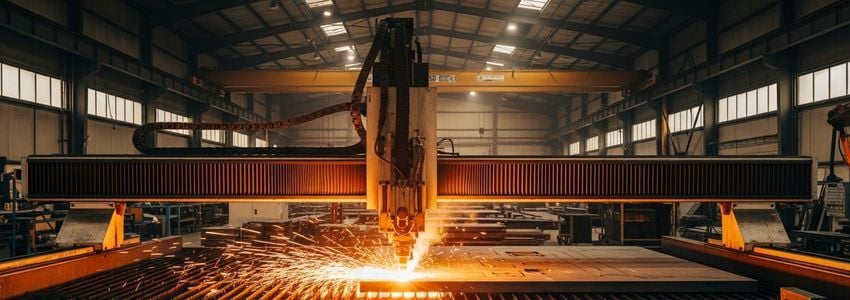
CNC Plasma Table Financing & Leasing: Everything You Need to Know
For fabrication shops, custom metalworkers, and manufacturing facilities, a CNC plasma table is a game-changing piece of equipment that unlocks new levels of precision, speed, and profitability. However, the significant upfront cost can be a major barrier to acquisition. This is where cnc plasma table financing becomes a critical strategic tool, allowing businesses to acquire the technology they need to grow without depleting their cash reserves. By spreading the cost over time with predictable monthly payments, you can put your new equipment to work generating revenue immediately.
In This Article
- What Is a CNC Plasma Table?
- How CNC Plasma Table Financing Works
- CNC Plasma Table Leasing vs. Buying
- Types of Financing Available
- How Much Does a CNC Plasma Table Cost?
- Who Qualifies for CNC Plasma Table Financing?
- How Crestmont Capital Helps
- Real-World Scenarios
- Frequently Asked Questions
- How to Get Started
- Conclusion
What Is a CNC Plasma Table?
Before diving into the financial aspects, it's essential to understand the equipment itself and the value it brings to a business. A CNC plasma table is a sophisticated machine that combines two powerful technologies: plasma cutting and Computer Numerical Control (CNC).
Plasma Cutting: This is the process of using a high-velocity jet of ionized gas-that is, plasma-to cut through electrically conductive materials. An electric arc is formed through a gas (like oxygen, nitrogen, or argon) that is passed through a constricted opening. This elevates the gas to a fourth state of matter, plasma, which can reach temperatures exceeding 40,000°F. This intense heat melts the workpiece material, and the high-speed gas stream blows the molten metal away, creating a clean, precise cut.
Computer Numerical Control (CNC): This is the automation component. A computer controller reads a digital design file, typically created in CAD (Computer-Aided Design) software. It then translates this design into precise, programmable movements along multiple axes (X, Y, and often Z for torch height). The controller directs the plasma torch's movement over the material on the cutting table, executing the design with a level of accuracy and repeatability that is impossible to achieve by hand.
When combined, these technologies create a CNC plasma table-a machine capable of automatically cutting intricate shapes, patterns, and parts from metal sheets with incredible speed and precision. This automation drastically reduces manual labor, minimizes material waste, and allows for the mass production of identical components.
Key Components of a CNC Plasma Table
- Cutting Table: The physical surface where the metal sheet is placed. It often includes a water table or downdraft system to control smoke, fumes, and sparks.
- Gantry: The bridge-like structure that moves along the length and width of the table, carrying the plasma torch.
- Plasma Torch: The "business end" of the machine that generates and directs the plasma arc.
- CNC Controller: The computer "brain" that interprets the design files and controls the gantry's motors and the plasma system.
- Power Supply: The unit that provides the high-amperage electrical current needed to create the plasma.
- Software: CAD (for designing parts) and CAM (Computer-Aided Manufacturing, for creating the toolpaths for the torch) software are essential for operation.
Industries and Applications
The versatility of CNC plasma tables makes them indispensable in numerous sectors:
- Automotive Fabrication: Creating custom brackets, chassis components, and body panels.
- Aerospace: Cutting parts for aircraft structures from aluminum and other alloys.
- Construction and Structural Steel: Fabricating gussets, base plates, and other structural components.
- Manufacturing: Producing parts for machinery, equipment, and consumer goods.
- Custom Signage and Art: Crafting intricate metal signs, decorative panels, and sculptures.
- Shipbuilding: Cutting large steel plates for ship hulls and superstructures.
How CNC Plasma Table Financing Works
Understanding the financing process demystifies it and empowers you to make informed decisions for your business. At its core, cnc plasma table financing is a straightforward agreement between your business and a lender like Crestmont Capital. Instead of paying the full purchase price of the equipment upfront, you pay for it over a set period through regular, manageable installments.
This approach allows you to preserve your cash flow and working capital for other critical business needs like payroll, marketing, or inventory. The equipment itself typically serves as the collateral for the loan, which simplifies the application process and often leads to higher approval rates compared to traditional unsecured loans.
The Step-by-Step Financing Process
While specifics can vary slightly between lenders, the general process for acquiring equipment financing is consistent and designed for efficiency:
- Choose Your Equipment: The first step is to identify the exact CNC plasma table that meets your business's needs. Consider the size, power, brand, and any necessary accessories or software. Obtain a formal quote or invoice from the vendor, as this will be a key document in your application.
- Submit an Application: You will complete a simple application with the lender. At Crestmont Capital, this can be done online in just a few minutes. The application will ask for basic information about your business, its owners, and the equipment you wish to finance.
- Provide Documentation: For most equipment financing under $250,000, the documentation requirements are minimal. You will typically need to provide the equipment invoice and a few recent business bank statements. For larger amounts, the lender may request additional financials like tax returns or profit and loss statements.
- Underwriting and Approval: The lender's underwriting team will review your application and supporting documents. They assess your business's financial health, credit history, and ability to make the proposed payments. Because the equipment itself is the collateral, this process is often much faster than a traditional bank loan. Lenders like Crestmont Capital can often provide a credit decision within a few hours.
- Review and Sign a Financing Agreement: Once approved, you will receive a financing agreement outlining all the terms: the total amount financed, the interest rate, the term length (e.g., 36, 48, or 60 months), and the fixed monthly payment amount. It's crucial to review this document carefully before signing.
- Funding and Equipment Purchase: After you sign the agreement, the lender will coordinate directly with the equipment vendor. They will fund the vendor for the full purchase price of the CNC plasma table. The vendor then arranges for the delivery and installation of your new equipment.
- Begin Payments: Your business can start using the new plasma table to generate revenue immediately. Your first payment is typically due 30 days after the agreement is finalized. You will continue to make these fixed monthly payments for the duration of the term.
Key Point: The primary advantage of this process is speed. While a traditional bank might take weeks or even months to approve an equipment loan, a dedicated equipment financier can often complete the entire process from application to funding in as little as 24-48 hours.
CNC Plasma Table Leasing vs. Buying
One of the most critical decisions you'll face is whether to lease the equipment or buy it using a loan. Both are forms of financing, but they have different implications for your cash flow, balance sheet, and long-term strategy. There is no universally "better" option; the right choice depends entirely on your business's specific financial situation and goals.
Buying with an Equipment Financing Agreement (EFA)
Buying a CNC plasma table via an Equipment Financing agreement is similar to a traditional loan. You make monthly payments for a set term, and at the end of the term, you own the equipment outright. This path is often preferred by established businesses that plan to use the machine for its entire operational life and want to build equity in their assets.
Advantages of Buying:
- Ownership and Equity: The equipment is a business asset from day one. You build equity with every payment, and once the loan is paid off, the machine is yours free and clear.
- Tax Benefits: This is a major advantage. Under Section 179 of the IRS tax code, businesses can often deduct the full purchase price of qualifying equipment in the year it's put into service. This can lead to significant tax savings. You can also depreciate the asset over time. (Consult your tax advisor for details).
- No Restrictions: Since you own the equipment, there are no restrictions on usage, hours, or modifications.
- Lower Long-Term Cost: Over the full life of the equipment, buying is typically less expensive than leasing it for the same period.
Leasing a CNC Plasma Table
Equipment Leasing is more like a long-term rental agreement. You pay a monthly fee to use the equipment for a specified period (the lease term). At the end of the term, you typically have several options: return the equipment, purchase it at its fair market value (FMV), or upgrade to a newer model.
Advantages of Leasing:
- Lower Upfront Costs and Monthly Payments: Leases often require little to no down payment and generally have lower monthly payments than loans because you are only paying for the depreciation of the asset during the lease term, not its full value.
- Technology Upgrades: The fabrication industry sees constant technological advancements. Leasing makes it easy to upgrade to the latest, most efficient CNC plasma table every few years, ensuring you remain competitive without being stuck with obsolete equipment.
- Off-Balance Sheet Financing: Certain types of leases (Operating Leases) may not appear as a liability on your balance sheet, which can improve key financial ratios.
- Predictable Expenses: A fixed monthly lease payment simplifies budgeting and financial planning. Some leases may also bundle maintenance and service costs.
Side-by-Side Comparison: Leasing vs. Buying
| Feature | Buying (with a Loan) | Leasing |
|---|---|---|
| Ownership | You own the equipment at the end of the term. | The leasing company owns the equipment. You have options at term end. |
| Upfront Cost | Typically requires a down payment (10-20%). | Often requires little to no money down (e.g., first and last month's payment). |
| Monthly Payments | Generally higher, as you are paying off the full asset value. | Generally lower, as you are paying for the use and depreciation of the asset. |
| Tax Implications | Potential for full purchase price deduction via Section 179 and depreciation. | Lease payments are typically treated as an operating expense and are fully deductible. |
| End-of-Term | You own a valuable asset that you can continue to use, sell, or trade-in. | You can return the equipment, purchase it, or start a new lease on a newer model. |
| Maintenance | You are responsible for all maintenance and repairs. | Responsibility varies; some leases may include a maintenance package. |
| Best For | Businesses planning on long-term use and wanting to build equity and leverage tax advantages. | Businesses that want lower payments, flexibility, and to always have the latest technology. |
Types of Financing Available
When seeking funding for a CNC plasma table, businesses have several specialized financial products at their disposal. Each is designed to meet different needs regarding ownership, cash flow, and tax strategy. At Crestmont Capital, we offer a full suite of options to ensure you find the perfect fit for your operation.
Equipment Financing Agreements (EFAs)
This is the most popular option for businesses that want to own their equipment. An EFA is a straightforward loan where the equipment serves as its own collateral. You receive a lump sum to purchase the plasma table, and you repay it with interest over a fixed term. Once the final payment is made, you hold the title to the machine. This is the ideal structure for leveraging the Section 179 tax deduction.
Capital Leases ($1 Buyout Lease)
A capital lease functions very much like an EFA but is structured as a lease. You make regular lease payments, and at the end of the term, you have the option to purchase the equipment for a nominal amount, typically just $1. For tax and accounting purposes, this type of lease is treated as a purchase. It combines the benefits of ownership with the structure of a lease, often providing flexibility in payment scheduling.
Operating Leases (Fair Market Value Lease)
An operating lease, or FMV lease, is a true rental agreement. You pay to use the equipment for a set period, and your payments are significantly lower because they are based on the equipment's expected depreciation, not its full value. At the end of the term, you can choose to:
- Return the equipment to the lender.
- Purchase it for its current Fair Market Value (FMV).
- Renew the lease or lease a new, updated machine.

SBA Loans
The Small Business Administration (SBA) guarantees a portion of loans made by partner lenders, making it easier for small businesses to secure funding. SBA 7(a) and 504 loans can be used for equipment purchases. These loans often feature long repayment terms and competitive interest rates. However, the application process is notoriously rigorous and time-consuming, requiring extensive documentation and a strong credit profile. A report from Forbes.com highlights that SBA loans often have some of the strictest qualification criteria among business financing options.
Other Supporting Options
In addition to direct equipment financing, other financial tools can support your purchase:
- Business Lines of Credit: A flexible credit line can be used to cover the down payment, shipping, installation costs, or the initial purchase of consumables and raw materials.
- Working Capital Loans: A short-term infusion of cash can help manage the operational costs associated with integrating a new, high-capacity machine into your workflow before it starts generating its full revenue potential.
By the Numbers
CNC Plasma Table Financing - Key Statistics
79%
Of U.S. companies use financing (loans, leases, or lines of credit) to acquire business equipment. (Source: ELFA)
$1.25M
Is the 2024 deduction limit for Section 179, allowing businesses to write off the full cost of equipment. (Source: IRS guidelines)
6.2% CAGR
Projected annual growth for the global CNC plasma cutting machine market through 2030. (Source: Industry Reports)
24-48 Hrs
Typical funding time for equipment financing from alternative lenders, compared to weeks or months at a bank.
How Much Does a CNC Plasma Table Cost?
The price of a CNC plasma table can vary dramatically, ranging from a few thousand dollars for a small, entry-level machine to well over $150,000 for a large, industrial-grade system. Understanding the factors that influence cost is crucial for selecting the right machine and securing the appropriate amount of financing.
Primary Cost Factors
- Table Size: The physical dimensions of the cutting area are a primary cost driver. Common sizes include 4'x4', 4'x8', 5'x10', and larger. A larger table allows you to work with standard full sheets of metal, reducing prep time and material waste, but it comes at a higher price.
- Power Source (Amperage): The plasma power supply determines the thickness of the metal you can cut and how fast you can cut it. A 120-amp system will cost significantly more than a 45-amp system but will be able to sever much thicker steel plate at a higher production rate.
- Build Quality and Duty Cycle: Industrial-grade tables are built with heavier-duty components (thicker steel frames, more powerful servo motors) designed for continuous, multi-shift operation. Entry-level or "prosumer" tables use lighter components and are intended for less frequent use.
- Torch Height Control (THC): A high-quality THC system is critical for cut quality. It automatically maintains the optimal distance between the torch and the material, compensating for any warping in the metal sheet. Advanced systems are more expensive but yield far better results.
- Drive System: The mechanism that moves the gantry. Servo motors offer higher speeds, greater accuracy, and better acceleration than stepper motors, but they add to the overall cost.
- Software: The sophistication of the included CAD/CAM software package can affect the price. Advanced software may offer features like automatic nesting (to maximize material usage) and more intricate design capabilities.
- Brand and Support: Established brands like Hypertherm, Lincoln Electric, and Miller often command a premium due to their reputation for reliability, performance, and strong customer support networks.
General Price Ranges
While prices are always subject to change, these tiers provide a general guideline:
- Entry-Level / Hobbyist Tables ($5,000 - $20,000): These are typically smaller (e.g., 4'x4') tables with lighter construction and less powerful plasma sources. They are excellent for small custom shops, artists, and prototyping.
- Light Industrial / Commercial Tables ($20,000 - $60,000): This is the sweet spot for many growing fabrication shops. These tables are often 4'x8' or 5'x10', feature more robust construction, better drive systems, and more powerful plasma cutters capable of handling thicker materials on a daily basis.
- Heavy Industrial / Production Tables ($60,000 - $150,000+): These are large-format, heavy-duty machines built for non-stop production environments. They feature high-definition plasma sources, high-speed servo motors, and advanced features like beveling heads for weld prep.
Don't Forget Associated Costs
When budgeting and applying for financing, remember to account for these additional expenses:
- Shipping and Rigging: These machines are large and heavy; freight and professional installation can cost several thousand dollars.
- Electrical Work: You may need a licensed electrician to install the appropriate high-amperage circuit.
- Air Compressor and Dryer: Plasma cutters require a steady supply of clean, dry compressed air. This can be a significant additional investment.
- Ventilation: A proper fume extraction and ventilation system is essential for operator safety.
- Training: While many systems are user-friendly, on-site training from the manufacturer can be invaluable for getting your team up to speed quickly.
- Consumables: Budget for an initial stock of nozzles, electrodes, and shield caps.
Key Point: When applying for financing, it's wise to request an amount that covers the total "landed cost" of the machine, including shipping, installation, and any necessary accessories. This prevents you from having to pay for these items out of pocket.
Who Qualifies for CNC Plasma Table Financing?
One of the most common questions business owners ask is, "Will my business be approved?" While every lender has its own specific underwriting criteria, the qualifications for equipment financing are generally more flexible and accessible than those for traditional bank loans. This is because the CNC plasma table itself secures the transaction, reducing the lender's risk.
Lenders like Crestmont Capital look at a holistic picture of your business's health. Here are the key factors we evaluate:
1. Credit Score
Your personal and business credit scores are important indicators of your financial responsibility. However, a perfect score is not required.
- Excellent Credit (700+): Applicants in this range can expect to receive the most favorable terms, including the lowest interest rates and potentially 100% financing with no down payment.
- Good Credit (650-699): Businesses with good credit are strong candidates for approval and will still receive competitive rates and terms.
- Fair Credit (600-649): Many businesses fall into this category. Alternative lenders like Crestmont Capital specialize in working with these applicants. While the rates might be slightly higher to offset the increased risk, financing is very much attainable.
- Challenged Credit (Below 600): Approval is more difficult but not impossible, especially if other factors are strong. A significant down payment or additional collateral might be required.
2. Time in Business
Lenders prefer to see a track record of stability.
- 2+ Years in Business: This is the gold standard. A business that has been operating for two or more years has demonstrated its viability and is considered a lower risk.
- 6 Months to 2 Years: Many lenders, including Crestmont Capital, have programs specifically designed for newer businesses and startups. As long as you can demonstrate consistent revenue and have a solid business plan, you have a strong chance of approval.
3. Annual Revenue
Your business's revenue demonstrates its ability to handle a new monthly payment. Lenders aren't looking for massive profits, but they do need to see consistent cash flow. Most equipment financing programs require a minimum annual revenue, often starting around $100,000 to $150,000. The key is showing that your monthly deposits are sufficient to cover your existing expenses plus the new payment for the plasma table.
4. Industry and Equipment Type
Financing equipment for the manufacturing and fabrication industries is very common. Lenders understand the value and revenue-generating potential of a CNC plasma table. This makes it a "good" asset to finance, which works in your favor during the underwriting process.
Required Documentation
To streamline the process, it's helpful to have these documents ready:
- Completed Application: A simple one-page form.
- Equipment Invoice: A formal quote from the vendor detailing the machine and total cost.
- Bank Statements: Typically the last 3-4 months of your business bank statements. This is used to verify your revenue and cash flow.
- For Larger Transactions (over $250k): You may be asked for business tax returns, profit and loss statements, and a balance sheet.
The accessibility of equipment financing is a major reason why so many businesses choose this route. According to the U.S. Small Business Administration, access to capital is a persistent challenge for small businesses, and streamlined financing options are crucial for their growth and ability to invest in productivity-enhancing equipment.
How Crestmont Capital Helps
Navigating the world of business finance can be complex, but it doesn't have to be. As the #1 business lender in the United States, Crestmont Capital specializes in making the process of acquiring essential equipment fast, simple, and transparent. We understand the challenges and opportunities within the fabrication and manufacturing industries, and we've designed our cnc plasma table financing programs to help your business succeed.
Here’s how we stand out from traditional banks and other lenders:
- Speed and Efficiency: We know that in business, timing is everything. A delayed equipment purchase can mean lost contracts and revenue. Our streamlined online application takes only minutes to complete, and we often provide credit decisions in as little as two hours. Funding can be completed in just 24 hours, meaning you can get your new plasma table on its way to your shop floor almost immediately.
- High Approval Rates: Traditional banks often have rigid, conservative lending criteria that automatically disqualify many healthy, growing businesses. We take a different approach. By focusing on your business's cash flow and the value of the equipment itself, we are able to approve a much higher percentage of applications, including those from newer businesses or owners with less-than-perfect credit.
- Flexible, Tailored Solutions: We are not a one-size-fits-all lender. We offer a wide range of financing products, including EFAs, $1 buyout leases, and FMV operating leases. Our financing experts will work with you to understand your specific goals-whether that's maximizing tax benefits, achieving the lowest monthly payment, or preserving capital-and structure a deal that aligns perfectly with your business strategy.
- Minimal Paperwork: We value your time. For most financing requests under $250,000, our application-only program requires just the application form and a few recent bank statements. No need to dig up years of tax returns or create complex financial projections.
- Expertise You Can Trust: Our team is comprised of seasoned financing professionals who specialize in equipment. We understand the difference between a stepper and a servo motor, the importance of a good THC, and the ROI a new plasma table can deliver. We speak your language and are here to act as a trusted partner in your business's growth.
Ready to Upgrade Your Fabrication Capabilities?
Get a no-obligation financing quote in minutes. See how affordable your new CNC plasma table can be.
Apply Now ->Real-World Scenarios
To better illustrate how CNC plasma table financing works in practice, let's explore three detailed, hypothetical scenarios that reflect common business situations.
Scenario 1: The Startup Custom Fabrication Shop
- Business: "Precision Metalworks LLC," a custom fabrication shop that has been in business for 18 months.
- The Need: The owner, a skilled welder, has been turning away larger, more profitable jobs because he's limited to manual cutting tools. He needs a 4'x8' light industrial CNC plasma table to take on projects like custom gates, railings, and automotive parts.
- The Equipment: A brand-name 4'x8' table with a 65-amp power source, complete with software. The total quoted cost is $28,000.
- The Challenge: As a newer business, Precision Metalworks doesn't have years of financial history. The owner has a good personal credit score (690) but wants to preserve his cash for materials and marketing. A large cash purchase is out of the question.
- The Solution: The owner applies for an equipment lease with Crestmont Capital. He chooses a 60-month capital lease with a $1 buyout option. Because the business shows consistent monthly revenue of $15,000 through its bank statements, it is quickly approved.
- The Outcome: The monthly payment is approximately $620. This manageable payment allows the shop to acquire the machine immediately. Within the first month, they land a $10,000 contract for custom metal fencing that would have been impossible before. The machine pays for itself and generates significant profit, all while the owner builds equity and prepares to own it outright at the end of the term for just $1.
Scenario 2: The Expanding Manufacturing Company
- Business: "Industrial Components Inc.," an established manufacturer of machine parts, in business for 12 years.
- The Need: To keep up with increasing demand and improve efficiency, the company needs to replace an aging, smaller plasma table with a heavy-duty 5'x10' high-definition model. The new machine will cut faster, more accurately, and handle thicker plate, reducing secondary processing.
- The Equipment: A top-of-the-line industrial plasma table with a 200-amp power source and advanced nesting software. The total cost, including installation and training, is $115,000.
- The Goal: The company is profitable and has strong financials. Their primary goal is to leverage tax advantages to reduce their overall tax liability for the year.
- The Solution: The company's CFO contacts Crestmont Capital and opts for a 48-month Equipment Financing Agreement (EFA). With a strong business credit profile and years of profitability, they are approved for 100% financing at a very competitive interest rate.
- The Outcome: The company acquires the state-of-the-art machine with no money out of pocket. Working with their accountant, they utilize the Section 179 deduction to write off the full $115,000 purchase price on that year's tax return, resulting in a tax savings of over $30,000 (depending on their tax bracket). The new machine increases their production capacity by 40%, allowing them to take on more orders and significantly boost their bottom line.
Scenario 3: The Part-Time Metal Artist with Fair Credit
- Business: "Steel & Spark Designs," a sole proprietorship creating and selling metal art online and at local markets. The business is three years old but operates part-time.
- The Need: The artist's intricate designs are time-consuming to cut by hand, limiting her production volume. She wants to purchase a 4'x4' entry-level CNC plasma table to automate the cutting process and increase her output.
- The Equipment: A well-regarded "prosumer" 4'x4' CNC table package priced at $12,500.
- The Challenge: Due to some past personal credit issues, the owner's credit score is 615. Her business revenue is modest and less consistent than a full-time operation. A traditional bank loan is not an option.
- The Solution: She applies for financing with Crestmont Capital, highlighting her industry experience and the clear ROI of the machine. Despite the lower credit score, our underwriters see the potential. They approve her for a 36-month financing agreement with a 10% down payment ($1,250) to mitigate the risk.
- The Outcome: The monthly payment is around $380. While the interest rate is higher than the previous scenarios, the financing makes the purchase possible. The artist is now able to produce in one day what used to take her a week. She triples her inventory, expands her online store, and the new income easily covers the monthly payment and generates a healthy profit. The financing acts as a bridge, allowing her to grow her business and improve her credit profile for the future. As reported by major outlets like CNBC.com, a history of consistent, on-time payments is one of the most effective ways to build a stronger credit score over time.
Frequently Asked Questions
How to Get Started
Taking the next step toward acquiring your new CNC plasma table is simple and straightforward. Follow this 3-step process to get started with Crestmont Capital today.
Define Your Equipment Needs
Research and identify the specific CNC plasma table that fits your production needs and budget. Consider the size, power, brand, and necessary accessories. Obtain a formal, itemized quote from your chosen vendor-this is the most important document you'll need for your application.
Submit a Quick Application
Click on our Apply Now page to complete our secure, one-page application. It takes less than five minutes and requires only basic information about you and your business. This will allow our team to conduct a soft credit pull and provide you with a no-obligation financing quote.
Review Your Options & Get Funded
A dedicated financing specialist will contact you to discuss your approval, review the terms, and answer any questions. Once you select the option that works best for you and sign the documents electronically, we will pay your vendor directly, and they will schedule your equipment for delivery.
Conclusion
A CNC plasma table is more than just a piece of metal-cutting machinery-it's a catalyst for growth, efficiency, and innovation. It allows fabrication shops to take on more complex jobs, manufacturers to streamline production, and artists to bring intricate designs to life. While the initial investment can seem substantial, it should not be a roadblock to your business's potential.
Strategic cnc plasma table financing transforms this major capital expenditure into a manageable operating expense. By preserving your cash, you maintain the financial agility to handle day-to-day operations and seize new opportunities. Whether through a loan that builds equity and offers powerful tax advantages or a flexible lease that keeps you on the cutting edge of technology, there is a financial solution perfectly suited to your business.
At Crestmont Capital, we are committed to being more than just a lender. We are a growth partner for businesses across the country. We combine deep industry expertise with a fast, transparent, and flexible financing process to help you acquire the tools you need to thrive. If you're ready to elevate your capabilities, we're ready to help you make it happen.
Take the First Step Towards Your New CNC Plasma Table
Our team is ready to help you secure the funding you need with a plan that fits your budget. Contact us today or apply online!
Apply Now ->Disclaimer: The information provided in this article is for general educational purposes only and is not financial, legal, or tax advice. Funding terms, qualifications, and product availability may vary and are subject to change without notice. Crestmont Capital does not guarantee approval, rates, or specific outcomes. For personalized information about your business funding options, contact our team directly.








