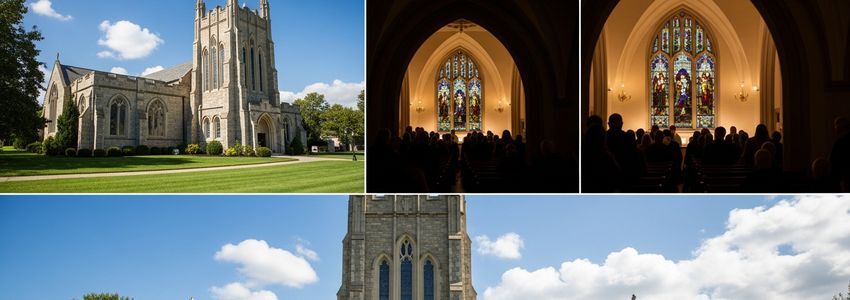
Church building loans are specialized financing solutions designed to help congregations, parishes, and religious organizations fund construction, renovation, expansion, and property acquisition projects. Whether your church is outgrowing its current space, needs critical structural repairs, or is ready to build a brand-new facility, understanding your church building loan options is the first step toward turning your vision into reality.
From small rural chapels to large urban megachurches, faith-based organizations across the United States rely on strategic financing to serve their communities. This complete guide breaks down everything you need to know about church mortgages, construction loans, renovation financing, and how Crestmont Capital can help your ministry secure the funding it needs - quickly and without the red tape of traditional banks.
In This Article
- What Are Church Building Loans?
- Key Benefits of Church Financing
- How Church Building Loans Work and How to Apply
- Types of Church Building Loans
- Who Qualifies for Church Financing?
- Church Building Loans vs. Other Financing Options
- How Crestmont Capital Helps Churches
- Real-World Church Financing Scenarios
- Frequently Asked Questions
- Next Steps for Your Church
What Are Church Building Loans?
Church building loans are a category of real estate and construction financing tailored to the unique needs of religious organizations. Unlike standard commercial mortgages or business loans, church building loans account for the nonprofit or religious nature of the borrower, the donation-based income model, and the long-term community mission of the institution.
These loans can be used for a wide range of purposes, including:
- Purchasing land for a new church campus
- Constructing a brand-new worship facility
- Renovating or expanding an existing building
- Refinancing an existing church mortgage
- Adding fellowship halls, classrooms, or community centers
- Installing accessibility upgrades such as ramps and elevators
- Replacing roofing, HVAC systems, or critical infrastructure
- Purchasing an existing building for worship use
Church building loans can be offered as term loans, church mortgages, construction loans, or lines of credit, depending on the lender and the project scope. Loan amounts typically range from $50,000 to $10 million or more, with repayment terms extending from 5 to 30 years.
According to the U.S. Small Business Administration, religious organizations represent one of the fastest-growing segments seeking alternative financing as traditional banks have grown increasingly reluctant to lend to faith-based institutions due to regulatory pressures and perceived risk. This shift has opened the door for specialized lenders and alternative financing platforms to fill the gap.
Key Benefits of Church Building Loans
Financing a church building project offers tangible benefits that go well beyond simply getting cash in hand. Here are the most important advantages for religious organizations:
1. Preserve Your Congregation's Savings
Most churches operate on tight budgets, relying heavily on weekly offerings, tithes, and fundraising campaigns. Taking out a church building loan means you can fund a major project without depleting the emergency reserves that keep your ministry operational during slow seasons or unexpected crises. A well-structured loan allows you to grow without financial risk to your current programs.
2. Build Immediately, Pay Over Time
Church building projects often take 12 to 36 months to complete, with costs exceeding what most congregations can raise in advance. Financing allows you to break ground now while your congregation continues making offering contributions that can go toward loan payments. You serve your community today while building tomorrow's capacity.
3. Increase Property Value and Equity
Real estate is typically the largest asset a religious organization owns. Improvements funded by church building loans directly increase property value, building long-term equity. A well-maintained, modern facility also attracts new members and community partnerships, expanding the congregation's reach and giving capacity.
4. Flexible Loan Structures
Unlike a personal home mortgage, church building loans can often be structured around a congregation's unique cash flow patterns. Seasonal payment adjustments, balloon structures, interest-only periods, and extended amortization schedules are all options that skilled lenders can offer to match your ministry's income cycle.
5. Tax-Advantaged Status
While we cannot provide tax advice, many religious organizations enjoy favorable tax treatment under IRS guidelines for religious institutions. Consulting with a qualified tax advisor about how church financing interacts with your organization's tax-exempt status can reveal additional financial benefits.
6. Strengthen Community Impact
A modern, accessible, well-equipped facility allows a church to expand its community programs - food banks, youth ministries, counseling services, senior care, and more. Financing your building means financing your mission. As Forbes has noted, community anchor institutions like churches play a vital economic role in neighborhoods across America.
How Church Building Loans Work and How to Apply
The application process for a church building loan differs slightly from a standard business loan, but the fundamentals are similar. Here is what to expect:
Step 1: Assess Your Financial Position
Before approaching any lender, gather the following documents and data:
- Last 2-3 years of financial statements (income statements, balance sheets)
- Bank statements showing average monthly deposits
- Documentation of weekly/monthly giving averages
- Current mortgage or lease agreements (if applicable)
- Building project plans, contractor bids, and cost estimates
- Articles of incorporation and tax-exempt status documentation
- List of church officers and board members
Step 2: Determine Your Loan Amount and Purpose
Be specific about how much you need and exactly how the funds will be used. Lenders want to see a clear plan - not just a dollar figure. Whether you need $200,000 for a roof replacement or $3 million for a new sanctuary, having a detailed project budget increases your credibility with lenders.
Step 3: Choose Your Lender Type
Church building loans are available through:
- Specialized religious lenders: Some institutions focus exclusively on faith-based organizations and understand the unique income model of congregations.
- Alternative business lenders: Companies like Crestmont Capital provide fast, flexible financing with simplified applications and quick approvals.
- Community banks and credit unions: Some local institutions have experience with church loans, though approvals can be slower.
- Traditional commercial banks: Major banks rarely lend to churches today due to regulatory restrictions, making alternative financing the preferred route for most congregations.
Step 4: Submit Your Application
The application for a church building loan typically includes financial statements, bank statements, project documentation, and leadership information. Alternative lenders like Crestmont Capital make this process fast and streamlined - often approving applications within 24-72 hours.
Step 5: Review Terms and Close
Once approved, review loan terms carefully: interest rate (fixed vs. variable), repayment schedule, prepayment penalties, and any collateral requirements. Most church building loans are secured by the property itself, similar to a commercial mortgage.
Types of Church Building Loans
There is no single "church loan" - instead, religious organizations can access several different financing products depending on the project and financial situation:
Church Mortgage (Commercial Real Estate Loan)
The most common type of church building loan, a church mortgage operates much like a standard commercial real estate loan. The property serves as collateral, terms range from 10 to 25 years, and interest rates are typically fixed or variable. Church mortgages are ideal for purchasing land or an existing building, or refinancing a current mortgage. Loan amounts often range from $250,000 to $10 million.
Church Construction Loan
A church construction loan funds a building project in phases, releasing draws as construction milestones are completed. These loans are typically interest-only during the construction phase (12-24 months) and then convert to a permanent mortgage. They require detailed project plans, contractor agreements, and regular inspections. According to data from U.S. Census Bureau, religious building construction expenditures reach billions of dollars annually in the United States.
Church Renovation Loan
For churches that need to update or repair an existing facility - replacing HVAC systems, upgrading electrical, renovating restrooms, adding ADA-compliant features - a renovation loan provides targeted funding without requiring a full property refinance. These are often shorter-term (5-15 years) and smaller in amount ($50,000 to $2 million).
Church Line of Credit
A business line of credit for a church allows ongoing access to funds for ongoing projects, seasonal cash flow needs, or unexpected repairs. Rather than taking one large lump sum, the church draws funds as needed and pays interest only on the amount drawn. This is particularly useful for churches managing multi-year renovation projects.
Equipment Financing for Church Facilities
Separate from building financing, churches often need to finance specific equipment: audio/visual systems, pews and seating, commercial kitchen equipment, HVAC units, generators, or lighting systems. Equipment financing allows you to fund these items separately, often with terms of 3-7 years and no property collateral required.
Bridge Loan for Churches
When a church needs to close on a property quickly before long-term financing is arranged - such as when a prime piece of land becomes available - a bridge loan provides short-term capital (3-24 months) to secure the opportunity. Bridge loans carry higher interest rates but are invaluable when timing is critical.
Who Qualifies for Church Building Loans?
Qualification criteria for church building loans are different from standard commercial loans because lenders must account for the nonprofit, donation-based nature of religious organizations. Here is what most lenders evaluate:
Congregation Size and Giving History
Lenders look at your congregation's weekly giving averages over the past 2-3 years. Consistent, growing giving patterns signal financial health and loan repayment capacity. A church with 200 active giving families and stable income has a much stronger loan application than one relying on a handful of major donors.
Debt Service Coverage Ratio (DSCR)
Most lenders require a DSCR of at least 1.2, meaning your church's monthly income (tithes, offerings, rental income) should be at least 1.2x the proposed loan payment. For example, if your proposed loan payment is $5,000/month, your church should be generating at least $6,000/month in reliable income.
Time in Operation
Churches that have been established for at least 2-3 years typically have an easier time qualifying. Newer congregations may need to demonstrate exceptional growth metrics and may be limited to smaller loan amounts initially.
Property and Collateral
For mortgage and construction loans, the property itself typically serves as collateral. Lenders will conduct an appraisal to confirm the property's value relative to the loan amount. Most church mortgages require a loan-to-value (LTV) ratio of 60-80%.
Leadership and Governance
Lenders want to see stable, accountable leadership. Having a formal board of directors or deacons, regular financial reporting, and independent financial oversight (audits or reviews) strengthens your application significantly.
Credit Profile
While many alternative lenders work with organizations that have imperfect credit histories, a stronger credit profile leads to better rates and terms. Some specialized church lenders also look at the personal credit of key signatories on the loan. If credit is a concern, explore bad credit business loans designed for borrowers with credit challenges.
Ready to Grow Your Church?
Get fast, flexible financing from the #1 business lender in the U.S. No obligation - apply in minutes.
Apply NowChurch Building Loans vs. Other Financing Options
Religious organizations have more financing options available than many leaders realize. Understanding the differences helps you choose the right tool for your project:
Church Building Loan vs. Capital Campaign
A capital campaign relies entirely on your congregation's generosity to raise a large sum over 3-5 years. While debt-free is the ideal, capital campaigns often fall short of targets and can take years to complete. Church building loans allow you to build now, while the capital campaign can run simultaneously to help service the debt. The two approaches are complementary, not mutually exclusive.
Church Building Loan vs. Denominational Lending
Many denominations operate their own internal lending programs for member churches. These can offer favorable rates but often involve lengthy approval processes, strict denominational requirements, and limited loan sizes. Independent and nondenominational churches may not qualify at all. Denominational loans work best as a first option, with alternative lenders as a flexible backup.
Church Building Loan vs. Crowdfunding
Faith-based crowdfunding platforms allow churches to solicit donations from a broad audience online. While crowdfunding can supplement fundraising, it rarely replaces the need for substantial financing and is unpredictable in yield. Best used in combination with traditional church financing rather than as a standalone strategy.
Church Building Loan vs. Leasing
Renting or leasing worship space avoids debt entirely but provides no equity buildup, no stability (landlords can terminate leases), and limits what you can customize. Owning your facility through a church mortgage builds long-term community roots and financial stability.
Key Stat: Church Financing in America
- There are an estimated 380,000+ religious congregations in the United States (Pew Research Center)
- The average church building project costs between $200 and $400 per square foot
- Many alternative lenders approve church building loans in as few as 3-7 business days
- Church mortgage rates typically range from 5% to 9% annually depending on creditworthiness and lender
- The typical loan-to-value ratio for church mortgages is 60-80%, requiring a 20-40% down payment or equity
Church Building Loan Process: How It Works
The 6-Step Church Building Loan Process
How Crestmont Capital Helps Churches Access Building Loans
Crestmont Capital is one of the nation's leading alternative lenders, and we understand that a church is not a typical business. Your ministry has a unique income structure, a community-driven mission, and financing needs that most banks are simply not equipped to handle. Here is how we help houses of worship get funded fast:
Simplified Application Process
Traditional bank loan applications for religious organizations can drag on for months, requiring extensive documentation, committee reviews, and regulatory hurdles. At Crestmont Capital, our online application takes just minutes to complete, and our team reviews your information quickly. Most churches receive a decision within 24-72 hours.
Flexible Loan Products
We offer a range of financing solutions for religious organizations, including small business loans, long-term business loans, equipment financing, and lines of credit. Whether your church needs $75,000 for a roof repair or $2 million for a sanctuary expansion, we have a product to match your needs.
Fast Funding
When a building project is on the line, waiting months for loan approval is not an option. Crestmont Capital offers some of the fastest funding in the industry - with many organizations receiving funds in as little as 1-3 business days after approval. Our fast business loans are designed for situations where time matters.
Work with All Credit Profiles
We understand that not every congregation has perfect credit or a spotless financial history. Our team works with a wide range of credit profiles, including organizations that have experienced financial hardship or leadership transitions. We focus on the overall health of your ministry, not just a single credit score. Explore our bad credit business loans for more information.
Transparent Terms, No Hidden Fees
We believe in honest, straightforward lending. Our loan officers will walk you through every line of your loan agreement, ensuring your church leadership understands exactly what you are committing to before signing. No surprises, no hidden fees.
For churches that also operate transportation fleets or shuttle services for members, Crestmont Capital also offers specialized fleet management business loans to support all aspects of your ministry operations.
Dedicated Support Team
Our funding specialists are experienced in working with faith-based organizations and understand the unique dynamics of church finances. We are available to answer questions, guide your application, and help you choose the right financing product for your specific project.
Ready to Grow Your Business?
Get fast, flexible financing from the #1 business lender in the U.S. No obligation - apply in minutes.
Apply NowReal-World Church Building Loan Scenarios
Here are six examples of how real congregations have used church building loans to transform their ministries:
Scenario 1: Small Rural Church Needs Roof Replacement
A 125-member Baptist congregation in rural Tennessee discovered that their 50-year-old sanctuary roof was failing. Replacement cost: $180,000. The congregation had $40,000 in savings but did not want to deplete their emergency fund. They applied for a $140,000 church renovation loan through an alternative lender, secured a 7-year term at a fixed rate, and had the new roof installed within 90 days. Monthly payments of $2,100 fit comfortably within their $18,000 monthly giving average.
Scenario 2: Growing Urban Congregation Buys a Building
An independent evangelical church in Atlanta, Georgia had been renting a 10,000-square-foot warehouse-style worship space for $12,000/month for five years. When the building came up for sale at $2.4 million, the congregation's board moved quickly. They applied for a church mortgage of $1.8 million (75% LTV), with a 20-year amortization. Their monthly payment ($14,500) was only slightly more than their current rent - and they were building equity in a property worth $2.4 million.
Scenario 3: Hispanic Pentecostal Church Expands Fellowship Hall
A growing bilingual congregation in Miami, Florida had outgrown its fellowship hall. The building addition would cost $450,000. Rather than pausing ministry programs for a 3-year capital campaign, the pastor secured a $400,000 construction loan that converted to a 15-year mortgage. Construction was completed in 14 months. The new space allowed the church to add a food pantry, ESL classes, and a youth center.
Scenario 4: Megachurch Refinances for Better Terms
A 4,500-member nondenominational church in suburban Dallas, Texas had a $6.5 million church mortgage originally taken out at a 7.8% interest rate. After five years of strong giving growth, they refinanced with a new lender at 5.9%, reducing their monthly payment by $4,200 and saving over $500,000 in interest over the remaining loan term. The savings were reinvested into ministry programs.
Scenario 5: New Church Plant Buys Its First Building
A 3-year-old church plant in Phoenix, Arizona with 180 members had been meeting in a school gymnasium. An opportunity arose to purchase a former retail building for $750,000 with $2 million in renovation needed to convert it to a worship facility. They secured a $520,000 bridge loan to acquire the property quickly, then obtained a $2.5 million construction-to-permanent loan. The completed facility - valued at $4.2 million upon completion - became a major community hub.
Scenario 6: Catholic Parish Upgrades Accessibility
An established Catholic parish in Chicago, Illinois needed to bring its 80-year-old church building into ADA compliance - requiring ramps, elevators, updated restrooms, and parking lot improvements. Total cost: $320,000. The diocese did not provide funding for the project, so the parish secured a $300,000 short-term business loan at competitive rates, completing all upgrades over 18 months. The improvements opened the building to elderly and disabled parishioners who had previously been unable to attend.
Industry Insight: Church Real Estate Values
According to CNBC, religious real estate represents hundreds of billions of dollars in U.S. property value. Many congregations are sitting on significant equity in their existing facilities - equity that can be leveraged through a church refinance or home equity-style loan to fund expansion and renovation without requiring new collateral.
Did You Know? Alternative Lending for Churches
A Bloomberg report on faith-based lending found that traditional bank lending to religious organizations has declined significantly since 2010 due to regulatory changes, pushing the majority of church building loan activity to specialized and alternative lenders. Today, more than 60% of church mortgages are originated outside the traditional banking system.
Important Stat: Church Giving and Loan Capacity
Faith-based financial experts generally recommend that a church's total annual debt service (all loan payments) should not exceed 25-35% of its total annual giving. For example, a church with $600,000 in annual giving should aim to keep total loan payments under $150,000-$210,000 per year. This guideline helps protect ministries from becoming over-leveraged while still enabling strategic growth.
Frequently Asked Questions
Can a church get a building loan?
Yes, churches and religious organizations can absolutely get building loans. While traditional commercial banks have become more reluctant to lend to religious institutions, specialized church lenders and alternative financing companies regularly provide church mortgages, construction loans, renovation financing, and equipment financing to congregations of all sizes and denominations. Qualification is based on your church's financial health, giving history, and the specific project.
What credit score does a church need to get a building loan?
Requirements vary by lender. Traditional lenders typically want to see a strong organizational credit profile and personal credit scores above 680 for key signatories. Alternative lenders are more flexible and may work with credit scores in the 550-650 range, placing more emphasis on cash flow, giving history, and overall financial health. The stronger your credit, the better the interest rate you can expect.
How much can a church borrow for a building project?
Church building loan amounts range widely - from $50,000 for small repair projects to $10 million or more for large new construction. The amount a church can borrow is typically limited by: (1) the value of the property being purchased or used as collateral, (2) the church's annual giving income and DSCR, and (3) the lender's own limits. Most lenders prefer to see total annual debt payments not exceed 25-35% of annual giving.
What interest rates do church building loans typically carry?
Church mortgage rates typically range from 5% to 9% annually, depending on the lender type, loan term, credit profile, and current market rates. Shorter-term renovation loans and bridge loans may carry higher rates (8-15%). Churches with strong financial profiles and larger loan amounts typically receive more favorable rates. Always compare multiple lenders and ask for a clear APR disclosure before committing.
How long does it take to get a church building loan?
Approval and funding timelines vary significantly by lender type. Traditional banks can take 60-120+ days to approve a church loan. Specialized church lenders typically complete the process in 30-60 days. Alternative lenders like Crestmont Capital can often provide approvals within 24-72 hours and fund within 1-5 business days for smaller loans, though larger real estate loans may take longer due to appraisal and title requirements.
Do churches need a down payment for a building loan?
Yes, most church mortgages and construction loans require a down payment or equity contribution of 20-40% of the total project cost or purchase price. This requirement helps lenders manage risk. Some lenders allow churches to use their existing property as collateral in lieu of a cash down payment. For renovations and smaller loans, some lenders offer unsecured options with no collateral required, though these carry higher interest rates.
Can a church get a loan if it is new and has no long financial history?
It is more challenging for new congregations to qualify for large building loans, but not impossible. Church plants with 1-3 years of operation may access smaller renovation loans or equipment financing. Demonstrating strong membership growth, consistent giving trends, and solid leadership governance can compensate for limited financial history. Crestmont Capital evaluates each application holistically, looking at the whole picture rather than just years in operation.
What documents does a church need to apply for a building loan?
Typical documentation required for a church building loan includes: (1) 2-3 years of financial statements (income/expense reports and balance sheets), (2) 6-12 months of bank statements, (3) documentation of average weekly/monthly giving, (4) building project plans and contractor estimates, (5) articles of incorporation and tax-exempt status confirmation, (6) list of church board members, and (7) any existing mortgage or lease documents. Alternative lenders often require less documentation than traditional banks.
Can a church refinance its existing mortgage?
Yes, church refinancing is a common strategy to reduce monthly payments, lock in a lower interest rate, or access built-up equity for renovation projects. If your church has been making payments on a mortgage for several years, you may have significant equity available. Refinancing can reduce your interest rate, extend your loan term to lower monthly payments, or both - freeing up cash flow for ministry programs. Contact Crestmont Capital to explore your refinancing options.
Is there such a thing as an SBA loan for churches?
SBA loans are generally not available to religious organizations because SBA guidelines prohibit lending to entities that have a primary purpose of religious instruction, worship, or proselytizing. However, churches that operate associated commercial enterprises (schools, cafeterias, bookstores, etc.) may explore SBA options for those specific business activities. For the church building itself, alternative lenders and specialized faith-based lenders are the preferred route.
What is the typical repayment term for a church building loan?
Repayment terms for church building loans vary by loan type. Church mortgages typically offer 15-25 year amortization schedules, similar to commercial real estate loans. Renovation and equipment loans may have terms of 5-10 years. Construction loans are usually interest-only during the build phase (12-24 months) and then convert to a standard amortizing loan. Bridge loans are short-term, typically 6-24 months. Longer terms mean lower monthly payments but more total interest paid over time.
Can a church use a line of credit instead of a building loan?
A business line of credit can be a useful tool for churches managing ongoing renovation projects, seasonal cash flow gaps, or smaller equipment purchases. However, for large-scale building projects, a line of credit is typically not sufficient - the credit limits are usually lower than what is needed for construction or major purchases, and the repayment structure is more flexible but less suited for long-term property financing. Lines of credit work best as a complement to a primary building loan, not a replacement.
What happens if a church cannot make its loan payments?
If a church experiences financial hardship and struggles to make loan payments, the first step is to contact your lender immediately. Many lenders offer temporary forbearance, loan modifications, or payment deferral options during documented hardships. Ignoring the problem leads to delinquency, potential foreclosure on any pledged property, and severe damage to your organization's financial credibility. Proactive communication with your lender is always the best approach during difficult periods.
Can a church get a loan for audio/visual and technology upgrades?
Absolutely. Equipment financing is specifically designed for purchases like sound systems, projection equipment, LED displays, livestreaming technology, lighting systems, and more. These loans are typically unsecured (no property collateral needed), offer terms of 3-7 years, and can be approved very quickly - sometimes in as little as 24 hours. Equipment loans allow your church to upgrade its technology capabilities without draining reserves or disturbing your primary building loan. Explore Crestmont Capital's equipment financing options for churches.
How does Crestmont Capital compare to a bank for church building loans?
Compared to traditional banks, Crestmont Capital offers significant advantages for churches: faster approval (days vs. months), simplified documentation requirements, greater flexibility for religious organizations, and willingness to work with a broader range of credit profiles. While bank rates may be marginally lower for highly-qualified borrowers, the speed, simplicity, and accessibility of Crestmont Capital's lending makes it the preferred choice for most religious organizations - especially those that need funding quickly or have been turned down by traditional lenders.
Ready to Fund Your Church Building Project?
Get fast, flexible financing from the #1 business lender in the U.S. No obligation - apply in minutes.
Apply NowNext Steps for Your Church Building Loan
Your Action Plan: 5 Steps to Get Your Church Building Loan
Conclusion
Church building loans are a powerful tool that allows faith-based organizations to fulfill their mission without waiting years for capital campaigns to close the gap. Whether you need to replace a failing roof, purchase a property, build a new sanctuary, or renovate aging facilities, the right financing partner can make the difference between a project that moves forward and a vision that stalls indefinitely.
Crestmont Capital is proud to support houses of worship across the United States with fast, flexible, and transparent financing solutions. Our team understands the unique financial dynamics of religious organizations and is committed to helping your congregation access the capital it needs - on terms that work for your ministry's cash flow and long-term health.
If you are ready to explore church building loan options, the best next step is a simple conversation. Apply online today and see what Crestmont Capital can do for your house of worship.
Disclaimer: The information provided in this article is for general educational purposes only and is not financial, legal, or tax advice. Funding terms, qualifications, and product availability may vary and are subject to change without notice. Crestmont Capital does not guarantee approval, rates, or specific outcomes. For personalized information about your business funding options, contact our team directly.