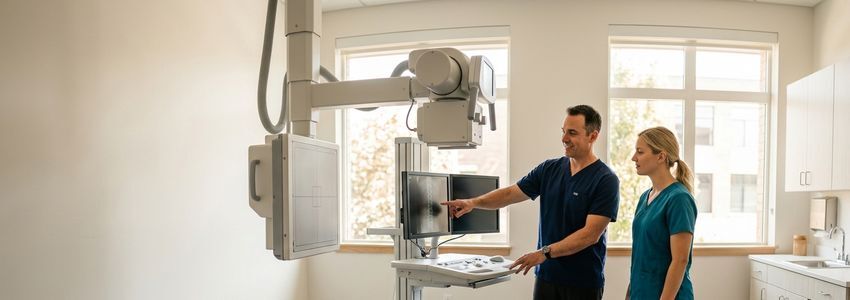
A chiropractic practice that still relies on an aging analog X-ray unit or an outdated digital sensor is fighting an uphill battle. Diagnostic imaging is often the difference between a confident treatment plan and a guessing game, and patients increasingly expect same-visit digital results rather than a trip to an outside imaging center. Chiropractic X-ray equipment financing gives practice owners a way to acquire modern imaging systems, from digital radiography units to full computed radiography (CR) upgrades, without draining the cash reserves the practice needs for payroll, rent, and day-to-day operations.
In This Article
What Is Chiropractic X-Ray Equipment Financing?
Chiropractic X-ray equipment financing is a funding arrangement that allows a chiropractic practice to purchase or lease diagnostic imaging equipment, such as digital radiography (DR) panels, computed radiography (CR) readers, portable X-ray units, or full-room analog-to-digital retrofits, while spreading the cost over a fixed monthly payment schedule instead of paying the full purchase price upfront.
Modern chiropractic X-ray systems typically range from $25,000 for a compact digital retrofit to well over $150,000 for a full-room DR system with advanced post-processing software. Very few independent practices can absorb that expense out of working capital without disrupting cash flow for staffing, marketing, or rent. Financing converts a large capital expenditure into a predictable operating cost that can often be paid down, in part, by the additional imaging revenue and improved patient retention the new equipment generates.
Unlike a general-purpose business loan, equipment financing is typically secured by the equipment itself. That collateral relationship often makes approval easier and terms more competitive than an unsecured loan of the same size, because the lender has a tangible asset backing the transaction.
Key Stat: According to U.S. Census Bureau Statistics of U.S. Businesses data, health care and social assistance is one of the fastest-growing small business sectors in the country, and outpatient care providers, including chiropractic offices, represent a significant share of that growth. Diagnostic capability is a common differentiator among competing practices in the same market.
Small business owners across every healthcare specialty are navigating similar capital-access challenges. The U.S. Small Business Administration has noted that access to affordable financing remains one of the most cited growth barriers for independent practices and small clinics nationwide, which is part of why equipment-specific financing programs have grown in popularity: they target a single, well-defined need rather than requiring a broad, harder-to-qualify-for general business loan.
Key Benefits of Financing Chiropractic X-Ray Equipment
- Preserve working capital. Keep cash on hand for payroll, marketing, and unexpected expenses instead of tying it up in a single equipment purchase.
- Faster diagnosis and treatment planning. Digital imaging delivers results in seconds rather than the minutes required to develop film, letting doctors start treatment the same visit.
- Lower radiation exposure. Modern digital sensors generally require a fraction of the radiation dose of older analog film systems, which is a meaningful patient-safety and marketing point.
- Predictable monthly payments. A fixed payment schedule makes budgeting simple and avoids the cash-flow shock of a large one-time purchase.
- Potential tax advantages. Many equipment financing structures allow a practice to claim depreciation or expense the equipment, though every practice should confirm specifics with its own accountant.
- Stay competitive. Practices that can perform in-house imaging avoid referring patients out for X-rays, which keeps the full episode of care, and the associated revenue, in house.
- Upgrade path for growth. Financing structures can often be paired with future equipment lines of credit, so the next upgrade (ultrasound, additional imaging modalities) doesn't require starting the approval process from zero.
Ready to Upgrade Your Practice's Imaging Capability?
Get fast, flexible financing from the #1 business lender in the U.S. No obligation, apply in minutes.
Apply Now →How Chiropractic X-Ray Equipment Financing Works
The process is more straightforward than most chiropractors expect, especially compared to a traditional bank term loan. Here is the general path from application to installed equipment.
- Identify the equipment and vendor. Decide whether you're purchasing a new DR system, a CR retrofit kit, or a portable unit, and get a vendor quote. Many lenders can finance both new and used equipment, and some allow financing for equipment already purchased within the last 90 to 180 days (a sale-leaseback or reimbursement structure).
- Submit an application. Most equipment lenders require basic business financials: a few months of bank statements, a business tax return or two, and the equipment quote or invoice. Many transactions under $150,000 to $250,000 can be approved with limited documentation.
- Underwriting review. The lender evaluates time in business, revenue trends, and credit profile. Because the equipment itself serves as collateral, approval is often faster and terms are more flexible than with unsecured financing.
- Approval and terms. You'll receive approved amount, term length (commonly 24 to 72 months for imaging equipment), and payment structure. Some lenders offer step-up payments or seasonal payment structures for practices with variable cash flow.
- Documentation and funding. Once you sign the financing agreement, funds are typically disbursed directly to the equipment vendor, or to your practice if it's a reimbursement structure, often within a few business days.
- Installation and use. The vendor installs and calibrates the system. Payments begin per the agreed schedule, usually 30 to 45 days after funding.
Quick Guide
How Chiropractic X-Ray Equipment Financing Works
Select your DR system, CR retrofit, or portable X-ray unit and get pricing.
Bank statements, tax returns, and the equipment quote are usually sufficient.
Review term length, payment structure, and total cost before signing.
Funds go to the vendor, equipment is installed, and payments begin on schedule.
Types of Chiropractic X-Ray Equipment Financing
Not every practice needs the same structure. Here are the most common ways chiropractors fund imaging equipment.
Equipment Financing (Loan Structure)
You borrow the full purchase price and make fixed payments over a set term, typically 24 to 72 months. At the end of the term, your practice owns the equipment outright, often for as little as $1 in a "dollar buyout" structure. This is generally the best fit for practices that plan to keep the system for its full useful life, usually 7 to 10 years for imaging equipment.
Equipment Leasing
A lease can offer lower monthly payments than a loan of the same amount because you're paying for the equipment's use during the lease term rather than its full purchase price. At the end of the lease you can typically return the equipment, purchase it at fair market value, or renew. Leasing tends to make sense for practices anticipating a technology upgrade cycle, since imaging software and sensor resolution continue to improve.
Sale-Leaseback / Refinance
If you already purchased X-ray equipment with cash or a high-interest source within the past several months, some lenders will refinance that purchase, freeing up the capital you originally spent and replacing it with a structured monthly payment.
Working Capital Loan or Line of Credit
Instead of equipment-specific financing, some practices use a working capital loan or a business line of credit to cover the purchase, especially when they want flexibility to use remaining funds for other practice needs, such as staffing or marketing, alongside the equipment purchase.
SBA Financing
For larger imaging upgrades bundled with other practice improvements (buildout, additional equipment, working capital), an SBA loan can offer longer terms and lower rates, though the application and underwriting timeline is typically longer than dedicated equipment financing.

Why Digital Imaging Is Becoming the Standard in Chiropractic Care
The shift from analog film to digital radiography has been underway across healthcare for more than a decade, and chiropractic care has followed the broader trend. Reporting from Forbes Health has covered the broader digitization of outpatient diagnostic care, noting that faster imaging turnaround improves both clinical decision-making and patient satisfaction, two factors that directly affect patient retention for a chiropractic practice competing in a crowded local market.
There is also a practical financial angle. Facilities that phase out film-based systems eliminate the recurring cost of film, chemicals, and the physical storage space required for paper-based radiographs. Coverage from CNBC's healthcare desk has highlighted how independent healthcare practices increasingly treat equipment upgrades as a cash-flow decision as much as a clinical one, weighing financing structures against the ongoing cost of maintaining outdated technology.
For chiropractors specifically, digital X-ray systems also support better patient education. Being able to pull up a high-resolution image immediately after a scan, walk a patient through what it shows, and reference it during subsequent visits builds trust in a way that waiting days for developed film simply cannot match. That trust often translates directly into treatment plan acceptance and long-term patient retention, both of which matter more to a practice's bottom line than the sticker price of the equipment itself.
Who Chiropractic X-Ray Equipment Financing Is Best For
Financing X-ray equipment makes the most sense for specific situations. Consider this option if you fall into one of these categories:
- New practice owners building out a clinic and needing imaging capability from day one without depleting startup capital.
- Established practices replacing analog systems that are becoming difficult to service, or where film and chemical costs are eating into margins.
- Multi-location practices standardizing digital imaging across offices for consistent patient records and referral workflows.
- Practices currently referring patients out for imaging and losing that revenue and continuity of care to an outside radiology provider.
- Practices with strong patient volume but limited cash reserves, where a large one-time purchase would strain payroll or rent obligations.
It is generally a poor fit for a practice that is brand new with no revenue history and no ability to demonstrate cash flow, since even secured equipment financing typically requires at least a few months of business banking history or a strong personal credit profile to support approval.
Pro Tip: Ask your equipment vendor whether they offer a trade-in credit for your existing analog or older digital system. Some manufacturers apply a trade-in value directly against the new equipment quote, which reduces the amount you need to finance.
Financing vs. Leasing vs. Cash vs. Other Options
| Option | Best For | Ownership | Typical Term |
|---|---|---|---|
| Equipment Financing (Loan) | Long-term system use, wanting ownership | Owns equipment at term end | 24-72 months |
| Equipment Leasing | Frequent tech upgrades, lower payments | Return, buy, or renew at term end | 24-60 months |
| Cash Purchase | Practices with large cash reserves | Immediate ownership | N/A |
| Working Capital Loan | Bundling equipment with other needs | Immediate ownership | 6-24 months |
| SBA Loan | Larger, multi-purpose expansions | Immediate ownership | Up to 10-25 years |
Cost Breakdown and Return on Investment
Understanding the real cost of financing versus the revenue potential of in-house imaging helps put the decision in perspective. Below is a simplified way to think through the math for a mid-range digital X-ray system.
| Cost Factor | Typical Range |
|---|---|
| Digital retrofit for existing analog unit | $25,000 - $40,000 |
| Portable digital X-ray system | $40,000 - $65,000 |
| Full-room DR system with software | $80,000 - $150,000+ |
| Estimated monthly payment (60-month term) | Roughly 2% of financed amount per month |
| Ongoing film/chemical costs eliminated (analog systems) | Often $300-$800+ per month |
These figures are general ranges, not quotes, and actual pricing depends on the manufacturer, panel resolution, software package, installation complexity, and whether the practice is financing new or used equipment. The point of the comparison is directional: for a practice still running film, the combination of eliminated consumable costs and the ability to bill for imaging that was previously referred out can offset a meaningful share of the monthly payment before factoring in any additional patient volume the improved experience generates.
Practices should also factor in the practical cost of downtime. An aging analog system that requires more frequent service calls, or a digital sensor nearing end of manufacturer support, creates a real risk of unplanned downtime during a busy clinical week. Financing a proactive upgrade, rather than waiting for a system to fail entirely, avoids the scramble of last-minute equipment sourcing and the lost revenue from days without imaging capability.
How Crestmont Capital Helps
Crestmont Capital works with chiropractic practices across the country to structure financing around the equipment they actually need, whether that's a full digital radiography suite or a targeted CR retrofit. Our equipment financing programs are designed for healthcare providers who need predictable payments and fast turnaround, not a drawn-out bank underwriting process.
We also offer equipment leasing for practices that prefer lower monthly payments or plan to upgrade imaging technology again within a few years. If your imaging upgrade is part of a larger practice expansion, our commercial financing team can help structure a combined solution that covers equipment, buildout, and working capital in a single approval process.
For chiropractors who want a broader look at financing a growing practice beyond just equipment, our complete guide to chiropractic business loans covers financing for staffing, marketing, and multi-location growth alongside equipment needs.
See What Financing You Qualify For
Fast approvals, flexible terms, and a straightforward application built for busy practice owners.
Get Started →Real-World Scenarios
Scenario 1: The Solo Practice Replacing Film With Digital
Dr. Martinez has run a solo chiropractic practice for eight years, still using a film-based X-ray system. Film and chemical costs, plus the time staff spend developing images, were adding up. She financed a $42,000 digital retrofit over 48 months, and the reduced per-image cost combined with faster patient throughput covered roughly 70% of the new payment within the first year.
Scenario 2: A New Practice Building Imaging In-House
A newly licensed chiropractor opening his first office wanted in-house imaging from day one rather than referring patients to an outside radiology center and losing that portion of the treatment relationship. He financed a $58,000 portable digital system with a 60-month term, keeping his opening-day cash reserves intact for staffing and marketing.
Scenario 3: A Multi-Location Group Standardizing Systems
A three-location chiropractic group wanted consistent digital imaging and shared patient records across all offices. They used a single equipment financing agreement to fund DR upgrades at two locations that still had older CR readers, standardizing workflow and reducing IT support complexity.
Scenario 4: A Practice Trading Up After Rapid Growth
After a growth year that outpaced their original entry-level digital system's capacity, a practice financed an upgrade to a higher-resolution DR panel with advanced measurement software, using a lease structure so they could upgrade again in four years without a large residual buyout.
Common Mistakes to Avoid
A few recurring mistakes show up when practices finance imaging equipment for the first time. Avoiding them can save real money over the life of the agreement.
- Financing the sticker price without negotiating. Equipment vendors often have room to negotiate on price, installation, training, or warranty terms. Negotiate the purchase price before locking in a financing quote based on it.
- Choosing the longest available term by default. A longer term lowers the monthly payment but increases total interest paid over the life of the agreement. Match the term to how long you realistically expect to use the equipment.
- Overlooking software and training costs. Some vendor quotes separate the hardware price from software licensing, image storage, and staff training. Confirm the full all-in cost before comparing financing offers.
- Not confirming end-of-term terms upfront. Whether it's a $1 buyout, fair market value purchase option, or lease renewal, know exactly what happens at the end of the term before you sign.
- Skipping a maintenance or service plan. Imaging equipment requires periodic calibration and service. Factor a service plan into your total cost comparison, not just the financed equipment price.
Frequently Asked Questions
What is chiropractic X-ray equipment financing?
It is a financing arrangement that lets a chiropractic practice purchase or lease digital radiography, computed radiography, or portable X-ray equipment with fixed monthly payments instead of a large upfront cash outlay.
How much does chiropractic X-ray equipment typically cost?
Costs range widely depending on system type. A digital retrofit for an existing analog unit can start around $25,000 to $40,000, while a full-room DR system with advanced software can run $80,000 to $150,000 or more.
Can I finance used X-ray equipment?
Many lenders finance used or refurbished imaging equipment, provided the equipment has a reasonable remaining useful life and a clear valuation from the seller or an independent appraisal.
What credit score do I need to qualify?
Requirements vary by lender and deal size, but many equipment financing programs consider applicants with fair to good personal credit, especially when the practice shows steady revenue and the equipment serves as collateral.
How long does approval and funding take?
Many equipment financing applications under $150,000 to $250,000 can be approved within one to three business days, with funding to the vendor following shortly after documentation is signed.
What's the difference between financing and leasing X-ray equipment?
Financing (a loan) results in ownership at the end of the term, often for a nominal buyout. Leasing typically offers lower monthly payments and flexibility to return, renew, or purchase the equipment at fair market value when the term ends.
Are there tax benefits to financing chiropractic imaging equipment?
Financed equipment may qualify for depreciation or other tax treatment depending on the financing structure and your practice's specific tax situation. Consult your accountant for guidance specific to your business.
Can a brand-new chiropractic practice get X-ray equipment financing?
It is possible, though new practices with no revenue history typically face more scrutiny and may need a stronger personal credit profile or a co-signer. Some lenders specialize in startup-friendly equipment financing.
Is a down payment required?
Many equipment financing programs offer zero or low down payment options, particularly for established practices with strong revenue and credit. Larger transactions or newer practices may require a modest down payment.
What documents do I need to apply?
Typically a few months of business bank statements, one or two years of business tax returns, and the vendor's equipment quote or invoice. Some smaller transactions qualify for reduced documentation.
Can I refinance X-ray equipment I already purchased with cash?
Yes, this is often called a sale-leaseback or equipment refinance. If the purchase happened relatively recently, some lenders will structure financing against the equipment's value and return the original purchase cash to your practice.
Does the type of X-ray system affect financing terms?
Yes. Higher-value, higher-resale systems like full DR suites may qualify for longer terms and better rates than lower-value portable units, since the collateral value supports more favorable underwriting.
What happens if my practice's revenue fluctuates seasonally?
Some equipment lenders offer step-up or seasonal payment structures that align higher payments with your practice's stronger revenue months, rather than a flat payment every month regardless of cash flow.
Will financing X-ray equipment affect my ability to get other business loans?
It can affect overall debt capacity, but because equipment financing is secured by the equipment itself, many lenders view it more favorably than unsecured debt when evaluating a practice for additional financing, such as a working capital loan or line of credit.
Where can I apply for chiropractic X-ray equipment financing?
You can apply directly through Crestmont Capital's online application. Approval decisions for most equipment financing requests are typically returned within one to two business days.
Give Your Patients Same-Visit Digital Imaging
Apply today and find out how quickly your practice can upgrade its X-ray capability.
Apply Now →Next Steps
Get a quote from your preferred X-ray equipment vendor for the exact system your practice needs.
Gather a few months of bank statements and recent business tax returns.
Apply online and review your approved terms, term length, and payment schedule.
Sign the agreement and coordinate installation with your vendor once funding is complete.
How to Get an Accurate Vendor Quote Before Applying
Financing works best when it's based on a firm, itemized vendor quote rather than a rough estimate. Before applying, ask your equipment vendor to break the quote into distinct line items: the imaging panel or generator itself, any required software licenses, installation and calibration labor, staff training, and the warranty or first-year service plan. This level of detail does two things. First, it lets you compare vendors on an apples-to-apples basis, since one vendor's "all-in" number might bundle training and warranty while another charges separately. Second, it gives your lender a clear picture of exactly what is being financed, which generally speeds up underwriting since there is less back-and-forth clarifying what the funds will be used for.
If you're weighing multiple vendors, it's also worth asking each one directly about typical service response times and whether loaner equipment is available during repairs. An imaging system with a five-year track record and a responsive regional service network is often a better long-term value than a slightly cheaper system with a thin service footprint, even if the sticker price looks more attractive on paper.
Conclusion
Chiropractic X-ray equipment financing lets practice owners modernize diagnostic imaging without draining cash reserves needed to run the day-to-day business. Whether you're replacing an aging analog system, adding imaging capability to a new practice, or standardizing digital workflows across multiple locations, structured financing turns a large capital expense into a manageable monthly payment. The right structure depends on your practice's growth plans, cash flow, and how long you intend to keep the equipment, but for most chiropractors the ability to offer fast, accurate, same-visit imaging is well worth the investment.
Disclaimer: The information provided in this article is for general educational purposes only and is not financial, legal, or tax advice. Funding terms, qualifications, and product availability may vary and are subject to change without notice. Crestmont Capital does not guarantee approval, rates, or specific outcomes. For personalized information about your business funding options, contact our team directly.