
 (800) 949-0401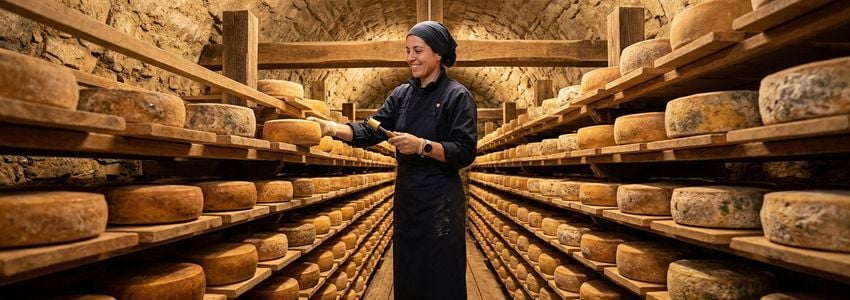
Cheese Aging Facility Financing: The Complete Guide for Business Owners
Cheese aging facility financing gives creameries, affineurs, and specialty cheese producers the capital they need to build, expand, or upgrade the climate-controlled caves and ripening rooms where raw cheese transforms into a finished, sellable product. Unlike the vats, presses, and pasteurizers used to make cheese, an aging facility is a separate capital investment entirely, one built around humidity control, temperature stability, air circulation, and racking systems that must run flawlessly for weeks, months, or even years at a time. For a growing cheese business, that infrastructure is often the single biggest barrier standing between a small-batch operation and a scalable, wholesale-ready brand.
Whether you run a farmstead creamery aging your first wheels of cheddar, a commercial affineur managing thousands of wheels across multiple humidity zones, or a specialty cheese importer building a domestic aging operation, the right financing structure can mean the difference between waiting years to self-fund an expansion and capturing market demand today. This guide walks through exactly how cheese aging facility financing works, what it costs, who qualifies, and how to choose the right funding path for your business.
In This Article
What Is Cheese Aging Facility Financing?
Cheese aging facility financing is business funding used specifically to build out, expand, or equip the space where cheese is ripened after production. This includes construction or renovation of walk-in aging rooms and underground or above-ground caves, humidity and temperature control systems, HVAC and refrigeration units built for narrow tolerance ranges, cheese racking and shelving systems, brine tanks, washing and turning equipment, and monitoring technology that tracks conditions around the clock.
This is a distinct category from cheese making equipment financing, which covers the production side (vats, presses, molds, pasteurizers). An aging facility is where the real value of artisan and aged cheese gets created. A wheel of cheddar aged 12 months commands a dramatically higher price point than a fresh wheel, but only if the aging environment is precisely controlled. That makes the aging room itself one of the most important assets in a cheese business, and one of the most expensive to build correctly.
Financing options generally fall into a few buckets: equipment financing for the racking, refrigeration, and humidity systems; commercial real estate financing or a business term loan if you are building out a new physical space; and working capital loans or lines of credit to cover the gap between when a wheel goes into the cave and when it is finally ready to sell. Because aging cheese ties up inventory for months at a time without generating revenue, financing that specific working capital gap is just as important as financing the physical build-out.
Ready to Expand Your Aging Operation?
Get fast, flexible financing from the #1 business lender in the U.S. No obligation, apply in minutes.
Apply Now →Key Benefits of Financing Your Aging Facility
Cash flow in a cheese business is uniquely challenging because inventory sits in a cave earning nothing for months while overhead keeps running. Financing the aging facility itself, rather than draining working capital to build it, protects the cash a business needs to keep buying milk, paying staff, and covering rent while product ages toward its most profitable sale point.
- Preserve working capital. Keep cash on hand for milk purchases, payroll, and day-to-day operations instead of tying it up in construction and racking systems.
- Scale aging capacity to meet demand. Add cave space or racking density before you are forced to turn away wholesale accounts due to lack of room.
- Improve product quality and consistency. Purpose-built humidity and temperature systems reduce spoilage, mold contamination, and inconsistent ripening compared to improvised or converted spaces.
- Unlock higher-margin products. Long-aged cheeses (12, 18, 24+ months) sell at premium price points that short-aged or fresh cheese simply cannot match.
- Predictable monthly payments. Term loans and equipment financing structure your build-out cost into fixed payments that are easier to plan around than a lump-sum cash outlay.
- Tax advantages on equipment purchases. Many aging facility equipment purchases can qualify for accelerated depreciation treatment. Speak with your accountant about what applies to your business.
- Faster time to revenue. Financing lets you build the facility now rather than waiting years to self-fund, capturing wholesale and retail demand while it exists.
How Cheese Aging Facility Financing Works
The process generally follows the same core steps as other forms of commercial equipment and business financing, but with a few industry-specific wrinkles worth understanding before you apply.
- Step 1: Define the scope of the project. Are you building a new cave from scratch, converting an existing space (root cellar, warehouse bay, shipping container), or simply adding racking and climate control equipment to an existing room? The scope determines whether you need equipment financing, a commercial real estate loan, a working capital loan, or some combination.
- Step 2: Get quotes from contractors and equipment vendors. Aging room specialists, refrigeration contractors, and racking manufacturers will provide itemized quotes. Lenders want to see a clear breakdown of what the money will fund.
- Step 3: Gather your financial documentation. Most lenders will ask for 3-6 months of business bank statements, basic financial statements, and time in business. Newer creameries may need to supplement with a business plan or personal financial information.
- Step 4: Choose the right financing structure. Equipment financing typically works best for racking, refrigeration units, and monitoring systems since the equipment itself serves as collateral. Construction or major renovation usually calls for a term loan or commercial financing product. A line of credit or working capital loan can bridge the aging period itself.
- Step 5: Submit your application. A straightforward equipment financing application can often be approved within 24-48 hours. Larger construction or real estate financing requests take longer due to additional underwriting.
- Step 6: Funding and installation. Once approved, funds are typically disbursed directly to the vendor or contractor, or to your business account for you to manage the build-out. Equipment financing may also allow the vendor to be paid directly upon delivery and installation.
- Step 7: Repayment. Terms vary by product. Equipment financing is commonly structured over 24-84 months depending on the useful life of the equipment. Term loans for larger construction projects can extend further, matched to the expected revenue ramp of the new capacity.
Types of Financing and Equipment Covered
Because "cheese aging facility" can mean anything from a single converted closet to a multi-zone commercial ripening operation, financing needs vary widely. Here is what typically falls under this category:
- Humidity and climate control systems: Commercial-grade humidifiers, dehumidifiers, and precision HVAC systems built to hold narrow humidity bands (often 80-95% RH) and temperature ranges (typically 45-60°F depending on the cheese style).
- Refrigeration units: Walk-in coolers and specialized refrigeration systems sized for the aging room's volume and turnover.
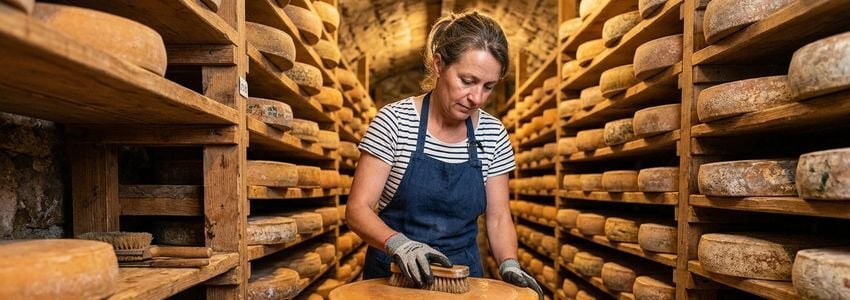
- Cheese racking and shelving: Wood, plastic, or stainless steel racking systems designed for airflow, mold management, and ease of turning and washing wheels.
- Cave construction and renovation: Structural build-out, insulation, vapor barriers, drainage, and finishing work for a purpose-built aging room or converted space.
- Brine tanks and washing equipment: Systems used for brining, washing, and rind development during the aging process.
- Monitoring and automation technology: Remote sensors, alarms, and automated control systems that track humidity, temperature, and airflow in real time and alert staff to deviations.
- Working capital for aging inventory: Financing that bridges the gap between production cost and the eventual sale of aged product, often the most overlooked piece of the puzzle.
By the Numbers
Cheese Aging and Specialty Food Financing, Key Statistics
33M+
Small businesses in the U.S., per the SBA
12-24 Mo
Typical aging window for premium hard cheeses
85-95%
Typical target humidity range in a cheese cave
24-48 Hrs
Common turnaround for equipment financing approval
Who Cheese Aging Facility Financing Is Best For
This type of financing tends to make the most sense for a specific set of business situations rather than every cheese-related business:
- Farmstead and artisan creameries ready to move from small-batch, short-aged product into longer-aged, higher-margin lines that require dedicated ripening space.
- Commercial affineurs who purchase young cheese from producers and specialize purely in aging and finishing it for retail and wholesale.
- Specialty cheese shops and importers looking to build in-house aging capacity rather than relying entirely on imported, pre-aged product.
- Growing wholesale cheese producers who have outgrown a converted basement, root cellar, or single walk-in cooler and need commercial-grade capacity.
- Businesses expanding into new cheese categories (for example, a fresh mozzarella producer adding an aged cheddar or gouda line) that require a new type of aging environment they do not currently have.
Comparing Your Financing Options
Not every financing product fits every aging facility project. The table below breaks down how the most common options compare for this specific use case.
| Financing Type | Best For | Typical Term | Collateral |
|---|---|---|---|
| Equipment Financing | Racking, refrigeration, humidity systems | 24-84 months | The equipment itself |
| Business Term Loan | Cave construction, major renovation | 1-5 years | Varies, often unsecured or blanket lien |
| Working Capital Loan | Bridging aging periods, covering overhead | Short-term, 3-24 months | Typically unsecured |
| Business Line of Credit | Ongoing flexibility, seasonal cash flow gaps | Revolving | Varies |
| Commercial Real Estate Financing | Purchasing a building or dedicated facility | 10-25 years | The property itself |
Pro Tip: Many cheese businesses combine two products, equipment financing for the racking and climate control systems, plus a working capital loan or line of credit to cover payroll and overhead while the first batches finish aging. Structuring it this way avoids over-borrowing against equipment that will outlast a single financing term.
How Crestmont Capital Helps
Crestmont Capital works with food and beverage producers, including cheese makers and affineurs, to structure financing around the realities of the industry rather than a one-size-fits-all lending template. Our equipment financing programs are built to fund the humidity control systems, refrigeration units, and racking equipment that make up the core of a cheese aging operation, with approval decisions that move fast enough to keep a build-out on schedule.
For businesses tackling a larger cave construction or renovation project, our commercial financing solutions and traditional term loans provide the capital structure to fund the build-out without draining operating cash. If your biggest challenge is covering overhead while product ages toward its sale date, our unsecured working capital loans and business line of credit options are designed specifically to bridge that kind of cash flow gap.
We have helped food producers finance everything from cheese making equipment to full dairy processing lines, and we understand that an aging facility often represents the missing piece between producing cheese and producing a premium, shelf-stable brand. Our team can walk through your specific build-out or equipment quote and recommend the financing structure that fits your timeline and cash flow, not just the fastest approval.
Build the Aging Capacity Your Cheese Deserves
From racking systems to full cave construction, get financing built for food producers. No obligation, apply in minutes.
Apply Now →Real-World Scenarios
Scenario 1: The Farmstead Creamery Adding Its First Cave. A small dairy farm producing fresh chevre and feta wants to add an aged cheddar line to diversify revenue. They need roughly $85,000 to convert an unused barn bay into a climate-controlled cave, including insulation, a dedicated humidity system, and racking for 400 wheels. Equipment financing covers the racking and climate control systems, while a smaller working capital loan covers the six months of overhead before the first wheels are ready to sell.
Scenario 2: The Affineur Scaling Wholesale Capacity. A commercial affineur purchasing young wheels from three regional producers has outgrown their current cave and is turning away new wholesale accounts. They finance a $250,000 expansion adding a second aging room with independent humidity zones for washed-rind and natural-rind varieties, using equipment financing for the build-out and a business line of credit to manage the increased purchasing volume from producers.
Scenario 3: The Specialty Shop Building In-House Aging. A specialty cheese retailer that has relied entirely on imported, pre-aged cheese wants to start finishing young imported wheels in-house to differentiate from competitors and improve margins. They finance a $60,000 buildout of a small retail-adjacent aging room with a viewing window for customers, using an equipment financing package that includes the racking, refrigeration, and monitoring technology.
Scenario 4: The Producer Recovering From a Refrigeration Failure. An established creamery experiences a refrigeration failure in their aging room that puts an entire batch at risk and exposes an aging piece of equipment that needs full replacement, not just repair. They use fast equipment financing to replace the failed system within days, minimizing spoilage risk and avoiding a repeat failure with updated, more reliable technology.
Key Stat: According to the SBA, over 33 million small businesses operate in the U.S., and access to capital is consistently cited as their number one growth barrier. For specialty food producers with long production cycles like cheese aging, that barrier is even more pronounced because inventory ties up cash for months before it can be sold.
Frequently Asked Questions
Turn Your Aging Room Into a Growth Engine
Fast approval, flexible terms, and financing built for food producers. No obligation, apply in minutes.
Apply Now →Next Steps
Decide whether you need new construction, a converted space, or simply new racking and climate control equipment.
Itemized quotes help lenders move faster and help you choose the right financing product for each piece of the project.
A few months of business bank statements and basic financials are usually all that is needed to start.
Submit your application and get a funding decision, often within 24 to 48 hours for equipment financing.
Conclusion
Cheese aging facility financing is what allows a cheese business to turn a great recipe into a scalable, higher-margin product line. From humidity-controlled caves to precision refrigeration and racking systems, the equipment and space behind the aging process represent a serious capital investment, but one that pays for itself through premium pricing and expanded wholesale and retail relationships. Whether you are converting your first root cellar or scaling a multi-zone commercial affinage operation, the right financing structure keeps your cash flow intact while your product does the slow, patient work of becoming something worth a premium price.
If you are ready to explore cheese aging facility financing for your business, Crestmont Capital can help you find the right structure, whether that is equipment financing, a term loan for construction, or working capital to bridge your aging period. Contact our team to talk through your specific project and get a funding decision fast.
Disclaimer: The information provided in this article is for general educational purposes only and is not financial, legal, or tax advice. Funding terms, qualifications, and product availability may vary and are subject to change without notice. Crestmont Capital does not guarantee approval, rates, or specific outcomes. For personalized information about your business funding options, contact our team directly.








