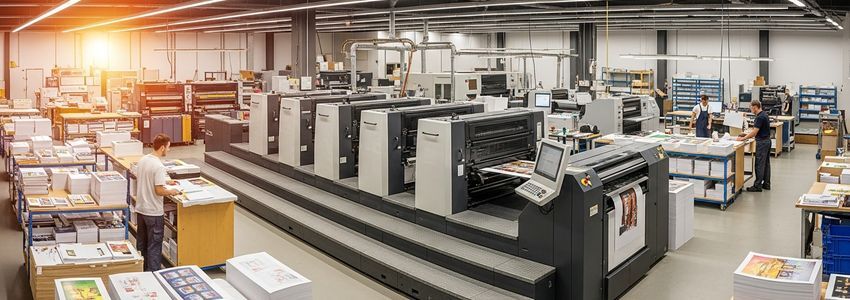
Running a print shop is a capital-intensive business. Between industrial printing presses, large-format plotters, binding equipment, finishing machines, and the software infrastructure to manage design and production workflows, the upfront and ongoing costs of operating a competitive commercial print operation are substantial. Print shop business loans give owners a practical way to fund equipment upgrades, manage cash flow between large client contracts, expand into new services, or simply keep the lights on during slower periods.
This guide covers everything you need to know about financing options for print shops and commercial printers in 2026, including which loan types work best, how to qualify, what to expect from the application process, and how Crestmont Capital helps print businesses get funded fast.
In This Article
What Are Print Shop Business Loans?
Print shop business loans are financing products specifically designed to meet the cash flow, equipment, and expansion needs of print-oriented businesses. This category includes commercial printers, digital print shops, sign and display companies, screen printing operations, quick-print franchises, packaging printers, and specialty printers serving the promotional products, publishing, or corporate communications markets.
Like most small business loans, print shop financing can come in several forms: term loans that provide a lump sum upfront, lines of credit for flexible ongoing access to cash, equipment financing tied to specific machinery purchases, and merchant cash advances tied to daily revenue. The right product depends on the specific need - and most print shops benefit from more than one type of financing over the lifecycle of the business.
According to the U.S. Census Bureau, the commercial printing industry generates over $75 billion in annual revenue, with tens of thousands of establishments operating across the country. The industry has been undergoing significant transformation as digital technologies displace traditional offset processes, making capital access even more critical for shops that need to upgrade equipment to remain competitive.
Why Print Shops Need Business Financing
Print businesses face a unique set of financial pressures that make access to capital especially important. Understanding these dynamics helps you choose the right loan type for your specific situation.
Equipment Costs
Commercial printing equipment represents some of the most expensive machinery in any industry. A production-grade digital press from manufacturers like Xerox, Konica Minolta, or HP Indigo can cost $150,000 to $500,000 or more. Wide-format printers, UV flatbed printers, and finishing equipment add further to the capital requirements. Even for shops focused on screen printing or embroidery, automated equipment can cost tens of thousands of dollars. Equipment financing or leasing allows print shops to acquire these assets without depleting working capital.
Cash Flow Gaps
Many commercial printers work on net-30 or net-60 payment terms with their business clients. Large print runs for marketing agencies, publishers, or corporate accounts can result in significant receivables with a gap between when you pay for materials and when the client pays you. A business line of credit bridges this cash flow gap without disrupting daily operations.
Seasonal Demand
Print shops often experience seasonal peaks tied to retail advertising cycles, election seasons, holiday promotions, and trade show schedules. Financing helps cover staffing, overtime, and raw material costs during high-demand periods, with repayment aligned to the revenue that follows.
Software and Technology Investment
Modern print shops must invest in design software, job management systems, web-to-print platforms, and color management tools. These technology investments can run from $10,000 to $100,000 or more and are essential to staying competitive. Business term loans or lines of credit can fund these upgrades without disrupting operations.
Expansion and Location Growth
Whether you're opening a second location, adding production capacity, or building out a new service line like wide-format or promotional printing, expansion requires capital beyond what most print shops can self-fund. A term loan provides a structured path to fund these investments with predictable monthly payments.
Ready to Fund Your Print Shop?
Crestmont Capital offers fast, flexible financing for print shops and commercial printers. Apply in minutes - no obligation.
Apply Now →Types of Financing Available for Print Shops
Print shop owners have access to a wider range of financing products than many small business categories. Here is a breakdown of the most practical options in 2026.
Equipment Financing and Leasing
Equipment financing is purpose-built for acquiring printing machinery, finishing equipment, or technology infrastructure. The equipment itself serves as collateral, which typically makes qualification easier and rates lower than unsecured options. You can finance new or used equipment, with terms typically ranging from 24 to 84 months. Alternatively, equipment leasing allows you to use high-value machinery while preserving cash and offering flexibility to upgrade at the end of the lease term.
Crestmont Capital's equipment financing programs cover printing presses, large-format printers, binding machines, laser cutters, and any other specialized print industry equipment. Approvals are often available within 24 to 48 hours.
Small Business Term Loans
A term loan provides a lump sum that you repay over a fixed period, typically with monthly payments. These loans work well for larger, one-time needs like building out a new service line, purchasing a competitor, or completing a major equipment refresh. Small business term loans from alternative lenders like Crestmont Capital are typically available in amounts from $10,000 to $500,000 with repayment terms from 3 months to 5 years.
Business Lines of Credit
A revolving line of credit gives print shops flexible access to capital that can be drawn, repaid, and redrawn as needed. This is ideal for managing cash flow between large print jobs, covering materials and labor during busy seasons, or responding to unexpected costs. A business line of credit lets you pay interest only on what you use, making it a cost-effective tool when used strategically.
Working Capital Loans
Working capital loans provide short-term cash to cover day-to-day operating expenses including payroll, ink and paper supplies, utilities, and rent. Unlike equipment financing, these loans are unsecured and typically have shorter repayment periods (3 to 24 months). They are especially useful during slow periods or when waiting on large accounts receivable to clear.
SBA Loans
The Small Business Administration offers government-backed loan programs that feature longer repayment terms and competitive rates. SBA 7(a) loans can fund equipment purchases, real estate, working capital, and business acquisitions up to $5 million. The tradeoff is a longer approval process - typically 30 to 90 days - making them better suited for planned, non-urgent capital needs rather than immediate opportunities.
Revenue-Based Financing
Revenue-based financing repays as a percentage of your daily or weekly revenue, adjusting automatically with your sales volume. This structure can be helpful for print shops with variable income - you pay more when business is strong and less during slower periods. It's most appropriate for established businesses with consistent, documented revenue.
Merchant Cash Advances
A merchant cash advance (MCA) provides a lump sum in exchange for a percentage of future sales. While approval is fast and credit requirements are flexible, MCAs carry the highest effective cost of any print shop financing option. They should be used only as a short-term bridge when other options are unavailable, not as a routine financing tool.
By the Numbers
Commercial Printing Industry - Key Statistics
$75B+
Annual U.S. commercial printing revenue
34K+
Print establishments operating in the U.S.
24 Hrs
Typical Crestmont Capital approval timeline
$500K
Maximum term loan amount available
How the Application Process Works
Applying for print shop financing through an alternative lender like Crestmont Capital is significantly faster and less paperwork-intensive than a traditional bank application. Here is what to expect from start to funded.
Step 1: Gather Your Documents
Most lenders will require the last 3 to 6 months of business bank statements, a completed application, and basic business identification (EIN, business license, etc.). For larger loans above $150,000, you may also need recent tax returns, a P&L statement, and a brief business summary. Equipment financing may require a quote or invoice from the equipment vendor.
Step 2: Submit Your Application
Online applications typically take less than 15 minutes to complete. Crestmont Capital's application at offers.crestmontcapital.com/apply-now covers your basic business details, the funding amount you need, and the purpose of the loan. A specialist reviews your application and may reach out for clarification or additional documents.
Step 3: Receive Your Offer
For most print shop financing requests, Crestmont Capital can deliver an offer within 24 to 48 business hours. The offer will specify the loan amount, term, payment schedule, and total cost of financing. You are never obligated to accept.
Step 4: Sign and Fund
Once you accept the offer, funds typically arrive in your business bank account within 1 to 3 business days. For equipment financing, funds are often sent directly to the vendor. The entire process, from application to funding, can be completed in as little as 2 to 5 business days for straightforward requests.
Industry Insight: Many print shop owners are surprised to learn that alternative lenders can fund equipment in as little as 48 hours - compared to the weeks or months typically required by traditional banks. When a production-critical press goes down, fast access to capital can make a real difference to your business continuity.
Qualification Requirements for Print Shop Business Loans
Qualification requirements vary by lender type and loan product. Here is a general overview of what most lenders look for when evaluating print shop financing applications.
Time in Business
Most alternative lenders require a minimum of 6 months in business. Traditional banks and SBA lenders typically require 2 or more years of operating history. If your print shop is a startup, equipment financing secured by the machinery itself may be the most accessible option.
Monthly Revenue
Lenders typically want to see monthly revenue of at least $10,000 to $15,000 to qualify for most working capital products. Equipment financing is available at lower revenue thresholds because the equipment itself provides security. Larger loan amounts generally require higher revenue benchmarks.
Credit Score
Alternative lenders like Crestmont Capital evaluate credit as one factor among many, not the only deciding factor. Business owners with credit scores as low as 550 may qualify for certain products, particularly when the business shows strong cash flow. Higher credit scores generally qualify for better rates and larger loan amounts. If you need financing with a lower credit profile, bad credit business loans are available through Crestmont Capital.
Bank Statement Health
Lenders review your bank statements to understand how money flows through your business. They look for consistent deposits, manageable average daily balances, no excessive NSF activity, and confirmation that the revenue on your application matches what appears in the account. Three to six months of clean statements significantly strengthens your application.
Existing Debt
Having existing business loans does not automatically disqualify you. Lenders assess your debt service coverage ratio - whether your monthly income is sufficient to comfortably cover existing and new loan payments. Print shops with multiple loan products should pay attention to total monthly obligations when planning new financing.
Pro Tip: Before applying for print shop financing, review your last 6 months of bank statements from the lender's perspective. Look for consistent revenue, reasonable daily balances, and minimal overdraft activity. Cleaning up any recurring issues before you apply improves your approval odds and often results in better offers.
How Crestmont Capital Helps Print Shops and Commercial Printers
Crestmont Capital has worked with print shop owners across the United States to structure financing that fits their business model, cash flow patterns, and growth plans. As a direct lender rated #1 in the country, Crestmont Capital offers fast decisions, competitive terms, and a team that understands the unique challenges facing print businesses in today's market.
Whether you run a digital quick-print shop, a commercial offset operation, a screen printing studio, or a specialty printer serving the marketing and promotional products market, Crestmont Capital can structure a financing solution that addresses your specific needs. For print businesses with screen printing operations, our screen printing business loans guide provides additional detail on financing options tailored to that segment.
What Crestmont Capital Offers Print Shops
- Term loans from $10,000 to $500,000 for equipment, expansion, and working capital
- Business lines of credit for flexible, ongoing access to capital
- Equipment financing with approvals in as little as 24 hours
- Working capital loans for cash flow management between large print contracts
- Fast funding - most print shops receive funds within 1 to 3 business days of approval
- No application fees and no obligation to accept any offer
- Dedicated financing specialists who understand the print industry
Crestmont Capital can also help print businesses explore commercial equipment financing for large capital equipment acquisitions, as well as fast funding options when time-sensitive opportunities arise. Our team evaluates each application holistically, not just by credit score, which means print shops with strong cash flow can often qualify even with imperfect credit histories.
Need Capital for Your Print Business?
From equipment upgrades to working capital, Crestmont Capital funds print shops quickly with competitive terms. Apply today.
Get Your Offer →Real-World Financing Scenarios for Print Shops
Understanding how other print businesses have used financing helps clarify when and how these products create real business value.
Scenario 1: Equipment Upgrade to Win Larger Contracts
A regional commercial printer has been losing bids to larger competitors because their offset equipment cannot match the quality or turnaround time of newer digital presses. They apply for a $275,000 equipment loan to acquire a production-grade digital press. The new equipment enables faster production, higher quality, and the ability to handle short-run personalized printing that commands a premium price. Within 8 months, the printer has won three new corporate clients whose annual print spend more than covers the loan payment.
Scenario 2: Bridging Cash Flow During a Slow Month
A quick-print shop with strong annual revenue experiences a slow January after a busy Q4 season. With $40,000 in receivables outstanding from December jobs and payroll due the following week, the owner draws $25,000 from their business line of credit to cover expenses. When the receivables clear two weeks later, they repay the draw and the line is available again. The cost of the bridge financing is minimal compared to the alternative of missing payroll or maxing out a personal credit card.
Scenario 3: Expanding into Wide-Format and Signage
A small print shop specializing in business cards, brochures, and marketing collateral sees growing demand from local real estate agents, contractors, and event planners for large-format printing - banners, trade show displays, window graphics, and vehicle wraps. To enter this market, they need a wide-format UV printer and a laminator, totaling $85,000. An equipment financing loan covers the cost, and the new revenue stream brings in enough additional monthly income to cover the loan payment within six months of installation.
Scenario 4: Acquiring a Competitor
A 15-year-old commercial print shop has an opportunity to purchase a nearby competitor whose owner is retiring. The acquisition would double their client base and add a second production facility. A $350,000 business acquisition loan, structured as a term loan, funds the purchase. The combined operation achieves efficiencies that allow both the acquisition loan and existing overhead to be covered within the first year.
Scenario 5: Surviving a Major Client Loss
A print shop loses its largest client - a regional retailer that accounted for 35% of monthly revenue - with no warning. While the owner works to replace that revenue, they use a working capital loan of $60,000 to cover operating expenses for the following three months, giving them time to develop new client relationships without being forced to cut staff or default on equipment leases.
Scenario 6: Seasonal Inventory and Paper Purchasing
A specialty holiday and greeting card printer needs to purchase a large inventory of specialty papers, inks, and substrates each August to prepare for the Q4 holiday printing rush. They draw on a line of credit to purchase $45,000 worth of inventory in August, then repay the draw as November and December revenue arrives. This approach is far less expensive than waiting until they have enough cash on hand, which would mean missing the purchasing window entirely.
Frequently Asked Questions
What types of print shop businesses qualify for financing?
Most types of print-related businesses can qualify, including commercial offset printers, digital print shops, screen printing operations, wide-format and large-format printers, sign and display companies, promotional product printers, quick-print franchises, and specialty printers serving publishing, packaging, or direct mail markets. As long as the business has been operating for at least 6 months and generates consistent revenue, there are financing options available.
How much can I borrow for my print shop?
Loan amounts vary based on your revenue, time in business, credit profile, and the type of financing. Through Crestmont Capital, print shops can access term loans and equipment financing from $10,000 to $500,000. Business lines of credit are typically sized at 10-20% of annual revenue. SBA loans can reach $5 million for qualifying businesses with strong documentation. The best way to determine your borrowing capacity is to apply and receive a no-obligation offer.
Can I get print shop financing with bad credit?
Yes, print shops with less-than-perfect credit can often qualify for financing. Alternative lenders like Crestmont Capital evaluate your application holistically, considering monthly revenue, bank statement health, and business cash flow alongside your credit score. Equipment financing is particularly accessible for lower-credit borrowers because the equipment serves as collateral. Credit scores as low as 550 may qualify for some products when cash flow is strong.
How fast can I get approved and funded?
With Crestmont Capital, most print shop applications receive a decision within 24 to 48 hours. Once approved and documentation is signed, funds are typically deposited in your business bank account within 1 to 3 business days. The entire process from application to funded can take as little as 2 to 5 business days, making it one of the fastest small business financing options available.
What documents do I need to apply?
For most print shop financing, you will need the last 3 to 6 months of business bank statements, a completed application with basic business details, and your EIN. For equipment financing, a vendor quote or invoice for the equipment is helpful. For larger loans above $150,000, lenders may request business tax returns, a profit and loss statement, or accounts receivable aging reports. The simpler your request, the less documentation is typically required.
Is equipment financing better than a general business loan for buying printing equipment?
For acquiring specific equipment, equipment financing is usually the better choice. Because the equipment secures the loan, rates are typically lower than unsecured products, and approval is often faster. Equipment financing keeps working capital free for day-to-day operations. General term loans are more appropriate for non-equipment purposes like expansion, marketing, or bridging cash flow.
What interest rates can print shops expect?
Rates vary significantly based on credit score, time in business, loan type, and the lender. SBA loans offer the most competitive rates (currently 10-13% APR) but take longer to fund. Equipment financing from alternative lenders typically ranges from 8-25% APR depending on creditworthiness. Working capital loans and lines of credit from alternative lenders may carry higher effective rates in exchange for faster funding and flexible qualification. Always compare the total cost of financing, not just the stated rate.
Can I finance used printing equipment?
Yes, many lenders including Crestmont Capital finance used commercial printing equipment. The key factors are the age and condition of the equipment, whether it has a verifiable market value, and whether the seller can provide documentation. Used equipment financing is common for print shops looking to upgrade capability without the full cost of new equipment. Crestmont Capital's used equipment financing program is available for qualifying assets.
How is a merchant cash advance different from a business loan for a print shop?
A merchant cash advance is a purchase of future revenue rather than a traditional loan. Repayment is made as a percentage of daily sales, so payment amounts fluctuate with business volume. MCAs are typically approved faster and have more flexible credit requirements than traditional loans, but their effective cost (expressed as a factor rate, not an APR) is usually much higher. For print shops with strong, consistent revenue, a term loan or line of credit is almost always a better financial decision than an MCA.
Can a print shop get financing to purchase another print shop?
Yes. Business acquisition loans are available for qualified print shops looking to purchase a competitor or expand through acquisition. These loans are typically structured as term loans and require more documentation than equipment or working capital financing, including financial statements from both the acquiring and target business. SBA 7(a) loans are also commonly used for business acquisitions and can be structured with favorable repayment terms.
Do I need collateral to get a print shop business loan?
Not necessarily. Equipment financing uses the equipment itself as collateral, making it a secured product that typically does not require additional assets. Unsecured working capital loans and lines of credit do not require collateral but may require a personal guarantee, meaning you take on personal responsibility for repayment if the business cannot pay. SBA loans may require collateral for larger amounts. Crestmont Capital offers unsecured options for qualifying print businesses.
What is the minimum time in business required to qualify?
Most alternative lenders require a minimum of 6 months in business to qualify for working capital or term loan products. Equipment financing may be available to newer businesses because the equipment secures the loan. Traditional banks typically require 2 or more years of operating history. SBA loans generally require at least 2 years in business and may require collateral for new or early-stage businesses. If your print shop is a startup, startup equipment financing options may be worth exploring.
Can print shops use financing for software and technology upgrades?
Yes. Business term loans and lines of credit can be used for any business purpose, including software licenses, web-to-print platform subscriptions, color management systems, print MIS software, or technology hardware. Some equipment financing programs also cover technology assets as part of a broader equipment package. Software-as-a-service (SaaS) tools are typically financed through working capital or a line of credit rather than a dedicated equipment loan.
How do I compare loan offers from different lenders?
When comparing offers, look beyond the interest rate. Evaluate the total cost of financing (all fees + interest over the full term), the monthly payment amount, whether there are prepayment penalties, and how quickly funds will be available. For products that use factor rates rather than interest rates (like MCAs), convert to an effective APR for a true comparison. The cheapest option on paper is not always the best choice if it comes with hidden fees or slower funding timelines.
Does Crestmont Capital work with print shops across the entire United States?
Yes. Crestmont Capital is a national lender that works with print shops and commercial printers in all 50 states. Whether you operate a digital print shop in Los Angeles, a commercial offset printer in Chicago, a screen printing studio in Atlanta, or a sign shop in rural Texas, Crestmont Capital can evaluate your financing needs and structure an offer that fits your situation. Our online application process means geography is never a barrier to getting funded.
How to Get Started
Complete our quick application at offers.crestmontcapital.com/apply-now - takes less than 15 minutes. No application fee and no obligation.
A Crestmont Capital financing advisor will review your print shop's needs and identify the most suitable products. Expect a response within 24 hours.
Accept your offer, sign the documents, and receive your funds - often within 1 to 3 business days. Equipment financing proceeds go directly to the vendor.
Conclusion
Print shop business loans give commercial printers and digital print operations the financial tools to compete, grow, and weather the challenges that come with running a capital-intensive business. Whether you need equipment financing to acquire a new press, a line of credit to bridge cash flow between large contracts, or a term loan to fund an expansion or acquisition, the right financing product is available to you.
Crestmont Capital has helped print shops across the United States access fast, flexible financing tailored to the realities of the commercial printing industry. With funding available in as little as 2 to 5 business days, a simple application process, and competitive options for businesses of all credit profiles, Crestmont Capital is a trusted partner for print shop owners ready to invest in their business's future. Apply today and get your print shop the capital it needs to grow.
Disclaimer: The information provided in this article is for general educational purposes only and is not financial, legal, or tax advice. Funding terms, qualifications, and product availability may vary and are subject to change without notice. Crestmont Capital does not guarantee approval, rates, or specific outcomes. For personalized information about your business funding options, contact our team directly.