A sudden spike in workers comp claims can hit a business from every direction at once: rising insurance premiums, mounting medical bills passed through by the carrier, lost productivity from injured employees, and the very real risk of an audit or non-renewal notice. For many owners, the fastest way to stop the bleeding is not another insurance quote, it is targeted financing that pays for the safety upgrades, training, and equipment that bring claims back under control. This guide walks through how business owners are using working capital, equipment financing, and lines of credit to fund safety programs after a spike in workers comp claims, what lenders look for, and how to build a plan that actually lowers your experience modification rate over time.
In This Article
What Is Safety Program Financing?
Safety program financing is business funding used specifically to reduce workplace injuries and, in turn, bring rising workers comp claims and premiums back under control. Rather than borrowing to cover a single unexpected bill, this financing pays for the structural changes that prevent the next claim: ergonomic equipment, machine guarding, ventilation upgrades, forklift and lift-truck replacements, safety training programs, and sometimes a dedicated risk manager or consultant.
Insurance carriers set premiums using an experience modification rate, commonly called an ExMod, that compares a company's claims history against industry averages. A spike in workers comp claims pushes that number higher, which raises premiums for years afterward even if no new incidents occur. Safety program financing exists to interrupt that cycle quickly, before a second or third renewal cycle locks in a higher rate.
Unlike a traditional insurance-linked loan, this type of financing is typically structured as a working capital loan, an equipment loan, or a business line of credit. The lender is not underwriting the insurance risk itself, it is underwriting the business's revenue and ability to repay, which is why speed of approval tends to be much faster than waiting on an insurer to approve a loss control credit.
Rising Workers Comp Costs Eating Into Cash Flow?
Get fast, flexible financing from the #1 business lender in the U.S. No obligation, apply in minutes.
Apply Now →Key Benefits of Financing a Safety Program
Business owners who move quickly after a claims spike put themselves in a much stronger position at the next insurance renewal. The benefits go well beyond the insurance line item on the budget.
- Lower future premiums. Demonstrated safety investments can help stabilize or reduce your ExMod over subsequent policy periods, softening the long-term cost of the spike.
- Fewer lost workdays. Ergonomic tools, better guarding, and updated equipment reduce the frequency of soft-tissue injuries and repetitive strain claims, which are among the most common and costly claim types.
- Stronger renewal negotiating position. Underwriters respond to documented corrective action. Showing a funded, in-progress safety plan can be the difference between a non-renewal notice and a manageable rate increase.
- Preserved working capital. Financing the upgrade means you are not draining the cash reserve you need for payroll, inventory, or growth while also absorbing higher premiums.
- Faster implementation. Approval on equipment financing or a working capital loan can happen in days, letting you address hazards before the next incident rather than waiting on next year's budget cycle.
- Tax and depreciation advantages on qualifying equipment. Many safety-related equipment purchases, such as material handling upgrades or ventilation systems, are depreciable business assets.
Key Stat: The National Safety Council estimates the average workers compensation claim now costs businesses close to $50,000 when medical costs and lost productivity are combined, a figure that has climbed steadily as medical inflation runs several points ahead of general inflation.
How Safety Program Financing Works
The process for financing a safety upgrade after a spike in workers comp claims looks a lot like financing any other business need, with a few extra steps to connect the funding to your loss control plan.
- Document the claims trend. Pull your loss run report from your carrier or broker showing the recent spike, along with your current ExMod. This becomes the business case for both the loan and your next renewal negotiation.
- Identify the corrective investments. Work with your safety consultant, broker, or equipment vendor to price out the specific fixes: new lift equipment, guarding, ergonomic workstations, training programs, or a dedicated safety manager.
- Choose the right funding structure. Equipment purchases are usually best matched to equipment financing or leasing, while training programs, consulting fees, and smaller upgrades are better suited to a working capital loan or business line of credit.
- Apply and provide financials. Most lenders will ask for several months of bank statements, basic business financials, and time in business. Approval timelines for working capital products are often measured in days, not weeks.
- Implement and document. Once funded, keep clear records of what was purchased and installed. This documentation is exactly what your broker will present to the underwriter at renewal.
- Revisit your policy at renewal. Bring the completed safety upgrades to your broker ahead of the renewal date so they can be factored into the new rate, rather than surfacing them after the quote is already locked.
By the Numbers
Workers Comp Claims and Business Insurance Costs
~$50K
Average combined cost of a single workers comp claim, per the National Safety Council
33%
Share of small commercial insurance customers who saw a rate increase in 2025, per Forbes
52%
Portion of those increases initiated by the insurer, not by added coverage, per Forbes
36.2M
Small businesses operating in the U.S. today, per the SBA Office of Advocacy
Types of Financing to Consider
Not every safety upgrade calls for the same funding tool. Matching the financing type to the expense keeps costs down and approval simple.
- Equipment financing. Best for physical upgrades such as replacing aging forklifts, adding machine guarding, installing ventilation systems, or upgrading ergonomic workstations. The equipment itself typically serves as collateral, which can mean better rates.
- Business line of credit. Ideal when you are not sure of the full scope yet, or when costs will be spread across several smaller purchases over a few months, such as training sessions, PPE upgrades, or a phased rollout across multiple locations.
- Unsecured working capital loan. A strong fit for funding a safety consultant, an OSHA compliance audit, staff training programs, or a combination of smaller line items that do not fit neatly into an equipment loan.
- SBA loans. For larger, comprehensive safety overhauls tied to a broader facility upgrade, an SBA-backed loan can offer longer terms and lower payments, though the approval process takes longer than working capital options.
- Commercial financing for facility changes. If the claims spike is tied to a facility layout issue, such as poor sightlines, inadequate lighting, or unsafe traffic patterns for equipment, commercial financing can fund the physical renovation.
What Drives the Cost of a Claims Spike
Understanding where the real cost lands helps business owners size their financing request accurately. A single workers comp claim rarely shows up as one clean number on a bill. Instead, it stacks up across several categories that compound over time.
- Direct medical and indemnity costs. This is the portion most people think of first: emergency care, ongoing treatment, physical therapy, and wage replacement while an employee recovers. Per the National Council on Compensation Insurance, the average combined cost across all claim types has climbed past $47,000 in recent data.
- Lost productivity. An injured employee's absence rarely gets absorbed for free. Overtime for coworkers, temporary staffing, and training a replacement all add hidden cost that never shows up on the insurance invoice.
- Premium surcharge over multiple years. Because the experience modification calculation typically looks back across a rolling multi-year period, a single bad claim year can elevate premiums for two or three renewal cycles, not just the next one.
- Administrative and legal overhead. Claims that involve disputes, litigation, or OSHA investigation carry additional costs in staff time, legal fees, and record-keeping that can dwarf the original medical bill.
- Recruiting and retention impact. A workplace with a visible injury problem can struggle to retain skilled labor, particularly in industries like construction and manufacturing where workers have options.
Seeing the full picture is often what convinces owners that financing a fix now costs far less than absorbing the compounding costs of doing nothing.
Who This Financing Is Best For
Safety program financing tends to make the most sense for a specific set of business situations.
- Businesses that have received a non-renewal warning or a significant premium increase notice tied to recent claims.
- Manufacturing, construction, warehousing, transportation, and healthcare businesses, industries where injury frequency and claim severity run higher than the national average.
- Companies whose ExMod has crossed 1.0, signaling to underwriters that losses are running above the industry benchmark for their classification code.
- Owners who want to act before the next renewal cycle rather than absorbing another year of elevated premiums.
- Businesses without the cash reserves to fund a full safety overhaul out of pocket while still meeting payroll and other obligations.
Comparing Your Financing Options
The table below compares the most common financing paths business owners use to fund a safety program after a spike in workers comp claims.
| Financing Type | Best For | Typical Speed | Collateral |
|---|---|---|---|
| Equipment Financing | Machine guarding, lift equipment, ventilation systems | Days to about a week | The equipment itself |
| Business Line of Credit | Phased upgrades, ongoing training costs | As fast as 24 to 48 hours | Usually unsecured or blanket lien |
| Unsecured Working Capital Loan | Consultants, audits, training programs | 1 to 3 business days | None required |
| SBA Loan | Large, comprehensive facility overhauls | Several weeks or more | Often required |
How Crestmont Capital Helps
Crestmont Capital works with business owners to move quickly once a spike in workers comp claims starts putting pressure on insurance renewals and cash flow. Depending on what your safety plan requires, our team can structure the right product for the job.
If your priority is replacing aging equipment that is contributing to injuries, our equipment financing and equipment leasing programs are built to move fast, often funding within days of approval. For businesses running material handling equipment specifically, our forklift financing program is a common starting point since forklift-related incidents are a frequent driver of claims spikes in warehousing and distribution.
When the need is broader, such as covering a safety consultant, staff training, or a mix of smaller purchases, our unsecured working capital loans and business line of credit products give you flexible access to funds without tying up specific assets. For larger, structured overhauls, our SBA loan program offers longer terms and lower monthly payments.
If your claims spike is tied to a facility layout or building condition issue rather than equipment, our commercial financing division can fund the renovation directly. Business owners who have already been through a related cash crunch, such as the kind covered in our guide to emergency business loans, often find the same lender relationship carries over smoothly into a proactive safety financing conversation. And for owners weighing whether a line of credit or a term product fits better, our breakdown of working capital lines of credit lays out the tradeoffs in detail.
Turn Safety Upgrades Into Lower Premiums
Crestmont Capital funds equipment, training, and facility upgrades fast, so you can walk into your next renewal with a documented plan. No obligation, apply in minutes.
Apply Now →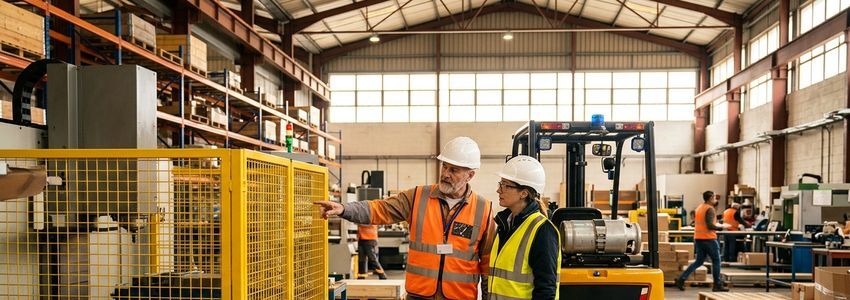
Real-World Scenarios
These composite scenarios reflect common situations business owners face when workers comp claims start climbing.
Scenario 1: The distribution center with a forklift problem. A regional distribution company saw three lift-related claims in eight months after running its forklift fleet past its recommended service life. The broker flagged a likely ExMod increase at renewal. The owner used equipment financing to replace four forklifts and add proximity sensors, funding the upgrade within a week and documenting it ahead of the renewal conversation.
Scenario 2: The manufacturing shop with repetitive strain claims. A metal fabrication business experienced a cluster of repetitive strain injuries tied to manual material handling on the shop floor. Rather than wait for next year's capital budget, the owner used a working capital loan to fund ergonomic lift assists and a physical therapist-led training session for the team.
Scenario 3: The construction contractor facing a non-renewal notice. After two significant fall-related claims, a mid-size contractor received a non-renewal warning from its carrier. The company used a business line of credit to fund fall protection equipment, jobsite safety signage, and a third-party safety audit, then presented the completed corrective plan to a new carrier during the shopping process.
Scenario 4: The healthcare practice with lifting injuries. A physical therapy clinic saw a spike in staff back injuries related to patient transfers. An unsecured working capital loan funded mechanical patient lifts and a revised transfer protocol training program, addressing the root cause rather than just absorbing the higher premium.
Scenario 5: The trucking company with a driver injury cluster. A regional trucking operation faced rising claims tied to loading dock incidents. The company financed dock leveler upgrades and better lighting through equipment financing, cutting incident frequency at its busiest terminal within two quarters.
Pro Tip: Ask your broker for a copy of your experience modification worksheet, not just the summary number. It shows exactly which claim types and classification codes are driving your rate, which tells you precisely where safety dollars will have the most impact.
Don't Wait for Your Renewal Notice
The sooner your safety plan is funded and in place, the more leverage you have at your next insurance renewal. See your options today.
Apply Now →Frequently Asked Questions
What counts as a "spike" in workers comp claims?
Most brokers consider a spike to be two or more claims within a policy year, or a single severe claim that significantly exceeds your typical claim cost. Either scenario can push your experience modification rate above 1.0, which triggers higher premiums at renewal.
Can financing actually lower my workers comp premium?
The financing itself does not directly change your premium. What lowers your premium over time is the safety improvement it funds, combined with a lower claims frequency in future policy periods. Financing simply lets you make that investment sooner instead of waiting for a future budget cycle.
What is an experience modification rate (ExMod)?
An ExMod compares your company's claims history to the industry average for your classification code. A rating of 1.0 is average. Above 1.0 means you are paying a surcharge on your premium, below 1.0 means you are receiving a discount for a better-than-average safety record.
How fast can I get funding after a claims spike?
Working capital loans and business lines of credit can often be approved and funded within one to three business days. Equipment financing typically takes a similar timeframe once the equipment vendor quote is in hand. SBA loans take longer, often several weeks or more.
Do I need good personal credit to qualify?
Requirements vary by product and lender. Business revenue and time in business often carry more weight than personal credit alone for working capital and equipment financing products, though stronger credit can help secure better rates and terms.
What kinds of equipment purchases qualify?
Common examples include forklifts and other material handling equipment, machine guarding, ergonomic workstations, ventilation and air quality systems, fall protection equipment, dock levelers, and safety signage or lighting systems.
Can I finance safety training and consulting, not just equipment?
Yes. Working capital loans and business lines of credit are commonly used for safety consulting fees, OSHA compliance audits, and employee training programs, since these expenses typically do not qualify as equipment collateral.
Will my insurance broker require proof the safety upgrades were completed?
Most carriers want documentation such as invoices, installation dates, and training completion records before crediting a loss control improvement toward your renewal. Keep organized records from the moment funding is used.
What industries see the most claims-related premium spikes?
Construction, manufacturing, warehousing and distribution, transportation, and healthcare tend to see higher claim frequency and severity, though any business with manual labor, repetitive tasks, or heavy equipment can be affected.
Is a business line of credit or a term loan better for this situation?
A line of credit works well when your safety plan will roll out in phases or when costs are still being finalized. A term loan or equipment loan makes more sense when you have a specific, priced purchase to make right away.
Can this financing help if I already received a non-renewal notice?
Yes. A funded, documented safety plan is one of the strongest tools your broker has when shopping your business to new carriers after a non-renewal notice, since it shows underwriters the root cause is being actively addressed.
How much does a typical safety program financing amount run?
Amounts vary widely based on scope, from a few thousand dollars for training and smaller equipment to well over six figures for a full equipment fleet upgrade or facility renovation. Lenders size the loan to the documented plan and the business's revenue.
Does financing safety upgrades affect my other insurance lines?
Safety improvements aimed at reducing injuries can sometimes have a positive spillover effect on general liability and commercial auto coverage as well, particularly for equipment-related upgrades like better lighting, guarding, or vehicle safety features.
What documents do I need to apply?
Most lenders ask for several months of business bank statements, basic revenue information, and time in business. Equipment financing may also require a vendor quote or invoice for the equipment being purchased.
How do I start the application process?
You can apply online in minutes, or reach out to a Crestmont Capital financing specialist directly to discuss which product fits your safety plan before you formally apply.
Fund Your Safety Plan Before Your Next Renewal
Every month you wait is another month of elevated premiums. See what financing you qualify for today.
Apply Now →Next Steps
Get this from your broker so you know exactly which claim types are driving the spike.
Get quotes on equipment, training, or consulting so you know the exact amount to finance.
Match equipment purchases to equipment financing and everything else to a working capital loan or line of credit.
Give your broker completed proof of the upgrades well before your policy renews.
Common Mistakes to Avoid
Business owners moving quickly after a claims spike sometimes make decisions that cost them more in the long run. A few patterns show up repeatedly.
- Waiting until the renewal notice arrives. By the time the new premium is quoted, the underwriting decision is already made for that cycle. Acting during the policy year, not after the notice, is what actually influences the next renewal.
- Fixing symptoms instead of root causes. Replacing a single piece of equipment without addressing the underlying process, such as inadequate training or poor scheduling that leads to fatigue, often results in a different claim type appearing within months.
- Underfunding the plan. Financing only part of a safety upgrade to save on the loan amount can leave gaps that undermine the entire initiative. It is usually more cost-effective to fund the complete plan in one pass.
- Not documenting the work. Even a well-executed safety upgrade will not help at renewal if there is no paper trail. Invoices, before-and-after photos, and training sign-off sheets all matter.
- Choosing the wrong financing structure. Using a short-term working capital loan for a large equipment purchase, or vice versa, can create cash flow strain that offsets the benefit of the safety investment itself.
Conclusion
A spike in workers comp claims does not have to mean years of elevated premiums with no path forward. By financing a targeted safety program, whether that means new equipment, updated training, or a facility fix, business owners can address the root cause quickly and walk into their next renewal with a documented plan instead of just a higher bill. The right financing structure depends on what your safety plan requires, but speed matters: the sooner the upgrades are in place, the sooner your claims history starts working in your favor again.
Disclaimer: The information provided in this article is for general educational purposes only and is not financial, legal, or tax advice. Funding terms, qualifications, and product availability may vary and are subject to change without notice. Crestmont Capital does not guarantee approval, rates, or specific outcomes. For personalized information about your business funding options, contact our team directly.