
 (800) 949-0401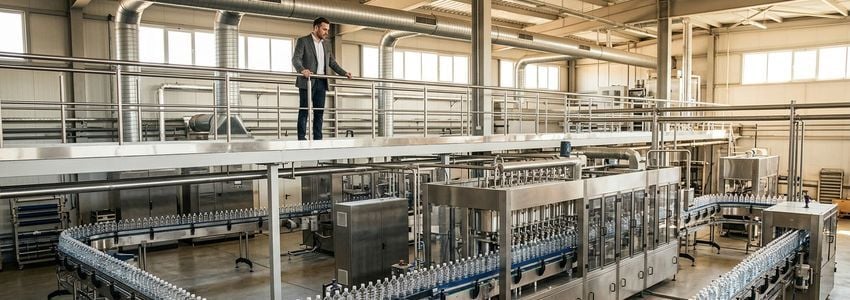
Bottled Water Production Equipment Financing: The Complete Guide for Business Owners
Bottled water production equipment financing gives beverage business owners a way to acquire filling lines, purification systems, and packaging equipment without draining cash reserves. Whether you are launching a new bottling operation or expanding an existing production line, understanding your financing options can mean the difference between a slow rollout and a fast, well-capitalized launch.
The bottled water industry continues to grow at a steady pace, driven by consumer demand for convenience and health-conscious hydration choices. But breaking into or scaling within this market requires serious capital investment in specialized machinery. This guide walks through everything a business owner needs to know about financing bottled water production equipment, from how the process works to which lenders and loan structures make the most sense for your situation.
In This Article
What Is Bottled Water Production Equipment Financing?
Bottled water production equipment financing is a category of commercial equipment financing designed specifically for the machinery used to purify, fill, cap, label, and package bottled water. Instead of paying the full purchase price up front, a business owner borrows the funds (or leases the equipment) and repays the lender over a fixed term, typically with the equipment itself serving as collateral.
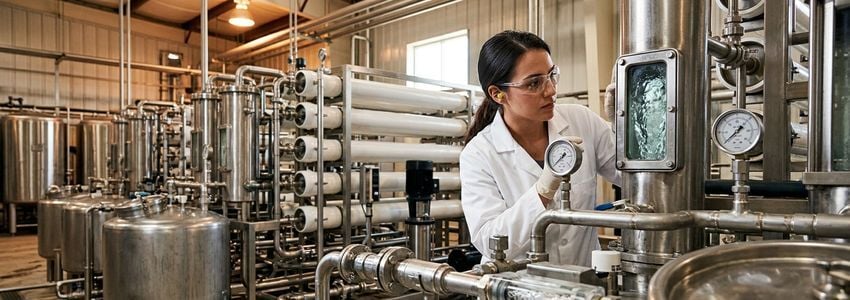
This type of financing covers the full range of machinery a bottling operation needs, including reverse osmosis and filtration systems, blow molding machines for bottle production, automated filling and capping lines, labeling equipment, shrink wrap tunnels, and palletizing systems. Because bottled water production is capital-intensive, few operators can pay cash for a full production line, which is why equipment financing has become the standard path to market entry and expansion.
Lenders who specialize in equipment financing understand the resale value of bottling machinery, which allows them to extend financing even to newer companies or those without years of established credit history. The equipment's own value backs the loan, reducing risk for the lender and often improving approval odds compared to unsecured business loans.
The bottled water category itself spans several distinct product lines, each with slightly different equipment requirements. Spring water bottlers need source protection and transport systems in addition to standard filling equipment. Purified water producers rely heavily on multi-stage filtration and reverse osmosis. Sparkling and flavored water lines add carbonation and flavor injection systems to the mix. Alkaline and enhanced water brands may require additional mineral dosing equipment. Understanding which category your business falls into helps determine exactly which machinery your financing needs to cover.
Key Stat: The global bottled water market has surpassed the $300 billion mark and continues to expand at a compound annual growth rate above 5% annually, according to industry market research, driven largely by health-conscious consumers shifting away from sugary beverages, a shift Forbes has tracked as a broader trend in how small manufacturers approach capital-intensive equipment purchases.
Key Benefits of Financing Your Bottling Equipment
Financing bottled water production equipment offers several advantages over paying cash or waiting until you have saved enough capital to buy outright.
- Preserve working capital. Keep cash available for raw materials, packaging supplies, marketing, and payroll instead of tying it all up in machinery.
- Faster market entry. Get your bottling line operational in weeks rather than the months or years it might take to save enough for an all-cash purchase.
- Predictable monthly payments. Fixed-rate financing makes budgeting straightforward and protects you from unexpected cash flow gaps.
- Potential tax advantages. Financed equipment payments may be treated as a deductible business expense (consult your accountant for specifics on your situation).
- Access to newer technology. Financing makes it easier to upgrade to more efficient filtration or filling equipment as your production needs grow, rather than being locked into outdated machinery.
- Flexible terms matched to equipment life. Repayment schedules can be structured to align with how long the equipment is expected to remain productive.
How Bottled Water Production Equipment Financing Works
The financing process for bottling equipment generally follows a straightforward path, though the specifics vary by lender and loan structure.
First, you identify the equipment you need, whether that is a complete turnkey bottling line or individual components like a filtration system or capping machine. Many business owners work directly with equipment vendors who can provide quotes and specifications the lender will use to underwrite the loan.
Next, you apply with a lender, providing basic business financials, time in business, and details about the equipment being purchased. Because the equipment itself typically secures the loan, approval can move faster than for an unsecured loan, sometimes within 24 to 72 hours for straightforward applications.
Once approved, the lender typically pays the equipment vendor directly (or reimburses you if you already made the purchase), and you begin making fixed monthly payments over the agreed term. Depending on the lender and loan type, terms commonly range from three to seven years, aligned with the expected useful life of the machinery.
At the end of a financing agreement, you own the equipment outright. If you structured the deal as a lease instead, you may have the option to purchase the equipment for a predetermined residual value, return it, or upgrade to newer machinery.
Rates, Terms, and Down Payments
Interest rates on bottling equipment financing vary based on your credit profile, time in business, the age and type of equipment, and overall loan size. Businesses with stronger financials and established operating history typically secure the most competitive rates, while newer or higher-risk applicants may see rates on the higher end of the range. Because the equipment itself secures the loan, rates on equipment financing are often more favorable than unsecured working capital products.
Down payment requirements also vary by lender. Some equipment financing programs offer 100% financing with no down payment required, particularly for well-qualified borrowers or newer equipment with strong resale value. Others may require 10 to 20 percent down, especially for used equipment, higher-risk industries, or larger loan amounts. It is worth comparing multiple quotes, since down payment flexibility can significantly affect how quickly you can move on a purchase.
Regulatory Considerations for Bottling Equipment
Bottled water producers operate under FDA regulations as a packaged food product, and state health departments often add their own permitting and inspection requirements on top of federal rules. According to the U.S. Small Business Administration, small manufacturers pursuing equipment-heavy loan programs like the SBA 504 loan should factor compliance and permitting costs into their total project budget from the outset. Equipment purchases should account for these standards from the start, since retrofitting a production line to meet sanitation or water quality testing requirements after the fact can be costly and disruptive.
Financing your equipment through a lender familiar with food and beverage manufacturing can help ensure the machinery you select, and the vendor you work with, aligns with the sanitary design standards regulators expect. Many equipment vendors that serve the bottled water industry build compliance features directly into their systems, which can simplify the inspection and certification process once your production line is operational.
Quick Guide
How Bottled Water Equipment Financing Works — At a Glance
Get a quote for the filtration, filling, or packaging equipment your bottling line needs.
Provide basic business financials and equipment details for underwriting.
Equipment-secured financing can be approved in as little as 24 to 72 hours.
Your equipment ships and installs while you make fixed monthly payments over the term.
Ready to Build Out Your Bottling Line?
Get fast, flexible financing from the #1 business lender in the U.S. No obligation, apply in minutes.
Apply Now →Types of Equipment You Can Finance
Bottled water production involves several distinct stages, and financing can cover machinery at every step of the process.
- Water treatment and purification systems. Reverse osmosis units, ultraviolet sterilization systems, ozonation equipment, and multi-stage filtration systems that prepare source water for bottling.
- Blow molding machines. Equipment that manufactures PET bottles on-site from preforms, reducing packaging costs for higher-volume operations.
- Filling and capping lines. Automated or semi-automated systems that fill bottles to precise volumes and apply caps at high speed.
- Labeling equipment. Machines that apply pressure-sensitive or shrink-sleeve labels consistently across thousands of units per shift.
- Shrink wrap and bundling systems. Equipment that groups bottles into multi-packs and applies protective shrink film for retail distribution.
- Palletizing and conveyor systems. Automated material handling equipment that moves finished product from the line to the warehouse floor efficiently.
- Quality control and lab testing equipment. Instruments used to test water purity, pH balance, and contaminant levels to meet FDA and state regulatory standards.
Most lenders will finance new or used equipment, and many will also work with vendors to finance an entire turnkey bottling line as a single package rather than requiring separate applications for each machine.
New vs. Used Equipment Financing
Deciding between new and used equipment is one of the first major decisions a bottling business owner makes. New equipment typically comes with manufacturer warranties, the latest efficiency improvements, and full compatibility with current automation standards. It also tends to carry higher upfront costs, which financing helps offset through predictable monthly payments.
Used equipment can significantly reduce the initial investment required to get a bottling line operational, which makes it an attractive option for startups or businesses testing a new product line before committing to full-scale new machinery. Many equipment lenders will finance used bottling equipment as long as it has been inspected, is in good working condition, and has documented maintenance history. The trade-off is a shorter useful life and potentially higher maintenance costs down the road, which should factor into your overall cost comparison.
Who This Financing Is Best For
Bottled water production equipment financing works well for a range of business owners at different stages of growth.
New beverage entrepreneurs launching a bottled water brand often lack the capital to buy a full production line outright. Equipment financing lets them start production without waiting years to self-fund the purchase.
Established bottlers looking to expand capacity can use financing to add a second filling line, upgrade to higher-speed equipment, or add automation that reduces per-unit labor costs.
Private label and co-packing operations that produce bottled water for retailers or other brands often need to scale quickly to meet new contracts, making fast equipment financing especially valuable.
Businesses replacing aging or failing equipment can use financing to avoid costly downtime, spreading the cost of a critical repair or replacement over time instead of absorbing it as a single large expense.
Seasonal and regional bottlers serving markets with sharp demand spikes, such as summer tourism destinations or event-driven markets, often use financing to add temporary or supplemental capacity ahead of peak season without committing all their cash to equipment that sits idle during slower months.
Businesses pursuing retail or wholesale distribution contracts frequently need to demonstrate production capacity before a contract is finalized. Financing allows these businesses to have the necessary equipment in place and operational in time to meet a retailer's onboarding timeline, rather than losing the opportunity while capital is raised.
Financing vs. Leasing vs. Traditional Bank Loans
Business owners typically have three main paths to acquiring bottling equipment: equipment financing (a secured loan), equipment leasing, or a traditional bank term loan. Each has trade-offs worth understanding before you commit.
| Feature | Equipment Financing | Equipment Leasing | Traditional Bank Loan |
|---|---|---|---|
| Ownership at term end | Yes, automatically | Optional buyout | Yes, automatically |
| Approval speed | Fast (often 24-72 hours) | Fast | Slower (weeks) |
| Collateral required | The equipment itself | The equipment itself | Often additional business assets |
| Credit flexibility | More flexible | More flexible | Stricter requirements |
| Best for | Owning equipment long-term | Frequent technology upgrades | Established businesses with strong credit |
For most bottled water producers, equipment financing strikes the right balance: faster approval than a bank loan, ownership at the end of the term, and terms structured around the realistic lifespan of bottling machinery.
It's also worth considering how each option affects your balance sheet. A traditional bank loan or equipment financing arrangement typically shows up as a liability with a corresponding asset, since you are building equity in the machinery over time. A lease, particularly an operating lease, may be treated differently depending on your accounting method, which can matter if you are seeking additional financing or preparing your business for a future sale. Talk with your accountant about which structure best fits your broader financial strategy before signing.
How Crestmont Capital Helps
Crestmont Capital works with beverage and food production businesses across the country to structure equipment financing that fits the realities of a bottling operation, not a one-size-fits-all template. Our team understands that a filtration system and a full automated filling line have very different financing needs, and we structure terms accordingly.
For businesses building out a broader production facility, our manufacturing equipment financing programs can extend beyond the bottling line itself to cover supporting machinery on the production floor. And because bottled water production doesn't stop at filling, our packaging equipment financing options help cover labeling, shrink wrap, and palletizing systems that get your product retail-ready.
Business owners who qualify may also want to explore SBA loans, which can offer longer repayment terms for major equipment purchases when the timeline allows for a more involved application process. For businesses that need to pair equipment financing with additional capital for raw materials, staffing, or marketing a new product launch, our team can help structure a combined financing plan so the entire launch is properly funded, not just the machinery.
If you have already read our guide on bottled water company business loans, this equipment-specific financing guide is meant to go deeper into the machinery side of the equation. And if packaging automation is a priority for your production line, our post on using equipment financing to upgrade packaging lines covers that topic in more detail.
Our team works with business owners at every stage, from a founder financing their very first filling machine to an established co-packer adding a third production shift. We take the time to understand your production volume goals, your growth timeline, and your existing equipment before recommending a financing structure, rather than pushing a one-size-fits-all product.
Get a Custom Equipment Financing Quote
Tell us about the bottling equipment you need. Our team will structure terms around your production goals.
Apply Now →Real-World Scenarios
Scenario 1: The startup bottler. A husband-and-wife team wants to launch a regional spring water brand. They have a source agreement locked in but only enough capital for initial packaging design and marketing. Equipment financing lets them acquire a used filling and capping line, preserving cash for the first year of distribution costs.
Scenario 2: The co-packer scaling up. An established bottling facility lands a new private-label contract with a regional grocery chain but their current line cannot handle the added volume. They finance a second automated filling line to run a second shift without disrupting existing production.
Scenario 3: The equipment upgrade. A mid-size bottler is running a 15-year-old filtration system that increasingly breaks down, causing costly downtime. They finance a modern reverse osmosis system, reducing both maintenance costs and water waste in the purification process.
Scenario 4: The vertical integration play. A bottled water brand that previously outsourced bottle manufacturing decides to bring blow molding in-house to control packaging costs. They finance a blow molding machine alongside their existing filling line, cutting per-unit packaging expenses significantly.
Key Stat: According to U.S. Census Bureau Statistics of U.S. Businesses data, thousands of active establishments are classified under NAICS code 3121 (Beverage Manufacturing), reflecting a deep and active market of producers competing for capacity and modernized equipment.
Frequently Asked Questions
Let's Talk About Your Bottling Line
From filtration systems to full filling lines, get financing that matches your production timeline.
Apply Now →Next Steps
Conclusion
Bottled water production equipment financing gives business owners a practical path to acquiring the filtration, filling, and packaging machinery needed to compete in a growing beverage market, without tying up all of their working capital in a single purchase. Whether you are launching a new bottling brand, adding a second production line, or replacing aging equipment, the right financing structure can get your operation running faster and with more predictable costs.
If you are ready to explore financing for your bottling equipment, Crestmont Capital can help structure a plan that fits your production goals and timeline. Whether you need to finance a single filtration upgrade or a complete new production line, having the right financing partner in place from the start makes it easier to move quickly when opportunity knocks, whether that's a new distribution contract, a seasonal demand spike, or the chance to bring a new product line to market.
Disclaimer: The information provided in this article is for general educational purposes only and is not financial, legal, or tax advice. Funding terms, qualifications, and product availability may vary and are subject to change without notice. Crestmont Capital does not guarantee approval, rates, or specific outcomes. For personalized information about your business funding options, contact our team directly.








