
 (800) 949-0401
Basketball Training Facility Equipment Financing: The Complete Guide for Business Owners
Opening or expanding a basketball training facility means competing on one thing above all else: the quality of your equipment. Parents and athletes can tell the difference between a facility running worn-out rims and a program built around shooting machines, ball rebounders, and data-driven training systems. Basketball training facility equipment financing gives business owners a way to acquire that equipment now, pay for it over time, and start generating revenue from it immediately instead of waiting years to save up cash.
The youth and adult basketball training market has grown fast. Industry researchers put the global basketball training service market at roughly $8.5 billion to $9.4 billion in 2025, expanding at a compound annual growth rate near 8% through the early 2030s. Private basketball academies expanded by an estimated 16% between 2023 and 2025 alone, and more than 9,400 new coaching centers opened worldwide in that same window. That growth is creating real opportunity for facility owners, but it is also raising the bar on what "professional" equipment looks like.
In This Article
- What Is Basketball Training Facility Equipment Financing?
- Key Benefits of Financing Your Equipment
- How It Works
- Types of Equipment You Can Finance
- Common Basketball Training Business Models
- Who This Financing Is Best For
- Comparing Your Financing Options
- Key Considerations Before You Finance
- Common Mistakes to Avoid
- How Crestmont Capital Helps
- Real-World Scenarios
- Next Steps
- FAQ
What Is Basketball Training Facility Equipment Financing?
Basketball training facility equipment financing is a category of commercial equipment financing designed specifically for the tools that basketball training businesses depend on: shooting machines, ball rebounders, commercial hoop systems, portable and permanent flooring, video and shot-tracking technology, strength and conditioning gear, and the general buildout equipment that turns an empty warehouse or storefront into a functioning training facility.
Instead of paying the full purchase price of a shooting machine, court flooring package, or gym build-out up front, an equipment financing agreement lets you spread the cost across fixed monthly payments, typically over 24 to 72 months depending on the equipment and lender. The equipment itself usually serves as collateral, which is one reason approval can move faster and require less documentation than a general-purpose business loan.
Key Stat: A single professional-grade basketball shooting machine can run $5,000 to $11,000 or more, and a full commercial court installation frequently exceeds $20,000. For most independent training businesses, that is too much capital to pull from cash reserves without financing.
Key Benefits of Financing Your Basketball Training Equipment
Financing equipment rather than paying cash offers several advantages that matter especially to growing sports training businesses:
- Preserve working capital. Keep cash on hand for payroll, marketing, rent, and unexpected expenses instead of tying it all up in equipment.
- Match payments to revenue. Monthly payments can be structured to align with membership billing cycles or seasonal camp revenue.
- Access newer technology sooner. Shooting machines and shot-tracking software evolve quickly. Financing lets you upgrade without waiting years to save the full purchase price.
- Potential tax advantages. Many businesses structure equipment financing to take advantage of standard business expense treatment (always confirm specifics with your accountant).
- Faster approval than traditional loans. Because the equipment secures the financing, approval decisions often come back in 24 to 48 hours rather than weeks.
- Flexible terms. Terms can often be tailored to the useful life of the equipment, so you are not still paying for a shooting machine long after it has been replaced.
Ready to Upgrade Your Training Facility?
Get fast, flexible equipment financing from the #1 business lender in the U.S. No obligation, apply in minutes.
Apply Now →How Basketball Training Facility Equipment Financing Works
The process is more straightforward than most first-time facility owners expect. Here is the typical path from application to equipment on your court:
- Identify your equipment needs and get quotes. Vendor quotes for shooting machines, hoops, flooring, or a full buildout package give the lender a clear picture of what is being financed.
- Submit an application. Most lenders ask for basic business information, time in business, and recent bank statements. Some equipment financing programs skip tax returns entirely for smaller amounts.
- Underwriting review. The lender evaluates your business's cash flow, credit profile, and the equipment being financed rather than focusing solely on collateral outside the equipment itself.
- Approval and terms. You receive an approved amount, term length, and payment schedule. Terms for sports and fitness equipment commonly range from 24 to 72 months.
- Funding and equipment delivery. Once you accept terms, funds are released to the vendor (or to you, depending on the structure) and equipment is delivered and installed.
- Ongoing payments. You make fixed monthly payments over the agreed term while using the equipment to generate revenue from day one.
By the Numbers
Basketball Training Equipment Financing — Key Figures
$8.5B
Estimated 2025 size of the global basketball training services market
16%
Growth in private basketball academies from 2023 to 2025
24-48hrs
Typical approval turnaround for equipment financing programs
24-72mo
Common financing term length for sports training equipment
Types of Equipment You Can Finance
Basketball training facility equipment financing is not limited to a single piece of gear. Most lenders will finance the full range of equipment a modern training business needs:
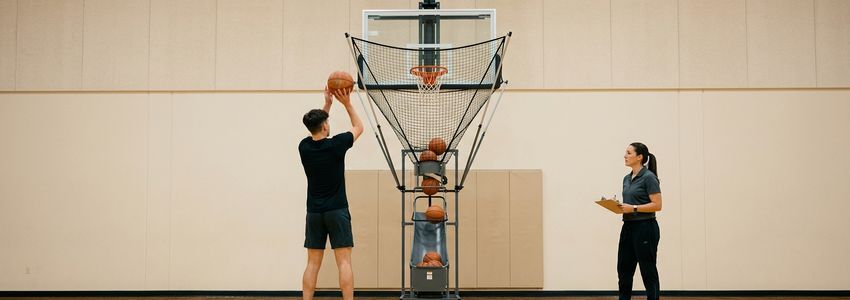
- Shooting and rebounding machines - automated shot trainers, rebounders, and passing machines used for high-volume repetition training
- Commercial hoop systems - in-ground, wall-mount, and adjustable-height goals rated for daily commercial use
- Court flooring - modular sport court tiles, hardwood systems, or synthetic training surfaces
- Shot-tracking and video technology - camera systems, sensor-based tracking, and performance analytics software platforms
- Strength and conditioning equipment - agility ladders, resistance bands, plyometric boxes, and functional training racks
- Facility build-out - wall padding, dividing curtains, lighting upgrades, sound systems, and reception/waiting area furnishings
- Safety and padding equipment - wall pads, floor mats, and protective netting
Pro Tip: Bundle equipment purchases into a single financing agreement whenever possible. Financing a shooting machine, flooring, and build-out items together under one term is usually simpler to manage than juggling multiple separate agreements with different payment dates.
Common Basketball Training Business Models
Not every basketball training facility looks the same, and the equipment financing approach that makes sense often depends on which business model you are running.
Private One-on-One and Small Group Training
These operations typically run on a smaller footprint, often 2,000 to 3,500 square feet, with one or two hoops, a shooting machine, and shot-tracking technology as the core equipment investment. Financing needs here tend to be smaller and more focused, making them well suited to a single equipment financing agreement covering the essentials.
Full-Service Training Academies
Larger academies combining skill training, strength and conditioning, and league or camp programming require a broader equipment mix, multiple hoop stations, a dedicated weight and conditioning area, and often a larger flooring footprint. These businesses frequently benefit from bundling equipment financing across categories rather than financing each equipment type separately.
Mobile and Pop-Up Training Services
Trainers who rent gym time or operate out of multiple partner facilities still need portable equipment: transportable shooting machines, collapsible hoop systems, and equipment cases built for repeated setup and teardown. Financing portable equipment often comes with shorter terms since the equipment tends to see more wear and requires more frequent replacement.
Franchise-Model Training Facilities
Basketball training franchises often specify exact equipment brands and models to maintain consistency across locations. Financing for franchise buildouts typically needs to account for franchisor-approved vendor lists, which can affect which lenders are willing to finance the specific equipment being purchased.
Who Basketball Training Facility Financing Is Best For
This type of financing tends to make the most sense for a specific range of basketball training businesses:
- New facility owners opening their first location and needing a full equipment package without draining startup capital
- Established trainers expanding from a mobile or rented-space model into a dedicated permanent facility
- Multi-location operators replicating equipment packages across additional sites
- Franchise-style basketball training programs outfitting new locations to brand specifications
- School and club programs that need to upgrade aging equipment but operate on tight annual budgets
- Seasonal camp operators who need equipment available before their busiest enrollment period but generate most revenue later in the year
Comparing Your Financing Options
Basketball training facility owners typically choose between a few common financing structures. Here is how they stack up:
| Option | Best For | Speed | Collateral |
|---|---|---|---|
| Equipment Financing | Financing specific equipment (machines, hoops, flooring) | 24-48 hours | The equipment itself |
| Equipment Leasing | Lower monthly payments, easier upgrades later | 24-48 hours | The equipment itself |
| Business Line of Credit | Ongoing flexible needs beyond just equipment | A few days | Varies, often unsecured |
| SBA Loan | Larger buildouts combined with real estate or working capital | Several weeks | Often required |
| Working Capital Loan | General operating expenses, payroll, marketing | 1-3 days | Typically unsecured |
Key Considerations Before You Finance
Before signing any equipment financing agreement, walk through a few practical considerations that can save you money and headaches down the road.
Match the Term Length to the Equipment's Useful Life
A shooting machine or shot-tracking camera system may only stay cutting-edge for three to five years before newer technology makes it feel dated. Court flooring and commercial hoops, on the other hand, can last a decade or more with proper maintenance. Choosing a financing term that roughly matches how long you plan to actually use the equipment prevents you from paying off outdated technology while a newer model sits on a competitor's court.
Understand the Total Cost, Not Just the Monthly Payment
A lower monthly payment stretched over a longer term can end up costing significantly more in total interest than a higher payment over a shorter term. Always ask for the total repayment amount, not just the monthly figure, before comparing offers from different lenders.
Factor In Installation and Delivery
Commercial hoop systems and modular court flooring often require professional installation. Confirm whether installation costs are included in your financed amount or need to be budgeted separately, since unexpected installation expenses are one of the most common budget surprises facility owners report.
Consider Seasonality in Your Payment Structure
If your facility does the bulk of its business during summer camps or a fall/winter travel team season, ask potential lenders whether they offer seasonal or step-payment structures. Some equipment finance providers will front-load lower payments during slow months and higher payments during peak enrollment periods.
Common Mistakes to Avoid
Facility owners who have been through the equipment financing process before often point to a handful of avoidable missteps:
- Underestimating total equipment needs. Owners frequently finance the shooting machine and hoops but forget flooring, padding, or lighting, then have to seek a second financing agreement shortly after opening.
- Not comparing multiple lenders. Rates, terms, and documentation requirements vary meaningfully between equipment finance providers. A quick comparison can mean thousands of dollars in savings over the life of the agreement.
- Ignoring maintenance costs. Shooting machines and other automated equipment require occasional maintenance and part replacement. Budget for this separately from your financing payment.
- Overbuying for current enrollment. It can be tempting to finance a facility's worth of equipment based on projected growth rather than current demand. Start with what supports your realistic near-term enrollment and add equipment as revenue grows.
- Skipping the fine print on early payoff. Some financing agreements charge a penalty for paying off the balance early. If you expect strong revenue growth, ask about prepayment terms before signing.
How Crestmont Capital Helps Basketball Training Facilities
Crestmont Capital works with sports and fitness business owners across the country to structure equipment financing that fits how their revenue actually flows. Whether you are outfitting your first training facility or adding a second location, our team looks beyond a credit score alone and considers the full picture of your business.
For facility owners who need more than equipment alone, we also offer an unsecured business line of credit to cover marketing, staffing, or unexpected repairs, and working capital loans for facilities managing seasonal cash flow swings between camp sessions. If your equipment financing needs extend into general commercial equipment beyond sports-specific gear, our capital equipment financing program can round out a full facility buildout. And if you are weighing a larger project that includes real estate or a full renovation, our SBA loan options are worth exploring alongside equipment financing.
We have also helped operators in adjacent training and youth athletics niches get their facilities off the ground. If you are researching options broadly, our guide on youth sports business loans covers financing for training programs more broadly, and our gymnastics facility financing guide walks through a similar equipment-heavy buildout process in a different sport.
Build the Facility Your Athletes Deserve
Fast approvals, flexible terms, and equipment-specific financing built for growing training businesses.
Apply Now →Real-World Scenarios
Scenario 1: The First-Time Facility Owner
A former college player leases a 4,000 square foot warehouse space to launch a private training academy. Between two commercial hoop systems, a shooting machine, modular sport court flooring, and wall padding, the total equipment cost comes to roughly $38,000. Rather than draining personal savings, she finances the full package over 60 months, keeping her cash reserves intact for the first six months of marketing and payroll before enrollment ramps up.
Scenario 2: The Expanding Trainer
A trainer who has run a successful mobile coaching business out of rented gym time for three years decides to open a dedicated facility. He finances a professional-grade shooting machine, shot-tracking camera system, and strength training equipment package, using the newer technology as a key differentiator in his marketing to justify premium session pricing.
Scenario 3: The Multi-Location Operator
An operator with one successful location wants to replicate the exact equipment setup at a second site across town. Financing the second facility's equipment package separately from the first lets him keep each location's payments tied to that location's own revenue performance, rather than stretching a single loan across two properties.
Scenario 4: The Seasonal Camp Business
A youth basketball camp operator needs updated equipment before summer enrollment opens but does not collect the bulk of tuition revenue until camps actually begin. Financing lets him get the shooting machines and flooring installed in the spring, with a payment structure that ramps up once camp revenue starts coming in.
Scenario 5: The School Partnership Program
A training business partnering with a local school district to run after-hours programming needs to bring its own commercial-grade equipment since the school's gym equipment does not meet program standards. Financing the equipment separately from the partnership agreement keeps ownership and liability clearly with the training business.
What Lenders Typically Ask For
While requirements vary between lenders, most equipment financing applications for basketball training facilities request some combination of the following:
- Basic business information - legal business name, entity type, and time in operation
- Equipment quote or invoice - a vendor quote showing the specific equipment and total cost
- Recent bank statements - typically the last three to six months to demonstrate cash flow
- Owner information - basic identification and, in some cases, a personal guarantee for newer businesses
- Business plan or projections - more likely to be requested for brand-new facilities without an operating history
Smaller financing amounts, often under $50,000, frequently move through a streamlined application process that skips tax returns and full financial statements entirely, which is one reason equipment financing appeals to facility owners who need to move quickly on a seasonal opening deadline.
Next Steps to Financing Your Basketball Training Equipment
Collect vendor quotes for the shooting machines, hoops, flooring, or build-out items you need.
Have recent bank statements and a general sense of your time in business ready.
Submit a simple application online, most decisions come back within 24 to 48 hours.
Accept your terms, equipment gets ordered and installed, and you start training athletes.
Frequently Asked Questions
Don't Let Equipment Costs Slow Your Growth
Crestmont Capital helps basketball training facility owners finance the equipment they need to compete and grow.
Apply Now →Conclusion
Basketball training facility equipment financing gives business owners a practical path to acquiring the shooting machines, commercial hoops, flooring, and technology that today's competitive training market demands, without draining the cash reserves a growing business needs to survive its early years. With approvals often available within 24 to 48 hours and terms that can be matched to seasonal revenue patterns, financing removes one of the biggest barriers standing between a great training program and the equipment it deserves. Whether you are opening your first facility or expanding to a second location, the right financing structure lets you invest in the tools that set your program apart while keeping your business financially flexible.
Disclaimer: The information provided in this article is for general educational purposes only and is not financial, legal, or tax advice. Funding terms, qualifications, and product availability may vary and are subject to change without notice. Crestmont Capital does not guarantee approval, rates, or specific outcomes. For personalized information about your business funding options, contact our team directly.








