
 (800) 949-0401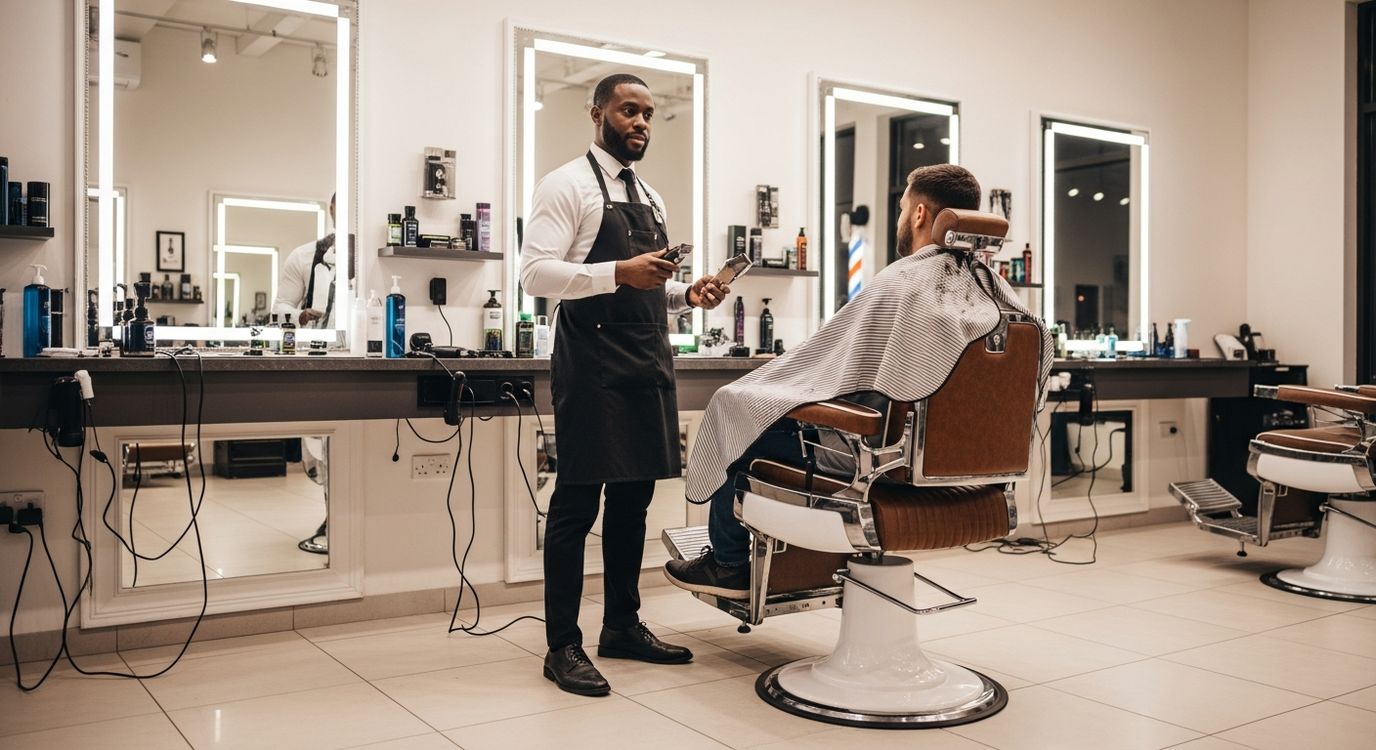
Barber Shop Business Loans: The Complete Financing Guide for Barbershop Owners
Running a barbershop takes more than a sharp pair of clippers and a loyal clientele. Whether you are opening your first location, upgrading your equipment, or expanding to a second chair, having access to the right capital at the right time can be the difference between growing your business and falling behind. Forbes notes that small business owners rely on financing for everything from equipment to working capital, and barbershops are no exception. Barber shop business loans give shop owners the financial flexibility to invest in what matters most, without draining the cash they need to keep the lights on and the chairs spinning.
This guide covers everything barbershop owners need to know about financing, from the most common loan types and qualification requirements to how to use funding strategically for long-term growth.
What Are Barber Shop Business Loans?
Barber shop business loans are financing products designed to help barbershop owners fund their operations and growth. Like any small business loan, these products provide a lump sum or revolving line of credit that you repay over time, typically with interest. They can come from traditional banks, credit unions, SBA-backed lenders, or alternative online lenders.
Unlike personal loans, business loans are tied to your business entity and credit profile. That means lenders evaluate your business revenue, time in operation, cash flow, and sometimes your personal credit score when deciding how much to lend and at what rate. For barbershops, which often operate as sole proprietorships or LLCs, this distinction matters when you structure your finances.
Barbershops use financing for a wide range of needs: new barber chairs and styling stations, renovations, marketing campaigns, hiring additional barbers, purchasing product inventory, or simply smoothing out cash flow during slower weeks. The right loan product depends on what you need the money for and how quickly you need it.
Types of Financing Available to Barbershop Owners
Term Loans
A term loan gives you a lump sum of capital upfront, which you repay in fixed installments over a set period. Terms typically range from one to five years for short-term and medium-term loans. Term loans work well for one-time investments like a full shop renovation, purchasing real estate, or acquiring another location.
For established barbershops with consistent revenue, term loans from traditional lenders often carry the most competitive interest rates. If your shop has been operating profitably for two or more years and you have a solid credit profile, a term loan is likely your most cost-effective borrowing option.
Business Line of Credit
A business line of credit works more like a credit card than a traditional loan. You are approved for a maximum borrowing limit, and you draw from it as needed, paying interest only on what you use. This flexibility makes lines of credit ideal for barbershops that experience seasonal revenue swings or need ongoing access to working capital.
For example, if business slows in January after the holiday rush, you can draw on your credit line to cover payroll and product orders without disrupting your operation. When revenue picks back up in spring, you repay what you used and your line resets.
Equipment Financing
Equipment financing allows you to purchase barbershop equipment using the equipment itself as collateral. This includes barber chairs, hydraulic lifts, styling stations, shampoo bowls, clippers, sterilization units, and POS systems. Because the equipment secures the loan, lenders often offer more flexible approval terms even for shop owners with limited business credit history.
Repayment terms typically mirror the expected useful life of the equipment, making monthly payments more manageable. You own the equipment outright at the end of the term, and some loans may qualify for Section 179 tax deductions. To learn more about how this financing type works in depth, see our complete guide to equipment financing 101.
SBA Loans
Small Business Administration loans are partially guaranteed by the federal government, which reduces the risk for lenders and allows them to offer lower rates and longer repayment terms than many conventional loans. SBA loans are particularly well-suited for barbershop owners who want to finance a larger investment, such as purchasing a building, doing a major renovation, or acquiring an existing barbershop business.
The tradeoff is time: SBA loans typically take longer to fund than alternative financing options, and documentation requirements are more extensive. According to the U.S. Small Business Administration, the SBA 7(a) loan program is the most common and flexible option, with loan amounts up to $5 million. For shop owners who qualify and have time to plan ahead, SBA financing often represents the lowest cost of capital available in the market.
Working Capital Loans
Working capital loans are short-term loans designed to cover day-to-day operating expenses rather than long-term investments. They are useful when cash flow gaps arise, such as when you are stocking up on supplies before a busy season or covering payroll during a slow stretch.
Unsecured working capital loans do not require collateral, which makes them accessible to barbershop owners who do not own significant business assets. Repayment terms are typically shorter, ranging from three to eighteen months, and funding can be available quickly, sometimes within 24 to 48 hours.
Merchant Cash Advances
A merchant cash advance provides upfront capital in exchange for a percentage of your future daily card sales. Repayment happens automatically as customers pay by card, making it a flexible option during slow periods because you repay less when revenue dips. However, the cost of an MCA is typically higher than traditional loans, so this product is best reserved for short-term needs when other options are not available or when speed is the top priority.
How Much Can a Barbershop Borrow?
Loan amounts vary significantly by lender type and the financial strength of your business. Here is a general overview of typical ranges:
- Equipment financing: $5,000 to $500,000+ depending on equipment value
- Working capital loans: $10,000 to $250,000 for most barbershops
- Business line of credit: $10,000 to $250,000 for established shops
- SBA loans: Up to $5 million, though most barbershop loans fall under $500,000
- Term loans: $25,000 to $1 million depending on revenue and creditworthiness
Your borrowing capacity ultimately depends on your annual revenue, how long your shop has been open, your personal and business credit scores, and the strength of your financials. Most alternative lenders require at least $10,000 in monthly revenue and six months of operating history as a baseline.
Qualifying for a Barber Shop Business Loan
Lenders evaluate several factors when reviewing a barbershop loan application. Understanding what they look for before you apply gives you the best chance of approval. For a full breakdown of lender requirements, read our guide on how to get approved for a business loan.
Credit Score Requirements
Credit requirements vary widely by loan type and lender. Traditional bank loans and SBA loans typically require a personal credit score of 680 or higher. Alternative lenders and online financing companies often work with scores as low as 550 to 600. For equipment financing, requirements can be even more flexible since the equipment serves as collateral.
If your credit is less than perfect, focus on building your business credit profile, paying existing debt on time, and keeping utilization low. The SBA recommends maintaining separate business banking accounts and establishing trade lines as early as possible to build a strong credit profile. Some lenders will also weigh your revenue and cash flow more heavily than your credit score when making approval decisions.
Time in Business
Most conventional lenders want to see at least two years of operating history. SBA loans typically require the same. Alternative and online lenders often fund businesses that have been open for just six months, especially if revenue is strong. Startups and pre-revenue shops have fewer options, but equipment financing programs specifically designed for new businesses do exist.
Revenue and Cash Flow
Lenders look at your revenue to determine how much you can reasonably afford to repay each month. Most require that your monthly loan payment not exceed 10 to 15 percent of your monthly gross revenue. You will typically need to provide three to twelve months of business bank statements so lenders can verify your deposit history and assess cash flow patterns.
Business Documents
Common documentation requirements include: business bank statements (3-12 months), business tax returns (1-2 years for bank loans), your business license or barbershop license, a voided business check, and occasionally a profit and loss statement. The more organized your financials are before you apply, the smoother and faster the process will be.
How to Use Barber Shop Business Loans Strategically

Taking out a loan is not just about plugging a cash flow gap. The most successful barbershop owners use financing as a tool to generate returns that exceed the cost of the debt. Here are the most productive ways to deploy business capital in a barbershop setting.
Upgrading Equipment and Stations
Clients notice the quality of your chairs, lighting, mirrors, and styling tools. An upgraded, modern shop creates a premium experience that justifies higher service prices. Equipment financing lets you spread the cost of new barber chairs and styling stations over two to five years, making the investment manageable while the improved client experience and pricing power pay dividends immediately.
Shop Renovations and Buildouts
If your shop space is outdated, a renovation can dramatically affect both foot traffic and the perception of your brand. A term loan or SBA loan is ideal for larger renovation projects, as you can finance the full cost upfront and repay it over a longer period. Even modest improvements to signage, lighting, seating, and paint can increase the volume of walk-in traffic and retain existing clients.
Expanding to Additional Locations
Once your first location is profitable and running smoothly, opening a second shop can multiply your revenue without doubling your personal labor. Expansion loans, SBA loans, and lines of credit can fund the buildout, equipment, and first few months of operating costs at a new location. This is one of the highest-return uses of business capital for barbershop owners.
Marketing and Client Acquisition
A modest investment in local advertising, social media marketing, or a professional website can deliver a strong return in a service business like a barbershop. A small working capital loan or draw from your credit line can fund a marketing push that builds your appointment book and client base well beyond the cost of the loan.
Inventory and Product Sales
Many barbershops generate ancillary revenue by selling grooming products: pomades, beard oils, hair tools, and skincare. Stocking a solid retail section requires upfront inventory investment. An inventory or working capital loan lets you stock up without depleting your operating cash.
Hiring and Payroll Support
Adding barbers to your team is one of the most direct ways to increase capacity and revenue. But new hires cost money before they generate enough business to cover their wages. Short-term working capital or payroll financing can bridge the gap during the ramp-up period.
Real-World Scenarios: How Barbershop Owners Use Financing
Scenario 1: Equipment Upgrade Before Grand Reopening
Marcus owns a three-chair shop that has been open for four years. His existing hydraulic chairs are aging and his styling stations are outdated. He finances six new barber chairs and updated stations for $38,000 using an equipment loan at a 60-month term. His monthly payment is manageable relative to his revenue, and the upgraded shop allows him to raise prices and attract a higher-end clientele, boosting his average ticket by 25 percent.
Scenario 2: Line of Credit for Seasonal Slowdowns
Janelle runs a busy barbershop in a college town. Business peaks during the school year and drops sharply in the summer. She secures a $40,000 business line of credit to cover payroll and rent during June and July when student traffic disappears. She draws $15,000 over the summer and repays the balance by October when the school year brings clients back. She pays interest only on what she used, keeping her total cost low.
Scenario 3: SBA Loan for a Second Location
Derek has been running a successful barbershop for six years with strong annual revenue. He secures an SBA 7(a) loan for $175,000 to build out and launch a second location in a nearby commercial district. The SBA loan gives him a 10-year repayment period and a competitive interest rate. His first location's cash flow comfortably services the debt while the second location ramps up over the first 12 months.
Scenario 4: Working Capital Loan for a Buildout
Simone just signed a lease on a raw commercial space and needs $65,000 to build out her barbershop from scratch. She does not qualify for an SBA loan because she has less than two years in business. Instead, she combines an equipment financing package for her chairs and stations with a working capital loan to cover construction labor, signage, and first and last month's rent. The layered approach gets her open on schedule without requiring personal savings.
Scenario 5: Marketing Push to Fill New Chairs
Lionel adds two new barber chairs and brings on two additional barbers. He uses a $12,000 draw from his business line of credit to fund a three-month local marketing campaign: Google Ads targeting nearby neighborhoods, Instagram content production, and a referral discount program. Within four months, the new chairs are generating enough incremental revenue to repay the draw and become fully profitable.
Barber Shop Business Loans vs. Other Financing Options
Not every financing tool is equal. Understanding the tradeoffs helps you choose the right product for each situation.
Business loans vs. personal loans: Personal loans can be easier to qualify for with limited business history, but they expose your personal credit and finances to the risk. Business loans keep your business and personal finances separate and build your business credit profile over time.
SBA loans vs. online lenders: SBA loans offer better rates and longer terms but require more time and documentation. Online lenders fund faster with less paperwork but typically at higher rates. The right choice depends on how urgent your need is and how much the difference in interest cost matters over your loan term.
Equipment loans vs. equipment leasing: Leasing offers lower monthly payments and the ability to upgrade equipment more frequently. Purchasing with a loan builds equity in the asset and allows for depreciation deductions. For high-value, long-lasting equipment like hydraulic barber chairs, buying typically makes more financial sense over a five-to-ten-year horizon.
Merchant cash advances vs. working capital loans: MCAs fund quickly with minimal paperwork and repay automatically based on sales, but they carry higher effective rates. Working capital loans carry fixed repayment schedules but often lower costs. Use MCAs only when speed is critical and other options are unavailable.
How Crestmont Capital Helps Barbershop Owners
Crestmont Capital works with barbershop owners across the country to match them with the right financing product for their specific situation. Whether you need equipment financing to upgrade your chairs, a working capital loan to cover payroll during a slow stretch, or a larger term loan to fund a new location, our team can help you understand your options and move quickly.
We offer flexible qualification requirements, fast approvals, and loan amounts ranging from $10,000 to over $5 million. Our specialists work with shop owners at every stage, from startups with six months of history to well-established multi-location operations. You can apply now and receive a decision in as little as 24 hours.
To explore the full range of financing options available for barbershops and service businesses, visit our barbershop business loans page or speak with a specialist directly.
Tips for Getting Approved
- Separate your finances: Keep a dedicated business bank account. Lenders will review your statements, and commingled personal and business transactions create confusion and red flags.
- Track revenue consistently: Deposit all business income into your business account. Cash-heavy businesses like barbershops that keep a lot of revenue off the books will struggle to document their actual revenue when applying for financing.
- Monitor your credit: Both personal and business credit matter. Check your reports regularly and dispute any errors before you apply.
- Build business credit early: Open vendor trade accounts, get a business credit card, and pay everything on time. Even 12 to 18 months of positive business credit history can meaningfully improve your financing options and rates.
- Apply at the right time: Apply when your business is performing well, not during a prolonged slow period. Lenders look at your most recent bank statements most closely.
- Know your numbers: Be ready to discuss your monthly revenue, average ticket price, number of chairs, and active client count. Lenders appreciate applicants who understand their own financials.
Next Steps for Barbershop Financing
If you are ready to explore financing for your barbershop, the next step is gathering your core financial documents: three to six months of business bank statements, your business license, and basic revenue figures. Having this information ready before you apply will speed up the process significantly.
Crestmont Capital makes it straightforward to explore your options without a hard credit pull during the initial review. You can get started online in minutes and receive real offers based on your actual business performance, not just your credit score.
Whether you are buying new chairs, renovating your space, or funding your next location, barber shop business loans can give you the capital you need to build a shop that lasts. The key is matching the right loan product to the right need and working with a lender who understands the service business landscape.
Conclusion
Barber shop business loans are a powerful resource for shop owners who want to invest in their business without waiting years to save the capital needed. From equipment financing that gets new chairs on the floor quickly to SBA loans that fund major expansions, there is a financing product designed for every stage and every need in the barbershop industry. Understanding your options, keeping your financials organized, and applying at the right time puts you in the strongest position to qualify for the capital your shop deserves. Crestmont Capital is here to help you find the right fit and move forward with confidence.
Frequently Asked Questions
Disclaimer: The information provided in this article is for general educational purposes only and is not financial, legal, or tax advice. Funding terms, qualifications, and product availability may vary and are subject to change without notice. Crestmont Capital does not guarantee approval, rates, or specific outcomes. For personalized information about your business funding options, contact our team directly.








