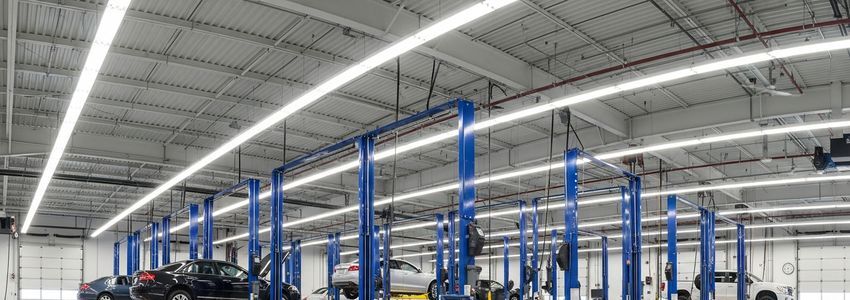
Auto repair shop financing is one of the most important decisions a shop owner will ever make. Whether you are opening a new location, upgrading lifts and diagnostic equipment, bridging a slow-season cash gap, or preparing for a major expansion, the right funding strategy determines how fast you grow and how well you survive lean months. This guide breaks down every financing option available to auto repair and automotive service businesses in 2026, including how to qualify, what lenders look for, and how Crestmont Capital helps shop owners access capital faster than traditional banks.
In This Article
- What Is Auto Repair Shop Financing?
- Key Benefits of Business Financing for Auto Shops
- How Auto Shop Financing Works
- Types of Financing for Auto Repair Shops
- Who Qualifies for Auto Repair Shop Financing?
- Comparing Financing Options
- How Crestmont Capital Helps Shop Owners
- Real-World Financing Scenarios
- Auto Repair Industry by the Numbers
- Frequently Asked Questions
- Next Steps
- Conclusion
What Is Auto Repair Shop Financing?
Auto repair shop financing refers to any business funding product specifically suited to the needs of automotive repair and maintenance businesses. This includes term loans, lines of credit, equipment financing, SBA loans, merchant cash advances, and invoice financing. Unlike personal auto loans or consumer-facing car repair financing, shop owner financing is structured around business cash flow, receivables, and commercial assets.
Auto repair shops operate in a capital-intensive environment. Lifts, alignment systems, scan tools, and bay equipment can cost tens of thousands of dollars each. At the same time, the business cycle is uneven: winter storms drive vehicle damage claims while summer travel drives tire and maintenance demand. Financing helps shop owners smooth out these peaks and valleys while investing in the capacity to serve more customers.
According to the U.S. Small Business Administration, automotive service and repair businesses rank among the most common small business categories in the country, with hundreds of thousands of independent shops operating across all 50 states. Most of these are small operations with one to five bays, owner-operated, and reliant on local customer relationships.
Key Benefits of Business Financing for Auto Shops
The right financing strategy gives auto repair shop owners a competitive edge in a market where equipment age and turnaround speed directly affect customer ratings and revenue.
- Preserve cash flow - Cover payroll, parts inventory, and facility costs without draining operating reserves
- Upgrade equipment faster - Replace aging lifts, tire changers, and diagnostic tools without waiting years to save the cash
- Handle seasonal gaps - Bridge slow months without cutting staff or deferring rent
- Expand capacity - Add bays, open a second location, or acquire a competing shop
- Take on larger jobs - Finance the tools and parts needed for fleet accounts or specialty work
- Build business credit - Consistent loan repayment improves your credit profile for future, lower-cost financing
- Outpace competitors - A shop with newer equipment, faster turnaround, and better staffing wins more repeat customers
Ready to Fund Your Auto Repair Shop?
Get pre-qualified in minutes with no hard credit pull. Fast decisions, flexible terms.
Apply Now →How Auto Repair Shop Financing Works
The process for securing business financing as an auto repair shop owner follows a clear sequence, regardless of which product you choose. Understanding this sequence helps you prepare the right documents and set realistic expectations.
Step 1: Identify Your Financing Need
Before applying for any loan, define exactly what you need the money for. Equipment purchases, working capital, expansion, and acquisition all call for different products with different terms. A lift purchase is well-suited to equipment financing; a slow-season bridge is better served by a line of credit or short-term loan.
Step 2: Assess Your Financial Position
Lenders evaluate auto repair shops on monthly revenue, time in business, credit score, and sometimes the value of shop equipment as collateral. Pull your last 3-6 months of bank statements, your most recent tax return (if applicable), and check your personal credit score.
Step 3: Choose the Right Financing Product
Match the product to the need. Equipment financing is ideal for physical assets. A business line of credit is ideal for recurring working capital needs. Term loans suit one-time expansion costs. Revenue-based financing suits high-revenue shops that want flexible repayment.
Step 4: Apply with Documentation
Most alternative lenders require only: 3-6 months of business bank statements, a completed application, and basic business details. SBA loans require more documentation including financial statements, business plans, and personal background checks.
Step 5: Review Terms and Accept
Compare factor rates (for MCAs), interest rates (for term loans), and draw fees (for lines of credit). Calculate the total cost of capital before signing. Look for prepayment flexibility, especially on short-term products.
Step 6: Receive Funds and Deploy
Most alternative lenders fund within 1-5 business days. Equipment financing may take a few days more to process lien documentation. Use funds specifically for the purpose stated in your application to avoid compliance issues.
Types of Financing for Auto Repair Shops
Equipment Financing
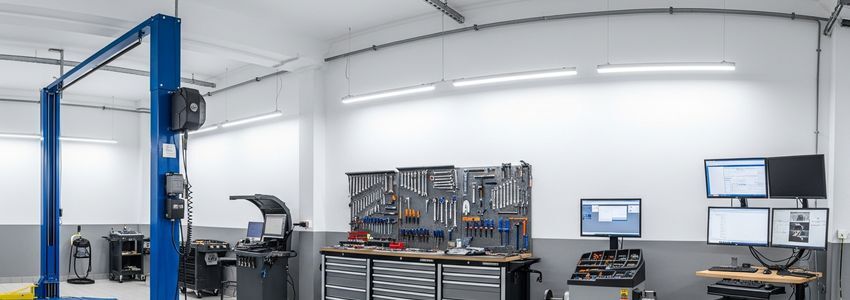
Equipment financing is purpose-built for purchasing physical business equipment. The equipment itself serves as collateral, which typically makes approval rates higher and rates lower than unsecured loans. For auto repair shops, this is ideal for two-post and four-post lifts, alignment racks, tire machines, brake lathes, scan tools, and air compressors.
Terms typically range from 24 to 84 months, with rates from roughly 6% to 25% APR depending on creditworthiness. The equipment retains value, so even shops with imperfect credit often qualify. Learn more about equipment financing options for automotive businesses.
Business Line of Credit
A business line of credit gives a shop owner a revolving pool of capital to draw from when needed. You only pay interest on what you draw, and as you repay, your available balance replenishes. This is the ideal tool for managing parts inventory spikes, bridging net-30 or net-60 payment terms from fleet customers, or covering a sudden payroll gap during a slow week.
Credit lines for auto repair shops typically range from $10,000 to $250,000 for well-qualified businesses. The flexibility and revolving nature make it one of the most valuable ongoing tools for shop cash management.
SBA Loans
SBA loans offer the lowest interest rates and longest terms of any small business financing product. The SBA 7(a) program is the most common choice for auto repair shops looking to purchase real estate, acquire a competitor, or fund a major long-term expansion. The SBA 504 program is specifically designed for commercial real estate and heavy equipment purchases.
The trade-off is time and documentation. SBA loans can take 60-90 days to close and require detailed financial records, personal financial statements, and often a business plan. They are best for shop owners who have the time to wait and want the lowest possible long-term cost. Explore SBA loan options through Crestmont Capital.
Short-Term Business Loans
Short-term business loans are typically 3-18 months in length and funded quickly, sometimes within 24-48 hours. They carry higher total cost than long-term options but provide speed and accessibility for shop owners who need capital now. Common uses include emergency equipment replacement, a seasonal inventory build-up, or capitalizing on a time-sensitive expansion opportunity.
Merchant Cash Advance
A merchant cash advance (MCA) is a lump sum of capital in exchange for a percentage of future daily credit card receipts or daily bank debits. For auto repair shops that process a high volume of card transactions, MCAs provide rapid access to capital with minimal credit requirements. The cost is expressed as a factor rate (e.g., 1.25x) rather than an interest rate, and the total repayment amount is fixed at the start.
MCAs are best used for short-term gaps rather than long-term growth, since the cost of capital is higher than most other options. They are particularly useful for shops that have been declined by traditional lenders.
Invoice Financing
Auto repair shops that work with fleet accounts, insurance companies, or commercial clients often have outstanding invoices that create cash flow gaps. Invoice financing allows you to advance 80-95% of the face value of those invoices immediately, rather than waiting 30, 60, or 90 days for payment. The lender collects from your customer when the invoice is due.
This is one of the cleanest financing options for shops with strong B2B revenue because the approval is based on the creditworthiness of your customers, not just your own financials.
Revenue-Based Financing
Revenue-based financing scales repayment with your monthly revenue. In strong months, you pay more. In slow months, you pay less. This structure is well-suited to auto repair shops because revenue fluctuates seasonally, and traditional fixed-payment loans can strain cash flow during slow periods.
Bad Credit Business Loans
Credit challenges do not automatically disqualify auto repair shop owners from financing. Many alternative lenders offer bad credit business loans based primarily on monthly revenue and bank statement history. If your shop generates steady revenue, you may qualify for a term loan or MCA even with a personal credit score below 600.
Who Qualifies for Auto Repair Shop Financing?
Qualification criteria vary by product and lender. Here is a general breakdown of what most lenders look for when evaluating auto repair shop financing applications.
Traditional / SBA Lenders
- 2+ years in business
- 650+ personal credit score
- $250,000+ annual revenue
- Strong financial statements
- Collateral (equipment, real estate)
Alternative / Online Lenders (like Crestmont Capital)
- 6+ months in business
- 550+ personal credit score (some products have no minimum)
- $10,000+ in monthly revenue
- 3-6 months of bank statements
- No collateral required for many products
Shop owners with strong revenue but imperfect credit, limited time in business, or prior financial difficulties often find better outcomes working with alternative lenders that evaluate the full picture of a business rather than relying solely on credit scores.
By the Numbers
Auto Repair Industry - Key Statistics
$142B
U.S. auto repair industry annual revenue (IBISWorld 2024)
168K+
Independent auto repair shops in the U.S. (Census Bureau)
$880
Average annual repair cost per U.S. vehicle (AAA 2023)
4.2%
Projected annual industry growth rate through 2028
Comparing Financing Options for Auto Repair Shops
Not all financing products are created equal. The right choice depends on what you need the money for, how fast you need it, and what you can afford to pay. Here is a side-by-side comparison of the most common options for auto repair shops.
| Product | Best For | Speed | Cost | Credit Req. |
|---|---|---|---|---|
| Equipment Financing | Lifts, tools, diagnostics | 2-5 days | Low to mid | 600+ |
| Line of Credit | Working capital, inventory | 1-3 days | Low to mid | 600+ |
| SBA Loan | Real estate, acquisitions | 60-90 days | Lowest | 650+ |
| Short-Term Loan | Emergencies, quick needs | 24-48 hrs | Mid to high | 550+ |
| MCA | Fast capital, credit challenges | Same day | High | 500+ |
| Invoice Financing | Fleet/commercial clients | 1-2 days | Low to mid | Any |
For a deeper look at how to build toward lower-cost financing over time, see our guide on how to graduate to lower-interest financing.
How Crestmont Capital Helps Auto Repair Shop Owners
Crestmont Capital works with auto repair shop owners across the country to find the right financing for each shop's specific situation. Whether you are a single-bay independent shop or a multi-location operation, Crestmont connects you with the right product at the right time.
Here is what sets Crestmont apart for auto repair businesses:
- Broad lender network - Access to dozens of lenders means more options and better pricing than applying to one bank
- Fast decisions - Most applicants receive a funding decision within 24 hours
- Flexible credit requirements - Products available for shops with credit scores as low as 500
- No collateral required - Many products are unsecured, so your shop equipment and real estate are not at risk
- Same-day funding available - Emergency needs get priority through Crestmont's fast-track process
- Transparent terms - Clear explanations of total cost of capital, repayment structure, and any fees
Whether you need small business loans for general operations, equipment financing for a new lift, or a line of credit for parts inventory management, Crestmont has a path forward for your shop. If your credit history has challenges, explore bad credit business loans designed for owners rebuilding their financial profile.
Get Funding Tailored for Your Auto Shop
From equipment loans to working capital lines - find the right fit in minutes. No obligation.
Apply Now →Real-World Auto Repair Shop Financing Scenarios
Scenario 1: Equipment Upgrade at a High-Volume Shop
A 4-bay independent shop in Texas had two aging two-post lifts that frequently required maintenance, costing the owner roughly $400 per month in downtime and repairs. The owner applied for equipment financing through Crestmont Capital, was approved for $48,000 over 60 months, and replaced both lifts plus added a wheel alignment machine. The new equipment eliminated the downtime costs and added an alignment service line, increasing average repair order value by $85. The loan payment was $940 per month - less than the downtime cost plus new revenue generated.
Scenario 2: Bridging a Slow Winter with a Line of Credit
A 6-bay shop in Minnesota saw revenue drop 35% every January and February as harsh winter conditions kept customers from bringing in vehicles for non-emergency work. The owner established a $75,000 business line of credit through Crestmont in October, before the slow season hit. When January arrived, he drew $22,000 to cover payroll and parts orders, then repaid it over March and April as revenue recovered. He paid interest only on the drawn balance - approximately $1,100 total - avoiding layoffs and keeping his team intact through the slow period.
Scenario 3: Acquiring a Retiring Competitor's Shop
A shop owner in Ohio heard that a competing shop across town was closing because the owner was retiring. The business had a loyal customer base, three lifts, and a strong location. The acquisition opportunity was $210,000 with a 60-day window. The buyer applied for an SBA 7(a) loan through Crestmont Capital, qualified based on 8 years in business and a 690 credit score, and closed in 74 days. She now operates two locations with a combined revenue of over $1.8 million annually.
Scenario 4: Fleet Account Invoice Financing
A shop in Florida landed a contract with a regional delivery company managing a 40-vehicle fleet. The contract was valuable but had net-45 payment terms - meaning invoices weren't paid for 45 days after service. At $8,000-$12,000 per monthly invoice, the gap created a cash crunch. The shop owner used invoice financing to advance 90% of each invoice immediately, eliminating the cash flow gap. The fee was 3% per invoice - a manageable cost given the scale and reliability of the fleet account revenue.
Scenario 5: Same-Day Emergency Loan for Equipment Failure
A 3-bay shop in Georgia experienced a catastrophic compressor failure on a Monday morning, shutting down all pneumatic tools and rendering the shop unable to operate. The replacement cost was $9,500 plus installation. The owner called Crestmont Capital, was approved for a $12,000 short-term loan within 2 hours, and received funds the same day. The compressor was ordered and installed by Wednesday, with the shop losing less than two full days of revenue. The loan was repaid over 6 months from normal operating cash flow.
Scenario 6: Second Location Expansion
After 11 years operating a successful shop in suburban Illinois, an owner identified a second location in a nearby town that had no major independent shop within 4 miles. The buildout, equipment, and initial operating capital required $185,000. She secured a long-term business loan through Crestmont at a competitive rate with a 5-year term. The second location broke even in month 7 and generated $680,000 in annual revenue by its second year. The loan payment was $3,400 per month - a small fraction of the new location's gross income.
For insights on industry-specific lending patterns, our business loan approval rates by industry report provides useful context for auto repair shop owners planning to apply.
Frequently Asked Questions
What credit score do I need for auto repair shop financing?
It depends on the product. Equipment financing and SBA loans typically require a 620-650 personal credit score. Short-term loans and merchant cash advances through alternative lenders often accept scores as low as 500-550. Lines of credit generally require 580-600+. The higher your score, the better your rate and terms.
How much can an auto repair shop borrow?
Loan amounts vary widely based on the product and your shop's financials. Small short-term loans start at $5,000. Lines of credit can range from $10,000 to $500,000 for well-qualified shops. Equipment financing covers the full purchase price of equipment, sometimes exceeding $250,000. SBA loans can reach $5 million for major acquisitions or real estate purchases.
Can a new auto repair shop get financing?
Yes, though options are more limited for newer businesses. Shops open less than 6 months primarily qualify for equipment financing (based on the asset value) or startup business loans. After 6-12 months of documented revenue, more products open up. SBA loans typically require 2+ years in business. For newer shops, equipment financing is usually the best entry point.
How fast can an auto repair shop get funded?
Speed depends on the lender and product. Alternative lenders through Crestmont Capital can fund within 24-48 hours for qualified applicants, and same-day funding is available in emergency situations. Equipment financing typically takes 2-5 business days for lien processing. SBA loans take 60-90 days due to documentation requirements.
Do I need collateral for auto repair shop financing?
Not always. Equipment financing uses the purchased equipment as collateral. Many short-term loans, lines of credit, and MCAs from alternative lenders are unsecured, meaning no collateral is required. SBA loans may require a personal guarantee and business or personal assets as collateral for larger amounts. For many alternative lending products, your shop's monthly revenue is the primary underwriting factor.
What documents are required to apply for a shop business loan?
For most alternative lenders: 3-6 months of business bank statements, a completed application, and basic business information (EIN, business name, ownership). For SBA loans: 2 years of business and personal tax returns, profit and loss statements, balance sheets, and a business plan. Equipment financing adds: a quote or invoice for the equipment being purchased.
Is it better to lease or finance shop equipment?
It depends on your goals. Equipment financing results in ownership at end of term - you build equity. Equipment leasing offers lower monthly payments, easier upgrades, and potential off-balance-sheet treatment, but you don't own the asset at lease end unless you exercise a buyout option. For long-lived assets like lifts (15-20 year life), financing to ownership often makes more sense. For technology-heavy diagnostic equipment that becomes obsolete, leasing preserves flexibility.
What interest rates can auto repair shop owners expect?
Rates vary by product, creditworthiness, and lender. SBA loans: prime + 2.75% to prime + 4.75%. Equipment financing: 6%-25% APR. Business lines of credit: 8%-30% APR. Short-term loans: 15%-40% APR equivalent. MCAs: Factor rates of 1.15-1.45x (roughly 30%-80%+ APR equivalent). Strong credit, solid revenue, and longer business history all push rates lower.
Can I use business financing to buy an existing auto repair shop?
Yes. SBA 7(a) loans are commonly used to acquire existing businesses, including auto repair shops. They allow you to finance goodwill, equipment, real estate, and working capital in a single loan. Term loans from alternative lenders can also fund acquisitions up to $500,000 or more. You will typically need to show that the acquired business has sufficient cash flow to service the debt.
Does Crestmont Capital work with auto repair shops that have been declined elsewhere?
Yes. Crestmont Capital works with a network of lenders that specialize in non-traditional approvals. If your shop has been declined by a bank or credit union due to credit challenges, limited time in business, or inconsistent revenue, Crestmont can often find a product that fits. The application process does not require a hard credit pull to receive an initial offer.
How do I choose between a term loan and a line of credit for my shop?
Use a term loan for a specific, one-time expense with a clear return: a new lift, a renovation, a second location. Use a line of credit for ongoing, recurring needs: managing payroll during slow months, buying parts inventory, or bridging gaps between fleet account payments. Term loans give you a predictable payment and payoff date. Lines of credit give you flexibility and revolving access to capital.
What is the minimum monthly revenue needed to qualify?
Most alternative lenders require $10,000-$15,000 in monthly gross revenue as a minimum. For larger loan amounts, lenders typically want to see revenue that is 5-10x the monthly payment amount. Some equipment financing products have lower revenue thresholds since the equipment serves as collateral. SBA lenders focus more on profit and debt service coverage ratio than raw revenue figures.
Can I refinance existing shop debt to lower my payments?
Yes, debt consolidation and refinancing are common strategies for auto repair shop owners with multiple high-cost obligations. By consolidating MCA positions or short-term loans into a longer-term, lower-rate loan, you can reduce monthly cash outflow and total interest cost. Crestmont Capital can evaluate your current debt structure and recommend consolidation options when applicable.
Are there industry-specific loan programs for auto repair businesses?
There are no government-sponsored programs exclusively for auto repair shops, but the SBA 7(a) and 504 programs serve this industry well for equipment, real estate, and business acquisition. Some state-level small business development programs offer grants or low-interest loans to automotive businesses in underserved areas. Equipment manufacturers and distributors also sometimes offer financing for their own product lines, though terms may be less favorable than independent lenders.
How does applying with Crestmont Capital work?
The application takes about 5 minutes online. You provide basic business information, your monthly revenue range, and 3-6 months of bank statements. There is no hard credit pull for the initial review. You receive a funding decision typically within 24 hours, along with product options and terms. If you accept an offer, funds are transferred directly to your business bank account - usually within 1-3 business days.
Next Steps to Secure Auto Repair Shop Financing
- Define your funding need. Write down exactly what you need money for - equipment purchase, working capital, expansion - and the specific dollar amount. This clarity speeds up the application process and ensures you apply for the right product.
- Check your credit score. Pull your personal credit score for free from any major bureau. If it is below 600, consider whether a secured product like equipment financing or an unsecured alternative lender product is a better fit than a conventional loan.
- Gather bank statements. Collect 3-6 months of your most recent business bank statements. Most lenders will ask for these as the primary underwriting document. Having them ready speeds approval significantly.
- Compare products. Review the options above - equipment financing, line of credit, short-term loan, SBA - and match the product to your need. Do not overborrow or choose a shorter term than you need.
- Apply through Crestmont Capital. Submit your application at offers.crestmontcapital.com/apply-now. The process takes under 5 minutes and results in no hard credit pull until you accept an offer.
- Review and accept your offer. Once you receive your offer, review the total cost, repayment term, and any fees. Ask questions before signing. If approved, funds are typically in your account within 1-3 business days.
Conclusion
Auto repair shop financing is not a one-size-fits-all product. The right tool depends on your specific need, your financial profile, and your timeline. Equipment financing works best when you are buying physical assets. A business line of credit handles recurring working capital gaps. Short-term loans bridge emergencies. SBA loans serve major long-term investments at the lowest cost. And for shops with credit challenges or unusual revenue patterns, alternative lenders provide access that traditional banks do not.
The auto repair industry is growing, vehicle complexity is increasing, and the shop owners who invest in better equipment, stronger cash flow management, and strategic expansion are the ones who win long-term. Auto repair shop financing is the tool that makes those investments possible without depleting the reserves you need to run your business day to day.
Crestmont Capital works with shop owners at every stage - from early-stage shops building their first credit history to established operations pursuing multi-location expansion. If you are ready to take the next step, apply now and find out what your shop qualifies for in minutes.
Apply for Auto Repair Shop Financing Today
Fast approvals, flexible terms, and funding built for shop owners. No obligation to apply.
Apply Now →Disclaimer: The information provided in this article is for general educational purposes only and is not financial, legal, or tax advice. Funding terms, qualifications, and product availability may vary and are subject to change without notice. Crestmont Capital does not guarantee approval, rates, or specific outcomes. For personalized information about your business funding options, contact our team directly.