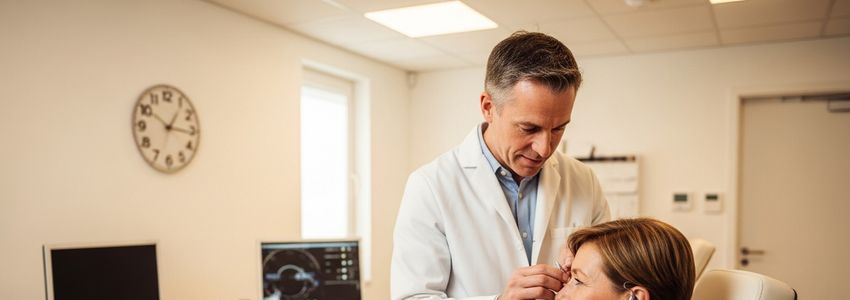
Running an audiology practice requires more than clinical expertise - it takes real capital to purchase diagnostic equipment, expand your facility, hire qualified staff, and keep operations running smoothly between insurance reimbursements. Audiology business loans give practice owners the financial tools they need to grow without waiting on slow insurance cycles or depleting personal savings.
Whether you're opening your first audiology clinic, upgrading to the latest audiometric testing systems, or adding a second location, the right financing structure can make all the difference. This guide covers everything audiology practice owners need to know about securing funding: the types of loans available, how they work, qualification requirements, and how Crestmont Capital helps audiologists get funded fast.
In This Article
- What Are Audiology Business Loans?
- Key Benefits for Audiology Practice Owners
- Types of Financing for Audiology Practices
- How Audiology Practice Loans Work
- How Audiologists Use Business Financing
- Who Qualifies for Audiology Business Loans?
- How Crestmont Capital Helps Audiologists
- Real-World Financing Scenarios
- Comparing Financing Options
- Frequently Asked Questions
- How to Get Started
What Are Audiology Business Loans?
Audiology business loans are financing products designed specifically to support the operational and growth needs of hearing health practices. Unlike personal loans, these products are underwritten based on your business's revenue, cash flow, and overall financial health - not just your personal credit score.
Audiology practices face a unique set of financial challenges. Equipment like audiometers, otoacoustic emission testers, hearing aid fitting systems, and sound-treated testing booths carries significant price tags. At the same time, insurance reimbursement cycles can stretch 30 to 90 days, creating cash flow gaps that slow operations. Business loans give audiologists a way to bridge those gaps and fund growth without taking on personal financial risk.
These loans can be structured as term loans, equipment financing, business lines of credit, working capital advances, or SBA-backed products - each suited to different situations and timelines.
Industry Snapshot: According to the Bureau of Labor Statistics, audiologist employment is projected to grow 11% through 2032 - faster than the national average. With over 13,000 audiology practices operating in the U.S., access to business capital is a core driver of practice expansion and survival.
Key Benefits for Audiology Practice Owners
Financing gives audiology practice owners options they simply don't have when relying solely on insurance revenue and out-of-pocket collections. Here's what the right loan can do for your practice:
- Preserve cash flow: Cover day-to-day expenses while waiting on insurance reimbursements that take weeks or months to arrive.
- Invest in technology: Purchase modern audiometric equipment, hearing aid dispensing systems, or telehealth platforms without tying up your operating capital.
- Hire and retain staff: Fund salaries for audiologists, audiology assistants, front desk staff, and billing specialists during growth phases.
- Expand your facility: Add soundproof testing rooms, expand your waiting area, or open a second clinic location.
- Build working capital reserves: Create a financial cushion that protects your practice during slow seasons or unexpected disruptions.
- Grow faster: Take on more patients, expand services like tinnitus treatment or pediatric audiology, or invest in marketing - without waiting years to accumulate retained earnings.
Ready to Fund Your Audiology Practice?
Get fast, flexible financing built for healthcare practices. Apply in minutes - no obligation.
Apply Now →Types of Financing for Audiology Practices
Audiology practice owners have access to several distinct financing structures. Understanding each one helps you select the product that best fits your needs and timeline.
Term Loans
A term loan provides a lump sum of capital repaid over a fixed schedule with regular payments. Term loans are ideal for large, one-time investments like practice acquisition, major renovations, or technology upgrades. Repayment periods typically range from 1 to 5 years for short- and medium-term products, and up to 10 years for long-term business loans.
For audiology practices, term loans work well when you know exactly how much you need and want predictable, fixed monthly payments. Many practices use term loans to fund clinic expansions or to purchase a competing practice.
Equipment Financing
Equipment financing is a loan secured by the equipment being purchased - which means the equipment itself serves as collateral. This makes approval easier and often results in better rates than unsecured loans. For audiology practices, this covers audiometers, real-ear measurement systems, otoacoustic emission analyzers, hearing aid programming software, and more.
Because the collateral is built in, lenders are generally willing to finance up to 100% of the equipment's value. Equipment loans come with fixed repayment schedules that align with the useful life of the equipment. You can explore equipment financing options and medical equipment financing specifically tailored to healthcare practices.
Business Line of Credit
A business line of credit is a revolving credit facility that works like a credit card - you draw funds when you need them and only pay interest on what you've used. Lines of credit are ideal for managing the cash flow gaps created by slow insurance reimbursements or seasonal patient volume fluctuations.
Audiology practices often use lines of credit to cover payroll during billing lag periods, purchase hearing aid inventory, or handle unexpected equipment repairs. Once you repay what you've drawn, the credit becomes available again. Learn more about business lines of credit and how they can support healthcare operations.
Working Capital Loans
Working capital loans are short-term loans designed to fund day-to-day operations rather than long-term investments. For audiology practices, this means covering payroll, utilities, rent, marketing expenses, and inventory while waiting for insurance payments to clear. These loans are fast to close - often within 24 to 72 hours - making them useful for urgent cash flow needs.
SBA Loans
Small Business Administration (SBA) loans are government-backed loans that come with lower interest rates and longer repayment terms than conventional business loans. The most common products are the SBA 7(a) loan (up to $5 million) and the SBA 504 loan (for commercial real estate and major equipment purchases).
SBA loans are best for established audiology practices with strong credit and documentation, as the application process is more thorough. The tradeoff is access to longer repayment periods - up to 25 years for real estate and 10 years for working capital - and some of the most competitive rates available. Explore SBA loan options with Crestmont Capital.
Revenue-Based Financing
Revenue-based financing (RBF) allows businesses to receive a lump sum in exchange for a percentage of future revenue until the advance is repaid. For audiology practices with strong monthly collections but inconsistent cash flow, RBF can provide immediate capital with repayments that flex with your revenue instead of requiring fixed monthly amounts.
How Audiology Practice Loans Work
Understanding the mechanics of business lending helps you set realistic expectations and prepare a stronger application.
Quick Guide
How Audiology Practice Financing Works - At a Glance
Complete a short application with basic business and financial information. Takes about 5-10 minutes.
Provide bank statements, financial statements, and any other documents your lender requests for underwriting.
Receive a tailored financing offer with loan amount, rate, term, and repayment details. Compare your options.
Sign your agreement and receive funds - often within 24 to 72 hours for most products. Put capital to work right away.
Lenders evaluate audiology practices using a combination of financial and operational factors. Revenue consistency is important - lenders want to see that your practice generates steady income, ideally with at least 3 to 6 months of bank statements showing regular deposits. Time in business matters as well: established practices typically access larger loan amounts and better rates than startups.
Your personal credit score plays a role, but it's rarely the only determining factor. Many lenders extend financing to practice owners with scores in the 600s when business financials are strong. Collateral may or may not be required depending on the loan type - equipment loans and SBA loans typically require it, while working capital and revenue-based products often don't.

How Audiologists Use Business Financing
Audiology practice loans serve a wide variety of purposes. Here's a breakdown of the most common uses and how each type of financing maps to them:
Purchasing Audiometric Equipment
Modern audiology practices require sophisticated equipment to deliver accurate diagnoses and treatment. Audiometers, tympanometers, otoacoustic emission (OAE) analyzers, and auditory brainstem response (ABR) systems can cost anywhere from $5,000 to $80,000 or more for a full diagnostic suite. Equipment financing or a term loan is usually the most efficient way to fund these purchases, allowing practices to own the equipment outright while spreading the cost over 2 to 5 years.
Soundproofing and Facility Build-Outs
ANSI-certified soundproof testing booths are non-negotiable for accurate audiometric testing. A single sound booth can cost $20,000 to $80,000 depending on size and specifications. When opening a new clinic or renovating an existing space, practice owners often need $50,000 to $200,000 or more for complete facility build-outs. Term loans or SBA 7(a) loans are the right tool for this scale of investment.
Hearing Aid Inventory
Hearing aid dispensing is a major revenue driver for most audiology practices - but it requires significant upfront inventory investment. High-quality hearing aids from leading manufacturers can cost the practice $800 to $3,000 per unit at wholesale, and maintaining adequate stock across multiple technology levels and styles represents a substantial capital commitment. Working capital loans and business lines of credit are well-suited for funding inventory purchases.
Hiring and Staff Expansion
Growing patient volume means hiring licensed audiologists, audiology assistants, front desk coordinators, and billing specialists. Payroll is typically the largest operating expense for any healthcare practice, and it must be met even during months when insurance reimbursements are delayed. Small business loans and working capital products help practices maintain payroll without cash flow disruptions.
Marketing and Patient Acquisition
Attracting new patients requires investment in digital marketing, community outreach, physician referral programs, and audiological awareness campaigns. Many practices allocate $2,000 to $10,000 per month to marketing efforts. A business line of credit or working capital loan can fund marketing initiatives while the practice waits for those efforts to generate revenue.
Practice Acquisition
Buying an existing audiology practice is often faster and less risky than starting from scratch. Established practices come with a patient base, staff, equipment, and existing insurance contracts. Acquisition loans or SBA 7(a) loans are typically used for this purpose, with amounts ranging from $250,000 to several million dollars depending on the practice's size and revenue.
By the Numbers
Audiology Practice Financing - Key Statistics
11%
Projected job growth for audiologists through 2032 (BLS)
13K+
Audiology practices operating across the U.S.
48M
Americans with some degree of hearing loss (NIDCD)
$200K+
Typical startup cost for a new audiology practice
Who Qualifies for Audiology Business Loans?
Qualification requirements vary by lender and product type, but here's a general overview of what most lenders look for when evaluating audiology practice loan applications:
Time in Business
Most conventional lenders prefer to see at least 6 months to 2 years of operating history. Newer practices may qualify through SBA startup loan programs, SBDC-backed financing, or lenders that specialize in healthcare startups. Established practices with 3 or more years of history typically qualify for the largest loan amounts and most favorable terms.
Annual Revenue
Lenders want to see that your practice generates consistent revenue. Minimum annual revenue thresholds typically start at $100,000 to $150,000 for smaller loan products, scaling up for larger financing requests. Practices with strong and growing revenue can access more favorable rates and higher loan amounts.
Credit Profile
Your personal credit score is reviewed alongside your business credit history. Most conventional lenders prefer a personal credit score of 650 or above, though some alternative lenders work with scores in the 580 to 640 range. If credit is a concern, explore bad credit business loans designed for practice owners rebuilding their credit profile.
Cash Flow Documentation
Three to six months of business bank statements is the standard requirement for most loan products. For SBA loans and larger term loans, full financial statements including profit and loss reports, balance sheets, and sometimes tax returns may be required. Clean, well-organized financials make the underwriting process smoother and faster.
Collateral (Varies by Product)
Equipment loans and SBA 504 loans are secured by the assets being financed. Some term loans and working capital products are unsecured, meaning no specific collateral is pledged - though a general business lien may apply. Understanding the collateral requirements before applying helps you prepare the right documentation.
Pro Tip: Even if your practice is relatively new or your personal credit is below ideal, you may still qualify for audiology business financing. Lenders weigh multiple factors together - strong monthly revenue and consistent cash flow can offset weaknesses in other areas.
How Crestmont Capital Helps Audiology Practice Owners
Crestmont Capital is one of the leading business lenders in the U.S., with a track record of funding healthcare practices across the country. We understand that audiology practices face unique financial dynamics - from insurance reimbursement delays to high equipment costs - and we've built our lending products to address them directly.
When you work with Crestmont Capital, you get access to a full range of financing options matched to your specific situation. Whether you need fast working capital to bridge a cash flow gap or a structured term loan to fund a major practice expansion, our advisors help you find the right product at the right terms.
Here's what sets Crestmont Capital apart for audiology practices:
- Fast approvals: Many applications are reviewed and approved within 24 to 48 hours - not weeks.
- Flexible qualification: We look at the full picture of your practice's health, not just your credit score.
- Healthcare industry expertise: Our advisors understand the financial challenges unique to medical and healthcare practices.
- Multiple loan types under one roof: From equipment financing to SBA loans to working capital - you don't need to shop around.
- No prepayment penalties: Pay off your loan early without penalty when cash flow allows.
Explore our small business financing options or connect with an advisor to discuss your audiology practice's specific needs. You can also review related financing guides for healthcare practices, including our complete guide to physical therapy business loans and our detailed overview of medical practice loans for healthcare owners.
Grow Your Audiology Practice Faster
Crestmont Capital funds healthcare practices quickly with flexible terms. Get your offer in 24 hours.
Apply Now →Real-World Financing Scenarios for Audiology Practices
Understanding how other audiology practices have used business financing helps contextualize your own situation. Here are several real-world scenarios that illustrate common use cases:
Scenario 1: New Practice Build-Out
A newly licensed audiologist leases a 1,200-square-foot commercial space in a medical office park. She needs to install two ANSI-certified sound treatment booths at $35,000 each, purchase a full audiometric testing suite for $45,000, and cover initial operating expenses including staff salaries and marketing for the first 90 days. Total funding need: $185,000. A combination of an SBA 7(a) term loan and a working capital line of credit provides the capital she needs, with the SBA loan covering the build-out and equipment and the line of credit serving as a cash flow buffer during ramp-up.
Scenario 2: Equipment Technology Upgrade
An established audiology practice with 8 years of history needs to replace aging audiometers and OAE equipment. The newest generation of diagnostic systems improves test accuracy, reduces test time, and integrates directly with their practice management software. Equipment cost: $62,000. An equipment financing loan covers the full purchase price at a competitive rate, repaid over 48 months. The monthly payment is offset by increased patient throughput and reduced per-appointment time costs.
Scenario 3: Cash Flow Bridge During Insurance Delay
A solo audiologist faces a 90-day delay in Medicare reimbursements following a coding audit. Her practice has strong revenue but the timing mismatch leaves her unable to cover payroll for two staff members and this month's rent. A short-term working capital loan of $40,000 bridges the gap, repaid within 6 months once the reimbursements clear. Without the loan, she would have been forced to reduce staff hours or miss rent payments.
Scenario 4: Hearing Aid Dispensary Expansion
An audiology practice wants to expand its hearing aid dispensary section, increasing its inventory investment from $30,000 to $80,000 to offer premium hearing aids from three additional manufacturers. A business line of credit provides $75,000 in revolving credit. The practice uses the credit to purchase inventory, then repays it as hearing aids are sold. The revolving structure allows them to continuously refresh inventory without needing to reapply for a new loan each time.
Scenario 5: Second Location Opening
A two-location regional audiology group wants to open a third clinic in an adjacent suburb with high senior population density. The build-out, equipment, and initial operating capital requirement is $275,000. The practice has 12 years of operating history and strong financials. A conventional term loan covers the full expansion cost, with a 5-year repayment schedule structured around projected revenue from the new location.
Scenario 6: Practice Acquisition
An experienced audiologist wants to purchase a retiring colleague's established practice, which includes a loyal patient base of 1,200 active patients, two staff members, fully equipped clinical space, and strong insurance contracts. Acquisition price: $420,000. An SBA 7(a) acquisition loan provides 90% of the purchase price, with the remaining 10% as a down payment. The practice's existing cash flow services the loan with room to spare.
Comparing Audiology Financing Options
| Loan Type | Best For | Typical Amount | Speed | Collateral |
|---|---|---|---|---|
| Term Loan | Expansion, acquisition, build-out | $50K - $5M | 2-7 days | Sometimes required |
| Equipment Financing | Audiometers, testing systems | $10K - $500K | 2-5 days | Equipment (self-collateralizing) |
| Line of Credit | Cash flow, inventory, payroll | $10K - $500K | 1-3 days | Usually none |
| Working Capital Loan | Urgent cash flow needs | $10K - $250K | 24-72 hours | None required |
| SBA 7(a) Loan | Major investment, long-term needs | $50K - $5M | 2-6 weeks | Required for larger amounts |
| Revenue-Based Financing | Flexible repayment needs | $25K - $500K | 24-48 hours | None required |
Frequently Asked Questions
What types of loans are available for audiology practices?
Audiology practices can access term loans, equipment financing, business lines of credit, working capital loans, SBA loans, and revenue-based financing. Each serves a different purpose - equipment financing is best for purchasing audiometric systems, while lines of credit work well for cash flow management. The right choice depends on what you need the funds for and your timeline.
How much can I borrow for my audiology practice?
Loan amounts range from as little as $10,000 for small working capital needs up to $5 million or more for SBA loans used for acquisitions or major expansions. Most established audiology practices qualify for $50,000 to $500,000 depending on annual revenue, credit profile, and intended use of funds. The best way to determine your maximum is to apply and receive a tailored offer.
How fast can an audiology practice get funded?
Funding speed depends on the loan type. Working capital loans and lines of credit can fund in as little as 24 to 72 hours after approval. Conventional term loans typically close in 2 to 7 business days. SBA loans take longer - usually 2 to 6 weeks - due to more extensive underwriting and documentation requirements. For urgent needs, short-term products are fastest.
What credit score do I need for an audiology business loan?
Most traditional lenders prefer a personal credit score of 650 or higher. However, alternative lenders and healthcare-focused financing products may work with scores in the 580 to 640 range if business revenue and cash flow are strong. SBA loans generally require a 680 or higher. Credit score is one factor among many - a strong practice with solid revenue may qualify even with a lower score.
Can a new audiology practice get a business loan?
Yes, though options are more limited for startups. New practices may qualify through SBA loan programs designed for startups, SBDC-assisted lending, equipment financing (secured by the equipment itself), or lenders that specialize in healthcare startup financing. Having a strong business plan, personal credit above 680, and some personal capital to contribute improves your chances significantly.
Can I use a business loan to purchase audiometric equipment?
Yes. Equipment financing is specifically designed for this purpose. You can finance audiometers, OAE analyzers, ABR systems, sound treatment booths, hearing aid fitting and programming systems, and virtually any other diagnostic or clinical equipment. The equipment serves as collateral, which often results in more favorable rates and easier qualification compared to unsecured loans.
Are audiology business loans hard to qualify for?
Qualification difficulty varies by lender and product. Established practices with at least 1 to 2 years of history and consistent revenue typically find the process straightforward. Newer practices or those with credit challenges may face more restrictions, but specialized healthcare lenders and alternative lending products expand access significantly. The key is finding the right lender for your specific situation.
What documents do I need to apply for an audiology practice loan?
Standard documentation includes 3 to 6 months of business bank statements, a government-issued ID, and basic business information (EIN, legal entity, address). Larger loans may require financial statements, a profit and loss report, balance sheet, and 1 to 2 years of business tax returns. For SBA loans, expect to provide more comprehensive documentation including a business plan and detailed financial projections.
Can I use an audiology business loan to open a second location?
Yes, practice expansion loans are a common use case. Expanding to a second clinic location typically requires $100,000 to $400,000 or more depending on the market, facility size, and equipment needs. Term loans and SBA 7(a) loans are the most common tools for this purpose. Lenders will evaluate the expansion opportunity based on your existing practice's financial performance and the projected revenue from the new location.
How does a business line of credit help with insurance reimbursement delays?
A business line of credit gives you immediate access to funds when you need them. During months when insurance reimbursements are delayed by 30, 60, or even 90 days, you can draw on your credit line to cover payroll, rent, and operating expenses without disrupting operations. Once the reimbursements arrive, you repay what you drew. The revolving structure means the credit is available again for the next cycle.
What are typical interest rates for audiology business loans?
Interest rates vary widely based on credit score, loan type, term length, and lender. SBA loans carry some of the lowest rates, typically ranging from prime plus 2.25% to prime plus 4.75%. Conventional term loans from online and alternative lenders range from approximately 7% to 30% APR. Short-term working capital products and merchant cash advances carry higher effective rates due to their speed and flexibility. Comparing multiple offers is always recommended.
How is an audiology business loan different from a personal loan?
Business loans are underwritten based on your practice's financial performance - revenue, cash flow, and operating history - not just your personal credit. They typically offer higher loan amounts, longer repayment periods, and potentially lower rates than personal loans for comparable business purposes. Business loans also help build your practice's credit profile, which improves access to future financing.
Can I get an audiology practice loan with no collateral?
Yes. Many working capital loans, business lines of credit, and revenue-based financing products are unsecured - meaning no specific collateral is required. These products are evaluated primarily on revenue and cash flow. However, unsecured loans may carry slightly higher rates than collateralized products. For larger amounts, some lenders may place a general business lien rather than requiring specific assets as security.
How do I choose between an SBA loan and a conventional loan for my audiology practice?
SBA loans offer lower interest rates and longer repayment terms, making them ideal for large investments where minimizing long-term cost matters most. But they take longer to close - usually 2 to 6 weeks - and require more documentation. Conventional loans close faster (days rather than weeks) and involve less paperwork, but rates may be higher. If you need funds quickly, conventional is better. If you have time and want the best long-term terms, pursue SBA.
How soon after being funded can I apply for another loan?
There's no universal waiting period. Many practices maintain multiple financing products simultaneously - for example, a term loan for equipment plus a line of credit for working capital. If you've been making timely payments and your practice's revenue supports the additional debt service, you can apply for additional financing at any time. Demonstrating responsible repayment history actually improves your chances on subsequent applications.
How to Get Started
Complete our quick application at offers.crestmontcapital.com/apply-now - takes just a few minutes.
A Crestmont Capital advisor experienced in healthcare practice financing will review your needs and match you with the right product.
Receive your funds - often within days - and put them to work expanding your audiology practice, upgrading equipment, or covering operations.
Conclusion
Audiology business loans give practice owners the financial tools to grow, compete, and deliver world-class hearing care without being constrained by cash flow gaps or the slow pace of insurance reimbursements. Whether you need equipment financing for a new diagnostic suite, a working capital loan to bridge a reimbursement delay, or a long-term term loan to fund a second clinic location, the right financing product exists for your situation.
The audiology industry is growing. Demand for hearing health services is rising, driven by an aging U.S. population and growing awareness of the connection between hearing loss and overall health outcomes. Practices that invest in their capabilities now - better technology, expanded capacity, stronger teams - are positioned to capture that demand and build durable, high-value businesses.
Crestmont Capital works with healthcare practice owners across the country to find fast, flexible financing solutions. If you're ready to take your audiology practice to the next level, we're ready to help. Apply today and get a decision within 24 to 48 hours - no obligation, no hassle.
Ready to Secure Audiology Business Financing?
Join thousands of healthcare practice owners who trust Crestmont Capital for fast, flexible business loans. Apply in minutes.
Apply Now →Disclaimer: The information provided in this article is for general educational purposes only and is not financial, legal, or tax advice. Funding terms, qualifications, and product availability may vary and are subject to change without notice. Crestmont Capital does not guarantee approval, rates, or specific outcomes. For personalized information about your business funding options, contact our team directly.