
 (800) 949-0401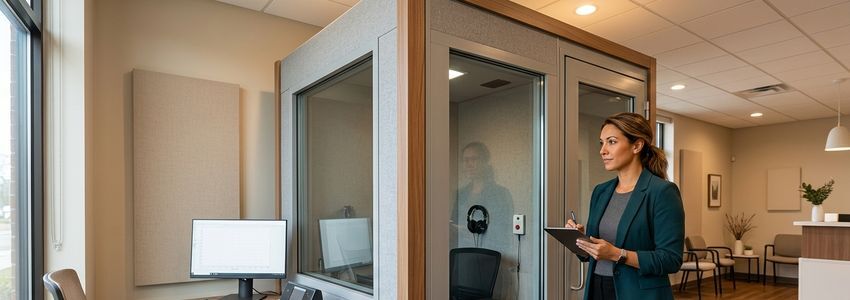
Audiology Booth Financing: The Complete Guide for Hearing Practice Owners
Audiology booth financing is the fastest way for hearing practice owners to fund a new or replacement sound-treated testing booth without draining cash reserves. A properly built audiometric booth is one of the single largest equipment purchases most audiology practices ever make, and paying for it outright can delay expansion, hiring, or opening a second location for months or years.
This guide walks through exactly how audiology booth financing works, what it costs, which funding structures make the most sense for hearing practices, and how to get approved quickly so your booth gets installed on your timeline, not your bank's.
In This Article
What Is an Audiology Booth?
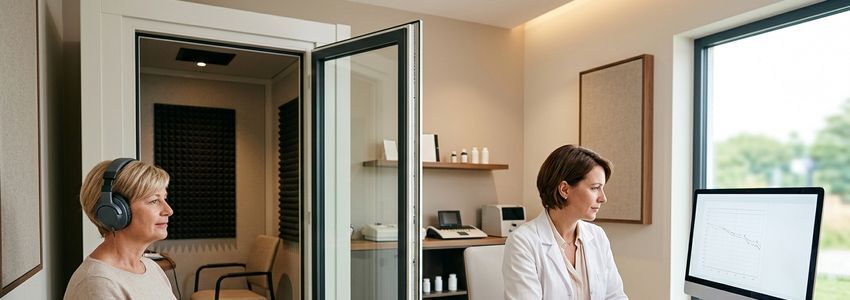
An audiology booth, sometimes called an audiometric booth or sound-treated testing booth, is a purpose-built enclosure designed to isolate ambient noise so hearing tests can be conducted with accuracy. These booths meet ANSI S3.1 background noise standards, which is a requirement for reliable pure-tone audiometry, speech testing, and other diagnostic hearing evaluations.
Booths range from compact single-person units suitable for a small practice room to large double-wall constructions that can accommodate two patients, pediatric testing setups, or tympanometry equipment alongside the audiometer. Pricing varies widely depending on size, wall construction (single-wall versus double-wall), window placement, ventilation systems, and electrical wiring for equipment pass-throughs.
Most new audiology booths run anywhere from the high four figures for a basic single-wall unit up to well over $30,000 for a large, fully outfitted double-wall booth with custom electrical and ventilation work. Add in delivery, professional installation, and any room modifications, and the total project cost for many practices lands in the $15,000 to $40,000 range.
The construction details matter more than most first-time buyers expect. Double-wall booths use two separated wall structures with an air gap between them, which dramatically improves sound attenuation compared to single-wall construction. This matters clinically because even a few decibels of ambient noise leakage can shift a patient's threshold results, particularly at the lower frequencies used to screen for common forms of hearing loss.
Ventilation is another detail that catches new practice owners off guard. Because the booth is sealed for sound isolation, it needs a dedicated low-noise ventilation system to keep air circulating comfortably during longer test sessions, especially for pediatric patients who may spend extended time inside. Skimping on ventilation to save money upfront is one of the most common regrets practice owners report after installation, and it is far more expensive to retrofit than to specify correctly from the start.
Key Benefits of Audiology Booth Financing
Financing a booth instead of paying cash preserves working capital for payroll, marketing, and everyday operating expenses. It also lets a practice install the exact booth it needs today rather than settling for a smaller or used unit because of budget constraints.
- Preserve cash flow - Keep operating capital available for staffing, inventory, and marketing instead of tying it up in one piece of equipment.
- Predictable monthly payments - Fixed payment structures make budgeting simple and protect against interest rate volatility.
- Faster installation - Get approved and funded in days, not months, so your booth arrives on your renovation or opening timeline.
- Potential tax advantages - Many financing structures allow the equipment to be treated as a business expense; consult your CPA for specifics on your situation.
- Match payments to revenue - A booth that generates testing revenue can often be structured so payments align with the cash flow it produces.
- Flexible terms - Terms can be structured from 24 to 72 months depending on equipment cost and practice qualifications.
Ready to Fund Your Audiology Booth?
Get fast, flexible equipment financing built for hearing practices. No obligation, apply in minutes.
Apply Now →How Audiology Booth Financing Works
The process for financing an audiology booth follows the same general steps as most equipment financing arrangements, but a few audiology-specific details matter along the way.
- Get a quote from your booth manufacturer or dealer. Confirm the full project cost, including the booth itself, delivery, installation, and any electrical or ventilation work.
- Apply for financing. Most lenders that specialize in equipment financing for medical and healthcare practices can process an application using basic business information, several months of bank statements, and the vendor quote.
- Get approved. Straightforward equipment financing applications for established practices are commonly approved within one to two business days.
- Sign your agreement. Review the payment schedule, term length, and any end-of-term options (such as a $1 buyout or fair market value purchase option).
- Funds are disbursed to your vendor. The lender pays the manufacturer or dealer directly, or reimburses you if you have already made a deposit.
- Booth is delivered and installed. Most audiology booths take two to six weeks to build and ship depending on size and customization, plus installation time.
Quick Guide
Audiology Booth Financing - At a Glance
Confirm total project cost including installation and electrical work.
Basic business details and recent bank statements are typically all that's needed.
Most straightforward applications move quickly once documents are in.
Funds go directly to your vendor so your booth build stays on schedule.
Types of Financing for Audiology Booths
Not every audiology practice qualifies for or benefits from the same financing structure. Here are the most common options.
Equipment Financing
A term loan or lease specifically secured by the booth itself. Payments are fixed and predictable, terms typically run 24 to 72 months, and the booth serves as collateral, which often means more competitive rates than unsecured options.
Equipment Leasing
A lease structure where you make monthly payments to use the booth, often with an end-of-term option to purchase for $1, purchase at fair market value, or return the equipment. This can preserve capital and, depending on the lease structure, may offer accounting advantages worth discussing with your accountant.
Business Line of Credit
A revolving credit line can cover a booth purchase alongside other practice needs like inventory or staffing, giving flexibility if you anticipate additional equipment purchases soon after the booth installation.
Unsecured Working Capital
For practices that want to avoid using the booth as collateral, unsecured working capital loans provide a lump sum based primarily on business revenue and cash flow rather than the specific asset being purchased.
Key Point: Because a sound-treated booth qualifies as tangible business equipment, it typically financed more easily and at better terms than unsecured working capital, since the booth itself can serve as collateral.
Who Audiology Booth Financing Is Best For
Audiology booth financing tends to make the most sense for a specific set of practice situations.
- New practice owners building out a clinic from scratch who need to preserve startup capital for lease deposits, staffing, and marketing.
- Established practices replacing an aging booth that no longer meets current ANSI noise standards or has outdated wiring for modern audiometers.
- Practices expanding to a second or third location that need to duplicate their testing setup without pausing growth to save cash first.
- ENT and multi-specialty medical groups adding audiology services as a new revenue line within an existing practice.
- Hearing aid dispensers who need diagnostic testing capability to support fitting and verification services.
It is worth noting who financing tends to make less sense for as well. A practice with substantial cash reserves and no near-term plans to redeploy that capital elsewhere may find that a straight cash purchase avoids any financing cost entirely. Similarly, a practice planning to close or relocate within the next year or two should weigh whether a shorter-term lease with a return option makes more sense than a longer financing commitment tied to a specific location.
Multi-location groups deserve a specific mention here. Practices scaling to three, four, or more locations often find that centralizing equipment financing through a single lender relationship, rather than negotiating a new arrangement at every location, simplifies both the application process and ongoing account management. This becomes especially valuable when a group is opening locations on a compressed timeline and needs consistent, predictable underwriting rather than starting from scratch each time.
Financing vs. Buying Outright vs. Leasing
| Approach | Upfront Cost | Cash Flow Impact | Best For |
|---|---|---|---|
| Cash Purchase | Full cost upfront | High - ties up capital | Practices with significant cash reserves and no near-term capital needs |
| Equipment Financing | Little to none | Low - fixed monthly payment | Most practices that want to own the booth long-term |
| Equipment Leasing | Little to none | Low - fixed monthly payment | Practices that may upgrade equipment again in a few years |
How Crestmont Capital Helps
Crestmont Capital works with audiology practices, ENT groups, and hearing aid dispensers to structure medical equipment financing around the realities of running a healthcare business. Applications are streamlined, decisions are fast, and terms are built around what a practice can reasonably support based on its revenue, not a one-size-fits-all formula.
For practices with additional equipment needs beyond the booth itself, such as audiometers, tympanometers, or otoacoustic emissions testing systems, Crestmont's broader healthcare equipment financing programs can bundle multiple pieces of equipment into a single financing arrangement. This is often simpler than juggling separate loans for each piece of diagnostic equipment.
Practices that want flexibility beyond a single equipment purchase, whether for staffing, marketing, or opening a second location, may also want to review Crestmont's business line of credit options or unsecured working capital loans, both of which can complement equipment-specific financing.
Practices researching the broader financing landscape for their business may also find it useful to review Crestmont's guide to audiology business loans and the guide covering hearing aid clinic business loans, both of which cover financing options beyond a single equipment purchase.
Build the Practice You've Been Planning
From a single testing booth to a full clinic buildout, Crestmont Capital moves fast so your project doesn't stall.
Apply Now →Real-World Scenarios
Pro Tip: Request your vendor quote as a single itemized invoice that separates booth cost, delivery, and installation labor. Lenders that finance the full project cost, rather than just the equipment line item, generally need this breakdown to structure the financing correctly and avoid delays during underwriting.
Scenario 1: New Practice Buildout
A newly licensed audiologist opening her first solo practice needs a double-wall booth priced at $22,000 along with an audiometer and tympanometer. Rather than draining her startup savings, she finances the full equipment package over 60 months, keeping cash available for six months of rent and initial marketing spend.
Scenario 2: Aging Booth Replacement
An established ENT practice's 18-year-old audiology booth no longer meets current ANSI background noise standards, risking inaccurate test results. The practice finances a replacement single-wall booth over 36 months, timing the installation around a slow scheduling week to minimize disruption to patient testing.
Scenario 3: Second Location Expansion
A hearing practice with one successful location wants to open a second office across town. Rather than waiting to save enough cash for a second full booth setup, the owner finances the new booth and complements it with a business line of credit to cover the first few months of overhead at the new location.
Scenario 4: Adding Diagnostic Capability
A hearing aid dispensary that previously referred patients out for diagnostic testing decides to bring audiometric testing in-house. Financing the booth and testing equipment together allows the business to capture testing revenue that was previously going to a referral partner.
Frequently Asked Questions
Don't Let a Testing Booth Slow Down Your Growth
Apply today and find out how fast your audiology booth can be funded.
Apply Now →Next Steps
Get a firm quote from your preferred booth manufacturer or dealer, including installation and any electrical work.
Gather three to six months of recent business bank statements.
Submit your application with Crestmont Capital and get a decision, often within one to two business days.
Schedule delivery and installation once funds are disbursed to your vendor.
Conclusion
Audiology booth financing gives hearing practice owners a practical path to install the sound-treated testing equipment their patients need without emptying the bank account to do it. Whether you're opening a new practice, replacing an aging booth that no longer meets ANSI standards, or expanding to a second location, structured financing keeps the project moving on your schedule.
The U.S. Small Business Administration notes that access to capital remains one of the top challenges facing small business owners, and healthcare practices are no exception, particularly when a single piece of equipment can represent a five-figure investment. According to the U.S. Census Bureau, small businesses make up the vast majority of U.S. business establishments, and equipment financing has become a standard tool for that segment to manage large capital purchases responsibly. Healthcare has also been highlighted by Forbes as one of the more resilient sectors for small business formation in recent years, underscoring why practices need reliable ways to fund growth-stage equipment purchases like an audiology booth.
Practices that plan ahead, get a clear vendor quote, and line up financing before committing to an installation date tend to have the smoothest experience. Trying to arrange financing after equipment has already been ordered can create timing pressure that limits your options, so it is worth starting the conversation with a lender as soon as you have a firm quote in hand, even before you have fully decided between vendors.
If you're ready to move forward with audiology booth financing, Crestmont Capital can help you get a fast decision and structure payments that fit your practice's cash flow.
Disclaimer: The information provided in this article is for general educational purposes only and is not financial, legal, or tax advice. Funding terms, qualifications, and product availability may vary and are subject to change without notice. Crestmont Capital does not guarantee approval, rates, or specific outcomes. For personalized information about your business funding options, contact our team directly.








