
 (800) 949-0401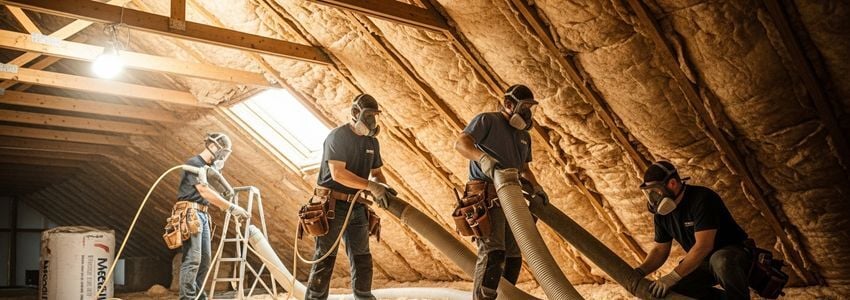
Attic Insulation Business Loans: The Complete Financing Guide for Attic Insulation Business Owners
The attic insulation industry is experiencing significant growth, driven by rising energy costs and a greater focus on home efficiency. For contractors in this space, capitalizing on this demand requires having the right equipment, skilled labor, and operational cash flow. This is where attic insulation business loans become a critical tool, providing the necessary capital to scale operations, purchase advanced machinery, and outpace the competition.In This Article
- What Are Attic Insulation Business Loans?
- The Growing Demand for Attic Insulation: Why Now is the Time to Invest
- Key Benefits of Securing Financing for Your Insulation Business
- Top Types of Attic Insulation Business Loans
- How Attic Insulation Business Financing Works: The Process Explained
- Who Qualifies for Insulation Contractor Loans?
- How to Apply for an Attic Insulation Business Loan: A Step-by-Step Guide
- Real-World Scenarios: How Insulation Businesses Use Financing
- Comparing Financing Options: Which Loan is Right for Your Business?
- How Crestmont Capital Streamlines the Financing Process
- Frequently Asked Questions
- How to Get Started
What Are Attic Insulation Business Loans?
Attic insulation business loans are not a single, specific financial product. Instead, the term refers to a broad category of funding solutions designed to meet the unique capital needs of attic insulation contractors and companies. These loans provide the necessary funds to cover a wide range of business expenses, from purchasing specialized equipment like spray foam rigs to managing day-to-day operational costs such as payroll and marketing.
Unlike a generic personal loan, this type of financing is structured around the commercial realities of the insulation industry. Lenders who specialize in business funding, like Crestmont Capital, understand the seasonal nature of the work, the high upfront cost of equipment, and the cash flow cycles that define a contracting business. This understanding allows them to offer more flexible and suitable financing options.
The core purpose of these loans is to bridge the gap between your current financial state and your growth potential. Whether you are a solo operator looking to hire your first employee or an established firm aiming to expand into a new territory, business financing provides the fuel to achieve your objectives. These funds can be used for virtually any legitimate business purpose, including:
- Equipment Purchase: Acquiring new or used blown-in insulation machines, spray foam rigs, work trucks, safety gear, and diagnostic tools.
- Working Capital: Covering ongoing expenses like employee salaries, insurance, vehicle maintenance, and utility bills during slow periods.
- Inventory Management: Buying insulation materials like fiberglass, cellulose, or spray foam in bulk to secure better pricing and ensure you are prepared for large jobs.
- Marketing and Advertising: Launching digital marketing campaigns, creating a professional website, or investing in local advertising to attract more residential and commercial clients.
- Expansion: Opening a new office, leasing a larger warehouse, or expanding your service area to capture a larger market share.
- Hiring and Training: Onboarding new technicians and providing them with the necessary safety and application training to maintain high-quality standards.
Ultimately, an attic insulation business loan is an investment in your company's future. It empowers you to make strategic decisions based on opportunity rather than being constrained by your immediate cash on hand. By leveraging the right financing, you can improve efficiency, increase profitability, and build a more resilient and successful insulation business.
The Growing Demand for Attic Insulation: Why Now is the Time to Invest
The insulation industry is not just stable; it is on a significant upward trajectory. Several powerful economic and social factors are converging to create a robust and sustained demand for professional attic insulation services. For business owners, this market environment presents a clear opportunity for growth, and securing financing is the key to unlocking it.
The U.S. home insulation market was valued at over $12 billion in 2023 and is projected to grow at a compound annual growth rate (CAGR) of over 5%. This growth is fueled by a perfect storm of consumer awareness, government incentives, and aging housing stock. Homeowners and commercial property managers are more educated than ever about the financial and comfort benefits of proper insulation.
According to the U.S. Department of Energy, homeowners can reduce their heating and cooling costs by an average of 15 percent by air sealing their homes and adding insulation in attics, floors, and crawlspaces. In some cases, especially in older homes, the savings can be as high as 50%. This compelling return on investment makes attic insulation a high-priority home improvement project.
The scale of the opportunity is massive. The North American Insulation Manufacturers Association (NAIMA) estimates that over 90 million homes in the United States are under-insulated by modern standards. This represents a vast, untapped market for skilled contractors. Each of these homes is a potential job waiting to be claimed. As energy prices continue to fluctuate and often rise, the financial incentive for homeowners to address this issue becomes even stronger.
Furthermore, government initiatives and utility company rebates often encourage homeowners to invest in energy efficiency upgrades. Programs at the federal, state, and local levels can offset the cost of an insulation project, making it an even more attractive proposition for consumers. As an insulation contractor, being able to help clients navigate these incentives can be a powerful sales tool, but fulfilling the resulting increase in demand requires a well-equipped and well-staffed operation.
This is precisely why investing in your business now is so critical. The demand is present and growing. However, to capture it, you need the operational capacity to handle multiple projects, the modern equipment to perform high-quality work efficiently, and the marketing reach to connect with these motivated homeowners. Waiting for profits to accumulate slowly means leaving money on the table and allowing competitors to establish a stronger foothold. Small business loans provide the proactive capital needed to seize this market opportunity immediately.
Attic Insulation Industry: By the Numbers
$12 Billion+
U.S. home insulation market value in 2023, with projected growth.
90 Million
Number of under-insulated homes in the United States, representing a massive market.
10-50%
Potential energy bill savings for homeowners with proper attic insulation.
$150,000
The potential cost of a high-end, fully-equipped spray foam insulation rig.
Key Benefits of Securing Financing for Your Insulation Business
Securing an attic insulation business loan is more than just a financial transaction; it is a strategic move that can fundamentally change the trajectory of your company. The infusion of capital, when used wisely, unlocks a host of benefits that directly contribute to increased revenue, improved efficiency, and long-term sustainability.
1. Upgrade or Purchase High-End Equipment
The quality and efficiency of your work are directly tied to the equipment you use. Outdated machinery can lead to slower job completion, wasted materials, and subpar results. Financing allows you to invest in state-of-the-art equipment. For example, a modern spray foam rig, which can cost anywhere from $25,000 to over $150,000, can dramatically increase your service offerings and profit margins. Similarly, a powerful new blown-in insulation machine, costing between $5,000 and $15,000, can cut job time in half. With equipment financing, you can acquire these assets immediately and let them pay for themselves through increased productivity.
2. Expand Your Workforce and Expertise
Growth is impossible without a skilled team. A business loan provides the funds to hire and properly train new technicians. This allows you to take on more jobs simultaneously, reducing lead times and improving customer satisfaction. You can also afford to offer competitive wages and benefits, which helps in attracting and retaining top talent in a tight labor market. A larger, well-trained team is the foundation for scaling your operations and reputation.
3. Boost Your Marketing and Sales Efforts
The best insulation services in the world are meaningless if potential customers do not know you exist. A significant portion of a business loan can be dedicated to a robust marketing strategy. This could include developing a professional website with strong SEO, running targeted online ad campaigns, investing in vehicle wraps for your work trucks, and creating high-quality marketing materials. Effective marketing generates a steady stream of qualified leads, filling your project pipeline and ensuring consistent revenue.
4. Optimize Cash Flow Management
The construction and home services industries are often subject to seasonal fluctuations and unpredictable payment cycles. A major project might tie up your capital for weeks or even months. A business line of credit or a working capital loan provides a crucial safety net. It ensures you can always cover essential expenses like payroll, rent, and supplier bills, even when waiting for client payments. This financial stability prevents cash flow crises and allows you to operate with confidence.
5. Increase Purchasing Power for Inventory
Insulation materials represent a significant portion of your job costs. Suppliers often offer substantial discounts for bulk purchases. By using a loan to buy inventory in larger quantities, you can lower your cost per job, increasing your profit margin on every project. It also protects you from sudden price hikes and supply chain disruptions, ensuring you have the materials you need when you need them.
6. Seize Expansion Opportunities
Is there a neighboring town with a growing housing market? Is there an opportunity to bid on larger commercial projects? Financing provides the capital to act on these opportunities. This could mean leasing a larger warehouse, opening a satellite office, or acquiring the necessary bonding and insurance for bigger contracts. Strategic expansion, backed by solid funding, is how small local businesses become regional leaders.

Top Types of Attic Insulation Business Loans
Understanding the different types of financing available is the first step toward choosing the right solution for your business. Each loan product has its own structure, terms, and ideal use case. Here is a breakdown of the most common and effective financing options for attic insulation contractors.
Equipment Financing
This is one of the most popular options for insulation businesses due to the high cost of specialized machinery. With equipment financing, the loan is specifically for purchasing new or used equipment, and the equipment itself serves as collateral. This secured nature often results in competitive interest rates and favorable terms.
- Best For: Purchasing spray foam rigs, blown-in machines, work vans, safety equipment, and thermal imaging cameras.
- Loan Amounts: Typically up to 100% of the equipment value, from a few thousand dollars to $250,000 or more.
- Terms: Usually 1 to 7 years, often matching the expected useful life of the equipment.
- Key Benefit: Allows you to acquire revenue-generating assets without a large upfront cash outlay. The new equipment can start paying for itself immediately.
SBA Loans
Backed by the U.S. Small Business Administration, SBA loans are offered by lenders like Crestmont Capital but partially guaranteed by the government. This guarantee reduces the lender's risk, often leading to some of the most attractive terms available: large loan amounts, long repayment periods, and low interest rates.
- Best For: Major business expansion, purchasing real estate, refinancing existing debt, or acquiring a competitor.
- Loan Amounts: Up to $5 million.
- Terms: Can extend up to 10 years for working capital or equipment, and up to 25 years for real estate.
- Key Benefit: Excellent terms make monthly payments manageable. The SBA 7(a) and 504 loan programs are powerful tools for significant, long-term growth. However, the application process is typically more intensive and takes longer than other options. For more information, you can visit the official SBA.gov website.
Working Capital Loans
These are short-term loans designed to provide a quick infusion of cash to cover day-to-day operational expenses. They are ideal for managing cash flow gaps, funding marketing campaigns, or covering unexpected costs. They are often unsecured, meaning you do not need to put up specific collateral.
- Best For: Payroll, inventory purchases, marketing, bridging the gap while waiting for customer payments, and managing seasonal downturns.
- Loan Amounts: Typically from $5,000 to $500,000.
- Terms: Shorter repayment periods, usually from 3 to 24 months.
- Key Benefit: Working capital loans offer a very fast funding process, sometimes in as little as 24 hours, making them perfect for urgent needs.
Business Line of Credit
A business line of credit provides access to a set amount of capital that you can draw from as needed. You only pay interest on the funds you use. Once you repay the amount you have drawn, your credit line is replenished. It functions like a credit card for your business but with potentially higher limits and lower rates.
- Best For: Ongoing or unexpected expenses, managing fluctuating cash flow, and having a financial safety net.
- Loan Amounts: Credit lines can range up to $500,000 for qualified contractors.
- Terms: Revolving; you can draw and repay funds repeatedly as long as the line is open.
- Key Benefit: Ultimate flexibility. It provides peace of mind knowing you have access to capital whenever a need or opportunity arises, without having to reapply for a new loan each time.
Term Loans
A traditional term loan provides a lump sum of cash upfront, which you repay with regular, fixed payments over a predetermined period. They can be secured or unsecured and are suitable for a wide range of planned business investments.
- Best For: Specific, one-time projects like a major marketing launch, renovating an office, or purchasing a large inventory of materials.
- Loan Amounts: Varies widely, from $25,000 to over $1 million.
- Terms: Typically 1 to 10 years.
- Key Benefit: Predictable, fixed payments make budgeting easy. The interest rates are often competitive, especially for businesses with strong credit.
Ready to Fund Your Insulation Business?
Get the capital you need to buy equipment, hire staff, and grow. See your options in minutes.
Apply Now ->How Attic Insulation Business Financing Works: The Process Explained
Navigating the business loan process can seem daunting, but it becomes straightforward when you break it down into a series of clear steps. While specifics can vary between lenders and loan types, the fundamental journey from application to funding generally follows a consistent path. Here is what you can expect when you seek financing for your attic insulation business.
Step 1: Assess Your Business Needs and Goals
Before you even look at applications, the first step is internal. You need to clearly define why you need the money and exactly how much you require. Are you buying a specific piece of equipment? Get a quote. Are you launching a marketing campaign? Create a budget. Having a precise number and a clear plan not only helps you choose the right loan but also demonstrates to lenders that you are a responsible and well-prepared business owner.
Step 2: Gather Necessary Documentation
Lenders need to verify your business's financial health and identity. Being prepared with the right documents will significantly speed up the process. While requirements vary, a typical checklist includes:
- Business Bank Statements: Usually the most recent 3-6 months.
- Business and Personal Tax Returns: Often the last 1-2 years.
- Financial Statements: Profit & Loss (P&L) statements and balance sheets.
- Business Registration Documents: Articles of incorporation, business licenses, etc.
- Personal Identification: A government-issued photo ID for all owners.
- Equipment Quotes or Purchase Orders: If applying for equipment financing.
Alternative lenders like Crestmont Capital often have a more streamlined documentation process, sometimes requiring only bank statements for smaller loan amounts.
Step 3: Choose the Right Lender and Submit Your Application
You have two primary choices for lenders: traditional banks and alternative lenders. Banks often have stricter requirements and longer processing times. Alternative lenders, like Crestmont Capital, specialize in working with small to medium-sized businesses and offer faster, more flexible solutions. Our online application is designed to be quick and easy, often taking just a few minutes to complete.
Step 4: Underwriting and Review
Once you submit your application and documents, the lender's underwriting team gets to work. They will analyze your business's financial data to assess its health and ability to repay the loan. Key factors they review include your monthly revenue, cash flow patterns, time in business, and personal and business credit scores. This is the risk assessment phase of the process.
Step 5: Receive and Compare Offers
If your application is approved, you will receive one or more loan offers. Each offer will detail the loan amount, interest rate, repayment term, and any associated fees. It is crucial to review these terms carefully. Look at the total cost of borrowing, not just the monthly payment. A dedicated funding advisor from Crestmont Capital will walk you through your offers to ensure you understand all the details and can make an informed decision.
Step 6: Accept the Offer and Sign the Agreement
After you have chosen the best offer for your business, you will sign the loan agreement. Thanks to modern technology, this is almost always done electronically, making the process fast and convenient.
Step 7: Funding
This is the final and most exciting step. Once the signed agreement is received, the lender will transfer the funds directly into your business bank account. With lenders focused on fast business loans, this can happen in as little as 24 hours after approval. The capital is now yours to use for the business purposes you outlined in your plan.
Who Qualifies for Insulation Contractor Loans?
Lenders evaluate several key factors to determine if a business is a good candidate for financing. While every lender has slightly different criteria, the core elements of a strong application are consistent across the industry. Understanding these qualifications can help you prepare your business and increase your chances of approval.
1. Credit Score
Both your personal and business credit scores play a significant role. A higher credit score signals to lenders that you have a history of managing debt responsibly. Traditional banks typically require a personal credit score of 680 or higher. However, alternative lenders like Crestmont Capital are more flexible and can work with a wider range of credit profiles. We offer bad credit business loans for contractors who may have had financial challenges in the past but can demonstrate strong recent revenue.
2. Time in Business
Lenders prefer to see a track record of stability. Most require a minimum of 6 months to 1 year in business. Businesses that have been operating for 2 years or more often qualify for the best rates and terms. If you are a startup, options are more limited but still available, often through programs like SBA microloans or equipment financing where the asset itself provides security.
3. Annual Revenue
Your business's revenue is a primary indicator of its ability to make loan payments. Lenders will look at your gross annual revenue, and most have a minimum threshold. This can range from $100,000 to $250,000 or more per year, depending on the loan type and amount. The key is to demonstrate consistent and sufficient cash flow to support the new debt.
4. Business Financial Health
Beyond just top-line revenue, underwriters will examine your bank statements to understand your cash flow patterns. They look for things like the average daily balance, the number of deposits versus withdrawals, and any negative balance days (NSFs). A healthy, positive cash flow is one of the most important qualification factors, especially for unsecured loans.
5. Industry and Collateral
Being in the construction and home services sector, like attic insulation, is generally viewed favorably as it is a tangible, essential service. For certain loans, particularly equipment financing or larger term loans, collateral may be required. This could be the equipment you are purchasing, existing business assets, or real estate. Unsecured loans, however, do not require specific collateral, relying instead on the overall financial strength of the business.
6. A Clear Business Plan
While not always required for smaller loans, a clear plan for how you will use the funds is essential. Lenders want to see that you have a strategic vision for the capital that will lead to growth and improve your ability to repay the loan. This is especially critical when applying for larger amounts or SBA loans.
Don't Let Financing Hold You Back
Our simple application takes minutes. Get the funds you need to scale your insulation business.
Apply Now ->How to Apply for an Attic Insulation Business Loan: A Step-by-Step Guide
Applying for a business loan is a proactive step toward growth. By following a structured approach, you can streamline the process and present your business in the best possible light. Here is a practical guide to get you from planning to funded.
Step 1: Solidify Your Funding Purpose and Amount
Be specific. "I need money to grow" is not enough. A strong application is built on a clear purpose. For example: "I need $65,000 to purchase a new Graco E-30 spray foam rig to expand my service offerings and take on higher-margin jobs." Or, "I need a $25,000 working capital loan to hire two new technicians and launch a targeted Google Ads campaign for the spring season." This clarity helps you and the lender identify the perfect loan product.
Step 2: Organize Your Financial Documents
Create a digital folder and gather all the necessary paperwork ahead of time. This preparation shows professionalism and dramatically speeds up the underwriting process. Your checklist should include:
- Last 3-6 months of business bank statements.
- Most recent business and personal tax returns.
- Year-to-date Profit & Loss statement and Balance Sheet.
- A copy of your driver's license.
- Business formation documents (e.g., LLC operating agreement).
- A voided business check for funding.
- Any relevant equipment quotes or invoices.
Step 3: Evaluate Your Credit Situation
Obtain copies of both your personal and business credit reports. Review them for accuracy and identify any potential issues. Knowing your credit score beforehand helps you set realistic expectations and target the right lenders. If your credit is less than perfect, focus on lenders like Crestmont Capital that have programs specifically for business owners in your situation.
Step 4: Research and Select a Lender
Do not just go to the bank you have used for your personal checking account. They may not have the best options for insulation contractor business loans. Compare different types of lenders:
- Traditional Banks: Often offer low rates but have very strict requirements and a slow, paper-intensive process.
- SBA Lenders: Can provide excellent long-term financing but require extensive documentation and have a lengthy approval timeline.
- Alternative Lenders (like Crestmont Capital): Specialize in speed, flexibility, and a high approval rate. They are an excellent choice for businesses that need funding quickly or may not meet the rigid criteria of a traditional bank.
Step 5: Complete the Application with Care
Whether you are filling out an online form or a paper application, be thorough and accurate. Double-check all numbers and information. Any inconsistencies can raise red flags and delay the process. Crestmont Capital's online application is designed to be simple and can be completed in under five minutes.
Step 6: Be Responsive During Underwriting
An underwriter may have follow-up questions or require an additional document. Respond to these requests as quickly as possible. Your promptness can directly impact how fast you get funded. A dedicated advisor will be your point of contact, making communication easy and efficient.
Step 7: Critically Review the Loan Agreement
Once approved, you will receive a formal loan agreement. Read it carefully. Pay close attention to the interest rate (or factor rate), the total repayment amount, the term length, the payment schedule, and any prepayment policies. If anything is unclear, ask your funding advisor for clarification before you sign. A reputable lender will ensure you are completely comfortable with the terms.
Real-World Scenarios: How Insulation Businesses Use Financing
To better understand the practical impact of attic insulation business loans, let's explore a few common scenarios that contractors face. These examples illustrate how different types of financing can be deployed to solve specific challenges and unlock new opportunities.
Scenario 1: The Startup Investment
The Business: "Efficient Attic Solutions," a new company started by an experienced installer who wants to go out on his own.
The Challenge: He has the skills but lacks the capital for essential startup equipment. He needs a reliable work van, a professional-grade blown-in insulation machine, and funds for initial marketing and insurance.
The Solution: He applies for a $40,000 equipment financing loan. Because the loan is secured by the van and the insulation machine, he gets approved despite having no business history. The loan covers 100% of the equipment cost. He uses his personal savings for marketing. Within a month, he is fully equipped and booking his first jobs.
Scenario 2: Expanding Service Offerings
The Business: "Quality Insulation Pros," an established 5-year-old company specializing in fiberglass and cellulose.
The Challenge: They are losing out on lucrative jobs because they do not offer spray foam insulation, which is growing in popularity for its superior air-sealing properties. A new spray foam rig and the necessary training for their crew will cost around $85,000.
The Solution: The owner secures an $85,000 term loan. With a strong business credit history and consistent revenue, she qualifies for a 5-year term with a competitive interest rate. The predictable monthly payments are easily incorporated into her budget. The new spray foam service adds a high-margin revenue stream, and the loan is on track to be paid off early from the profits of the new jobs.
Scenario 3: Managing Seasonal Cash Flow
The Business: "Northern Comfort Insulation," a successful business in a region with very hot summers and very cold winters.
The Challenge: Their business booms in the fall and early summer but slows down significantly during the spring and late winter. During these slow periods, covering payroll for their core team of four skilled technicians becomes a strain.
The Solution: The owner proactively applies for and is approved for a $75,000 business line of credit. She does not touch the funds during the busy seasons. When work slows down, she draws $15,000 to cover payroll and other fixed costs. As soon as business picks back up, she repays the draw. The line of credit acts as a flexible financial buffer, allowing her to retain her valuable employees year-round without stress.
Scenario 4: Aggressive Growth and Expansion
The Business: "Metro Insulation Services," a market leader in their city.
The Challenge: The owner identifies a major opportunity to open a second location in a rapidly growing suburban county 50 miles away. The expansion requires leasing a new warehouse, purchasing two new work trucks, hiring a local manager, and a significant marketing launch, totaling about $250,000.
The Solution: Given the scale of the investment, the owner works with Crestmont Capital to secure an SBA 7(a) loan. While the application process is more detailed, the 10-year repayment term and low interest rate make the large investment manageable. The loan provides the capital needed to execute the expansion plan flawlessly, establishing a strong presence in the new market from day one.
Comparing Financing Options: Which Loan is Right for Your Business?
Choosing the right financing is as important as deciding to seek funding in the first place. The best option depends entirely on your specific need, your timeline, and your business's financial profile. Below is a comparison to help you match your situation to the ideal loan product.
| Loan Type | Best For | Loan Amount | Funding Speed | Key Consideration |
|---|---|---|---|---|
| Equipment Financing | New/used spray rigs, blowers, trucks | $5,000 - $500,000+ | 2-5 days | The asset itself is the collateral, making it easier to qualify for. |
| SBA Loan | Major expansions, real estate, debt consolidation | Up to $5 Million | 30-90 days | Best rates and terms, but requires strong credit and a lengthy application. |
| Working Capital Loan | Payroll, inventory, marketing, cash flow gaps | $5,000 - $500,000 | 1-3 days | Ideal for urgent, short-term needs. Repayment is also short-term. |
| Business Line of Credit | Ongoing expenses, emergency fund, managing seasonality | Up to $500,000 | 1-2 weeks (initial setup) | Maximum flexibility. Use and repay funds as needed. Pay interest only on what you use. |
| Term Loan | Planned one-time investments and projects | $25,000 - $1 Million+ | 3-10 days | Predictable payments make it easy to budget for. A versatile, all-purpose option. |
To choose wisely, start with your "why." If your goal is to buy a new truck, equipment financing is tailor-made for that. If you are constantly juggling receivables and payroll, a business line of credit is your best friend. For a once-in-a-generation expansion opportunity, the long terms of an SBA loan might be the perfect fit. According to U.S. Census Bureau data on the construction sector, managing operational costs is a top challenge for contractors, highlighting the importance of choosing the right financing tool for financial stability and growth.
How Crestmont Capital Streamlines the Financing Process
In a competitive market, speed and reliability matter. As a #1-rated U.S. business lender, Crestmont Capital understands the unique pressures and opportunities facing attic insulation contractors. We have built our entire process around providing fast, flexible, and transparent financing solutions that empower you to grow your business without the bureaucratic hurdles of traditional lending.
Expertise in the Trades: We are not generalists. Our funding advisors have deep experience working with businesses in the construction and home services industries. We understand your business model, your equipment needs, and your cash flow cycles. This expertise allows us to quickly identify the best financing products for your specific situation and guide you through the process with relevant, practical advice.
A Broad Spectrum of Solutions: Crestmont Capital is not a one-trick pony. We offer a comprehensive suite of financing options, including equipment financing, working capital loans, SBA loans, business lines of credit, and more. This means we are not trying to fit you into a single box. Instead, we match your unique needs to the ideal product, ensuring you get the right terms, the right amount, and the right structure for your goals.
Speed and Efficiency: We know that opportunities do not wait. Our application process is streamlined and digital, taking only minutes to complete. We leverage technology to accelerate the underwriting process, often providing approvals within hours and funding in as little as 24 hours. This speed allows you to act decisively, whether it is purchasing a piece of equipment at a discount or hiring a key employee before a competitor does.
High Approval Rates: Our diverse lending platform and flexible underwriting criteria mean we can say "yes" more often. We look beyond just a credit score, taking a holistic view of your business's health, including its revenue and cash flow. We are proud to help business owners who may have been turned down by traditional banks, providing them with the capital they need to thrive.
Transparency and Partnership: We believe in building long-term relationships. From your first call, you will be paired with a dedicated funding advisor who will be your single point of contact. They will explain all your options clearly, with no jargon and no hidden fees. We operate with complete transparency, so you can make your financing decisions with total confidence.
As noted in a recent Forbes article, the push for energy efficiency is creating unprecedented demand. Crestmont Capital is here to ensure your business has the financial resources to meet that demand head-on.
Partner with the Best
Experience the Crestmont Capital difference. Our expert advisors are ready to help you secure the perfect loan for your insulation business.
Apply Now ->Frequently Asked Questions
How to Get Started
Complete Our Simple Application
Our secure online application takes less than 5 minutes. Provide some basic information about your business and its financing needs.
Review Your Options with an Advisor
A dedicated funding advisor will contact you to discuss your qualifications and walk you through the best available loan options, answering all your questions along the way.
Get Funded
Once you select your preferred loan and sign the agreement, funds are deposited directly into your business bank account, often in as little as 24 hours.
Conclusion
The demand for professional attic insulation services is stronger than ever. For ambitious contractors, this presents a golden opportunity to scale, increase profitability, and build a lasting enterprise. However, growth requires investment-in equipment, in people, and in marketing. Attic insulation business loans are the key that unlocks this potential, providing the capital needed to turn ambition into reality.
By understanding the different types of financing available and partnering with a lender that specializes in your industry, you can secure the right funding to meet your specific goals. Whether you are buying your first work truck or expanding to a new state, Crestmont Capital is here to provide the fast, flexible, and transparent financing you need to succeed. Do not let a lack of capital be the one thing that holds your business back. Take the next step today and invest in your future.
Disclaimer: The information provided in this article is for general educational purposes only and is not financial, legal, or tax advice. Funding terms, qualifications, and product availability may vary and are subject to change without notice. Crestmont Capital does not guarantee approval, rates, or specific outcomes. For personalized information about your business funding options, contact our team directly.








