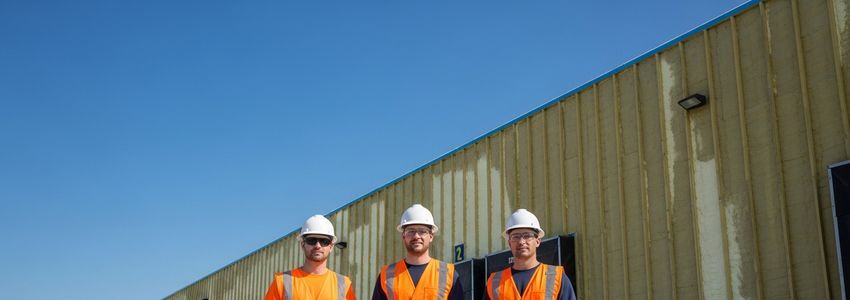
Running an insulation contracting business requires reliable capital — from purchasing spray foam rigs and blowing machines to hiring skilled crews and managing seasonal cash flow gaps. Insulation contractor business loans give owners like you the financial foundation to take on bigger jobs, invest in better equipment, and grow a company that competes at the commercial and residential level. Whether you're a solo operator or managing a crew of 20, understanding your financing options is one of the most important steps toward building a sustainable business.
In This Article
- What Are Insulation Contractor Business Loans?
- Types of Financing Available
- How Insulation Contractor Financing Works
- Best Uses for Insulation Business Loans
- Insulation Industry: By the Numbers
- Who Qualifies?
- How Crestmont Capital Helps
- Real-World Scenarios
- Frequently Asked Questions
- How to Get Started
What Are Insulation Contractor Business Loans?
Insulation contractor business loans are commercial financing products designed to meet the capital needs of insulation companies — whether you specialize in spray polyurethane foam (SPF), blown-in cellulose or fiberglass, batt insulation, or commercial rigid board systems. These loans can fund anything from equipment purchases and vehicle acquisitions to payroll coverage, marketing investments, and business expansion.
Unlike a personal loan, business financing allows you to keep your personal finances separate while building your company's credit profile. Lenders evaluate your business's revenue, time in operation, and overall financial health — not just your personal credit score. This makes dedicated business loans a practical and scalable choice for insulation contractors at every stage of growth.
The insulation market is strong and growing. According to data published by the U.S. Census Bureau, new construction activity drives sustained demand for insulation services across the residential, commercial, and industrial segments. Energy codes are also becoming stricter, requiring higher R-values in new builds — which creates ongoing demand for qualified insulation contractors who can deliver results.
Types of Financing Available for Insulation Contractors
Insulation businesses have access to a broad range of financing products. The right loan depends on your cash flow needs, time horizon, and how you plan to use the funds.
Term Loans
A small business term loan provides a lump sum upfront that you repay over a fixed period — typically 1 to 5 years for shorter-term products, or up to 10+ years for long-term financing. Term loans are ideal for major purchases like spray foam rigs, trucks, or business expansion. They offer predictable monthly payments, which simplifies cash flow planning.
Business Lines of Credit
A business line of credit works like a revolving credit account. You draw from an approved credit limit when you need funds and repay only what you use. This is perfect for insulation contractors who face seasonal cash flow fluctuations or need to cover job expenses before a client payment clears. You can draw, repay, and draw again as needed — making it one of the most flexible tools in a contractor's financial arsenal.
Equipment Financing
Equipment financing lets you buy or lease the machinery your business runs on — spray rigs, blowing machines, trucks, trailers, generators, and safety equipment — without draining your working capital. The equipment itself often serves as collateral, making approval easier even for newer businesses. Payments are structured over the useful life of the asset, so cash outflows align with when the equipment generates revenue.
SBA Loans
SBA loans are government-backed loans offered through approved lenders. The SBA 7(a) program is the most popular option for insulation contractors needing $50,000 to $5 million for working capital, equipment, real estate, or business acquisition. SBA 504 loans are ideal for real estate and large equipment purchases. The key advantage: lower interest rates and longer repayment terms compared to conventional small business loans. The tradeoff is a longer approval process and stricter documentation requirements.
Working Capital Loans
Working capital loans are short-term financing solutions designed to cover everyday operating expenses — payroll, materials, insurance, fuel, and subcontractor costs. For insulation contractors who juggle multiple jobs with staggered payment timelines, working capital financing keeps operations running smoothly between payment cycles.
Invoice Financing
Invoice financing (also called accounts receivable financing) lets you borrow against outstanding invoices. If a general contractor owes you $80,000 but won't pay for 45 days, invoice financing can advance you up to 85-90% of that balance immediately. This eliminates cash flow gaps on large commercial jobs — a common challenge for insulation contractors working on commercial builds.
Ready to Fund Your Insulation Business?
Get flexible financing built for insulation contractors. Apply in minutes — no obligation.
Apply Now →How Insulation Contractor Financing Works
The process of securing business financing has become significantly faster and more accessible over the past decade. Here is a simplified overview of how most insulation contractor loans work from application to funding.
Step 1: Application. You complete an online application providing basic information about your business — legal name, years in operation, annual revenue, and the amount you need. Most online lenders and alternative financing companies can complete this in under 15 minutes.
Step 2: Documentation. Lenders typically request 3-6 months of business bank statements, your most recent tax return (sometimes two years), a copy of your business license, and basic identification documents. For larger loans or SBA applications, you may also need financial projections and a business plan summary.
Step 3: Underwriting. Lenders evaluate your revenue consistency, average monthly deposits, time in business, and creditworthiness. Alternative lenders often use technology-based underwriting that evaluates your actual cash flow rather than relying solely on credit scores — giving insulation contractors with strong revenue better access to capital even if their credit profile isn't perfect.
Step 4: Approval and Offer. You receive a loan offer outlining the amount, term, interest rate or factor rate, and any fees. Review the offer carefully, paying attention to the Annual Percentage Rate (APR) and total cost of borrowing — not just the monthly payment.
Step 5: Funding. Once you accept the offer and sign the agreement, funds are typically deposited into your business bank account within 1-3 business days for alternative lenders, or 2-4 weeks for SBA loans.
Best Uses for Insulation Business Loans
Knowing how to deploy capital strategically is just as important as securing it. Here are the most impactful ways insulation contractors use business financing:
- Spray foam rig acquisition: A commercial-grade proportioner and rig can cost $30,000 to $100,000 or more. Equipment financing allows you to acquire this without draining reserves.
- Fleet expansion: Additional work trucks and trailers allow you to run multiple crews simultaneously, dramatically increasing your capacity and revenue potential.
- Crew hiring and payroll: When you win a large contract, you need to staff up quickly. Working capital financing ensures you can meet payroll before the client pays.
- Material inventory: Buying foam, cellulose, fiberglass batts, and other materials in bulk reduces per-unit costs. A business line of credit lets you purchase inventory when pricing is favorable.
- Licensing and certifications: Spray Polyurethane Foam Alliance (SPFA) certifications and OSHA training courses improve your ability to bid on larger commercial contracts. Financing can cover these upfront costs.
- Marketing and lead generation: Investing in a professional website, Google Ads campaigns, or local SEO can generate a consistent pipeline of new jobs. Loan proceeds can fund these growth initiatives.
- Insurance premiums: Commercial general liability and workers' compensation insurance for a multi-crew operation can cost tens of thousands per year. Financing helps manage these large upfront payments.
- Business acquisition: Looking to buy an existing insulation company? An acquisition loan or SBA 7(a) loan can fund the purchase.
Industry Insight: According to Forbes Small Business, contractors who invest in equipment upgrades and crew expansion consistently outperform competitors who rely on outdated tools and understaffed operations — particularly when energy-efficiency retrofits are in high demand.
Insulation Industry: By the Numbers
By the Numbers
Insulation Contractor Industry - Key Statistics
$20B+
U.S. insulation installation market size annually
5%+
Annual market growth rate driven by energy codes and retrofits
24 hrs
Average approval time with alternative lenders
$5K-$5M
Typical loan range for insulation business owners
Who Qualifies for Insulation Contractor Business Loans?
Lender requirements vary by product and institution, but here is a general overview of what most lenders look for when underwriting insulation contractor business loans:
Time in Business
Most traditional lenders and SBA programs require at least 2 years of operating history. Alternative lenders may fund businesses with as little as 6 months in operation, though better terms are available with more established track records.
Annual Revenue
Lenders typically want to see at least $100,000 to $150,000 in annual gross revenue for small business loans. For larger loan amounts ($250,000+), lenders generally expect $500,000 or more in annual revenue.
Credit Score
Traditional bank loans and SBA loans typically require a personal credit score of 650 or higher. Alternative lenders and revenue-based financing programs may work with scores as low as 500-550, with loan offers sized proportionally to risk. If your credit is less than perfect, explore bad credit business loan options designed for business owners rebuilding their credit profile.
Cash Flow
Lenders want to see consistent monthly deposits in your business bank account. Ideally, your monthly gross revenue should be at least 3-4 times your expected monthly loan payment. Strong, consistent cash flow is often more important than a perfect credit score.
Collateral
For equipment financing, the equipment itself serves as collateral. For working capital loans and lines of credit under $150,000, many alternative lenders offer unsecured options. Larger loans may require a personal guarantee or a lien on business assets.
Pro Tip: According to the U.S. Small Business Administration, small businesses that maintain organized financial records and separate business/personal banking are approved at significantly higher rates than those that don't. If you haven't already, open a dedicated business checking account and use accounting software to track income and expenses.
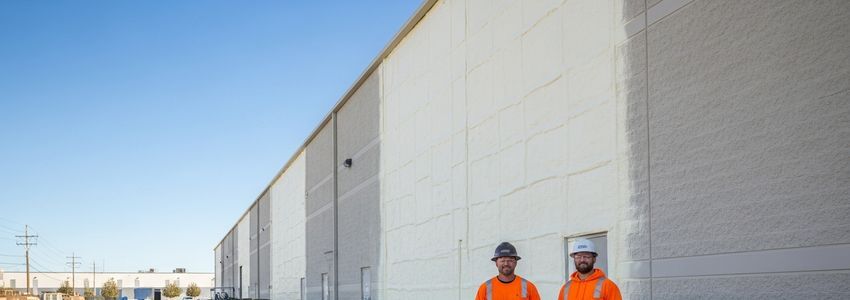
How Crestmont Capital Helps Insulation Contractors
Crestmont Capital is one of the nation's top-rated business lenders, helping contractors across all trades access fast, flexible financing. We specialize in working with insulation contractors, construction companies, and specialty trade businesses that traditional banks often underserve.
Our team understands the realities of running an insulation business — the upfront equipment costs, the seasonal demand swings, the gap between completing a job and receiving payment. We've structured our loan products to match the way contractors actually work.
Here's what makes Crestmont Capital different:
- Fast approvals: Most insulation contractors receive a decision within 24 hours of submitting their application.
- Flexible terms: We offer a wide range of loan structures — from short-term working capital loans to long-term equipment financing — so you can choose a product that fits your cash flow timeline.
- Soft credit pulls: We won't damage your credit score with an initial review of your application.
- Dedicated advisors: You'll work with a financing specialist who understands the specialty trades industry, not a generic call center.
- Multiple product access: Through our network, we can match you with the right lender for your situation — whether that's an SBA loan, a short-term business loan, equipment financing, or a long-term growth loan.
Insulation contractors who have worked with Crestmont Capital have used financing to expand their crews, acquire commercial spray rigs, launch digital marketing campaigns, and open second business locations — all while maintaining healthy cash flow.
Get Your Insulation Business Funded Today
Compare loan options tailored for insulation contractors. Fast decisions, flexible terms.
Start Your Application →Real-World Financing Scenarios for Insulation Contractors
Understanding how other insulation contractors have used business financing can help you identify the right strategy for your situation.
Scenario 1: Acquiring a Second Spray Foam Rig
A Texas-based spray foam contractor had one full-time crew but was consistently turning down commercial jobs because he didn't have the capacity to run two job sites simultaneously. He secured a $65,000 equipment financing loan with a 48-month term. The second rig paid for itself within the first six months as his monthly revenue nearly doubled. The monthly payment was comfortably covered by the additional revenue the new crew generated.
Scenario 2: Bridging a Cash Flow Gap on a Large Commercial Project
A commercial insulation contractor in the Midwest won a $200,000 contract to insulate a new distribution warehouse. The project required $40,000 in materials upfront and three weeks of crew labor before receiving the first progress payment. The contractor used a $50,000 business line of credit to cover materials and payroll, repaid it when the first progress payment came in, and kept the credit line available for the next billing cycle. This strategy allowed the contractor to take on large commercial contracts without cash flow stress.
Scenario 3: Recovering from a Slow Season
A residential insulation contractor in the Northeast experienced a slow January and February — typical in his market. He used a short-term working capital loan to cover fixed overhead (insurance, vehicle payments, warehouse lease) while business was slow. By March when demand picked back up, he was fully staffed and ready to capture the spring surge rather than spending the first two months catching up from a difficult winter.
Scenario 4: Scaling Through Business Acquisition
An insulation contractor in the Pacific Northwest identified a retiring competitor whose business included an established customer list, equipment, and two trained crews. Rather than building from scratch, she used an SBA 7(a) loan to acquire the business for $350,000 — essentially doubling her capacity overnight. The acquisition also brought a fleet of work vehicles and a spray rig that would have taken years to accumulate organically.
Scenario 5: Breaking Into Commercial Work
A residential spray foam contractor wanted to expand into commercial insulation — a higher-value segment with larger contracts. Commercial bids required a SPFA certification upgrade, commercial-grade equipment, and a higher insurance bond. He financed the certification training, equipment upgrades, and insurance bond increase through a combination of equipment financing and a working capital loan, successfully completing his first commercial project within six months.
Scenario 6: Hiring for a Major Contract Win
After winning a multi-phase residential development contract worth $600,000, a contractor needed to hire four additional installers immediately. Pre-employment costs — background checks, safety training, uniforms, and two weeks of payroll before the first job draw — required $35,000 in immediate capital. A fast-approval working capital loan from an alternative lender provided funding within 48 hours, allowing the contractor to staff up in time to meet the project's start date.
Frequently Asked Questions
What credit score do I need to get an insulation contractor business loan?
Requirements vary by lender. SBA loans and bank loans typically require a minimum personal credit score of 650-680. Alternative and online lenders may approve insulation contractors with scores as low as 500-550, though loan terms will reflect the additional risk. Your business revenue, cash flow, and time in business often weigh heavily alongside credit score in approval decisions.
How much can I borrow as an insulation contractor?
Loan amounts range from $5,000 for small working capital needs to $5 million or more for large equipment purchases, acquisitions, or commercial real estate through SBA programs. Most insulation contractors access between $25,000 and $500,000 depending on their revenue, time in business, and financing purpose. Lenders typically cap loan amounts at 10-15% of your annual gross revenue.
How fast can I get funding for my insulation business?
Alternative lenders can fund approved applications within 24-48 hours of receiving all required documents. SBA loans take considerably longer — typically 45-90 days from application to funding. If you need capital quickly to cover payroll, materials, or an urgent equipment need, a fast-approval working capital loan or business line of credit through an alternative lender is the most practical choice.
Can I get a loan as a new insulation contractor?
Yes, though options are more limited for businesses under 1 year old. Some alternative lenders work with businesses that have been operating for at least 6 months and can demonstrate consistent revenue. SBA microloans (up to $50,000) are also available for newer businesses. Another option is equipment financing, where the equipment itself serves as collateral — making it easier to qualify even without an extensive business history.
What documents do I need to apply for an insulation business loan?
Standard requirements include: 3-6 months of business bank statements, 1-2 years of business tax returns, a valid business license, government-issued ID, and basic application information (business name, EIN, revenue figures). For larger loans or SBA applications, you may also need financial projections, a profit and loss statement, and a description of how you'll use the funds.
Is equipment financing the best option for buying a spray foam rig?
Equipment financing is generally the most practical choice for spray foam rigs and proportioners because the equipment serves as collateral, making approval easier and often resulting in competitive interest rates. Terms typically range from 24-84 months, and payments are predictable. If you're deciding between purchasing and leasing, consider your cash flow. Leasing offers lower monthly payments and flexibility to upgrade, while purchasing builds equity over time.
How does a business line of credit help manage seasonal cash flow?
A business line of credit is one of the most effective tools for managing seasonal revenue fluctuations. During slow months, you can draw on the credit line to cover fixed costs like payroll, insurance, and lease payments. During busy seasons, you repay what you've borrowed and rebuild your available credit. You only pay interest on what you actually use — making it cost-efficient compared to term loans when your cash flow needs are irregular.
What interest rates should I expect on insulation contractor loans?
Interest rates vary significantly by loan type and lender. SBA loans typically carry the lowest rates — 7.5% to 11% APR depending on current SBA base rate and loan term. Traditional bank term loans range from 6% to 15% APR. Equipment financing rates are typically 6% to 20% APR depending on the equipment type and your credit profile. Alternative and online lenders may charge higher effective rates (20-50% APR) in exchange for faster approval and more flexible qualification requirements. Always compare APR, not just the monthly payment.
Do I need collateral to get an insulation contractor business loan?
Not always. Equipment financing uses the purchased equipment as collateral. For working capital loans and lines of credit under $150,000, many alternative lenders offer unsecured options — no collateral required. Larger loans typically require a personal guarantee (where you personally backstop the loan) and may require a lien on business assets. SBA loans typically require all available collateral to be pledged but do not automatically require collateral for loans under $25,000.
Can I get an insulation contractor loan with bad credit?
Yes. Alternative lenders and revenue-based financing companies work with insulation contractors who have credit scores as low as 500-550. However, loan amounts may be smaller and interest rates higher than what's available to borrowers with stronger credit. Building your business credit profile — through timely loan repayments, vendor net-30 accounts, and maintaining healthy business bank balances — will improve your options over time.
What is invoice financing and how does it work for insulation contractors?
Invoice financing allows insulation contractors to borrow against outstanding invoices from commercial clients. If you've completed $100,000 worth of work and invoiced a general contractor but are waiting on payment, an invoice financing company can advance you 80-90% of the invoice value immediately — often within 24-48 hours. You repay the advance plus fees when your client pays. This eliminates cash flow gaps on commercial projects without taking on traditional debt.
How does an SBA loan work for insulation contractors?
SBA loans are partially guaranteed by the U.S. Small Business Administration and issued through approved private lenders. Because the SBA guarantees a portion of the loan, banks are willing to offer better rates and longer terms than they would on conventional small business loans. The SBA 7(a) program is most common for insulation contractors — offering up to $5 million with terms up to 10 years for working capital or 25 years for real estate. The application process is more involved and takes longer, but the rates and terms are typically the best available.
Can I use a business loan to hire employees for my insulation company?
Yes. Working capital loans and business lines of credit are commonly used to fund new hires — covering pre-employment costs (training, uniforms, background checks) and bridging the payroll gap before new crew members start generating revenue. This is especially useful when you win a large contract that requires ramping up staffing quickly.
Will applying for a business loan affect my personal credit?
Most lenders conduct an initial soft credit pull that doesn't impact your credit score. A hard inquiry only occurs when you accept an offer and proceed to formal underwriting. If you sign a personal guarantee on the loan, the loan may also appear on your personal credit report. Making timely payments builds your personal credit; missing payments can hurt it. Business loans that do not require a personal guarantee will not affect your personal credit score at all.
What is the difference between a short-term and long-term business loan for insulation contractors?
Short-term loans (3-18 months) are designed for immediate needs — covering a payroll shortfall, buying materials for a large job, or bridging a slow season. They typically have faster approval, less documentation, but higher total interest costs due to their compressed repayment schedule. Long-term loans (3-10+ years) are better suited for major investments — buying equipment, expanding facilities, or acquiring another company — where the cost is spread over the useful life of the asset. Matching your loan term to your investment horizon is key to maintaining healthy cash flow.
How to Get Started
Complete our quick application at offers.crestmontcapital.com/apply-now — it takes just a few minutes and won't impact your credit score.
A Crestmont Capital advisor who understands the contracting industry will review your needs and match you with the right insulation contractor financing option.
Receive your funds — often within 24-48 hours of approval — and put them to work growing your insulation business.
Conclusion
Insulation contractor business loans are a powerful tool for growing a profitable, competitive contracting operation. Whether you need to buy a new spray foam rig, hire additional crew members, cover a cash flow gap on a commercial project, or expand into new market segments, the right financing can make it possible. The insulation industry is growing, driven by stricter energy codes and a strong new construction pipeline — and contractors who invest strategically in their businesses are positioned to capture a larger share of that market.
Crestmont Capital makes it easy to find the right insulation contractor business loan for your situation. With fast approvals, flexible product offerings, and a team that understands the specialty trades industry, we're ready to help you take the next step. Explore all of our small business financing options or apply now to get started.
Ready to Grow Your Insulation Business?
Apply in minutes. No obligation. Get a decision within 24 hours.
Apply Now →Disclaimer: The information provided in this article is for general educational purposes only and is not financial, legal, or tax advice. Funding terms, qualifications, and product availability may vary and are subject to change without notice. Crestmont Capital does not guarantee approval, rates, or specific outcomes. For personalized information about your business funding options, contact our team directly.