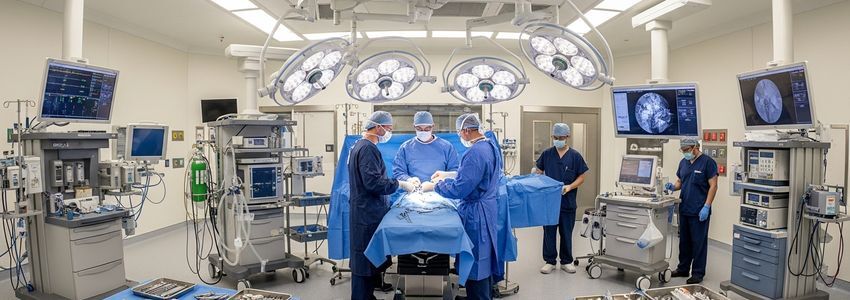
Running an ambulatory surgery center requires a constant commitment to capital. From surgical suites and advanced imaging systems to staffing costs and accreditation upgrades, the financial demands on ASC owners are significant and ongoing. Ambulatory surgery center loans give facility owners the funding they need to grow, modernize, and stay competitive without disrupting day-to-day operations. Whether you are expanding your OR capacity, replacing aging equipment, or launching a de novo center, the right financing strategy makes all the difference.
This guide covers every major financing option available to ambulatory surgery centers, what lenders look for, how to qualify, and how Crestmont Capital can help you get funded fast.
In This Article
- What Is an Ambulatory Surgery Center Loan?
- Why ASCs Need Specialized Financing
- Types of Loans for Ambulatory Surgery Centers
- How ASC Financing Works
- How to Qualify
- How ASCs Use Financing
- How Crestmont Capital Helps ASC Owners
- Real-World Financing Scenarios
- Frequently Asked Questions
- How to Get Started
What Is an Ambulatory Surgery Center Loan?
An ambulatory surgery center loan is a business financing product specifically used to fund the capital needs of outpatient surgical facilities. These loans can finance equipment purchases, facility construction and renovation, working capital, physician buyouts, and debt refinancing. Because ASCs operate in a highly regulated environment with unique revenue cycles, the best lenders for these centers understand healthcare-specific cash flow patterns, reimbursement timelines, and accreditation requirements.
Unlike a simple small business loan, ASC financing often involves larger ticket sizes - frequently $250,000 to $5 million or more - and structures that align repayment with the facility's revenue cycle. Lenders who specialize in healthcare lending evaluate your center's payer mix, case volume, revenue per case, and EBITDA margin rather than just standard business financials.
If your center is experiencing rapid case volume growth, a reimbursement backlog, or a major capital expenditure need, an ambulatory surgery center loan can be the fastest path to the funding you need. Crestmont Capital specializes in helping healthcare businesses access the right financing quickly and efficiently. Explore our full range of small business financing options designed for healthcare providers.
Industry Insight: According to the Ambulatory Surgery Center Association, there are over 9,000 Medicare-certified ASCs in the United States performing more than 23 million procedures annually. This growing sector needs specialized capital to keep pace with equipment cycles and patient demand.
Why Ambulatory Surgery Centers Need Specialized Financing
ASCs face a unique set of financial challenges that make standard bank loans a poor fit for many situations. Reimbursement from Medicare, Medicaid, and commercial payers can take 30 to 90 days or longer, creating cash flow gaps even for profitable centers. At the same time, surgical equipment has a relatively short useful life - robotic systems, C-arms, arthroscopy towers, and laser platforms may need replacement every 5 to 10 years to remain clinically current and competitive.
Add to this the rising cost of accreditation compliance, staffing, and facility upgrades, and it becomes clear why a strategic financing plan is essential. The right loan allows an ASC to invest in growth without depleting the reserves needed for payroll, supply chain, and regulatory compliance.
Ambulatory surgery centers also face a competitive squeeze from hospital systems expanding into the outpatient space. To attract surgeons and retain market share, independent ASCs must continuously invest in clinical technology, patient experience, and facility quality. This ongoing capital need makes access to flexible, affordable financing critical to long-term success.
The U.S. ASC market is also benefiting from a major secular shift toward outpatient care. According to research cited by Forbes, procedures that once required inpatient hospitalization - joint replacements, spine surgery, cardiac catheterization - are increasingly being performed at ASCs at a fraction of the cost. Centers positioned to capture this volume growth need access to capital today.
By the Numbers
Ambulatory Surgery Center Industry Snapshot
9,000+
Medicare-certified ASCs in the U.S.
23M+
Outpatient procedures performed annually
60%
Lower cost vs. hospital outpatient departments
$45B
Estimated U.S. ASC market size
Ready to Fund Your Surgery Center?
Crestmont Capital specializes in healthcare business financing. Get competitive rates and fast approvals tailored for ASC owners.
Apply Now →Types of Loans for Ambulatory Surgery Centers
ASC owners have access to a variety of financing products. The right choice depends on the purpose of the loan, the amount needed, your credit profile, and the time frame for repayment. Below are the most common options used by surgery center owners and operators.
SBA Loans
SBA 7(a) loans and SBA 504 loans are popular choices for ambulatory surgery center financing because they offer competitive rates, long repayment terms, and large loan amounts. The SBA 7(a) program allows borrowing up to $5 million for working capital, equipment, and real estate, while the 504 program is specifically designed for major fixed assets like building purchases or expansions. The trade-off is time - SBA loans typically take 60 to 90 days to close. For ASC owners who need capital quickly, alternative lenders may be a better fit. Learn more about SBA loan options for healthcare businesses.
Equipment Financing
For surgery centers that need to purchase or upgrade specific equipment - robotic surgical systems, C-arm fluoroscopy units, arthroscopy towers, anesthesia machines, or sterilization equipment - equipment financing is often the most efficient solution. The equipment itself typically serves as collateral, which reduces the lender's risk and can improve approval odds for centers with newer credit histories. Terms generally range from 3 to 7 years. Crestmont Capital offers medical equipment financing with flexible structures for healthcare providers.
Business Lines of Credit
A revolving business line of credit is ideal for managing the working capital gaps that are common in healthcare. Because reimbursement cycles can stretch 60 to 90 days, a line of credit allows an ASC to meet payroll, pay suppliers, and cover operating costs while waiting for claims to be paid. Lines of credit are particularly valuable during periods of high case volume when upfront costs accelerate ahead of collections. They are also useful for seasonal fluctuations in procedure volume.
Term Loans
Traditional term loans provide a lump sum of capital repaid over a fixed schedule. For ASC owners with strong financials, bank term loans can offer rates as low as 6-8% with terms of 3 to 10 years. For those who need faster approvals or have less-than-perfect credit, online lenders and alternative lending platforms can fund in as little as 24 to 72 hours at higher rates. Term loans are best suited for well-defined projects - a facility renovation, a new OR buildout, or refinancing higher-cost debt.
Revenue-Based Financing
Revenue-based financing (RBF) allows an ASC to receive a lump sum repaid as a percentage of future monthly revenue. This structure can be well-suited for surgery centers with strong but variable revenue streams, since repayment flexes with cash flow. RBF is typically faster to obtain than bank loans but comes at a higher cost. It is best used for short-term capital needs - a few months of bridge funding, a specific inventory purchase, or a short-duration project.
Construction and Renovation Loans
If you are building a new ASC from the ground up or undertaking a major renovation - adding a new OR suite, upgrading your HVAC filtration system, or retrofitting for new imaging equipment - a construction or commercial real estate loan may be the right fit. These loans typically require a strong business plan, detailed cost projections, and collateral. SBA 504 loans are a common vehicle for ASC real estate purchases and large facility upgrades.
Physician Practice Acquisition Loans
When a physician group is acquiring an existing ASC, or a surgery center is buying out a departing physician partner, acquisition loans provide the capital needed to complete the transaction. These loans are structured around the value of the business, cash flow history, and the creditworthiness of the acquiring entity. They often require a business valuation, letter of intent, and detailed financial statements.
How Ambulatory Surgery Center Financing Works
The process for securing an ASC loan follows a defined path from application through funding. Understanding each stage helps you prepare your documentation and move through underwriting efficiently.
Quick Guide
How ASC Financing Works - At a Glance
Gather 2 years of business tax returns, recent P&L statements, balance sheet, and information about your payer mix and case volume.
Submit your loan application with a clear statement of purpose - what you are funding, how much you need, and how you plan to repay it.
Lenders evaluate your EBITDA, DSCR, credit score, payer mix, operating history, and the specific use of funds.
After approval, funds are disbursed - often within 1 to 5 business days for alternative lenders, or 30 to 90 days for SBA loans.
How to Qualify for Ambulatory Surgery Center Loans
Qualifying for ASC financing is similar to qualifying for any business loan, but lenders with healthcare expertise will pay close attention to metrics that are specific to the industry. Understanding these factors helps you prepare a stronger application.
Time in Business
Most lenders prefer ASCs with at least 2 years of operating history. Newer centers may qualify for SBA loans or specialized healthcare startup financing, but they will typically face higher rates and stricter requirements. If your center is in the planning or pre-revenue stage, a business plan with detailed financial projections and the personal financial strength of the physician partners will be key.
Revenue and Cash Flow
Lenders want to see sufficient revenue to cover loan payments with room to spare. A Debt Service Coverage Ratio (DSCR) of 1.25 or higher is typically required - meaning your operating income after expenses is at least 1.25 times your annual debt payments. Revenue of $500,000 or more annually is often the minimum threshold for most commercial lenders, though this varies by product. For more detail on how cash flow affects healthcare loan approvals, see our guide to how revenue affects business loan approval.
Credit Score
For traditional bank and SBA loans, a personal credit score of 680 or higher is generally preferred. Alternative lenders may work with scores in the 600-650 range if other factors are strong. The credit scores of all physician partners with 20%+ ownership stake may also be considered. If your score needs improvement, review strategies for improving your business credit score quickly.
Payer Mix and Revenue Quality
Healthcare lenders pay particular attention to your payer mix. A high percentage of commercial insurance payers - versus Medicare and Medicaid - is viewed positively because commercial reimbursement rates are higher and more predictable. A diverse case mix across multiple specialties also reduces concentration risk in the lender's view.
Accreditation Status
Accreditation by the Accreditation Association for Ambulatory Health Care (AAAHC), The Joint Commission, or the American Association for Accreditation of Ambulatory Surgery Facilities (AAAASF) demonstrates that your center meets rigorous quality and safety standards. Accredited centers are viewed as lower-risk by lenders and may receive more favorable terms.
Pro Tip: Before applying, prepare a one-page executive summary of your ASC's key metrics: case volume, payer mix breakdown, revenue per case, EBITDA margin, and number of OR suites. Lenders with healthcare expertise will appreciate the clarity, and it can accelerate the underwriting process significantly.
Collateral
Many ASC loans are secured with the equipment being financed, commercial real estate, or personal guarantees from the physician-owners. Some alternative lenders offer unsecured loans to well-qualified borrowers. The amount and type of collateral required depends heavily on the loan size and the borrower's credit profile. For more on how collateral works in healthcare lending, review our guide to collateral for business loans.
How Ambulatory Surgery Centers Use Financing
ASC financing is used across the full spectrum of facility needs. Here are the most common categories where surgery centers deploy borrowed capital strategically.
Equipment Upgrades and Replacement
Surgical technology has a well-defined replacement cycle. Robotic surgery systems, high-definition arthroscopy towers, advanced anesthesia platforms, and digital imaging equipment must be updated regularly to attract surgeons and meet clinical standards. Equipment financing allows ASCs to acquire new technology without a large upfront cash outlay, preserving working capital for operations. According to the SBA, equipment financing is one of the most commonly used loan types among healthcare businesses.
Facility Construction and Expansion
Adding a new operating room suite, building a dedicated recovery area, or constructing a new facility entirely requires substantial capital. Construction loans and SBA 504 loans are commonly used to fund these projects. Proper financing ensures that construction timelines are not delayed by cash flow constraints, which can cost as much as the interest expense itself in lost case volume.
Working Capital and Cash Flow Management
Even profitable surgery centers face cash flow timing mismatches. Insurance reimbursements can take 45 to 90 days after a procedure, while payroll, supply purchases, and lease payments are due on a regular schedule. A revolving line of credit bridges these gaps and allows the center to operate smoothly regardless of the payment cycle. A business line of credit is particularly well-suited for this use case because you only pay interest on the amount drawn.
Physician Buyouts and Partnership Changes
When a founding physician retires, reduces their involvement, or a new partner is brought in, a buyout loan allows the transaction to be completed cleanly. These loans are structured around the business value, and repayment is typically tied to the ongoing cash flow of the center. A well-structured buyout preserves operational continuity and allows the departing physician to receive fair value for their ownership stake.
Accreditation and Compliance Investments
Maintaining or upgrading accreditation status often requires capital investment - updating HVAC systems, fire suppression, electrical infrastructure, or staff training programs. Financing these compliance projects ensures that the center meets regulatory requirements without straining its operating budget. Facilities that fall behind on compliance risk accreditation suspension, which can disrupt operations and revenue for months.
Marketing and Patient Acquisition
As competition for elective procedure volume intensifies, ASC owners are investing more in digital marketing, patient outreach, and referral network development. A working capital loan or small business line of credit can fund these initiatives while long-term case volume growth pays it back. According to CNBC, outpatient surgical centers are increasingly competing on patient experience and digital presence to differentiate from hospital-based competitors.
De Novo ASC Development
Physicians considering launching a new ambulatory surgery center face significant startup costs - site selection, construction, equipment, accreditation, staffing, and working capital during the ramp-up phase. Specialized startup financing programs, often backed by SBA guarantees, are available for well-capitalized physician groups with the experience to support a new facility. The startup timeline from concept to first case typically ranges from 12 to 24 months, making long-term financing structures essential.
Compare ASC Financing Options Today
Crestmont Capital has helped hundreds of healthcare businesses access the capital they need. Fast decisions, flexible terms, and real healthcare expertise.
Get My Options →How Crestmont Capital Helps Ambulatory Surgery Center Owners
Crestmont Capital has been connecting healthcare businesses with the right financing since 2015. Our team understands the operational and financial realities that ASC owners face, and we work with a broad network of lenders to match your center with the loan product that best fits your needs.
Unlike traditional banks that apply a one-size-fits-all credit model, we take a comprehensive view of your ASC's financial health - including payer mix, case volume trends, EBITDA margins, and growth trajectory. This approach allows us to advocate for you with lenders and structure deals that support your long-term goals.
Our financing options for ambulatory surgery centers include:
- Equipment financing - Acquire or upgrade surgical, imaging, and clinical equipment with terms up to 7 years and funding in as little as 24 hours
- Working capital loans - Access $50,000 to $5 million to cover operating expenses, payroll, and reimbursement gaps
- Business lines of credit - Revolving credit lines for ongoing operational flexibility
- SBA loans - Long-term, low-rate financing for major capital needs and real estate
- Term loans - Fixed-rate, fixed-term loans for well-defined projects and expansions
Our healthcare equipment financing platform is specifically designed for medical businesses. We understand the difference between a C-arm and an anesthesia workstation, and our advisors can help you structure the right financing for each piece of equipment based on its useful life and your center's cash flow cycle.
We also offer comprehensive healthcare business loans for a wide range of medical specialties and practice types. Whether you need a quick bridge to cover a reimbursement gap or a long-term structured loan for a major expansion, we have the products and expertise to help.
Real-World Financing Scenarios for ASC Owners
Understanding how ambulatory surgery center loans work in practice helps you evaluate which option is right for your specific situation. Here are six common scenarios that illustrate how ASC owners use financing strategically.
Scenario 1: Replacing an Aging C-Arm Fluoroscopy System
An orthopedic ASC in Texas has a 10-year-old C-arm that is increasingly unreliable and producing lower-quality images than newer digital systems. Replacing it with a modern unit costs $180,000. Rather than depleting operating reserves, the center secures a 60-month equipment loan at 8.5% interest, resulting in a monthly payment of approximately $3,700. The new system improves surgical precision, reduces procedure time, and supports volume growth - easily justifying the financing cost within 18 months of improved throughput.
Scenario 2: Adding a Third Operating Room
A multi-specialty ASC in Florida is turning away cases due to OR capacity constraints. Adding a third suite will cost an estimated $600,000 including construction, equipment, and soft costs. The center secures an SBA 7(a) loan at 9.5% over 10 years with a monthly payment around $7,800. The added capacity allows the center to grow procedure volume by 40%, generating incremental revenue that far exceeds the debt service cost.
Scenario 3: Managing a 90-Day Insurance Reimbursement Gap
An ophthalmology ASC in Illinois has high case volume but is consistently cash-tight in the first 2 months after quarter-end because payers are slow to process claims. Rather than delaying payroll, the center establishes a $300,000 revolving line of credit. They draw on the line to cover operating costs during the gap and repay it as claims are collected. The flexibility prevents operational disruptions and supports staff retention and morale.
Scenario 4: Physician Buyout at Retirement
A founding physician of a GI and endoscopy ASC is retiring at 65 and wants to exit her ownership stake. The remaining physician partners need $1.2 million to buy her out at fair market value. They secure a 7-year term loan through an alternative healthcare lender at 10.75%, with monthly payments of approximately $20,500. The center's strong cash flow easily supports the debt, and the transition is completed without disrupting operations or case volume.
Scenario 5: HVAC Upgrade for Accreditation Renewal
An ASC in Colorado receives notice during its accreditation renewal that its OR ventilation system must be upgraded to meet current AAAHC standards. The project will cost $95,000 and must be completed within 6 months. The center uses a short-term working capital loan to fund the project, with a 24-month repayment schedule that fits comfortably within the operating budget. Without financing, the center would have been forced to delay the upgrade and risk accreditation suspension.
Scenario 6: De Novo ASC Launch by a Physician Group
A group of 6 orthopedic surgeons decides to launch an independent ASC to reduce their dependence on the local hospital and capture the facility fee. Total startup costs are estimated at $3.5 million including construction, equipment, accreditation, and 12 months of working capital. They secure an SBA 504 loan for the facility ($2.2 million) and equipment financing for the surgical platforms ($800,000), with a working capital line of credit for the ramp-up phase. The structure preserves personal equity while giving the group full control over their facility economics and physician scheduling.
Comparing Your ASC Financing Options
Choosing the right financing product for your surgery center depends on your specific needs, timeline, and financial profile. The table below provides a quick comparison of the most common options available to ASC owners.
| Loan Type | Best For | Typical Amount | Time to Fund |
|---|---|---|---|
| SBA 7(a) | Working capital, equipment, real estate | Up to $5M | 60-90 days |
| Equipment Financing | Surgical technology, imaging, anesthesia | $25K - $5M+ | 1-5 days |
| Business Line of Credit | Working capital, reimbursement gaps | $50K - $2M | 1-7 days |
| Term Loan | Renovation, buyout, defined projects | $100K - $5M | 3-30 days |
| Revenue-Based | Short-term cash needs, variable revenue | $25K - $500K | 1-3 days |
Important Note: The healthcare lending market is more nuanced than general business lending. Rates, terms, and approval criteria vary significantly by lender. Working with a financing partner who specializes in healthcare - like Crestmont Capital - gives you access to the full competitive landscape and increases your chances of getting the best structure for your situation. Review our guide to medical practice loans to see how this process works for other healthcare providers.
Frequently Asked Questions About Ambulatory Surgery Center Loans
What types of loans are available for ambulatory surgery centers?
ASC owners can access SBA 7(a) loans, SBA 504 loans, equipment financing, business lines of credit, term loans, revenue-based financing, and construction loans. The best option depends on the purpose of the loan, the amount needed, and your center's financial profile.
How much can an ambulatory surgery center borrow?
Loan amounts vary widely depending on the product and the lender. Equipment financing typically ranges from $25,000 to several million dollars. SBA 7(a) loans go up to $5 million. Large construction or acquisition projects may involve multiple loan products stacked together to reach the total capital needed.
What credit score is needed to qualify for an ASC loan?
Traditional bank and SBA loans generally require a personal credit score of 680 or higher. Alternative lenders may approve applicants with scores in the 600-650 range if other financial metrics are strong. The credit scores of all partners with 20% or greater ownership stake are typically reviewed.
How long does it take to get funded?
Funding timelines vary by product. Alternative lenders can fund equipment loans and working capital loans in as little as 24 to 72 hours. SBA loans typically take 60 to 90 days to close. Construction loans also require more time due to title work, appraisals, and inspections.
Can a newly opened ASC qualify for financing?
Yes, though options may be more limited and rates higher. SBA loans designed for startups, equipment financing, and specialized healthcare startup programs are available for new ASCs. A strong business plan, detailed financial projections, and personal financial strength of the physician partners will be key factors.
What financial documents do I need to apply?
Most lenders require 2 years of business tax returns, recent profit and loss statements, a current balance sheet, 3-6 months of business bank statements, and information about your payer mix and case volume. For larger loans, personal tax returns for physician-owners and a business plan are also commonly required.
What is the Debt Service Coverage Ratio (DSCR) lenders look for?
Most lenders require a DSCR of at least 1.25, meaning your operating income is at least 1.25 times your annual debt payments. Some programs will consider DSCRs as low as 1.15 for well-qualified borrowers. A higher DSCR gives lenders more confidence that cash flow is sufficient to cover repayment.
Does accreditation status affect my ability to get a loan?
Yes. Accreditation by AAAHC, The Joint Commission, or AAAASF signals that your center meets rigorous quality and safety standards. Accredited centers are viewed as lower-risk by lenders and may receive more favorable rates and terms. Lenders may also ask about upcoming accreditation renewal dates as part of their risk assessment.
Can I use an ASC loan to fund a physician buyout?
Yes. Term loans and SBA 7(a) loans are commonly used to fund physician partner buyouts and ownership transitions. Lenders will evaluate the center's valuation, historical cash flow, and the financial strength of the remaining partners. A business valuation and letter of intent are typically required.
What interest rates can I expect on ASC loans?
Rates vary significantly by product, lender, and borrower profile. SBA loans typically range from 8% to 12% depending on the term and prime rate. Equipment financing rates commonly fall between 6% and 15%. Alternative lenders and working capital products may carry higher rates. Shopping multiple lenders is the best way to find a competitive rate.
Is a personal guarantee required for ASC loans?
Most lenders require a personal guarantee from all business owners with 20% or more ownership. This is standard for small and mid-size business loans. Some lenders offer non-recourse options for larger, well-secured transactions, but these are less common in the healthcare space.
Can I finance the purchase of an existing ASC?
Yes. Business acquisition loans, including SBA 7(a) loans, are commonly used to finance the purchase of existing ambulatory surgery centers. Lenders evaluate the target facility's financials, patient volume, payer mix, and market position. A business valuation and due diligence process are required.
How does payer mix affect my loan approval?
Payer mix is an important factor for healthcare lenders because it affects revenue quality and predictability. A higher proportion of commercial insurance payers is viewed positively, as commercial reimbursement rates are higher and more consistent. A heavy reliance on Medicaid can raise concerns about revenue sustainability, particularly in states with lower reimbursement rates.
How quickly can I get a decision on my ASC loan application?
Decision timelines vary by lender and product. Alternative lenders can provide decisions in as little as 4 to 24 hours for equipment loans and working capital products. Traditional banks and SBA lenders typically take 2 to 6 weeks for an initial credit decision, with the full closing process taking longer.
What is the best way to find ASC financing?
Working with a specialized healthcare financing platform like Crestmont Capital gives you access to a network of lenders who understand the ASC industry. Rather than applying to one bank and waiting weeks for a decision, a financing broker can present your application to multiple lenders simultaneously and match you with the best terms.
How to Get Started with ASC Financing
Complete our quick application at offers.crestmontcapital.com/apply-now - it takes just a few minutes and does not affect your credit score.
A Crestmont Capital advisor with healthcare industry experience will review your facility's needs and present you with the most competitive financing options available.
Once approved, funds are typically disbursed within 1 to 5 business days for most products. You can focus on growing your surgery center while we handle the financing details.
Conclusion
Ambulatory surgery centers represent one of the most dynamic and growing segments of healthcare delivery in the United States. Whether you operate a single-specialty center or a multi-specialty facility, access to strategic capital is essential for staying competitive, maintaining clinical excellence, and achieving your long-term growth goals. Ambulatory surgery center loans provide the financial foundation to invest in equipment, expand capacity, manage cash flow, and execute the business transitions that keep your center thriving.
Crestmont Capital specializes in connecting healthcare businesses with the right financing, backed by expertise in the ASC industry and a network of lenders who understand your unique operating environment. Whether you need fast working capital, equipment financing, or a long-term SBA loan, we are here to help you find the right solution at the right terms.
Ready to take the next step? Apply now and speak with a Crestmont Capital healthcare financing specialist today.
Start Your ASC Loan Application Today
Fast decisions. Competitive rates. Healthcare expertise. Crestmont Capital has been the #1 business lender in the U.S. since 2015.
Apply Now →Disclaimer: The information provided in this article is for general educational purposes only and is not financial, legal, or tax advice. Funding terms, qualifications, and product availability may vary and are subject to change without notice. Crestmont Capital does not guarantee approval, rates, or specific outcomes. For personalized information about your business funding options, contact our team directly.