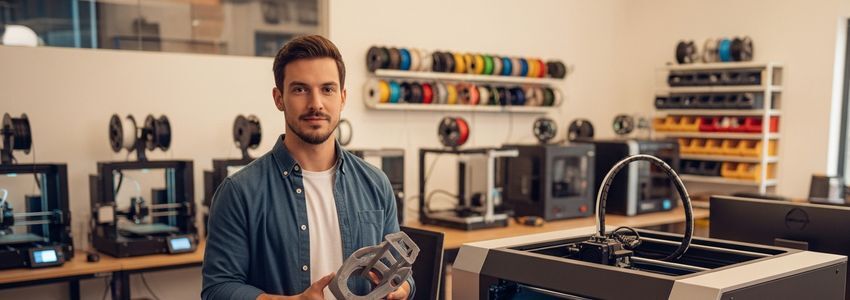
The 3D printing industry, also known as additive manufacturing, is revolutionizing production across countless sectors, from aerospace to healthcare. For entrepreneurs in this dynamic field, securing the right capital is crucial for purchasing advanced equipment, managing operational costs, and scaling for growth. 3D printing business loans are specialized financial tools designed to meet these unique needs, providing the necessary funding to turn innovative ideas into tangible, profitable products. Understanding your financing options is the first step toward building a competitive and successful 3D printing enterprise.
In This Article
- What Are 3D Printing Business Loans?
- The 3D Printing Industry: Opportunity and Growth
- Financing Options for 3D Printing Businesses
- How 3D Printing Business Loans Work
- Types of 3D Printing Businesses That Can Qualify
- Qualification Requirements
- What Can You Finance with a 3D Printing Business Loan?
- How Crestmont Capital Helps 3D Printing Businesses
- Real-World Financing Scenarios
- Comparing Financing Options for 3D Printing Businesses
- How to Apply for a 3D Printing Business Loan
- Frequently Asked Questions
- How to Get Started
- Conclusion
What Are 3D Printing Business Loans?
3D printing business loans are a category of commercial financing specifically structured to support companies operating in the additive manufacturing sector. Unlike generic business loans, these financial products are tailored to address the high capital expenditures and unique operational challenges of 3D printing businesses. The primary purpose of these loans is to provide funding for acquiring, upgrading, or repairing 3D printing equipment, as well as for covering other essential business expenses like raw materials, software, facility expansion, and payroll.
The core of this financing often revolves around the equipment itself. Additive manufacturing technology is expensive, with industrial-grade printers ranging from tens of thousands to over a million dollars. Lenders who specialize in this area, like Crestmont Capital, understand the value and longevity of these assets. This understanding allows them to offer financing solutions, such as equipment financing, where the 3D printer itself serves as collateral for the loan. This secured structure can make it easier for businesses, including startups and those with less-than-perfect credit, to qualify for funding.
Beyond equipment, these loans can take the form of working capital loans, lines of credit, or term loans. This flexibility ensures that a business can access capital not just for large one-time purchases but also for ongoing needs. Whether a company needs to stockpile specialized polymer resins, hire a skilled CAD designer, or launch a marketing campaign to attract new clients, a well-structured 3D printing business loan provides the financial fuel necessary to compete and innovate.
The 3D Printing Industry: Opportunity and Growth
The additive manufacturing industry is not just growing; it is experiencing an explosive expansion that is reshaping global manufacturing. What was once a niche technology for rapid prototyping has evolved into a mainstream production method used in aerospace, automotive, healthcare, consumer goods, and defense. This rapid adoption is driven by the technology's key advantages: design freedom, mass customization, reduced waste, and the ability to create complex geometries impossible with traditional manufacturing.
The market numbers reflect this transformative potential. According to industry reports, the global 3D printing market is valued at approximately $20 billion in 2024 and is projected to grow at a compound annual growth rate (CAGR) of over 21%. As noted by Forbes, this growth is fueled by advancements in printing materials, increased printing speeds, and the integration of AI and machine learning into the manufacturing process.
Several key trends are defining the industry's trajectory:
- Material Innovation: The development of new materials, including high-performance metals, biocompatible polymers, and advanced composites, is opening doors to new applications, particularly in medical implants and aerospace components.
- On-Demand Manufacturing: Companies are increasingly using 3D printing to create localized, on-demand supply chains. This reduces reliance on overseas manufacturing, shortens lead times, and allows for just-in-time inventory management.
- Mass Customization: From custom-fit earbuds to patient-specific surgical guides, 3D printing enables the cost-effective production of personalized products at scale, a feat unachievable with traditional tooling and molds.
- Sustainability: Additive manufacturing is inherently less wasteful than subtractive methods (like CNC milling), as it only uses the material needed to create a part. This "green" aspect is becoming a significant competitive advantage.
For entrepreneurs, this landscape presents a massive opportunity. The barrier to entry has lowered with the availability of more affordable professional-grade printers, yet the demand for specialized, high-quality 3D printing services is at an all-time high. Securing financing allows business owners to invest in the latest technology, positioning them to capitalize on these trends and establish a strong foothold in a market poised for decades of continued growth.
Ready to Fund Your 3D Printing Business?
Access the capital you need to purchase equipment, hire staff, and scale your operations. Get a free quote today.
Apply Now →Financing Options for 3D Printing Businesses
When seeking capital for a 3D printing business, owners have several financing avenues to explore. Each option comes with its own set of terms, requirements, and best-use cases. Understanding the differences is key to selecting the right financial product for your specific business needs.
Equipment Financing and Leasing
This is the most common and direct way to fund the purchase of 3D printers and related machinery. With equipment financing, the loan is secured by the equipment being purchased. The printer itself serves as collateral, which reduces the lender's risk and often results in more favorable rates and higher approval chances.
- How it Works: You receive up to 100% of the cost of the equipment, which you then repay in fixed monthly installments over a set term (typically 2-7 years). At the end of the term, you own the equipment outright.
- Pros: Preserves cash flow, simplified application process, and the asset builds equity for your business. It's often easier to qualify for than an unsecured loan.
- Cons: The funding can only be used for the specific equipment purchase.
- Best For: Acquiring new or used industrial-grade 3D printers, post-processing stations, or quality control scanners.
Equipment leasing is a similar option, where you pay a monthly fee to use the equipment for a set period. At the end of the lease, you may have the option to purchase it, return it, or upgrade to a newer model. Leasing is an excellent choice for technology that rapidly becomes obsolete.
SBA Loans
Backed by the U.S. Small Business Administration, SBA loans are offered by partner lenders like Crestmont Capital. They are highly sought after due to their long repayment terms and low interest rates. The government guarantee reduces the lender's risk, allowing them to offer some of the most competitive terms available.
- How it Works: The two most common types are the 7(a) loan, for general business purposes, and the 504 loan, for major fixed assets like real estate and heavy machinery.
- Pros: Excellent rates, long terms (up to 10 years for equipment, 25 for real estate), and versatile use of funds.
- Cons: The application process is notoriously lengthy and document-intensive, with stringent qualification requirements.
- Best For: Established businesses with strong financials looking for significant, long-term capital for major expansion projects.
Business Term Loans
A traditional term loan provides a lump sum of capital that you repay with interest over a fixed period. These loans can be secured or unsecured and are offered by traditional banks and alternative lenders. Alternative lenders often provide a faster, more flexible process.
- How it Works: You receive a one-time cash injection and make regular payments (daily, weekly, or monthly) until the loan is paid off.
- Pros: Predictable payments make budgeting easy. Funds can be used for a wide range of business purposes.
- Cons: May require a strong credit history and significant time in business, especially for lower rates from traditional banks. -Best For: Specific projects with a clear ROI, such as a facility build-out, a large inventory purchase of raw materials, or a major marketing campaign.
Business Line of Credit
A business line of credit functions like a credit card for your business. You are approved for a maximum credit limit and can draw funds as needed, up to that limit. You only pay interest on the amount you use.
- How it Works: Once you repay the borrowed amount, your credit limit is replenished, making it a reusable source of capital.
- Pros: Ultimate flexibility for managing cash flow, handling unexpected expenses, or seizing opportunities quickly.
- Cons: Interest rates can be higher than term loans, and there may be fees for maintaining the line.
- Best For: Managing fluctuating material costs, bridging gaps between accounts receivable, or covering unforeseen equipment repairs.
Working Capital Loans
These are short-term loans designed to cover everyday operational expenses rather than long-term assets. Working capital loans are ideal for smoothing out cash flow cycles and ensuring you have the funds to pay for staff, rent, utilities, and inventory.
- How it Works: You receive a lump sum with a shorter repayment term, typically 3-18 months. The focus is on rapid funding to address immediate needs.
- Pros: Very fast application and funding times, often within 24-48 hours. Less stringent credit requirements than traditional loans.
- Cons: Shorter terms and higher rates reflect the speed and convenience.
- Best For: Businesses needing immediate cash to purchase a large batch of filament for a big order, cover payroll during a slow period, or invest in a time-sensitive marketing opportunity.
How 3D Printing Business Loans Work
The process of securing a 3D printing business loan is designed to be straightforward, especially when working with an experienced lender that understands the industry. While the exact steps can vary slightly depending on the loan type and lender, the general workflow follows a clear path from application to funding.
- Initial Assessment and Consultation: The process begins when you identify a need for capital. The first step is to determine how much funding you need and what you will use it for. A consultation with a financing specialist at a lender like Crestmont Capital can help clarify your options and identify the best loan product for your goals, whether it's for a new SLS printer or for working capital.
- Application Submission: Next, you will complete a formal application. Modern lenders have streamlined this process with simple online forms that can often be completed in minutes. You will need to provide basic information about your business, including its legal name, address, tax ID number, time in business, and annual revenue. You will also provide personal information as the business owner.
- Documentation Review: Along with the application, you will typically be asked to submit supporting documents. The required paperwork depends on the loan size and type. For smaller loans and equipment financing, this might be as simple as a few recent bank statements and an invoice for the printer you want to buy. For larger loans or SBA loans, you may need to provide tax returns, financial statements (profit and loss, balance sheet), and a detailed business plan.
- Underwriting and Credit Analysis: Once your application package is complete, it moves to the underwriting department. Underwriters are the risk assessors. They will analyze your business's financial health, cash flow, credit history, and the value of any collateral. For 3D printing, they understand the intrinsic value of the equipment, which is a significant factor in equipment financing decisions. Their goal is to verify the information you provided and determine your business's ability to repay the loan.
- Approval and Offer Presentation: If the underwriter approves your application, the lender will extend a formal loan offer. This document will outline all the key terms: the total loan amount, the interest rate (or factor rate), the repayment term, the payment amount and frequency, and any applicable fees. It is critical to review this offer carefully and ask your loan officer to clarify any points you do not understand.
- Funding: After you accept the offer and sign the loan agreement, the funding process is initiated. For equipment financing, the lender often pays the equipment vendor directly. For working capital or term loans, the funds are deposited directly into your business bank account. With alternative lenders, this final step can be incredibly fast, with funds often available in as little as 24 hours.
Types of 3D Printing Businesses That Can Qualify
The versatility of additive manufacturing means that a wide array of business models can leverage 3D printing technology. Lenders who specialize in this sector recognize this diversity and can provide financing for virtually any legitimate business that utilizes 3D printing at its core. If your business model involves additive manufacturing, there is likely a financing solution available for you.
Key Insight: Lenders are more concerned with your business's financial health and ability to repay the loan than with your specific niche within the 3D printing industry. A strong business plan and clear revenue streams are key.
Here are some of the common types of 3D printing businesses that regularly seek and qualify for financing:
Prototyping and Product Development Services
These businesses are the bedrock of the 3D printing industry. They work with inventors, engineers, and large corporations to create physical prototypes of new products quickly and cost-effectively. They require a range of printers to handle different materials and resolutions, from Fused Deposition Modeling (FDM) for early-stage models to Stereolithography (SLA) or Selective Laser Sintering (SLS) for high-fidelity, functional prototypes. Financing is essential for keeping their technology current.
On-Demand Manufacturing and Parts Production
This segment uses 3D printing for end-use parts, not just prototypes. These "service bureaus" or "3D printing farms" produce everything from custom drone components to replacement parts for vintage machinery. They need fleets of reliable, industrial-grade printers to handle volume production and often require loans to scale their capacity, purchase materials in bulk, or invest in automated post-processing equipment.
Custom Consumer Products
Many entrepreneurs use 3D printing to create and sell unique consumer goods. This can include custom jewelry, personalized phone cases, tabletop gaming miniatures, home decor, and bespoke fashion accessories. These businesses may start small but often seek financing to purchase more advanced printers that can work with a wider variety of materials or to increase their production output to meet demand from platforms like Etsy or their own e-commerce sites.
Medical and Dental Applications
This is a high-growth, high-value sector. Businesses in this space use biocompatible materials to print patient-specific surgical guides, dental implants, crowns, aligners, and custom prosthetics. The equipment required is highly specialized and expensive, making financing a necessity. These companies must also navigate strict regulatory environments, and loans can help cover the costs of certification and compliance.
Architectural and Engineering Model Making
Architects, engineers, and construction firms rely on detailed physical models to visualize and present their projects. 3D printing businesses that cater to this market create intricate scale models of buildings, landscapes, and infrastructure projects. They need large-format printers and the ability to work with materials that simulate different building textures, making equipment loans a common requirement.
Aerospace and Automotive Specialists
These high-tech businesses produce lightweight, high-strength parts for aircraft, satellites, and performance vehicles. They often use advanced metal 3D printing technologies like Direct Metal Laser Sintering (DMLS) or Electron Beam Melting (EBM). The machinery for metal printing is among the most expensive, and financing is almost always required to acquire and maintain these systems.
Qualification Requirements
While lenders are eager to fund businesses in the high-growth 3D printing sector, they still have a responsibility to assess risk. To qualify for a 3D printing business loan, you will need to meet certain criteria that demonstrate your business's stability and its ability to manage and repay debt. The specific requirements will vary based on the lender and the type of loan, but they generally fall into a few key categories.
Credit Score
Your personal and business credit scores are a primary indicator of your financial responsibility. For traditional bank loans and SBA loans, you will typically need a personal credit score of 680 or higher. Alternative lenders like Crestmont Capital are more flexible and can often work with business owners with scores as low as 550, especially for equipment financing where the printer itself secures the loan.
Time in Business
Lenders prefer to see a track record of success. Most traditional lenders require at least two years in business to consider an application. However, many alternative lenders understand the dynamic nature of the tech industry and offer options for businesses that have been operating for as little as six months. Startups with no operating history may need to explore specialized startup financing or present an exceptionally strong business plan with detailed financial projections.
Annual Revenue
Your business's revenue is a direct measure of its ability to generate the cash flow needed to make loan payments. The minimum annual revenue requirement can range from $100,000 for some alternative loans to over $250,000 for larger bank loans. You will need to provide recent bank statements or tax returns to verify your revenue figures. Consistent monthly deposits are a strong positive signal to underwriters.
Business Financials
For larger loan amounts, lenders will want to perform a deeper analysis of your business's financial health. This involves reviewing key documents such as:
- Profit and Loss (P&L) Statement: Shows your revenues, costs, and profitability over a period.
- Balance Sheet: Provides a snapshot of your assets, liabilities, and equity at a specific point in time.
- Cash Flow Statement: Demonstrates how cash moves in and out of your business.
A history of profitability and positive cash flow will significantly improve your chances of approval and help you secure better terms.
Collateral
For secured loans, the value of the collateral is a critical factor. In the case of 3D printer equipment financing, the new printer is the collateral. The lender will assess its value and expected lifespan. For other types of secured loans, you might pledge other business assets, such as existing machinery or accounts receivable. Providing collateral reduces the lender's risk and can help you qualify for a larger loan or a lower interest rate.
The 3D Printing Industry: By the Numbers
~$20B
Global 3D printing market size in 2024, demonstrating its significant economic impact.
~21%
Projected compound annual growth rate (CAGR), signaling massive future opportunities.
2.2M+
Estimated number of 3D printers shipped in the U.S., highlighting widespread adoption.
$3k-$500k+
Typical cost range for professional and industrial 3D printers, making financing essential.

What Can You Finance with a 3D Printing Business Loan?
A 3D printing business loan is a versatile tool that can be used to fund nearly every aspect of your operation. The capital can be deployed strategically to improve efficiency, expand capacity, and drive revenue growth. Here are some of the most common and impactful ways businesses use these funds.
Purchasing New 3D Printers
This is the most obvious and critical use. Financing allows you to acquire state-of-the-art equipment without depleting your cash reserves. This could mean buying your first industrial-grade machine, adding a printer that uses a new material (like metal or carbon fiber), or building a "print farm" of multiple machines to increase your production throughput. This is a core use case for financing advanced manufacturing equipment.
Upgrading Existing Equipment
The technology in additive manufacturing evolves rapidly. A loan can be used to upgrade your current printers with new extruders, higher-resolution laser systems, or automated material handling modules. These upgrades can boost printing speed, improve part quality, and reduce manual labor, directly impacting your bottom line.
Acquiring Post-Processing and Finishing Equipment
A professional 3D printing operation doesn't end when the print is finished. You may need to finance equipment for support removal, surface smoothing, vapor polishing, dyeing, or curing. Investing in automated post-processing solutions can dramatically reduce lead times and improve the final quality of your products.
Buying Raw Materials and Inventory
Specialized filaments, resins, and metal powders can be expensive. A working capital loan allows you to purchase these materials in bulk, often at a discount, ensuring you never have to turn down a large order due to a lack of inventory. This is crucial for maintaining a smooth production workflow.
Investing in Software and Training
Your printers are only as good as the software that runs them and the technicians who operate them. Funds can be used to purchase advanced CAD/CAM software licenses, print management software, or to pay for specialized training and certification for your staff. This investment enhances your team's skills and your company's capabilities.
Hiring Skilled Staff
As you grow, you will need to expand your team. A loan can provide the working capital to hire skilled 3D printing technicians, CAD designers, sales representatives, and quality control specialists. This ensures you have the human resources to manage an increased workload.
Expanding or Renovating Your Facility
More printers require more space. You can use a term loan or SBA loan to finance the expansion of your production facility, lease a larger workshop, or renovate your current space to improve workflow and accommodate new machinery. This includes costs for proper ventilation, power upgrades, and climate control systems essential for certain printing materials.
Marketing and Business Development
Having the best technology is useless if clients don't know you exist. You can use loan proceeds to fund a new website, launch a digital marketing campaign, attend industry trade shows, or hire a sales team to proactively seek out new contracts. This is an investment in your company's growth and market presence.
How Crestmont Capital Helps 3D Printing Businesses
At Crestmont Capital, we understand that the 3D printing industry is built on innovation, speed, and precision. We believe your financing partner should operate with the same principles. We specialize in providing fast, flexible, and reliable funding solutions tailored specifically for the needs of additive manufacturing businesses. Unlike traditional banks that may not grasp the value of your specialized equipment, our team has deep expertise in the manufacturing sector.
Our flagship equipment financing program is perfectly suited for 3D printing companies. We can finance up to 100% of the cost of new or used printers, scanners, and post-processing stations, allowing you to acquire the technology you need to stay competitive without a massive upfront capital outlay. Because the equipment serves as its own collateral, our application process is streamlined, and we can offer approvals to a wider range of businesses, including those with less-than-perfect credit.
We also recognize that your needs go beyond hardware. Our portfolio of small business loans includes:
- Fast Working Capital: Get funded in as little as 24 hours to cover inventory, payroll, or other immediate operational needs.
- Flexible Lines of Credit: Access a revolving source of funds to manage cash flow and seize opportunities as they arise.
- Competitive Term Loans: Secure a lump sum of capital for strategic growth projects like facility expansion or major marketing initiatives.
We pride ourselves on a consultative approach. Our dedicated financing specialists will work with you to understand your business goals and structure a funding package that aligns with your budget and objectives. We are a direct lender, which means no middlemen and a faster, more transparent process from start to finish. Our commitment to technology allows for a simple online application and rapid underwriting, so you can get back to what you do best: building the future, one layer at a time. This focus on speed and efficiency is why we are a top choice for manufacturing business loans.
Partner with a Lender That Understands Your Industry
Crestmont Capital offers specialized financing for 3D printing businesses. Let us help you secure the right funding for your growth.
Get Started Today →Real-World Financing Scenarios
To better understand how 3D printing business loans work in practice, let's explore a few detailed, real-world scenarios. These examples illustrate how different financing products can solve specific challenges and unlock growth opportunities for various types of additive manufacturing companies.
Scenario 1: The Prototyping Service Upgrade
- Business: "ProtoWorks Inc.," an established rapid prototyping service with 5 years in business and strong revenue.
- Challenge: ProtoWorks is turning away clients who require prototypes made from high-strength, heat-resistant materials. Their current FDM and SLA printers cannot handle these advanced polymers. To enter the lucrative aerospace and automotive prototyping market, they need to purchase a Selective Laser Sintering (SLS) machine.
- Cost: The SLS printer, including installation and a powder handling station, costs $180,000.
- Solution: ProtoWorks applies for equipment financing with Crestmont Capital. Because of their strong business history and credit, they are quickly approved for a $180,000 loan covering the full cost of the equipment.
- Terms: The loan has a 5-year (60-month) term with fixed monthly payments. The SLS printer itself is the only collateral required.
- Outcome: ProtoWorks acquires the new technology without impacting its cash reserves. They immediately begin marketing their new capabilities and land a major contract with an automotive parts supplier. The new revenue stream easily covers the monthly loan payments and significantly increases the company's overall profitability.
Scenario 2: The E-Commerce Startup Scaling Up
- Business: "CustomCreations Co.," a 1-year-old online store selling personalized 3D printed lithophanes and gifts.
- Challenge: The business is growing rapidly, but the owner is struggling to keep up with orders using just two desktop 3D printers. They need to scale production to reduce lead times and handle holiday season demand, but as a young business, they don't have the capital for a large equipment purchase.
- Need: The owner wants to purchase a fleet of 10 semi-professional FDM printers at a cost of $25,000.
- Solution: The owner applies for a short-term fast business loan. While their time in business is short, their bank statements show strong and consistent monthly revenue growth. They are approved for a $25,000 working capital loan.
- Terms: The loan has a 12-month repayment term with automated weekly payments.
- Outcome: The funds are deposited within 48 hours. CustomCreations Co. purchases the 10 new printers, creating a small print farm. They are able to drastically cut their production time, improve product quality, and take on more orders. The increased sales volume allows them to comfortably make the weekly payments and set themselves up for a highly successful Q4.
Scenario 3: The On-Demand Manufacturer Managing Cash Flow
- Business: "Additive Parts Direct," a 3-year-old on-demand manufacturing service that prints end-use parts for various industries.
- Challenge: Their business is project-based. They often need to purchase large quantities of specialized, expensive polymer powder for a client's job but may not receive payment from the client for 60-90 days. This creates significant cash flow gaps that strain their ability to take on multiple large projects simultaneously.
- Need: A flexible source of capital to bridge the gap between paying suppliers and getting paid by customers.
- Solution: The company applies for and is approved for a $75,000 business line of credit.
- Terms: It is a revolving line of credit. They can draw funds as needed and only pay interest on the outstanding balance.
- Outcome: When a new $50,000 project comes in that requires a $15,000 upfront material purchase, Additive Parts Direct draws $15,000 from their line of credit to pay the supplier. They complete the job and, once the client pays their invoice 60 days later, they repay the $15,000 plus interest, restoring their full $75,000 credit line. This tool allows them to confidently bid on and manage multiple large projects without worrying about cash flow constraints.
Comparing Financing Options for 3D Printing Businesses
Choosing the right financing product is a critical decision. The best option depends on your specific need, your business's financial profile, and how quickly you need the capital. Below is a comparison table to help you evaluate the most common financing solutions for 3D printing businesses.
| Financing Option | Typical Loan Amount | Repayment Term | Interest Rates | Funding Speed | Best For |
|---|---|---|---|---|---|
| Equipment Financing | $10,000 - $2,000,000+ | 2 - 7 years | Low to Moderate | 2 - 5 days | Purchasing new or used 3D printers, scanners, and other machinery. The equipment itself serves as collateral. |
| SBA Loan | $50,000 - $5,000,000 | 7 - 25 years | Very Low | 30 - 90 days | Major, long-term investments like facility acquisition, significant expansion, or large-scale equipment purchases for well-established businesses. |
| Business Term Loan | $25,000 - $500,000 | 1 - 5 years | Moderate | 3 - 10 days | Specific growth projects with a clear budget, such as a facility renovation, software investment, or marketing campaign. |
| Business Line of Credit | $10,000 - $250,000 | Revolving | Moderate to High | 1 - 7 days | Managing day-to-day cash flow, handling unexpected expenses, and bridging gaps between accounts receivable and payable. |
| Working Capital Loan | $5,000 - $250,000 | 3 - 18 months | Moderate to High | 1 - 3 days | Addressing immediate short-term needs like purchasing a bulk order of materials, covering payroll, or funding a time-sensitive opportunity. |
How to Apply for a 3D Printing Business Loan
Applying for a 3D printing business loan can be a smooth and efficient process, particularly when you are well-prepared. Following a structured approach will increase your chances of a successful outcome and help you secure the best possible terms.
Step 1: Define Your Funding Needs
Before you approach any lender, have a clear and specific plan. How much money do you need? What exactly will you use it for? If you are buying a printer, get a formal quote from the vendor. If you need working capital, create a detailed budget showing how the funds will be allocated. Lenders are more likely to approve a well-defined request than a vague one.
Step 2: Gather Your Documents
Having your paperwork in order will significantly speed up the application process. While requirements vary, it is a good practice to have the following documents ready:
- Business Identification: Driver's license of the owner(s), voided business check, and articles of incorporation.
- Financial Statements: The last 3-6 months of business bank statements are standard. For larger loans, be prepared with 2-3 years of business tax returns, a P&L statement, and a balance sheet.
- Equipment Quote: If applying for equipment financing, have a detailed invoice or quote from the supplier for the specific 3D printer or machinery you intend to purchase.
- Business Plan: For startups or businesses seeking significant funding, a comprehensive business plan with financial projections is often required.
Step 3: Research and Choose a Lender
Not all lenders are created equal. Compare different types of lenders to find the best fit for your business:
- Traditional Banks: Offer low rates but have strict requirements and a slow process. Best for highly qualified, established businesses.
- SBA Lenders: Provide excellent government-backed loan programs but involve a lengthy and complex application.
- Alternative Lenders (like Crestmont Capital): Specialize in speed and flexibility. They have higher approval rates, faster funding times, and are more open to working with newer businesses or those with imperfect credit. They are an excellent choice for equipment financing and working capital.
Step 4: Complete the Application
Most modern lenders offer a simple online application that can be completed in just a few minutes. Fill out the form accurately and completely. Be prepared to provide details about your business, personal credit, and revenue. Upload the required documents through the lender's secure portal.
Pro Tip: Be transparent and honest on your application. Lenders use sophisticated tools to verify information, and any discrepancies can lead to an automatic denial.
Step 5: Review and Accept Your Offer
If your application is approved, you will receive a formal loan offer. Review the terms carefully, paying close attention to the loan amount, interest rate, repayment term, and any fees. Do not hesitate to ask your loan officer questions to ensure you fully understand the agreement. Once you are confident it is the right fit for your business, you can sign the documents electronically and await funding.
The final step is receiving your capital. As mentioned, for equipment financing, funds often go directly to the vendor, while other loan types are deposited into your business bank account, often within one business day of signing. To start this process, you can apply now with Crestmont Capital.
Frequently Asked Questions
What exactly is a 3D printing business loan?
A 3D printing business loan is a type of commercial financing designed to meet the specific needs of businesses in the additive manufacturing industry. It can be used to purchase 3D printers and related equipment, buy materials, cover operational costs, or fund expansion. The most common form is equipment financing, where the printer itself collateralizes the loan.
How do these loans differ from traditional business loans?
The main difference is the lender's understanding of the asset. Lenders specializing in 3D printing loans recognize the high value and long-term utility of industrial printers, making them more willing to use the equipment as collateral. This often leads to a simpler application process, faster funding, and higher approval rates compared to a general-purpose, unsecured loan from a traditional bank.
What are the typical interest rates and terms?
Terms vary widely based on the loan type, your business's financial health, and the lender. For equipment financing, terms typically range from 2 to 7 years with competitive, fixed interest rates. Short-term working capital loans have terms of 3 to 18 months and carry higher rates due to their speed and convenience. SBA loans offer the lowest rates and longest terms (up to 25 years) but are the most difficult to obtain.
How much does an industrial 3D printer cost to finance?
The cost of industrial 3D printers varies dramatically by technology. A professional FDM or SLA machine might cost $5,000 to $25,000. An industrial SLS or MJF printer can range from $100,000 to $500,000. Advanced DMLS metal printers can easily exceed $1,000,000. Financing allows you to acquire these assets with predictable monthly payments rather than a large upfront cash payment.
What are the minimum qualifications to get approved?
Qualifications depend on the lender. For alternative lenders like Crestmont Capital, typical minimums are 6+ months in business, a personal credit score of 550+, and at least $150,000 in annual revenue. Traditional banks and SBA loans will have much stricter requirements, usually demanding 2+ years in business, a 680+ credit score, and strong profitability.
Can a startup 3D printing business get a loan?
It can be challenging, but it is possible. True startups with no operating history may need to look at SBA microloans, personal loans, or seek investors. However, a business with at least 6 months of revenue history can often qualify for equipment financing or a working capital loan from an alternative lender, especially if they have a strong business plan and the owner has good personal credit.
How fast can I get funded?
Speed is a major advantage of working with an alternative lender. For equipment financing and working capital loans, the process from application to funding can be as fast as 24-48 hours. SBA loans are the slowest, typically taking 30 to 90 days or more to close.
Can I get a 3D printing business loan with bad credit?
Yes, options are available. While a high credit score will get you the best rates, lenders that specialize in equipment financing place significant weight on the value of the collateral (the printer). This means they can often approve applicants with lower credit scores (sometimes down to 550). The loan will likely have a higher interest rate to offset the increased risk.
What types of 3D printing businesses can qualify?
Virtually any business that uses additive manufacturing can qualify. This includes rapid prototyping services, on-demand parts manufacturers, custom consumer product designers, medical and dental labs, architectural model makers, and aerospace/automotive specialists. The lender is more focused on your financial stability than your specific niche.
What can I use the loan funds for besides equipment?
If you get a working capital loan, term loan, or line of credit, the funds are very flexible. You can use them for almost any legitimate business purpose, including purchasing raw materials (filaments, resins, powders), hiring and training staff, software subscriptions, marketing campaigns, facility rent, or covering other operational expenses.
Are SBA loans a good option for 3D printing businesses?
SBA loans can be an excellent option due to their low rates and long terms. An SBA 7(a) loan can be used for a wide range of purposes, while a 504 loan is ideal for major asset purchases. However, the application process is very demanding and slow. They are best suited for established, profitable businesses that are not in a hurry to get funded.
How do I apply for a loan?
The first step is to gather necessary documents like bank statements and an equipment quote. Then, you can complete a simple online application with a lender like Crestmont Capital. After a quick review and underwriting process, you will receive a loan offer. Once you sign the agreement, funds are disbursed.
What do lenders look for in an application?
Lenders primarily look for three things: cash flow, credit history, and collateral. They want to see consistent revenue and a positive cash flow that can support loan payments. They check your credit to assess your history of repaying debts. Finally, for secured loans, they evaluate the value of the collateral you are offering.
Is equipment leasing a better option than financing?
It depends on your business strategy. Financing leads to ownership, building equity in an asset. Leasing is like renting; it offers lower monthly payments and makes it easy to upgrade to newer technology at the end of the term. If you want to own the asset long-term, financing is better. If you prioritize low payments and always having the latest technology, leasing might be a good choice.
Will I need to provide a personal guarantee?
For most small business loans, yes. A personal guarantee (PG) is a promise from the business owner to personally repay the debt if the business defaults. It is a standard requirement for most types of business financing, including SBA loans and loans from alternative lenders, as it demonstrates the owner's commitment to the business's success.
How to Get Started
Taking the next step toward financing your 3D printing business is a straightforward process. Follow these three steps to move from planning to funding.
Assess Your Needs and Prepare
Clearly define how much capital you need and what it will be used for. Obtain a formal quote for any equipment you plan to purchase and gather your essential financial documents, such as the last 3-6 months of your business bank statements.
Complete a Simple Application
Fill out our secure online application in just a few minutes. The form is designed to be quick and easy, requiring only basic information about you and your business to get the process started. There is no cost or obligation to apply.
Consult with a Funding Expert
Once your application is submitted, one of our dedicated financing specialists will contact you to discuss your options. We will review your goals and present the best funding solutions tailored to your 3D printing business, ensuring you receive a clear, transparent offer.
Don't Let a Lack of Capital Hold You Back
The future of manufacturing is here. Secure the funding you need to lead the way. Start your application now.
Apply Now →Conclusion
The 3D printing industry offers unparalleled opportunities for innovation and growth, but capitalizing on them requires significant investment in technology, materials, and talent. 3D printing business loans are the essential key that unlocks this potential, enabling entrepreneurs to acquire cutting-edge equipment and scale their operations effectively. From equipment financing that secures your next industrial printer to a flexible line of credit that smooths out cash flow, a diverse range of funding solutions exists to meet every business need.
By understanding the different types of loans, preparing the necessary documentation, and partnering with a lender that specializes in the manufacturing sector, you can navigate the financing process with confidence. The right capital infusion at the right time can be the catalyst that propels your 3D printing business from a small workshop to an industry leader. Investing in your company's future is the most important step you can take, and securing the right financing is how you build that future.
Disclaimer: The information provided in this article is for general educational purposes only and is not financial, legal, or tax advice. Funding terms, qualifications, and product availability may vary and are subject to change without notice. Crestmont Capital does not guarantee approval, rates, or specific outcomes. For personalized information about your business funding options, contact our team directly.