
 (800) 949-0401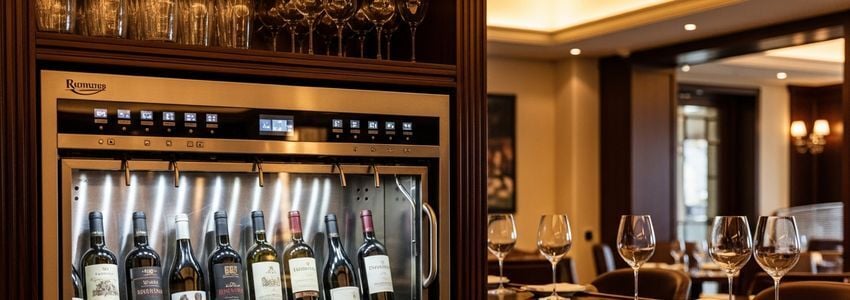
Wine Dispenser Financing: The Complete Guide for Business Owners
Upgrading your establishment with a commercial wine dispenser is a strategic move to reduce waste, increase profits, and elevate the customer experience. However, the upfront cost of this specialized equipment can be a significant hurdle. This is where exploring wine dispenser financing for restaurant owners becomes a crucial step, allowing you to acquire profit-generating assets without depleting your working capital. This guide provides a comprehensive overview of how to finance a wine dispenser, from understanding your options to securing the best terms for your business.In This Article
What Is Wine Dispenser Financing?
Wine dispenser financing is a specialized business funding solution that allows restaurants, bars, hotels, and other hospitality businesses to acquire wine preservation and dispensing systems through a loan or lease. Instead of paying the full purchase price upfront in cash, you make manageable monthly payments over a predetermined period. This financial tool is a specific form of equipment financing designed to make expensive, revenue-generating assets more accessible. The core principle is simple: the wine dispenser itself serves as the collateral for the loan. This often makes it easier to qualify for than traditional bank loans, which may require other business or personal assets to secure the funding. An effective restaurant wine equipment loan covers not just the cost of the dispenser unit but can often be structured to include "soft costs" like taxes, shipping, and installation fees, providing a complete, all-in-one funding package. There are two primary structures for this type of financing: 1. Equipment Loan (or Equipment Finance Agreement - EFA): With a loan, you are the owner of the equipment from the start. You make principal and interest payments over the loan term, and once the final payment is made, you own the wine dispenser free and clear. This is a great option for businesses that plan to use the equipment for its entire functional lifespan. 2. Equipment Lease: A wine dispenser lease operates more like a long-term rental. You pay a fixed monthly fee to use the equipment for a set term. At the end of the lease, you typically have several options: purchase the equipment (for a predetermined price, like $1, or for its Fair Market Value), renew the lease, or return the equipment and upgrade to a newer model. Leasing is ideal for businesses that want lower monthly payments or expect to upgrade their technology every few years. Ultimately, both paths lead to the same goal: getting a state-of-the-art wine dispenser into your establishment so it can start generating a return on investment immediately.Why Finance a Commercial Wine Dispenser?
The decision to finance a commercial wine dispenser is not just about managing costs; it's a strategic investment in your business's growth and profitability. Paying cash might seem like the simplest route, but it can severely limit your operational flexibility. Here are the most compelling reasons why financing is often the smarter choice for savvy business owners.Preserve Critical Cash Flow
Cash is the lifeblood of any restaurant or bar. The daily demands of payroll, inventory, rent, and marketing require a healthy reserve of liquid capital. A commercial wine dispenser can cost anywhere from $5,000 to over $50,000. Paying this amount in cash can drain your bank account, leaving you vulnerable to unexpected expenses or unable to seize other growth opportunities. Financing converts this large, one-time capital expenditure into a predictable, manageable monthly operating expense, keeping your cash free for day-to-day needs.Generate Immediate Return on Investment (ROI)
A wine dispenser isn't just a piece of equipment; it's a profit center. It allows you to sell premium wines by the glass without fear of spoilage, which can increase wine sales by 30-50% or more. The system pays for itself through reduced waste, perfect portion control, and the ability to command higher price points for premium pours. By financing, you can start generating this new revenue stream immediately while paying for the equipment over time with the profits it helps create.Unlock Significant Tax Advantages
Financing your wine dispenser can offer substantial tax benefits. Under Section 179 of the IRS tax code, businesses can often deduct the full purchase price of qualifying new or used equipment in the year it is placed into service. This can significantly lower your taxable income. Additionally, bonus depreciation rules may apply. A wine dispenser lease can also be beneficial, as monthly lease payments are often treated as a fully deductible operating expense. (Always consult with a tax professional to understand the specific implications for your business).100% Financing for a Turnkey Solution
Many commercial wine dispenser financing agreements can be structured to cover 100% of the project cost. This means you can finance not only the dispenser unit itself but also the associated "soft costs," including sales tax, delivery charges, and professional installation. This turnkey approach eliminates all upfront out-of-pocket expenses, making it even easier to get your new system up and running without financial strain.Enhance Customer Experience and Loyalty
Modern wine dispensers elevate the guest experience. They ensure every glass is served at the perfect temperature and is as fresh as the day the bottle was opened. This consistency builds trust and satisfaction. Furthermore, it allows you to offer a wider, more exciting by-the-glass selection, encouraging customers to explore new varietals and price points. Self-serve wine walls, in particular, create a fun, interactive experience that can become a major draw for your establishment.Gain a Competitive Edge
In a crowded market, differentiation is key. A sophisticated wine program powered by a dispensing system can set you apart from competitors. It signals a commitment to quality and innovation that discerning customers appreciate. Whether it's offering a "wine flight" of high-end Cabernets or the efficiency of a wine-on-tap system, this technology helps you cater to modern consumer preferences and positions your brand as a market leader.Boost Your Wine Program Today
Finance the equipment that increases profits and reduces waste. See your options in minutes with no impact on your credit score.
Get a Free Quote →Types of Wine Dispensing Systems You Can Finance
The world of wine dispensing technology is diverse, with systems designed for every type of establishment, from a cozy bistro to a high-volume event center. Understanding the different types available is the first step in choosing the right one for your business model. Fortunately, financing is available for the full spectrum of these systems.Temperature-Controlled Dispensing & Preservation Systems
These are often what people first imagine when they think of a wine dispenser. These sophisticated units use an inert gas, typically argon or nitrogen, to displace the oxygen in an opened bottle, preventing oxidation and preserving the wine's character for weeks. They feature precise temperature controls, often with dual-zone options for reds and whites, and automated portion control for 1 oz, 3 oz, or 6 oz pours. * Best For: Fine dining restaurants, upscale wine bars, and steakhouses looking to offer an extensive list of premium and super-premium wines by the glass. * Key Brands: WineEmotion, Enomatic, By The Glass. * Typical Cost: $5,000 to $25,000+, depending on bottle capacity (from 4 to 16+ bottles) and features.Wine on Tap / Keg Systems
Much like draft beer, wine on tap system financing allows you to serve high-quality wine from stainless steel kegs. This system eliminates bottle waste (corks, labels, glass) and dramatically speeds up service. A single 26-liter keg holds the equivalent of about 35 bottles of wine, reducing storage needs and handling time for staff. The wine is propelled through the lines using an inert gas blend, ensuring freshness from the first glass to the last. * Best For: High-volume restaurants, pizzerias, casual bars, hotels, and event venues that serve a lot of house or popular mid-range wines. * Key Brands: Free Flow Wines, Gotham Project. * Typical Cost: $3,000 to $15,000 for the complete tap system, including refrigeration, lines, and taps.Self-Serve Wine Walls and Vending Machines
This is the cutting edge of wine service technology. Customers are given a pre-loaded RFID card which they can use to activate dispensers along a "wine wall." They can choose from dozens of wines and select from different pour sizes (e.g., a taste, a half-glass, or a full glass). The system tracks their purchases automatically. This model reduces labor costs, encourages exploration, and creates a highly engaging, interactive customer experience. * Best For: Dedicated wine bars, modern lounges, hotel lobbies, and entertainment venues looking for a unique selling proposition. * Key Brands: PourMyBeer, WineStation. * Typical Cost: $10,000 to $50,000+, highly dependent on the number of taps and the complexity of the integrated software.Key Stat: Restaurants with wine preservation systems report a reduction in wine spoilage waste from an industry average of 15-25% down to less than 2%, dramatically improving profit margins on their wine program.
Countertop and Small-Capacity Dispensers
For businesses with limited space or a smaller-scale wine program, countertop units offer a powerful solution. These compact systems typically hold 2 to 4 bottles and use the same gas preservation technology as their larger counterparts. They provide an excellent entry point into wine dispensing or can be used to feature a rotating selection of special, high-end wines without committing to a large, permanent installation. * Best For: Small restaurants, cafes, boutique hotels, corporate tasting rooms, or as a supplementary unit for a main bar. * Key Brands: Coravin for Business, Plum. * Typical Cost: $1,000 to $5,000. No matter which system aligns with your business goals, a tailored financing solution can put it within reach, allowing you to upgrade your service and profitability.How Wine Dispenser Financing Works
Securing a restaurant wine equipment loan or lease is a straightforward process, especially when working with a lender that specializes in the hospitality industry. The process is designed to be much faster and less cumbersome than a traditional bank loan. Here is a typical step-by-step breakdown of how to finance a wine dispenser. Step 1: Define Your Needs and Select Your Equipment First, determine which type of wine dispensing system best fits your concept, volume, and budget. Research different brands and models, considering factors like bottle capacity, temperature zones, preservation technology, and ease of use. Once you have a specific system in mind, contact the manufacturer or an authorized dealer to get a formal quote. This quote will be the foundation of your financing application. Step 2: Complete a Simple Application The next step is to apply for financing. With a modern lender like Crestmont Capital, this is typically a simple one-page online application that takes only a few minutes to complete. You will provide basic information about your business, such as its legal name, address, time in business, and estimated annual revenue. For financing under $250,000, this is often the only documentation required. Step 3: Underwriting and Credit Review Once your application is submitted, the lender's underwriting team will review your business's financial health. This process is much quicker than at a traditional bank. Lenders look at your credit history, time in business, and cash flow (often assessed via bank statements). Because the equipment itself serves as collateral, the approval criteria can be more flexible. Most decisions are made within a few hours to one business day. Step 4: Review and Accept Your Financing Offer If approved, you will receive a formal financing offer. This document will clearly outline the key details: * The total amount being financed. * The length of the term (e.g., 36, 48, or 60 months). * The fixed monthly payment amount. * The interest rate or factor rate. * The end-of-term options (for a lease). Take the time to review these terms carefully and ask your financing specialist any questions you may have. Once you are comfortable with the offer, you will sign the financing agreements electronically. Step 5: Funding and Equipment Delivery After the agreements are signed, the lender coordinates directly with your chosen equipment vendor. The lender pays the vendor the full amount from the invoice you provided. The vendor is then cleared to ship your wine dispenser directly to your establishment. This process is seamless for you; the financial transaction happens behind the scenes. Step 6: Begin Your Monthly Payments Your new wine dispenser is installed and ready to start generating revenue. Your first payment is typically due about 30 days after the financing is finalized. You will continue to make these fixed monthly payments for the duration of your term, enjoying the benefits of your new equipment from day one.By the Numbers
Wine Dispenser Financing - Key Statistics
$5K-$50K
Typical wine dispenser cost range
12-72 Mo
Standard financing term lengths
24 Hrs
Typical approval time with alternative lenders
$0 Down
Many financing options require no down payment

Wine Dispenser Financing Rates and Terms
Understanding the financial components of your loan or lease is essential for making an informed decision. While specific rates and terms depend on your business's unique profile, here is a general overview of what you can expect when seeking commercial wine dispenser financing.Interest Rates and Factor Rates
The cost of borrowing is expressed as either an interest rate (for loans) or a factor rate (common with alternative financing). * Interest Rates: For businesses with strong credit and a solid history, rates can be very competitive, often starting in the single digits (e.g., 6-9%). For newer businesses or those with fair credit, rates may range from 10% to 30% or higher. * Factor Rates: A factor rate is a decimal figure (e.g., 1.15) that is multiplied by the loan amount to determine the total payback amount. For example, a $20,000 dispenser financed with a 1.15 factor rate would have a total payback of $23,000 ($20,000 x 1.15). The rate you are offered will be determined by your credit score, time in business, annual revenue, and the overall financial health of your restaurant.Financing Terms
The term is the length of time you have to repay the loan or lease. For wine dispensers and similar restaurant equipment, terms typically range from 12 to 72 months (1 to 6 years). * Shorter Terms (12-36 months): Result in higher monthly payments but a lower total cost of financing because you pay interest for a shorter period. This is a good option if cash flow is strong and you want to own the equipment quickly. * Longer Terms (48-72 months): Result in lower, more manageable monthly payments, making it easier to fit into your budget. The total interest paid over the life of the loan will be higher. This is ideal for businesses prioritizing low monthly expenses to preserve cash flow.Down Payments
One of the most attractive features of equipment financing is the availability of zero-down options. Many lenders can finance 100% of the equipment cost, requiring no upfront cash from you. However, choosing to make a down payment (typically 10-20%) can be beneficial. It can lower your monthly payments, potentially help you secure a better interest rate, and reduce the total amount financed.Pro Tip: Ask your lender about deferred payment options. Some programs allow you to make smaller, interest-only payments for the first 90 days, giving your new equipment time to start generating revenue before full payments begin.
Lease-End Options
If you choose a wine dispenser lease, understanding your end-of-term options is critical. * $1 Buyout Lease: This is a capital lease, structured like a loan. You make slightly higher monthly payments, and at the end of the term, you can purchase the equipment for just $1. It's designed for businesses that intend to keep the asset. * Fair Market Value (FMV) Lease: This is an operating lease with lower monthly payments. At the end of the term, you can buy the equipment for its fair market value (which will be determined at that time), return it, or renew the lease. This provides maximum flexibility and is great for businesses that want to avoid obsolescence.How to Qualify for Wine Dispenser Financing
Qualifying for wine dispenser financing is generally more accessible than securing a traditional loan from a bank. Lenders in this space prioritize the health of your business and its ability to make payments, looking beyond just a single credit score. Here are the key factors that underwriters will evaluate.Personal and Business Credit Score
Your FICO score is an important factor. Lenders typically categorize applicants into tiers: * Excellent Credit (720+): You can expect to qualify for the best rates and longest terms with the most favorable conditions. * Good Credit (650-719): You will still have access to many competitive financing options with good rates. * Fair Credit (600-649): You can still get approved, though rates may be higher. Lenders may ask for additional documentation, like bank statements, to verify cash flow. * Challenged Credit (Below 600): Approval is still possible, especially with lenders who specialize in subprime financing. Expect higher rates and potentially a down payment requirement.Time in Business
Most lenders prefer to see that a business has been operational for at least one to two years. An established track record demonstrates stability and reduces the lender's risk. However, many programs are available for newer businesses and startups, often requiring a strong personal credit score from the owner and a solid business plan. Some lenders will finance businesses that have been open for as little as six months.Annual Revenue and Cash Flow
Lenders need to see that your business generates enough revenue to comfortably afford the new monthly payment. They will often look at your last 3-6 months of business bank statements to assess your average daily balance and monthly deposits. A consistent, healthy cash flow is one of the most important qualifying factors, as it directly shows your ability to repay the loan. There isn't always a strict minimum revenue, but higher revenues generally lead to better financing offers.Industry Experience
While not always a formal requirement, having experience in the restaurant or hospitality industry is a significant plus. Lenders understand the unique challenges and cycles of this sector. An owner with a proven history of running a successful restaurant is seen as a lower risk.Required Documentation
For most financing requests under $250,000, the process is streamlined. You'll typically only need: * A completed one-page application. * The official quote/invoice for the wine dispenser you wish to purchase. * For some programs or borderline cases, the last 3-6 months of business bank statements may be requested. Being prepared with this information will help expedite the approval and funding process, getting you your new equipment faster.Wondering if You Qualify?
Our simple application takes just 60 seconds. Find out what your business is eligible for without any commitment.
Check Eligibility Now →How Crestmont Capital Helps Restaurant and Bar Owners
Navigating the world of business financing can be complex, but at Crestmont Capital, we simplify the process so you can focus on what you do best: running your business. We specialize in providing fast, flexible, and reliable funding for the hospitality industry. We understand that a wine dispenser is more than just equipment; it's an investment in your growth, and we have the tools to help you make that investment wisely. Our specialized equipment financing programs are designed with restaurant owners in mind. We offer a wide range of solutions, from straightforward loans to flexible leases, ensuring you get a payment plan that fits your budget and business goals. We finance both new and used equipment from any vendor of your choice, giving you the freedom to select the perfect system for your needs. We go beyond generic lending by offering tailored restaurant equipment financing solutions. Our team of dedicated financing advisors understands the unique cash flow cycles and operational challenges of the restaurant world. This industry expertise allows us to approve more applications and structure better deals than traditional banks or generalist lenders. We see the potential in your business and work to find a "yes" when others might say no. Sometimes your needs extend beyond a single piece of equipment. You might need capital for marketing, inventory, or renovations at the same time. That's why, in addition to equipment funding, we provide a variety of small business loans to support all aspects of your growth. We can bundle your needs into a single, comprehensive funding package. For businesses looking for maximum flexibility and the lowest possible monthly payments, our equipment leasing options are an ideal choice. A lease allows you to acquire the latest wine dispensing technology without the long-term commitment of ownership, preserving your capital and protecting you from equipment obsolescence. The Crestmont Capital advantage is built on speed and simplicity. Our entire process is designed for the busy business owner. You can apply now through our secure online portal in just a few minutes. We provide decisions in hours, not weeks, and can have your new wine dispenser funded in as little as 24 hours. Let us handle the financing, so you can get back to delighting your customers.Real-World Scenarios
To better illustrate how wine dispenser financing works in practice, let's explore a few common scenarios faced by business owners in the hospitality industry.Scenario 1: The Upscale Steakhouse
* The Business: "The Gilded Cut," a successful steakhouse known for its prime meats and extensive wine list. * The Challenge: The sommelier wants to offer more high-end wines like cult Napa Cabernets and Grand Cru Burgundies by the glass, but the risk of spoilage on a $300 bottle is too high. A single unsold bottle could wipe out the profit from an entire case. * The Solution: The owner decides to finance a 16-bottle, dual-zone WineEmotion system, costing $22,000 installed. They choose a 48-month equipment finance agreement. * The Outcome: The monthly payment is approximately $575. The system allows them to confidently sell $50+ glasses of wine with zero waste. They introduce a "Sommelier's Flight" feature, which becomes incredibly popular. The increased profit from premium wine sales covers the monthly payment several times over, and the restaurant solidifies its reputation as a top destination for wine lovers.Scenario 2: The High-Volume Pizzeria & Bar
* The Business: "Tony's Pies & Pours," a popular, family-friendly pizzeria with a busy bar area. * The Challenge: During peak dinner rushes on Friday and Saturday nights, bartenders are constantly opening new bottles of the house Pinot Grigio and Chianti, slowing down service and creating a mountain of empty bottles for recycling. * The Solution: The manager gets a quote for an 8-tap wine on tap system for $11,000. They opt for a wine dispenser lease with a 36-month term to keep monthly payments low and have the option to upgrade later. * The Outcome: The monthly lease payment is around $360. Service speed at the bar increases by 25% during peak hours. The cost per ounce of their house wines decreases, and the hassle of bottle storage and disposal is eliminated. The savings on labor and improved efficiency lead to higher table turnover and greater overall profitability.Scenario 3: The New Wine Bar Startup
* The Business: "VinoVenture," a new wine bar concept focused on exploration and discovery. * The Challenge: The founders have a limited startup budget. They want to create a unique, interactive experience but cannot afford the $40,000 upfront cost for a 32-tap self-serve wine wall. * The Solution: They work with Crestmont Capital to secure an FMV lease on the entire system. This structure offers the lowest possible monthly payment, preserving their precious startup capital for marketing and initial inventory. * The Outcome: With a manageable monthly payment, VinoVenture is able to launch with its core concept intact. The self-serve wall becomes a huge draw, attracting media attention and a loyal following. The lease structure gives them the flexibility to purchase the equipment or upgrade to a newer system in three to five years as technology evolves.Wine Dispenser Financing vs. Other Options
When you need to acquire a wine dispenser, financing is just one of several paths you can take. Understanding the pros and cons of each option is key to making the best choice for your business's financial health.| Feature | Equipment Financing | Paying Cash | Business Credit Card | SBA Loan |
|---|---|---|---|---|
| Speed | Very Fast (1-3 days) | Instant | Instant (if you have credit) | Very Slow (1-3+ months) |
| Impact on Cash | Low (preserves capital) | High (depletes reserves) | Low initially, but high interest | Low (often requires down payment) |
| Approval Rate | High | N/A | Moderate (depends on limit) | Low (very strict criteria) |
| Total Cost | Moderate (interest cost) | Lowest (no interest) | High (if balance is carried) | Low (excellent rates if you qualify) |
| Tax Benefits | Excellent (Sec. 179 eligible) | Excellent (Sec. 179 eligible) | Moderate (interest is deductible) | Excellent (Sec. 179 eligible) |
| Collateral | The equipment itself | N/A | Usually unsecured | Often requires blanket lien/personal guarantee |
Frequently Asked Questions
1. What is wine dispenser financing?
It is a type of business loan or lease specifically designed to help restaurants, bars, and other hospitality businesses purchase commercial wine dispensing and preservation systems. Instead of paying cash upfront, you make fixed monthly payments over a set term.
2. Can I finance a used wine dispenser?
Yes, most equipment financing companies, including Crestmont Capital, will finance both new and used equipment. Financing a used dispenser can be a great way to lower your initial cost and monthly payment.
3. What is the minimum credit score required?
While a higher score (650+) will get you the best rates, many lenders have programs for business owners with fair or challenged credit. Lenders often look at a combination of factors, including cash flow and time in business, not just the credit score.
4. How long does the financing process take?
With an alternative lender like Crestmont Capital, the process is very fast. You can often get an approval within a few hours of submitting your application and have the funds sent to your equipment vendor in as little as 24-48 hours.
5. What is the difference between a loan and a lease?
With a loan (or Equipment Finance Agreement), you own the equipment from day one. With a lease, you are essentially renting the equipment for a set term with the option to buy it at the end. Leases often have lower monthly payments and more flexibility. For an in-depth look, this Forbes equipment financing guide is a great resource.
6. Does financing cover installation and shipping costs?
Yes, in most cases. You can typically roll all "soft costs," including taxes, shipping, and installation fees, into the total financed amount. This provides a true 100% financing solution with no out-of-pocket expenses.
7. What are typical interest rates for a restaurant wine equipment loan?
Rates vary widely based on your credit profile, time in business, and the loan term. They can range from as low as 6% for well-qualified businesses to over 25% for high-risk or startup businesses.
8. Do I need to provide collateral?
The wine dispenser itself serves as the collateral for the loan. This is why equipment financing is often easier to obtain than other types of business loans, as it is secured by a tangible asset.
9. Can a new restaurant or startup get financing?
Yes, financing is available for startups. Lenders will typically place more weight on the owner's personal credit score and may require a detailed business plan. While terms might be slightly less favorable than for an established business, it is definitely possible to secure funding.
10. What happens at the end of a wine dispenser lease term?
This depends on the lease structure. With a $1 Buyout lease, you pay $1 and own the equipment. With a Fair Market Value (FMV) lease, you can choose to buy the equipment for its current market value, renew the lease, or return the equipment and upgrade to a newer model.
11. Are there tax benefits to financing a wine dispenser?
Yes. Under Section 179 of the IRS code, you may be able to deduct the full cost of the equipment in the year you purchase it. Lease payments are also often fully deductible as an operating expense. Always consult with your tax advisor for details specific to your situation.
12. What documents do I need to apply?
For most applications under $250,000, all you need is a simple one-page application and the invoice for the equipment you want to buy. In some cases, the lender may request your last 3 months of business bank statements to verify revenue.
13. Can I pay off the loan early?
This depends on the lender and the specific terms of your agreement. Some loans have prepayment penalties, while others do not. It's an important question to ask your financing specialist before signing the documents.
14. Can I finance a wine on tap system?
Absolutely. Wine on tap system financing is a very common type of restaurant equipment financing. The process is the same as financing a bottled wine dispenser, covering everything from the kegerators and lines to the taps themselves.
15. What if I'm denied by my bank?
Don't be discouraged. Banks have very strict lending criteria. Alternative lenders like Crestmont Capital have much more flexible guidelines and higher approval rates, especially for equipment-secured loans. We approve many businesses that have been turned down by traditional banks. Keeping up with general business news on sites like CNBC small business can also provide insights into the current lending climate.
Your Next Steps to Getting Funded
Step 1: Apply Online
Fill out our secure, one-page application in 60 seconds. It's free and won't impact your credit score.
Step 2: Review Your Options
A dedicated financing advisor will contact you to discuss your approved options and help you choose the best term and payment plan.
Step 3: Get Your Equipment
Once you sign the documents, we pay your vendor directly. Your new wine dispenser is shipped and you're ready to grow.
Conclusion
Investing in a commercial wine dispenser is a proven strategy for enhancing profitability, reducing waste, and elevating the customer experience in any restaurant or bar. While the initial cost can seem daunting, wine dispenser financing for restaurant owners transforms this capital-intensive purchase into a manageable and predictable monthly expense. By preserving your cash flow, you can acquire this revenue-generating asset and let it pay for itself through increased sales and operational efficiencies. From temperature-controlled preservation units to high-volume wine on tap systems, a financing solution exists for every type of equipment and every business model. The process is faster, simpler, and more flexible than ever before, with high approval rates and options available for businesses of all sizes and credit profiles. Don't let a capital barrier prevent you from upgrading your wine program. Take the next step to unlock your business's full potential.Ready to Finance Your Wine Dispenser?
Get fast, flexible equipment financing from the #1 business lender in the U.S. No obligation - apply in minutes.
Apply Now →Disclaimer: The information provided in this article is for general educational purposes only and is not financial, legal, or tax advice. Funding terms, qualifications, and product availability may vary and are subject to change without notice. Crestmont Capital does not guarantee approval, rates, or specific outcomes. For personalized information about your business funding options, contact our team directly.








