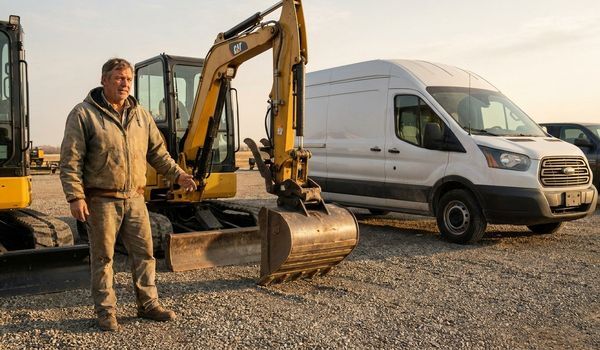
Well drilling business loans give contractors the capital they need to purchase heavy equipment, hire skilled crews, and take on larger projects in a competitive market. Whether you run a small water well drilling operation or a full-scale geothermal and irrigation drilling company, access to the right financing can be the difference between stagnation and sustainable growth. In this guide, we break down every loan option available to well drilling contractors so you can make a confident, informed decision.
In This Article
- What Are Well Drilling Business Loans?
- Why Well Drilling Businesses Need Financing
- Types of Loans for Well Drilling Contractors
- How Well Drilling Equipment Financing Works
- How to Qualify for Well Drilling Business Loans
- How Crestmont Capital Helps Well Drilling Contractors
- Real-World Scenarios
- Comparing Loan Options
- FAQ
- Next Steps
- Conclusion
What Are Well Drilling Business Loans?
Well drilling business loans are commercial financing products designed specifically for contractors and companies that drill water wells, geothermal wells, oil and gas wells, irrigation wells, and environmental monitoring wells. These loans provide capital to cover costs that are common in the drilling industry: large equipment purchases, fleet maintenance, payroll between project payouts, bonding requirements, and business expansion.
Unlike general-purpose business loans, well drilling financing often accounts for the project-based and seasonal nature of the industry. Lenders who understand drilling operations recognize that revenue can be irregular, that large equipment represents significant collateral value, and that contracts from municipalities, agricultural operations, and real estate developers can serve as strong indicators of future income.
Common uses for well drilling business loans include:
- Purchasing new or used drilling rigs and rotary equipment
- Acquiring support vehicles such as water trucks, compressor trucks, and service rigs
- Covering payroll and operational expenses between project payments
- Stocking drill bits, pipe, casing, and drilling fluids
- Expanding into new service areas or hiring additional crews
- Meeting bonding, licensing, and insurance requirements
- Refinancing existing high-interest business debt
According to the USGS Water Resources Mission, groundwater serves as the primary drinking water source for approximately 43% of the U.S. population. Demand for well drilling services remains robust, especially in rural areas and regions affected by water scarcity, making this a reliable industry with steady contractor demand.
Industry Insight
The well drilling and water services sector is projected to continue growing as aging infrastructure, rural development, and environmental monitoring needs increase demand for qualified drilling contractors across every U.S. region.
Ready to Finance Your Well Drilling Business?
Crestmont Capital offers fast, flexible financing designed for drilling contractors. Get funded in as little as 24-48 hours.
Apply Now - Free, No ObligationWhy Well Drilling Businesses Need Financing
The well drilling industry is capital-intensive by nature. A single drilling rig can cost anywhere from $100,000 to over $1 million depending on its capacity, age, and configuration. Add support equipment, consumable supplies, licensed crew wages, fuel, bonding, and insurance, and it becomes clear that even experienced contractors regularly face cash flow gaps.
High Equipment Costs
Modern air rotary or mud rotary drilling rigs represent the largest capital expenditure for most well drilling companies. Even used rigs in good working condition command prices that most small businesses cannot cover from operating cash flow alone. Financing allows contractors to spread equipment costs over time while keeping the rig generating revenue from day one.
Project-Based Revenue Cycles
Well drilling projects are frequently billed at completion milestones rather than on a regular schedule. This creates gaps where payroll, fuel, and materials must be covered before client payments arrive. A business line of credit or working capital loan bridges these gaps without disrupting operations.
Seasonal Demand Variations
In many regions, drilling activity peaks in spring and fall and slows during winter months when frozen ground or reduced agricultural demand limits project volume. Seasonal cash flow fluctuations require proactive financing strategies to maintain equipment, retain trained crews, and stay ready for busy-season surges.
Competitive Bidding Requirements
Winning large municipal, agricultural, or commercial contracts often requires demonstrating financial stability, posting performance bonds, and meeting insurance thresholds. Access to business financing helps contractors meet these requirements and position their bids competitively.
Crew Retention and Growth
Skilled drilling operators, pump installers, and geologists are in high demand. Retaining qualified crew members during slow periods requires steady payroll funding, which financing products can reliably provide. Growing companies also need capital to onboard new hires before the revenue from expanded contracts arrives.
Key Takeaway
Financing is not just for struggling businesses. Many of the most successful well drilling companies use strategic borrowing to accelerate fleet expansion, lock in new markets, and outbid competitors who are limited by their own cash flow.
Types of Loans for Well Drilling Contractors
Well drilling contractors have access to a wider range of financing options than many business owners realize. Understanding each product's strengths and best use cases helps you choose the right tool for each financial need.
1. Equipment Financing for Drilling Rigs
Equipment financing is often the most logical choice when purchasing a drilling rig, pump hoist, air compressor, or support vehicle. The equipment itself serves as collateral, which typically results in favorable interest rates and longer repayment terms - often 24 to 84 months. Learn more about equipment financing options available through Crestmont Capital.
2. SBA Loans
The SBA 7(a) loan program offers well drilling companies access to loan amounts up to $5 million with competitive interest rates and repayment terms up to 25 years for real estate and 10 years for working capital or equipment. SBA loans require strong credit and documentation but offer some of the best terms available. Explore SBA loan options through Crestmont Capital.
3. Term Loans
Term loans provide a lump sum of capital repaid over a fixed period with set payments. They work well for one-time large investments such as purchasing a second drilling rig, acquiring another business, or completing a major facility upgrade. Long-term business loans can provide the runway needed for major growth initiatives.
4. Business Line of Credit
A revolving business line of credit allows contractors to draw funds as needed and repay them on a flexible schedule. This is ideal for managing payroll gaps, purchasing consumable supplies, and handling unexpected repair costs without taking on unnecessary debt when cash flow is strong.
5. Working Capital Loans
Working capital loans provide fast access to cash for day-to-day operational expenses. For well drilling businesses, this might mean covering fuel costs for a multi-week drilling project, paying crew wages before the client invoice clears, or stocking up on casing and pipe before prices increase.
6. Fast Business Loans
When a rig breaks down mid-project or an unexpected opportunity requires immediate capital, fast business loans can deliver funding in as little as 24 hours. Speed comes at a higher cost, but when downtime is expensive, rapid funding pays for itself quickly.
7. Bad Credit Business Loans
Contractors who have faced financial hardship, tax liens, or credit challenges still have options. Bad credit business loans focus more on revenue, project history, and cash flow than on credit score alone, giving qualified contractors a path to the capital they need.
8. Invoice Financing
Well drilling companies that work with municipalities, utilities, or large agricultural operations often have substantial outstanding invoices. Invoice financing (also called accounts receivable financing) allows you to convert those invoices into immediate cash, eliminating the wait for slow-paying clients.
How Well Drilling Equipment Financing Works
Equipment financing is the most commonly used loan product in the drilling industry for good reason: it aligns the repayment schedule with the productive life of the equipment, and lenders view drilling rigs and support vehicles as strong collateral that retains value over time.
The Equipment Financing Process
- Identify the equipment: Find the rig, vehicle, or machinery you plan to purchase, whether new from a manufacturer or used from a dealer or private seller.
- Get a quote or invoice: The lender will need documentation of the equipment's cost, age, condition, and serial or VIN number.
- Apply for financing: Submit your application with basic business and financial documentation.
- Receive approval and funding: Many equipment financing approvals are completed in 24-72 hours. Funds are disbursed directly to the seller.
- Begin monthly payments: Repay the loan in fixed monthly installments over your agreed term.
- Own the equipment outright: At loan maturity, you own the equipment free and clear.
What Equipment Qualifies?
Most drilling-related equipment qualifies for equipment financing, including:
- Air rotary and mud rotary drilling rigs
- Cable tool drilling equipment
- Pump hoist trucks and crane trucks
- Air compressors and compressor trucks
- Water trucks and pump test equipment
- Survey and geophysical equipment
- Service vans and crew transport vehicles
- Pipe threaders, welders, and fabrication equipment
Rates and Terms
Equipment financing rates for well drilling businesses typically range from 6% to 22% depending on credit profile, time in business, equipment age, and lender type. Repayment terms commonly run from 24 to 84 months, with longer terms available for newer, high-value equipment. Down payments of 10% to 20% may be required, though 100% financing is sometimes available for qualified borrowers.
Well Drilling Industry: Key Financing Statistics
$150K-$1M+
Average cost of a drilling rig
43%
of Americans rely on groundwater
24-72 hrs
Typical equipment financing approval
Up to $5M
SBA 7(a) loan maximum
500+
Minimum credit score for most lenders
Get Pre-Qualified Today - No Hard Credit Pull
See your financing options in minutes with no impact to your credit score. Crestmont Capital works with well drilling companies nationwide.
Check My OptionsHow to Qualify for Well Drilling Business Loans
Qualifying for a well drilling business loan depends on the type of financing you are seeking and the lender's specific criteria. Understanding what lenders look for allows you to prepare a stronger application and improve your chances of approval.
General Qualification Requirements
| Factor | Alternative Lenders | SBA / Banks |
|---|---|---|
| Minimum Credit Score | 500+ | 650+ |
| Time in Business | 6+ months | 2+ years |
| Annual Revenue | $100,000+ | $250,000+ |
| Collateral Required | Often not required | Often required |
| Approval Time | 24-72 hours | 2-8 weeks |
Documents Typically Required
- Business bank statements (last 3-6 months)
- Business tax returns (last 1-2 years)
- Personal tax returns
- Profit and loss statement
- Business license and drilling contractor license
- Equipment invoice or quote (for equipment financing)
- Accounts receivable aging report (for invoice financing)
Industry-Specific Factors Lenders Consider
Lenders familiar with the well drilling industry may also evaluate:
- Active drilling contracts and backlog
- State drilling license in good standing
- Well completion bonding and insurance coverage
- Value and condition of existing equipment as collateral
- Relationship with local municipalities, utilities, or agricultural operations
Pro Tip
Having a letter of intent or signed contract from a client dramatically improves your loan application. Even if your credit score is below ideal, demonstrated revenue pipeline reassures lenders about your ability to repay.

How Crestmont Capital Helps Well Drilling Contractors
Crestmont Capital specializes in small business loans for contractors and trade businesses across the United States, including well drilling companies of every size. Our team understands the capital-intensive, project-driven nature of drilling operations and structures financing products to match how your business actually works - not how a traditional bank thinks it should work.
Why Well Drilling Contractors Choose Crestmont Capital
- Fast approvals: Get a funding decision in as little as 24-48 hours - not weeks or months.
- Flexible qualification: We work with contractors who have credit challenges, limited years in business, or irregular revenue patterns.
- Loan amounts from $10,000 to $5,000,000: Whether you need a quick working capital injection or a major equipment purchase loan, we have programs to match.
- No collateral required on many products: Unsecured working capital loans and lines of credit do not require you to pledge your rig or real estate.
- Industry expertise: Our advisors understand drilling contracts, equipment values, and seasonal revenue cycles.
- Multiple products under one roof: Access equipment financing, working capital loans, lines of credit, and more without shopping multiple lenders.
From a solo well driller looking to buy a first rig to a regional drilling company expanding into new service territories, Crestmont Capital has helped hundreds of contractors across the country access the capital they need to grow.
According to Forbes
Alternative lenders like Crestmont Capital have become the primary financing source for small and mid-sized contractors because they offer faster decisions, more flexible terms, and a better understanding of industry-specific cash flow patterns than traditional banks. (Forbes Business Loans Guide)
Real-World Scenarios: Well Drilling Business Financing in Action
Seeing how other well drilling contractors have used financing helps illustrate the practical value of each loan type. Here are six representative scenarios based on real business situations.
Scenario 1: Buying a Second Drilling Rig
A two-person water well drilling company in rural Texas had been turning down projects because their single rig was always committed. They identified a used air rotary rig for $180,000 and applied for equipment financing. With two years of solid bank statements and a signed contract for a 15-well residential development, they were approved for $162,000 (90% financing) at a competitive rate over 60 months. Their monthly payment was covered by a single well completion, and the second rig immediately doubled their project capacity.
Scenario 2: Covering Payroll During a Slow Winter
A geothermal drilling company in Michigan saw project volume drop by 60% from December through February. Rather than laying off their trained crew - which would have cost them in the spring when qualified operators were in high demand - they drew $45,000 from a business line of credit to cover payroll and benefits through the slow period. When spring contracts kicked in, they repaid the line within eight weeks.
Scenario 3: Winning a Large Municipal Contract
A mid-sized drilling contractor in Arizona was awarded a $2.1 million municipal well rehabilitation contract that required $400,000 in upfront mobilization costs, including specialized tooling, crew hires, and insurance upgrades. They used an SBA 7(a) loan through Crestmont Capital to finance the mobilization costs at favorable long-term rates, with repayment structured to align with the contract's milestone payment schedule.
Scenario 4: Emergency Rig Repair
A well drilling company in North Carolina experienced a catastrophic hydraulic system failure on their primary rig mid-project. The repair estimate was $28,000 and the equipment manufacturer required payment upfront. Unable to wait for an SBA approval, the contractor applied for a fast business loan and had $30,000 in their account within 24 hours. The rig was back in service within five days, preventing costly contract penalties.
Scenario 5: Expanding into Irrigation Well Services
A water well contractor in California's Central Valley recognized a growing opportunity in large-diameter agricultural irrigation wells. The specialty equipment required an investment of $320,000. They financed 80% of the cost through equipment financing and used a small-business working capital loan to cover the crew training and licensing costs associated with the expanded service line. Within 18 months, the irrigation division represented 40% of total company revenue.
Scenario 6: Buying Out a Retiring Partner
A well drilling partnership in Colorado had a founding partner ready to retire and sell his 50% stake for $500,000. Rather than bring in an outside investor, the remaining partner used a business acquisition loan from Crestmont Capital to purchase the interest outright, retaining full control of the company and its existing client relationships.
Comparing Loan Options for Well Drilling Businesses
Choosing the right financing product depends on your specific need, timeline, credit profile, and cost tolerance. The table below summarizes the key features of each loan type for well drilling contractors.
| Loan Type | Best For | Loan Amount | Speed | Cost |
|---|---|---|---|---|
| Equipment Financing | Rig and vehicle purchases | $10K - $2M+ | 1-3 days | Low-Moderate |
| SBA 7(a) Loan | Major expansion, real estate | Up to $5M | 2-8 weeks | Very Low |
| Term Loan | Lump-sum capital needs | $25K - $500K | 1-5 days | Low-Moderate |
| Line of Credit | Cash flow gaps, payroll | $10K - $250K | 1-3 days | Moderate |
| Working Capital Loan | Operations and payroll | $10K - $500K | 1-3 days | Moderate |
| Fast Business Loan | Emergency repairs, urgent needs | $5K - $250K | 24 hours | Higher |
| Invoice Financing | Slow-paying clients | Up to 90% of invoice | 1-2 days | Moderate |
| Bad Credit Loan | Credit-challenged borrowers | $5K - $150K | 24-48 hours | Higher |
Callout: Know Your True Cost of Capital
When comparing loan options, always look beyond the stated interest rate. Factor in origination fees, prepayment penalties, and whether interest is calculated on a simple interest or factor rate basis. A higher-rate loan with no fees and early payoff flexibility may cost less than a low-rate loan with heavy fees and prepayment penalties.
Frequently Asked Questions About Well Drilling Business Loans
What credit score do I need to get a well drilling business loan?
How much can I borrow for a well drilling business loan?
How fast can I get a well drilling business loan?
Can I get a well drilling business loan with bad credit?
Can I use a business loan to purchase a drilling rig?
Do I need collateral for a well drilling business loan?
Are there loans specifically for water well drilling companies?
What is the interest rate on a well drilling business loan?
How does a business line of credit work for well drilling companies?
Can a startup well drilling company get a loan?
What documents do I need to apply for a well drilling business loan?
How does invoice financing work for well drilling contractors?
Can I use an SBA loan to buy drilling equipment?
What if I already have existing business debt?
Does the EPA have any programs that affect well drilling financing?
Ready to Apply for Your Well Drilling Business Loan?
Get started now - our simple application takes less than 10 minutes and funding decisions come within 24-48 hours.
Start My ApplicationNext Steps: How to Secure Your Well Drilling Business Loan
Identify Your Specific Capital Need
Determine exactly what you need funding for - equipment purchase, payroll, emergency repair, expansion - and how much capital is required. This helps you choose the right product and avoid borrowing more than necessary.
Check Your Credit and Financial Position
Pull your personal and business credit reports, review your last 6 months of bank statements, and have your most recent tax returns on hand. Understanding your financial position before applying helps you set realistic expectations and avoid surprises.
Gather Required Documents
Collect business bank statements (3-6 months), tax returns, profit and loss statements, business license, drilling license, and any equipment invoices or contracts relevant to your loan request.
Apply with Crestmont Capital
Submit your application online through Crestmont Capital. Our streamlined process takes less than 10 minutes and a funding decision is typically available within 24 to 48 business hours.
Review Your Offer and Accept Funding
Review your loan offer carefully, including the APR, total repayment amount, term length, and any fees. Accept the offer and receive funds directly to your business bank account, often on the same day or the next business day.
Put Capital to Work and Build Your Credit
Deploy the capital according to your plan, make on-time payments to build business credit, and return to Crestmont Capital for your next financing need as your business grows.
Conclusion
Well drilling business loans are not just a safety net - they are a strategic tool that allows ambitious contractors to grow faster, win bigger projects, and build a more resilient operation. Whether you need to finance a new drilling rig, bridge a seasonal cash flow gap, cover emergency repairs, or fund a full-scale business expansion, there is a financing product designed for your situation.
The key is choosing the right loan type for your specific need, working with a lender who understands the drilling industry, and approaching the application process with solid documentation and a clear plan for how the capital will be deployed.
Crestmont Capital has helped well drilling companies across the United States access the financing they need to grow. From single-operator businesses buying their first rig to multi-crew companies expanding into new markets, we offer fast approvals, flexible qualification, and loan products tailored to how drilling businesses actually work.
Ready to take the next step? Apply for a well drilling business loan today and get a funding decision within 24 to 48 hours.
This content is provided for general educational purposes only and does not constitute financial, legal, or investment advice. Crestmont Capital is a commercial lender. Loan terms, rates, and availability vary based on individual business qualifications and are subject to change. Please consult with a qualified financial advisor before making financing decisions.