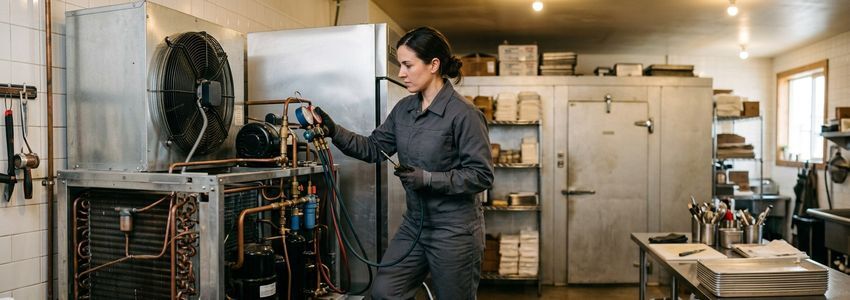
Walk-in freezer compressor replacement financing gives restaurants, grocery stores, distributors, and other food-handling businesses a fast way to cover the cost of an emergency compressor failure without draining cash reserves or losing perishable inventory. When a compressor goes down, the clock starts ticking immediately, and the business needs capital in hand within days, not weeks.
In This Article
- What Is Walk-In Freezer Compressor Replacement Financing?
- Why Compressors Fail Without Warning
- What Compressor Replacement Actually Costs
- Benefits of Financing Over Paying Cash
- How the Financing Process Works
- Types of Financing Available
- Who This Financing Is Best For
- Financing vs. Other Funding Options
- How Crestmont Capital Helps
- Real-World Scenarios
- FAQ
- Next Steps
What Is Walk-In Freezer Compressor Replacement Financing?
Walk-in freezer compressor replacement financing is a category of business funding designed specifically for companies that need to repair or replace a failed compressor unit on a commercial walk-in freezer. Rather than paying a repair contractor's full invoice out of pocket or waiting weeks for cash flow to recover, a business borrows the funds needed and repays over a set term, spreading the cost across manageable monthly payments.
This type of financing typically falls under equipment financing, a short-term working capital loan, or a business line of credit, depending on how quickly the funds are needed and how the business prefers to structure repayment. Because compressor failures are almost always unplanned, lenders who specialize in fast-turnaround funding are the most practical option for this specific situation.
Unlike financing a brand-new freezer unit as part of a facility buildout, compressor replacement financing is reactive by nature. The business is not choosing when to spend the money; the equipment failure is choosing for them. That urgency shapes everything about how this financing needs to work, from approval speed to funding timeline.
The category also differs from general-purpose business loans in an important way: it is tied to a specific, verifiable expense with a clear dollar amount attached. Because the funding request maps directly to a repair invoice or contractor estimate, lenders can often process these applications faster than open-ended working capital requests where the use of funds is less defined. This makes compressor replacement financing one of the more straightforward emergency funding categories to get approved for, even for businesses that have not borrowed before.
It is also worth understanding that this financing sits at the intersection of two broader categories that Crestmont Capital and similar lenders already serve every day: equipment financing (because a compressor is mechanical equipment with resale value) and short-term working capital lending (because the underlying need is cash flow continuity during a crisis). Recognizing which category fits your situation best is one of the first decisions in the financing process, and it often depends on whether you want the loan secured against the new equipment or kept unsecured for maximum flexibility.
Why Compressors Fail Without Warning
Commercial refrigeration compressors run nearly around the clock, and that constant duty cycle is exactly what makes failures so disruptive. A compressor can operate reliably for years and then fail within a matter of hours once a critical component wears out.
- Refrigerant leaks that slowly starve the compressor of the pressure it needs to function, eventually causing it to overheat and seize.
- Electrical component failure, including capacitors, relays, and start components that degrade with age and heat cycling.
- Age and duty cycle, since most commercial compressors are rated for a finite number of operating hours before mechanical wear becomes a failure risk.
- Poor maintenance, such as dirty condenser coils or low refrigerant charge, which forces the compressor to work harder than it should and shortens its lifespan.
- Power surges or electrical issues in the building that stress the compressor's motor windings beyond their rated tolerance.
Because these failure modes rarely give more than a day or two of warning signs (if any), most businesses are caught off guard. That is precisely why financing options built for speed matter so much in this situation.
Compressors in walk-in freezers work under more strain than almost any other piece of refrigeration equipment in a commercial building. A freezer compressor has to maintain temperatures well below zero degrees Fahrenheit around the clock, which means the compressor rarely gets a true rest cycle the way a walk-in cooler compressor might during off-peak hours. This constant, high-demand duty cycle accelerates mechanical wear on internal components like pistons, bearings, and seals.
Seasonal demand spikes make the problem worse. Restaurants, grocers, and distributors often push their freezer units harder during summer months, holiday seasons, or promotional periods when frozen inventory volume increases. A compressor that has been running near its capacity limit for weeks is far more likely to fail exactly when the business can least afford downtime, which is often precisely when sales volume and inventory value are at their highest.
Environmental factors around the compressor's location matter too. Compressors installed in poorly ventilated mechanical rooms, near heat sources, or in areas exposed to excessive dust and debris tend to fail earlier than units in clean, well-ventilated spaces. Routine coil cleaning and airflow checks can extend compressor life, but even well-maintained units eventually reach the end of their mechanical service life.
Freezer Down? Don't Wait on Cash Flow.
Get fast, flexible financing to cover an emergency compressor replacement before your inventory is at risk. No obligation to apply.
Apply Now →What Compressor Replacement Actually Costs
The price of replacing a walk-in freezer compressor varies widely based on horsepower, refrigerant type, and whether the surrounding condensing unit also needs work. Most businesses face a bill that lands somewhere in a range that hurts even a healthy cash position, especially when it lands on top of already-tight margins in food service and grocery operations.
Key Stat: According to the U.S. Small Business Administration, unplanned equipment repair costs are one of the most commonly cited reasons small businesses tap short-term financing rather than depleting operating cash reserves.
Beyond the direct repair cost, a compressor failure also creates hidden costs: spoiled inventory that has to be discarded, emergency labor rates for after-hours service calls, and potential lost sales if the business has to pause operations or turn away customers while the unit is down. When all of these factors are added together, the true financial impact of a compressor failure is almost always higher than the repair invoice alone suggests.
By the Numbers
Walk-In Freezer Compressor Failures — Key Statistics
24-72 Hrs
Typical window before frozen inventory begins to thaw after a compressor failure
1-2 Days
How fast funding can typically be approved through equipment or working capital financing
33M+
Small businesses in the U.S., per the SBA, many of which rely on refrigeration equipment daily
12-24 Mo
Common repayment term length for equipment repair financing
Benefits of Financing Over Paying Cash
Many business owners assume paying cash is always the smarter move because it avoids interest costs entirely. In an emergency repair scenario, though, financing often protects the business in ways that a cash payment cannot.
- Preserves working capital for payroll, inventory restocking, and other operating needs that cannot wait.
- Faster funding turnaround than liquidating savings, waiting on a business line draw, or negotiating a payment plan directly with a contractor.
- Predictable monthly payments that are easier to budget around than a single large cash outlay.
- Keeps credit lines open for other emergencies, since a separate financing product does not touch your existing line of credit.
- Minimizes downtime because approved funds let a business move forward with repair scheduling immediately instead of waiting to save up.
For seasonal businesses or those with thin margins, protecting cash reserves during a compressor failure can be the difference between a quick recovery and a much longer operational setback.
How the Financing Process Works
The process for securing walk-in freezer compressor replacement financing is designed to move quickly, since most lenders who work in this space understand the urgency involved.
Quick Guide
How Compressor Replacement Financing Works — At a Glance
A refrigeration contractor diagnoses the failure and provides a written repair or replacement estimate.
Most lenders only need basic business information and recent bank statements, not a mountain of paperwork.
Approval decisions often come back within one business day, with clear repayment terms to review before accepting.
Once funded, the business pays the contractor and gets the compressor replaced without further delay.
Documentation requirements are typically light compared to traditional bank loans. Most lenders ask for a few months of business bank statements, basic business identification information, and sometimes the repair estimate itself so the funding amount matches the actual need.
Types of Financing Available
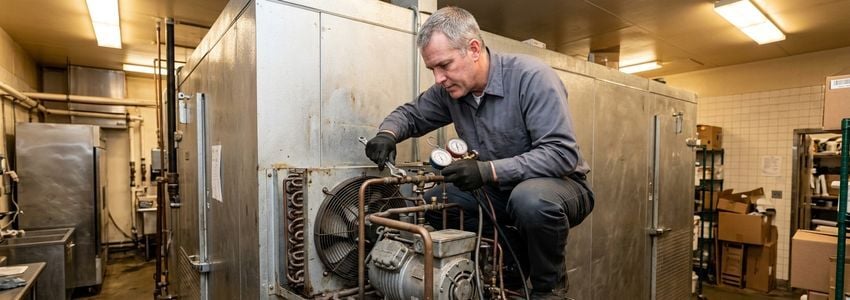
Several financing structures can cover a compressor replacement, and the right choice usually depends on the exact dollar amount and how quickly the business needs the money in hand.
Equipment Financing
Since a compressor is a piece of equipment, some lenders will finance the replacement unit directly as an equipment financing transaction, using the new compressor itself as collateral. This can result in favorable terms since the loan is secured by tangible equipment.
Unsecured Working Capital Loans
For businesses that need funds fast and do not want to tie the loan to a specific piece of equipment, an unsecured working capital loan provides flexible cash that can cover the repair invoice, spoiled inventory replacement, and any related costs in one lump sum.
Business Line of Credit
A business line of credit is ideal for businesses that experience recurring equipment issues, since the credit line stays open for future needs after this repair is paid off. Businesses only pay interest on what they actually draw.
Bad Credit Equipment Financing
Businesses with less-than-perfect credit are not automatically excluded. Bad credit equipment financing programs exist specifically for situations where a strong revenue history matters more than a flawless credit score.
Merchant Cash Advances
For businesses with strong, consistent card-based sales volume, a merchant cash advance can provide same-day or next-day funding based on future receivables, which can be especially useful for restaurants and retail food businesses that process a high volume of daily card transactions.
Inventory Financing
If the compressor failure also resulted in a significant loss of frozen inventory that needs to be restocked immediately, inventory financing can be paired with the repair funding to get shelves and freezer units fully restocked without a second funding round.
Who This Financing Is Best For
Compressor replacement financing tends to make the most sense for a specific set of businesses that depend heavily on frozen or refrigerated inventory.
- Restaurants and commercial kitchens that store bulk frozen inventory and cannot afford spoilage
- Grocery stores and specialty food markets with walk-in freezer sections
- Food distributors and wholesalers operating cold storage warehouses
- Catering companies with dedicated freezer storage for large-batch prep
- Convenience stores and gas station food service operations with frozen product lines
- Ghost kitchens and commissary kitchens supporting multiple food brands from one facility
It is also a strong fit for businesses that do not have a large cash reserve set aside specifically for equipment emergencies, or that would rather preserve existing cash for payroll, rent, and inventory purchases while spreading the compressor cost over time.
Financing vs. Other Funding Options
| Funding Option | Typical Speed | Best For |
|---|---|---|
| Equipment Financing | 1-2 business days | Full compressor/unit replacement with equipment as collateral |
| Unsecured Working Capital | Same day to 2 days | Covering repair invoice plus related costs like spoiled inventory |
| Business Line of Credit | Instant draw once approved | Businesses with recurring equipment repair needs |
| Personal Savings / Cash | Immediate, if available | Businesses with large cash reserves not needed elsewhere |
How Crestmont Capital Helps
Crestmont Capital works with restaurants, grocers, food distributors, and other refrigeration-dependent businesses to get emergency equipment financing approved and funded quickly. Because compressor failures do not wait for a convenient time, the application process is built around speed and minimal documentation.
Businesses can apply for unsecured working capital loans to cover the full cost of an emergency repair, or explore equipment financing if the compressor and condensing unit both need to be replaced. For businesses that have dealt with refrigeration failures before, a business line of credit can provide a standing safety net for the next unexpected repair.
For businesses researching related refrigeration failures, Crestmont has also published a detailed guide on walk-in cooler compressor failure financing, which covers similar funding strategies for cooler units rather than freezers, and a broader overview of walk-in freezer financing for businesses planning a full unit upgrade rather than a single-component repair.
Protect Your Frozen Inventory Today
Crestmont Capital helps food-service and grocery businesses get emergency financing approved fast. No obligation to apply.
Apply Now →Real-World Scenarios
Scenario 1: The Neighborhood Grocery Store
A family-owned grocery store discovers on a Monday morning that its walk-in freezer compressor has failed overnight. With thousands of dollars in frozen meat and dairy inventory at risk, the owner applies for an unsecured working capital loan that afternoon, gets approved within hours, and has a contractor on-site replacing the compressor by Tuesday morning, saving nearly all of the frozen stock.
Scenario 2: The Regional Food Distributor
A wholesale food distributor operating a large cold storage warehouse experiences a compressor failure on one of three walk-in units. Rather than pulling from cash reserves earmarked for a fleet vehicle purchase, the company uses equipment financing to cover the $18,000 replacement cost, keeping its capital plans on track while restoring full cold storage capacity within 48 hours.
Scenario 3: The Busy Restaurant Kitchen
A mid-size restaurant's walk-in freezer compressor dies during a holiday weekend rush. The owner uses an existing business line of credit to fund an emergency after-hours repair call, avoiding a shutdown during the restaurant's highest-revenue weekend of the year.
Scenario 4: The Catering Company
A catering business relies on frozen bulk ingredients for weekly large-event prep. When the compressor fails two days before a major corporate event, the company secures same-day working capital financing to cover both the repair and a temporary rental freezer unit, ensuring the event goes off without a hitch.
Scenario 5: The Convenience Store Chain
A small chain of convenience stores relies on frozen novelty items and packaged meals as a meaningful revenue category. When one location's walk-in freezer compressor fails, the store manager escalates to ownership, who applies for equipment financing to replace the unit outright rather than patching an aging compressor for the third time in two years. The financing is structured with a 24-month term, keeping monthly payments low enough that the location's overall profitability is barely affected.
Scenario 6: The Specialty Food Wholesaler
A specialty food wholesaler supplying frozen imported goods to restaurants across the region loses a compressor during a particularly busy delivery week. Because the wholesaler's contracts include penalty clauses for late or missed deliveries, the owner cannot afford even a single day of downtime. A same-day unsecured working capital loan covers an emergency after-hours repair crew, and the wholesaler meets every delivery commitment that week without disruption.
Pro Tip: Always get a written repair estimate from a licensed refrigeration contractor before applying for financing. Lenders can often approve and fund faster when the exact repair cost is documented up front.
Frequently Asked Questions
What is walk-in freezer compressor replacement financing?
It is business financing designed to cover the cost of repairing or replacing a failed compressor on a commercial walk-in freezer, allowing the business to spread the expense over monthly payments instead of paying the full repair invoice upfront.
How fast can I get funding for a compressor emergency?
Many lenders can approve and fund working capital or equipment financing within one to two business days, and some same-day funding options exist for qualified applicants.
How much does it typically cost to replace a walk-in freezer compressor?
Costs vary based on compressor horsepower, refrigerant type, and labor rates in your area, but most businesses face a bill that is significant enough to justify financing rather than a full cash payment.
Can I finance the compressor and the labor cost together?
Yes. Most working capital and equipment financing products cover the full invoice amount, including parts, labor, and any related service fees from the contractor.
Do I need good credit to qualify?
Not necessarily. Bad credit equipment financing programs exist for business owners with lower credit scores, and many lenders weigh recent business revenue and bank statement history more heavily than a personal credit score alone.
What documents do I need to apply?
Most lenders ask for several months of business bank statements, basic business identification information, and ideally a written repair estimate from your refrigeration contractor.
Should I finance the repair or use my business line of credit?
If you already have an open line of credit with available capacity, drawing on it can be the fastest option since no new application is required. If you do not have a line open, a dedicated working capital loan or equipment financing product is typically the next-fastest route.
Is it better to repair the compressor or replace the entire unit?
That depends on the age of the freezer and the extent of the failure. A licensed refrigeration technician can advise whether a compressor-only replacement makes sense or whether the full condensing unit should be upgraded, especially if the unit is older or has had prior issues.
What repayment terms are typical for this type of financing?
Repayment terms for equipment repair financing commonly range from 12 to 24 months, though exact terms depend on the loan amount, the lender, and the business's overall qualifications.
Can startups or newer businesses qualify for this financing?
Qualification generally depends on time in business and revenue history, so newer businesses may have more limited options, but some lenders still work with businesses that have at least six months to a year of operating history and consistent revenue.
Will financing cover the cost of spoiled inventory too?
Unsecured working capital loans are flexible enough to cover both the repair invoice and the cost of replacing spoiled inventory, since the funds are not restricted to a single line-item expense the way some equipment-specific financing can be.
Does the type of refrigerant used affect financing eligibility?
No, financing eligibility is based on the business's financial qualifications, not the technical specifications of the refrigeration equipment. The refrigerant type may affect the total repair cost, but not whether financing is available.
Can I use this financing for multiple freezer units at once?
Yes. If your business operates multiple walk-in freezer units and more than one needs attention, working capital financing or a business line of credit can be structured to cover several repairs or replacements in a single funding round.
Is there a minimum or maximum amount I can finance for a compressor repair?
Loan amounts vary by lender, but many equipment repair financing products range from a few thousand dollars up to $150,000 or more, which comfortably covers most single-unit compressor replacements as well as multi-unit repairs.
How do I get started with Crestmont Capital?
Start by submitting a quick application through Crestmont Capital's online form. A funding specialist will review your business details and repair estimate, then walk you through the fastest financing option available for your situation.
Every Hour Counts When a Compressor Fails
Apply now and get a funding decision fast, so your frozen inventory and your business stay protected.
Apply Now →Next Steps
Contact a licensed refrigeration contractor to diagnose the failure and quote the replacement.
Have your last three to six months of statements ready to speed up the application.
Submit a fast, no-obligation application to see what financing options you qualify for.
Move forward with the replacement immediately after funding arrives to minimize downtime.
Conclusion
A failed walk-in freezer compressor is one of the most disruptive emergencies a food-handling business can face, but it does not have to mean a financial crisis on top of an operational one. Walk-in freezer compressor replacement financing gives businesses a practical way to cover the repair quickly, protect frozen inventory, and keep operations running without draining the cash reserves needed for everything else the business depends on. With fast approval timelines and flexible options ranging from equipment financing to working capital loans, the right financing partner can turn a stressful emergency into a manageable, short-term expense.
Disclaimer: The information provided in this article is for general educational purposes only and is not financial, legal, or tax advice. Funding terms, qualifications, and product availability may vary and are subject to change without notice. Crestmont Capital does not guarantee approval, rates, or specific outcomes. For personalized information about your business funding options, contact our team directly.