Potato harvester financing gives commercial potato growers a practical way to acquire the harvesting equipment they need without draining working capital right before the season starts. A new self-propelled potato harvester can run well into six figures, and even a quality used machine represents a major capital decision for any farming operation. This guide breaks down how potato harvester financing works, what new and used machines typically cost, which loan and lease structures fit different operations, and how to position your farm business for a fast approval. Whether you run a few hundred acres in Idaho or a diversified operation in Maine, the right financing structure can put a reliable harvester in your field this season instead of three seasons from now.
In This Article
- What Is Potato Harvester Financing?
- Benefits of Financing a Potato Harvester
- How Potato Harvester Financing Works
- Types of Potato Harvesters You Can Finance
- How Much Does a Potato Harvester Cost?
- Financing Options Compared
- Who Qualifies for Potato Harvester Financing?
- How Crestmont Capital Helps Potato Growers
- Real-World Financing Scenarios
- Next Steps
- Frequently Asked Questions
What Is Potato Harvester Financing?
Potato harvester financing is a form of agricultural equipment financing designed to help farm businesses purchase or lease the specialized machinery used to lift, separate, and collect potatoes at harvest. Instead of paying the full purchase price upfront, a grower spreads the cost over a fixed term, typically three to seven years, while the machine itself serves as collateral for the agreement. That structure keeps cash available for seed, fertilizer, labor, storage, and the dozens of other expenses that pile up during the growing season.
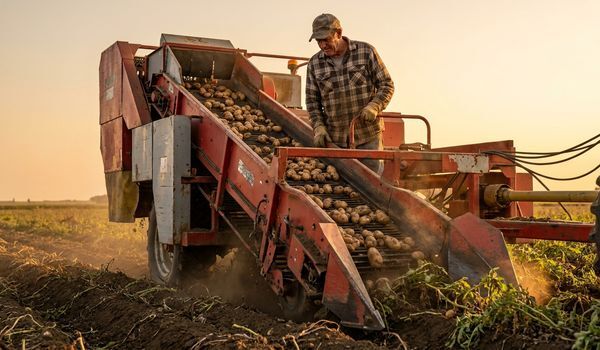
Because a potato harvester is a revenue-producing asset with a measurable resale market, lenders treat it differently than an unsecured loan. The equipment secures the financing, which usually means lower rates, longer terms, and faster approvals than a general-purpose business loan. Financing is available for every class of harvest equipment: pull-type harvesters, self-propelled multi-row machines, windrowers, and the receiving and handling equipment that moves potatoes from field to storage.
Most potato harvester financing falls into one of three structures. An equipment loan gives you ownership from day one with a fixed monthly payment. An equipment lease lowers the monthly cost and lets you upgrade or purchase the machine at the end of the term. A business line of credit can cover smaller purchases, attachments, or the gap between a trade-in and the price of a newer machine. Each structure has a place depending on your acreage, harvest volume, and how quickly the technology in your fleet turns over.
Benefits of Financing a Potato Harvester
The harvest window for potatoes is unforgiving. A machine that sits in the shop waiting on a repair during a two-week harvest window can cost a grower far more than a financing payment ever will. Financing turns an overwhelming capital expense into a predictable operating cost, and it does several other things for a farm business at the same time.
- Preserves working capital. A six-figure equipment purchase made in cash can strip out the reserves you need for inputs, labor, and storage costs. Financing keeps that cash working in the operation.
- Matches cost to revenue. Potato harvesters earn their keep during a short, intense window each year. Fixed monthly payments spread the machine's cost across the same years it generates revenue.
- Builds business credit. Consistent, on-time payments on an equipment agreement strengthen your farm's credit profile, which improves terms on future financing for trucks, storage facilities, or irrigation systems.
- Reduces downtime risk. Replacing an aging harvester before it fails mid-harvest is almost always cheaper than an emergency repair plus a short-notice rental. Financing makes proactive replacement possible.
- Locks in capacity. Owning or leasing your own harvester means you harvest on your schedule, not on a custom operator's calendar. That timing control directly affects tuber quality and storage outcomes.
- Fixed, predictable payments. A fixed-rate equipment agreement is easy to budget around, unlike repair bills on an old machine that arrive at the worst possible moment.
For most commercial growers, the calculation is straightforward: if a financed harvester prevents even one significant harvest delay or one season of excessive repair bills, the financing cost pays for itself.
How Potato Harvester Financing Works
The process is simpler than most farm owners expect, especially compared to a traditional bank loan. Agricultural equipment lenders focus on three things: the machine, the operation's cash flow, and the borrower's track record. Here is how a typical financing arrangement unfolds from start to finish.
Step 1: Identify the Machine and Get a Quote
Start with a specific machine and a written price quote from a dealer, auction house, or private seller. Lenders need the year, make, model, hours or acreage history, and condition. A firm quote anchors the entire transaction, and it also tells you exactly how much funding to request.
Step 2: Choose a Financing Structure
Decide whether a loan, lease, or line of credit fits best. Loans suit growers who keep machines for a decade or more. Leases suit operations that upgrade regularly or want lower payments. A line of credit suits smaller purchases or partial funding alongside a trade-in. The comparison section below walks through each option in detail.
Step 3: Submit an Application
A modern equipment financing application takes minutes, not weeks. Expect to provide basic business information, time in business, annual revenue, and the equipment details. Many lenders, including specialized agricultural equipment financing companies, issue decisions within 24 to 48 hours for well-qualified applicants.
Step 4: Review the Offer
Your approval will specify the amount, term length, rate structure, down payment, and any seasonal payment options. Some agricultural lenders offer deferred or seasonal payment schedules that align payments with harvest revenue instead of spreading them evenly through the year. Read the terms carefully and ask about prepayment, end-of-lease options, and what happens if you trade the machine early.
Step 5: Funding and Delivery
Once you accept, the lender pays the seller directly and you take delivery of the harvester. The whole cycle from application to funding commonly closes inside a week for deals under $500,000, which matters when a machine becomes available right before planting or harvest.
Step 6: Repayment
You make fixed payments over the agreed term. On a loan, you own the machine outright at the end. On a lease, you choose to buy it at a preset residual, return it, or upgrade to a newer unit.
Ready to Finance Your Next Potato Harvester?
Get a decision in as little as 24 hours. No obligation, no impact on your credit to see your options.
Apply NowTypes of Potato Harvesters You Can Finance
Potato harvesting equipment spans a wide range of sizes and price points, and lenders who understand agriculture finance all of them. The right machine depends on your acreage, soil conditions, storage setup, and labor situation.
Pull-Type Harvesters
Pull-type harvesters tow behind a tractor and come in single-row and multi-row configurations. They are the entry point for many mid-size operations because they cost far less than self-propelled units and use the tractor you already own. New pull-type machines generally run from $40,000 to $120,000 depending on row count and separation technology. Financing a pull-type harvester is often the fastest approval in the category because the ticket size stays modest.
Self-Propelled Harvesters
Self-propelled harvesters handle two to four rows at once with onboard separation, cleaning, and bunk or elevator systems. These are the workhorses of large commercial operations, and they carry prices to match: new units frequently list between $350,000 and $600,000, while late-model used machines trade from $150,000 to $350,000. At this level, structured financing with longer terms becomes essential, and lenders pay close attention to the machine's hours and maintenance records.
Windrowers and Diggers
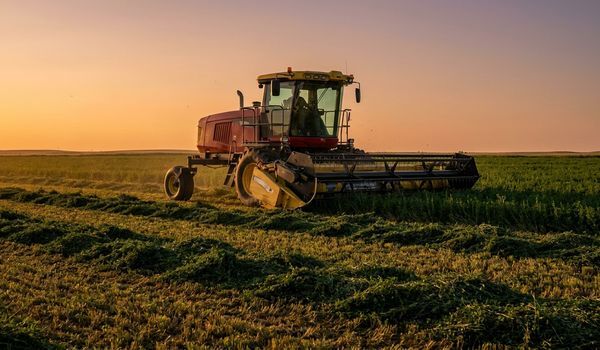
Windrowers lift potatoes and lay them back on the ground in concentrated rows so a harvester can pick them up in a single pass. Pairing a windrower with a harvester can dramatically increase acres covered per day. These machines typically run $30,000 to $90,000 and are easy to add to an existing financing agreement or fund with a line of credit.
Receiving, Handling, and Storage Equipment
The harvest does not end at the field edge. Receiving hoppers, dirt eliminators, conveyors, pilers, and bin loaders all move potatoes from the truck into storage without bruising. Many growers bundle handling equipment into the same financing agreement as the harvester itself, which simplifies paperwork and keeps one predictable payment covering the whole harvest line.
How Much Does a Potato Harvester Cost?
Answering "how much does a potato harvester cost" requires separating three price tiers, because the gap between them is enormous.
New self-propelled harvesters sit at the top of the market. A new two-row self-propelled machine starts around $350,000, and four-row machines with advanced separation and cleaning packages push past $550,000. At this level, most purchases involve a five to seven year financing term, a 10 to 20 percent down payment, and sometimes a balloon or residual structure to keep payments manageable.
Used self-propelled harvesters offer the best value for operations scaling up. A well-maintained machine with 2,000 to 4,000 engine hours commonly trades between $150,000 and $350,000. Used equipment financing is widely available for machines up to about 15 years old, though terms shorten and rates rise as age and hours climb. Lenders will want maintenance records and, often, an inspection.
Pull-type harvesters and diggers range from $15,000 for older used units to $120,000 for new multi-row machines. This tier is where many growers buy their first owned harvester, and approvals here can move extremely fast because the loan amounts are moderate.
Smart Buyer Tip: The total cost of a harvester is not the sticker price. Add expected annual maintenance (often 3 to 5 percent of the machine's value), wear parts like chains, belts, and digging shares, and the cost of any tractor upgrades needed to pull it. Financing lets you roll the machine into a predictable payment, but the operating budget still has to work.
Potato Harvester Financing Options Compared
Four structures cover nearly every potato harvester purchase. The right choice depends on how long you keep equipment, how much cash you want to commit upfront, and how your revenue cycles through the year.
By the Numbers
Potato Harvester Financing at a Glance
$350K-$600K
Typical new self-propelled harvester price range
3-7 yrs
Common financing term lengths for harvest equipment
10-20%
Typical down payment on a new or late-model used machine
24-48 hrs
Typical decision time for qualified equipment financing applications
| Option | Best For | Typical Term | Ownership |
|---|---|---|---|
| Equipment Loan | Growers who keep machines 10+ years | 3-7 years | Immediate |
| Equipment Lease | Operations that upgrade every few seasons | 3-5 years | At buyout |
| Business Line of Credit | Smaller purchases, attachments, gap funding | Revolving | Immediate |
| SBA Loan | Largest purchases, patient timelines | Up to 10-25 years | Immediate |
Equipment Loans
An equipment loan is the most common path to potato harvester ownership. You borrow the purchase price, the machine secures the loan, and you own it from day one. Fixed rates and fixed payments make budgeting simple, and when the last payment clears, the machine is yours with no residual or buyout. For growers who run a harvester for a decade or more, this is usually the lowest total cost of ownership.
Equipment Leases
A lease trades ownership for a lower monthly payment and built-in flexibility. At the end of the term you can buy the machine at a preset residual, return it, or roll into a newer model. Leasing makes sense when harvest technology is changing fast, when you want factory warranty coverage throughout the term, or when keeping payments low during a tight margin year matters more than owning the asset.
Business Lines of Credit
A business line of credit works well for pull-type harvesters, windrowers, attachments, and the handling equipment that rounds out a harvest line. You draw only what you need, pay interest on the balance, and reuse the credit as you pay it down. Many growers pair a line of credit with a trade-in to bridge the difference on a bigger machine.
SBA Loans
The U.S. Small Business Administration's loan programs can fund major equipment purchases, and the SBA 504 loan program is built specifically for large fixed assets like heavy machinery. SBA loans offer long terms and competitive rates, but they move slowly: expect weeks of documentation and underwriting. The SBA 7(a) program can also fund equipment, though most growers use it for broader working capital needs. If a harvester deal is time-sensitive, a direct equipment lender will almost always close faster.
Get Harvest-Ready Without Draining Your Cash
Crestmont Capital finances new and used potato harvesters with terms built around farm cash flow. See your options today.
Check Your OptionsWho Qualifies for Potato Harvester Financing?
Equipment financing is accessible to a wide range of farm businesses because the machine itself anchors the deal. Lenders still look at the operation behind the application, and a few core factors drive both approval and pricing.
Time in business. Most lenders want to see at least two years of operating history. Established farms with multi-season revenue records get the best terms. Younger operations can still qualify but may face higher down payments or shorter terms.
Credit profile. A personal credit score of 650 or higher opens most programs, and scores above 700 unlock the best rates. Scores in the low 600s and below are not automatic disqualifiers on equipment deals, because the collateral matters more than the score, but expect to bring more cash to the table. Growers with damaged credit can often still structure a deal with a larger down payment or a co-signer.
Cash flow and revenue. Lenders want to see that the operation's revenue can absorb the new payment alongside existing obligations. Bank statements, financial statements, or recent tax returns may be requested depending on the deal size. Farms with seasonal revenue should ask about seasonal payment schedules that concentrate payments after harvest.
The equipment itself. Age, hours, and condition matter. A five-year-old harvester with clean maintenance records finances more easily than a fifteen-year-old machine with unknown history. Very old machines may need a larger down payment or an inspection to verify condition.
Approval Tip: The fastest approvals come from complete applications. Have your dealer quote, two years of revenue figures, and three months of business bank statements ready before you apply. Incomplete files are the number one cause of avoidable delays.
How Crestmont Capital Helps Potato Growers
Crestmont Capital is a U.S. business lender rated number one in the country, and agricultural equipment is a core specialty. The team finances potato harvesters, windrowers, trucks, irrigation systems, storage equipment, and full harvest lines for farm businesses across the country.
What sets the process apart is speed and structure. Applications take minutes, decisions on qualified files arrive in as little as 24 hours, and funding can close inside a week. Terms run three to seven years with fixed payments, and seasonal structures are available for operations whose revenue concentrates around harvest. Growers buying used machines can use the same streamlined process through Crestmont's used equipment financing program, which covers dealer, auction, and private-party purchases.
Beyond the harvester itself, Crestmont's broader equipment financing programs cover the rest of the operation, so a grower can fund a harvester this season and a truck or storage upgrade next season through one relationship. For a wider look at how farm machinery financing works across tractors, sprayers, and harvesters, see Crestmont's guide to agricultural equipment leasing. Growers running diversified or specialty crop operations may also find the breakdown of vineyard equipment financing useful, since the financing structures for specialty harvesters are nearly identical.
Real-World Financing Scenarios
Every operation's situation is different, but most potato harvester financing deals resemble one of these four scenarios.
Scenario 1: Replacing a Failing Harvester Mid-Stride
A 900-acre grower in the Columbia Basin runs a twelve-year-old self-propelled harvester that needed $28,000 in repairs last season alone. Rather than gamble on another breakdown during a three-week harvest window, the operation finances a five-year-old used machine for $240,000 with 15 percent down and a five-year term. The payment runs about $3,900 per month, and the elimination of emergency repairs plus a full harvest completed on schedule covers the payment several times over in the first year.
Scenario 2: Moving Up from Custom Harvesting
A 350-acre operation in Wisconsin has paid a custom harvester $95 per acre for years, an annual bill around $33,000 with no asset to show for it. The owners finance a new two-row pull-type harvester for $85,000 over five years. The payment is roughly $1,600 per month, and owning the machine lets them harvest at optimal maturity instead of waiting in the custom operator's queue. Tuber quality improves, storage losses drop, and the farm builds equity in an asset instead of renting labor.
Scenario 3: Scaling to Meet a Processor Contract
An Idaho grower signs a contract expansion with a major processor and needs to add 400 acres of capacity in one season. The operation leases a late-model four-row self-propelled harvester rather than buying, keeping payments low during the contract's first year and preserving cash for seed and storage upgrades. At the end of the three-year lease, the buyout option lets them purchase a proven machine at a known price using the equity the contract created.
Scenario 4: Bundling a Full Harvest Line
A multi-generation farm in Maine replaces its harvester, windrower, and receiving line in one off-season. Instead of three separate transactions, the operation bundles $410,000 of equipment into a single financing agreement with one payment and a seasonal schedule that concentrates payments in the four months after harvest. One application, one approval, one payment, and the entire harvest system arrives before planting.
Next Steps: Get Your Harvester Financed
If a new or used potato harvester is on your horizon for this season or next, the process from here is simple.
Get a written quote on the machine
A firm price, year, make, model, and hours from the dealer or seller is the foundation of a fast approval.
Gather two years of revenue figures
Recent bank statements and basic financials answer most of what an underwriter will ask.
Submit a short application
Crestmont Capital's online application takes minutes, and qualified applicants often see a decision within 24 hours.
Review terms, sign, and take delivery
Funding goes directly to the seller, and your harvester heads to the field on your timeline.
Your Harvest Window Will Not Wait. Neither Should Your Financing.
Apply in minutes and get a decision in as little as 24 hours. Crestmont Capital has funded thousands of equipment deals for American farm businesses.
Start Your ApplicationFrequently Asked Questions
What is potato harvester financing? +
Potato harvester financing is an equipment loan or lease that lets a farm business acquire harvesting machinery by spreading the cost over a fixed term instead of paying the full price upfront. The machine serves as collateral, which typically means better rates and faster approvals than unsecured financing.
How much does a potato harvester cost? +
New self-propelled potato harvesters generally run $350,000 to $600,000, late-model used machines trade between $150,000 and $350,000, and pull-type harvesters range from about $15,000 for older used units to $120,000 new. Final pricing depends on row count, separation technology, hours, and condition.
Can I finance a used potato harvester? +
Yes. Used equipment financing is widely available for harvesters up to about 15 years old, whether the seller is a dealer, an auction, or a private party. Lenders will usually ask for maintenance records and may require an inspection on older machines, and terms shorten as equipment age increases.
What credit score do I need to finance a potato harvester? +
Most programs look for a personal credit score of 650 or higher, with the strongest pricing above 700. Because the equipment secures the agreement, lower scores do not automatically disqualify you, though they usually mean a larger down payment or a shorter term.
How long are typical financing terms for harvest equipment? +
Most potato harvester financing runs three to seven years. Newer, higher-priced machines qualify for the longest terms, while older used equipment usually finances over three to five years. SBA programs can extend further for large fixed-asset purchases.
What down payment is required? +
Plan for 10 to 20 percent down on a new or late-model used harvester. Strong credit and long operating history can push that lower, while older machines or thinner credit files push it higher. Trade-in equity often counts toward the down payment requirement.
Is leasing or buying a potato harvester better? +
Buying wins on total cost when you keep a machine for ten years or more. Leasing wins when you want lower payments, plan to upgrade every few seasons, or want the machine under warranty for its entire time in your fleet. Many large operations lease first and exercise the buyout once the machine has proven itself.
How fast can I get approved for equipment financing? +
Specialized equipment lenders routinely issue decisions within 24 to 48 hours on complete applications, and funding can close inside a week. Bank and SBA channels are slower, often taking several weeks from application to funding.
Can I finance other potato farming equipment in the same agreement? +
Yes. Growers regularly bundle windrowers, planters, receiving hoppers, conveyors, and storage equipment into a single financing agreement with the harvester. Bundling simplifies paperwork, creates one payment, and often improves overall terms because of the larger relationship.
What documents do I need to apply? +
Expect to provide a written equipment quote, basic business information, time in business, annual revenue figures, and recent business bank statements. Larger transactions may also request financial statements or tax returns. Having these ready before you apply is the single biggest driver of a fast approval.
Do seasonal farm revenues affect qualification? +
Agricultural lenders understand seasonal cash flow and evaluate annual revenue rather than monthly consistency. Many offer seasonal payment schedules that concentrate payments in the months following harvest, so the agreement matches the rhythm of your operation instead of fighting it.
Can I finance a potato harvester with bad credit? +
Often, yes. Equipment financing is collateral-based, so lenders weigh the machine's value alongside your credit history. Approvals with damaged credit typically involve a larger down payment, a shorter term, or a co-signer, but a past credit issue does not automatically end the conversation.
What happens at the end of an equipment lease? +
At lease end you typically have three choices: purchase the machine at the preset residual value, return it and walk away, or trade into a newer machine under a fresh agreement. The right move depends on the harvester's condition, its remaining useful life, and whether the residual is below current market value.
Can I pay off an equipment loan early? +
Most equipment loans allow early payoff, but the treatment varies. Some agreements carry a small prepayment fee in the first year or two, while others are penalty-free. Ask about prepayment terms before you sign, especially if a strong harvest year might let you retire the debt ahead of schedule.
Does Crestmont Capital finance potato harvesters in my state? +
Crestmont Capital works with farm businesses across the United States and finances agricultural equipment in all major potato-producing regions, from Idaho and Washington to Wisconsin, Maine, and beyond. Apply online or contact the team to confirm programs for your specific situation.
Conclusion: Put Your Next Harvester to Work This Season
A potato harvester is one of the largest equipment decisions a farm business makes, and it is also one of the most leverageable. Potato harvester financing converts a six-figure capital hurdle into a predictable payment, preserves the working capital your operation needs to run, and puts a reliable machine in the field on your schedule instead of a custom operator's. Whether the right move is a loan on a late-model used harvester, a lease on a new self-propelled machine, or a bundled agreement covering the whole harvest line, the structure matters as much as the machine.
The growers who get the best outcomes share one habit: they arrange financing before they need it urgently. If your current machine is aging, your acres are growing, or a contract is pushing you toward more capacity, start the conversation now while you have room to compare terms. Crestmont Capital's team works with farm businesses across the country, and a short application is all it takes to see real numbers for your operation.
Disclaimer: The information provided in this article is for general educational purposes only and is not financial, legal, or tax advice. Funding terms, qualifications, and product availability may vary and are subject to change without notice. Crestmont Capital does not guarantee approval, rates, or specific outcomes. For personalized information about your business funding options, contact our team directly.

Allan Garfinkle
Allan Garfinkle is the Chief Revenue Officer at Crestmont Capital, where he has spent more than a decade leading revenue strategy, business development, and operational growth. With 28 years of experience building and advising startups and small businesses, Allan has helped more than 10,000 business owners navigate financing decisions, growth opportunities, and changing economic conditions. He earned a Bachelor of Science in Economics and an MBA with a concentration in Finance from Northeastern University, as well as a Juris Doctor from New England Law, where his studies focused on contracts and business law. His writing draws on extensive practical experience in small-business lending, equipment financing, business credit, and commercial finance.