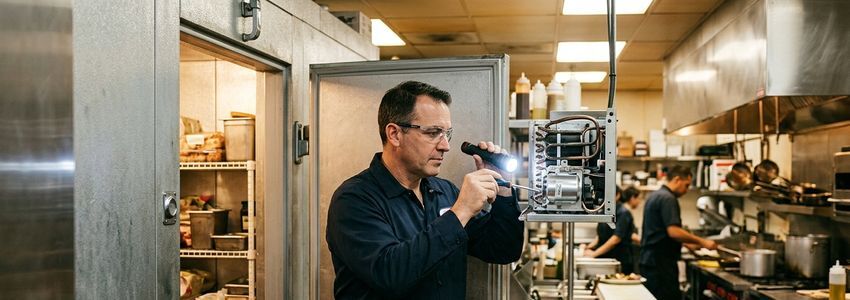
A walk-in cooler compressor failure is one of the fastest-moving emergencies a food business can face. Within hours, product temperatures climb past safe holding levels, inventory starts to spoil, and a kitchen that depends on cold storage can grind to a halt. For restaurant owners, grocers, caterers, and distributors, understanding financing options for a walk-in cooler compressor failure is often the difference between a controlled repair and a full-blown crisis.
This guide walks through what actually happens when a compressor fails, why waiting to save up cash is rarely the right call, and the specific financing tools business owners use to get a replacement compressor installed fast, without draining working capital reserves that are needed to keep the rest of the business running.
In This Article
- What Happens When a Compressor Fails
- Common Types of Compressor Failures
- Why This Is a Financing Emergency
- How Financing Works for Emergency Repairs
- Financing Options to Consider
- Who This Financing Is Best For
- Comparing Your Options
- How Crestmont Capital Helps
- Real-World Scenarios
- Preventing Future Failures
- FAQ
- Next Steps
What Happens When a Walk-In Cooler Compressor Fails
The compressor is the mechanical heart of a walk-in cooler system. It circulates and pressurizes refrigerant so the coils inside the box can pull heat out of the air. When the compressor fails, whether from a burned-out motor winding, a seized piston, a refrigerant leak that starves the unit, or simple end-of-life wear, the entire cooling cycle stops. There is no partial failure mode where a walk-in "cools a little slower." Once the compressor is down, the box begins warming toward ambient kitchen or warehouse temperature almost immediately.
For a business that stores proteins, dairy, produce, or any perishable inventory, that clock starts ticking the moment the unit stops running. Health codes generally require potentially hazardous food to stay at 41 degrees Fahrenheit or below, and most walk-ins will lose safe holding temperature within four to eight hours depending on box size, door traffic, and ambient conditions. That is a narrow window to diagnose the problem, source a replacement compressor, and get a technician on site.
A full compressor replacement on a commercial walk-in cooler typically runs anywhere from $2,500 to $9,000 depending on the compressor size, refrigerant type, and whether the condensing unit needs to be replaced alongside it. Emergency after-hours service calls, expedited parts shipping, and disposal of spoiled inventory can push the total cost of the incident well beyond the repair invoice alone.
Key Stat: Refrigeration failures cost restaurants an average of roughly $18,000 per year in combined repair costs, spoiled inventory, and lost sales, according to industry equipment data. A single walk-in cooler compressor failure can account for a large share of that annual figure in one incident.
Common Types of Walk-In Cooler Compressor Failures
Not every compressor failure looks the same, and the type of failure often determines both the repair cost and how urgently financing needs to be arranged. Understanding the common failure modes can help you have a more informed conversation with your technician and make a faster decision about financing.
- Burned-out motor windings: Often caused by electrical surges, voltage fluctuations, or a compressor running well past its expected lifespan. This usually requires a full compressor swap rather than a partial repair.
- Refrigerant leaks starving the system: A slow leak can cause the compressor to run constantly trying to reach set temperature, eventually leading to overheating and failure. This often means both a leak repair and a compressor replacement are needed.
- Mechanical seizure: Internal components like pistons or valves can seize from lack of lubrication, age, or contamination in the refrigerant line. A seized compressor cannot be repaired and must be replaced.
- Electrical component failure: Start relays, capacitors, or control boards can fail independently of the compressor itself. These are sometimes less expensive to fix, but a technician needs to diagnose whether the compressor motor itself is still healthy.
- Age-related wear: Commercial compressors typically have a working life of 10 to 15 years. A unit failing near or past that mark is often better replaced than repaired, since a repair only extends the life of an already-aging system.
Whichever failure mode applies to your situation, the financial impact is largely the same: an unplanned, time-sensitive expense that most operating budgets are not built to absorb without support.
Why a Compressor Failure Is a Financing Emergency, Not a Maintenance Line Item
Many business owners try to absorb a compressor failure out of cash flow, treating it like a routine maintenance expense. The problem is that a walk-in cooler compressor failure rarely arrives on a convenient timeline. It tends to happen during a slow month, right after a big inventory order, or alongside another unplanned expense like a payroll cycle or a vendor payment due date.
Draining a cash reserve to cover an emergency repair can leave a business without a buffer for the next surprise, whether that is a second piece of equipment failing, a slow receivables month, or a seasonal dip in revenue. Financing the repair or replacement instead preserves working capital for day-to-day operations while spreading the cost of the equipment over a term that matches its useful life, often three to seven years for refrigeration equipment.
There is also a speed dimension. A business that has already lined up a relationship with a lender, or that understands which financing product fits an emergency equipment purchase, can move from diagnosis to funded repair in a matter of days rather than weeks. That speed matters when spoiled inventory and lost revenue are accumulating by the hour.
Cooler Down? Don't Wait to Fix It.
Get fast, flexible financing to cover an emergency compressor replacement. No obligation, apply in minutes.
Apply Now →How Financing Works for Emergency Equipment Repairs
Financing an emergency compressor replacement follows a similar process to any small business loan or equipment financing product, but lenders who understand emergency repair situations can move much faster than a standard bank underwriting timeline. Here is what the process generally looks like from the moment the compressor fails to funds hitting your account.
Quick Guide
Emergency Compressor Financing: How It Works
A refrigeration technician diagnoses the failure and quotes the compressor replacement, including parts and labor.
Submit a short application with basic business and financial details. Most lenders ask for a few months of bank statements.
Many lenders offering working capital or equipment financing can return a decision within 24 to 48 hours.
Once approved, funds typically land within one to two business days, allowing you to pay the technician and get the compressor installed.
Financing Options for a Walk-In Cooler Compressor Replacement
Not every business needs the same financing tool. The right product depends on how the repair is being handled, whether the whole condensing unit needs replacement, and how the business's cash flow and credit profile look. Below are the most common options business owners use for this exact situation.
- Equipment financing: Structured specifically around purchasing or replacing equipment like a compressor or full condensing unit, with the new equipment often serving as collateral. Terms typically run three to seven years, which spreads the cost over the equipment's useful life. Commercial kitchen equipment financing is built for exactly this kind of purchase.
- Unsecured working capital loans: A lump sum of cash that is not tied to a specific piece of equipment, useful when the compressor replacement is bundled with other emergency costs like spoiled inventory replacement or a temporary rental cooler. Learn more about unsecured working capital loans.
- Business line of credit: A revolving credit line that a business can draw against as needed and only pay interest on what is used. This is a strong fit for businesses that want a standing reserve for future equipment surprises, not just this one. See details on a business line of credit.
- SBA-backed loans: For businesses with time to plan (for example, replacing an aging walk-in system proactively rather than reactively after a failure), SBA loan programs can offer longer terms and lower rates, though the approval timeline is longer than an emergency situation usually allows.
- Restaurant equipment financing: For food service operators specifically, dedicated restaurant equipment financing programs are built around the realities of kitchen equipment purchases and replacements.
Who This Financing Is Best For
Emergency compressor financing tends to make the most sense for a specific set of business situations. Understanding where your business falls can help clarify which product to pursue.
- Restaurants and food service operations that cannot afford extended downtime on cold storage without menu disruption or spoilage losses.
- Grocery stores and specialty food retailers where the walk-in cooler holds the bulk of daily sellable inventory.
- Distributors and wholesalers whose entire business model depends on maintaining a cold chain for customer deliveries.
- Caterers and event businesses that need reliable cold storage capacity ahead of scheduled events and cannot push a repair back.
- Businesses without a large cash reserve earmarked for equipment failures, which describes a large share of small and mid-size operators.
- Owners who want to avoid liquidating savings or maxing out a personal credit card to cover a business equipment emergency.
Comparing Your Financing Options
Business owners facing a compressor failure often default to whatever is fastest, but it is worth comparing the real tradeoffs across the options available.
| Option | Speed | Cost of Capital | Best For |
|---|---|---|---|
| Cash reserves | Immediate | None, but depletes buffer | Businesses with a large emergency fund |
| Personal credit card | Immediate | High interest rates | Very small repair amounts only |
| Equipment financing | 1-3 days | Moderate, fixed terms | Replacing the compressor or full unit |
| Working capital loan | 1-2 days | Moderate to higher, flexible use | Bundling repair with related losses |
| Business line of credit | Same day if already established | Interest only on funds drawn | Ongoing equipment reserve |
According to the U.S. Small Business Administration, access to timely capital remains one of the top challenges cited by small business owners, which is exactly why having a financing option identified before an emergency hits can save critical time when a compressor actually fails.
Preventing the Next Compressor Failure
Once an emergency repair is behind you, it is worth thinking about how to avoid repeating the experience. Compressor failures are rarely completely random. Most are the end result of deferred maintenance, an aging unit running past its expected service life, or a smaller mechanical issue that was never addressed.
- Schedule regular preventative maintenance. A quarterly or semi-annual service visit from a qualified refrigeration technician can catch early warning signs like refrigerant leaks, worn electrical components, or dirty condenser coils before they cause a full failure.
- Track the age of your equipment. If your compressor or condensing unit is approaching 10 to 12 years old, start budgeting or pre-qualifying for financing proactively rather than waiting for a failure to force the decision.
- Keep condenser coils clean. Dust and debris buildup forces a compressor to work harder to maintain temperature, shortening its lifespan and increasing energy costs in the meantime.
- Monitor temperature logs. A cooler that is running warmer than usual, cycling more frequently, or taking longer to recover after door openings can be an early sign of a compressor under strain.
- Consider a service contract. Many refrigeration companies offer maintenance contracts that include priority emergency response, which can shorten the diagnostic-to-repair timeline if a failure does happen.
Pairing proactive maintenance with a financing plan already in place, such as a pre-approved business line of credit, gives a business the best of both worlds: a lower likelihood of failure and a fast path to funding if one happens anyway.
How Crestmont Capital Helps
Crestmont Capital works with business owners across the restaurant, grocery, distribution, and hospitality sectors to structure financing around emergency equipment situations like a failed walk-in cooler compressor. Rather than a one-size-fits-all product, Crestmont evaluates the specifics of the repair, the business's cash flow, and the timeline pressure to recommend the right structure, whether that is equipment financing for the new compressor, an unsecured working capital loan to cover the full incident cost, or a business line of credit for ongoing equipment reserve capacity.
Crestmont has also worked with businesses on related refrigeration financing needs, including a full refrigeration system failure and emergency replacement and businesses that were expanding cold storage capacity proactively rather than reactively. The application process is designed to be fast and straightforward, with minimal paperwork required to get a decision, because Crestmont understands that a business facing a compressor failure does not have weeks to wait on financing.
Keep Your Cold Storage Running
Talk to Crestmont Capital about fast financing for your compressor replacement. No obligation, apply in minutes.
Apply Now →Real-World Scenarios
Scenario 1: The Neighborhood Restaurant
A family-owned Italian restaurant discovers on a Saturday morning, its busiest prep day, that the walk-in cooler compressor has seized overnight. With a wedding rehearsal dinner booked that evening, the owner cannot afford to wait days for a decision. She applies for an unsecured working capital loan online, is approved within hours, and has funds in her account before the technician even finishes the diagnostic visit. The compressor is replaced by early afternoon, and the event goes on as planned.
Without financing in place, the owner would have faced an impossible choice: cancel a high-value private event and refund the deposit, or attempt to run the event without reliable cold storage and risk a food safety violation. The cost of the loan ended up being a small fraction of the revenue and reputation that were protected by keeping the kitchen fully operational.
Scenario 2: The Regional Grocery Store
A small independent grocer's walk-in produce cooler compressor fails during a summer heat wave, threatening thousands of dollars in fresh produce. The owner uses equipment financing to replace not just the compressor but the aging condensing unit alongside it, since the technician flags that the rest of the system is near end of life. Spreading the cost over five years keeps the monthly payment manageable while preventing a repeat failure next season.
Scenario 3: The Catering Company
A catering business relies on a walk-in cooler to stage ingredients for back-to-back weekend events. When the compressor fails midweek, the owner draws against an existing business line of credit that was set up months earlier specifically for equipment emergencies. Because the line was already in place, funds are available the same day, with no new application required.
Scenario 4: The Regional Distributor
A wholesale food distributor with multiple walk-in units at its warehouse experiences a compressor failure on one of three coolers. Rather than risk a domino effect on inventory stored across the facility, the company finances an immediate replacement plus a service contract on the remaining two units, using a working capital loan that also covers the temporary rental refrigeration unit brought in during the repair window.

Frequently Asked Questions
How much does a walk-in cooler compressor replacement typically cost?
A full compressor replacement on a commercial walk-in cooler generally ranges from $2,500 to $9,000, depending on the compressor size, refrigerant type, labor rates in your area, and whether the condensing unit needs to be replaced along with the compressor.
How fast can I get financing for an emergency compressor replacement?
Many online lenders and alternative financing providers can return a decision within 24 to 48 hours, with funds disbursed shortly after approval. This is significantly faster than traditional bank loan timelines, which is why emergency equipment financing has become a common tool for this exact situation.
Should I repair the compressor or replace the whole condensing unit?
A common rule of thumb in refrigeration is that if a repair costs more than 50 percent of the value of a full replacement and the unit is over 10-12 years old, replacement is usually the more economical long-term choice. A qualified technician can assess your specific system and give a recommendation.
What is equipment financing and how does it apply to a compressor replacement?
Equipment financing is a loan structured specifically around purchasing equipment, in this case a replacement compressor or condensing unit. The equipment often serves as collateral, which can make approval easier and terms more favorable than an unsecured loan.
What credit score do I need to qualify for emergency equipment financing?
Requirements vary by lender and product, but many working capital and equipment financing options are available to business owners with fair to good credit, and some programs accommodate lower credit scores as well. Time in business and cash flow are often weighed alongside credit score.
Can I finance the repair along with the cost of spoiled inventory?
Yes. An unsecured working capital loan is not restricted to a single expense, which makes it a common choice when a business needs to cover the compressor repair, replace spoiled inventory, and potentially rent a temporary cooler all at once.
Is a business line of credit better than a one-time loan for this situation?
A line of credit is ideal if you want an ongoing reserve for equipment emergencies beyond just this one, since you only pay interest on what you draw. A one-time loan or equipment financing product may be simpler if you know this is a single, defined expense.
How long are typical repayment terms for a compressor replacement loan?
Equipment financing terms for refrigeration equipment typically run three to seven years, aligning the payment schedule with the expected useful life of the compressor or condensing unit. Working capital loans usually have shorter terms, often 6 to 24 months.
What documents do I need to apply for emergency equipment financing?
Most lenders ask for basic business information, several months of business bank statements, and sometimes a repair quote or invoice from the technician. Some programs are application-only for smaller amounts, minimizing paperwork during a time-sensitive repair.
Will financing a repair affect my ability to get other business loans later?
Taking on a reasonable, well-structured loan for a necessary equipment repair is generally viewed favorably by future lenders, especially if payments are made on time. What matters most is that your total debt load stays proportional to your revenue and cash flow.
Can startups or newer businesses get financing for a compressor failure?
Newer businesses may have fewer financing options and higher rates than established businesses, but options do exist, particularly equipment-secured financing where the collateral value of the equipment offsets limited time in business.
Should I set up financing before a compressor fails, not after?
Setting up a business line of credit or pre-qualifying for equipment financing before an emergency happens can dramatically shorten the time between a failure and a funded repair. Many business owners treat this as standard risk management for aging refrigeration equipment.
How can I tell if my compressor is close to failing before it actually breaks?
Warning signs include unusual noises like grinding or clicking, the compressor cycling on and off more frequently, ice buildup on coils, longer run times to reach set temperature, and higher-than-normal energy bills. Regular preventative maintenance can catch these signs early.
Can I use financing for a walk-in freezer compressor failure the same way as a cooler?
Yes. Walk-in freezer compressors fail for the same underlying reasons as walk-in cooler compressors, and the same financing products (equipment financing, working capital loans, and lines of credit) apply equally to either type of unit.
Does Crestmont Capital finance walk-in cooler compressor replacements?
Yes. Crestmont Capital offers equipment financing, unsecured working capital loans, and business lines of credit that can be used to cover a compressor replacement, related repair costs, and inventory losses. Apply online to see what you qualify for.
Don't Let a Broken Compressor Cost You More Than It Should
Get the financing you need today and get your cold storage back online fast.
Apply Now →Next Steps
Conclusion
A walk-in cooler compressor failure is not a scenario most business owners plan for, but it is one of the most common and costly equipment emergencies in the food service, grocery, and distribution industries. Understanding financing options ahead of time, from equipment financing to unsecured working capital loans to a standing business line of credit, gives you the ability to act fast when it happens instead of scrambling for cash or absorbing a painful hit to your reserves. Crestmont Capital works with business owners every day to structure fast, flexible financing for exactly this kind of emergency equipment need, so a broken compressor does not turn into a prolonged business disruption.
Disclaimer: The information provided in this article is for general educational purposes only and is not financial, legal, or tax advice. Funding terms, qualifications, and product availability may vary and are subject to change without notice. Crestmont Capital does not guarantee approval, rates, or specific outcomes. For personalized information about your business funding options, contact our team directly.