A walk-in cooler condenser failure is one of the fastest ways a restaurant, grocery store, or food distribution business can lose money overnight. Walk-in cooler condenser failure financing gives business owners a way to cover emergency repair or replacement costs immediately, before spoiled inventory and lost sales turn a mechanical problem into a much bigger financial one. When the condenser goes down, the clock starts ticking on everything stored inside that cooler, and most operators cannot afford to wait weeks for a repair fund to build up on its own.
In This Article
- What Is a Walk-In Cooler Condenser Failure?
- Why Financing Beats Waiting on a Failed Condenser
- How Condenser Failure Financing Works
- Financing Options for Emergency Refrigeration Repairs
- Who This Financing Is Best For
- Comparing Your Financing Options
- How Crestmont Capital Helps
- Real-World Scenarios
- FAQ
- Next Steps
What Is a Walk-In Cooler Condenser Failure?
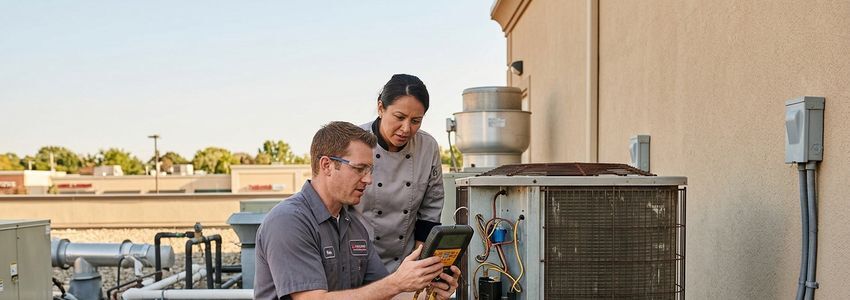
The condenser is the part of a walk-in cooler's refrigeration system that releases heat pulled out of the box so the refrigerant can cycle back through and keep cooling. It typically sits outside the cooler, either on a rooftop, in a mechanical room, or mounted to an exterior wall, and it works constantly alongside the compressor and evaporator to hold the interior at a safe temperature. When the condenser fails, whether from a seized fan motor, a clogged or corroded coil, a refrigerant leak, or an electrical fault, the entire refrigeration cycle breaks down and the cooler begins to warm up almost immediately.
Unlike a slow temperature drift, a full condenser failure often happens with little or no warning. A business owner might walk in the next morning to find the cooler at 55 degrees instead of 38, with an entire day's or week's worth of proteins, dairy, produce, and prepared food already sitting in the temperature danger zone. Because condensers are exposed to weather, grease-laden air, and dust, they tend to fail after years of gradual wear rather than sudden misuse, but the failure itself is almost always abrupt.
Walk-in cooler condenser failure financing refers to any fast-moving business funding product, such as a short-term loan, a business line of credit, or equipment financing, used specifically to pay for emergency diagnosis, parts, and installation labor when this kind of breakdown happens. Because refrigeration contractors typically want payment at the time of service or shortly after, having financing lined up in advance (or ready to apply for the moment a technician gives you a quote) is what separates a one-day disruption from a multi-day shutdown.
Key Stat: According to the Small Business Administration, equipment purchases and repairs are one of the most common reasons small businesses seek outside financing, since equipment can serve as its own collateral and often speeds up approval compared to unsecured funding requests.
Why Financing Beats Waiting on a Failed Condenser
Every hour a walk-in cooler sits above safe holding temperature is an hour of inventory value draining away. Financing the repair or replacement immediately, rather than waiting to save up the cash or delaying the technician's visit, protects the business in several concrete ways.
- Stops the spoilage clock fast. Getting a technician on-site and paid the same day is usually the difference between losing a few hundred dollars of product and losing thousands.
- Preserves health department standing. A prolonged temperature excursion can trigger a failed inspection, a forced closure, or a costly re-inspection process. Fast repair funding keeps that risk off the table.
- Keeps the menu or shelves intact. Restaurants and grocers that cannot access refrigerated inventory often have to cut menu items or pull products, which directly reduces daily revenue on top of the repair cost.
- Avoids emergency-rate premiums without delay. Refrigeration contractors often charge more for rush service, but paying that premium immediately is usually cheaper than the compounding cost of extended downtime.
- Protects staff and customers. A cooler that cannot hold safe temperatures is a food safety liability the moment it happens, not just an inconvenience.
- Frees up working capital for everything else. Financing the repair means payroll, rent, and supplier payments do not have to be delayed or shuffled to cover an emergency expense.
Business owners who have been through an equipment failure before often say the real cost was never just the repair invoice. It was the missed catering order, the walk-out customers, or the days spent operating with a half-stocked line while parts were on backorder. Financing exists precisely to close that gap between "the part is available" and "we have the cash to pay for it right now."
How Condenser Failure Financing Works
Getting funded for an emergency refrigeration repair follows a fairly predictable path, and most lenders who specialize in small business equipment and working capital financing have streamlined it specifically because breakdowns like this are so common.
Quick Guide
Walk-In Cooler Condenser Financing at a Glance
A refrigeration contractor diagnoses the condenser and provides a written estimate for parts and labor.
Submit a short application with basic business and revenue information, often without a hard credit pull upfront.
Many lenders return same-day or next-day decisions based on bank statements and cash flow rather than perfect credit.
Funds are deposited directly to the business bank account, often within one to two business days.
What separates equipment and working capital lenders who understand food service from generalist lenders is speed of underwriting. A lender familiar with restaurant and grocery operations recognizes that a refrigeration failure is not a red flag on the business, it is simply a mechanical event, and they will typically move faster than a traditional bank that requires weeks of documentation review.
Cooler Down? Don't Let Inventory Spoil.
Get fast, flexible financing from the #1 business lender in the U.S. No obligation, apply in minutes and get a decision fast.
Apply Now →Financing Options for Emergency Refrigeration Repairs
Not every business needs the same type of financing for a condenser failure. The right choice usually depends on the size of the repair bill, how quickly funds are needed, and whether the business is replacing a component or the entire refrigeration unit.
Business Line of Credit
A revolving line of credit is often the single best tool for a condenser emergency because it can be drawn on the moment the need arises, with no need to reapply for future repairs. Businesses only pay interest on what they actually draw, which makes it efficient for a repair that might range from a few thousand dollars for a coil replacement to well over ten thousand for a full unit swap.
Equipment Financing
When the condenser or the entire condensing unit needs to be replaced rather than repaired, equipment financing allows the business to spread the cost of the new unit over a term that roughly matches its useful life. The equipment itself typically serves as collateral, which can make approval faster and terms more favorable than an unsecured product.
Short-Term Working Capital Loan
A short-term loan provides a lump sum with a fixed repayment schedule, which works well for a business that wants a predictable payoff date and does not plan to need ongoing access to the same credit line for future repairs.
Unsecured Working Capital Loans
For businesses that need funds quickly but do not want to put up specific collateral, unsecured working capital financing can bridge the gap based primarily on business revenue and bank statement history rather than hard assets.
Many operators end up using more than one of these tools over the life of their business, pairing a standing line of credit for smaller emergencies with equipment financing for larger capital replacements.
Who This Financing Is Best For
Walk-in cooler condenser failure financing is most useful for businesses where refrigeration is not optional, meaning downtime directly threatens revenue or compliance. That typically includes:
- Restaurants and quick-service operators who cannot serve most of the menu without cold storage for proteins, dairy, and produce.
- Grocery and convenience stores carrying perishable inventory that represents a large share of total sales.
- Catering companies and commissary kitchens operating on tight event timelines where a delayed repair can mean a missed contract.
- Food distributors and wholesalers storing product for multiple downstream customers, where a single failure can ripple across several accounts.
- Bakeries, cafes, and bars that rely on consistent cold storage for dairy, produce, and perishable ingredients even if refrigeration is not their primary product line.
- Multi-location operators who need a repeatable, fast funding process because equipment failures are a recurring cost of doing business across several sites.
Businesses that are seasonal, newer, or still building strong credit are often good candidates too, since many lenders in this space weigh cash flow and revenue history more heavily than a perfect credit score, particularly for smaller repair amounts.
Comparing Your Financing Options
The table below breaks down how the main financing paths compare on speed, structure, and best use case for a condenser repair or replacement.
| Financing Type | Typical Speed | Best For | Collateral |
|---|---|---|---|
| Business Line of Credit | Same day to 2 days | Recurring or unpredictable repair costs | Usually none required |
| Equipment Financing | 2 to 5 days | Full condensing unit replacement | The equipment itself |
| Short-Term Working Capital Loan | 1 to 3 days | One-time repair with fixed payoff | Usually none required |
| Unsecured Working Capital | 1 to 3 days | Businesses without hard collateral to pledge | None |
Traditional bank loans and SBA-backed products can offer lower rates over time, but they are rarely fast enough for a same-week emergency. They are worth exploring for planned refrigeration upgrades on a longer timeline, but for an active condenser failure, speed usually outweighs rate.
How Crestmont Capital Helps
Crestmont Capital works with restaurants, grocers, distributors, and other food-dependent businesses that need funding fast when refrigeration equipment fails. Rather than requiring weeks of underwriting, Crestmont focuses on a business's actual cash flow and revenue history to make a funding decision quickly, so a condenser replacement does not turn into a multi-week shutdown.
Depending on the size of the repair and how the business prefers to structure repayment, Crestmont's business line of credit can provide standing access to funds for this failure and future ones, while equipment financing is built specifically for replacing a full condensing unit or refrigeration system when repair is no longer cost-effective. For businesses that want a lump sum with a fixed term, unsecured working capital loans are also available without requiring specific collateral.
Businesses that have already dealt with a related refrigeration failure, such as a compressor or evaporator fan going out, may find it useful to compare notes with Crestmont's guide on walk-in cooler compressor failure financing, since the funding process and urgency are nearly identical. For a broader look at keeping refrigeration running year-round, the walk-in cooler and freezer financing guide covers planned upgrades as well as emergency repairs.
Every application is reviewed by a funding specialist who understands the food service and grocery industries, not just a generic underwriting checklist. That industry familiarity is often what allows Crestmont to move faster than a traditional lender when a business calls in with an active refrigeration emergency.
Get Your Kitchen Back Up and Running
Crestmont Capital helps food businesses fund emergency equipment repairs fast. Apply now and see what you qualify for.
Apply Now →By the Numbers
Walk-In Cooler Condenser Failure - Key Figures
$103.6B
Monthly U.S. eating and drinking place sales, per Census Bureau retail data
75%
Equipment financing available for as little as one to two days after approval
10-25 Yrs
Typical SBA equipment loan repayment terms, per SBA.gov guidance
42%
Share of restaurant financing requests tied to equipment needs
Real-World Scenarios
Scenario 1: The Overnight Failure
A mid-size restaurant's kitchen manager arrived at 6 a.m. to find the walk-in cooler at 58 degrees. A refrigeration contractor diagnosed a seized condenser fan motor and quoted $2,400 for parts and same-day labor. The owner applied for a short-term working capital loan on a mobile phone in the parking lot, was approved within an hour, and had the repair paid for before the lunch rush. Total inventory loss was limited to a single case of dairy that had already started to warm.
Scenario 2: The Full Unit Replacement
A grocery store's 15-year-old condensing unit failed completely after a refrigerant leak corroded the coil beyond repair. The replacement quote came in at $14,500 including labor and a crane rental for the rooftop unit. The owner used equipment financing to spread the cost over five years, keeping monthly payments manageable while avoiding a five-figure hit to cash reserves during a slow season.
Scenario 3: The Multi-Location Operator
A regional catering company with four commissary kitchens experienced condenser failures at two locations within the same quarter. Rather than applying separately each time, the owner set up a standing business line of credit specifically to cover equipment emergencies across all locations, drawing funds only when needed and repaying between incidents.
Scenario 4: The Weekend Emergency
A bakery's condenser failed on a Saturday morning before a large wedding order was set to be assembled. Because most banks are closed on weekends, the owner relied on an online lender offering unsecured working capital financing with a same-day decision, allowing an emergency technician to be paid in cash and the order to be saved.
Frequently Asked Questions
What is a walk-in cooler condenser and why does it fail?
The condenser releases heat from the refrigerant so the cooling cycle can continue. It commonly fails due to a worn fan motor, a clogged or corroded coil, a refrigerant leak, or an electrical fault after years of exposure to outdoor weather and airborne grease.
How much does it cost to repair or replace a condenser?
Minor repairs such as a fan motor swap can run a few hundred to a couple thousand dollars. A full condensing unit replacement, including labor and any crane or electrical work, often falls between $10,000 and $20,000 depending on unit size and installation complexity.
How fast can I get financing for an emergency refrigeration repair?
Many alternative lenders, including Crestmont Capital, can provide a funding decision the same day or within one business day, with funds deposited shortly after approval. This is significantly faster than traditional bank loans.
Do I need good credit to qualify for condenser failure financing?
Not necessarily. Many working capital and equipment financing products weigh business revenue and bank statement history more heavily than personal credit score, especially for smaller repair amounts.
Should I repair the condenser or replace the entire unit?
A qualified refrigeration contractor can advise based on the unit's age and the extent of the failure. As a general rule, if the unit is more than 10 to 12 years old or the repair cost approaches half the price of a new unit, replacement is often more cost-effective long term.
Can I use a business line of credit for future refrigeration emergencies too?
Yes. A revolving line of credit stays open after the initial repair is paid off, so it can be drawn on again for future equipment issues without a new application each time.
What documents do I need to apply?
Most lenders ask for a few months of business bank statements, basic business information, and the repair quote or invoice from the refrigeration contractor. Extensive tax return history is often not required for smaller emergency amounts.
Will my insurance cover the condenser failure instead?
Standard equipment breakdown from age or wear is often excluded or limited under general property policies unless a specific equipment breakdown rider is in place. Even when coverage exists, claims can take time to process, so financing is frequently used to bridge the gap while a claim is reviewed.
How much inventory loss should I expect from a condenser failure?
Loss depends heavily on how quickly the failure is caught and repaired. A same-day repair may limit losses to a single shift's worth of product, while an unaddressed multi-day outage can spoil an entire week of inventory.
Is equipment financing only for buying new equipment?
No. Equipment financing can also be used for replacing a failed component or an entire refrigeration system, since the new equipment itself typically serves as collateral for the loan regardless of whether it is a repair or an upgrade.
Can startups or newer businesses qualify for this type of financing?
Many alternative lenders will consider newer businesses, particularly for smaller repair amounts, as long as there is consistent revenue and healthy bank account activity to review.
What is the difference between the condenser, compressor, and evaporator?
The compressor pressurizes refrigerant, the condenser releases the heat that pressurization created, and the evaporator inside the box absorbs heat from the cooler's air. All three work together, and a failure in any one component can bring down the whole system.
How long does full condensing unit installation take?
A straightforward swap can often be completed in a single day, though rooftop units requiring crane access or electrical upgrades may take two to three days depending on contractor availability and permitting.
Can preventive maintenance reduce the risk of a condenser failure?
Yes. Regular coil cleaning, fan motor inspections, and refrigerant checks by a licensed technician can extend condenser life significantly and catch early warning signs before a full failure occurs, though even well-maintained units eventually reach end of life.
How do I apply for walk-in cooler condenser failure financing with Crestmont Capital?
You can apply online in minutes with basic business details and recent bank statements. A funding specialist will review your situation and reach out quickly with financing options suited to the size and urgency of your repair.
Don't Let a Broken Condenser Cost You More Than the Repair
Apply now for fast business financing and get your refrigeration back online before inventory is lost.
Apply Now →Next Steps: What to Do Right Now If Your Condenser Has Failed
Conclusion
A walk-in cooler condenser failure is rarely convenient, and it almost never gives advance notice. The businesses that come through it with the least financial damage are usually the ones that treat financing as part of the emergency response, not a last resort after the inventory has already spoiled. Whether the fix is a quick fan motor swap or a full condensing unit replacement, walk-in cooler condenser failure financing exists specifically to keep the repair moving at the same speed as the problem.
Crestmont Capital works with restaurants, grocers, and food-dependent businesses across the country to get emergency refrigeration repairs funded quickly, so a mechanical failure does not turn into a lost week of sales. If a condenser has already failed, or if it is time to build a financial safety net before the next one does, applying now is the fastest way to protect the inventory that keeps the business running.
Disclaimer: The information provided in this article is for general educational purposes only and is not financial, legal, or tax advice. Funding terms, qualifications, and product availability may vary and are subject to change without notice. Crestmont Capital does not guarantee approval, rates, or specific outcomes. For personalized information about your business funding options, contact our team directly.