In the world of construction, the foundation of any project is just that- the foundation. Proper soil and asphalt compaction is non-negotiable for ensuring the structural integrity and longevity of roads, buildings, and infrastructure. This is where the vibratory roller, a powerhouse of compaction technology, becomes an indispensable asset. But these critical pieces of heavy equipment represent a significant capital investment. For growing construction companies and independent contractors, vibratory roller financing isn't just an option; it's a strategic tool that enables growth, preserves cash flow, and provides a competitive edge without draining financial resources.
Whether you're looking to acquire your first single-drum compactor for site preparation or adding a fleet of double-drum asphalt rollers for a major highway project, understanding the landscape of compaction equipment financing is essential. This comprehensive guide will walk you through every aspect, from the types of rollers you can finance and how the process works to comparing different funding solutions and qualifying- even with less-than-perfect credit. We will provide the clarity you need to make informed financial decisions that pave the way for your business's success.
In This Article
- What Is a Vibratory Roller?
- Why Finance a Vibratory Roller Instead of Buying Outright?
- Types of Vibratory Rollers You Can Finance
- How Vibratory Roller Financing Works
- Vibratory Roller Financing Options
- What Does Vibratory Roller Financing Cost?
- How to Qualify for Vibratory Roller Financing
- Vibratory Roller Financing with Bad Credit
- How Crestmont Capital Helps Secure Your Funding
- Real-World Scenarios: Financing in Action
- Frequently Asked Questions (FAQ)
- Your Next Steps to Secure Funding
What Is a Vibratory Roller?
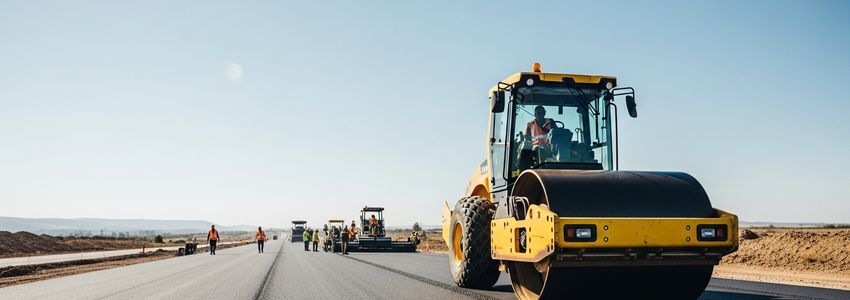
At its core, a vibratory roller, also known as a roller compactor or road roller, is a piece of heavy construction equipment designed to compact soil, gravel, concrete, or asphalt. Unlike a static roller that relies solely on its weight (static pressure) to compress material, a vibratory roller incorporates a dynamic force that dramatically increases its compaction efficiency. This is the key differentiator and why these machines are so vital for modern construction.
The "vibratory" mechanism consists of one or more eccentric weights inside the steel drum. As the drum rotates, these off-center weights spin rapidly, creating a powerful vibrating or oscillating motion. This action generates dynamic loads that are transferred into the ground. The vibrations reduce the frictional forces between soil or aggregate particles, allowing them to settle closer together into a denser, more stable mass. This process removes air voids and creates a solid, uniform base that can withstand heavy loads and resist deformation over time.
Achieving the specified level of compaction, often measured as a percentage of maximum Proctor density, is a critical quality control benchmark in civil engineering and construction. Failure to achieve proper compaction can lead to premature pavement failure, foundation settlement, and catastrophic structural issues. Vibratory rollers are the primary tool used to meet these stringent engineering requirements efficiently. They allow contractors to achieve deeper and more uniform compaction in fewer passes than a static roller, saving significant time, fuel, and labor costs on the job site. This efficiency is precisely why access to modern, reliable vibratory rollers is a cornerstone of a profitable construction operation.
Why Finance a Vibratory Roller Instead of Buying Outright?
The sticker price of a new or even a well-maintained used vibratory roller can range from tens of thousands to well over a hundred thousand dollars. Paying for such an asset with cash can place an immense strain on a construction business's finances. Financing offers a strategic alternative with numerous compelling advantages over a direct cash purchase.
1. Preservation of Working Capital: This is the most significant benefit. Cash is the lifeblood of any construction business. It's needed for payroll, purchasing materials, covering fuel costs, marketing, and handling unexpected expenses. Tying up a large sum of cash in a single piece of equipment can leave a business vulnerable and limit its ability to operate smoothly or seize new opportunities. Financing allows you to acquire the roller you need while keeping your cash reserves liquid and available for daily operational needs.
2. Predictable Budgeting and Cash Flow Management: A equipment financing agreement breaks down the total cost of the roller into fixed, predictable monthly payments over a set term. This makes budgeting far simpler. You know exactly what your equipment expense will be each month, which helps in forecasting project costs and managing cash flow with greater accuracy. A large, unplanned cash purchase can disrupt your financial forecasting for months.
3. Immediate Access to Essential Equipment: Winning a big contract often depends on having the right equipment ready to go. You may not have the time to save up the full purchase price. Financing allows you to acquire the necessary road roller or vibratory compactor immediately, enabling you to start work, generate revenue, and let the equipment pay for itself over time. This speed and agility can be a major competitive advantage.
4. Access to Better, Newer Technology: The construction equipment industry is constantly evolving with more fuel-efficient engines, advanced GPS and telematics systems, and improved compaction technology. Financing can make it possible to afford a newer, more advanced model that you might not be able to buy with cash. This can lead to increased productivity, lower operating costs, and better project outcomes.
5. Scalability and Fleet Expansion: As your business grows, you'll need to expand your fleet. Financing provides a scalable model for growth. Instead of one massive cash outlay, you can add multiple pieces of equipment through manageable financing agreements. This allows you to scale your operations in line with your revenue growth, taking on larger and more profitable projects without overextending your capital.
6. Flexible Financing Structures: Lenders offer a variety of financing products, from term loans to specialized leases. This flexibility allows you to choose a structure that best aligns with your business's financial situation and long-term goals. You can select terms, payment schedules (including seasonal payments for businesses in colder climates), and buyout options that fit your needs, which is not an option with a cash purchase.
In essence, financing a vibratory roller is not about an inability to pay; it's a sophisticated financial strategy. It transforms a major capital expenditure into a manageable operating expense, allowing you to leverage your capital more effectively for growth and stability.
Ready to Compact the Competition?
Don't let a lack of capital hold you back. Get the vibratory roller you need to win more bids and complete projects faster. See your financing options in minutes.
Get a Free Quote NowTypes of Vibratory Rollers You Can Finance
The term "vibratory roller" covers a wide range of machines, each designed for specific applications and materials. Lenders like Crestmont Capital can provide compaction equipment financing for virtually any type of new or used roller your business requires. Understanding the different types helps you select the right machine for your needs, which is a key factor in a successful financing application.
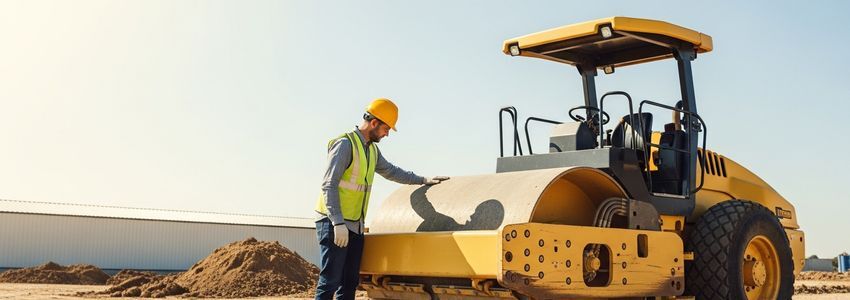
Single-Drum Rollers (Smooth Drum): This is one of the most common types of vibratory compactors. It features a large steel drum at the front and heavy-duty tires at the rear for propulsion and steering. The smooth drum is ideal for compacting granular materials like sand, gravel, and crushed rock, as well as for the final finishing pass on asphalt. They are workhorses for site preparation, road base construction, and large earthmoving projects.
Single-Drum Padfoot/Sheepsfoot Rollers: Structurally similar to a smooth drum roller, this variant has a drum covered in rectangular or tapered "pads" or "feet". These feet penetrate the surface of cohesive soils like clay and silt, manipulating the material from the bottom of the lift upwards. This kneading action breaks down soil clumps and forces air and moisture out, achieving superior compaction in sticky, high-moisture content soils where a smooth drum would be ineffective.
Double-Drum Rollers (Tandem Rollers): As the name implies, these machines have two steel drums, one at the front and one at the rear, both of which can vibrate. Double-drum rollers are the gold standard for asphalt compaction. They provide a smooth, consistent finish and are used for everything from small parking lots to large-scale highway paving projects. Their dual-drum design allows for efficient compaction in fewer passes, crucial for maintaining asphalt temperature during the paving process.
Trench Rollers (Remote-Controlled Compactors): Also known as multi-purpose compactors, these are smaller, articulated machines typically operated by remote control. They are designed for compacting soil in confined spaces like trenches for pipelines, utilities, and foundation backfills. The remote-control operation is a critical safety feature, keeping the operator out of the trench and away from potential collapses. Financing these specialized units is common for utility contractors and foundation specialists.
Pneumatic Tire Rollers: While not strictly "vibratory," pneumatic rollers are a key part of the compaction family and are often financed alongside vibratory equipment. They feature multiple rows of rubber tires instead of steel drums. The tires create a kneading, static pressure that is excellent for sealing the surface of new asphalt pavements, proof-rolling subgrades, and compacting chip-seal applications. Their unique compaction method helps ensure a dense, impermeable surface.
Financing is available for all major brands, including Caterpillar (CAT), Bomag, Hamm, Volvo, Dynapac, and Case. Whether you need a small trench roller for utility work or a massive highway-class asphalt compactor, a tailored road roller financing solution can put that asset to work for your business.
How Vibratory Roller Financing Works
Securing financing for a vibratory roller is a straightforward process, especially when working with a lender experienced in heavy equipment. While specifics can vary slightly between lenders, the core journey from application to funding follows a clear path. The goal is to get you the equipment you need with minimal downtime so you can get back to the job site.
The process is designed to be efficient, leveraging technology to speed up approvals while still performing the necessary due diligence. For the business owner, this means less paperwork, faster decisions, and quicker access to revenue-generating equipment. Here is a step-by-step breakdown of what to expect.
Step 1: Application
Complete a simple one-page online application. Provide basic information about your business, ownership, and the equipment you want to finance.
Step 2: Documentation
Submit necessary documents, typically just a few recent bank statements and an invoice for the roller from the dealer or seller.
Step 3: Underwriting & Approval
The lender reviews your application and documents to assess your business's financial health and determine creditworthiness, often providing an approval within hours.
Step 4: Funding
Once you accept the offer and sign the financing documents electronically, the lender pays the seller directly. You can then take delivery of your roller.
The beauty of this streamlined process is its speed. Traditional bank loans for equipment can take weeks or even months, involving mountains of paperwork and multiple meetings. Modern lenders focused on heavy equipment financing understand that in the construction industry, time is money. A project can't wait for a slow loan approval. The goal of this efficient four-step process is to move at the speed of your business, ensuring you never miss a contract due to a lack of equipment.
Vibratory Roller Financing Options
When it comes to funding your vibratory roller, there isn't a one-size-fits-all solution. Different financing products are designed to meet different business needs, ownership goals, and financial profiles. Understanding the key options will help you choose the best path for your company.
Equipment Financing Agreements (EFA) An EFA is one of the most popular forms of vibratory roller financing. It's a straightforward loan where you borrow money to purchase the equipment. You make regular payments for a predetermined term (e.g., 24-72 months), and at the end of the term, you own the roller free and clear. The roller itself serves as the primary collateral for the loan, which often simplifies the approval process compared to traditional bank loans that may require blanket liens on all your business assets.
- Best for: Businesses that want to build equity and own their assets long-term.
- Key Feature: Simple interest loan structure with clear ownership at the end.
Equipment Leases Leasing provides the use of a vibratory roller for a set period in exchange for regular payments, but the ownership structure is different. There are two main types:
- Capital Lease (or $1 Buyout Lease): This functions very much like an EFA. The lease payments cover the full value of the equipment, and at the end of the term, you can purchase the roller for a nominal amount, typically $1. It's essentially a financing arrangement structured as a lease.
- Operating Lease (or Fair Market Value Lease): With an operating lease, your payments are lower because you are only paying for the depreciation of the roller during the lease term, not its full value. At the end of the term, you have the option to return the equipment, purchase it for its fair market value (FMV), or renew the lease. This is a great option for businesses that want to have the latest equipment every few years and prefer lower monthly payments.
Best for: Businesses that want lower monthly payments or want to regularly upgrade their equipment to the latest models (Operating Lease), or those who want ownership with a different payment structure (Capital Lease).
Working Capital Loans While not a direct equipment financing product, a short-term business loan can be used to purchase a vibratory roller or make a substantial down payment. These loans provide a lump sum of cash that you can use for various business purposes. They can be a good option if you are buying a less expensive, used roller from a private party or if you want to bundle the equipment purchase with other business expenses. However, the rates may be higher than a secured equipment loan since the roller isn't the direct collateral.
- Best for: Purchasing lower-cost used equipment, or when you need funds for more than just the equipment itself.
Business Line of Credit A business line of credit gives you access to a revolving pool of funds that you can draw from as needed. You only pay interest on the money you use. You could use a line of credit to purchase a roller, and once you pay back the amount drawn, your credit line is replenished. This provides maximum flexibility, especially for businesses with fluctuating needs or those who want a financial safety net for future equipment purchases or repairs.
- Best for: Businesses seeking maximum flexibility to purchase equipment or cover other costs as they arise.
Industry Insight: According to market analysis reported by outlets like Forbes, the global construction equipment market is projected to grow significantly in the coming years. This growth is driven by increased infrastructure spending, and financing is the primary method used by over 80% of U.S. companies to acquire these essential assets.
What Does Vibratory Roller Financing Cost?
Understanding the potential costs associated with a vibratory compactor loan is crucial for making a sound financial decision. The total cost is influenced by several factors, not just a single interest rate. Here's a breakdown of the components that determine the cost of your financing.
Interest Rates and Factor Rates The primary cost of financing is the interest or factor rate. This is the fee the lender charges for providing the capital.
- Interest Rate: Used in traditional loans and EFAs, this is expressed as an annual percentage rate (APR). For prime borrowers with strong credit and several years in business, rates can be very competitive, often in the single digits. For businesses with fair credit or less time in business, rates will be higher.
- Factor Rate: Often used in alternative financing and for higher-risk borrowers, a factor rate is a decimal figure (e.g., 1.25). To calculate the total payback, you simply multiply the loan amount by the factor rate. A $50,000 roller financed with a 1.25 factor rate would have a total payback of $62,500 ($50,000 x 1.25).
Key Factors Influencing Your Rate:
- Credit Score: The single most important factor. Higher personal and business credit scores lead to lower rates.
- Time in Business: Lenders view established businesses (2+ years) as less risky, which can result in better terms. Startups may face higher rates.
- Business Revenue: Strong and consistent monthly revenue demonstrates an ability to handle payments, which can help secure a lower rate.
- Equipment Cost and Age: Financing a new, high-value roller from a reputable dealer often secures better rates than financing an older, used machine from a private seller, as the collateral is considered more reliable.
Loan Term The term is the length of time you have to repay the loan, typically ranging from 24 to 72 months (2 to 6 years). A longer term will result in lower monthly payments, but you will pay more in total interest over the life of the loan. A shorter term means higher monthly payments but a lower total cost of financing. Choosing the right term involves balancing affordable monthly payments with minimizing the overall interest paid.
Down Payment While many equipment financing programs require little to no money down, providing a down payment of 10-20% can be beneficial. It reduces the amount you need to finance, which can lower your monthly payments and may help you secure a better interest rate. For businesses with challenged credit or startups, a down payment is often required to offset the lender's risk.
Fees Be aware of potential fees, which can add to the total cost. The most common is an origination fee, a one-time charge for processing the loan, which is often rolled into the total financed amount. Ask your lender about any documentation fees, processing fees, or prepayment penalties (fees for paying off the loan early) so you have a clear picture of all associated costs.
How to Qualify for Vibratory Roller Financing
Qualifying for vibratory roller financing is generally more accessible than qualifying for a traditional unsecured business loan. This is because the roller itself serves as collateral, reducing the risk for the lender. However, lenders still evaluate several key aspects of your business to determine eligibility and approve terms.
1. Credit Score Both your personal and business credit scores will be reviewed. While a perfect score isn't necessary, a higher score demonstrates a history of responsible credit management and will unlock the best rates and terms.
- Excellent Credit (700+): You can expect to qualify for the lowest rates, longest terms, and minimal documentation requirements. Approval is often very fast.
- Good Credit (650-699): You will still have access to very competitive financing options from a wide range of lenders.
- Fair or Bad Credit (Below 650): Qualifying is still very possible, especially with asset-backed financing. The focus will shift more heavily to your business's cash flow and other factors. We discuss this in more detail in the next section.
2. Time in Business Lenders prefer to see a track record of stability. The standard requirement is often two years in business. However, many lenders, including Crestmont Capital, have specialized programs for newer businesses.
- 2+ Years: This is the sweet spot that opens up the most financing options.
- 6 Months - 2 Years: There are numerous programs available for businesses with at least six months of operational history, though they may require stronger revenue or a down payment.
- Startups (Under 6 Months): Financing is more challenging but not impossible. It often requires a strong business plan, excellent personal credit, a significant down payment, and potentially additional collateral.
3. Annual and Monthly Revenue Your business's cash flow is a critical indicator of your ability to make monthly payments. Lenders will typically ask to see your last 3-6 months of business bank statements to verify your revenue. There isn't always a strict minimum revenue requirement, but lenders want to see consistent deposits and a healthy average daily bank balance. A general rule of thumb is that your total existing monthly debt payments plus the new proposed equipment payment should not exceed a certain percentage of your average monthly income.
4. Equipment Details The specifics of the vibratory roller you wish to finance also play a role. The lender will need a quote or invoice from the seller (whether a dealer or private party). This should include the make, model, year, VIN/serial number, and purchase price. For used equipment, the lender will assess its value to ensure it adequately collateralizes the loan amount.
Find Out What You Qualify For
Our simple application takes less than 60 seconds to complete. See your personalized vibratory roller financing options today with no obligation and no impact on your credit score.
Apply Now and See Your OptionsVibratory Roller Financing with Bad Credit
A low credit score can feel like a major roadblock when seeking business funding, but for equipment financing, it's often more of a hurdle than a dead end. Because a vibratory roller is a tangible asset that holds its value, it provides security for the lender. This makes them more willing to work with business owners who have less-than-perfect credit.
If you're seeking equipment financing with bad credit, lenders will shift their focus from your credit history to other indicators of business health. They want to see that despite past credit challenges, your current business operations are strong enough to support the new loan payment.
What Lenders Look for Instead of a High Credit Score:
- Strong, Consistent Cash Flow: This is the most important factor. Lenders will closely examine your business bank statements. They are looking for consistent monthly revenue, a limited number of non-sufficient funds (NSF) or overdraft days, and a healthy average daily balance. This proves that you have the cash flow to manage the payments.
- A Solid Down Payment: Providing a significant down payment (typically 10-25%) greatly increases your chances of approval. It lowers the lender's risk by reducing the loan-to-value ratio and shows that you have "skin in the game."
- Industry Experience: If you're an experienced contractor with years in the construction industry, it works in your favor. It suggests you know how to operate a profitable business and effectively utilize the equipment you're financing.
- Existing Contracts: If you can show that you have upcoming, contracted work that requires the new vibratory roller, it provides a powerful case for your ability to generate revenue with the new asset.
What to Expect with Bad Credit Financing
It's important to set realistic expectations. While financing is attainable, the terms will reflect the increased risk to the lender. You should anticipate:
- Higher Interest Rates or Factor Rates: This is the primary way lenders compensate for risk.
- Shorter Repayment Terms: Lenders may offer shorter terms (e.g., 24-48 months) to recoup their investment faster.
- A Required Down Payment: As mentioned, this is very common and often a prerequisite for approval.
Even with these conditions, financing is often a smarter move than letting a credit score prevent you from acquiring a revenue-generating asset that your business needs to grow.
How Crestmont Capital Helps Secure Your Funding
Navigating the world of construction equipment financing can be complex. At Crestmont Capital, we specialize in simplifying this process and connecting contractors and construction business owners with the capital they need. As the #1 rated business lender, our focus is on providing fast, flexible, and transparent funding solutions.
We understand the unique challenges and opportunities within the construction industry. We know that you need more than just a loan; you need a financial partner who understands your business. Our expertise in construction business loans means we have cultivated a vast network of lending partners, each with different credit appetites and program specialties. This allows us to find the right fit for your specific situation, whether you have excellent credit or are exploring options for bad credit business loans.
Our streamlined application process is designed with busy contractors in mind. We minimize paperwork and leverage technology to provide decisions in hours, not weeks. We believe in transparency, clearly outlining all rates, terms, and fees so you can make a fully informed decision. Whether you need a simple vibratory compactor loan, a flexible lease, or a broader set of small business loans to fuel your growth, our dedicated financing experts are here to guide you every step of the way, ensuring you get the right equipment on the right terms.
Real-World Scenarios: Financing in Action
To better illustrate how vibratory roller financing works in practice, let's explore three common scenarios faced by construction businesses.
Scenario 1: The Startup Paving Company
- The Business: "Precision Paving LLC," a new asphalt paving company in business for 8 months. The owner has extensive industry experience but the business itself has a limited credit history.
- The Need: They land a significant subcontract for a series of commercial parking lots but need a reliable double-drum vibratory roller to meet the project's quality specifications. The required machine costs $85,000.
- The Challenge: With less than a year in business, traditional banks won't consider them for a loan. Paying cash would wipe out their operating capital.
- The Solution: They apply for equipment financing through a specialized lender. Due to their limited time in business, the lender focuses on the owner's strong personal credit (710) and the business's last 6 months of bank statements, which show consistent revenue from smaller jobs. They are approved for a 48-month equipment financing agreement with a 15% down payment.
- The Outcome: Precision Paving makes the down payment, secures the roller, and completes the subcontract on time and to specification. The monthly payments are easily covered by the revenue from the new project, and they now own an asset that allows them to bid on larger, more profitable jobs.
Scenario 2: The Established Earthmoving Contractor
- The Business: "GroundBreakers Inc.," an earthmoving and site preparation company with 10 years in business and excellent credit.
- The Need: They win a large municipal contract for a new sports complex, which requires two new high-horsepower, padfoot single-drum rollers for soil compaction. The total equipment cost is $250,000.
- The Challenge: While they have the cash, the CFO determines it's better to preserve that liquidity for potential material cost increases and to maintain a strong balance sheet.
- The Solution: With their strong financial profile, they qualify for a top-tier equipment financing program. They are approved for 100% financing on a 60-month term at a very low single-digit interest rate. The entire process from application to funding takes less than 48 hours.
- The Outcome: GroundBreakers acquires both rollers with zero money down, preserving their entire cash position. The low, fixed monthly payments are easily integrated into their project budget, and they have the state-of-the-art equipment needed to complete the municipal project efficiently.
Scenario 3: The Contractor with Recovering Credit
- The Business: "Bedrock Foundations," a 5-year-old concrete and foundation contractor. The owner went through a personal financial hardship two years ago, which dropped his credit score to 610.
- The Need: They need a remote-controlled trench roller for a series of tight-access foundation jobs. The used machine they've located costs $45,000.
- The Challenge: The owner's credit score is an immediate red flag for many lenders.
- The Solution: They apply with a lender that specializes in bad credit equipment financing. The lender looks past the credit score and focuses on the business's consistent revenue of over $40,000 per month and clean bank statements for the past year. They approve a 36-month loan, requiring a 20% down payment to mitigate their risk. The rate is higher than prime, but the payment is still manageable.
- The Outcome: Bedrock Foundations gets the specialized roller they need to safely and efficiently complete their contracted work. By making on-time payments, they not only pay off a revenue-generating asset but also begin the process of rebuilding their business credit profile, opening the door to better financing terms in the future.
Comparison Table: Vibratory Roller Financing Options
| Feature | Equipment Financing Agreement (EFA) | Operating Lease (FMV) | Capital Lease ($1 Buyout) | Business Line of Credit |
|---|---|---|---|---|
| Ownership | You own the equipment at the end of the term. | Lender owns the equipment. You have the option to buy or return. | You own the equipment for $1 at the end of the term. | You own the equipment immediately upon purchase. |
| Monthly Payment | Moderate to High | Lowest | Moderate to High | Varies based on amount drawn and interest rate. |
| Typical Term | 2 - 6 years | 2 - 5 years | 2 - 6 years | Revolving (typically renewed annually) |
| End of Term | Own free and clear. | Return, renew, or purchase at Fair Market Value. | Pay $1 and own free and clear. | Continue using the line for other purchases. |
| Best For | Long-term ownership and building equity in assets. | Lowest payments and frequently upgrading equipment. | Businesses wanting ownership with a lease structure. | Maximum flexibility and ongoing purchasing needs. |
Your Partner in Growth
Crestmont Capital is committed to helping your construction business thrive. Let us build a financing solution that works for you.
Start Your ApplicationFrequently Asked Questions (FAQ)
What is vibratory roller financing?
Vibratory roller financing is a type of business funding that allows construction companies to acquire a new or used roller compactor by making regular payments over a set period, rather than paying the full price upfront. This includes loans, leases, and other financing products where the roller itself often serves as the collateral.
Can I finance a used vibratory roller?
Absolutely. Lenders frequently finance used equipment. The process is similar to financing new equipment, though the lender may have some restrictions on the age or hours of the machine. They will assess the value of the used roller to ensure it provides adequate collateral for the loan amount.
What is the minimum credit score for roller compactor financing?
While there's no universal minimum, many lenders look for a score of 620 or higher for their standard programs. However, specialized lenders, like Crestmont Capital, offer programs for business owners with credit scores as low as the mid-500s by focusing more on business cash flow and other factors.
How long are the repayment terms for a vibratory roller loan?
Repayment terms typically range from 24 to 72 months (2 to 6 years). The term you qualify for will depend on your credit profile, time in business, and the age and cost of the equipment being financed.
Do I need a down payment to finance a road roller?
Not always. Well-qualified borrowers with strong credit and established businesses can often secure 100% financing with no money down. For startups or businesses with fair or bad credit, a down payment of 10-25% is commonly required to reduce the lender's risk.
How quickly can I get funded for compaction equipment?
The process can be very fast. With a streamlined online application and minimal documentation, it's possible to go from application to funding in as little as 24-48 hours. This allows you to acquire the equipment you need without significant project delays.
What documents do I need to apply for financing?
For most applications under $250,000, the documentation is minimal. You will typically need a completed one-page application, your last 3-4 months of business bank statements, and an invoice or quote for the vibratory roller from the seller.
Is it better to lease or finance a vibratory roller?
It depends on your business goals. If you want to own the asset long-term and build equity, a financing agreement (loan) is better. If you prefer lower monthly payments and the ability to upgrade to newer technology every few years, an operating lease might be the superior choice.
Can a new construction business get vibratory roller financing?
Yes, but it can be more challenging than for an established business. Many lenders have startup programs for businesses with at least 6 months of operating history. True startups (under 6 months) will likely need a strong business plan, excellent personal credit from the owner, and a significant down payment.
Does the roller itself act as collateral for the loan?
Yes. In most equipment financing agreements, the vibratory roller being financed serves as the primary collateral for the loan. This is why equipment financing is often easier to obtain than unsecured loans, as it reduces the lender's risk.
What are the interest rates for vibratory roller financing?
Interest rates vary widely based on your creditworthiness, time in business, and the loan term. Prime borrowers can expect rates in the single digits (e.g., 6-9%), while borrowers with fair or poor credit might see rates in the teens or higher. It's best to get a personalized quote to see your specific rate.
Are there prepayment penalties on equipment loans?
This depends on the lender and the specific loan product. Some loans have no prepayment penalties, allowing you to pay them off early without any extra fees. Others might have penalties. It's an important question to ask your lender before signing any agreement.
Can I finance multiple pieces of equipment at once?
Yes. You can often bundle multiple pieces of equipment, such as a roller, a paver, and a skid steer, into a single financing package. This can simplify your payments and help you equip an entire crew or project at once.
What brands of vibratory rollers can I finance?
You can finance virtually any brand of new or used vibratory roller. Lenders are familiar with all major manufacturers, including Caterpillar (CAT), Bomag, Hamm, Volvo, Dynapac, Case, Sakai, and more. The brand is less important than the value and condition of the specific machine.
How does a business line of credit work for buying equipment?
A business line of credit gives you a revolving credit limit. You can draw funds up to that limit to purchase the roller. You then make payments (interest and principal) on the amount you've drawn. As you pay it down, your available credit is replenished, giving you a flexible funding source for future needs.
Your Next Steps to Secure Funding
You have the knowledge, now it's time to take action. Securing vibratory roller financing is a clear, manageable process. Follow these steps to get the equipment your business needs to succeed.
Building Your Business on a Solid Foundation
In the competitive construction landscape, having the right tools is not just an advantage; it's a necessity. A modern, reliable vibratory roller ensures you can meet project specifications, work efficiently, and deliver the quality results that build your reputation. However, the high cost of this essential asset should not be a barrier to your company's growth. By leveraging the right financing solution, you can acquire the equipment you need while protecting your cash flow and maintaining financial flexibility.
From understanding the different types of rollers and financing options to navigating the qualification process, you are now equipped with the information needed to make a strategic investment in your business's future. The path to acquiring your next key piece of equipment is clear and accessible. Taking the next step toward securing your vibratory roller financing is a direct investment in your operational capacity and long-term success.
Disclaimer: The information provided in this article is for general educational purposes only and is not financial, legal, or tax advice. Funding terms, qualifications, and product availability may vary and are subject to change without notice. Crestmont Capital does not guarantee approval, rates, or specific outcomes. For personalized information about your business funding options, contact our team directly.