Production quality is the backbone of every successful manufacturing, food service, healthcare, and industrial business. When your equipment is outdated, unreliable, or under-capacity, quality suffers, customers notice, and revenue declines. The solution is clear: upgrade your equipment. The challenge is equally clear: modern commercial-grade machinery is expensive, and paying out of pocket can cripple your cash flow.
Equipment financing for production quality solves this problem directly. It lets you acquire the machinery you need today, preserve your operating capital, and pay over time with predictable monthly payments. Whether you run a manufacturing plant, a commercial kitchen, a medical practice, or a printing facility, equipment financing is the strategic tool that separates businesses that stagnate from those that scale.
This guide covers everything you need to know about using equipment financing to elevate your production quality, from how it works and what equipment qualifies, to how Crestmont Capital helps businesses nationwide secure the right financing at competitive terms.
In This Article
- What Is Equipment Financing for Production Quality?
- How Equipment Financing Works
- Key Benefits for Production Quality
- What Equipment Qualifies?
- Equipment Financing vs. Equipment Leasing
- Who Qualifies for Equipment Financing?
- How Crestmont Capital Helps
- Real-World Scenarios
- Financing Options Compared
- Frequently Asked Questions
- How to Get Started
What Is Equipment Financing for Production Quality?
Equipment financing is a specialized form of business lending that allows companies to acquire the machinery, tools, and technology needed to operate and grow without paying the full purchase price upfront. The equipment itself typically serves as collateral for the loan, which makes approval more accessible than many other forms of business credit.
When applied to production quality improvement, equipment financing becomes a strategic capital allocation tool. Instead of tying up hundreds of thousands of dollars in a single purchase, businesses can spread the cost over 24 to 84 months, freeing cash reserves for payroll, inventory, marketing, and day-to-day operations. Meanwhile, the upgraded equipment begins generating returns immediately upon deployment.
According to the Equipment Leasing and Finance Association (ELFA), U.S. businesses invested over $1.7 trillion in capital equipment, software, and related assets in 2023. Roughly 55% of those acquisitions were financed through loans, leases, or lines of credit rather than cash purchases, a testament to how widely accepted and strategically sound equipment financing has become.
Industry Insight: Businesses that regularly upgrade their equipment report up to 30% higher throughput efficiency and significantly fewer defect rates compared to those relying on aging machinery, according to industry research from Deloitte's manufacturing practice.
How Equipment Financing Works
Understanding the mechanics of equipment financing helps you make smarter decisions when evaluating lenders and structuring your deal. The process is more straightforward than many business owners expect.
Step 1 - Identify Your Production Gap
Start by auditing your current production output against your capacity targets. What specific quality issues are you experiencing? Is your CNC machine producing out-of-tolerance parts? Is your commercial oven producing inconsistent results? Are your packaging machines causing excessive product damage? Pinpointing the equipment causing the quality gap makes the financing conversation much more targeted and productive.
Step 2 - Select the Right Equipment
Work with your equipment vendors and operations team to identify the specific machinery models that will resolve your quality issues. Get detailed quotes and specifications, because lenders will want to see what they are financing. Be specific: model number, year, condition (new or used), and seller information all matter.
Step 3 - Apply for Equipment Financing
Submit a loan application to a lender that specializes in equipment financing. You will typically need to provide 3-6 months of business bank statements, basic business financials, and information about the equipment. Crestmont Capital streamlines this process, often approving applications within 24-48 hours.
Step 4 - Close and Take Delivery
Once approved, the lender funds the purchase directly to the vendor. You take delivery of the equipment and begin making monthly payments according to your agreed-upon schedule. The equipment is now generating value for your business while you pay over time.
Quick Guide
Equipment Financing for Production Quality - How It Works
Determine what machinery is limiting your production quality and get vendor quotes.
Submit a simple application at Crestmont Capital with basic business and equipment details.
Receive a financing decision within 24-48 hours in most cases. Review your terms.
Lender pays the vendor directly. You receive your equipment and start improving production quality immediately.
Key Benefits of Equipment Financing for Production Quality
The relationship between equipment quality and output quality is direct and well-documented. Here is how financing the right equipment creates measurable business improvements.
1. Preserve Working Capital
Buying equipment outright means tying up capital that could otherwise fund payroll, inventory purchases, or marketing campaigns. Equipment financing lets you redirect that cash toward revenue-generating activities while still acquiring the production assets you need. This is especially critical for growth-stage businesses that need to maintain operational flexibility.
2. Upgrade Without Delay
When quality problems emerge, the cost of waiting often exceeds the cost of financing. Returned products, customer complaints, reputational damage, and lost contracts all compound quickly. Equipment financing lets you address quality issues now rather than saving up for a future cash purchase that may never materialize.
3. Access Better Technology
The best production machinery often carries price tags that are prohibitive for cash purchases. Financing breaks that barrier. A food manufacturer can access a $400,000 automated inspection system. A metal fabricator can finance a $250,000 CNC machining center. A medical practice can equip a new diagnostic suite. All without disrupting operations to accumulate the cash.
4. Predictable Monthly Payments
Equipment financing structures your costs into fixed monthly payments, making budgeting simple and reliable. There are no surprise repair costs for major breakdowns, no emergency capital outlays, and no seasonal cash crunches caused by large equipment purchases. You know your payment obligation in advance, month after month.
5. Potential Financial Benefits
The IRS's Section 179 deduction and bonus depreciation provisions allow many businesses to deduct a significant portion of financed equipment costs in the year of purchase rather than depreciating over many years. Consult your accountant about how these provisions may apply to your specific situation and financial position.
Key Stat: According to the Manufacturing Institute, manufacturers that regularly invest in modern production equipment report 25% fewer quality defects and 18% higher customer satisfaction scores compared to those with equipment over 10 years old.
Ready to Upgrade Your Production Equipment?
Get fast, flexible financing from the #1 business lender in the U.S. Approvals in as little as 24 hours.
Apply Now - It's Free to Apply
What Equipment Qualifies for Production Quality Financing?
One of the most common questions business owners ask is whether their specific equipment type qualifies for financing. The short answer: almost any business-use equipment can be financed. Here is a breakdown of common production-quality-related equipment categories that Crestmont Capital regularly finances.
Manufacturing Equipment
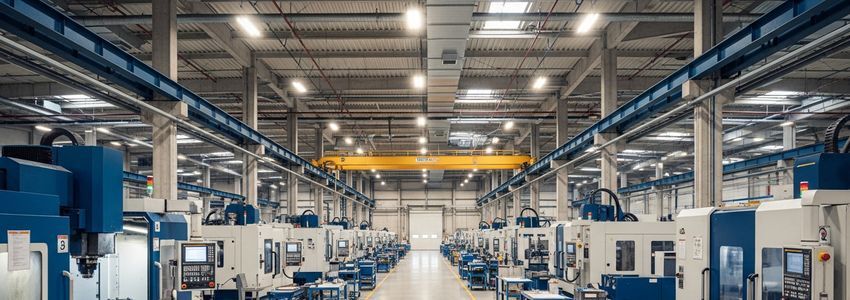
CNC milling machines, lathes, turning centers, injection molding equipment, stamping presses, and robotic assembly systems. These are the workhorses of precision manufacturing, and their condition directly controls product tolerances, surface finish quality, and throughput consistency.
Food Processing and Commercial Kitchen Equipment
Commercial ovens, industrial mixers, pasteurizers, filling machines, packaging lines, automated inspection systems, and refrigeration equipment. In food service and food production, equipment quality is directly tied to food safety, regulatory compliance, and customer experience.
Medical and Healthcare Equipment
Diagnostic imaging systems, surgical equipment, patient monitoring devices, laboratory analysis equipment, and sterilization systems. In healthcare, equipment quality is not just a competitive concern - it directly affects patient outcomes and regulatory compliance.
Agricultural and Farm Equipment
Precision harvesters, grain handling equipment, irrigation systems, sorting and grading machinery, and controlled environment agriculture technology. Modern agricultural equipment reduces crop losses, improves consistency, and enables compliance with food safety standards.
Printing and Finishing Equipment
Commercial offset printing presses, digital presses, wide-format printers, die-cutting systems, and laminating equipment. Print quality is measured in dots per inch, color accuracy, and registration precision - all of which degrade with aging equipment.
Technology and Automation Systems
Industrial robotics, vision inspection systems, SCADA control systems, and quality measurement equipment including coordinate measuring machines (CMMs). These systems represent the frontier of production quality control and are increasingly accessible through financing.
By the Numbers
Equipment Financing for Production - Key Statistics
55%
Of U.S. equipment acquisitions financed rather than purchased outright
$1.7T
Capital equipment invested by U.S. businesses annually
30%
Average throughput efficiency increase with modern equipment upgrades
24hr
Typical approval time for equipment financing with Crestmont Capital
Equipment Financing vs. Equipment Leasing: Which Is Better for Production Quality?
Business owners frequently encounter both equipment financing (loans) and equipment leasing as pathways to acquiring production equipment. Understanding the difference helps you choose the structure that best supports your operational and financial goals.
| Feature | Equipment Financing (Loan) | Equipment Leasing |
|---|---|---|
| Ownership | You own the equipment after final payment | Lessor owns; you return or buy at end of term |
| Monthly Payments | Typically higher (building toward ownership) | Typically lower (no ownership buildup) |
| Technology Refresh | Keep equipment until you decide to replace | Easy to upgrade at end of lease term |
| Best For | Long-life equipment with slow obsolescence | Technology that evolves rapidly |
| Down Payment | May require 10-20% down | Often first and last payment only |
| Balance Sheet Impact | Equipment and debt appear on balance sheet | May be off-balance-sheet depending on structure |
| Term Length | 24-84 months typically | 12-60 months typically |
For production quality improvements involving heavy industrial machinery, CNC equipment, food processing lines, or medical equipment - things that will be used for a decade or more - equipment financing (ownership) often makes more strategic sense. For technology-driven production systems where newer models offer substantially better performance every few years, leasing provides the flexibility to upgrade without being locked into obsolete equipment.
Crestmont Capital offers both equipment financing and equipment leasing solutions, and our advisors can help you determine the right structure for your specific production goals and financial situation.
Who Qualifies for Equipment Financing?
One of the most accessible aspects of equipment financing is its qualification criteria. Because the equipment serves as collateral, lenders can offer more flexible terms than traditional unsecured business loans. Here is what most equipment financing lenders look for:
Time in Business
Most lenders prefer businesses with at least 1 year of operating history. Startup businesses may face more stringent requirements or may need to provide additional documentation such as business plans or personal financial statements. Established businesses with 2 or more years of operations typically qualify for the best rates and terms.
Revenue and Cash Flow
Lenders want to see that your business generates sufficient revenue to support the loan payments. For smaller equipment purchases (under $150,000), many lenders can approve based primarily on bank statement reviews. Larger purchases may require reviewed or audited financial statements.
Credit Profile
Both your business and personal credit scores play a role. A business credit score above 650 and a personal score above 650 positions you well for competitive equipment financing terms. Lower scores do not automatically disqualify you - equipment financing lenders like Crestmont Capital work with a range of credit profiles, especially when the equipment itself provides strong collateral value.
Equipment Type and Value
The equipment you are financing must have clear commercial value. New equipment from established manufacturers is easiest to finance. Used equipment can be financed as well, though lenders will assess its remaining useful life and market value. Lenders generally finance up to 100% of the equipment value for qualified borrowers.
Good to Know: Equipment financing is one of the most accessible forms of business credit available. Unlike unsecured working capital loans, the equipment itself secures the debt, which means lenders can approve businesses with shorter operating histories and less-than-perfect credit profiles.
How Crestmont Capital Helps Businesses Upgrade Production Quality
Crestmont Capital is a nationally recognized business lender specializing in equipment financing and leasing for businesses across every industry and production sector. We understand that production quality problems are often urgent - every day of delayed equipment acquisition is a day of suboptimal output, customer dissatisfaction risk, and competitive disadvantage.
Our equipment financing solutions are designed to eliminate that urgency by providing fast access to capital with flexible terms.
Fast Approvals
Our streamlined application process delivers decisions in as little as 24-48 hours for most equipment financing requests. You do not have to wait weeks to find out if you are approved. We understand that production timelines move fast, and your financing should too.
Flexible Loan Amounts
Crestmont Capital finances equipment purchases from $25,000 to several million dollars. Whether you need to finance a single piece of precision machinery or outfit an entire new production line, our financing scales to meet your needs. We work with both individual equipment purchases and multi-unit financing packages.
Competitive Rates and Terms
Our relationships with a broad network of equipment lending partners allow us to present multiple options and help you select the combination of rate, term, and structure that best fits your production investment thesis. Terms ranging from 24 to 84 months give you control over your monthly payment size and total financing cost.
Industry Expertise
Our team understands the equipment that drives production quality across dozens of industries - from CNC machining and food processing to healthcare diagnostics and agricultural technology. We speak your language, and we can move quickly because we already understand the equipment categories you need.
Explore our capital equipment financing options or contact our team to discuss your specific production equipment needs. We also offer manufacturing equipment financing with terms tailored to production operations.
Upgrade Your Production Equipment Today
Speak with a Crestmont Capital specialist about equipment financing options tailored to your business. No obligation, fast decisions.
Get Your Free Quote TodayReal-World Scenarios: Equipment Financing and Production Quality
Abstract discussions of financing are less useful than concrete examples. Here is how equipment financing for production quality plays out across different industries.
Scenario 1 - Metal Fabrication Shop
A mid-sized metal fabrication business in Ohio has been losing contracts because its aging laser cutting table produces inconsistent cut quality, particularly on thicker gauge materials. A new fiber laser cutting system with automated material handling would cost $380,000 - far beyond what the company can purchase outright. They secure equipment financing for the full amount at a competitive rate over 60 months. Monthly payments of approximately $7,200 are easily offset by recovering two major contracts worth $25,000 per month combined. Within the first quarter, defect rates on laser-cut components drop by 40%, and on-time delivery rates improve from 82% to 97%.
Scenario 2 - Commercial Bakery
A growing commercial bakery in Texas is producing inconsistent product weights and textures because its deck ovens are aging and no longer maintain even temperature distribution. Customer complaints have increased, and a regional grocery chain has threatened to reduce order volumes. The bakery finances two new high-precision rack ovens and an automated scaling system totaling $120,000 over 48 months. The investment ends the temperature inconsistency issues immediately, the grocery chain increases its orders, and the monthly financing payment is covered multiple times over by the recovered and expanded revenue.
Scenario 3 - Medical Imaging Center
An independent radiology practice in Florida is losing referrals to a competing hospital system that recently installed a newer generation MRI scanner with faster scan times and higher resolution. The practice finances a $1.2 million MRI upgrade through a combination of equipment financing and an equipment lease on ancillary imaging accessories. Within 6 months of deploying the upgraded equipment, referring physician volumes increase by 28%, and patient wait times drop from 12 days to 4 days - a direct result of the scanner's faster throughput and reduced retake rates.
Scenario 4 - Agricultural Processor
A vegetable processing operation in California is struggling with excessive waste and inconsistent grading because its optical sorting equipment is a decade old and no longer performs to modern accuracy standards. They finance a new high-speed hyperspectral optical sorting line for $285,000 over 60 months. The new equipment reduces grade-out waste by 22%, improves consistency of packaged product to meet a premium retailer's quality specifications, and enables the business to secure a new supply contract worth $180,000 annually.
Scenario 5 - Craft Beverage Producer
A craft brewery in Colorado wants to expand into canned product distribution but lacks the filling and seaming equipment required to produce consistent, commercially acceptable cans at scale. They use brewing equipment financing to acquire a $150,000 automated canning line. Within two months of installation, they are supplying canned product to 45 retail accounts, a channel that was previously closed to them entirely.
Scenario 6 - Print Shop
A commercial print shop in New York is losing large-format print contracts because its wide-format printer cannot achieve the color accuracy that modern brand standards require. They finance a $95,000 high-fidelity UV flatbed printer over 36 months. The new printer opens access to architectural signage, POP display, and exhibit graphics markets that were previously unattainable. The added revenue stream justifies the financing cost in the first eight months of operation.
Evaluating Equipment Financing Options
Not all equipment financing offers are created equal. When comparing options from multiple lenders, evaluate these key parameters to ensure you are getting the best deal for your production quality investment.
| Parameter | What to Look For | Red Flags |
|---|---|---|
| Interest Rate / Factor Rate | Competitive rates relative to your credit profile | Unusually high rates or opaque factor rate structures |
| Loan Term | Term should align with useful life of equipment | Paying for equipment long after it is obsolete |
| Down Payment | Low or no down payment for qualified borrowers | Requiring 30%+ down without justification |
| Prepayment Penalties | Flexible prepayment or no penalty after year 1 | Severe penalties that lock you in regardless of circumstances |
| Approval Speed | 24-48 hour decisions for standard equipment requests | Weeks-long approval processes without clear timeline |
| Lender Experience | Proven track record in your industry and equipment type | Generic lenders unfamiliar with commercial production equipment |
Working with a specialized lender like Crestmont Capital ensures you have access to advisors who understand both the financial mechanics and the operational context of equipment financing for production quality improvement. Our team can also help you access working capital loans to fund installation costs, training, or facility modifications that accompany major equipment upgrades.
Frequently Asked Questions
What is equipment financing for production quality?
Equipment financing for production quality is a loan or lease specifically used to acquire machinery and technology that improves a business's output quality, consistency, capacity, or operational efficiency. The equipment secures the loan, making this type of financing more accessible than unsecured business loans. Businesses across manufacturing, food service, healthcare, agriculture, and other sectors use it to upgrade aging or underperforming production assets without depleting cash reserves.
How much can I borrow through equipment financing?
Equipment financing amounts vary widely depending on the lender and the borrower's qualifications. Crestmont Capital finances equipment purchases from $25,000 to several million dollars. The loan amount is typically based on the purchase price of the equipment, with most lenders financing up to 100% of the equipment value for qualified borrowers. Larger purchases may require stronger financials or additional collateral.
What credit score do I need to qualify for equipment financing?
Most equipment financing lenders prefer a minimum personal credit score in the range of 620-650 and a similar business credit score where applicable. However, equipment financing is more accessible than many other forms of credit because the equipment provides direct collateral. Borrowers with lower credit scores may still qualify, though they may face higher interest rates or shorter terms. Crestmont Capital works with a broad range of credit profiles.
How long does equipment financing approval take?
Approval times vary by lender and loan size. At Crestmont Capital, standard equipment financing applications for amounts under $500,000 often receive decisions within 24-48 business hours. Larger or more complex transactions may take 3-5 business days. Funding typically occurs within 2-5 days of approval, depending on the equipment vendor's process for receiving payment.
Can I finance used equipment for production quality improvements?
Yes, most equipment financing lenders will finance used equipment, provided it has sufficient remaining useful life and market value. Lenders typically want used equipment to be no older than 10-15 years and to have a clear, verifiable purchase price from a legitimate seller. Used equipment financing often carries slightly higher rates than new equipment financing to account for the depreciated collateral value.
What types of businesses use equipment financing to improve production quality?
Equipment financing for production quality is used across virtually every industry with capital equipment needs. Common examples include manufacturers using CNC machines and automation, food processors upgrading filling and inspection lines, healthcare providers acquiring diagnostic imaging equipment, agricultural operations financing precision harvesting and sorting equipment, and print shops upgrading to high-accuracy color production systems. If your business produces a product or delivers a service that depends on equipment performance, equipment financing likely applies.
How does equipment financing differ from a traditional business loan?
The primary difference is collateral. Equipment financing uses the purchased equipment itself as security for the loan, which makes qualification more accessible and often results in better rates compared to unsecured business loans. Traditional business loans are typically unsecured or secured by general business assets, require stronger credit and financial profiles, and may take longer to process. Equipment financing is purpose-built for capital equipment acquisition and is optimized for speed and accessibility.
Is equipment financing better than equipment leasing for production upgrades?
The better option depends on your production strategy. Equipment financing (loans) leads to ownership, which is generally preferred for heavy industrial machinery, CNC equipment, and other assets with long useful lives and slow obsolescence. Equipment leasing offers lower monthly payments and easier technology refresh cycles, making it better suited for production technology that evolves rapidly, such as vision inspection systems or digital printing equipment. Crestmont Capital offers both and can help you determine which structure best fits your goals.
Can startups use equipment financing to improve production quality?
Startups can often access equipment financing, though the process is more challenging than for established businesses. Lenders will look closely at personal credit, industry experience, business plan quality, and the value of the equipment being financed. Startups with strong personal credit (700+) and relevant industry experience have the best odds of approval. Some lenders specialize in startup equipment financing and accept the collateral value of the equipment in lieu of extended operating history.
What documentation is needed to apply for equipment financing?
Standard documentation for equipment financing typically includes 3-6 months of business bank statements, a completed loan application, equipment vendor quotes or invoices, basic business information (legal name, EIN, time in business), and owner identification. For larger loan amounts, lenders may also request business tax returns, a profit and loss statement, or balance sheet. Crestmont Capital keeps documentation requirements streamlined to accelerate the approval process.
How does equipment financing affect my business's cash flow?
Equipment financing replaces a large one-time cash outflow with a series of fixed monthly payments spread over 24-84 months. This structure significantly improves cash flow management compared to outright purchases, allowing businesses to maintain operating reserves while still acquiring needed equipment. The equipment typically generates returns - through improved production quality, higher throughput, or reduced defect rates - that offset the monthly payment. When structured correctly, equipment financing is designed to be cash flow positive for the business.
Can I finance both new and refurbished production equipment?
Yes. Both new and refurbished production equipment can be financed. New equipment typically carries the most favorable rates and terms, as it represents the strongest collateral with the longest expected useful life. Certified refurbished equipment from reputable vendors can also be financed at competitive rates, particularly when it comes with warranties and service agreements. Private-party used equipment purchases are generally harder to finance but still possible with the right lender and documentation.
What happens at the end of an equipment financing term?
At the end of an equipment financing loan term, ownership of the equipment transfers fully to you. There is no residual payment, no balloon, and no obligation to return the equipment. You own it outright and can continue to use it, sell it, trade it in, or upgrade to a new financed unit. This differs from an equipment lease, where end-of-term options typically include renewal, return, or purchase at a predetermined price.
Does financing multiple pieces of equipment require separate loans?
Not necessarily. Many lenders offer multi-unit or production line financing packages that consolidate multiple equipment items into a single loan with one monthly payment. This simplifies administration and can result in more favorable terms when the total financing amount is larger. Crestmont Capital can structure consolidated equipment financing packages for businesses upgrading an entire production line rather than a single machine.
How do I get started with equipment financing for production quality improvements?
Start by identifying the specific equipment you need and obtaining vendor quotes. Then apply online at Crestmont Capital - our application takes just minutes to complete and requires only basic information about your business and the equipment. You will receive a financing decision within 24-48 hours in most cases. A Crestmont Capital advisor will work with you to structure the best terms for your specific production quality goals and financial situation.
How to Get Started
Complete our quick application at offers.crestmontcapital.com/apply-now - takes just a few minutes.
A Crestmont Capital equipment financing advisor will review your production equipment needs and match you with the right financing structure at competitive terms.
Receive your funds, take delivery of your upgraded production equipment, and begin the measurable quality improvements your business needs to compete and grow.
Conclusion
Production quality is not a luxury - it is a competitive necessity. Businesses that invest in the right equipment consistently outperform competitors that are running aging, underperforming machinery. Equipment financing for production quality improvement makes that investment accessible, allowing you to upgrade now and pay over time with manageable, predictable monthly payments.
Whether you need to replace a CNC machine, upgrade a food processing line, equip a healthcare facility, or modernize an agricultural operation, Crestmont Capital has the equipment financing expertise and lending relationships to get you funded fast and on favorable terms. Do not let cash constraints hold your production quality back. Contact our team today and let's build a financing solution designed around your specific production goals.
Start Improving Your Production Quality Today
Equipment financing from the #1 business lender in the U.S. Fast approvals, flexible terms, and industry expertise you can trust.
Apply for Equipment Financing NowDisclaimer: The information provided in this article is for general educational purposes only and is not financial, legal, or tax advice. Funding terms, qualifications, and product availability may vary and are subject to change without notice. Crestmont Capital does not guarantee approval, rates, or specific outcomes. For personalized information about your business funding options, contact our team directly.