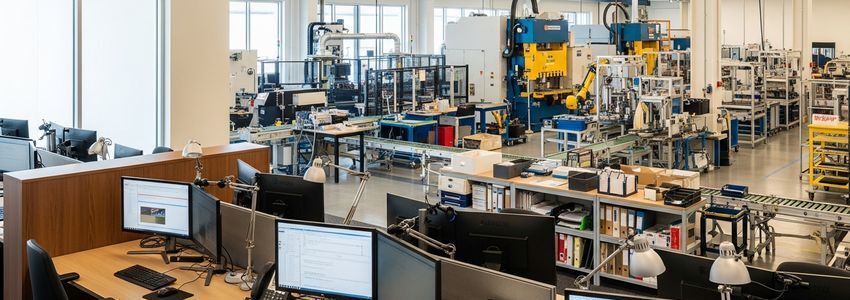
For many business owners, the idea of taking on debt feels counterintuitive to financial health. However, when used strategically, financing is one of the most powerful tools available for growth and long-term stability. This guide explores a critical, often overlooked strategy: using debt to improve operational efficiency, a direct path for business owners looking to learn how to reduce business costs and boost their bottom line.
In This Article
- What It Means to Use Debt for Operational Efficiency
- Why Strategic Debt Reduces Costs and Drives Growth
- How It Works: Financing Efficiency Improvements
- Types of Financing for Operational Improvements
- Who Should Consider This Strategy
- How Crestmont Capital Helps
- Real-World Examples: Businesses That Cut Costs with Financing
- Comparing Financing Options for Efficiency Projects
- Frequently Asked Questions
- How to Get Started
- Conclusion
What It Means to Use Debt for Operational Efficiency
Using debt for operational efficiency is the practice of securing capital to invest in systems, technology, equipment, or processes that streamline business operations, reduce waste, and lower long-term expenses. It is not about borrowing to cover payroll or rent during a slow month. Instead, it is a calculated investment designed to generate a positive return on investment (ROI) by making your business run smarter, faster, and more profitably.
Think of it as "spending money to save money," but with a structured financial plan. The monthly loan payment is a predictable expense, while the savings and increased output it generates should significantly outweigh that cost. This strategy directly addresses the core challenge of how to reduce business costs not by cutting corners, but by eliminating the root causes of inefficiency.
Operational efficiency improvements can take many forms, including:
- Automation: Implementing software or machinery that performs repetitive tasks previously done by employees. This could be anything from an automated inventory management system to a robotic arm on a manufacturing line.
- Technology Upgrades: Replacing outdated computers, servers, or point-of-sale (POS) systems with modern technology that is faster, more secure, and better integrated.
- Equipment Acquisition: Purchasing new, more efficient machinery that increases production capacity, reduces energy consumption, or lowers maintenance costs. For a construction company, this might be a new excavator with GPS technology; for a restaurant, it could be a high-efficiency convection oven.
- Process Re-engineering: Investing in consulting or training to redesign workflows. This could involve adopting lean manufacturing principles or implementing a new project management framework.
- Infrastructure Improvements: Upgrading a facility to improve logistics, such as redesigning a warehouse layout for faster picking and packing, or investing in energy-efficient lighting and HVAC systems to lower utility bills.
The fundamental principle is that the cost of inaction-continuing with inefficient processes-is often far greater than the cost of the financing required to fix them. Lost productivity, wasted materials, high labor costs, and missed opportunities are all silent profit killers. Strategic debt provides the immediate capital needed to eliminate these hidden expenses and build a more resilient, competitive business.
Why Strategic Debt Reduces Costs and Drives Growth
The concept of taking on debt to save money might seem paradoxical, but the underlying financial logic is sound. Strategic financing acts as a catalyst, unlocking efficiency gains that would otherwise be inaccessible or take years to achieve through retained earnings alone. Here’s a deeper look at why this approach is so effective for businesses aiming to reduce business operating costs and foster sustainable growth.
1. Overcoming Capital Constraints
The most significant barrier to operational improvement is often a lack of available cash. A business owner might know that a $100,000 piece of equipment could save them $5,000 per month in labor and material costs, but they may not have $100,000 in liquid capital. A loan or financing agreement bridges this gap, allowing the business to acquire the asset immediately and start realizing those savings. The monthly loan payment (for example, $2,500) is more than covered by the savings generated ($5,000), resulting in a net monthly gain of $2,500.
2. Generating a Measurable Return on Investment (ROI)
Unlike debt used for general working capital, financing for efficiency is tied to a specific, measurable outcome. The ROI can be calculated with a high degree of confidence.
- Cost Savings: These are the most direct returns. They include reduced labor hours, lower utility bills, decreased material waste, and fewer maintenance expenses.
- Increased Revenue: Efficiency often leads to higher output. A manufacturer that can produce more units per hour or a service business that can handle more clients per day can directly increase its revenue without a proportional increase in overhead.
- Improved Margins: By lowering the cost per unit of production or service delivery, the business improves its profit margin on every sale. This makes the entire operation more profitable and resilient to market fluctuations.
Key Stat: According to a report highlighted by Forbes, companies that are leaders in operational efficiency can have operating margins up to 25 percentage points higher than their competitors. This demonstrates the profound impact that efficiency has on profitability.
3. Enhancing Competitive Advantage
In a competitive marketplace, efficiency is a key differentiator. A business that can produce goods or deliver services at a lower cost can either offer more competitive pricing to gain market share or enjoy higher profits. Furthermore, modern, efficient operations often lead to better quality control and faster delivery times, improving customer satisfaction and loyalty. Waiting to save up for these improvements means ceding this advantage to competitors who are willing to invest.
4. Mitigating Future Risks
Inefficient operations are a significant liability. They are vulnerable to rising labor costs, supply chain disruptions, and equipment failures. Investing in modern, automated, and streamlined processes builds a more robust business. For example, automating a key part of the production process reduces reliance on a volatile labor market. Upgrading to new equipment minimizes the risk of costly downtime due to unexpected breakdowns.
5. Preserving Working Capital for Core Operations
Using financing for major capital expenditures allows a business to preserve its cash reserves for day-to-day needs like payroll, inventory, and marketing. Draining the company’s bank account to buy a major asset can create a precarious cash flow situation. Financing spreads the cost over time, turning a large, prohibitive upfront expense into a manageable monthly payment, which is crucial for maintaining healthy liquidity. For flexible funding options, many businesses explore a business line of credit to manage cash flow while investing in growth.
How It Works: Financing Efficiency Improvements
The process of using financing to improve operational efficiency is a strategic initiative that requires careful planning and execution. It's more than just applying for a loan; it's about building a business case that clearly demonstrates how the borrowed funds will lead to tangible cost reductions and productivity gains. Here is a step-by-step breakdown of the process.
Step 1: Identify and Audit Inefficiencies
The journey begins with a thorough analysis of your current operations. You cannot fix what you do not measure. Look for bottlenecks, areas of waste, and repetitive tasks that consume excessive time or resources. Key areas to audit include:
- Production Workflow: Are there delays between stages? Is there significant material waste? Are machines frequently idle?
- Labor Allocation: Are skilled employees spending time on low-value, manual tasks that could be automated? Is overtime a consistent and high expense?
- Technology Stack: Is your software outdated, slow, or poorly integrated? Are employees using manual workarounds like spreadsheets because your core systems are inadequate?
- Energy and Utilities: Are your facilities and equipment energy-efficient? Could upgrades to lighting, HVAC, or machinery lead to significant savings?
- Supply Chain and Inventory: Are you carrying too much inventory? Is your ordering process manual and prone to errors? Could a better system reduce carrying costs and prevent stockouts?
Step 2: Quantify the Cost of Inefficiency
Once you've identified the pain points, you must attach a dollar value to them. This is the most critical step in building your business case for financing. For example:
- If manual data entry takes an employee 20 hours per week at $25/hour, the annual cost of that inefficiency is $26,000.
- If an old machine wastes 10% of raw materials on a $500,000 annual material budget, the cost of that inefficiency is $50,000 per year.
- If frequent equipment breakdowns result in 5 hours of lost production time per week, and your facility generates $1,000/hour in revenue, the cost is $260,000 in lost revenue annually.
Summing up these costs provides a clear picture of how much money the inefficiency is costing your business and establishes a baseline for calculating the potential ROI of an investment.
Step 3: Research Solutions and Determine Costs
With a clear understanding of the problem and its cost, you can now research solutions. This involves getting quotes for new equipment, pricing software subscriptions, or estimating the cost of process re-engineering consultants. The goal is to find a solution whose cost is justified by the savings it will generate.
For instance, if the $26,000/year data entry problem can be solved with a $15,000 software integration project, the investment would pay for itself in less than seven months. This is the kind of compelling data that lenders want to see.
Step 4: Develop a Financial Proposal
Now, you package your findings into a proposal. This document should be shared with your leadership team and, ultimately, with your lender. It should include:
- A clear description of the operational problem.
- The quantified annual cost of this inefficiency.
- The proposed solution and its total upfront cost.
- A projected ROI calculation, showing the payback period and the net savings after accounting for loan payments.
- A timeline for implementation and when the savings are expected to begin.
This proposal transforms a loan application from a simple request for money into a strategic investment plan.
Step 5: Secure the Right Financing
With a strong business case in hand, you can approach a lender like Crestmont Capital. The type of financing you seek should align with the asset you are acquiring. For machinery, equipment financing is ideal. For a combination of software, training, and hardware, a working capital loan or a term loan might be more appropriate. A lender will review your proposal, business financials, and credit history to structure a loan that fits your needs and budget.
Step 6: Implement and Measure
Once funding is secured, the final step is to execute your plan. Purchase the equipment, install the software, and retrain your team. But the work doesn't stop there. It is crucial to track the results. Monitor the key performance indicators (KPIs) you identified in Step 2. Are labor costs down? Is material waste reduced? Is production output up? Measuring the actual results against your projections validates the investment and provides valuable data for future strategic decisions.
Types of Financing for Operational Improvements
Choosing the right financial product is crucial when you are using financing for efficiency. The best option depends on the nature of the improvement, the total cost, and your business's financial profile. Each type of financing has unique features, benefits, and use cases. Here are the most common options for funding operational upgrades.
Equipment Financing
Equipment financing is a specialized loan used to purchase specific pieces of business machinery or equipment. The equipment itself serves as collateral for the loan, which can make it easier to qualify for than other types of unsecured debt. This is an ideal solution for tangible assets that directly improve productivity.
- Best For: Purchasing new or used machinery, vehicles, technology hardware (like servers or specialized computers), and manufacturing tools.
- How it Works: You receive up to 100% of the equipment's value, which you repay over a set term (typically 2-7 years). At the end of the term, you own the equipment outright.
- Efficiency Example: A printing company finances a new digital press for $250,000. The press is 50% faster and uses 30% less ink than their old model, drastically reducing job completion times and material costs. The monthly savings on labor and supplies exceed the loan payment.
Unsecured Working Capital Loans
These are versatile, short-to-medium-term loans that provide a lump sum of cash without requiring specific physical collateral. They are perfect for projects that involve a mix of expenses, not just a single piece of equipment. Crestmont Capital offers flexible unsecured working capital loans to help businesses invest in comprehensive efficiency projects.
- Best For: Software implementation, employee training programs, process consulting fees, and smaller technology upgrades that don't qualify for equipment financing.
- How it Works: You receive a lump sum of capital and repay it with fixed payments over a predetermined period (often 6-24 months).
- Efficiency Example: A logistics company takes out a $75,000 working capital loan to implement a new route optimization and fleet management software. The funds cover the software license, installation, and mandatory driver training. The new system reduces fuel consumption by 15% and allows them to complete 20% more deliveries per day.
Business Line of Credit
A business line of credit provides access to a revolving pool of funds that you can draw from as needed, up to a set credit limit. You only pay interest on the amount you use. This flexibility is excellent for ongoing projects or when the exact costs are not yet known.
- Best For: Staged technology rollouts, ongoing process improvements, or having a financial cushion to seize efficiency opportunities as they arise.
- How it Works: You are approved for a maximum credit limit (e.g., $100,000). You can draw $20,000 for a server upgrade one month, and then $30,000 for a software project two months later. As you repay the drawn amount, your available credit is replenished.
- Efficiency Example: A marketing agency secures a $50,000 line of credit. They use it to purchase project management software, invest in automation tools for client reporting, and upgrade their creative team's computers over six months, drawing funds only when necessary to manage cash flow effectively.
SBA Loans
Backed by the U.S. Small Business Administration, SBA loans (like the 7(a) and 504 programs) offer favorable terms, including long repayment periods and competitive interest rates. While the application process can be more intensive, they are an excellent option for large-scale efficiency projects.
- Best For: Major facility upgrades, purchasing real estate for a more efficient layout, or large, multi-faceted technology and equipment overhauls.
- How it Works: The SBA guarantees a portion of the loan, reducing the risk for lenders and allowing them to offer better terms. Repayment can extend up to 10 years for working capital/equipment and 25 years for real estate.
- Efficiency Example: A food manufacturer secures an SBA 504 loan to purchase a larger facility and equip it with a modern, automated packaging line. The move consolidates their operations from two smaller, inefficient locations and the new equipment doubles their output capacity with the same number of staff.
Quick Guide
How to Use Financing to Reduce Costs - At a Glance
Identify Inefficiency
Audit your operations to pinpoint bottlenecks, waste, and manual processes that are costing you time and money.
Quantify & Propose
Calculate the annual cost of the inefficiency and research a solution. Build a business case showing a clear ROI.
Secure Financing
Work with a lender to choose the right financial product that aligns with your project's scope, cost, and timeline.
Implement & Measure
Execute your plan and track key metrics to confirm the cost savings and efficiency gains you projected.
Who Should Consider This Strategy
While nearly any business can benefit from improved efficiency, this financing strategy is particularly potent for companies at specific stages or facing certain operational challenges. It is not just for large corporations; small and medium-sized businesses often see the most dramatic impact. Here are the key indicators that your business is a strong candidate for using business loans to reduce costs.
Businesses with High Variable Costs
Companies in sectors like manufacturing, construction, logistics, and restaurants have significant variable costs tied to labor, materials, and energy. These are precisely the expenses that efficiency improvements target. If a large portion of your budget is dedicated to hourly labor or raw materials, investing in automation or waste-reduction technology can yield substantial and immediate savings.
Companies Experiencing Rapid Growth
Growth is exciting, but it can also strain your operations. As order volume increases, manual processes that were once manageable become crippling bottlenecks. A growing business must scale its operations efficiently to remain profitable. Financing allows you to invest in the infrastructure needed to support that growth-such as a CRM for a sales team, an ERP system for a distributor, or higher-capacity machinery for a manufacturer-before the operational cracks begin to show.
Businesses with Aging Equipment or Technology
If your core equipment is old, frequently breaks down, or is technologically obsolete, you are likely hemorrhaging money through downtime, high maintenance bills, and slow production. The cost of "making do" with old assets is often far higher than the cost of financing new ones. This applies to everything from a 15-year-old delivery truck that guzzles fuel to a 10-year-old server that constantly crashes.
Key Data: According to the U.S. Census Bureau, capital expenditures for equipment by U.S. businesses total hundreds of billions of dollars annually. For example, in 2021, manufacturing companies alone spent over $190 billion on capital investments, a significant portion of which is aimed at improving operational capacity and efficiency.
Companies in Highly Competitive Markets
When margins are thin and competition is fierce, operational efficiency becomes a primary driver of survival and success. If your competitors are using technology to offer lower prices, faster service, or better quality, you cannot afford to stand still. Investing in efficiency is a defensive necessity and an offensive strategy to capture market share.
Businesses with Strong, Predictable Cash Flow
While it may seem counterintuitive, businesses that are already financially healthy are often the best candidates. A stable cash flow demonstrates to lenders that you can comfortably handle a new loan payment. More importantly, it means you are making this investment from a position of strength, not desperation. You are proactively choosing to optimize your operations to become even more profitable, rather than borrowing to plug a hole. A strong history of revenue and profitability is a key factor in securing the best small business loans for these strategic projects.
Is Your Business Ready for Peak Efficiency?
If you're facing operational bottlenecks or high variable costs, it's time to explore a strategic investment. See how financing can transform your business.
Get a Free Quote →How Crestmont Capital Helps
Navigating the world of financing for operational improvements requires a partner who understands the unique intersection of business strategy and finance. At Crestmont Capital, we are more than just a lender; we are strategic capital partners dedicated to helping businesses achieve their full potential. Our approach is built on speed, expertise, and a deep commitment to our clients' success.
Expertise in Asset-Based and Strategic Financing
We specialize in the types of financing that are perfectly suited for efficiency projects. Our team has extensive experience in equipment financing, working capital loans, and other solutions designed to fund growth and optimization. We understand the value of the assets you are acquiring and can structure financing that reflects their long-term benefit to your business. As a direct business lender, we have the flexibility to create customized solutions that traditional banks often cannot.
A Consultative and Streamlined Process
We know that as a business owner, your time is your most valuable asset. Our application and funding process is designed to be fast, transparent, and hassle-free. We start by listening to your goals. Our funding specialists work with you to understand the specific inefficiency you're trying to solve and help you build the business case for your investment. We guide you toward the right financial product for your needs, ensuring the terms and payment structure align with your projected cost savings and cash flow.
Fast Access to Capital
Opportunities to improve efficiency can be time-sensitive. A key piece of equipment might be on sale for a limited time, or a critical software implementation needs to happen before your busy season. Crestmont Capital is renowned for its ability to provide rapid funding decisions, often within hours, and capital in as little as one business day. This speed allows you to act decisively and begin realizing your ROI sooner.
Financing for a Wide Range of Industries
We have a proven track record of helping businesses across virtually every sector implement efficiency-boosting projects. Whether you are in manufacturing, healthcare, construction, retail, or professional services, we understand the specific operational challenges you face and can provide relevant, industry-specific financing solutions.
Partner with an Efficiency Financing Expert
Let Crestmont Capital help you turn operational challenges into opportunities for growth and profitability. Start your application today.
Apply Now →Real-World Examples: Businesses That Cut Costs with Financing
The theory behind using debt for efficiency is powerful, but seeing it in action provides a clear picture of its transformative potential. Here are some detailed, real-world scenarios illustrating how businesses in different industries leverage financing to slash costs and drive profitability.
Scenario 1: The Manufacturing Company
- The Problem: A mid-sized metal fabrication shop was facing a major bottleneck in its cutting department. Their older plasma cutter was slow, inaccurate, and required a skilled operator to manually nest parts on a sheet of steel, leading to significant material waste. They were turning down larger, more profitable jobs because they couldn't meet the production deadlines.
- The Inefficiency Cost: They calculated that wasted steel was costing them $6,000 per month. The slow machine speed and manual setup resulted in an estimated $10,000 per month in lost revenue from rejected jobs and excessive labor costs. Total monthly cost: $16,000.
- The Solution: The owner decided to invest in a new, state-of-the-art fiber laser cutting machine with automated nesting software. The total cost of the machine and installation was $400,000.
- The Financing: They secured a 5-year equipment financing agreement from Crestmont Capital. Their monthly payment was approximately $8,500.
- The Result: The new laser cutter was three times faster and the nesting software reduced material waste by over 80%. Their monthly savings on materials alone was nearly $5,000. The increased speed allowed them to take on the larger jobs they were previously rejecting, boosting monthly revenue by an average of $30,000. After their $8,500 loan payment, the company's net monthly profit increased by over $26,500. The investment paid for itself many times over during the life of the loan.

Scenario 2: The Dental Practice
- The Problem: A busy four-chair dental practice was struggling with an inefficient workflow. Their front desk was overwhelmed with manual appointment scheduling, insurance verification, and patient reminders. In the back, they were still using physical molds for crowns and implants, a time-consuming and often inaccurate process that required multiple patient visits.
- The Inefficiency Cost: The front desk staff spent 50% of their time on administrative tasks that could be automated. The multi-visit crown process led to lower patient satisfaction and limited the number of high-value procedures they could perform each week.
- The Solution: The lead dentist decided on a comprehensive technology overhaul. This included a new practice management software with an online patient portal for scheduling and payments, and a digital intraoral scanner and in-office milling machine for same-day crowns. The total investment for software, hardware, and training was $120,000.
- The Financing: They obtained a 4-year working capital loan to cover the entire project. The monthly payment was around $3,100.
- The Result: The new software freed up the front desk staff to focus on patient experience and marketing, contributing to a 15% increase in new patient bookings within six months. The same-day crown technology was a huge competitive advantage. They could now complete a crown procedure in a single two-hour visit, delighting patients and allowing them to perform an average of three additional high-margin procedures per week. The increased revenue easily covered the loan payment and significantly boosted the practice's overall profitability. This is a great example of using blended financing strategies in spirit, by using one loan type to fund multiple asset types.
Scenario 3: The E-commerce Retailer
- The Problem: A rapidly growing online clothing boutique was drowning in its own success. Their order fulfillment process was entirely manual. Employees would print out orders, walk through a disorganized warehouse to pick items, manually pack them, and then type shipping information into a carrier's website. This led to frequent shipping errors, high labor costs, and an inability to offer competitive two-day shipping.
- The Inefficiency Cost: Labor costs for fulfillment were spiraling. They were spending $20,000 a month on pick-and-pack labor, and their error rate (wrong item or address) was 3%, resulting in costly returns and dissatisfied customers.
- The Solution: The owner invested in a warehouse management system (WMS). This included barcode scanners for every employee, inventory management software that optimized pick paths, and an integrated shipping platform that automatically printed labels. The cost was $50,000 for the software, hardware, and warehouse re-racking.
- The Financing: They used a business line of credit to fund the project in stages, first buying the software, then the hardware, and finally paying for the new shelving.
- The Result: The WMS cut their fulfillment time per order by 60%. They were able to reduce their fulfillment labor costs by $8,000 per month. The shipping error rate dropped to less than 0.5%. The newfound efficiency allowed them to finally offer a premium two-day shipping option, which boosted their conversion rate by 10% and increased overall sales.
Comparing Financing Options for Efficiency Projects
Selecting the optimal financing tool is a critical step in your strategy to reduce business operating costs. The table below compares the most common financing options for efficiency improvements, helping you align the product with your specific project needs.
| Financing Type | Best For | Typical Loan Amount | Repayment Structure | Key Benefit for Efficiency |
|---|---|---|---|---|
| Equipment Financing | Purchasing specific, tangible assets like machinery, vehicles, or heavy-duty tech hardware. | $25,000 - $5,000,000+ | Fixed monthly payments over a 2-7 year term. | Secured by the asset itself, often making it easier to qualify for and preserving other business assets. |
| Unsecured Working Capital Loan | Multi-faceted projects involving software, training, consulting, and smaller hardware purchases. | $10,000 - $500,000 | Fixed daily, weekly, or monthly payments over a 6-24 month term. | Fast funding and flexibility to use the capital for a wide range of intangible and tangible expenses. |
| Business Line of Credit | Ongoing or phased efficiency projects where exact costs are unknown upfront; managing cash flow during implementation. | $10,000 - $250,000 | Revolving credit; pay interest only on the funds you draw. Repay and redraw as needed. | Maximum flexibility. Acts as a financial safety net and allows you to seize opportunities without a new application. |
| SBA Loan | Large-scale, transformative projects such as facility acquisition/renovation or a complete operational overhaul. | Up to $5,000,000 | Fixed monthly payments over a long term (up to 10-25 years). | Offers the most favorable terms (low rates, long repayment periods), maximizing cash flow for very large investments. |
Frequently Asked Questions
1. What does it mean to use debt for operational efficiency?
It means strategically borrowing money to invest in technology, equipment, software, or processes that will make your business run more smoothly and cost-effectively. The goal is for the long-term savings and increased revenue generated by the improvement to be significantly greater than the cost of the loan used to finance it.
2. How can spending money on a loan actually reduce business costs?
A loan provides the immediate capital to eliminate a source of ongoing expense. For example, a $50,000 loan for an automated system might have a monthly payment of $1,500. If that system eliminates $4,000 per month in manual labor costs, your business experiences a net savings of $2,500 every month, directly reducing your operating costs while paying off the investment.
3. Who is the ideal candidate for this financing strategy?
Ideal candidates are established businesses with predictable revenue that have identified specific operational bottlenecks. This includes companies with high labor or material costs, those using outdated equipment, businesses experiencing rapid growth that need to scale, and those in competitive industries where efficiency is a key advantage.
4. What types of operational improvements can be financed?
A wide range of improvements can be financed, including: new manufacturing machinery, construction vehicles, medical equipment, automation software (ERPs, CRMs), IT hardware upgrades (servers, computers), warehouse management systems, energy-efficient facility upgrades (HVAC, lighting), and even employee training programs for new systems.
5. What are the most common types of business loans to reduce costs?
The most common types are equipment financing (for tangible assets), unsecured working capital loans (for mixed-expense projects like software and training), business lines of credit (for flexibility and ongoing projects), and SBA loans (for large-scale, transformative investments).
6. How much financing can a business typically secure for efficiency projects?
The amount varies widely based on the business's financial health (revenue, profitability, credit score) and the type of financing. It can range from $10,000 for a small software project to over $5 million for a major equipment purchase or facility upgrade. At Crestmont Capital, we offer a broad range of funding amounts to match the scope of your project.
7. What is the approval process like for these types of loans?
With a lender like Crestmont Capital, the process is streamlined. It typically involves a simple online application, submission of recent bank statements, and a discussion with a funding specialist about your project. For equipment or working capital loans, approval can happen in hours. SBA loans involve a more detailed application and longer timeline.
8. What are the typical credit score requirements?
Requirements vary by lender and loan type. Generally, for alternative lenders, a FICO score of 600 or higher may be sufficient, especially if the business has strong revenue. For SBA loans or traditional bank loans, a score of 680 or higher is often preferred. A strong business case with a clear ROI can sometimes help offset a lower credit score.
9. How long does it take to get funded for an efficiency project?
This depends on the loan type. Working capital loans and equipment financing can often be funded in as little as 24-48 hours after approval. A business line of credit can be established within a few days. SBA loans are the longest, typically taking anywhere from 30 to 90 days to close.
10. What are the biggest mistakes businesses make when using financing for efficiency?
The biggest mistakes include: not clearly quantifying the cost of the inefficiency beforehand, underestimating the total project cost (including training and implementation), choosing the wrong type of financing for the project, and failing to track and measure the results after implementation to confirm the ROI.
11. How do I calculate the potential ROI of an efficiency-focused loan?
A simple ROI calculation is: (Annual Financial Gain - Annual Loan Cost) / Total Loan Cost. The "Financial Gain" includes direct cost savings (labor, materials) and new revenue generated. A more detailed analysis would also calculate the payback period: Total Investment Cost / Monthly Net Savings. This tells you how many months it will take for the investment to pay for itself.
12. What are the risks involved in taking on debt for operational improvements?
The primary risk is that the projected savings or revenue gains do not materialize as expected, leaving the business with a loan payment it struggles to afford. This can be mitigated by thorough research, conservative financial projections, and planning for implementation challenges like employee adoption of new technology. Another risk is a business downturn, making any debt payment more difficult.
13. Are there alternatives to debt financing for improving efficiency?
Yes. Alternatives include using retained earnings (cash on hand), which is slow and can deplete your working capital. Another is equipment leasing, where you pay to use the asset for a term but don't own it at the end. For some technology, a subscription model (SaaS) can be an alternative to a large upfront purchase. However, for significant investments, financing is often the most practical way to acquire assets while preserving cash.
14. My business is profitable. Why should I consider taking on debt?
Profitable businesses are the best candidates. Using debt allows you to leverage your current success to become even more profitable and competitive. It enables you to make strategic investments without draining your cash reserves, which should be preserved for unforeseen opportunities or challenges. It's about optimizing your capital structure for maximum growth-a concept well understood when you learn how to build strong banking relationships.
15. How can I be sure the efficiency gains will outweigh the cost of the loan?
While there is no absolute guarantee, you can build a high degree of confidence through diligent planning. Start by accurately measuring the current cost of your inefficiency. Get firm quotes for the solution. Create conservative projections for your savings, perhaps estimating only 75% of the expected gain. If the project still shows a strong positive ROI with these conservative numbers, you can proceed with confidence.
Unlock Your Business's Full Potential
Ready to turn operational costs into profit centers? Discover the right financing solution to power your efficiency goals.
Apply in Minutes →How to Get Started
Taking the first step toward financing your operational improvements is a straightforward process. By following these structured steps, you can build a compelling case for your investment and approach lenders with confidence.
Assess and Quantify
Conduct a detailed audit of your operations. Identify the top 1-3 areas where inefficiency is costing you the most in terms of labor, materials, or lost time. Use real data to calculate the monthly or annual cost of these bottlenecks. This is the foundation of your business case.
Gather Documentation
Prepare the necessary financial documents that lenders will need to see. Typically, this includes your last 3-6 months of business bank statements, your business tax ID number, and basic information about your company's ownership. For larger loans, you may also need profit and loss statements and a balance sheet.
Consult with a Funding Specialist
Contact a reputable lender like Crestmont Capital. Share your assessment and your goals. A knowledgeable funding specialist can review your situation, discuss the most suitable financing options, and guide you through a quick and easy application process to get the capital you need.
Conclusion
In today's competitive business landscape, operational efficiency is not a luxury-it is a prerequisite for survival and growth. The persistent question of how to reduce business costs finds its most powerful answer not in reactive budget cuts, but in proactive, strategic investment. Using debt to finance operational improvements is a sophisticated strategy that allows smart business owners to transform their largest expenses into sources of profit and competitive advantage.
By identifying inefficiencies, acquiring the right tools and technology, and leveraging the right financing, you can build a leaner, more resilient, and more profitable enterprise. The cost of a loan is temporary, but the benefits of a streamlined, efficient operation will pay dividends for years to come. When you are ready to invest in your business's future, Crestmont Capital is here to provide the capital and expertise to help you succeed.
Disclaimer: The information provided in this article is for general educational purposes only and is not financial, legal, or tax advice. Funding terms, qualifications, and product availability may vary and are subject to change without notice. Crestmont Capital does not guarantee approval, rates, or specific outcomes. For personalized information about your business funding options, contact our team directly.