
 (800) 949-0401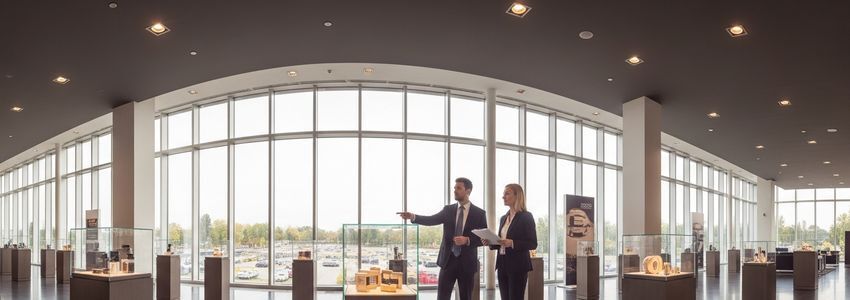
Business Loans for Customer Demonstration Areas: How to Finance Showrooms and Boost Sales
A business loan for customer demonstration areas can be one of the highest-return investments a company makes. In today's experience-driven economy, customers want to see, touch, and interact with products before they commit. Whether you operate a technology firm, equipment dealership, retail showroom, or service-based business, upgrading your demo space can directly accelerate sales cycles, increase average transaction values, and build the kind of brand trust that generates repeat business. The challenge is funding these upgrades without disrupting cash flow or tying up working capital you need for day-to-day operations.
This guide covers every financing option available for customer demonstration areas, who qualifies, how to apply, and real-world examples of businesses that transformed their sales outcomes by investing in the right spaces. Whether you need $25,000 to refresh a retail floor or $500,000 to build a state-of-the-art interactive showroom, there is a funding solution designed for your situation.
In This Article
- What Are Customer Demonstration Areas?
- Why Financing Your Demo Space Pays Off
- Loan Types That Work for Demo Area Upgrades
- How Business Loan Financing Works
- Who Qualifies for Demo Area Financing
- How to Use Loan Funds Strategically
- How Crestmont Capital Can Help
- Real-World Scenarios
- Frequently Asked Questions
- How to Get Started
What Are Customer Demonstration Areas?
Customer demonstration areas - also called showrooms, experience centers, demo floors, or interactive display zones - are dedicated spaces within a business where prospects and current clients can engage directly with products or services in a realistic setting. Unlike a standard sales floor, a demonstration area is designed to simulate real use conditions, highlight key features, and make it easy for buyers to visualize how a solution fits into their own operations or lifestyle.
These spaces exist across virtually every industry. Equipment dealers dedicate warehouse sections to running machinery under live conditions. Technology companies build interactive labs where clients can test software and hardware before purchase. Medical device firms set up clinical-grade demonstration suites. Retail brands invest in sensory environments that put products in their best light. Even service businesses - from architectural firms to financial advisors - create experience areas that showcase their processes and past work in compelling ways.
The business case is straightforward: customers who can experience a product first-hand convert at significantly higher rates, require less time in the sales cycle, and are more likely to refer others. A well-designed demonstration area is not a sunk cost. It is an ongoing revenue-generating asset that pays dividends for years.
Industry Insight: According to research from the Event Marketing Institute, 74% of consumers say engaging with a branded product experience directly influences their likelihood to purchase. Businesses with dedicated demo spaces report 30-50% shorter sales cycles compared to those relying solely on digital presentations or brochures.
Why Financing Your Demo Space Pays Off
Many business owners hesitate to invest in physical demonstration areas because the upfront costs - renovation, displays, equipment, technology, and staffing - can be substantial. But there is a compelling argument for using financing rather than waiting to accumulate the capital organically. The return on a well-executed demo area often materializes within the first year, making it one of the stronger use cases for business debt.
The key benefits of financing your demonstration area include:
- Preserve working capital: Keep cash available for inventory, payroll, and unexpected expenses instead of tying it up in a capital project.
- Start generating ROI immediately: An upgraded demo space can begin influencing conversions the day it opens. Every week you delay is potential revenue left on the table.
- Scale to match your vision: Financing allows you to build the demo area your business actually needs rather than settling for a scaled-down version that falls short of expectations.
- Tax advantages: Business loan interest and certain depreciation deductions on fixtures, equipment, and improvements may reduce your overall tax burden - consult your accountant for specifics relevant to your situation.
- Competitive differentiation: If your competitors have mediocre showrooms and you invest in a world-class experience center, that gap becomes a meaningful competitive advantage that attracts higher-value customers.
- Employee morale and training: Modern, well-equipped demo spaces also function as training environments, helping sales staff become more knowledgeable and confident.
When you calculate the cost of financing against the incremental revenue that better demo facilities generate, the math often favors moving forward now rather than waiting. A $100,000 demo upgrade financed over 36 months at a typical rate may cost $3,000-$3,500 per month - a fraction of what a single additional converted sale per month might represent for many businesses.
Ready to Transform Your Customer Experience?
Get fast, flexible financing to build or upgrade your demonstration area. No obligation - apply in minutes.
Apply Now →Loan Types That Work for Demo Area Upgrades
Not all business loans are created equal. The right financing product for your customer demonstration area depends on how much you need to borrow, how quickly you need access to funds, what your credit profile looks like, and how the investment will be structured. Here is a breakdown of the most effective options:
Term Loans for Larger Build-Outs
A traditional term loan - sometimes called a small business term loan or commercial term loan - provides a lump sum of capital that you repay over a fixed period with regular payments. These are ideal for planned demonstration area renovations with a defined scope and budget. Term loans typically offer the most favorable interest rates for qualified borrowers and can range from $25,000 to several million dollars depending on your lender and financials. Repayment periods commonly run 12 to 84 months, allowing you to spread costs over a period that matches the useful life of your investment.
Business Line of Credit for Phased Projects
If your demo area upgrade will happen in phases or if you anticipate needing ongoing access to capital for updates and maintenance, a business line of credit offers superior flexibility. You draw only what you need, when you need it, and interest accrues only on the outstanding balance. A revolving line is particularly valuable for businesses that plan to refresh their showroom annually or that want a financial cushion for reactive improvements as competitive pressures evolve.
Equipment Financing for Technology and Displays
Many demonstration areas are anchored by specific equipment - interactive display screens, demo machines, simulation technology, video walls, or specialized presentation tools. Equipment financing uses the equipment itself as collateral, which often allows businesses with imperfect credit to access funding at favorable terms. The equipment is paid off over time while generating value every day it is in use. This structure keeps your general credit lines available for other needs.
Working Capital Loans for Faster Access
If you need funding quickly - for example, to capitalize on a seasonal selling window or to respond to a competitor's new showroom - a working capital loan can deliver funds in as little as 24-72 hours. These loans are typically unsecured, meaning no collateral is required, and are well-suited for businesses with strong revenue but limited hard assets. They are especially effective for covering soft costs like design fees, installation labor, and initial inventory of demonstration units.
SBA Loans for Long-Term, Low-Rate Financing
For larger projects requiring $150,000 or more, an SBA 7(a) loan - backed by the U.S. Small Business Administration - offers the most favorable long-term rates available to small businesses. SBA loans have longer repayment periods (up to 10 years for working capital, 25 years for real estate) and competitive interest rates, though the application process typically takes 30-90 days. Businesses willing to plan ahead and navigate the documentation requirements can save significantly over the life of a major demonstration facility investment through an SBA loan.
By the Numbers
Customer Demo Area Financing - Key Data Points
74%
Consumers more likely to buy after hands-on brand experience
40%
Average reduction in sales cycle length with interactive demo spaces
$500K+
Maximum funding available for showroom and demo buildouts
24 Hrs
Fastest possible funding for qualified business borrowers
How Business Loan Financing Works for Demonstration Areas
Understanding the mechanics of business financing helps you choose the right product, structure your application for approval, and plan repayments in a way that protects your cash flow. Here is a step-by-step overview of how the process typically unfolds when a business pursues loan financing for a customer demo area project.
Step 1 - Define Your Project Scope and Budget
Before approaching any lender, you need a clear picture of what you are building or upgrading. Work with a designer, contractor, or technology consultant to develop a project scope that includes itemized costs for construction or renovation, furniture and fixtures, display technology, demonstration units, signage, audiovisual systems, security upgrades, and any associated soft costs like permits or design fees. A detailed budget demonstrates to lenders that you have done your homework and reduces the risk of unexpected cost overruns.
Step 2 - Evaluate Your Financial Position
Lenders evaluate several key metrics when underwriting a business loan: time in business (typically two or more years is preferred), annual revenue (most lenders want to see at least $100,000-$250,000 annually), personal credit score (580+ for most programs; 680+ for the most favorable rates), and existing debt obligations. Before applying, pull your business credit report, review your last two years of tax returns, and gather three to six months of business bank statements. Knowing your position helps you apply to the right programs and avoid unnecessary hard credit inquiries.
Step 3 - Apply with Multiple Lender Types
Working with a financing company like Crestmont Capital that has access to multiple lenders and loan products dramatically simplifies this step. Rather than applying individually to banks, credit unions, and online lenders, you submit one application and receive options from multiple sources simultaneously. This approach maximizes your chances of approval and helps you compare rates and terms side by side.
Step 4 - Review and Accept Your Offer
Once approved, you will receive a term sheet or loan offer outlining the principal amount, interest rate, repayment period, any collateral requirements, and associated fees. Review these carefully - pay particular attention to the APR, any prepayment penalties, and the total cost of financing over the full term. Do not hesitate to negotiate or ask questions.
Step 5 - Fund and Execute Your Project
After signing your loan documents, funds are typically deposited directly into your business bank account within one to five business days. You can then proceed with your demonstration area project on the timeline you have planned. Keep clear records of all expenditures, as maintaining organized documentation is important for both accounting purposes and any future financing conversations with lenders.
Who Qualifies for Customer Demonstration Area Financing
Business loans for demonstration area upgrades are available to a wide range of businesses. While exact requirements vary by lender and loan type, most applicants who meet the following baseline criteria will find multiple financing options available to them.
Businesses well-suited for this type of financing include:
- Equipment dealers and distributors that need live demonstration inventory and operational display areas
- Technology and software companies building client experience labs or product showcase facilities
- Retail businesses investing in enhanced in-store experience zones, sensory displays, or interactive product areas
- Automotive and powersports dealerships upgrading showroom floors and service demonstration bays
- Medical device and healthcare equipment companies constructing clinical demonstration suites
- Architecture, interior design, and home improvement firms creating material and product libraries or showroom spaces
- Manufacturing companies hosting prospect tours at production facilities with dedicated demonstration stations
- B2B service providers of any kind that can benefit from a professional, designed space to meet clients and showcase capabilities
Qualification Benchmarks: Most alternative lenders can work with businesses that have been operating for at least 6-12 months with $100,000+ in annual revenue. Traditional bank loans and SBA programs typically require 2+ years in business, $250,000+ in revenue, and a credit score of 680 or higher. Equipment financing programs often have more flexible requirements since the equipment serves as collateral.
Businesses with less-than-perfect credit or limited time in business are not necessarily disqualified. Revenue-based financing, equipment financing, and certain unsecured working capital programs are specifically designed to serve businesses that fall outside conventional bank lending criteria. The key is working with a lender who understands your business model and can match you with the right product.
How to Use Loan Funds Strategically for Maximum ROI
Once you secure financing, deploying funds thoughtfully is critical to achieving the return you expect. Not all investments within a customer demonstration area deliver equal value. Here is a prioritized approach based on what consistently drives the strongest impact on conversions and customer engagement.
Interactive Technology and Digital Displays
High-resolution display screens, interactive kiosks, augmented reality (AR) demonstration tools, and touchscreen product configurators create memorable experiences that differentiate your demo space from competitors. For technology and manufacturing companies, these investments directly enable prospects to visualize custom configurations. Budget $15,000-$100,000 depending on scale and complexity. Returns are typically realized within three to six months through improved conversion rates.

Live Demonstration Equipment
For equipment dealers, manufacturing companies, and technology firms, having live, operational units that prospects can interact with is the single most powerful conversion driver. This might mean installing working machinery in a display configuration, setting up live software environments on dedicated workstations, or creating a functional mock facility that replicates a client's actual operating conditions. Finance this as equipment, which typically allows for favorable terms and tax treatment.
Physical Environment and Aesthetics
The physical space itself communicates your brand's quality and professionalism before a single word is spoken. Lighting upgrades, flooring improvements, branded wall treatments, comfortable seating areas, and clear wayfinding signage all contribute to the overall impression. Construction and renovation costs of $25,000-$150,000 can fundamentally transform how visitors perceive your business.
Hospitality and Experience Elements
For B2B businesses hosting prospect visits, investing in a well-appointed meeting area adjacent to the demo space - with quality seating, audiovisual presentation capabilities, and simple hospitality amenities - elevates the entire visit experience. These elements signal that you take client relationships seriously and are invested in making each interaction productive.
Finance Your Demo Area Upgrade Today
From equipment financing to working capital loans - Crestmont Capital connects you with the right funding solution for your project.
Start Your Application →How Crestmont Capital Helps Businesses Fund Demonstration Areas
Crestmont Capital is one of the nation's leading business lenders, with a full portfolio of financing products designed to meet the specific needs of growing companies. When it comes to funding customer demonstration areas, our advisors work with you to identify the optimal combination of loan products based on your project scope, financial profile, and timeline.
Through our network of lenders and our in-house financing programs, we offer access to:
- Small business financing programs from $25,000 to $5 million
- Equipment financing with competitive rates and no large down payment requirements
- Unsecured working capital loans for businesses that need fast access to funds
- Business lines of credit for ongoing or phased demonstration space investments
- SBA loan programs for businesses looking for the most favorable long-term rates
Our application process is streamlined and designed to minimize disruption to your operations. Most business owners can complete our online application in under 10 minutes, and decisions are typically available within 24-48 hours. For businesses with strong financials, same-day approval is often possible. We understand that timing matters - a delayed demo space upgrade means delayed revenue, and we work hard to move your financing forward as quickly as possible.
For more guidance on how to structure your financing strategy, our recent post on how to use a business loan strategically offers practical frameworks applicable to demonstration area investments. If you are evaluating whether your business is ready for significant growth investments, our guide on signs you should expand your business can help you confirm you are making the right move at the right time.
Real-World Scenarios: Businesses That Transformed Sales with Demo Area Investments
Scenario 1: Industrial Equipment Dealer
A mid-size construction equipment dealer in the Midwest was losing deals to competitors whose showrooms featured live, operational demo units. After financing $350,000 through a combination of equipment loans and a term loan, the dealer installed three fully operational excavators, loaders, and compactors in a reconfigured outdoor demo yard, complete with a client viewing area and digital specification displays. Within 12 months, their conversion rate on showroom visits increased from 28% to 47%, and average deal size grew by 18% as customers who could see equipment in action were more confident purchasing higher-specification models.
Scenario 2: Technology Solutions Provider
A managed IT services firm was struggling to differentiate their offerings in a crowded market. Using a $75,000 working capital loan, they built a client experience lab featuring live demonstrations of their cybersecurity systems, network monitoring dashboards, and cloud migration tools. The lab allowed prospects to interact directly with the technology under simulated real-world conditions. In the 18 months following the investment, new client acquisition increased by 34% and average contract values grew significantly as the experience lab allowed the firm to demonstrate premium-tier capabilities that had previously been difficult to convey in slide presentations.
Scenario 3: Home Appliance Retailer
A regional home appliance retailer used a $120,000 business line of credit to completely redesign their showroom floor into a series of functional "vignettes" - realistic kitchen and laundry room settings where customers could interact with appliances under real-use conditions. Staff could run actual demonstration cycles, showing load capacities, cycle times, and operational noise levels in a setting that felt like a real home environment. The retailer reported a 41% increase in average ticket value and a 25% improvement in upsell rate to higher-margin product tiers within eight months of the redesign launch.
Scenario 4: Medical Device Company
A medical device distributor servicing hospitals and surgical centers financed a clinical demonstration suite for $200,000 using an SBA 7(a) loan. The suite replicated a surgical environment where surgeons and hospital procurement teams could conduct hands-on evaluations of new minimally invasive devices under conditions closely simulating actual operating room settings. The investment dramatically reduced their procurement cycle from an average of 14 months to under 7 months and increased the rate at which trial evaluations converted to full purchasing commitments.
Scenario 5: Specialty Software Firm
A construction industry software company built a dedicated demo environment using $45,000 in equipment financing. The space housed configured workstations running their platform in realistic project scenarios, allowing potential clients to test actual workflows rather than watching recorded demonstrations. This shift from passive to active selling reduced their average sales cycle from 90 days to 38 days and increased their close rate from 18% to 31% on qualified demos.
Scenario 6: Flooring and Materials Showroom
A commercial flooring company serving architects and interior designers used an $85,000 term loan to create a high-end material library and specification showroom. Full-scale room mock-ups allowed design professionals to specify flooring, tile, and surface materials in accurate spatial context. The investment positioned the company as a premium resource for architects, increasing specification rates by 56% over the following year as design professionals began recommending the company to their clients at significantly higher rates.
Common Thread: In every scenario above, the businesses that saw the strongest returns invested in spaces that allowed customers to experience products or services under realistic, relevant conditions - not just view them passively. The quality of the experience directly correlated with conversion rate improvements.
Frequently Asked Questions
How to Get Started
Develop a clear scope and budget for your demonstration area project. Include all costs - renovation, equipment, technology, design, and installation. Having specific numbers makes your application stronger and helps lenders understand the purpose of the funds.
Complete our quick application at offers.crestmontcapital.com/apply-now. The process takes 5-10 minutes and has no impact on your credit score to receive initial options.
A Crestmont Capital advisor will present you with financing options matched to your business profile. Review rates, terms, and monthly payments to select the solution that best fits your project and cash flow.
Receive funds in as little as 24 hours and immediately begin executing your demonstration area upgrade. Start generating stronger conversions and higher average deal values from the day your space opens.
Conclusion
A business loan for customer demonstration areas is among the most strategically sound investments a growth-oriented company can make. By enabling customers to experience your products or services first-hand in a professional, engaging environment, you directly accelerate sales velocity, improve conversion rates, and build competitive differentiation that is difficult for rivals to quickly replicate. The range of financing options available - from fast-funding working capital loans to long-term SBA programs and equipment-specific financing - means that businesses of nearly any size and financial profile can access the capital they need to build or upgrade their demo spaces. The key is choosing the right loan structure for your specific project, timeline, and financial situation.
Crestmont Capital is here to help you navigate those choices and connect you with the financing that accelerates your growth. Our advisors have worked with businesses across hundreds of industries to fund demonstration areas, showroom upgrades, and experience center investments. Whether your project is $30,000 or $3 million, we have the products and expertise to help you move forward with confidence.
Disclaimer: The information provided in this article is for general educational purposes only and is not financial, legal, or tax advice. Funding terms, qualifications, and product availability may vary and are subject to change without notice. Crestmont Capital does not guarantee approval, rates, or specific outcomes. For personalized information about your business funding options, contact our team directly.








