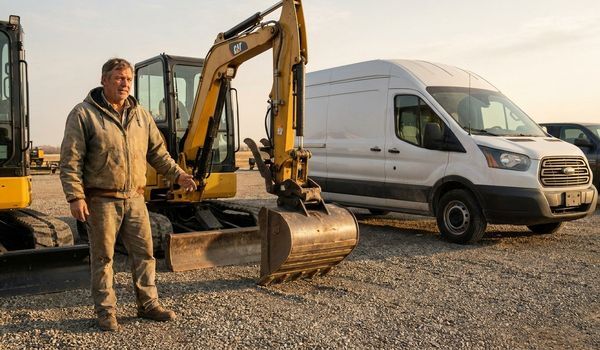
The equipment leasing process doesn't have to be complicated. Whether you're a contractor looking to acquire a new excavator, a restaurant owner eyeing commercial kitchen equipment, or a healthcare provider upgrading diagnostic tools, equipment leasing gives your business access to the assets it needs without draining your cash reserves. Yet many business owners hesitate because they don't fully understand how the process works.
This guide walks you through every stage of the equipment leasing process, from the initial decision to the final delivery and beyond. By the end, you'll know exactly what to expect, what documents you need, and how to get the best possible terms for your business.
In This Article
- What Is Equipment Leasing?
- Leasing vs. Buying: Which Is Right for You?
- The Equipment Leasing Process: Step-by-Step
- Types of Equipment Leases
- Who Qualifies for Equipment Leasing?
- Equipment Leasing by the Numbers
- How Crestmont Capital Helps
- Real-World Scenarios
- Leasing Options Compared
- Frequently Asked Questions
- How to Get Started
What Is Equipment Leasing?
Equipment leasing is a financing arrangement in which a business uses equipment owned by a lender or leasing company in exchange for regular payments over a set period. At the end of the lease term, the business typically has the option to purchase the equipment at a predetermined price, renew the lease, or return the asset.
Unlike a traditional equipment loan, leasing doesn't require you to own the asset outright. You pay for the right to use the equipment, which means lower monthly payments, preserved working capital, and the flexibility to upgrade technology as your industry evolves.
The equipment leasing market in the United States represents hundreds of billions of dollars in annual transactions. According to the Equipment Leasing and Finance Association (ELFA), roughly 79% of U.S. businesses use some form of financing to acquire equipment, with leasing being one of the most popular methods. Industries ranging from construction and manufacturing to healthcare and hospitality rely heavily on leasing to maintain competitive operations without excessive capital expenditure.
Did You Know? According to the Equipment Leasing and Finance Association, equipment and software investment in the U.S. reached over $1.8 trillion annually, with leasing accounting for a significant portion of those transactions. Leasing is no longer a niche strategy - it is mainstream business finance.
Leasing vs. Buying: Which Is Right for You?
Before diving into the equipment leasing process itself, it's worth understanding why leasing often makes more sense than buying outright. The decision depends on your cash flow, growth plans, the lifespan of the equipment, and how quickly technology in your industry changes.
When you purchase equipment outright or through a traditional loan, you own the asset from day one. That means higher upfront costs or monthly payments, and you bear the full risk of depreciation. When you lease, the leasing company retains ownership, which shifts some of that risk away from your business.
Here are the core situations where leasing tends to win:
- You need to preserve cash for operations, payroll, or other investments
- The equipment you need depreciates quickly or becomes outdated within a few years
- You want predictable monthly expenses for budget planning
- You don't want to carry the long-term debt of a traditional loan on your balance sheet
- You want the flexibility to upgrade equipment at the end of the term
Buying makes more sense when the equipment has a very long useful life, its value doesn't depreciate quickly, and you intend to use it for many years without needing an upgrade. Heavy-duty industrial machinery, for example, might be worth purchasing. But high-tech medical imaging equipment or rapidly evolving commercial vehicles are often better suited for leasing.
Ready to Explore Equipment Leasing?
Get fast, flexible equipment leasing from the #1 business lender in the U.S. No obligation - apply in minutes.
Apply Now →The Equipment Leasing Process: Step-by-Step
The equipment leasing process follows a clear sequence of steps. Understanding each stage helps you move through the process faster and avoid common mistakes that delay approvals.
Step 1 - Identify Your Equipment Needs
Before contacting any lender, define exactly what equipment you need. This means identifying the make, model, and specifications of the asset, as well as the vendor or supplier you plan to work with. Having this information ready allows lenders to provide accurate quotes and speeds up the approval process.
Consider the following when identifying your equipment needs:
- What problem does this equipment solve for your business?
- How long will you need it before upgrading to newer technology?
- What is the fair market value of the equipment?
- Is it new or used equipment?
- Who is the vendor, and do they have experience working with leasing companies?
Step 2 - Choose a Lender or Leasing Company
Not all equipment leasing providers are the same. Some specialize in specific industries - healthcare, construction, or transportation - while others offer broad leasing programs across industries. When evaluating lenders, consider:
- Their experience with your specific type of equipment
- The range of lease terms they offer (24, 36, 48, or 60 months)
- Whether they offer end-of-lease purchase options
- Their application and approval timeline
- Their reputation and customer reviews
Working with a full-service business lender like Crestmont Capital gives you access to a broad spectrum of equipment financing and leasing options, along with expert guidance on structuring the right deal for your business.
Step 3 - Submit Your Application
The application process for equipment leasing is generally straightforward and faster than traditional bank loans. Most lenders will ask for:
- Business name, address, and years in operation
- Equipment details and vendor information
- Business bank statements (typically three months)
- Business and personal credit information
- Recent business tax returns (for larger transactions)
- Financial statements for larger credit requests
For smaller equipment leases - typically under $150,000 - many lenders can make a credit decision based on a simple one-page application and a credit pull. Larger transactions will require more documentation, including full financial statements and tax returns.
Step 4 - Credit Review and Approval
The lender reviews your application, evaluates your credit profile, and assesses the residual value of the equipment. Unlike unsecured business loans, equipment leases are secured by the underlying asset, which means lenders can sometimes approve businesses with less-than-perfect credit.
Approval typically takes one to three business days for smaller transactions, and up to one to two weeks for larger, more complex deals. The lender will evaluate:
- Your personal and business credit scores
- Time in business (most lenders prefer at least 12-24 months)
- Monthly revenue and cash flow
- The equipment's collateral value and depreciation profile
- Any existing liens or outstanding debts
Step 5 - Receive and Review the Lease Agreement
Once approved, the lender prepares a lease agreement outlining all terms. This is one of the most important steps in the equipment leasing process, and too many business owners rush through it. Review every detail, including:
- Monthly payment amount
- Lease term length
- Interest rate or money factor
- End-of-lease purchase option price
- Early termination clauses and associated fees
- Maintenance and insurance requirements
- Late payment penalties
- Return conditions for the equipment
Pro Tip: Always read the fine print on early termination clauses. Many leases have significant penalties for ending the agreement before the term expires. If you anticipate your business needs may change within the lease period, negotiate more flexible terms upfront or choose a shorter lease term.
Step 6 - Sign the Agreement and Fund the Vendor
After reviewing and agreeing to the terms, you sign the lease agreement. The lender then pays the equipment vendor directly on your behalf. You don't handle the funds - the leasing company purchases the equipment from the vendor and becomes the owner, while you gain the right to use it under the lease terms.
Step 7 - Equipment Delivery and Installation
Once the vendor receives payment from the leasing company, they deliver and install the equipment at your location. You may need to sign an "acceptance certificate" or similar document confirming that the equipment was delivered in satisfactory condition. This signature typically triggers the start of your lease term and monthly payment schedule.
Step 8 - Make Monthly Payments
Your lease payments begin according to the agreed schedule. Payments are typically fixed for the duration of the term, making cash flow planning easy. Some leases offer seasonal payment structures or deferred payment periods to accommodate businesses with cyclical revenue patterns.
Step 9 - End of Lease Options
As your lease term approaches its end, you'll typically have three options:
- Purchase the equipment at the predetermined fair market value or fixed price stated in your lease agreement
- Renew the lease for an additional term, often at a reduced rate since the equipment's value has depreciated
- Return the equipment in its original condition (subject to normal wear and tear) and lease newer equipment
Choosing the right end-of-lease option depends on whether the equipment still serves your needs, whether newer technology has emerged, and what makes financial sense for your business at that point.
Types of Equipment Leases
Understanding the different types of equipment leases helps you choose the structure that best fits your situation. The two main categories are operating leases and finance (capital) leases.
Operating Lease
An operating lease is essentially a rental arrangement. You use the equipment for a defined period, make regular payments, and return it at the end. The lease term is typically shorter than the equipment's useful life, and monthly payments are generally lower. Operating leases are popular when technology changes rapidly, because they allow businesses to upgrade frequently without being stuck with outdated equipment.
Finance (Capital) Lease
A finance lease is structured more like a loan. The lease term covers most of the equipment's useful life, and at the end, you typically have the option to purchase the equipment for a nominal amount - often $1. Monthly payments are higher than an operating lease because you're effectively paying down the equipment's full value over time. Finance leases are better suited for equipment you intend to own long-term.
Fair Market Value (FMV) Lease
An FMV lease is a common form of operating lease where you have the option to purchase the equipment at its fair market value at the end of the term. This gives you flexibility - if the equipment is still worth owning, you buy it at market price. If not, you return it and upgrade. Monthly payments are typically lower than a finance lease.
$1 Buyout Lease
In a $1 buyout lease, you pay slightly higher monthly payments but have the right to purchase the equipment for just $1 at the end of the term. This is essentially a financing arrangement designed for businesses that know they want to own the equipment eventually but prefer to spread the cost over time.
By the Numbers
Equipment Leasing in the U.S. - Key Statistics
79%
of U.S. businesses use financing to acquire equipment
$1.8T
in annual U.S. equipment and software investment
1-3 Days
Typical approval time for equipment leases under $150K
24-60
Typical lease term range in months for most equipment types
Who Qualifies for Equipment Leasing?
Equipment leasing has more flexible qualification requirements than traditional bank loans, which makes it accessible to a wide range of businesses - including newer companies and those with less-than-perfect credit.
Most lenders look for the following minimum qualifications:
- Time in business: At least 6-12 months for small leases, 24+ months for larger transactions
- Credit score: Most programs start at 600+ personal FICO, though some lenders have startup programs for lower scores
- Monthly revenue: Sufficient revenue to cover the monthly lease payment, typically 3-5x the payment amount
- No recent bankruptcies or major derogatory events: Recent financial distress can make approval difficult
Businesses in high-demand industries - healthcare, construction, transportation, food service - often find it easier to qualify for equipment leases because lenders are familiar with those industries' asset values and revenue patterns. Newer businesses or those in riskier industries may face higher rates or need to provide additional collateral.
For businesses with challenged credit, some lenders offer bad credit equipment financing options with adjusted terms to account for the additional risk.
See If Your Business Qualifies
Our team specializes in matching businesses with the right equipment leasing structure - even for complex situations. Get a decision in as little as 24 hours.
Apply Now →
How Crestmont Capital Helps With Equipment Leasing
Crestmont Capital has helped thousands of businesses across the United States navigate the equipment leasing process. Rated #1 among U.S. business lenders, our team works with businesses in virtually every industry to structure equipment leases that align with their cash flow, growth plans, and operational needs.
Our equipment leasing programs include:
- Lease amounts from $10,000 to $5 million and above
- Terms from 24 to 84 months
- Fast approvals - often within 24-72 hours for standard transactions
- Programs for startups, established businesses, and companies with imperfect credit
- Flexible end-of-lease options including $1 buyout, FMV purchase, and lease renewals
- Seasonal and custom payment structures available
We work with businesses leasing everything from commercial kitchen equipment and medical devices to construction machinery and commercial vehicles. Our team understands the unique cash flow dynamics of each industry and can help you structure a lease that works for your specific situation.
In addition to equipment leasing, Crestmont offers a full suite of business financing options including working capital loans, business lines of credit, and SBA loans - so if your business needs go beyond equipment, we can help with those too.
Real-World Scenarios: Equipment Leasing in Action
Understanding the equipment leasing process in theory is one thing. Seeing how it plays out in real business situations makes it much more tangible. Here are several examples of how businesses use equipment leasing effectively.
Scenario 1: Restaurant Owner Upgrading Commercial Kitchen Equipment
A restaurant owner in Phoenix, Arizona needed to replace aging commercial ovens and refrigeration units before the summer rush. A full equipment purchase would cost $85,000, an amount that would severely strain working capital. Instead, the owner leased the equipment through a 48-month operating lease with a fair market value buyout option. Monthly payments of $1,850 fit comfortably within the restaurant's cash flow, and the owner had the option to purchase the upgraded units at the end or return them and lease the latest models.
Scenario 2: Construction Company Adding Heavy Equipment
A mid-size general contractor in Texas won a large commercial project but needed an additional excavator and skid steer loader to complete it on time. Rather than pulling $120,000 from working capital to buy the machines, the company structured a $1 buyout lease over 60 months. Monthly payments of approximately $2,400 came directly from the project's cash flow, and at the end of the term, the company owned both pieces of equipment outright for $1 each.
Scenario 3: Medical Practice Upgrading Diagnostic Equipment
A private chiropractic clinic in Atlanta was considering a new digital X-ray system priced at $65,000. The practice had strong revenue but wanted to avoid depleting reserves. A 36-month fair market value lease reduced the monthly outlay to $1,950 and gave the clinic the flexibility to upgrade to newer imaging technology at the end of the term - important in an industry where diagnostic technology advances rapidly.
Scenario 4: Startup Technology Company Equipping an Office
A 14-month-old software startup needed to equip a new 25-person office with computers, servers, and AV equipment totaling $180,000. The company hadn't yet established deep banking relationships and didn't want to dilute equity. A startup equipment lease through an alternative lender allowed them to fund the full equipment package with 20% down and a 48-month term, preserving cash for salaries and product development.
Scenario 5: Manufacturing Company Modernizing Production Line
A Wisconsin plastics manufacturer needed to replace two aging injection molding machines before a major client contract began. The new equipment cost $340,000. A 60-month finance lease with a $1 buyout spread payments of approximately $6,200 per month across the contract period, allowing the manufacturer to fund payments from the new revenue the contract would generate.
Scenario 6: Healthcare Facility Financing Multiple Assets
A physical therapy center in New Jersey needed to equip a new satellite clinic with treatment tables, ultrasound equipment, and electrical stimulation units totaling $95,000 across seven different items. Rather than opening separate leases for each piece, the lender structured a single master lease agreement covering all equipment. This simplified billing, consolidated documentation, and provided unified end-of-lease options for the full package.
Equipment Leasing Options Compared
| Feature | Operating Lease | Finance Lease ($1 Buyout) | FMV Lease |
|---|---|---|---|
| Monthly Payments | Lower | Higher | Lower |
| Ownership at End | Optional purchase | Yes, for $1 | Optional at market value |
| Best For | Short-term use, fast-changing tech | Long-term ownership plans | Flexibility at term end |
| Balance Sheet Impact | Off-balance-sheet | On-balance-sheet | Depends on accounting |
| Upgrade Flexibility | High | Low | Medium |
| Depreciation Risk | Lender's risk | Lessee's risk | Shared |
Industry Insight: According to Forbes, companies that use equipment leasing strategically can improve their return on assets by deploying capital more efficiently - using financing for equipment rather than cash, which frees resources for higher-ROI activities like marketing, hiring, and expansion.
Frequently Asked Questions
What is the typical equipment leasing process timeline?
For transactions under $150,000, the equipment leasing process typically takes three to seven business days from application to funding. This includes one to three days for credit review and approval, plus additional time for lease document preparation and vendor payment. Larger, more complex transactions may take one to two weeks. Having all required documents ready in advance significantly speeds up the process.
What credit score do I need to qualify for equipment leasing?
Most equipment leasing programs require a personal credit score of at least 600. Prime programs with the best rates typically require 680 or higher. However, there are equipment leasing programs available for businesses with scores below 600 - these programs typically require a larger down payment, shorter lease terms, or higher rates to compensate for the additional credit risk.
Can I lease equipment for a new business or startup?
Yes. Many lenders offer startup equipment leasing programs for businesses with less than two years of operating history. These programs often require a larger down payment (10-20%) and may have higher rates than established business programs. Some lenders specialize entirely in startup equipment financing. Having strong personal credit and a clear business plan helps significantly when applying as a startup.
What documents do I need to apply for an equipment lease?
For transactions under $150,000, most lenders require a completed application, three to six months of business bank statements, and the equipment quote or invoice from the vendor. For larger transactions, you may also need two years of business tax returns, a current balance sheet and income statement, and sometimes a business plan. Personal tax returns may be required for businesses with less than two years of history.
What is the difference between an operating lease and a finance lease?
An operating lease is essentially a rental - you use the equipment and return it at the end with an option to purchase at fair market value. Monthly payments are lower, and the lender retains ownership risk. A finance lease (also called a capital lease) is structured more like a loan where you pay down the full value of the equipment and own it at the end, usually for $1. Finance leases have higher monthly payments but result in ownership.
Can I lease used equipment?
Yes, most lenders will finance used equipment, though the terms may differ from new equipment leases. Lenders evaluate the age, condition, and residual value of used equipment carefully. As a general rule, most lenders require used equipment to be no more than 10-15 years old at the end of the proposed lease term. Specialty equipment with strong secondary markets - like construction machinery or commercial vehicles - is generally easier to lease used than niche technology equipment.
What happens if I need to end my equipment lease early?
Early termination of an equipment lease typically involves penalties, which can include paying the remaining balance of lease payments or a percentage thereof, plus any residual value obligations. The specific terms vary by lender and lease type. Some leases allow for early buyout at a discounted price. Before signing any lease agreement, review the early termination clause carefully, and if early termination is a real possibility, negotiate more favorable terms or choose a shorter initial term.
Does equipment leasing require a down payment?
Many equipment leases require little to no down payment for established businesses with strong credit. Some programs offer 100% financing with only the first and last month's payment due at signing. Businesses with lower credit scores, shorter histories, or those leasing less liquid equipment types may be asked for a 10-20% down payment. Down payment requirements vary significantly by lender, equipment type, and applicant credit profile.
How do equipment lease payments compare to loan payments?
Equipment lease payments are generally lower than loan payments for the same equipment on the same term. This is because a lease payment covers only the depreciation and financing cost of the equipment's use, not its full purchase price. However, if you intend to own the equipment long-term, the total cost of ownership through a finance lease may exceed the cost of a traditional loan due to the interest component. Operating leases offer the lowest monthly payments but result in no ownership at the end.
What types of equipment can be leased?
Almost any type of business equipment can be leased. Common categories include construction and heavy equipment, medical and dental devices, restaurant and commercial kitchen equipment, manufacturing machinery, commercial vehicles and fleets, technology and IT infrastructure, salon and spa equipment, agricultural machinery, and office furniture and equipment. If an asset has commercial value and can be repossessed in the event of default, a lender can generally structure a lease around it.
How does equipment leasing affect my business's balance sheet?
The accounting treatment for equipment leases changed significantly with ASC 842, the new lease accounting standard effective for most businesses since 2022. Under ASC 842, most leases - both operating and finance - must now be recorded on the balance sheet as a right-of-use (ROU) asset and a corresponding lease liability. This replaced the prior treatment where operating leases were kept off the balance sheet. Consult your CPA or accountant for guidance specific to your situation.
Is insurance required for leased equipment?
Yes. Almost all equipment lease agreements require the lessee to maintain adequate property and casualty insurance on the leased equipment for the duration of the lease term. The lender is typically listed as a loss payee on the policy. The required coverage amount is usually the replacement value or the outstanding lease balance, whichever is greater. Failure to maintain insurance is typically a lease default event.
Who is responsible for equipment maintenance during a lease?
In most equipment leases, the lessee (you) is responsible for routine maintenance and repairs. Unlike a vehicle lease from a dealership, most commercial equipment leases do not include maintenance packages. The lease agreement will typically specify that the lessee must keep the equipment in good working condition and return it in satisfactory condition at the end of the term, subject to normal wear and tear. Some specialized equipment providers do offer maintenance-included lease programs.
Can I negotiate the terms of an equipment lease?
Yes, most terms of an equipment lease are negotiable, especially for larger transactions. Common areas for negotiation include the lease rate or money factor, the end-of-lease purchase option price, payment structure (monthly, quarterly, seasonal), early termination provisions, and the advance payment required at signing. Businesses with strong credit profiles or high-value transactions have the most leverage to negotiate favorable terms. Working with an experienced financing partner can help you understand what terms are standard versus what can be improved.
What is the best lease term length for my business?
The ideal lease term depends on the equipment type, your cash flow preferences, and how long you'll need the asset. For technology equipment that becomes outdated quickly, shorter terms (24-36 months) allow you to upgrade more frequently. For heavy machinery or infrastructure equipment with long useful lives, longer terms (48-72 months) spread costs more efficiently. As a general rule, never lease equipment for longer than its useful life. Your lender can help you match the lease term to the equipment's depreciation profile.
How to Get Started
Complete our quick application at offers.crestmontcapital.com/apply-now - takes just a few minutes. Have your equipment quote and basic business information ready.
A Crestmont Capital equipment financing specialist will review your needs and match you with the right lease structure - operating lease, finance lease, or FMV, depending on your goals.
Once approved and documents are signed, we fund the vendor directly. Your equipment is delivered and you begin putting it to work - often within days of starting the process.
Ready to Start the Equipment Leasing Process?
Join thousands of businesses that trust Crestmont Capital for fast, flexible equipment financing. Apply today and get a decision in as little as 24 hours.
Apply Now →Conclusion
The equipment leasing process is designed to be efficient and accessible for businesses of all sizes. From identifying your equipment needs and choosing a lender, through credit approval, document signing, and vendor funding, each step is manageable when you know what to expect.
Understanding the different lease types - operating leases, finance leases, and fair market value leases - gives you the ability to choose the structure that best matches your long-term ownership goals and cash flow requirements. And knowing what lenders look for in terms of credit, time in business, and revenue helps you prepare a stronger application.
Whether you're a startup equipping your first office or an established manufacturer modernizing your production line, the equipment leasing process offers a practical path to the assets your business needs without depleting capital reserves. The key is working with an experienced financing partner who understands your industry and can structure a deal that serves your business today and into the future.
Crestmont Capital has the expertise and lending programs to support businesses through every stage of the equipment leasing process. Contact our team today to explore your options.
Disclaimer: The information provided in this article is for general educational purposes only and is not financial, legal, or tax advice. Funding terms, qualifications, and product availability may vary and are subject to change without notice. Crestmont Capital does not guarantee approval, rates, or specific outcomes. For personalized information about your business funding options, contact our team directly.