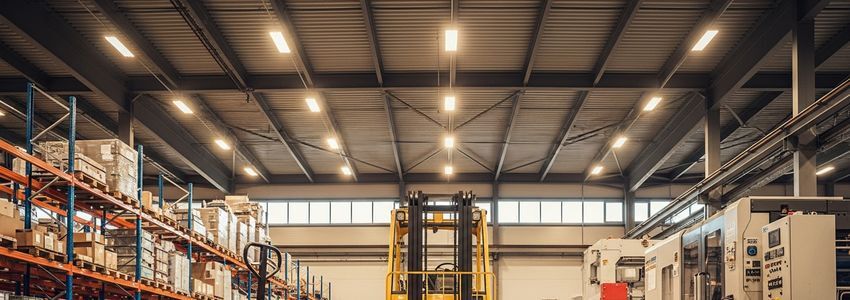
When your business needs new equipment - whether it's a commercial oven for your restaurant, a forklift for your warehouse, or diagnostic machinery for your clinic - you face a fundamental financial decision: lease it or buy it outright. For most small and mid-sized businesses, leasing equipment offers strategic advantages that purchasing simply cannot match. Understanding the full picture of equipment leasing benefits can reshape how you grow your operation, manage cash flow, and stay competitive without tying up critical capital.
In This Article
- What Is Equipment Leasing?
- Top Benefits of Leasing vs. Buying
- Cash Flow Preservation
- Access to Latest Technology
- Flexibility and Scalability
- Types of Equipment Leases
- Leasing vs. Buying: Side-by-Side Comparison
- Who Benefits Most from Equipment Leasing?
- Real-World Scenarios
- How Crestmont Capital Helps
- Frequently Asked Questions
- How to Get Started
What Is Equipment Leasing?
Equipment leasing is a financing arrangement in which a business uses equipment owned by a leasing company (the lessor) in exchange for regular monthly payments over an agreed term - typically one to seven years. At the end of the lease, businesses usually have options to purchase the equipment, return it, or renew the lease for updated models.
Unlike a traditional equipment loan where you borrow money to buy the equipment outright, leasing means the lessor retains legal ownership throughout the term. This distinction has significant financial and operational implications for your business. From a balance sheet perspective, many leases (particularly operating leases) keep the liability off your books, preserving your borrowing capacity for other purposes.
Equipment leasing is available for virtually every category of business asset - from restaurant ovens and medical imaging machines to construction excavators, fleet vehicles, and office technology. The global equipment leasing market exceeded $1.2 trillion in recent years, reflecting just how widely adopted this financing strategy has become among businesses of all sizes.
Key Stat: According to the Equipment Leasing and Finance Association (ELFA), approximately 80% of U.S. businesses use some form of equipment financing or leasing - making it the single most common method for acquiring business assets.
Top Benefits of Leasing Equipment Instead of Buying Outright
The case for leasing over purchasing is not one-size-fits-all, but there are compelling advantages that apply across most industries and business sizes. Here are the core reasons businesses choose to lease rather than buy.
By the Numbers
Equipment Leasing in America - Key Statistics
80%
of U.S. businesses use equipment financing or leasing
$1.2T+
Annual value of equipment leasing market globally
0%
Down payment required with many leasing programs
2-5x
More equipment accessible compared to cash purchase
Cash Flow Preservation: The #1 Benefit
The most immediate and impactful benefit of leasing equipment is what it does for your cash flow. When you purchase equipment outright, you make a large lump-sum payment that depletes working capital. That money is then tied up in a depreciating asset rather than being available for payroll, inventory, marketing, or other growth initiatives.
Leasing spreads the cost of equipment over time through predictable monthly payments. For example, a $75,000 commercial printing press purchased outright creates a $75,000 cash outflow today. The same equipment leased over 48 months might cost $1,800 per month - a manageable operating expense that aligns with the revenue the equipment generates.
This cash flow advantage compounds when you consider opportunity cost. Capital kept in reserve can be deployed for higher-return investments - hiring, advertising, opening a new location, or building an emergency cushion. Most small businesses with less than $500,000 in annual revenue cannot afford to lock up $50,000 to $200,000 in a single equipment purchase without compromising their operational stability.
Pro Tip: Many leasing programs offer 100% financing with no down payment, meaning you can acquire essential equipment and begin generating revenue from it on day one - without spending a dollar upfront. This model is especially powerful for startups and businesses in rapid growth phases.
Ready to Preserve Your Cash Flow?
Get flexible equipment leasing from the #1 business lender in the U.S. No obligation - apply in minutes.
Apply Now →Access to the Latest Technology and Equipment
Technology and equipment become obsolete faster than ever. A medical imaging machine purchased in 2019 may already be significantly outpaced by 2024 models. A restaurant POS system bought three years ago might lack the integrations your competitors now use daily. Ownership locks you into a specific generation of equipment - and the cost of upgrading is entirely on you.
Leasing gives businesses the flexibility to upgrade at the end of each lease term. Rather than being stuck with outdated machinery, you can return the old equipment and lease the newest version - often with minimal disruption and without a large capital outlay. This "evergreen equipment" strategy is particularly valuable in technology-driven industries where competitive advantage depends on having current tools.
Consider a medical practice investing in diagnostic imaging equipment. A purchase might make sense if the equipment will remain relevant for 15 or 20 years. But in fast-moving fields like medical technology, AI-powered diagnostics, and precision manufacturing, the competitive landscape shifts every three to five years. Leasing keeps businesses on the cutting edge without the financial burden of repeated large purchases.
Flexibility, Scalability, and Operational Agility
Business conditions change. Demand spikes, market conditions shift, and growth trajectories are rarely linear. Equipment leasing provides structural flexibility that outright ownership cannot match.
With a lease, you can scale up quickly by adding more equipment without the capital commitment of ownership. When business slows or pivots, you can return equipment at lease end rather than trying to sell used assets at a fraction of their original cost. This optionality is especially valuable for seasonal businesses, project-based contractors, and companies in rapidly evolving industries.
Leasing also creates flexibility in your overall financing strategy. By keeping large asset purchases off your balance sheet (in many operating lease structures), you preserve your debt capacity for other financing needs - a line of credit, an SBA loan, or a commercial real estate purchase. Lenders view lease obligations differently than long-term debt, which can improve your creditworthiness for other borrowing.
Types of Equipment Leases Explained
Understanding which type of lease fits your needs is essential. The two primary categories are operating leases and finance (capital) leases, but there are several structures within those categories.
Operating Leases
Operating leases function more like a rental agreement. The lessor retains ownership and the lessee uses the equipment for a set period. At the end, the equipment is returned, renewed, or purchased at fair market value. Operating leases keep the asset and liability off your balance sheet in many cases, which improves financial ratios. They're ideal for equipment with a shorter useful life relative to the lease term - technology, vehicles, and medical devices.
Finance (Capital) Leases
Finance leases transfer most of the economic benefits and risks of ownership to the lessee. These appear on your balance sheet as both an asset and a liability. They're structured for businesses that intend to own the equipment at the end - the residual (buyout) value is typically $1 or a nominal amount. Finance leases are better suited for long-lived equipment like heavy machinery, industrial generators, or commercial vehicles.
Sale-Leaseback Arrangements
If you already own equipment, a sale-leaseback allows you to sell it to a leasing company and immediately lease it back. This converts a fixed asset into working capital while retaining use of the equipment - a powerful liquidity strategy for businesses needing to free up cash without disrupting operations.
Fair Market Value (FMV) Leases
FMV leases offer the lowest monthly payments and end-of-term flexibility. At the end, you can buy the equipment at its fair market value, return it, or upgrade to new equipment. These are popular for technology and fast-evolving equipment categories.
Key Insight: According to the SBA, small businesses that lease rather than purchase major equipment often have 15-25% more liquid capital available for growth initiatives, giving them a significant competitive advantage during expansion phases.
Leasing vs. Buying Equipment: Side-by-Side Comparison
| Factor | Leasing | Buying Outright |
|---|---|---|
| Upfront Cost | Low to none - often $0 down | Full purchase price required |
| Monthly Cash Flow | Predictable fixed payments | Large initial outflow; no ongoing payments |
| Ownership | Lessor retains title (unless finance lease) | Business owns the asset immediately |
| Technology Risk | Low - upgrade at end of term | High - stuck with current generation |
| Balance Sheet Impact | Off-balance-sheet (operating leases) | On balance sheet as asset + depreciation |
| Flexibility | High - return, upgrade, or buy at term end | Low - must sell or keep the asset |
| Maintenance | Often included in lease terms | Entirely owner's responsibility |
| Long-Term Cost | Higher total cost if equipment kept long-term | Lower if used fully over its lifecycle |
| Best For | Fast-evolving equipment, cash-flow-conscious businesses, scalable growth | Long-lived assets, stable industries, businesses with surplus capital |
Who Benefits Most from Equipment Leasing?
While leasing can work for virtually any business, certain types of companies gain disproportionate advantages from leasing over purchasing.
Startups and Early-Stage Businesses
New businesses rarely have the capital reserves to purchase equipment outright. Leasing allows startups to acquire the equipment they need to operate without depleting their runway. Many lenders - including Crestmont Capital - offer startup equipment financing with flexible qualification criteria that account for limited business credit history.
Businesses in Technology-Driven Industries
Medical practices, dental offices, IT companies, manufacturing firms using CNC machinery, and similar businesses face rapid equipment obsolescence. Leasing keeps them competitive without repeated large capital outlays. A dental practice, for example, can lease a digital X-ray system, use it for five years, and upgrade to the next-generation system at the end of the term - all without a major capital event.
Seasonal and Cyclical Businesses
Landscaping companies, ski resorts, catering businesses, and retailers with heavy seasonal demand benefit from leasing because it matches expenses to revenue cycles. Some lease structures offer seasonal payment adjustments - lower payments during slow months and higher payments during peak season - to align cash outflows with cash inflows.
Rapidly Scaling Businesses
Companies experiencing fast growth often need equipment before they have the capital to purchase it. Leasing enables them to acquire equipment now and pay for it over time using the revenue it generates. This is particularly common in construction, manufacturing, healthcare, and foodservice.
Businesses Prioritizing Balance Sheet Health
Companies seeking to maintain strong financial ratios for future borrowing, investor due diligence, or acquisition purposes benefit from keeping equipment off the balance sheet through operating leases. This strategy preserves leverage capacity and can improve metrics like debt-to-equity and return on assets.
Is Equipment Leasing Right for Your Business?
Talk to a Crestmont Capital specialist today. We'll help you find the best financing structure for your equipment needs.
Get Started Today →Real-World Scenarios: Equipment Leasing in Action
Scenario 1: The Restaurant Owner Upgrading the Kitchen
Maria runs a mid-sized restaurant in Austin, Texas. Her commercial kitchen equipment - walk-in cooler, commercial range, and dishwasher system - is aging and increasingly unreliable. The cost to replace everything outright would be $85,000. That's capital she needs for a planned second location. By leasing the equipment through a restaurant equipment financing program, Maria pays $1,900 per month over 48 months. She gets new, efficient equipment, the lease payments qualify as business expenses, and she preserves her savings for the expansion.
Scenario 2: The Construction Contractor Adding Capacity
Carlos owns a mid-sized general contracting firm that just won a large commercial project requiring excavation equipment. Buying an excavator outright would cost $180,000 - an amount that would strain his working capital significantly. Through construction equipment financing, Carlos leases the machine for the project duration and beyond, making monthly payments of approximately $3,500. The equipment pays for itself through the project revenue, and Carlos returns or buys it at lease end based on his future workload.
Scenario 3: The Medical Practice Upgrading Diagnostics
Dr. Chen's family medicine practice needs an updated digital X-ray system and patient monitoring equipment. The total investment would be $120,000 outright. By leasing through a healthcare equipment program, the practice makes manageable monthly payments aligned with insurance reimbursements. At the end of the five-year lease, Dr. Chen can upgrade to the latest generation of imaging technology - keeping the practice competitive without another major capital event.
Scenario 4: The Fitness Studio Expanding Equipment
Sarah owns a boutique fitness studio with 200 members. She wants to add commercial cardio equipment and strength training machines to attract more members. Total cost to purchase: $65,000. By leasing through a gym equipment financing arrangement, Sarah pays $1,400 per month. The new equipment helps her recruit 50 new members at $80/month each - generating $4,000 in additional monthly revenue. The lease pays for itself in new memberships within four months.
Scenario 5: The Auto Shop Replacing Diagnostic Tools
A Texas auto repair shop needs to upgrade its diagnostic equipment, lift systems, and alignment machines as new vehicle models require updated tools. Rather than drain cash reserves purchasing $95,000 in equipment outright, the shop owner leases through Crestmont Capital's equipment financing program. The predictable monthly payments allow the business to budget accurately and maintain the working capital needed for parts inventory and payroll.
Scenario 6: The Startup Tech Company Equipping Its Office
A software startup needs workstations, servers, and networking infrastructure. Purchasing it all outright would cost $200,000 - a significant portion of their seed funding. By leasing the technology infrastructure through a startup equipment financing program, they preserve capital for hiring engineers and developing their product. When the lease ends, they can upgrade to next-generation hardware rather than being stuck with three-year-old servers.
How Crestmont Capital Helps with Equipment Leasing
Crestmont Capital specializes in helping small and mid-sized businesses access the equipment they need to grow - without the financial strain of outright purchases. As the #1-rated business lender in the United States, we offer flexible equipment leasing and financing solutions across virtually every industry and equipment category.
Our equipment financing programs include:
- Equipment financing and leasing for all asset types - from vehicles to medical equipment to industrial machinery
- Startup equipment financing for new businesses with limited credit history
- Used equipment financing for businesses acquiring pre-owned assets
- Equipment lines of credit that function like revolving credit for ongoing equipment needs
- Sale-leaseback programs for businesses looking to unlock capital from existing equipment
We understand that every business has unique needs, timelines, and cash flow requirements. Our equipment financing specialists work with you to structure a lease or loan that aligns with your revenue cycles, growth plans, and long-term objectives.
Our application process is fast and straightforward. Most equipment financing decisions are made within 24-48 hours, and funds are typically available within a few business days of approval. We work with businesses across all credit profiles - including those with challenged credit histories. Learn more about our equipment leasing options or explore our small business financing hub to see the full range of funding solutions available to you.
Quick Guide
How Equipment Leasing Works - At a Glance
Identify the equipment your business needs - new or used, any category.
Submit a quick application - most approvals take 24-48 hours.
Review your lease terms, payment schedule, and end-of-term options.
Equipment is delivered and you begin generating revenue from it immediately.
Frequently Asked Questions
What is the main benefit of leasing equipment versus buying it outright?
The main benefit is cash flow preservation. Leasing allows you to acquire and use equipment without a large upfront capital outlay, keeping your working capital available for payroll, inventory, marketing, and other growth initiatives. Instead of spending $80,000 today to purchase equipment, you make manageable monthly payments - often as low as $1,500 to $2,500 per month for the same asset - allowing the equipment to pay for itself through the revenue it generates.
Is it cheaper to lease or buy equipment in the long run?
Buying is typically less expensive over the full lifecycle of equipment if you intend to use it for many years beyond its purchase price. However, leasing provides economic advantages that pure cost comparison overlooks: access to newer technology, off-balance-sheet treatment, no maintenance risk, and the opportunity cost of capital freed up for higher-return uses. For businesses where equipment evolves rapidly - technology, medical, and manufacturing sectors - leasing often creates net financial advantages even at a higher nominal cost.
What types of equipment can be leased?
Almost any tangible business equipment can be leased. Common categories include commercial vehicles and trucks, restaurant and kitchen equipment, construction and heavy machinery, medical and dental equipment, office technology and computers, manufacturing equipment, agricultural machinery, gym and fitness equipment, salon and spa equipment, and industrial tools. Lenders like Crestmont Capital can structure leases for new or used equipment across virtually any industry.
Does leasing equipment affect my credit score?
Applying for equipment leasing typically involves a credit inquiry, which may cause a small temporary dip in your credit score. However, consistently making on-time lease payments can build your business credit profile over time. Equipment leases that report to business credit bureaus (Dun and Bradstreet, Experian Business, Equifax Business) are a powerful way to establish and strengthen your business credit history, which in turn improves your access to larger financing at better rates in the future.
Can I get equipment leasing with bad credit?
Yes. Many equipment leasing programs work with businesses that have less-than-perfect credit. Lenders often focus more on the value of the equipment (which serves as collateral) and the business's revenue history than on credit scores alone. Businesses with credit scores as low as 550-600 can often qualify for equipment leasing, particularly for lower-value assets or with a larger down payment. Crestmont Capital's bad credit equipment financing program is specifically designed for businesses in this situation.
What happens at the end of an equipment lease?
At the end of a lease term, you typically have three options: purchase the equipment at fair market value (or $1 in finance leases), return it and walk away, or renew/extend the lease - often on updated equipment. The best option depends on the equipment's continued relevance, its residual value, and your business needs. Many businesses choose the upgrade path, particularly in technology-heavy industries, ensuring they're always operating with current-generation equipment.
What is an equipment line of credit and how does it differ from a standard lease?
An equipment line of credit is a revolving credit facility specifically for equipment purchases. Rather than structuring a separate lease for each piece of equipment, an equipment line lets you draw funds as needed - up to your credit limit - and pay for multiple equipment acquisitions over time. This structure is ideal for businesses that regularly acquire equipment, such as contractors needing different tools for different projects or medical practices continually upgrading their device portfolio.
How long does it take to get approved for equipment leasing?
Equipment leasing approvals are generally fast. Many lenders - including Crestmont Capital - provide decisions within 24 to 48 hours for standard equipment financing requests. Larger transactions or more complex credit situations may take a few additional days. Once approved, funding typically occurs within 2-5 business days. This speed is one of the key advantages of equipment financing over traditional bank loans, which can take weeks or months to process.
Are lease payments tax deductible?
In general, operating lease payments are treated as business expenses and are typically deductible in the year they are paid. This can provide an immediate tax benefit compared to purchasing, where the deduction is spread over the asset's useful life through depreciation. Finance leases are treated differently - the interest component may be deductible, and the asset can be depreciated. Always consult with a qualified tax professional to understand the specific implications for your situation, as tax treatment depends on lease structure and current tax regulations.
What is a sale-leaseback and when should a business use it?
A sale-leaseback is a transaction where a business sells equipment it already owns to a financing company and then immediately leases it back for continued use. This converts a fixed asset into immediate working capital without disrupting operations - the business keeps using the equipment while receiving the proceeds from the sale. Sale-leasebacks are particularly useful when a business needs liquidity quickly, wants to fund a new opportunity without taking on new debt, or seeks to improve its balance sheet by converting assets to cash.
Can a startup business qualify for equipment leasing?
Yes. Startups can qualify for equipment leasing, though the requirements differ from established businesses. Lenders typically look at the owner's personal credit history, the business plan, industry experience, and the value of the equipment (which acts as collateral). Some startup equipment financing programs are specifically designed for businesses with less than two years of operating history. Because equipment serves as collateral, lenders can often approve financing even when a business has limited financial history.
What documents do I need to apply for equipment leasing?
Typical documentation for an equipment lease application includes a completed application form, the last 3-6 months of business bank statements, information about the equipment being leased (vendor quote or invoice), and basic business information (business name, EIN, time in business). Larger transactions may also require recent tax returns, financial statements, or additional documentation. The simpler the transaction, the fewer documents required - many lenders can approve financing under $100,000 with just an application and bank statements.
What is the difference between an operating lease and a finance lease?
An operating lease keeps the asset off your balance sheet - the lessor retains ownership and the lessee records payments as operating expenses. Operating leases are ideal for equipment with a shorter useful life relative to the lease term or when you do not intend to own the asset. A finance (capital) lease transfers economic ownership to the lessee and appears on the balance sheet as both an asset and a liability. Finance leases are used when the intent is to eventually own the equipment, often featuring a $1 buyout option at the end of the term.
Can I lease used equipment?
Yes. Used equipment can be leased, though the terms may differ slightly from new equipment. Lenders typically assess the age, condition, and remaining useful life of used equipment when structuring a lease. Used equipment financing often features shorter terms than new equipment (to align with the remaining asset life) and may require a higher down payment. Crestmont Capital offers used equipment financing programs for businesses looking to acquire pre-owned assets at more competitive price points without a large upfront cost.
How does leasing equipment help with business growth?
Equipment leasing accelerates growth in several ways. First, it allows immediate access to equipment that generates revenue without requiring large capital reserves. Second, it frees up capital for other growth investments like hiring, marketing, or location expansion. Third, it allows businesses to scale equipment capacity in line with demand rather than being constrained by what they can afford to purchase outright. Fourth, it enables businesses to stay competitive with the latest equipment technology rather than falling behind competitors who are upgrading. Combined, these advantages can significantly accelerate the pace of growth compared to a purchase-only strategy.
How to Get Started with Equipment Leasing
Determine which equipment your business needs, whether new or used, and get vendor quotes or invoices to include with your application.
Complete Crestmont Capital's quick application at offers.crestmontcapital.com/apply-now - the process takes just a few minutes and most decisions are returned within 24-48 hours.
A Crestmont Capital specialist will review your application and present lease structures tailored to your business size, cash flow, and goals.
Once approved, funding typically arrives within a few business days. Your equipment is delivered and you begin generating revenue immediately.
Conclusion
The benefits of leasing equipment instead of buying outright are substantial and well-documented. From preserving cash flow and accessing the latest technology to maintaining flexibility and scaling capacity on demand, equipment leasing offers strategic advantages that buying cannot match for most businesses. When your capital is the engine of growth, protecting it by spreading equipment costs over time - rather than spending it all upfront - is often the smarter financial decision.
Whether you need equipment leasing for a restaurant kitchen, a construction fleet, a medical practice, a fitness studio, or a manufacturing line, Crestmont Capital has the programs, expertise, and funding capacity to help you move forward. Explore our full suite of equipment financing solutions or contact our team to discuss your specific needs.
Ready to Lease the Equipment Your Business Needs?
Join thousands of business owners who trust Crestmont Capital for fast, flexible equipment financing. No obligation - apply in minutes.
Apply Now →Disclaimer: The information provided in this article is for general educational purposes only and is not financial, legal, or tax advice. Funding terms, qualifications, and product availability may vary and are subject to change without notice. Crestmont Capital does not guarantee approval, rates, or specific outcomes. For personalized information about your business funding options, contact our team directly.