
 (800) 949-0401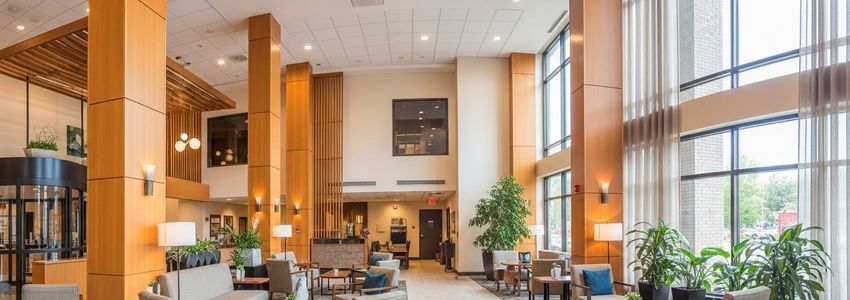
Tru by Hilton Franchise Loan: The Complete Financing Guide for Tru by Hilton Franchise Owners
In This Article
- What Is Tru by Hilton?
- Tru by Hilton Franchise Costs and Investment
- Financing Options for Tru by Hilton Franchise Owners
- SBA Loans for Hotel Franchises
- How to Qualify for a Tru by Hilton Franchise Loan
- Tru by Hilton Financing at a Glance
- Top Lenders for Hotel Franchise Financing
- Tips for Getting Approved
- Frequently Asked Questions
- Next Steps
If you are considering opening a Tru by Hilton hotel, you are looking at one of the fastest-growing midscale hotel brands in the hospitality industry. Launched in 2016, Tru by Hilton was designed from the ground up to serve the modern traveler who wants a fresh, energetic experience at an accessible price point. With more than 200 open locations across the United States and a robust development pipeline, this brand offers serious opportunity for hotel investors and developers.
But like any hotel project, financing a Tru by Hilton requires careful planning, a thorough understanding of the capital stack, and the right lending partners. Construction or acquisition of a midscale hotel is a significant investment, and the right loan structure can mean the difference between a profitable property and a financial burden.
In this guide, we walk you through everything you need to know about Tru by Hilton franchise loans - from upfront costs and investment ranges to the best loan products for your situation. Whether you are a first-time hotel developer or an experienced hospitality investor, this resource will help you approach financing with confidence.
Ready to explore your financing options?
Crestmont Capital works with hotel franchise owners across the U.S. to secure competitive loans tailored to the hospitality sector. Apply now and get matched with the right lender.
What Is Tru by Hilton?
Tru by Hilton is a midscale hotel brand owned by Hilton Worldwide Holdings Inc., one of the largest and most recognized hospitality companies in the world. The brand was conceived to fill a gap in the market between economy and upscale tiers - offering stylish, modern design and amenities at a price point that appeals to both budget-conscious travelers and cost-effective corporate accounts.
The typical Tru by Hilton property features a distinctive lobby experience built around a large, open "hive" space that integrates check-in, food and beverage, and social areas. Guest rooms are smaller than traditional hotels but highly functional, with ample storage, fast Wi-Fi, and modern furnishings. The brand emphasizes value-for-money without sacrificing the quality associated with the Hilton name.
Key brand characteristics include:
- Typical room count of 100 to 160 keys
- Three- to four-story construction, often limited-service format
- High-energy lobby with games, technology, and a grab-and-go market
- Hilton Honors loyalty program integration
- Strong RevPAR performance relative to midscale competitors
- Hilton's global distribution and reservations system
For investors, Tru by Hilton represents a brand with institutional backing, strong franchisor support, and a loyal guest base. The brand ranked among the top-performing new hotel concepts in its first years and continues to attract both new-build development and conversion opportunities.
According to SBA market research guidance, hotels and lodging represent one of the more capital-intensive small business categories, making appropriate financing critical from the outset. As a Hilton family brand, Tru benefits from the parent company's established vendor relationships, design-build resources, and global distribution - all of which contribute to its investment appeal.
Tru by Hilton Franchise Costs and Investment
Understanding the total investment required is the first step in developing your financing plan. Tru by Hilton is a new-build concept in most cases, meaning the capital outlay involves land acquisition or lease, construction costs, furniture and equipment, franchise fees, and working capital.
Initial Franchise Fee
The initial franchise fee for Tru by Hilton typically ranges from $75,000 to $100,000, depending on the number of guest rooms and specific terms negotiated with Hilton. This fee grants you the right to operate under the Tru by Hilton brand and access Hilton's proprietary systems, training programs, and support infrastructure.
Total Project Investment
The total investment for a Tru by Hilton new-build project typically falls in the range of $8 million to $18 million, depending on location, land costs, construction market conditions, and specific design choices. Here is a general breakdown:
- Land acquisition or long-term lease: $500,000 to $3,000,000+
- Construction (building and site work): $5,000,000 to $12,000,000
- Furniture, fixtures, and equipment (FF&E): $800,000 to $2,000,000
- Technology systems and pre-opening: $200,000 to $500,000
- Initial franchise fee: $75,000 to $100,000
- Working capital (3-6 months): $250,000 to $600,000
- Professional fees and soft costs: $200,000 to $600,000
These figures can vary considerably based on market, construction timeline, and whether you are building on owned land versus leased ground. In high-cost markets such as coastal cities or major metros, total investment can exceed $20 million for a single property.
Ongoing Royalties and Fees
In addition to upfront costs, Tru by Hilton franchisees pay ongoing fees including:
- Royalty fee: Approximately 5% of gross room revenue
- Program fee: Approximately 4% of gross room revenue (covers marketing, Hilton Honors, distribution)
- Technology fee: Variable based on systems utilized
These ongoing fees are standard for any Hilton-branded property and are factored into your NOI (net operating income) projections, which lenders will scrutinize closely when underwriting your loan.
Financing Options for Tru by Hilton Franchise Owners
Financing a midscale hotel development is meaningfully different from financing a restaurant, retail store, or service franchise. Hotel loans are typically larger, longer-term, and involve a blend of debt and equity. Understanding the financing landscape will help you build the right capital structure for your project.
1. Commercial Real Estate Loans (Construction and Permanent)
Most Tru by Hilton developments require a two-phase financing approach:
- Construction loan: Funds the actual building phase; typically has a floating interest rate and requires interest-only payments during construction; lenders advance funds in draws as construction milestones are met
- Permanent (take-out) loan: Replaces the construction loan once the hotel is stabilized; usually a 10-25 year amortizing loan with a lower rate tied to the property's proven cash flow
Many lenders offer construction-to-permanent loans that automatically convert to a long-term mortgage once occupancy and revenue stabilize - usually defined as maintaining target RevPAR and occupancy for 12 months.
2. SBA 504 Loans
The SBA 504 loan program is one of the most powerful tools for hotel developers. It provides long-term, fixed-rate financing for major assets like land, buildings, and heavy equipment. The structure involves:
- 50% from a conventional bank lender (first lien)
- 40% from a Certified Development Company (CDC), backed by an SBA-guaranteed debenture
- 10% equity contribution from the borrower
SBA 504 maximum loan amounts can reach $5.5 million for standard projects and $5.5 million for each energy-efficient or manufacturer project. The CDC portion is fixed-rate and carries a 10-year or 20-year term with 25-year amortization, making it attractive for hotel projects.
3. SBA 7(a) Loans
For hotel acquisitions or smaller projects, the SBA 7(a) program offers up to $5 million with terms of up to 25 years for real estate. The 7(a) is more flexible than the 504 and can cover a range of uses including franchise fees, working capital, and equipment. Down payment requirements are typically 10% to 20% for hotel projects.
4. Conventional Hotel Loans
Conventional lenders - commercial banks, credit unions, life insurance companies, and CMBS lenders - offer hotel-specific loan products. These typically require:
- 30% to 40% equity or down payment
- Proven track record in hotel ownership or management
- Stabilized pro forma projections vetted by a hotel consultant
- Loan-to-value ratios of 60% to 70%
5. Business Line of Credit
A business line of credit can supplement your primary hotel loan to cover pre-opening expenses, initial marketing, working capital shortfalls during the ramp-up period, and unexpected costs. Lines of credit are revolving, meaning you pay interest only on what you draw and can re-use the facility as you repay it.
6. Equipment Financing
The FF&E package for a new hotel is substantial. Equipment financing allows you to spread the cost of hotel equipment - commercial kitchen appliances, fitness center equipment, laundry systems, technology infrastructure - over 3 to 7 years rather than paying cash upfront. This preserves working capital during the critical opening period.
Callout: The Hilton Advantage
Lenders view Hilton-branded properties more favorably than independent hotels or lesser-known brands. The Hilton name, Hilton Honors loyalty program, and global distribution system significantly reduce occupancy risk - a key factor in hotel loan underwriting. This can translate to better loan terms, lower required equity, and faster approval timelines for qualified borrowers.
SBA Loans for Hotel Franchises
SBA loans remain the gold standard for small to mid-size hotel developments and acquisitions, particularly for first-time hotel owners who may not qualify for conventional hotel financing. The SBA does not lend money directly; instead, it guarantees a portion of loans made by approved lenders, reducing the risk to the lender and enabling more favorable terms for borrowers.
Why Hotel Projects Qualify for SBA Financing
Hotels are eligible SBA business types when they are owner-operated small businesses. A single-property Tru by Hilton operation typically meets SBA size standards. However, large REITs or institutional hotel owners would not qualify.
Key SBA eligibility requirements for hotel projects include:
- Business must be for-profit
- Owner must occupy at least 51% of the property (for 504 loans) or operate the hotel as a business (for 7(a))
- Business must meet SBA size standards (typically fewer than 500 employees and under $7.5 million in annual receipts for most hotel categories)
- Borrower must have invested equity in the project
- Personal credit score of at least 680 (preferred; some lenders go lower)
According to recent data from the Small Business Administration, hotel and lodging businesses consistently rank among the top SBA loan categories by dollar volume, demonstrating lender confidence in the sector when paired with strong brands like Hilton.
SBA 504 vs. SBA 7(a) for Hotel Projects
| Feature | SBA 504 | SBA 7(a) |
|---|---|---|
| Max Loan | $5.5M (CDC portion) | $5M |
| Eligible Uses | Real estate, equipment | Real estate, working capital, franchise fees |
| Equity Required | 10% | 10-20% |
| Rate Type | Fixed (CDC portion) | Variable or fixed |
| Max Term | 25 years (real estate) | 25 years (real estate) |
| Best For | Larger real estate projects | Acquisitions, mixed-use projects |
How to Qualify for a Tru by Hilton Franchise Loan
Hotel lenders evaluate franchise projects through a specific lens that differs from other business lending. Here is what lenders look for when underwriting a Tru by Hilton franchise loan:
Creditworthiness
Personal credit score is a primary underwriting factor, particularly for SBA loans. Most hotel lenders want to see a minimum score of 680-720. A strong credit history demonstrates financial responsibility and lowers lender risk. If your credit score is below this threshold, you may want to explore bad credit business loans or take steps to improve your score before applying.
Industry Experience
Most hotel lenders require the primary borrower or a key management partner to have demonstrable experience in hotel operations or real estate development. First-time hotel owners may need to partner with an experienced hotel management company (an approved Hilton management firm) to satisfy this requirement.
Equity Injection
Unlike many business loan types, hotel financing almost always requires a meaningful equity injection - typically 20% to 30% of the total project cost for conventional loans, and as low as 10% for SBA 504 projects. This equity can come from personal savings, investors, business partners, or seller financing in acquisition scenarios.
Pro Forma Financial Projections
Lenders will want to see detailed pro forma projections based on market data, including:
- Projected occupancy rates (year 1, 3, and 5)
- Average daily rate (ADR) and RevPAR assumptions
- Revenue and expense projections by department
- NOI and debt service coverage ratio (DSCR) - typically minimum 1.25x
- Market analysis supporting demand assumptions
A professional hotel feasibility study from a recognized hotel consultant can significantly strengthen your loan application and demonstrate credibility to lenders.
Franchise Approval
You must have a signed franchise agreement or letter of intent from Hilton before most lenders will fully commit. The franchise agreement confirms the brand affiliation, operating standards, and fee structure - key inputs to the financial model lenders use.
Collateral
Hotel loans are almost always secured by the real property itself. The hotel land and building serve as primary collateral. Additional collateral such as a personal guarantee, business assets, or other real estate holdings may be required depending on the loan size and borrower profile.
Callout: The Debt Service Coverage Ratio (DSCR)
DSCR is the single most important underwriting metric for hotel loans. It is calculated by dividing the hotel's annual NOI by the annual debt service (principal plus interest). A DSCR of 1.25x means the property generates 25% more income than needed to cover loan payments. Most hotel lenders require a minimum DSCR of 1.20x to 1.35x. Building strong projections that demonstrate healthy DSCR is essential to loan approval.
Tru by Hilton Financing at a Glance
Tru by Hilton Franchise Financing Overview
Total Investment Range
$8M - $18M+
Initial Franchise Fee
$75K - $100K
Typical Equity Required
20% - 30%
SBA 504 Equity (Min)
10%
Typical Loan Term
10 - 25 Years
Min Credit Score
680+
Royalty Fee
~5% Gross Revenue
Min DSCR (Typical)
1.25x
Estimates based on industry data. Actual figures vary by project, market, and lender.
Top Lenders for Hotel Franchise Financing
Not all lenders are created equal when it comes to hotel financing. Here are the primary categories of lenders that actively finance Hilton-branded hotel developments:
SBA-Preferred Lenders
SBA Preferred Lender Program (PLP) banks can approve SBA loans in-house without sending them to the SBA for review, which speeds up the process significantly. Many regional and national banks hold PLP status and have dedicated hotel lending teams experienced with branded hotels like Tru by Hilton.
CMBS Lenders
Commercial Mortgage-Backed Securities (CMBS) lenders package hotel loans into bond offerings sold to institutional investors. CMBS loans are non-recourse (no personal guarantee in most cases), offer competitive rates, and can handle larger loan amounts. However, they typically require the hotel to be stabilized with at least 12 months of operating history.
Life Insurance Companies
Life insurance companies (also called life company lenders) are among the most conservative but competitive sources of long-term hotel financing. They offer fixed-rate loans at attractive spreads for high-quality branded properties in good markets. Life company loans often have terms of 10 to 25 years with 25-30 year amortization.
Regional and Community Banks
Local and regional banks that understand their markets can be excellent sources of hotel construction and permanent financing. They often offer more flexibility on terms and have faster decision-making than large national institutions. Many regional banks participate in SBA hotel programs.
Alternative Business Lenders
For pre-development costs, working capital, and bridge financing needs, alternative business lenders can provide faster access to capital. Products like short-term business loans and fast business loans can help you cover early-stage project costs while your primary hotel loan is being processed.
Hilton's Development Resources
Hilton itself provides development resources and introductions to its preferred lender program partners. As a Tru by Hilton franchisee, you will have access to Hilton's development team, who can guide you toward lender relationships that are familiar with Hilton-branded projects and understand the brand's performance standards.
Looking for the right hotel financing partner?
Crestmont Capital connects hotel franchise investors with competitive loan products tailored to their project scope and financial profile. Start your application today.
Tips for Getting Approved for a Tru by Hilton Franchise Loan
Hotel loan approval requires more preparation than most other business loan types. Here are the most important steps you can take to maximize your chances of approval:
1. Hire a Hotel Consultant for Feasibility
A professional hotel market study from a recognized hospitality consulting firm (STR, HVS, PKF Hospitality) adds significant credibility to your loan application. Lenders trust independent analysis more than developer-provided projections. This study will typically include a competitive market analysis, demand segmentation, projected occupancy and ADR, and an operating pro forma.
2. Build a Strong Management Team
If you do not have direct hotel operating experience, hire a qualified hotel management company. Hilton maintains a list of approved management companies for its brands. Having a professional management team in place signals to lenders that the hotel will be operated according to brand standards and will have the operational expertise needed to drive revenue.
3. Demonstrate Equity Sources
Clearly document where your equity injection is coming from. Lenders want to see seasoned funds (typically in your account for at least 60 days) rather than borrowed capital. If your equity comes from multiple sources - personal savings, investors, retirement accounts through a ROBS structure - document each source thoroughly.
4. Prepare Your Financial Statements
You will need personal and business tax returns for at least three years, personal financial statements, bank statements, and a personal credit report. If you own other properties or businesses, you will need to provide financial information for those as well.
5. Get Franchise Approval First
Lenders want to see a signed franchise agreement or a letter of intent from Hilton before committing to funding. The franchise agreement de-risks the project from a lender's perspective - it confirms the brand affiliation and the performance support that comes with it.
6. Work with a Lender Experienced in Hotel Financing
Not all commercial lenders understand the nuances of hotel lending. Partnering with a lender or brokerage firm that specializes in hospitality finance will result in better terms and a smoother process. Long-term business loans structured for hotel projects require specific expertise that not every lender possesses.
According to U.S. Census Bureau small business data, hospitality businesses that secure appropriate financing in their first two years have significantly higher 5-year survival rates than those that undercapitalize at the outset. Investing the time to secure the right loan with the right lender is not just about the money - it is about building a sustainable business foundation.
Research from Forbes consistently shows that business owners who work with specialized lenders and come prepared with complete documentation close loans faster and at better rates than those who approach banks cold with incomplete packages. For hotel projects specifically, this preparation gap can mean the difference between a 7% and a 9% interest rate - a difference worth hundreds of thousands of dollars over the life of the loan.

A hotel franchise owner reviewing financing documents and financial projections for a new Tru by Hilton property.
Tru by Hilton vs. Other Hilton Midscale Brands: Financing Comparison
If you are exploring multiple Hilton brands, it is helpful to understand how Tru compares to other midscale and select-service options from Hilton's portfolio. This can influence your financing approach and lender conversations.
- Tru by Hilton vs. Hampton Inn: Hampton Inn is more established with a longer track record, which can make financing slightly easier with conservative lenders. However, Tru's lower construction cost per key and strong ADR performance make it competitive for newer developers. You may also want to review the Hampton Inn franchise loan guide for a detailed comparison.
- Tru by Hilton vs. Home2 Suites: Home2 Suites targets extended-stay guests and typically commands higher ADR due to suite-format rooms. The Home2 Suites franchise loan involves similar financing mechanics but often higher per-key construction costs.
- Tru by Hilton vs. Hilton Garden Inn: Hilton Garden Inn sits in the upper midscale tier with higher construction costs and more amenities. Tru by Hilton's simpler amenity package means lower construction costs and faster time to market.
Brand selection ultimately depends on your market, target guest profile, and capital availability. A hotel consultant and your Hilton development representative can help you determine which brand is best suited for your specific site and market conditions.
Understanding Hotel Loan Structures
Hotel financing is unique because the hotel itself is both the collateral for the loan and the operating business that generates the income to repay the loan. This dual nature means lenders evaluate both the real estate value and the business performance when underwriting.
Loan-to-Value (LTV) vs. Loan-to-Cost (LTC)
For hotel construction loans, lenders often use Loan-to-Cost (LTC) ratios rather than LTV. LTC compares the loan amount to the total project cost. For hotel construction, most lenders will advance up to 65% to 75% LTC. After stabilization, the permanent loan may be based on an LTV that is typically 65% to 70% of the appraised value of the stabilized property.
Interest Rate Structures
Hotel construction loans typically carry floating rates indexed to SOFR (Secured Overnight Financing Rate) plus a spread. Once the permanent loan is in place, you can often lock in a fixed rate - which many investors prefer for long-term planning. SBA 504 loans offer fixed rates on the CDC portion, providing rate certainty for 20 to 25 years.
Loan Covenants
Hotel loans often include operating covenants that require you to maintain minimum occupancy levels, DSCR thresholds, and property condition standards consistent with brand requirements. Understanding these covenants before signing is essential - violating them can trigger a loan default even if you are current on payments.
Working Capital for Hotel Operations
New hotel openings almost always require 3 to 6 months of working capital to cover operating expenses before revenue stabilizes. This is a critical and sometimes overlooked element of the capital stack. Hotels take time to build occupancy, develop local accounts, and ramp up to stabilized RevPAR levels.
Sources of working capital for hotel openings include:
- A portion of your total project loan (if the lender allows working capital within the loan proceeds)
- A standalone business line of credit drawn during the ramp-up period
- Personal reserves held in an operating account
- Investor contributions earmarked for operating expenses
Underestimating working capital needs is one of the most common reasons hotel developments struggle in their first year. Budget conservatively and have a clear plan for bridging any revenue gaps during the stabilization period.
A related issue flagged by CNBC reporting on hotel financing is that first-time hotel owners often deplete working capital reserves too quickly by over-investing in pre-opening marketing and staffing. Experienced hotel operators build these costs into their pro formas and manage them carefully against the ramp-up timeline.
The Role of Equity Partners and Hotel Investment Groups
Many hotel developers partner with equity investors to reduce their own capital requirement. Common equity structures for hotel development include:
- Joint venture (JV): You bring the development expertise and franchise relationship; the equity partner brings the capital. Typically structured as an LLC or LP with agreed-upon economic splits (often 70/30 or 80/20 favoring the equity partner).
- Hotel investment groups: Institutional and private equity hotel investors actively seek strong franchise relationships like Hilton. They provide equity in exchange for an ownership stake.
- High-net-worth individual investors: Private individuals who want exposure to hotel real estate can be equity partners for smaller developments.
If you bring equity partners into the deal, lenders will want to understand the ownership structure, governance provisions, and how decision-making authority is allocated between parties.
Franchise Financing Through Hilton's Network
Hilton Worldwide has established relationships with numerous lenders that specialize in Hilton-branded projects. As you move through the franchise approval process, your Hilton development director can connect you with these preferred lenders - institutions that have deep experience underwriting Tru by Hilton projects specifically.
This network access is a genuine benefit of the franchise relationship. Independent hotel developers often spend significant time identifying willing lenders; Hilton franchisees can shortcut that process by leveraging the brand's lender relationships.
You may also want to compare the Hilton franchise loan overview and the Courtyard by Marriott franchise loan to see how Tru stacks up against competing midscale brands from a lending perspective.
How Crestmont Capital Helps Hotel Franchise Borrowers
At Crestmont Capital, we work with hotel franchise investors to identify and access the right financing for their specific situation. Whether you are a first-time hotel developer navigating SBA applications or an experienced investor looking for a competitive conventional loan, our team has the relationships and expertise to help.
Our approach is straightforward: we analyze your project, identify the most appropriate loan products, and connect you with lenders that are actively funding hotel franchise developments. We do not apply a one-size-fits-all approach because hotel projects vary significantly in scope, market, and financial profile.
Key areas where we add value for hotel franchise borrowers:
- Identifying the right loan structure (construction-to-perm, SBA 504, conventional)
- Connecting you with hotel-experienced lenders
- Reviewing your pro forma and identifying potential underwriting issues before you apply
- Helping you build the documentation package lenders expect
- Advising on equity structure and capital stack optimization
Ready to Finance Your Tru by Hilton Hotel?
Connect with our hotel financing specialists and get a personalized funding analysis for your project.
Apply Now - No ObligationFrequently Asked Questions
How much does it cost to open a Tru by Hilton franchise?
The total investment to open a Tru by Hilton hotel typically ranges from $8 million to $18 million or more, depending on location, market conditions, and construction costs. This includes land, construction, FF&E, franchise fees, working capital, and soft costs.
What is the initial franchise fee for Tru by Hilton?
The initial franchise fee for Tru by Hilton typically ranges from $75,000 to $100,000, based on the number of rooms and the specific terms of the franchise agreement. This fee is paid to Hilton upon signing of the franchise agreement.
Can I use an SBA loan to finance a Tru by Hilton hotel?
Yes. SBA 504 and SBA 7(a) loans are both eligible for hotel franchise projects. The SBA 504 is particularly well-suited for large real estate development projects and can reduce the required equity to as low as 10%. SBA 7(a) loans offer more flexibility for mixed-use projects including franchise fees and working capital.
How much equity do I need to open a Tru by Hilton?
Conventional hotel lenders typically require 25% to 35% equity. SBA 504 loans can reduce this to as low as 10%. The equity requirement varies by lender, project size, and borrower experience. First-time hotel developers may face higher equity requirements than experienced operators.
Do I need hotel experience to get a Tru by Hilton franchise loan?
Most lenders require the primary borrower or a management partner to have hospitality industry experience. If you are a first-time hotel owner, partnering with an experienced hotel management company approved by Hilton can satisfy this requirement and strengthen your loan application.
What credit score do I need for a hotel franchise loan?
Most hotel lenders look for a personal credit score of at least 680, with 720 or higher preferred. Higher scores often result in better interest rates and lower equity requirements. If your credit is below 680, you may need to improve it before applying or explore alternative financing paths.
What is DSCR and why does it matter for hotel loans?
DSCR stands for Debt Service Coverage Ratio. It is calculated by dividing the hotel's annual net operating income by the annual debt service (loan payments). Lenders typically require a minimum DSCR of 1.20x to 1.35x. A higher DSCR indicates the hotel generates sufficient income to comfortably service the debt.
How long does it take to get a hotel franchise loan approved?
Hotel construction loans typically take 60 to 120 days from application to close, depending on the complexity of the project, the lender's workload, and how complete your documentation package is. SBA loans may take longer due to government review requirements. Conventional hotel loans from private lenders can sometimes close faster.
What documents do I need to apply for a Tru by Hilton franchise loan?
Key documents include: personal and business tax returns (3 years), personal financial statement, bank statements (3-6 months), business plan, hotel feasibility study, pro forma financial projections, franchise agreement or LOI from Hilton, resumes of key management personnel, real estate appraisal or purchase agreement, and construction plans and cost estimates.
Can I use the hotel property as collateral for the loan?
Yes. The hotel land and building serve as the primary collateral for most hotel loans. Lenders will require an appraisal of the property. In some cases, additional collateral such as other real estate, business assets, or a personal guarantee may also be required.
What are the ongoing royalty fees for Tru by Hilton?
Tru by Hilton franchisees pay approximately 5% of gross room revenue as a royalty fee, plus approximately 4% of gross room revenue for the program fee (covering marketing, Hilton Honors, and distribution). Technology fees are also assessed based on systems used. These fees are factored into your NOI projections.
Is Tru by Hilton a good investment?
Tru by Hilton has demonstrated strong performance metrics in its target markets, particularly in secondary cities, suburban locations, and markets with strong business and leisure demand. As with any hotel investment, success depends on market selection, management quality, and appropriate capitalization. A professional feasibility study is essential before committing to any hotel investment.
What is the difference between a construction loan and a permanent loan for hotels?
A construction loan funds the building phase and typically has a floating interest rate with interest-only payments during construction. Once the hotel is built and stabilized, the construction loan is replaced by a permanent loan - a long-term mortgage with a fixed or floating rate and fully amortizing payments. Some lenders offer construction-to-permanent loan programs that automatically convert.
How do I find a lender for a Tru by Hilton hotel project?
Start with Hilton's preferred lender program, which connects franchisees with lenders experienced in Hilton projects. Also work with business financing specialists like Crestmont Capital who have relationships with hotel lenders. SBA-preferred lender banks, CMBS lenders, and life insurance companies are all potential sources of hotel financing.
What happens if my hotel does not generate enough revenue to cover the loan payments?
If the hotel's income falls below the debt service requirement, you will need to cover the shortfall from reserves or other sources. Failure to make loan payments can result in default, which may trigger foreclosure proceedings. This is why adequate working capital reserves and conservative financial projections are essential from the outset. Lenders also often include loan covenants requiring minimum occupancy and DSCR thresholds.
Next Steps
Your Tru by Hilton Franchise Financing Roadmap
- Contact Hilton Development: Reach out to Hilton's franchise development team to begin the brand qualification process and learn about site requirements for Tru by Hilton.
- Commission a Feasibility Study: Hire a professional hotel consultant to conduct a market study and develop a pro forma for your target location. This document is essential for lender conversations.
- Assess Your Capital Position: Determine how much equity you have available and whether you will need equity partners. Model your capital stack before approaching lenders.
- Build Your Management Team: Identify a Hilton-approved hotel management company if you do not have direct hotel operating experience.
- Apply for Financing: Work with a specialized hotel lending partner like Crestmont Capital to identify the right loan product and begin the application process.
- Finalize Franchise Agreement: Work with Hilton's legal team to finalize the franchise agreement, ensuring all terms align with your financial model.
- Close and Build: Once financing is secured and the franchise agreement is signed, proceed with land acquisition, design, and construction with Hilton's development support.
Opening a Tru by Hilton hotel is a significant undertaking, but it is one of the most compelling opportunities in midscale hotel development today. The Hilton brand carries institutional credibility with lenders, the brand's design-forward concept has proven appeal with modern travelers, and the development pipeline continues to demonstrate investor and operator confidence in the concept.
The key is getting the financing right from the start. Work with lenders who understand hotel projects, prepare a thorough documentation package, engage professional consultants to validate your projections, and build adequate reserves to weather the initial ramp-up period.
At Crestmont Capital, we are here to help you navigate every step of the hotel franchise financing process. From identifying the right loan product to connecting you with lenders who actively fund Hilton-branded developments, our team is ready to support your project. Apply now or contact our team to discuss your Tru by Hilton financing needs.
Disclaimer: The information provided in this article is for general educational purposes only and is not financial, legal, or tax advice. Funding terms, qualifications, and product availability may vary and are subject to change without notice. Crestmont Capital does not guarantee approval, rates, or specific outcomes. For personalized information about your business funding options, contact our team directly.








