Transmission shop equipment financing gives auto repair business owners a way to acquire lifts, transmission jacks, fluid exchange machines, diagnostic scanners, and rebuild equipment without draining working capital. Whether you are opening a dedicated transmission repair shop or adding transmission services to an existing general repair business, the right equipment financing structure can get you operational in weeks instead of years of saving cash.
Transmission work is one of the highest-ticket repair categories in the automotive aftermarket, and shops that can perform in-house rebuilds and replacements capture significantly more revenue per repair order than shops that sublet the work out. But the equipment required, from two-post and four-post lifts to transmission jacks, presses, fluid exchange machines, and OEM-level diagnostic scanners, represents a serious capital investment. This guide covers every financing option available to transmission and auto repair shop owners in 2026, how the approval process works, what lenders look for, and how to decide which structure fits your shop's cash flow.
In This Article
What Is Transmission Shop Equipment Financing?
Transmission shop equipment financing is a category of business equipment financing designed specifically to help auto repair shop owners purchase or lease the specialized tools needed to diagnose, rebuild, and replace automatic and manual transmissions. Instead of paying cash upfront for a transmission jack, a two-post or four-post lift, a fluid exchange machine, a hydraulic press, or a diagnostic scanner, the shop owner works with a lender who either extends a term loan secured by the equipment or structures a lease where the equipment itself serves as collateral.
This financing model exists because transmission repair equipment is expensive relative to most other auto repair tools. A quality transmission jack alone can run several thousand dollars, and a full four-post lift rated for the weight and clearance transmission work requires can cost tens of thousands of dollars installed. Add in a fluid exchange machine, OEM-level scan tools, and shop presses, and a shop can easily need $40,000 to $150,000 in equipment to offer full transmission services in-house.
Equipment financing solves the cash flow problem that keeps many shops from expanding into transmission work. Rather than waiting years to save enough cash, a shop owner can finance the equipment, put it to work generating revenue immediately, and pay for it over time using the income the equipment itself helps produce.
Ready to Equip Your Transmission Shop?
Get fast, flexible financing from the #1 business lender in the U.S. No obligation, apply in minutes.
Apply Now →Key Benefits of Financing Transmission Shop Equipment
Financing gives transmission and auto repair shop owners several advantages over paying cash or waiting to save up for equipment:
- Preserve working capital. Keep cash on hand for payroll, parts inventory, and day-to-day operating expenses instead of tying it all up in a single equipment purchase.
- Start generating revenue faster. New equipment goes to work immediately, and the repair orders it enables help cover the monthly payment.
- Predictable monthly payments. Fixed-rate term loans and leases make budgeting straightforward, which matters in a business with seasonal repair volume swings.
- Potential tax advantages. Many shop owners are able to deduct financed equipment payments as a business expense (consult your accountant for guidance specific to your situation).
- Access to newer, more capable equipment. Financing often makes it possible to acquire equipment with better lift capacity, digital diagnostics, and safety features than a shop could afford paying cash.
- Build business credit. On-time payments on equipment financing help establish a payment history that can support larger financing needs down the road.
Key Stat: The U.S. automotive repair and maintenance industry generated roughly $89.6 billion in revenue across more than 300,000 businesses, and independent shops make up the large majority of that total, according to industry data compiled by IBISWorld and related sources.
How Transmission Shop Equipment Financing Works
The process for financing transmission shop equipment generally follows the same core steps whether you are financing a single diagnostic scanner or outfitting an entire bay for transmission rebuilds.
- Get an equipment quote. Work with your equipment vendor to get a firm price on the lift, jack, press, fluid exchange machine, or scan tool you plan to purchase.
- Apply with a lender. Submit a short application along with basic business information. Most equipment financing applications ask for time in business, monthly revenue, and the equipment quote or invoice.
- Underwriting review. The lender reviews your business's cash flow, credit profile, and the value of the equipment being financed. Because the equipment itself typically serves as collateral, approval can be faster and more flexible than an unsecured loan.
- Approval and terms. If approved, you receive a term sheet outlining the loan or lease amount, interest rate or factor rate, term length, and monthly payment.
- Funding. Once you accept terms, funds are typically disbursed directly to the equipment vendor, or in some cases to your business bank account, often within a few business days.
- Equipment delivery and installation. Your vendor delivers and installs the equipment, and you begin making scheduled payments according to your agreed term.
Quick Guide
How Transmission Shop Equipment Financing Works — At a Glance
Secure firm pricing from your equipment vendor on lifts, jacks, presses, or scan tools.
Provide basic business details, time in business, and the equipment invoice.
Review your rate, term length, and monthly payment before accepting.
Funds are disbursed, equipment is delivered and installed, and you start generating revenue.
Equipment You Can Finance for a Transmission Shop
Transmission shop equipment financing can cover nearly any tool or machine your shop needs to diagnose and repair transmissions in-house. Common equipment categories include:
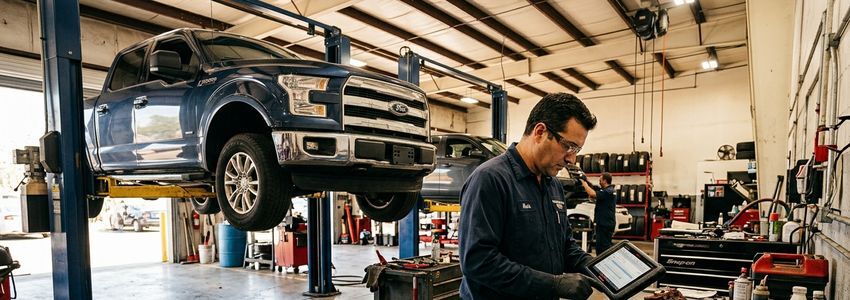
- Two-post and four-post lifts. The foundation of any transmission bay, rated for the vehicle weight and clearance needed to safely remove and reinstall transmissions.
- Transmission jacks. Specialized hydraulic jacks designed to safely support and maneuver a transmission during removal and installation.
- Transmission fluid exchange machines. Equipment that performs full fluid exchanges rather than partial drain-and-fill, a service many customers request and that commands a premium price.
- Hydraulic shop presses. Used for pressing bearings, seals, and other components during a rebuild.
- OEM-level diagnostic scanners. Modern transmissions rely heavily on computer controls, and accurate diagnosis requires scan tools that can read manufacturer-specific fault codes and adaptive learning data.
- Rebuild benches and parts washers. Dedicated workstations and cleaning equipment that speed up rebuild turnaround time and improve shop organization.
- Torque converter rebuilding equipment. Specialized tools for shops that want to offer torque converter service rather than sending converters out to a subcontractor.
Crestmont Capital's auto repair equipment financing program is built to cover this full range of equipment, whether you are purchasing a single tool or outfitting an entire transmission bay from scratch.
Types of Financing Available
Auto repair and transmission shop owners typically have several financing structures to choose from, each with different tradeoffs.
Equipment Loans
An equipment loan is a term loan where the equipment itself typically serves as collateral. You own the equipment from day one, make fixed monthly payments over a set term, and once the loan is paid off, the equipment is fully yours with no residual buyout. This structure works well for shops that plan to keep equipment for its full useful life.
Equipment Leasing
Leasing spreads the cost of equipment over monthly payments, often with lower upfront costs than a loan. At the end of the lease term, many leases offer options to purchase the equipment for a residual value, renew the lease, or return the equipment. Leasing can make sense for shops that want to preserve maximum cash flow or that expect to upgrade equipment more frequently.
SBA Loans
SBA 7(a) and 504 loans can be used to finance equipment, often with longer terms and lower rates than conventional financing, but the application and approval process typically takes longer and requires more documentation. This route can make sense for shop owners planning a larger buildout who have the time to work through a longer approval cycle.
Business Lines of Credit
A business line of credit gives shop owners flexible access to capital that can be used for equipment purchases, parts inventory, or unexpected repair needs, drawing only what is needed and paying interest only on the amount drawn.
Working Capital Loans
Rather than financing equipment specifically, some shop owners use unsecured working capital loans to cover equipment purchases alongside other operating needs, particularly if they want a single, flexible pool of capital rather than equipment-specific financing.
Who Transmission Shop Equipment Financing Is Best For
Transmission shop equipment financing tends to be the right fit for several types of auto repair business owners:
- General repair shop owners looking to add in-house transmission services instead of subletting that work to a specialty shop and losing the margin.
- New transmission shop owners who need to outfit a bay from the ground up but do not have the cash reserves to pay for lifts, jacks, and diagnostic equipment outright.
- Established transmission shops replacing aging equipment or adding capacity to reduce repair turnaround time and handle more vehicles.
- Shop owners who want to preserve cash reserves for payroll, rent, and parts inventory rather than tying up capital in a single large equipment purchase.
- Business owners with less-than-perfect credit who may find it easier to qualify for equipment-secured financing than for an unsecured loan of the same size.
- Multi-bay shop owners looking to standardize equipment across several locations, since financing can be structured to cover identical equipment packages at each site.
- Fleet service centers that handle their own commercial vehicle transmissions and want to reduce reliance on outside subcontractors for high-volume repair work.
Shop owners considering this type of financing should also think about seasonality. Transmission repair volume often ticks up in extreme heat and cold, when fluid breakdown and seal failures become more common. A shop that finances equipment ahead of a seasonal surge can capture that demand instead of turning customers away or subletting the work to a competitor down the street.
Comparing Your Financing Options
Choosing between an equipment loan, a lease, an SBA loan, or a line of credit depends on your shop's cash flow, how long you plan to keep the equipment, and how quickly you need funding.
Speed is often the deciding factor for transmission shop owners. A shop that suddenly loses a lift to a hydraulic failure, or that wins a fleet contract requiring faster turnaround, usually cannot afford to wait weeks for financing. Conventional equipment loans and leases typically move much faster than SBA products, which makes them the more practical choice when equipment failure or a sudden growth opportunity creates time pressure. SBA financing remains a strong option for shop owners planning a larger buildout well in advance, where the lower rate is worth a longer approval timeline.
Down payment requirements also vary by product. Equipment loans and leases often require little to no down payment, since the equipment itself secures the financing. SBA 504 loans, by contrast, typically require a borrower contribution of around 10 percent or more. Shop owners should weigh how much cash they want to commit upfront against the rate and term benefits of each option before deciding.
| Financing Type | Typical Speed | Best For |
|---|---|---|
| Equipment Loan | 1-5 business days | Owning equipment long-term with no buyout needed |
| Equipment Leasing | 1-5 business days | Lower upfront cost, flexibility to upgrade later |
| SBA 7(a) / 504 Loan | Several weeks or more | Larger buildouts, lower rates, longer terms |
| Business Line of Credit | 1-3 business days | Ongoing flexible access to capital for multiple needs |
How Crestmont Capital Helps Transmission and Auto Repair Shops
Crestmont Capital works with auto repair and transmission shop owners across the country to structure equipment financing that fits their specific shop's needs and cash flow. As a top-rated U.S. business lender, Crestmont offers a range of financing products relevant to transmission shop owners, including equipment financing, equipment leasing, and SBA loans.
For shop owners specifically outfitting an auto repair bay, Crestmont's dedicated auto repair equipment financing program is designed around the realities of this industry, including higher-ticket equipment like lifts and diagnostic tools, and the fact that many shops need to move quickly once they decide to expand their service offerings.
If your shop is a newer business, if your credit is less than perfect, or if you need financing structured around irregular repair volume, Crestmont's bad credit equipment financing options and flexible underwriting approach can help you get approved where a traditional bank might turn you away. Shop owners considering used equipment to control costs can also explore Crestmont's used equipment financing program.
Ready to Add Transmission Services to Your Shop?
See how much financing you qualify for in minutes, with no impact to your credit score to check.
Apply Now →Real-World Scenarios
Scenario 1: Adding Transmission Services to a General Repair Shop
A general auto repair shop owner has been subletting all transmission work to a specialty shop across town for years, losing the labor margin on every one of those repair orders. After financing a four-post lift, a transmission jack, and a fluid exchange machine through an equipment loan, the shop begins keeping transmission repairs in-house, capturing revenue that previously went to a competitor.
Scenario 2: Opening a Dedicated Transmission Shop
An experienced transmission technician who has spent 15 years working for other shops decides to open an independent transmission repair business. Rather than spending years saving cash to outfit a bay, the owner uses equipment financing to acquire a full package: lift, jack, press, fluid exchange machine, and diagnostic scanner, opening the doors within weeks of signing the lease on the shop space.
Scenario 3: Replacing Aging Equipment to Reduce Turnaround Time
A transmission shop with a decade-old lift and an outdated fluid exchange machine is losing customers to competitors with faster turnaround times. The owner finances a modern lift and a new fluid exchange machine, cutting average job time significantly and increasing the number of vehicles the shop can service each week.
Scenario 4: Upgrading Diagnostic Capability for Modern Vehicles
As transmissions become more computer-controlled, a shop's older scan tools can no longer accurately diagnose newer vehicles, causing misdiagnosed repairs and comebacks. The owner finances an OEM-level diagnostic scanner subscription and hardware package, reducing comebacks and building a reputation for accurate diagnosis on newer vehicles.
Scenario 5: Expanding Bay Capacity During a Growth Period
A busy transmission shop is turning away work because it only has one bay equipped for transmission repairs. The owner finances a second full equipment package, doubling capacity and allowing the shop to take on the overflow work it had been declining.
Pro Tip: A transmission replacement or rebuild commonly costs a customer between roughly $1,800 and $8,000 depending on the vehicle, according to industry cost guides. That high average ticket size means the equipment used to perform this work in-house can pay for itself relatively quickly through captured labor margin alone.

Frequently Asked Questions
What is transmission shop equipment financing?
Transmission shop equipment financing is a type of business equipment financing that helps auto repair shop owners purchase or lease lifts, transmission jacks, fluid exchange machines, diagnostic scanners, and other tools needed to perform transmission repairs in-house, typically through a term loan or lease secured by the equipment itself.
How much does transmission shop equipment typically cost?
A full equipment package to outfit a transmission bay, including a rated lift, transmission jack, hydraulic press, fluid exchange machine, and diagnostic scanner, commonly ranges from around $40,000 to $150,000 depending on capacity, brand, and whether equipment is new or used.
How does transmission equipment financing differ from a regular business loan?
Equipment financing is secured by the equipment itself, which often makes approval faster and more flexible than an unsecured business loan of the same size, since the lender has the equipment as collateral if the loan is not repaid.
Can I get transmission shop equipment financing with bad credit?
Yes, many lenders offer equipment financing programs specifically designed for business owners with less-than-perfect credit, since the equipment collateral reduces the lender's risk. Rates and terms may be less favorable than for borrowers with strong credit, but approval is often still possible.
Should I lease or buy transmission shop equipment?
Buying through an equipment loan makes sense if you plan to use the equipment for its full useful life and want to fully own it once paid off. Leasing can make sense if you want lower upfront costs or expect to upgrade equipment more frequently as newer models become available.
Can I finance used transmission shop equipment?
Yes, many lenders, including Crestmont Capital, offer financing specifically for used equipment, which can help shop owners control costs while still getting reliable, professionally reconditioned equipment.
How fast can I get approved for transmission equipment financing?
Many equipment financing applications are approved within one to two business days, with funding often following within a few additional business days, since the process is generally faster than traditional bank loans or SBA financing.
What documents do I need to apply for equipment financing?
Most lenders ask for basic business information, an equipment quote or invoice, and recent bank statements. Some applications also request time in business, monthly revenue figures, and a credit check, though documentation requirements vary by lender and loan size.
Can I finance a full transmission bay buildout, not just individual equipment?
Yes, lenders can often bundle multiple pieces of equipment, such as a lift, jack, press, and diagnostic scanner, into a single financing package rather than requiring separate applications for each item.
Is SBA financing a good option for a transmission shop equipment buildout?
SBA 7(a) and 504 loans can offer lower rates and longer terms, which can be beneficial for larger buildouts, but the application process typically takes longer than conventional equipment financing, so SBA loans work best for shop owners who can plan several weeks ahead.
Does the equipment I finance need to be new?
No, most equipment financing programs cover both new and used equipment, though terms and rates can vary depending on the age and condition of the equipment being financed.
What happens if I want to upgrade my equipment before the financing term ends?
This depends on your financing structure. Some leases include upgrade options built into the agreement, while equipment loans generally require the original loan to be paid off or refinanced before new equipment financing is added. Discuss upgrade flexibility with your lender before signing.
Is a business line of credit better than equipment financing for a transmission shop?
A line of credit offers more flexibility since funds can be used for equipment, inventory, or other needs, while equipment financing is typically dedicated to a specific purchase. Many shop owners use both: equipment financing for major purchases and a line of credit for smaller or ongoing needs.
How do I get started with transmission shop equipment financing?
Start by getting a firm quote from your equipment vendor, then apply with a lender that offers auto repair equipment financing. Most applications can be completed online in a few minutes, with approval decisions often coming back within one to two business days.
Can financing cover both my equipment purchase and installation costs?
In many cases, yes. Lenders will often finance the total invoice amount from your equipment vendor, which can include delivery, installation, and setup costs in addition to the equipment price itself, so it is worth confirming this with your equipment vendor and lender before finalizing your purchase.
Get the Equipment Your Transmission Shop Needs Today
Crestmont Capital makes it fast and simple to finance lifts, jacks, presses, and diagnostic tools.
Apply Now →Next Steps
Gather firm pricing on the specific lift, jack, press, or scan tool your shop needs.
Decide between an equipment loan, lease, SBA loan, or line of credit based on your cash flow.
Submit your application along with your equipment quote and basic business information.
Once funded, take delivery of your equipment and start capturing transmission repair revenue in-house.
Conclusion
Transmission shop equipment financing gives auto repair business owners a practical path to acquiring the lifts, jacks, presses, fluid exchange machines, and diagnostic tools needed to perform transmission work in-house, without draining cash reserves or waiting years to save up. Whether you are adding transmission services to an existing general repair shop, opening a dedicated transmission business, or upgrading aging equipment, the right financing structure can get you equipped and generating revenue in weeks rather than years.
Crestmont Capital works with transmission and auto repair shop owners nationwide to structure equipment financing that fits their specific cash flow and growth plans. If you are ready to explore transmission shop equipment financing options for your business, our team is ready to help you find the right fit.
Disclaimer: The information provided in this article is for general educational purposes only and is not financial, legal, or tax advice. Funding terms, qualifications, and product availability may vary and are subject to change without notice. Crestmont Capital does not guarantee approval, rates, or specific outcomes. For personalized information about your business funding options, contact our team directly.