
Tile contractor statistics tell a compelling story about one of the most resilient specialty trades in American construction. The U.S. tile installation industry generates billions of dollars in annual revenue, employs tens of thousands of skilled tradespeople, and continues to grow as homeowners and commercial property owners invest in durable, high-value finishes. Whether you run a tile contracting business, are considering starting one, or simply want to understand where the market is heading, the numbers below paint a detailed picture of the industry in 2026.
This report brings together the most important tile industry statistics available: market size, employment and wage data, installation costs, material trends, regional demand patterns, and the financial realities of running a tile contracting business. Data comes from government sources including the U.S. Census Bureau's construction spending reports and the Bureau of Labor Statistics, along with industry associations and market research firms that track the ceramic tile and flooring sectors.
The short version: tile remains one of the strongest segments in the flooring and finishes market. Demand is driven by residential remodeling, new home construction, commercial buildouts, and a consumer shift toward durable, low-maintenance surfaces. For tile contractors, the opportunity in 2026 is real, but so are the challenges, from labor shortages to material cost volatility. Here is what the data shows.
In This Article
- What Is the Tile Contracting Industry?
- Tile Contractor Market Size and Industry Value
- Employment and Workforce Statistics
- Tile Installation Cost and Revenue Data
- Key Industry Trends Shaping 2026
- Regional Demand and Where Tile Contractors Thrive
- Challenges Facing Tile Contractors
- Opportunities for Growth
- How Tile Contractors Finance Growth
- Real-World Scenarios
- How Crestmont Capital Helps Tile Contractors
- Next Steps
- Frequently Asked Questions
What Is the Tile Contracting Industry?
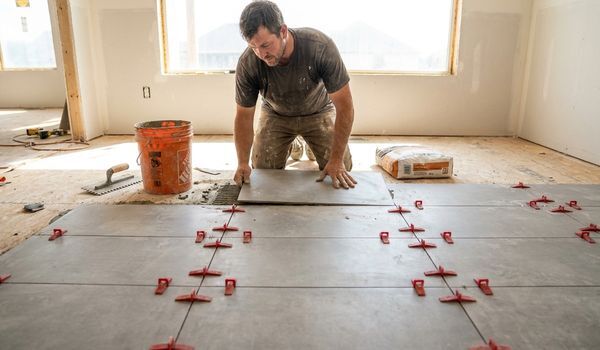
The tile contracting industry covers the installation, repair, and replacement of ceramic, porcelain, natural stone, glass, and mosaic tile in residential and commercial buildings. Tile contractors work on floors, walls, showers, backsplashes, countertops, pools, and exterior surfaces. The trade sits at the intersection of flooring, finishing carpentry, and masonry, and it requires specialized skills: substrate preparation, waterproofing, layout and cutting, setting, grouting, and sealing.
Within the construction economy, tile contractors are classified as specialty trade contractors. Most are small businesses. Industry data consistently shows that the typical tile installation company has fewer than 10 employees, and a large share of the workforce operates as independent contractors or small crews of two to five people. Only a small fraction of tile businesses exceed 20 employees, and those tend to focus on commercial work: hotels, hospitals, retail buildouts, and multi-family residential projects.
The industry is closely tied to the broader ceramic tile market, which includes manufacturers, importers, distributors, and retailers, as well as the installers who put the product in place. The United States imports the large majority of its ceramic tile, primarily from Spain, Italy, Mexico, Brazil, and increasingly India and Vietnam, which means tile contractors are exposed to global supply chain conditions, tariffs, and shipping costs in ways that many other trades are not.
How Tile Contractors Make Money
Revenue in the tile business comes from several sources. Labor is the core: installation is typically billed per square foot, per project, or occasionally per hour, with rates varying widely by region, material, and job complexity. Many contractors also markup materials, charging 10 to 25 percent above cost for tile, thinset, grout, backer board, and waterproofing systems they supply. Specialized work commands premium rates: large-format porcelain, natural stone, intricate mosaics, and waterproof shower systems can double or triple the per-square-foot labor rate compared to a basic floor installation.
Commercial work brings larger contracts but longer payment cycles, often 30 to 90 days with retainage held back. Residential work pays faster but involves more customer management per dollar of revenue. The most profitable tile businesses usually blend both, with a residential base providing steady cash flow and commercial projects providing volume.
Tile Contractor Market Size and Industry Value
Understanding tile contractor statistics starts with the size of the market they serve. The numbers below reflect the most recent full-year data available, along with industry projections for 2026.
U.S. Ceramic Tile Market Value
The U.S. ceramic tile market is valued at approximately $4 billion to $4.5 billion in 2026, based on industry estimates from market research firms that track the category. The market has grown at a compound annual rate of roughly 3 to 5 percent over the past decade, driven by remodeling activity, new housing starts, and commercial construction. Globally, the ceramic tile market exceeds $250 billion, with Asia-Pacific dominating production and consumption. The United States is the largest tile importer in the world by value.
Tile Consumption by Volume
Americans consume approximately 2.8 billion to 3 billion square feet of ceramic tile annually, according to figures tracked by the Tile Council of North America. Consumption dipped sharply during the 2008 to 2010 housing crash, falling from a peak above 3.4 billion square feet, and has recovered gradually since. Per-capita tile consumption in the United States remains well below levels in Europe and the Middle East, which industry analysts frequently cite as evidence of long-term headroom for growth.
The Broader Flooring Context
Tile competes within a U.S. flooring market worth roughly $25 billion to $30 billion annually. Ceramic and porcelain tile typically account for about 14 to 16 percent of total flooring sales by value, placing tile behind carpet and resilient flooring (luxury vinyl in particular) by volume but ahead of hardwood in many years. Because tile installation is far more labor-intensive than most competing surfaces, tile captures an outsized share of total installation labor dollars, which is what matters most to contractors.
Installation Labor Market Size
Industry analysts estimate that professional tile installation labor represents a $10 billion to $12 billion annual market in the United States when residential and commercial work are combined. That figure includes wages paid to employees of tile contracting firms, income earned by independent installers, and the labor portion of design-build and remodeling contracts. It excludes DIY installation, which accounts for a meaningful share of residential tile work but has been shrinking as projects grow more complex and homeowners skew older.
Tile Contracting By the Numbers: 2026
$4.2B
U.S. ceramic tile market value (2026 estimate)
2.9B
Square feet of tile consumed in the U.S. annually
~52K
Tile and stone setters employed nationwide
$51K
Median annual wage for tile and stone setters
4-6%
Projected employment growth through the early 2030s
$10B+
Estimated annual U.S. tile installation labor market
Employment and Workforce Statistics
The U.S. Bureau of Labor Statistics tracks tile and marble setters as a distinct occupation within the construction trades. The most recent occupational data shows approximately 50,000 to 55,000 tile and stone setters employed in the United States, a figure that has climbed steadily from the post-recession low but remains below the pre-2008 peak. When you include helpers, apprentices, and laborers who support tile crews, total employment tied to tile installation is estimated at 75,000 to 90,000 workers.
Wages and Earnings
The median annual wage for tile and stone setters sits near $51,000, which works out to roughly $24 to $25 per hour. The wage distribution is wide. The lowest 10 percent of earners make under $32,000, typically entry-level helpers and workers in low-cost rural markets. The top 10 percent earn more than $84,000, a tier dominated by experienced setters in high-cost metro areas, union commercial workers, and specialists in natural stone and large-format porcelain.
Self-employed tile contractors can earn significantly more than wage employees. Industry surveys of flooring and tile business owners show that established contractors with steady work pipelines commonly report owner earnings of $75,000 to $150,000 per year, with top performers in strong markets exceeding that range. The gap between employee wages and owner income is the primary driver of new business formation in the trade.
Where the Jobs Are
Employment concentrates where construction activity concentrates. California, Texas, Florida, New York, and Arizona consistently rank as the top states for tile setter employment, together accounting for roughly 40 percent of the national total. On a per-capita basis, the Southwest and Mountain West over-index on tile work because of climate, design preferences, and building stock: tile roofs, tile floors, and outdoor living spaces are standard in those regions rather than upgrades.
The Labor Shortage Problem
The single most repeated statistic in industry surveys is the shortage of skilled installers. Trade associations estimate the industry needs thousands of new tile setters annually just to replace retiring workers, and apprenticeship pipelines are not keeping pace. The average age of a skilled tile setter is in the mid-to-late 40s. Fewer than one in five entrants to the trade completes a formal apprenticeship. For contractors, the practical consequence is that hiring and retention are bigger constraints on growth than finding work, a theme that runs through the rest of this report.
Tile Installation Cost and Revenue Data
Tile installation cost is one of the most-searched topics in this space, and for good reason: pricing varies enormously, and both homeowners and contractors benefit from understanding the ranges. Current market data for 2026 shows the following typical ranges for professional installation.
Cost Per Square Foot
Standard ceramic or porcelain floor tile installation runs $7 to $14 per square foot for labor in most markets, with materials adding $2 to $10 per square foot depending on the tile selected. All-in project costs for a mid-range floor typically land between $10 and $20 per square foot. Wall tile and backsplashes run higher per square foot because of layout complexity and cutting: $15 to $35 per square foot installed is common. Shower installations, which require waterproofing systems, niches, benches, and precise slope work, regularly reach $25 to $50 per square foot of surface area.
Typical Project Sizes and Ticket Prices
A standard bathroom floor (40 to 60 square feet) typically bills at $800 to $1,500 installed. A full shower remodel with tile runs $2,500 to $8,000 for most residential work, with custom large-format or natural stone showers exceeding $12,000. Kitchen backsplashes average $600 to $1,500. Whole-house floor installations of 1,000 to 2,000 square feet range from $10,000 to $30,000 depending on material and layout complexity. Commercial projects scale much larger: hotel corridors, restaurant kitchens, and retail floors routinely produce contracts of $50,000 to $500,000 or more.
Revenue Per Contractor
Revenue data from industry surveys and Census Bureau construction statistics suggests the following rough tiers for tile contracting businesses. Solo operators and two-person crews typically gross $120,000 to $300,000 per year. Small shops with three to eight installers commonly gross $400,000 to $1.2 million. Established regional contractors with commercial divisions and multiple crews reach $2 million to $10 million or more. Net margins in the trade typically run 10 to 20 percent for well-managed shops, with material markups and efficient labor scheduling making the difference between the top and bottom of that range.
Growing a Tile Business Takes Capital
From wet saws and vans to payroll during slow pay cycles, Crestmont Capital funds tile contractors with fast, flexible financing built for the trades.
Check Your Funding OptionsMaterial Cost Trends
Material costs have been the most volatile input in the trade since 2020. Ceramic and porcelain tile prices rose sharply during the supply chain disruptions of 2021 and 2022, with some imported lines increasing 20 to 40 percent. Prices stabilized through 2024 and 2025 as freight costs normalized, but tariffs and anti-dumping duties on imports from several countries continue to create pricing uncertainty. Setting materials, thinset, grout, waterproofing membranes, and backer board have seen steadier but persistent increases of 3 to 6 percent annually. Contractors who bid work months in advance increasingly include escalation clauses in contracts to protect margins.
Key Industry Trends Shaping 2026
Several forces are reshaping what tile contractors install, how they price work, and where demand comes from. These are the trends with the strongest statistical support heading into 2026.
Large-Format Tile Goes Mainstream
Large-format porcelain, defined as tiles with at least one edge longer than 15 inches, has moved from a premium niche to the default choice for new residential floors in many markets. Gauged porcelain panels measuring 48 by 110 inches or larger are now common in high-end bathrooms and commercial lobbies. The shift matters to contractors because large-format work requires specialized handling equipment, suction cup systems, larger wet saws, and two-person setting teams. Contractors who invested in the training and tools charge significant premiums, while those who have not are losing bids on the fastest-growing segment of the market.
The Remodeling Share Keeps Growing
Remodeling and replacement now account for the majority of residential tile demand, estimated at 55 to 60 percent of residential installation dollars. Harvard's Joint Center for Housing Studies has tracked homeowner improvement spending at historically elevated levels since 2021, and kitchens and bathrooms, the two most tile-intensive rooms, remain the most-remodeled spaces in the home. An aging housing stock amplifies the trend: the median American home is now more than 40 years old, and bathrooms from the 1980s and 1990s are hitting their renovation window in large numbers.
Wood-Look and Stone-Look Porcelain Dominate
Wood-look plank porcelain continues to hold the largest share of the residential floor tile category, a position it has occupied for more than a decade. Stone-look porcelain, which replicates marble, travertine, and slate at a fraction of the material cost and maintenance burden, is the fastest-growing aesthetic category. Natural stone installation remains a premium niche but has steadily lost share to porcelain lookalikes, particularly in commercial settings where durability and consistency matter more than authenticity.
Commercial Demand Concentrates in Specific Verticals
On the commercial side, hospitality, healthcare, and multi-family construction generate the most consistent tile demand. Hotel renovation cycles, which typically run on seven-year refresh schedules, produce reliable volumes of bathroom and lobby work. Healthcare construction favors porcelain and specialty antimicrobial surfaces. Restaurant and grocery buildouts drive demand for quarry tile and slip-resistant commercial floors. Office construction, by contrast, has been a weak spot since 2020, with hybrid work reducing demand for the lobby and common-area finishes that once anchored commercial tile schedules.
Key Insight
Tile contractors who specialize in large-format porcelain and waterproof shower systems consistently report the strongest pricing power in 2026, with labor premiums of 30 to 50 percent over standard installations. The investment in training and equipment is typically recouped within the first several jobs.
Regional Demand and Where Tile Contractors Thrive
Tile demand is not evenly distributed. Climate, housing stock, construction activity, and design culture create sharp regional differences that every contractor and every industry statistic should be read through.
The Sun Belt Advantage
Florida, Texas, Arizona, and California remain the four strongest tile markets in the country, and Census Bureau construction data shows they also lead the nation in housing starts and residential construction spending. In Florida and the Southwest, tile is the default floor covering for new construction rather than an upgrade, which produces enormous baseline volume. Gulf Coast and Southeastern markets add hurricane-related reconstruction demand in active storm years, with tile favored in flood-prone areas precisely because it survives water exposure that destroys carpet, laminate, and hardwood.
Metro-Level Hotspots
The metro areas generating the most tile installation work in 2026 read like a list of the fastest-growing housing markets: Phoenix, Dallas-Fort Worth, Houston, Miami, Tampa, Orlando, Austin, Atlanta, Charlotte, and Las Vegas. Mountain West metros including Denver, Salt Lake City, and Boise punch above their weight on a per-capita basis. In mature coastal markets like Los Angeles, San Francisco, New York, and Boston, demand skews toward high-end remodeling and commercial work rather than new construction volume, which favors established contractors with design relationships over high-volume tract installers.
Cold-Climate Nuances
Northern markets present a different profile. Carpet and luxury vinyl hold larger flooring shares in cold climates, and tile demand concentrates in bathrooms, entryways, and kitchens rather than whole-house installations. Radiant floor heating has become a meaningful attachment sale in these markets, with heated tile floors turning a standard bathroom remodel into a premium project. Contractors in northern metros report some of the highest per-project tickets in the country, offset by lower overall volume than Sun Belt peers.
What Regional Data Means for Contractors
The practical takeaway from regional tile industry statistics is straightforward: the strongest business opportunities sit where population growth, housing construction, and remodeling spending overlap. Contractors in high-growth Sun Belt metros face more competition but deeper demand. Contractors in slower-growth markets succeed by dominating premium niches, building referral relationships with designers and general contractors, and keeping overhead lean enough to weather seasonal dips.
Challenges Facing Tile Contractors
The tile industry statistics that matter most to business owners are not all positive. Several structural challenges shape the economics of the trade in 2026.
Labor Availability and Training
The skilled labor shortage tops every industry survey. Trade associations estimate that for every five tile setters leaving the trade through retirement, only two to three new workers enter. Formal apprenticeship programs exist but cover a small fraction of the workforce. The result is a persistent bidding war for experienced installers, wage inflation running ahead of general construction averages, and project backlogs measured in weeks or months for reputable contractors. For growing shops, the constraint is almost never demand. It is finding the second, third, or fourth crew that can deliver the quality the reputation was built on.
Material Cost and Supply Volatility
Because the United States imports the large majority of its ceramic tile, contractors are exposed to shipping costs, tariffs, and anti-dumping duties that can change project economics between bid day and installation day. Anti-dumping and countervailing duties imposed on tile from several countries in recent years have reshuffled sourcing patterns and, in some cases, raised landed costs substantially. Setting material manufacturers have implemented their own price increases. Contractors report that material price volatility is now a standard line item in business planning, and an increasing number include price escalation language in contracts for work scheduled more than 60 days out.
Competition From Alternative Surfaces
Luxury vinyl plank has taken significant share from tile in the residential floor market over the past decade, particularly in mid-market new construction and rental properties. Its advantages are real: lower material cost, far lower installation labor cost, and speed. Tile's counter-advantages, durability, water resistance, longevity, and design value, are strongest at the mid-to-upper end of the market, which is where the industry's growth is concentrated. The statistical picture is a barbell: tile loses share at the entry level while gaining share in premium remodeling and commercial work.
Cash Flow and Payment Cycles
Cash flow is the challenge most likely to sink an otherwise healthy tile business. Commercial work pays on 30-to-90-day cycles with 5 to 10 percent retainage. Residential work pays faster but requires constant marketing and sales effort to keep the pipeline full. Materials must be purchased before installation. Payroll runs weekly. The gap between money out and money in is where even profitable contractors get into trouble, and it is the single most common reason tile businesses seek financing.
Opportunities for Growth
For contractors positioned to capture it, the 2026 opportunity set is unusually strong.
Aging Housing Stock and the Remodel Supercycle
The median American home is now more than four decades old. Millions of bathrooms and kitchens installed in the 1980s and 1990s are at or past the end of their design and functional life. Remodeling expenditure data shows homeowner improvement spending holding near record levels, and bathrooms rank as the single most-remodeled room in the country. For tile contractors, this is a demand engine measured in decades, not quarters. Every aging bathroom is a future shower rebuild, floor replacement, or full gut renovation.
Specialization Premiums
The clearest pricing power in the trade belongs to specialists. Large-format porcelain installation commands 30 to 50 percent labor premiums over standard work. Waterproof shower systems built with modern membrane products reduce callback risk and justify higher tickets. Natural stone and mosaic work serves a luxury niche with minimal price competition. Heated floor installation pairs naturally with tile and adds high-margin scope. Contractors who invest in certifications, such as those offered by the Ceramic Tile Education Foundation, consistently report stronger close rates and the ability to charge more, because certification signals quality in a market where customers have been burned by bad installations.
Commercial and Multi-Family Expansion
Multi-family construction, hospitality renovation, and healthcare buildout all generate large, repeatable tile contracts. A single relationship with a hotel brand's renovation program or a regional multi-family developer can fill a commercial division's schedule for years. The barrier to entry is not skill so much as capacity: bonding, insurance, working capital to float 60-to-90-day payment cycles, and enough trained crews to hit commercial schedules. Contractors who solve the capacity problem find commercial work far less price-competitive than residential retail.
Ready to Add a Crew or Take On Bigger Contracts?
Crestmont Capital provides equipment financing, working capital, and lines of credit designed for specialty trade contractors. Funding decisions in as little as 24 hours.
Apply Now - Fast ApprovalDigital Marketing as a Growth Lever
Tile installation is a visual trade, which makes it unusually well suited to digital marketing. Contractors who systematically photograph completed work and maintain active profiles on visual platforms report measurably stronger lead flow than peers who rely solely on referrals. Google Business Profile optimization, review generation, and before-and-after project galleries produce some of the lowest-cost leads in the home services sector, a shift Forbes' home improvement coverage has tracked as visual platforms reshape how homeowners choose contractors. The statistical gap is striking: contractors in the top quartile of online review volume report lead costs a fraction of what contractors pay for purchased leads or print advertising.
How Tile Contractors Finance Growth
Every growth move in this industry requires capital before it produces revenue. A new crew needs wages before the first invoice is paid. A large commercial contract needs materials before the first draw. A wet saw, a van, a showroom: all of it is cash out the door ahead of cash coming in. That is why access to the right financing is one of the most reliable predictors of which tile businesses scale and which stall.
The Most Common Financing Uses in the Trade
Equipment purchases lead the list. Professional wet saws run $1,500 to $5,000, tile cutters and large-format handling systems add thousands more, and a properly outfitted installation van with racking, tools, and inventory represents a $50,000 to $80,000 investment. Equipment financing spreads that cost over the productive life of the asset, which is why it is the most widely used financing product in the specialty trades. Contractors outfitting crews with tile cutting and setting equipment typically finance rather than pay cash, preserving working capital for payroll and materials.
Working capital is the second major use. Commercial contractors carrying receivables across 60-to-90-day payment cycles use working capital loans to bridge the gap between payroll and payment. A business line of credit serves the same purpose with more flexibility: draw when a big material order hits, repay when the draw comes in, and pay interest only on what is outstanding. For contractors moving into commercial work, a line of credit is often the difference between bidding confidently and passing on profitable contracts.
Financing Options Compared
| Financing Type | Best For | Typical Amounts | Speed |
|---|---|---|---|
| Equipment Financing | Wet saws, vehicles, handling systems | $5,000 - $500,000 | 24-72 hours |
| Business Line of Credit | Materials, payroll gaps, receivables float | $10,000 - $250,000 | 1-3 days |
| Working Capital Loan | Lump-sum needs, hiring, expansion | $10,000 - $500,000 | 24-48 hours |
| SBA Loan | Real estate, major expansion, acquisitions | $50,000 - $5,000,000 | 30-90 days |
Business owners evaluating the trade as an entry point can also look at financing from the other direction: startup costs for a tile contracting business typically run $15,000 to $50,000 for a solo operator, covering a used van, core tools, insurance, licensing, and initial marketing. Guides like this overview of tile installation business loans walk through the funding options for new and growing shops in detail.
Real-World Scenarios
Statistics describe the industry. These scenarios show what the numbers look like at the level of an actual business.
Scenario 1: The Solo Operator Adding a First Crew
A tile setter in Phoenix has run solo for six years, grossing $180,000 annually and turning away work. He hires two installers, buys a second van and equipment package for $65,000 financed over five years, and adds $20,000 in working capital to cover the payroll ramp. Within 12 months, revenue roughly doubles to $350,000. The financing payment runs about $1,300 per month, comfortably covered by the incremental gross margin of the new crew.
Scenario 2: The Residential Shop Landing a Hotel Renovation
A four-person residential tile company in Tampa wins a contract to renovate bathrooms across 120 hotel rooms, a $280,000 project paying net-60 with 10 percent retainage. The job requires $55,000 in materials up front and doubled labor capacity for 90 days. A $100,000 line of credit covers the float. The contractor draws $80,000 at peak, repays it as draws arrive, and pays interest only on the outstanding balance. The relationship with the hotel brand produces three more renovation contracts over the following two years.
Scenario 3: The Specialist Moving Upmarket
A contractor in Denver invests $12,000 in large-format porcelain training and certification plus $9,000 in suction handling systems and a bridge saw upgrade. He repositions the business toward high-end bathroom remodels and designer referrals. Average project size climbs from $4,500 to $11,000, close rates improve because certification differentiates him in bids, and gross margin rises from 38 to 47 percent. The equipment pays for itself in the first four jobs.
Scenario 4: The Commercial Contractor Managing the Float
A regional commercial tile contractor in Dallas carries $400,000 in receivables across five active projects. A general contractor on the largest job stretches payment to 90 days, creating a $120,000 cash gap exactly when payroll and a material order come due. An unsecured working capital loan of $150,000 bridges the gap at a total cost far below the late-payment penalties and supplier relationship damage the alternative would have caused. The contractor finishes the project, collects in full, and pays the loan down early.
Scenario 5: The New Entrant Starting Lean
A former project manager starts a tile business in Charlotte with $40,000 in startup financing: a used van, tools, insurance, licensing, and three months of marketing. She targets the bathroom remodel niche, builds a review profile aggressively, and reaches breakeven in month seven. By year two the business grosses $260,000 with one employee, and she is evaluating a second crew. Her experience matches the statistical pattern: the businesses that survive the first two years almost always reach profitability, and the ones that fail almost always run out of cash, not work.
How Crestmont Capital Helps Tile Contractors
Crestmont Capital works with specialty trade contractors across the country, and tile businesses are one of the most common profiles the team funds. The reason is simple: the financial shape of a tile contracting business, steady demand, real equipment needs, and lumpy cash flow, fits the products alternative lenders do best.
For equipment purchases, Crestmont Capital structures financing around the asset itself, which keeps approval fast and preserves the owner's other credit capacity. For cash flow needs, working capital loans and lines of credit are sized to the business's revenue rather than its collateral, which matters in a trade where the most valuable assets are skill and reputation rather than hard collateral. Contractors who need to float commercial receivables, stock up on materials ahead of a busy season, or hire ahead of a contract award can typically get a funding decision in as little as 24 hours.
The team also understands the seasonal and cyclical patterns of the trade: the spring remodeling rush, the holiday slowdown, the storm-season reconstruction spikes in Gulf markets. Repayment structures can be matched to how the business actually earns. If you are evaluating a growth move, whether that is a first crew, a commercial expansion, or a specialization investment, the fastest way to see your options is to apply online or speak with a funding specialist about small business financing built for contractors.
Planning a Larger Move?
For acquisitions, real estate purchases, or expansions above $250,000, ask about commercial financing options with longer terms and lower rates for qualified borrowers.
Next Steps
Whether you are running a tile business, starting one, or researching the trade, the path forward depends on using these statistics as a baseline and applying them to your specific market and goals.
Benchmark your business against the data.
Compare your revenue per installer, average ticket, and margins against the ranges in this report. Large gaps in either direction point to pricing, efficiency, or market-position issues worth investigating.
Identify your highest-leverage specialization.
The statistics are clear that large-format porcelain, waterproof showers, and certified installation command the strongest premiums. Pick one, invest in training, and build your marketing around it.
Fix cash flow before it constrains you.
If receivables, material costs, or payroll timing limit the work you can take, put a line of credit or working capital facility in place before you need it. Financing arranged proactively costs less and closes faster than financing arranged in a crisis.
Talk to a funding specialist.
A short conversation with the Crestmont Capital team will show you exactly what your business qualifies for, at what cost, and on what timeline, with no obligation.
Put the 2026 Tile Market to Work for Your Business
Join thousands of contractors who trust Crestmont Capital for fast, flexible funding. Apply in minutes and get a decision in as little as 24 hours.
Get Funded TodayFrequently Asked Questions
How large is the tile contracting industry in the United States? +
The U.S. ceramic tile market is valued at roughly $4 billion to $4.5 billion in 2026, and the professional installation labor market tied to it is estimated at $10 billion to $12 billion annually. Americans consume approximately 2.8 to 3 billion square feet of ceramic tile per year, making the United States the largest tile importer in the world by value.
How many tile contractors are there in the U.S.? +
The Bureau of Labor Statistics counts approximately 50,000 to 55,000 employed tile and stone setters. Including helpers, apprentices, and independent installers, total employment tied to tile installation is estimated at 75,000 to 90,000 workers. Most tile contracting businesses are small, with the typical company employing fewer than 10 people.
What is the average salary for a tile setter? +
The median annual wage for tile and stone setters is approximately $51,000, or about $24 to $25 per hour. Entry-level workers start near $32,000, while the top 10 percent of earners, typically experienced setters in high-cost metros, union commercial workers, and natural stone specialists, earn more than $84,000. Self-employed contractors with established businesses commonly earn $75,000 to $150,000 or more.
Is the tile contracting industry growing? +
Yes. Employment for tile and stone setters is projected to grow roughly 4 to 6 percent through the early 2030s, in line with the construction trades overall. Demand is supported by an aging housing stock, elevated remodeling spending, and commercial construction in hospitality, healthcare, and multi-family verticals. The industry's main growth constraint is the shortage of skilled installers, not a lack of work.
How much does tile installation cost? +
Standard ceramic or porcelain floor tile installation typically runs $7 to $14 per square foot for labor, with all-in project costs of $10 to $20 per square foot including materials. Wall tile and backsplashes run $15 to $35 per square foot installed, and waterproof shower installations commonly reach $25 to $50 per square foot. A typical bathroom floor costs $800 to $1,500 installed, while full shower remodels range from $2,500 to $8,000 or more.
How much revenue can a tile contracting business generate? +
Solo operators and two-person crews typically gross $120,000 to $300,000 per year. Small shops with three to eight installers commonly gross $400,000 to $1.2 million. Established regional contractors with commercial divisions reach $2 million to $10 million or more. Well-managed shops typically net 10 to 20 percent margins.
What does it cost to start a tile contracting business? +
A lean startup typically requires $15,000 to $50,000, covering a used van, core tools such as a wet saw and cutters, insurance, licensing, and initial marketing. Contractors who start with financing preserve personal savings and can equip themselves properly from day one, which directly affects the quality and speed of early work.
Which states have the most demand for tile contractors? +
California, Texas, Florida, New York, and Arizona account for roughly 40 percent of national tile setter employment. The strongest metro markets in 2026 include Phoenix, Dallas-Fort Worth, Houston, Miami, Tampa, Orlando, Austin, Atlanta, Charlotte, and Las Vegas, all of which combine population growth with heavy construction activity. Sun Belt markets treat tile as a default floor covering, which produces enormous baseline volume.
What are the biggest challenges tile contractors face? +
The top four challenges in industry surveys are the shortage of skilled installers, material cost and supply volatility driven by import tariffs and freight costs, competition from luxury vinyl plank in the mid-market flooring segment, and cash flow pressure from commercial payment cycles that run 30 to 90 days with retainage. Labor availability consistently ranks first and is the main constraint on growth for most established shops.
How do tile contractors typically finance equipment and growth? +
Equipment financing is the most common product, used for wet saws, vehicles, and large-format handling systems, with amounts from $5,000 to $500,000 and decisions in 24 to 72 hours. Lines of credit and working capital loans cover materials, payroll, and receivables float. SBA loans serve larger needs like real estate and acquisitions. Most contractors use financing deliberately to preserve cash for payroll and materials rather than paying cash for depreciating assets.
What is large-format tile and why does it matter? +
Large-format tile is defined as any tile with at least one edge longer than 15 inches, and gauged porcelain panels can measure 48 by 110 inches or more. It has become the default choice for new residential floors in many markets. It matters to contractors because installation requires specialized training, suction handling equipment, and two-person teams, which creates a genuine skill barrier. Contractors with large-format capability charge 30 to 50 percent labor premiums over standard installation.
Do tile contractors need certification? +
Certification is not legally required in most states, but it has become a meaningful competitive advantage. Credentials from organizations like the Ceramic Tile Education Foundation signal verified skill in a market where poor installations are common. Certified contractors consistently report higher close rates, access to designer and architect referrals, and the ability to charge premium prices. Commercial general contractors increasingly require documented training for large-format and shower work.
How long do commercial tile contractors wait to get paid? +
Commercial payment cycles typically run 30 to 90 days from invoice, with 5 to 10 percent retainage held until project completion. On a large project, that can mean carrying six figures of labor and material cost for months. This payment structure is the primary reason commercial tile contractors rely on lines of credit and working capital financing to bridge the gap between paying crews and collecting from general contractors.
Is tile losing market share to luxury vinyl flooring? +
At the entry level of the market, yes: luxury vinyl plank has taken significant share in mid-market new construction and rental properties over the past decade. Tile's response has been a shift upmarket. Tile holds roughly 14 to 16 percent of U.S. flooring sales by value and continues gaining share in premium remodeling and commercial work, where its durability, water resistance, and design value outweigh vinyl's cost advantage. The result is a barbell pattern: losses at the low end, growth at the high end.
Where can I find reliable tile industry statistics? +
The most reliable sources are the U.S. Census Bureau for construction spending data, the Bureau of Labor Statistics for employment and wage figures, the Tile Council of North America for consumption data, and Harvard's Joint Center for Housing Studies for remodeling expenditure trends. Market research firms publish ceramic tile market sizing reports, and trade associations survey contractor sentiment and labor conditions. This report draws on all of these sources to present a consolidated picture for 2026.
The Bottom Line on Tile Contractor Statistics in 2026
The tile contractor statistics for 2026 describe an industry in solid health: a $4 billion-plus materials market, a $10 billion-plus installation labor market, growing demand from an aging housing stock, and pricing power that increasingly rewards skill and specialization. The constraints are real, from the skilled labor shortage to import-driven material volatility, but they are constraints on supply, not demand. For business owners in the trade, that is the best kind of problem to have.
The contractors who win in this environment share a pattern: they specialize where premiums are highest, they market visually and systematically, and they solve the cash flow and equipment capital needs that growth requires before those needs become emergencies. Tile remains what it has been for decades, a durable, high-value finish that skilled hands install and homeowners pay a premium to get right. The numbers say that is not changing in 2026.
Disclaimer: The information provided in this article is for general educational purposes only and is not financial, legal, or tax advice. Funding terms, qualifications, and product availability may vary and are subject to change without notice. Crestmont Capital does not guarantee approval, rates, or specific outcomes. For personalized information about your business funding options, contact our team directly.

About the author and reviewer
Allan GarfinkleMBA (Finance), JD
Chief Revenue Officer, Crestmont Capital
Allan Garfinkle is the Chief Revenue Officer at Crestmont Capital, where he has spent more than a decade leading revenue strategy, business development, and operational growth. With 28 years of experience building and advising startups and small businesses, Allan has helped more than 10,000 business owners navigate financing decisions, growth opportunities, and changing economic conditions. He earned a Bachelor of Science in Economics and an MBA with a concentration in Finance from Northeastern University, as well as a Juris Doctor from New England Law, where his studies focused on contracts and business law. His writing draws on extensive practical experience in small-business lending, equipment financing, business credit, and commercial finance.