
The latest thrift store statistics tell a story that would have seemed unlikely a decade ago: an industry once associated with bargain hunting on a budget has become one of the fastest-growing corners of American retail. Heading into 2026, the US secondhand apparel market is worth an estimated $43 billion, the global secondhand apparel market has climbed to roughly $177 billion, and resale is growing several times faster than traditional retail clothing. Thrift stores, consignment shops, and resale platforms have moved from the margins of the retail economy to its center of gravity.
This report gathers the most current thrift store industry statistics available for 2026, covering market size, store counts, shopper demographics, revenue and profit benchmarks, the explosive growth of online resale, and the trends shaping where the industry goes next. Whether you operate a thrift store, are considering opening one, or are researching the resale sector, the sections below break down the numbers that matter and what they mean in practice.
In This Article
- Thrift Store Industry at a Glance
- How Big Is the Thrift Store Industry in 2026?
- Store Counts and the Competitive Landscape
- Thrift Shopper Demographics
- Online Resale Statistics
- Revenue and Profit Margin Benchmarks
- What Is Driving Thrift Industry Growth?
- Thrift Industry Trends to Watch
- What These Statistics Mean for Owners
- How Crestmont Capital Supports Thrift Stores
- Frequently Asked Questions
Thrift Store Industry at a Glance: Key Statistics for 2026
Before diving into the details, here are the headline numbers that define the United States thrift and resale industry heading into 2026:
Each of these figures reflects a structural shift in how Americans buy clothing and household goods. The secondhand market is no longer a niche. It is a mainstream retail channel with tens of thousands of storefronts, billions in annual revenue, and a customer base that now spans every income bracket and generation. The sections below unpack where those numbers come from and what is driving them.
How Big Is the Thrift Store Industry in 2026?
The headline figure most analysts cite for the US secondhand apparel market heading into 2026 is approximately $43 billion, based on the most recent thredUp Resale Report and follow-on projections. That estimate covers secondhand clothing, shoes, and accessories sold through thrift stores, consignment shops, resale platforms, and online marketplaces. The same research projects the US market will reach roughly $73 billion by 2028, implying sustained double-digit annual growth at a time when much of traditional retail is flat or growing in the low single digits.
Globally, the secondhand apparel market is estimated at roughly $177 billion heading into 2026 and is projected to reach approximately $350 billion by 2028. Within that total, the United States remains the single largest national market, but secondhand adoption is accelerating across Europe and parts of Asia as well, driven by the same mix of value-seeking and sustainability awareness that powers US growth.
Measured more narrowly, the traditional thrift store segment tracked by government data also shows real scale. The Census Bureau Economic Census counts used merchandise stores (NAICS 4533) as a distinct retail category, and the most recent census data records tens of billions of dollars in annual sales across roughly 20,000 to 25,000 establishments nationwide. Industry groups that track the broader resale and consignment sector put the total US store count at approximately 25,000 locations when independent resale boutiques and consignment shops are included.
Growth rate is where the thrift store industry statistics get genuinely striking. Over the past several years, secondhand apparel has consistently grown about 5 times faster than the broader retail clothing sector in the United States. While department store apparel sales have struggled to outpace inflation, resale has compounded at double-digit rates, a divergence that explains why landlords, investors, and lenders now treat well-run thrift operations as a serious retail category rather than a charitable sideline.
Own a Thrift Store and Need Capital to Grow?
Crestmont Capital funds thrift stores, resale shops, and consignment businesses with fast, flexible financing. Get a decision in hours, not weeks.
Apply Now - Free and No ObligationThrift Store Counts and the Competitive Landscape
The United States is home to approximately 25,000 thrift, resale, and consignment stores heading into 2026, and the count has been growing steadily rather than shrinking. Industry surveys have consistently shown net annual growth in store numbers for more than a decade, a rare record in brick-and-mortar retail. The total includes nonprofit thrift stores, for-profit resale chains, independent consignment boutiques, and vintage shops.
The nonprofit segment is anchored by Goodwill Industries, the largest thrift store network in the country. Goodwill's network of independent regional organizations operates roughly 3,300 retail locations across the United States and Canada, and network-wide retail revenue exceeds $6 billion annually. The Salvation Army operates approximately 1,500 thrift stores, with store proceeds funding its adult rehabilitation programs. Together, the major nonprofit operators give the thrift sector a physical footprint that rivals many national retail chains.
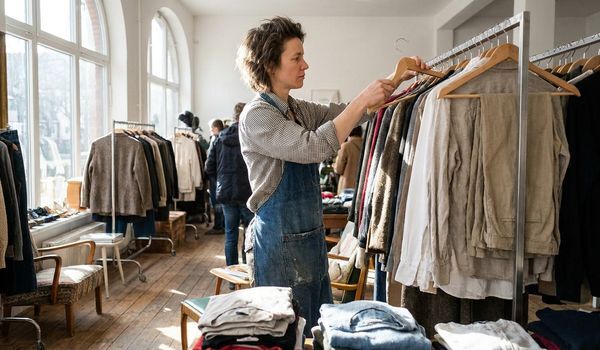
The for-profit segment is led by Savers, which operates about 300 stores under the Savers, Value Village, and Unique Thrift banners and is the largest for-profit thrift chain in North America. Beyond Savers, the for-profit landscape is a long tail of independent operators: single-location thrift stores, curated vintage boutiques, buy-sell-trade clothing shops, and regional resale chains. The majority of US thrift stores remain independently owned small businesses, often with one to five locations and deep roots in their local communities.
The structural difference between the two segments matters for anyone reading the data. Nonprofit thrift stores receive most of their inventory as donations and channel net proceeds into charitable programs, which gives them near-zero inventory cost but also a mission-driven operating model. For-profit stores purchase inventory outright, pay by the pound for bulk goods, or sell on consignment, which gives them more control over merchandising and pricing but introduces cost of goods sold. Both models are growing, and both show up in the industry's headline statistics.
Thrift Shopper Demographics: Who Buys Secondhand?
The demographic profile of the thrift shopper has changed more in the past decade than in the previous four. According to the thredUp Resale Report, 58% of American consumers shopped secondhand in the past year, a majority that would have been unthinkable when thrift carried a heavy stigma. Secondhand shopping is now mainstream behavior, not a niche habit.
Gen Z leads the shift. Roughly 2 in 5 items in a typical Gen Z consumer's closet are estimated to be secondhand, and younger millennials are close behind. These cohorts grew up with resale platforms on their phones and treat used clothing as a default option rather than a fallback. About 62% of Gen Z and millennial shoppers say they look for an item secondhand before buying it new, a habit that effectively makes resale the first stop in the purchase journey for the industry's future core customers.
Key Stat: Approximately 2 in 5 items in a typical Gen Z closet are secondhand, and 62% of Gen Z and millennial shoppers check secondhand options before buying new, according to the thredUp Resale Report.
The surprises are at the top of the income distribution. Higher-income households are the fastest-growing segment of secondhand shoppers, drawn by sustainability concerns, the hunt for unique and vintage items, and the simple math of value. Regular thrift shoppers report saving an average of roughly $1,700 per year compared with buying the same items new, a figure that resonates across income brackets when inflation is running hot. The result is a customer base that is younger, broader, and more affluent than the thrift stereotype suggests.
For thrift store owners, the demographic data carries a clear message: the customer walking through the door in 2026 is just as likely to be a 24-year-old hunting vintage denim as a retiree stretching a fixed income. Stores that merchandise for both ends of that spectrum, and that present inventory in a clean, curated, retail-grade environment, are the ones capturing the industry's growth.
Online Resale Statistics: The Fastest-Growing Channel
If thrift store growth is the headline, online resale is the exclamation point. US online secondhand apparel is a $20 billion-plus market heading into 2026 and has been growing several times faster than offline resale. The thredUp Resale Report projects the online channel will roughly double within five years, which would put it on pace to account for close to half of all US secondhand apparel sales by the end of the decade.
The channel is anchored by a set of scaled platforms. Poshmark reports more than 80 million users across its social commerce marketplace. Depop, the peer-to-peer fashion resale app popular with Gen Z, has surpassed 30 million registered users. ThredUp operates the largest online consignment and thrift store by volume, processing tens of millions of items through its automated distribution centers. eBay remains a giant in used goods of every category, Mercari has built a large US following, and The RealReal dominates authenticated luxury consignment. Together these platforms have trained consumers to buy and sell used goods with the same ease as new ones.
Key Stat: Online resale is growing several times faster than offline secondhand sales, and industry projections have the online channel roughly doubling within five years, per the thredUp Resale Report and related CNBC retail coverage.
Brick-and-mortar thrift stores are not sitting out the online shift. A growing share of independent and chain thrift operators now run e-commerce storefronts on Shopify or their own sites, list premium inventory on eBay and Poshmark, and sell through livestream shopping events on social platforms. The stores capturing the most value from the online boom treat their physical location as a sourcing and processing hub, pulling the best items for online listing at higher prices while keeping the sales floor stocked for local shoppers.
The online statistics also explain why investor interest in resale infrastructure has surged. Logistics, authentication, pricing software, and recommerce-as-a-service providers have all attracted significant capital, and major apparel brands now run their own trade-in and resale programs. The secondhand market's digital layer is becoming as important as its storefronts, and the two increasingly feed each other.
Thrift Store Revenue and Profit Margin Benchmarks
Revenue per thrift store varies widely, but industry benchmarks offer useful guideposts for operators and researchers. A typical independent thrift store generates somewhere between $200,000 and $1 million or more in annual revenue, depending on square footage, location quality, donation flow, and whether the store adds online sales. High-performing stores in strong retail corridors with active e-commerce operations can exceed that range, while small rural shops often operate below it.
The margin structure is what makes the thrift model distinctive. Because nonprofit stores receive donated inventory and for-profit stores often acquire goods by the pound or on consignment, cost of goods sold is far lower than in traditional retail. For-profit thrift stores commonly target gross margins of 40 to 60 percent, a range most apparel retailers cannot approach. Net margins for well-run stores typically land between 5 and 15 percent after rent, labor, processing, and transportation costs, which is healthy for the retail sector.
The category's scale players demonstrate what the model can do at size. Goodwill's network generates more than $6 billion in annual retail revenue across its roughly 3,300 locations, implying average store revenue well above the independent norm. Savers, the largest for-profit chain, operates about 300 stores and has repeatedly attracted private equity investment based on the durability of its unit economics. These large operators validate what independent store owners experience: thrift retail produces real, repeatable profit when run with discipline.
On a per-square-foot basis, used merchandise stores generally trail traditional apparel retail in sales density, but their operating costs are also far lower. No seasonal inventory buys, no vendor chargebacks, no markdown exposure on unsold new goods. The result is a business model that can thrive in secondary retail spaces, older strip centers, and neighborhoods where conventional apparel stores cannot make the rent work.
What Is Driving Thrift Industry Growth in 2026?
Several durable forces are pushing thrift industry growth heading into 2026, and none of them show signs of fading. The first is simple economics. Years of elevated inflation in apparel, footwear, and household goods have made value shopping a habit rather than a compromise. When a shopper can save roughly $1,700 per year buying secondhand, thrift stops being a fringe behavior and becomes a household budgeting strategy. Economic uncertainty reinforces the pattern: every period of consumer stress in the past two decades has produced a measurable bump in thrift store traffic, and the customers acquired in those periods tend to stay.
The second driver is sustainability. According to EPA figures, Americans generate tens of millions of tons of textile waste per year, the majority of which ends up landfilled, and textiles have become one of the fastest-growing categories of municipal solid waste. Awareness of that footprint has moved from environmental circles into mainstream consumer consciousness, particularly among younger shoppers. Buying secondhand is the most direct way for a consumer to keep clothing in circulation, and that motivation now ranks alongside price in survey after survey of secondhand shoppers.
Third is the social media effect. Thrift hauls, upcycling transformations, and vintage finds generate billions of views across TikTok, YouTube, and Instagram, and have reframed thrifting as a skill and a form of self-expression rather than a necessity. Influencers built entire audiences on secondhand fashion, and that content functions as free marketing for every thrift store in the country. The cultural repositioning of used goods, documented across Reuters retail and consumer coverage, is arguably the single biggest change in the industry's demand environment.
Fourth, the industry's infrastructure has matured. Recommerce logistics, pricing tools, and online marketplaces have removed the friction that once kept secondhand shopping local and inconvenient. Finally, traditional retailers and apparel brands have validated the space by launching their own trade-in and resale programs, which both expands supply and signals to consumers that secondhand is a normal part of the retail landscape. Together these drivers explain why the thrift store statistics for 2026 describe an industry still accelerating rather than cresting.
Thrift Industry Trends to Watch Through 2026 and Beyond
The first trend worth watching is consolidation and professionalization in the for-profit segment. Savers' scale, combined with growing private equity interest in resale, suggests more regional chains and roll-ups ahead. Franchise and multi-location models are spreading, bringing standardized merchandising, centralized processing, and professional management to a sector historically run on instinct. Independent stores are not disappearing, but the bar for operational competence is rising.
Technology adoption is the second major trend. AI-assisted pricing tools now help stores tag and price donated goods based on real-time resale market data. Barcode and RFID inventory systems, once rare in thrift, are becoming standard at multi-location operators. E-commerce integration lets a single store sell simultaneously on its own site, eBay, Poshmark, and Whatnot. The gap between tech-enabled stores and analog ones is widening into a genuine competitive divide.
Livestream and social selling represent a third trend with real momentum. Thrift stores and resellers host live sales where hosts show items to audiences who buy in real time, blending entertainment with retail. The format works especially well for vintage, collectibles, and premium secondhand fashion, categories where story and provenance drive price. Expect more stores to build dedicated livestream corners and content studios into their floor plans.
A fourth trend is the blurring boundary between thrift, vintage, and curated resale. Boutiques that cherry-pick high-quality secondhand inventory and present it in a boutique retail environment can command prices closer to new retail than to traditional thrift, expanding the industry's price ceiling. At the same time, branded resale partnerships, where apparel labels take back and resell their own used products, are bringing new supply and new legitimacy to the sector.
Finally, watch the regulatory environment. Policymakers in states including California and New York have advanced extended producer responsibility proposals aimed at textile waste, which would require apparel brands to fund collection and recycling programs. Whatever form these rules ultimately take, they point toward a policy environment that structurally favors reuse and resale. For an industry already growing 5 times faster than traditional apparel retail, even modest regulatory tailwinds could compound an already strong trajectory through the rest of the decade.
What These Statistics Mean for Thrift Store Owners
For current and prospective thrift store owners, the 2026 data carries practical implications. First, the demand environment is genuinely strong and still improving. A $43 billion US market growing at multiples of the broader retail sector means well-run stores have room to grow revenue without stealing share from a shrinking pie. Location quality and inventory sourcing matter more than ever, because the constraint in most markets is supply of good used goods, not customer demand.
Second, the growth data supports reinvestment. The statistics justify expansion into second locations, e-commerce add-ons, store refreshes, and better processing capacity. A store capturing even a small slice of the online resale boom can meaningfully lift revenue per square foot. The margin structure of thrift, with gross margins commonly in the 40 to 60 percent range for for-profit operators, gives owners unusual resilience to fund that growth.
Third, capital is the binding constraint for most operators. Inventory purchases for for-profit stores, delivery vehicles for donation pickup routes, point-of-sale and inventory systems, e-commerce build-outs, and location build-outs all require upfront cash that operating cash flow alone often cannot cover on the desired timeline. That is where purpose-built financing makes the difference. Inventory financing lets for-profit stores buy bulk inventory without straining cash reserves, while a business line of credit smooths the week-to-week swings in donation flow and sales that are inherent to the thrift model.
Owners evaluating their financing options should also review our companion thrift store business loans guide, which walks through the loan types, qualification criteria, and application process in detail. Pairing the industry data in this report with the financing playbook in that guide gives an operator everything needed to make a grounded growth decision in 2026.
Ready to Expand Your Thrift Store?
Finance inventory, build-outs, vehicles, and e-commerce growth with funding built for resale businesses. Apply in minutes.
Apply Now - Free and No ObligationHow Crestmont Capital Supports Thrift Store Owners
Crestmont Capital is the #1 rated business lender in the United States, and we fund thrift stores, resale shops, and consignment businesses at every stage of growth. Our small business financing programs cover the full range of needs a thrift operator faces, from store build-outs and equipment to inventory purchases and working capital. Because we lend to retail businesses every day, we understand the cash flow patterns of the thrift model: irregular donation cycles, seasonal sales swings, and the inventory-heavy nature of for-profit resale.
For operators who need flexible, fast funding, our working capital loans provide quick access to cash without real estate collateral, and our application takes minutes with decisions in hours rather than the weeks a bank typically requires. Whether you are opening your first store, adding a second location, or building out an online resale channel, our advisors can match the financing structure to the plan. For a sense of how data-driven operators in adjacent resale niches are growing, see our Pawn Shop Statistics 2026 report, which covers another fast-growing corner of the used-goods economy.
Frequently Asked Questions
How big is the US thrift store industry in 2026? +
The US secondhand apparel market is estimated at approximately $43 billion heading into 2026, according to the thredUp Resale Report and follow-on projections. The broader used merchandise retail sector records tens of billions in annual sales across roughly 20,000 to 25,000 establishments, and the total is projected to reach about $73 billion by 2028.
How many thrift stores are there in the United States? +
Industry estimates put the US total at approximately 25,000 thrift, resale, and consignment stores, including nonprofit operators like Goodwill and The Salvation Army, for-profit chains like Savers, and thousands of independent shops. The store count has grown steadily for more than a decade.
How fast is the secondhand market growing? +
Secondhand apparel has been growing roughly 5 times faster than the broader retail clothing sector in the US, with the online resale channel growing several times faster than offline. Industry projections have the US secondhand apparel market reaching roughly $73 billion by 2028.
Who shops at thrift stores most? +
About 58% of American consumers shopped secondhand in the past year. Gen Z leads adoption, with roughly 2 in 5 items in a typical Gen Z closet estimated to be secondhand, followed closely by millennials. Higher-income shoppers are the fastest-growing segment as thrifting sheds its old stigma.
How much revenue does a typical thrift store make? +
Independent thrift stores typically generate between $200,000 and $1 million or more in annual revenue, depending on store size, location, donation flow, and whether the store also sells online. High-performing stores in strong retail corridors with active e-commerce operations can exceed that range.
What profit margins do thrift stores earn? +
For-profit thrift stores commonly target gross margins of 40 to 60 percent because donated, consigned, or pound-purchased inventory carries little or no cost of goods. Net margins for well-run stores typically land between 5 and 15 percent after rent, labor, and processing costs.
What is the largest thrift store chain in the US? +
Goodwill Industries is the largest thrift store network, with roughly 3,300 locations and network-wide retail revenue above $6 billion. Savers, operating about 300 stores under the Savers, Value Village, and Unique banners, is the largest for-profit thrift chain in North America.
How big is online resale compared with in-store thrift sales? +
US online secondhand apparel is a $20 billion-plus market and is growing several times faster than offline resale. Projections have the online channel roughly doubling within five years, which would put it near half of all US secondhand apparel sales by the end of the decade.
What do thrift shoppers save on average? +
Regular thrift shoppers report saving an average of roughly $1,700 per year compared with buying the same items new. That savings figure is a major reason secondhand shopping spikes during periods of inflation and economic uncertainty.
Is the thrift store industry growing or shrinking? +
The industry is growing, and at a pace well ahead of traditional retail. US secondhand apparel has compounded at double-digit rates in recent years, the store count has grown steadily, and projections call for continued double-digit growth through at least 2028.
What role does sustainability play in thrift shopping growth? +
A significant one. The EPA reports that Americans generate tens of millions of tons of textile waste annually, most of it landfilled. Buying secondhand keeps clothing in circulation, and sustainability now ranks alongside price as a primary motivation, especially for Gen Z and millennial shoppers.
How has social media affected thrift stores? +
Social media has reframed thrifting as a skill and a form of self-expression. Thrift haul and upcycling content generates billions of views, influencers have built audiences on secondhand fashion, and many stores now sell through livestream shopping events. The result is free marketing and a younger customer base.
What does it cost to open a thrift store? +
Startup costs vary widely by market and store size, but most independent thrift stores require roughly $50,000 to $250,000 or more to open, covering lease deposits and build-out, fixtures and racking, point-of-sale systems, initial inventory or processing equipment, and working capital. For-profit stores need more inventory capital than donation-based nonprofit models.
How do thrift stores source their inventory? +
Nonprofit stores rely primarily on direct donations, often collected through donation centers and pickup routes. For-profit stores buy inventory outright from the public, purchase donated goods by the pound from charity partners, or sell on consignment. Many operators blend several sourcing channels to keep quality and volume consistent.
Can thrift stores get business financing? +
Yes. Thrift stores and resale businesses can qualify for working capital loans, business lines of credit, inventory financing, and equipment financing. Crestmont Capital funds thrift and resale businesses with a fast online application and decisions in hours. Nonprofit organizations may have a narrower set of options than for-profit operators.
Put These Trends to Work for Your Store
The resale boom rewards operators who invest ahead of demand. Apply in minutes and get a funding decision in hours.
Apply Now - Free and No ObligationNext Steps for Thrift Store Owners and Researchers
Save the key thrift store statistics above for your business plan, pitch deck, or market research.
If you own or are opening a thrift store, a Crestmont Capital advisor can match you with the right financing for your next stage of growth.
Complete the quick application at offers.crestmontcapital.com/apply-now in just a few minutes.
Conclusion
The thrift store statistics for 2026 describe an industry in the middle of a sustained, structural expansion. A $43 billion US secondhand apparel market growing at multiples of traditional retail, roughly 25,000 stores, a majority of American consumers already shopping secondhand, and an online channel doubling every few years add up to one of the strongest category stories in retail. Gen Z adoption, sustainability pressure, and social media culture suggest the demand drivers are durable rather than cyclical.
For thrift store owners and resale entrepreneurs, the opportunity is clear: the market is rewarding operators who invest in merchandising, technology, and additional channels. Crestmont Capital exists to make that investment possible with fast, flexible financing built for businesses like yours. The numbers point in one direction, and the operators who act on them will be the ones writing the next edition of these thrift store statistics.
Disclaimer: The information provided in this article is for general educational purposes only and is not financial, legal, or tax advice. Funding terms, qualifications, and product availability may vary and are subject to change without notice. Crestmont Capital does not guarantee approval, rates, or specific outcomes. For personalized information about your business funding options, contact our team directly.

About the author and reviewer
Allan GarfinkleMBA (Finance), JD
Chief Revenue Officer, Crestmont Capital
Allan Garfinkle is the Chief Revenue Officer at Crestmont Capital, where he has spent more than a decade leading revenue strategy, business development, and operational growth. With 28 years of experience building and advising startups and small businesses, Allan has helped more than 10,000 business owners navigate financing decisions, growth opportunities, and changing economic conditions. He earned a Bachelor of Science in Economics and an MBA with a concentration in Finance from Northeastern University, as well as a Juris Doctor from New England Law, where his studies focused on contracts and business law. His writing draws on extensive practical experience in small-business lending, equipment financing, business credit, and commercial finance.