

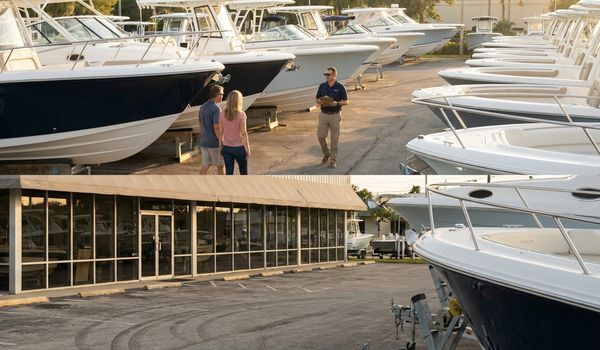
The recreational boating industry remains one of the most resilient corners of the American small business economy, and boat dealers sit at the center of it. Whether you operate a single-location dealership on a Gulf Coast marina or a multi-rooftop group in the Great Lakes region, the numbers behind this industry shape every inventory, staffing, and financing decision you make. This roundup of boat dealer statistics for 2026 pulls together the most current data on market size, dealer counts, unit sales, buyer demographics, and financing trends so owners and operators can benchmark their performance against the broader market.
The data below draws on industry sources including the National Marine Manufacturers Association (NMMA), the U.S. Coast Guard's recreational boating registration reports, U.S. Census Bureau business surveys, and publicly reported retail figures. Where figures are estimates, we say so. The goal is a practical, decision-ready picture of where the boat dealer industry stands in 2026 and where it is heading.
In This Article
- The State of Boat Dealerships in 2026
- Boat Dealer Market Size and Industry Overview
- New and Used Boat Sales Statistics
- How Many Boat Dealers Operate in the United States?
- Boat Buyer Demographics and Consumer Behavior
- Regional Boat Dealer Statistics: Top States
- Boat Financing Statistics and Trends
- Challenges Facing Boat Dealers in 2026
- Growth Opportunities for Boat Dealerships
- Boat Dealers vs. Other Marine Business Segments
- Real-World Scenarios: What the Data Means for Dealers
- How Crestmont Capital Supports Boat Dealers
- Next Steps for Boat Dealer Owners
- Frequently Asked Questions
The State of Boat Dealerships in 2026
Boat dealerships occupy a unique position in the recreational marine ecosystem. They are the primary retail channel between manufacturers and the roughly 85 million Americans who participate in recreational boating each year, and they generate revenue across four distinct streams: new boat sales, pre-owned boat sales, parts and accessories, and service and maintenance. That diversification is one reason the dealer model has proven durable through economic cycles that punished other discretionary retail segments.
The industry entered 2026 in a normalization phase. The extraordinary demand surge of 2020 and 2021, when first-time buyers flooded showrooms and dealer inventories ran historically thin, has fully unwound. Unit sales have settled back toward pre-pandemic baselines, but the customer base the industry gained during those years has largely stayed. Dealers who invested in service capacity, storage, and customer retention programs during the boom are now harvesting recurring revenue from that expanded owner base.
Several structural forces define the 2026 landscape:
- Inventory rebalance. Manufacturer production caught up with demand through 2024 and 2025, giving dealers fuller lots and restoring negotiating room for buyers. Floorplan costs, however, remain a bigger line item than they were in the low-rate era.
- Higher price points. The average retail price of a new powerboat has climbed steadily, driven by larger outboards, integrated electronics, and premium materials. Fewer units at higher prices is now the default volume strategy for many brands.
- Service-led profitability. Fixed operations (service, parts, storage, and winterization) now contribute a majority of gross profit at many dealerships, cushioning the volatility of unit sales.
- Digital-first buyers. The majority of boat shoppers begin their research online, and a growing share complete financing pre-qualification before ever stepping onto a lot.
For owners, the takeaway is straightforward: the dealers winning in 2026 are the ones running their stores like diversified marine service businesses rather than pure vehicle retail operations.
Boat Dealer Market Size and Industry Overview
The recreational boating industry's total annual economic impact in the United States is estimated at approximately $230 billion, according to NMMA analysis, supporting on the order of 800,000 American jobs and more than 30,000 businesses across manufacturing, retail, and services. Retail sales of new boats, engines, trailers, and accessories have held in the $55 billion to $60 billion range in recent years, with pre-owned sales adding a substantial additional volume layer on top.
New powerboat retail unit sales in the United States have run in the neighborhood of 230,000 to 260,000 units annually over the past several years, with outboard-powered boats representing the largest single segment by a wide margin. Pre-owned transactions are estimated to exceed one million units per year, which makes the used market roughly four times the size of the new market in unit terms and a critical profit center for dealers who take trade-ins seriously.
Boat Dealer Industry: By the Numbers (2026)
Key statistics at a glance, compiled from NMMA, U.S. Coast Guard, and industry retail data
$230B
Annual U.S. economic impact of recreational boating
~4,200
Estimated boat dealerships operating in the U.S.
~240K
New powerboats sold at retail per year (recent average)
1M+
Pre-owned boats changing hands annually
~85M
Americans who go boating each year
~12M
Registered recreational vessels in the U.S.
Dealer-level economics vary enormously by region, brand mix, and revenue diversification, but a healthy single-location dealership in a strong boating market commonly generates $5 million to $15 million in annual revenue, with top-quartile multi-location groups far above that. Gross margins on new boats typically run in the mid-teens percentage-wise, while pre-owned boats, F&I products, parts, and service all carry meaningfully higher margins. That mix explains why two dealerships with identical unit volumes can produce very different bottom lines.
New and Used Boat Sales Statistics
Unit sales data tells the story of an industry that spiked hard and then found its footing. New powerboat retail sales surged through 2020 and 2021 as households redirected travel and entertainment spending toward outdoor recreation, then cooled as interest rates rose and discretionary budgets tightened. By 2024 and 2025, sales had returned to a range broadly consistent with the years immediately before the pandemic, and early 2026 indicators point to continued stability rather than another sharp move in either direction.
Segment performance within those totals matters more than the headline number:
- Outboard boats remain the dominant category, consistently accounting for the majority of new powerboat units sold. Pontoon boats, aluminum fishing boats, and bowriders anchor this segment.
- Pontoons were the single hottest category of the boom years and have retained a large share of their gains, particularly among family buyers in inland lake markets.
- Personal watercraft continue to attract entry-level buyers, with annual unit sales that rank among the highest of any powered segment.
- Wake sport boats command premium prices and strong brand loyalty, serving a smaller but affluent buyer base.
- Saltwater fishing boats hold steady in coastal markets from the Gulf to the Northeast, supported by the continued growth of inshore and nearshore angling participation.
On the pre-owned side, brokers and dealers move well over a million used boats annually, and the pre-owned market acts as the industry's pressure valve. When new boat affordability tightens, demand cascades into late-model used inventory, lifting trade-in values and used margins. Dealers who built certified pre-owned programs and invested in reconditioning capacity have captured outsized share of this demand. The used segment also feeds the F&I department: a meaningful share of pre-owned buyers finance their purchases, and attachment rates for extended service contracts run higher on used units than on new ones.
Growing Your Dealership This Season?
Crestmont Capital funds boat dealers with inventory financing, working capital, and equipment loans sized to your lot. Decisions in as fast as 24 hours.
Check Your Funding OptionsHow Many Boat Dealers Operate in the United States?
Estimates from industry directories and Census Bureau business pattern data place the number of boat dealerships in the United States at roughly 4,000 to 4,500 storefront operations, with the commonly cited figure hovering near 4,200. That count understates the true retail footprint because many dealers operate multiple lots, marinas, and service yards under one ownership group. Consolidation has been a defining trend for more than a decade: large dealer groups and national marine retailers have steadily acquired independent stores, and the top dealer groups now account for a significant share of total new unit volume.
Several forces are driving that consolidation:
- Scale economics. Larger groups negotiate better floorplan terms, spread marketing costs across rooftops, and centralize back-office functions like accounting, HR, and F&I administration.
- Succession pressure. A large share of dealership principals are approaching retirement age, and many lack a family successor. Acquisition by a regional group is often the cleanest exit.
- Manufacturer preferences. Brands increasingly favor dealer partners with the capital to stock deeper inventory, maintain certified service departments, and invest in showroom standards.
- Technology requirements. Modern dealership management systems, digital retailing tools, and CRM platforms reward operators who can amortize the investment across multiple locations.
Despite consolidation, the independent dealership remains the backbone of the industry. The majority of U.S. boat dealers are still single-location or two-location family businesses, often paired with a marina, a service shop, or a storage facility. That structure makes the sector a natural fit for relationship-based small business financing rather than purely transactional lending.
Boat Buyer Demographics and Consumer Behavior
Understanding who buys boats is as important as knowing how many boats sell. The demographic profile of the American boat buyer has been shifting in ways that matter for dealer marketing, inventory planning, and financing programs.
The core buyer remains an established homeowner in their mid-40s to mid-50s with household income comfortably above the national median. Industry survey data has consistently placed the average age of a new boat buyer in the high 40s to low 50s, with pre-owned buyers skewing a few years younger. Household income for new boat buyers typically starts around the six-figure mark, while entry-level segments like personal watercraft and aluminum fishing boats reach buyers with more moderate incomes.
Key Takeaway: First-time buyers surged to roughly a third of all purchasers during the 2020-2021 boom, and retention data suggests the industry kept most of them. Dealers with strong owner onboarding, winterization reminders, and service loyalty programs are converting those first-time buyers into lifetime customers.
Behavioral trends worth tracking in 2026:
- Younger buyers are entering through access models. Boat clubs, peer-to-peer rentals, and shared ownership introduce millennials and Gen Z to boating before they buy. Dealers partnering with clubs see these members convert to owners over time.
- Women influence or make the majority of purchase decisions. Industry surveys show women are involved in well over half of boat purchases, a figure that continues to shape showroom design and marketing tone.
- Research happens online first. The typical buyer now spends weeks comparing models, watching walkthrough videos, and reading owner reviews before contacting a dealer. Stores with detailed online inventory, transparent pricing, and fast digital responses win the first appointment.
- Financing pre-qualification is moving upstream. Buyers increasingly want to know their monthly payment and approval odds before a showroom visit, which makes embedded financing tools a competitive advantage.
- Usage is diversifying. Fishing, watersports, cruising, and entertaining all drive purchases, and multi-purpose family boats that serve several of those uses continue to gain share.
Regional Boat Dealer Statistics: Top States
Boat ownership is intensely regional, and dealer density follows registered vessel counts. Florida leads the nation by a wide margin with close to one million registered recreational vessels, which supports the country's largest concentration of dealerships, brokerages, and marine service businesses. The Great Lakes states form the second major cluster: Michigan, Minnesota, and Wisconsin all rank near the top in registrations despite their shorter seasons, because boating participation rates in those states are among the highest in the country.
Other consistently strong dealer markets include:
- Texas, where a long season, large population, and strong bass fishing culture support high unit volumes across pontoons, bass boats, and bay boats.
- California, with a large coastal and delta boating population concentrated in Southern California, the Bay Area, and the Sacramento-San Joaquin Delta.
- New York, where the Great Lakes, the Finger Lakes, the Hudson, and Long Island Sound sustain a dense dealer network.
- North and South Carolina, Georgia, and Tennessee, where reservoir and coastal boating continue to grow with regional population inflows.
- Arizona and Nevada, smaller in absolute terms but notable for high per-capita participation on Colorado River reservoirs and Lake Mead.
For dealers, regional data drives real decisions: how much inventory to carry into spring, which segments deserve floorplan dollars, and how aggressively to staff the service department for winterization and commissioning surges. It also shapes financing strategy. Seasonal markets concentrate revenue into a few months, which makes working capital lines and seasonal payment structures more valuable than they are in year-round markets like Florida or the Gulf Coast.
Boat Financing Statistics and Trends
Financing sits at the heart of the boat dealer business model, both on the consumer side and the dealer side. On the consumer side, the majority of new boat purchases involve some form of financing, with marine loan terms commonly stretching from 10 to 20 years for larger boats. Monthly payment affordability is often the single biggest factor in closing a sale, which is why dealer F&I departments track approval rates and lender turn times as closely as unit volume.
On the dealer side, three financing categories dominate:
- Floorplan financing. Dealers finance their new boat inventory through manufacturer-sponsored or independent floorplan lines, paying interest per unit until each boat sells. Floorplan interest expense rose sharply when rates climbed and remains a major cost line, which has pushed dealers toward faster inventory turns and leaner lot stocking.
- Working capital. Seasonal cash flow makes revolving working capital essential, especially for dealers in northern markets who earn most of their revenue between April and September. A business line of credit sized to the off-season gap is the standard tool here.
- Equipment and facility financing. Service department lifts, diagnostic equipment, forklifts, trailers, and showroom upgrades are commonly financed through equipment financing, preserving cash for inventory and payroll.
Consumer marine lending conditions in 2026 reflect the broader rate environment: rates remain above the historic lows of the early 2020s, but lender competition for qualified boat buyers is healthy, and approval processes have sped up considerably thanks to digital applications and automated underwriting. Dealers report that buyers who arrive pre-qualified close faster and negotiate less, which is one reason many stores now promote financing pre-approval on their websites before promoting specific boats.
Need Working Capital Before the Season Turns?
From floorplan relief to service shop expansion, Crestmont Capital structures funding around your dealership's cash cycle. Apply online in minutes.
Apply NowChallenges Facing Boat Dealers in 2026
The 2026 operating environment is stable but not easy. Dealers consistently identify a handful of pressure points in industry surveys and trade coverage.
Affordability is the biggest headwind. Higher boat prices combined with elevated interest rates have pushed monthly payments up meaningfully from pre-pandemic norms. Entry-level buyers feel this first, and dealers in price-sensitive segments report longer decision cycles and more deal structures built around term length and down payment flexibility.
Technician shortages constrain service growth. The marine industry has wrestled with a shortage of certified service technicians for years, and the gap limits how much of the profitable fixed-operations business dealers can capture. Stores that invest in apprentice programs, tool allowances, and competitive pay are winning the talent competition, but those investments require capital.
Floorplan costs punish slow inventory. Every boat that sits past its curtailment date eats margin. Dealers are responding with more disciplined ordering, faster markdown cycles on aging units, and in some cases renegotiating floorplan terms or shifting to lenders with more flexible structures.
Consolidation raises the competitive bar. Independent dealers increasingly compete against regional groups with centralized marketing, bigger digital budgets, and multi-brand portfolios. The independents that thrive tend to dominate a niche: a specific brand, a specific lake, or a service reputation that big groups cannot replicate.
Weather and climate volatility complicate planning. Hurricane exposure on the Gulf and Atlantic coasts, low water levels in some western reservoirs, and shorter ice-free seasons in parts of the upper Midwest all introduce revenue unpredictability that dealers must absorb. Diversified revenue streams and adequate cash reserves are the standard hedges.
Growth Opportunities for Boat Dealerships
For well-capitalized dealers, 2026 offers more upside than the cautious headlines suggest.
Fixed operations are the clearest growth lever. Service, parts, storage, and winterization produce recurring, high-margin revenue that insulates the business from unit sales swings. Dealers expanding service bays or adding mobile service units typically see payback periods short enough to justify equipment financing rather than waiting to fund expansion from cash flow.
Data Point: With more than one million pre-owned boats changing hands each year, dealers without a formal pre-owned program are leaving their largest volume opportunity to brokers and private sellers. Reconditioning capacity is the usual bottleneck, and it is a solvable one.
Pre-owned and brokerage programs remain underexploited. Many dealers treat trade-ins as a nuisance rather than a profit center. A disciplined reconditioning process, transparent pricing, and certified pre-owned branding can turn used inventory into the highest-margin units on the lot.
Digital retailing is still a differentiator. The industry adopted online tools later than automotive, which means dealers who offer real-time inventory, online credit applications, virtual walkthroughs, and digital paperwork still stand out. The cost of entry is modest relative to the conversion gains.
Adjacent revenue streams are expanding. Boat clubs, rental fleets, storage facilities, winterization packages, and on-water events all deepen customer relationships and smooth seasonality. Dealers with marina access are particularly well positioned to bundle storage, service, and membership revenue.
The installed base keeps growing. Every boat sold during the 2020-2021 surge is now a service customer, a storage customer, and eventually a trade-in. Dealers who capture the ongoing relationship with that expanded owner base are building annuity-like revenue that will compound for years.
Boat Dealers vs. Other Marine Business Segments
Boat dealers share the marine economy with marinas, repair shops, brokerages, and rental operators, but their business model is distinct. The comparison below summarizes how the segments differ on the metrics that matter most to owners and lenders. For a deeper look at dealer-specific funding structures, see our guide to boat dealership business loans.
| Metric | Boat Dealers | Marinas | Repair Shops | Brokerages |
|---|---|---|---|---|
| Primary revenue | New and used unit sales plus service | Slip rental, storage, fuel | Labor and parts | Commission on used sales |
| Typical gross margin | Mid-teens on new units, higher on used and service | High on storage and slips | Highest in the industry on labor | Commission-based, low overhead |
| Seasonality | High in northern markets, moderate on coasts | High, offset by storage contracts | Counter-seasonal winter work | Moderate, follows listing cycles |
| Capital intensity | Very high (floorplan inventory) | High (real estate and docks) | Moderate (equipment and lifts) | Low |
| Biggest 2026 pressure | Floorplan interest and affordability | Waterfront real estate costs | Technician shortage | Inventory quality |
The dealer model's defining trait is capital intensity tied to inventory. A marina's assets sit in the ground; a dealer's assets sit on the lot, accruing floorplan interest every day they go unsold. That single fact explains most of the financing behavior in the segment: fast turns, disciplined ordering, and constant attention to the relationship between unit velocity and interest expense.
Real-World Scenarios: What the Data Means for Dealers
Statistics only matter when they change a decision. Here is how four representative dealers are applying 2026 industry data in practice.
Scenario 1: The inland pontoon dealer planning spring inventory
A two-location dealer on a Midwest reservoir chain watches the same numbers every winter: pontoon demand held its post-boom gains, first-time buyers remain a third of the market, and floorplan costs punish overstocking. Instead of ordering to 2019 peaks, the owner orders 15 percent lighter, shifts mix toward mid-price tritoons with the strongest turn rates, and puts the freed floorplan capacity into certified pre-owned units sourced from auction and trade-ins. The used units deliver higher margin per square foot of lot space.
Scenario 2: The coastal dealer hedging hurricane risk
A Gulf Coast dealership with $8 million in annual revenue studies regional registration data showing continued growth in its coastal county. Rather than expanding its exposed waterfront lot, the owner invests in a inland service and storage facility financed through equipment financing, adding hurricane-season haul-out contracts that generate revenue precisely when retail sales pause.
Scenario 3: The service-first turnaround
A family dealership in New York sees new unit margins compress and pivots toward fixed operations. The owners add two service bays, hire a master technician away from a competitor with a tool allowance and pay premium, and launch winterization packages marketed to the area's large base of boom-era first-time owners. Within two seasons, service and storage contribute the majority of gross profit, and the store's valuation multiple improves ahead of a planned eventual sale.
Scenario 4: The multi-store group acquiring a retiring competitor
A three-location dealer group in the Southeast tracks consolidation data and approaches the aging owner of a respected single store on a neighboring lake. Using acquisition financing sized against the target's service revenue and storage contracts rather than its volatile unit sales, the group structures a deal that pencils even in a flat unit market, then centralizes the acquired store's back office within 90 days.
Put the 2026 Data to Work
Whether you are stocking inventory, expanding service bays, or acquiring a competitor, Crestmont Capital has funded thousands of businesses like yours.
Start Your ApplicationHow Crestmont Capital Supports Boat Dealers
Crestmont Capital is a direct lender rated among the top business financing providers in the country, and marine businesses are a core part of our portfolio. We structure funding around the realities documented in this report: seasonal revenue, capital-intensive inventory, and service-led profitability.
Our boat dealer clients typically use a combination of products:
- Working capital and lines of credit to bridge the off-season gap and cover payroll, marketing, and floorplan interest while lots are quiet. Our business line of credit draws only what you use.
- Equipment financing for service lifts, diagnostic systems, forklifts, trailers, and showroom build-outs, structured so the equipment pays for itself out of the service revenue it enables.
- Inventory and expansion capital through our broader small business financing programs, including funding for acquisitions, second locations, and storage facility additions.
- Fast decisions. Applications take minutes online, and qualified dealers routinely receive decisions within 24 hours, which matters when a trade-in package or acquisition opportunity has a clock on it.
Owners weighing a broader capital strategy can also review our guides to boat dealership business loans and marine vessel financing and leasing for product-by-product detail. For industry context beyond the dealer segment, the Reuters business desk tracks the consumer spending and interest rate trends that flow directly into boat retail, and the U.S. Census Bureau's Annual Business Survey publishes the establishment-level data that underpins many of the figures cited above.
Next Steps for Boat Dealer Owners
Data without action is just trivia. If the statistics in this report map onto your own business, here is a practical sequence for putting them to work before the next selling season.
Benchmark your store against the industry.
Compare your unit velocity, gross margin mix, and fixed-operations share against the figures in this report. Gaps are either risk or opportunity.
Audit your floorplan exposure.
Calculate your current monthly floorplan interest as a percentage of gross profit, and stress-test it against a slower spring than you expect.
Quantify your fixed-operations upside.
Model what two more service bays, a storage expansion, or a winterization program would add to annual gross profit, then compare that to the cost of financing the build-out.
Line up capital before you need it.
The dealers who move fastest on acquisitions, inventory opportunities, and service expansion are the ones with pre-arranged funding. The SBA's market research guide is a useful framework for documenting your local market before you approach a lender.
Talk to a lender who understands marine businesses.
Seasonal cash flow and floorplan structures confuse generalist lenders. Start a conversation with Crestmont Capital and get a funding decision built around how dealerships actually operate.
The Bottom Line
The boat dealer statistics for 2026 describe an industry that has moved past the boom-and-correction whiplash of the early 2020s and settled into a more disciplined, service-led era. A $230 billion economic footprint, roughly 4,200 dealerships, more than a million used boat transactions a year, and an owner base enlarged by the pandemic surge all point to durable underlying demand. The dealers who will compound value from here are the ones treating fixed operations as the profit engine, pre-owned inventory as a first-class business line, and capital access as a strategic advantage rather than an emergency tool.
Crestmont Capital works with boat dealers and marine businesses across the country, funding the working capital, equipment, and expansion that turn industry data into dealership growth. If the numbers in this report have you thinking about your next move, we are ready when you are.
Frequently Asked Questions
How many boat dealers are there in the United States? +
Industry directories and Census Bureau business pattern data place the count at roughly 4,000 to 4,500 dealership operations, with the commonly cited figure near 4,200. The true retail footprint is larger because many dealers operate multiple lots, marinas, and service yards under one ownership group, and consolidation continues to concentrate volume among larger dealer groups.
What is the market size of the boat dealer industry? +
The recreational boating industry generates an estimated $230 billion in annual U.S. economic impact, with retail sales of new boats, engines, trailers, and accessories holding in the $55 billion to $60 billion range in recent years. Pre-owned sales add a substantial layer on top, with more than one million used boats changing hands annually.
How many new boats are sold each year in the U.S.? +
New powerboat retail sales have run in the neighborhood of 230,000 to 260,000 units annually over the past several years. Outboard-powered boats represent the largest segment by a wide margin, led by pontoons, aluminum fishing boats, and bowriders.
How big is the used boat market? +
Pre-owned transactions are estimated to exceed one million units per year, making the used market roughly four times the size of the new market in unit terms. Used boats are a critical profit center for dealers because they carry higher margins than new units and generate additional finance and service contract revenue.
What is the average age of a boat buyer? +
Industry survey data has consistently placed the average age of a new boat buyer in the high 40s to low 50s. Pre-owned buyers skew a few years younger, and entry-level segments like personal watercraft and aluminum fishing boats attract the youngest buyers in the market.
Which states have the most boat dealers? +
Florida leads the nation with close to one million registered recreational vessels and the country's largest dealer concentration. The Great Lakes states of Michigan, Minnesota, and Wisconsin form the second major cluster, followed by strong markets in Texas, California, New York, and the Carolinas.
What percentage of boat buyers finance their purchase? +
The majority of new boat purchases involve some form of financing, with marine loan terms commonly stretching from 10 to 20 years for larger boats. Monthly payment affordability is often the single biggest factor in closing a sale, which is why dealer F&I departments track approval rates as closely as unit volume.
How has boat dealer consolidation affected the industry? +
Large dealer groups and national marine retailers have steadily acquired independent stores for more than a decade, and the top groups now account for a significant share of new unit volume. Consolidation is driven by scale economics, succession pressure from retiring principals, manufacturer preferences for well-capitalized partners, and the rising cost of dealership technology.
What are the biggest challenges for boat dealers in 2026? +
Dealers consistently cite affordability pressure from higher boat prices and elevated interest rates, a shortage of certified service technicians, floorplan interest costs that punish slow-moving inventory, competitive pressure from consolidating dealer groups, and weather volatility that complicates seasonal planning.
What profit margins do boat dealers typically earn? +
Gross margins on new boats typically run in the mid-teens percentage-wise, while pre-owned boats, finance and insurance products, parts, and service all carry meaningfully higher margins. Fixed operations such as service, storage, and winterization now contribute a majority of gross profit at many dealerships.
How do boat dealers finance their inventory? +
Most dealers use floorplan financing, a revolving credit line where the lender pays the manufacturer for each boat and the dealer pays interest per unit until it sells. Floorplan interest expense rose sharply when rates climbed, pushing dealers toward faster inventory turns and leaner lot stocking.
What is floorplan financing and how does it work for boat dealers? +
Floorplan financing is a specialized revolving credit line secured by the dealer's inventory. Each boat on the lot is individually financed, interest accrues daily per unit, and curtailment schedules require principal paydowns on aging inventory. It keeps lots stocked without tying up the dealer's cash, but it makes inventory velocity the central discipline of the business.
How can boat dealers increase profitability? +
The clearest levers are expanding high-margin fixed operations like service, storage, and winterization, building a formal certified pre-owned program, adopting digital retailing tools that convert online researchers into showroom appointments, and adding adjacent revenue streams such as boat clubs, rentals, and on-water events.
What financing options are available for boat dealerships? +
Dealers commonly combine a business line of credit for seasonal working capital, equipment financing for service lifts and diagnostic systems, and term loans or acquisition financing for expansion, additional locations, or storage facilities. Crestmont Capital structures all three around the seasonal cash cycle of the marine industry.
Are boat dealership statistics different by region? +
Yes. Dealer density, segment mix, and seasonality all track registered vessel counts and climate. Florida supports year-round selling, Great Lakes dealers concentrate revenue into a few intense months, and Gulf Coast dealers build hurricane risk into their facility and inventory planning. Regional data should drive ordering, staffing, and financing decisions.
Disclaimer: The information provided in this article is for general educational purposes only and is not financial, legal, or tax advice. Funding terms, qualifications, and product availability may vary and are subject to change without notice. Crestmont Capital does not guarantee approval, rates, or specific outcomes. For personalized information about your business funding options, contact our team directly.

About the author and reviewer
Allan GarfinkleMBA (Finance), JD
Chief Revenue Officer, Crestmont Capital
Allan Garfinkle is the Chief Revenue Officer at Crestmont Capital, where he has spent more than a decade leading revenue strategy, business development, and operational growth. With 28 years of experience building and advising startups and small businesses, Allan has helped more than 10,000 business owners navigate financing decisions, growth opportunities, and changing economic conditions. He earned a Bachelor of Science in Economics and an MBA with a concentration in Finance from Northeastern University, as well as a Juris Doctor from New England Law, where his studies focused on contracts and business law. His writing draws on extensive practical experience in small-business lending, equipment financing, business credit, and commercial finance.